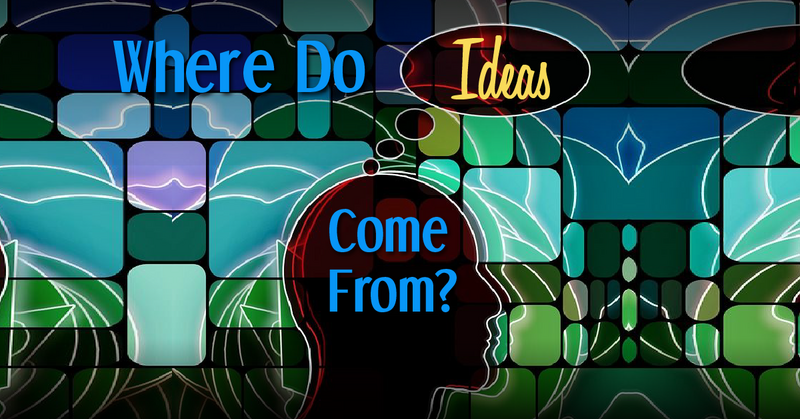
The biggest obstacle to writing a play often comes before the first word. It happens in the idea stage. I want to write, but my ideas are stupid. I know I could write something great but where do I start? How do I know my idea is a good one? These are the thoughts that lead directly to writers block.
When it comes to play ideas there are three things you should teach your students:
1. Ideas don’t grow on trees – you have to look for them.
2. The more ideas you have, the less you have to worry about good or bad.
3. Ideas are a place to start. Sometimes they are just a fragment, a sentence or a question. Ideas are not finished products.
There is this misconception that writers just magically think of things to write about. And that every idea is a gem right out of the gate. It’s just not true.
Writers look for things to write about. They create a habit of observation. To observe is to look specifically at people, places and things. If you observe on a daily basis, if you’re always looking, you will come up with ideas on a daily basis.
Writers learn to write down what they see and hear, what they experience. They write down their observations. It’s not enough to leave an idea in your head. That’s when ideas get lost.
Writers know that an idea is something to play around with, to try out. An idea is not a finished product. An idea is a place to start. And sometimes the idea will work, sometimes it won’t. That’s important to know. Ideas don’t always become finished products. When a student writers falters with an idea, their response is to assume they can’t write. Instead, remind students that not all ideas develop fully.
This process of idea creation put a lot less pressure on a student writer. You don’t have to magically come with a wonderful thing to write about. You simply:
- Observe the world around you
- Write it down
- Try it out
Reflection
When starting a playwriting unit, it’s important to get idea misconceptions out in the open and then out of the way. Discuss with students – What is an idea? Where do they come from? Have students reflect on their abilities to turn an idea into a play. Practice the act of observation with your students and get them in the habit of writing their observations down. And lastly instil in your students the fact that an idea is not a finished product. An idea is just a place to start.