Facebook Pixel Skip to main content

Ontario, Canada
Grade 7 - Reflecting, Responding and Analyzing

6 units • 6 professional development courses aligned to
B2.2 - analyse and describe, using drama terminology, how drama elements are used to communicate meaning in a variety of drama works and shared drama experiences

View all Standards for Ontario, Canada

B2.2 analyse and describe, using drama terminology, how drama elements are used to communicate meaning in a variety of drama works and shared drama experiences

This page lists 6 units and 6 professional development courses aligned to B2.2 from the Ontario, Canada. Designed for drama teachers, these resources directly address B2.2 - analyse and describe, using drama terminology, how drama elements are used to communicate meaning in a variety of drama works and shared drama experiences

Unit 5 of 8 in Middle School Curriculum

Unit Five: Intro to Script Writing

by Lindsay Johnson

7 lessons
In this unit, students learn how to write their own scripts using correct formatting. These scripts will be more detailed than the contentless scenes. Students will learn how to write dialogue that provide information about relationships, conflicting objectives, and setting. They’ll also learn how to correctly add expression and movement directions into the script itself. The unit will end with a partner script writing assignment which is performed in front of the class.
Unit 7 of 8 in Middle School Curriculum

Unit Seven: Directed Scenes Take 2: A Variety of Scenes

by Lindsay Johnson

10 lessons
Students will have another opportunity to participate in student-directed scenes, only this time each director will be assigned a different script, and actors for each group will be chosen by the teacher based on individual strengths and challenges, rather than holding auditions. Actors will take a deeper dive into character physicality and use of levels in staging this unit. Directors will continue to create a set design and block the scenes, adding props as well in this unit. The unit culminates in actors presenting their directed scenes to the class.

Aristotle's Elements

by Lea Marshall

12 lessons
Aristotle was a huge fan of the theatre. He philosophically believed in it and argued with other great thinkers at the time about the necessity and good results of theatrical pursuits. This makes him a great topic for a drama classroom unit. Aristotle identified six elements that needed to be in a play for it to be worthy: plot, thought, character, diction, spectacle, and sound. This unit by Lea Marshall focuses on and offers exercises for each of Aristotle’s elements - from using fairy tales to examine plot, to re-imagining movie trailers to explore music.

Introduction to Stanislavski

by Drama Teacher Academy

6 lessons
This is an in-depth unit with instruction and activities about the Stanislavski acting method. It is followed by scene work in which students learn how to score a scene, do a comprehensive character analysis, and use what they have learned in rehearsals in a performance. Students will also watch their own work and evaluate their process after the performance. The purpose of this unit is to give students an introduction and understanding of Stanislavski’s method and to put it into use as they prepare scenes for performance. After seeing their work, and spending time reflecting on how they used the principles of the method, students should take away a concrete understanding of how to prepare a role for performance.

Virtual Introduction to Stanislavski

by Drama Teacher Academy

6 lessons
The unit has been adapted for a virtual environment. This is an in-depth unit with instruction and activities about the Stanislavski acting method. It is followed by scene work in which students learn how to score a scene, do a comprehensive character analysis, and use what they have learned in rehearsals in a performance. Students will also watch their own work and evaluate their process after the performance. The purpose of this unit is to give students an introduction and understanding of Stanislavski’s method and to put it into use as they prepare scenes for performance. After seeing their work, and spending time reflecting on how they used the principles of the method, students should take away a concrete understanding of how to prepare a role for performance.

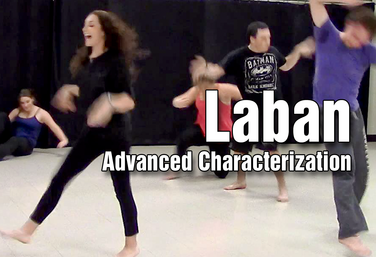
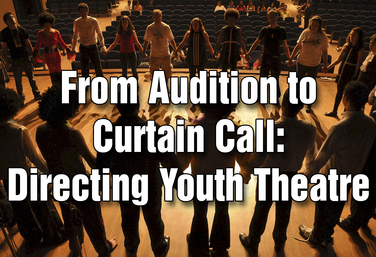
Laban: Advanced Characterization

by Drama Teacher Academy
7 lessons
This is an advanced acting unit in playing character through the Laban movement technique. Students will explore dance theorist Rudolf Laban’s eight efforts and their component parts; turn these elements into physicalizations through which one can express character; use Laban efforts and connect them to a character’s voice and body; and demonstrate knowledge through the creation of an original character. Reminder: This is an advanced acting unit. You will need students who can do work on their own outside of class time, commit to movement and sound, and commit to making instinctual choices.

View all Standards for Ontario, Canada    Standards Master List