
Facebook Pixel Skip to main content

Colorado Academic Standards - Drama and Theatre Arts
High School - Professional Pathway

4 units • 1 professional development course aligned to
DT.H3.3.2.c - Students Can: Support and explain aesthetics, preferences and beliefs to create a context for critical research that informs artistic decisions in a drama/theatre work.

View all Standards for Colorado Academic Standards - Drama and Theatre Arts

DT.H3.3.2.c Students Can: Support and explain aesthetics, preferences and beliefs to create a context for critical research that informs artistic decisions in a drama/theatre work.

This page lists 4 units and 1 professional development course aligned to DT.H3.3.2.c from the Colorado Academic Standards - Drama and Theatre Arts. Designed for drama teachers, these resources directly address DT.H3.3.2.c - Students Can: Support and explain aesthetics, preferences and beliefs to create a context for critical research that informs artistic decisions in a drama/theatre work.

Costuming

by Holly Beardsley

6 lessons
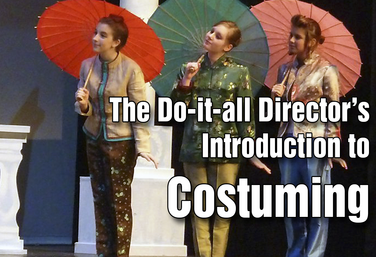
A costume designer and a costumer are two different things. A costume designer creates pieces from the drawing board to the stage, while a costumer pulls from already existing pieces to create fully realized characters. This means that the approach is different. In this six lesson unit students will learn the tools of a successful costumer. They will start by reflecting on their own personal style and the choices that go into that style. They’ll move on to look at versatility and adapting costume staples, creating a costuming vision, period clothing as the costumer, how to use the colour wheel as a costuming tool and everything culminates in a final project (two options).

Tech Theatre Unit: Costuming When You Don't Sew

by Drama Teacher Academy

8 lessons
In this unit, students will take on the role of the costumer, which is different from a costume designer. It introduces costuming concepts in order to execute a costume. No complicated sewing is required, which is great if you don’t have the background, the access, or the resources to have a class of students create costumes. Instead of making costumes from scratch, as a designer would, students will create costumes from stock, borrowed items, or low-cost finds. They will take finished products and adapt them into what they need to create the right atmosphere. In order to help with their adaptations, students will try different distressing techniques and learn three SIMPLE stitches that they’ll be able to use over and over again. It’s a valuable tech theatre skill to teach students how to execute on costumes when you (and they) don’t sew!
Unit 1 of 10 in Musical Theatre Curriculum

Introduction to Musical Theatre

by Drama Teacher Academy
In this unit, students will be introduced to the musical theatre form by asking and answering the question “What is a musical?” They will learn and demonstrate knowledge of musical theatre vocabulary terms. They will be introduced to two foundational songs in the musical form: the “I want” song and the “I am” song and analyze an example of each song. They will also start to think about their own voices and reflect on their skill set and confidence level with regard to singing in front of others. Students will learn the musical theatre warm-up that will be used throughout the curriculum. This set of exercises will help students prepare to perform through a physical and voice warm-up. Finally, students will watch, discuss and analyze one or two musicals (depending on your time and access to materials).
Unit 2 of 10 in Musical Theatre Curriculum

The Evolution of Musical Theatre

by Drama Teacher Academy

In this unit, students will learn and apply knowledge about musical theatre history. Two different approaches are provided to give you a variety of ways to apply this unit. Note that a class period is defined as 75 minutes. If your classes are longer or shorter, adjust accordingly.

View all Standards for Colorado Academic Standards - Drama and Theatre Arts    Standards Master List