National Core Arts Standards
Interpret intent and meaning in artistic work - Grade HS Advanced
10 units • 2 professional development courses aligned to TH:Re8.1.HSIII.b - Use new understandings of cultures and contexts to shape personal responses to drama/theatre work.
TH:Re8.1.HSIII.b Use new understandings of cultures and contexts to shape personal responses to drama/theatre work.
This page lists 10 units and 2 professional development courses aligned to TH:Re8.1.HSIII.b from the National Core Arts Standards. Designed for drama teachers, these resources directly address TH:Re8.1.HSIII.b - Use new understandings of cultures and contexts to shape personal responses to drama/theatre work.
This unit will enable students to identify, compare, and contrast three different styles of Japanese theatre: Noh, Bunraku, and Kabuki. There are three proposed projects in this unit: a research assignment where groups delve into further detail about one of the three styles; a performance project where students utilize what they’ve learned by enacting a scene from a Kyogen (comedic) play; and a Bunraku puppet play.
The purpose of this unit is to give students an introduction to independent learning as well as an overview of Ancient Greek theatre. Students will apply their knowledge throughout, and the unit culminates in a group activity.
This unit is delivered in hyperdoc format. What does that mean? A hyperdoc is an interactive tool that encourages digital learning. In this case, students are given a document on a subject, and there they can read articles, watch videos, do some independent research, and apply what they’ve learned. Because they’re working on their own, students are in charge of their own pacing.
Before you start the unit, ensure you read the Teacher Guide first. It will give you clear instructions on how to distribute the hyperdoc format and make it easy for you and your students.
This Indigenous Storytelling unit is brought to you in a different format than a traditional lesson plan. It uses a learning circle format. It was developed by Allison Green, a member of the Algonquin Band of Mattawa Ontario, who is also the author and instructor of the DTA course Approaching Drama Class with an Indigenous Perspective.
Students will discuss origin stories, research the background and land connection of a variety of Indigenous creation stories, create a plot graph of their story, share with the class what they have learned, and then retell the story in their own words. Once students have practiced this process, they will repeat the steps with an Abenaki creation story: Research | Recreate | Understand.
Students will develop characters based on the character traits of the Seven Grandfather Teachings. The unit begins with a focus on the traits (Love, Wisdom, Respect, Bravery, Honesty, Humility, and Truth) and the story of elders passing on teachings to the youth. Students will use tableau, viewpoints, and movement and explore how to develop a character with a clear backstory and identity. The unit uses open, neutral scenes as a partnered task that students can use to apply their learning followed by reflection and class discussion.
The objective of this unit is for students to be able to engage with Indigenous symbolism in art, and then interpret it in a theatrical context. It begins with an introduction of symbolism through a retelling of an Indigenous story with wolves representing human traits. Students develop a scene that focuses on how to “show and tell” an Indigenous story, clearly showing the symbolic meaning from the oral story. Students will then explore symbols by looking at the characteristics of Canadian Indigenous Art, delving into the symbols and story. Students then share their interpretation of the art by creating and presenting a piece of theatre, followed by reflection and class discussion.
In this unit, students will take on the role of the costumer, which is different from a costume designer. It introduces costuming concepts in order to execute a costume. No complicated sewing is required, which is great if you don’t have the background, the access, or the resources to have a class of students create costumes.
Instead of making costumes from scratch, as a designer would, students will create costumes from stock, borrowed items, or low-cost finds. They will take finished products and adapt them into what they need to create the right atmosphere.
In order to help with their adaptations, students will try different distressing techniques and learn three SIMPLE stitches that they’ll be able to use over and over again. It’s a valuable tech theatre skill to teach students how to execute on costumes when you (and they) don’t sew!
In this unit, students will be introduced to the musical theatre form by asking and answering the question “What is a musical?” They will learn and demonstrate knowledge of musical theatre vocabulary terms. They will be introduced to two foundational songs in the musical form: the “I want” song and the “I am” song and analyze an example of each song. They will also start to think about their own voices and reflect on their skill set and confidence level with regard to singing in front of others. Students will learn the musical theatre warm-up that will be used throughout the curriculum. This set of exercises will help students prepare to perform through a physical and voice warm-up. Finally, students will watch, discuss and analyze one or two musicals (depending on your time and access to materials).
In this unit, students will learn and apply knowledge about musical theatre history. Two different approaches are provided to give you a variety of ways to apply this unit. Note that a class period is defined as 75 minutes. If your classes are longer or shorter, adjust accordingly.
In this unit, students will incorporate character development into their musical theatre preparation. Students will explore internal and external tools that they can use to express emotion in their singing. Students will then take everything they have learned and apply it to a song which they will then perform (solo or in groups).
In this unit, students will combine knowledge of the previous two units: singing and movement. Students will review singing technique and terminology and work on a song together. They will build on their vocabulary of simple dance moves. Then, students will work in groups to learn and rehearse a section of a musical theatre song by choreographing movement that expresses the song’s meaning and characters, presenting their work to the class, and working on curriculum goals of risk taking, endurance, confidence, commitment, character, and emotion.
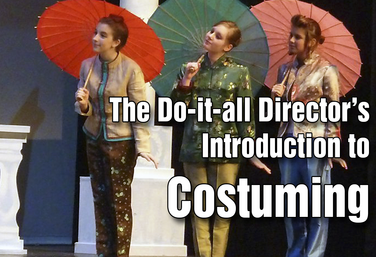
Do you know the difference between a bustle and a buckram frame? Or what works best as an emergency hem? Some directors are blessed with a big budget and a full support staff—a choreographer, a set designer, and a costumer. But the drama teacher often becomes director, choreographer, set designer, and costumer all in one.
And a budget? What’s a budget? The Do-It-All Director’s Introduction to Costuming will give you, the director, who must do it all, the confidence and skills to costume and direct, no matter your experience or budget. This course will teach you costuming basics, budget tricks, organization, and most importantly, the art of costuming as a director.
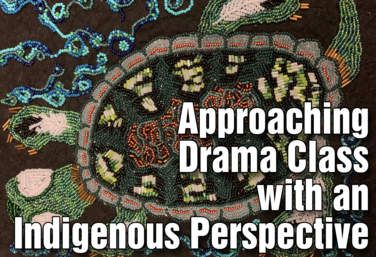
This course is led by Allison Green, a member of the Algonquin Band of Mattawa, and a drama and social sciences teacher in Northern Ontario, Canada. She believes that drama teachers should look at their teaching through an Indigenous lens for a few reasons:
- It is time in North America to take a conscientious look at Indigenous people’s approach to learning and teaching.
- For our Indigenous students, it’s important to see themselves in materials, activities, and classroom routines.
- It is also valuable for our non-Indigenous students to see and better understand the diverse nature of the creative process and ways of seeing our world through this lens.
This course aims to help teachers see their drama class through an Indigenous lens - by exploring the learning circle, culturally responsive approaches, and Indigenous pedagogy.
Our parent company Theatrefolk offers a fantastic selection of plays written specifically for high school and middle school students.
Whether for performances or class study, there's something for everyone: relevant & relatable themes, simple sets & costumes, flexible casting options and much more - a perfect addition to any drama program!
Please note:
Plays are offered separately from your membership and can be purchased through Theatrefolk.