
Podcast
The 48 Hour Play Project
Episode 200: The 48 Hour Play Project In this episode we talk to a middle school teacher who takes her students from script to production in 48 hours. How does she do it? How can you do it? Listen...
A 48-hour theatre project can energize students, build community, and teach collaboration under pressure. The idea is that you have a play, you have your actors, and you commit to being together from Friday night at 5:00pm until Sunday night at 6:30pm when the play is over. Read a play, cast a play, play games, develop techniques and characters, build sets, create props, set lighting, and put on a play in 48 hours.
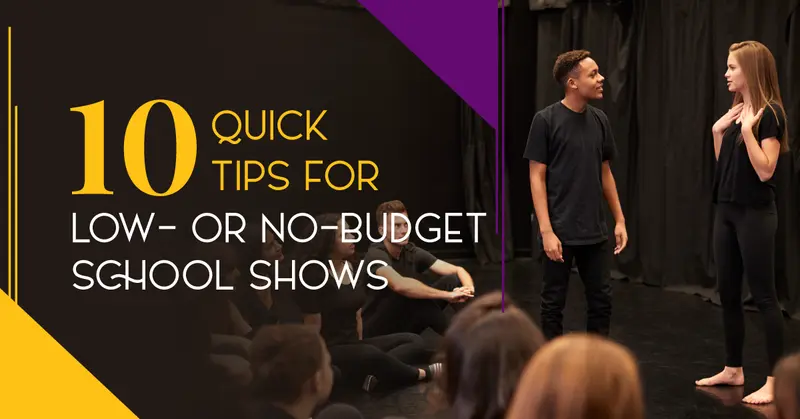
Go from script to a full production in this immersive weekend event by following our top 10 tips.
The 48-hour event serves as a motivating kickoff for students returning to school, and creates excitement for students new to your program. It builds early enthusiasm before a major production later in the year.
A tight deadline forces students to make decisions quickly, trust their instincts, and avoid perfectionism. You have 48 hours and you have to make a choice. You can’t ruminate on what’s going to be the best choice; you make a choice and run with it. The time crunch boosts creativity rather than stifling it.
Pick plays that feature characters similar in age to your students and explore relatable issues. This helps students connect emotionally while still experimenting with new roles and perspectives. The structure is great for encouraging students to try something out of their comfort zone in this limited time frame. And always ask yourself the question: Can we technically manage this in 48 hours? You want to choose something that you can put on its feet quickly; don’t get bogged down by complicated technical elements.
A project like this needs a lot of pre-weekend prep. You need to secure administrative approval; arrange parent communication, support, and permission (perhaps have an information meeting beforehand); organize food (do you have a parent booster group who could do this?), where and how students will sleep and who is going to supervise; find out and repeat over and over the rules for spending the night in the theatre. This is a special circumstance and you’re going to have a lot of people on board to make it happen. Add to that you want to have available simple props, costumes, crafting materials, and set pieces that students can use.
The time frame should follow a specific rhythm: Friday - ensemble building exercises, read-through and casting, Saturday - blocking and design, Sunday - run-throughs and performance. Having a clear routine will help when things get chaotic. On that note…
It will be chaotic and you will be racing to beat the performance deadline. It will be challenging but it will also be extremely rewarding. Your students will be proud of what they’ve accomplished.
It’s easy to expand the scope of this project to include everyone who wants to participate, but consider limiting the event to about 20 students. A small group fosters teamwork, ensemble building, and keeps supervision manageable. It ensures engagement over “crowd control.”
It’s all over in 48 hours. The longer you take with auditions, the less time you’ll have to rehearse. One suggestion is to cast the play based on the initial read-through and student introductions. Have students volunteer for certain roles and then switch it up after a few pages. This keeps the environment welcoming and maintains excitement rather than introducing competition.
Make the whole process about student ownership. Students should contribute set ideas, create props, manage lights and sound. Have a student stage manager. Do you have students who play instruments? Have them create live music for the show. Include a student choreographer. Let them do it all!
These types of events bring students together like no other. Students help each other with their lines, cues, and quick-problem solving all with the goal to bring a play to life. To make that bond happen, trust is essential. Do ensemble building exercises and make sure everyone knows each other. It may feel like it’s taking time away from learning the play, but it will help you in the long run.
Subscribe for our exciting updates, insights, teaching resources, and new script releases. Plus, sign up now and get 4 plays and 2 lesson plans for FREE!

.png)