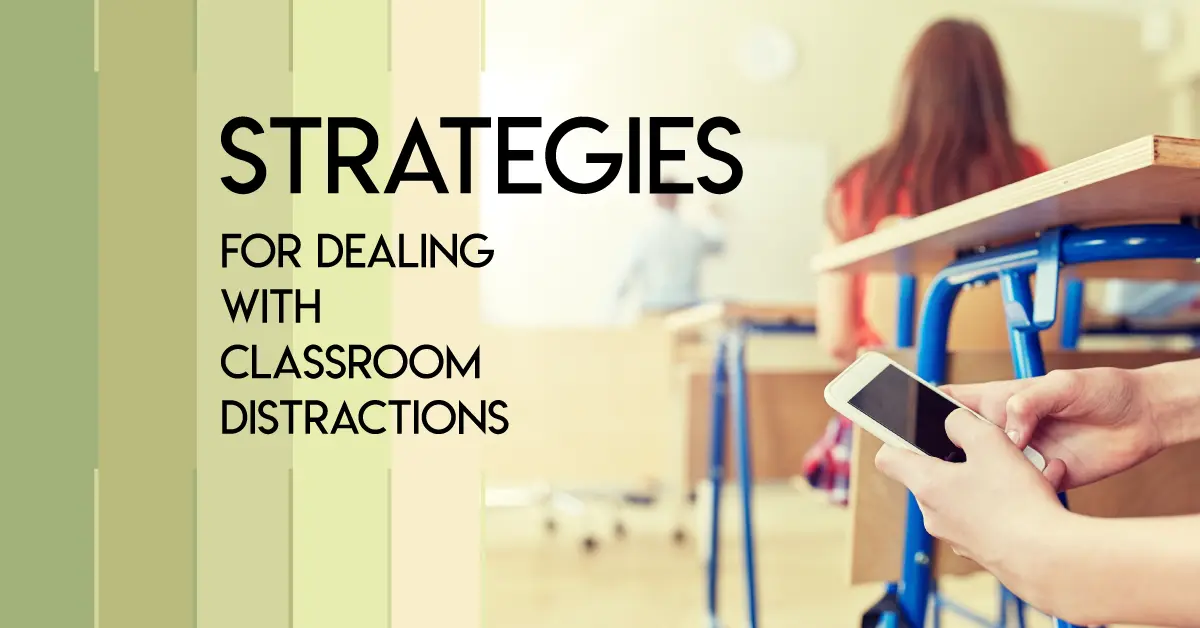
Students in drama classrooms get distracted just like any other students. Even though our classrooms are more active and engaged, distractions can still throw off our lessons. So what do you do when your classroom gets derailed by distractions? Here are three strategies for dealing with distractions in the drama classroom, based on their severity.
Minor Distraction
Minor distractions happen all the time in the drama classroom. A minor distraction can be anything from an unexpected announcement over the intercom, to an ‘accidental’ rude noise that slips out during a theatre game. When these types of distractions occur, it is best to simply acknowledge the event, ask the students to refocus — wait for the students to refocus — and continue the lesson. In these cases, it’s better to take a moment to acknowledge the distraction than to pretend it didn’t happen. Everyone heard or saw it, so just give it a moment of recognition and move on. If you pretend it didn’t happen, the repercussions will last longer and be more disruptive than if you simply deal with it.
Medium Distraction
This type of distraction would be something like a viral social media trend or news of a fight in the lunch room. They carry a little more weight and have a disproportionate effect on your students. In these cases, it’s a better strategy to give your students a little time to process the information in a conversation that you facilitate. This gives them the opportunity to work through their excitement or adrenaline in a structured, controlled manner, as opposed to numerous whispered conversations continuously breaking out around the classroom. If you’re concerned about spending too much time on these conversations, set a timer for five minutes and let your students know that when the timer goes off, the conversation will end. Investing those five dedicated minutes will make it easier to keep them focused for the remaining class time once the conversation is finished.
Major Distraction
Major distractions rise to a national, schoolwide, or extremely personal level. These would be significant cultural or school events such as 9/11, the George Floyd protests, or the unexpected death of a fellow student. When situations like these occur, consider allowing your students to spend an entire class period discussing and processing the event and its repercussions. It’s likely that students will be upset and distracted, and the quality of work you get from them will not be worth the effort required to force them to do it. Plus, it is also likely YOU will be affected by these kinds of shocking events, and you may need to process the information as well. When a crisis like this occurs, students will look to you for context and guidance, so be open and honest and help them as best you can. In these moments, “Life trumps Theatre,” so give yourself and your students the grace, space, and time to process together. You can teach your scheduled lessons another time.