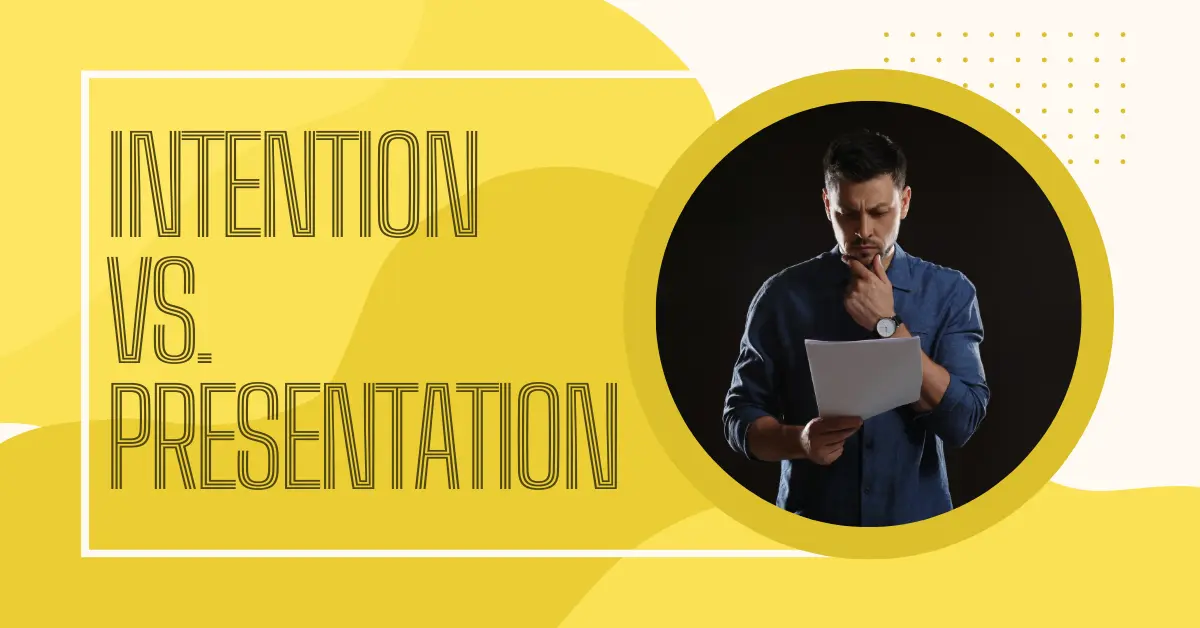
A common challenge for student actors is the gap between intention and presentation. There is a difference between what students intend to put on stage and what they actually do.
Students often know what they want to communicate. They can explain their character’s emotions, motivations, and relationships with confidence. They may even have strong conceptual ideas about the moment they are performing.
However, what is intended does not always appear in what is presented onstage. The audience can’t see inside an actor’s head. They only understand what an actor shows, not what they think.
How can we help students communicate their intention?
Make Acting Visible
Instead of just thinking “my character is nervous,” guide students toward turning intention into something physical and observable.
- How does that nervousness appear in the body?
- How does it change your posture?
- How does it affect your breathing?
- How do you move?
- What choices make that nervousness visible to an audience?
Encourage students to express intention through:
-
Posture (collapsed, tense, open, guarded)
-
Gesture (fidgeting, stillness, avoidance, reaching)
-
Movement (hesitation, pacing, retreating, advancing)
-
Facial expression (tightened, expressive, controlled)
-
Vocal delivery (rate, volume, pitch, clarity)
A useful benchmark is: If the sound were removed, would the intention still be clear?
Check for Clarity
You may have a student or students who are sure they’re presenting their intention, but it’s not coming across. The best way to help is to have them share their work with others and check for clarity. Be careful with this; you don’t want those watching to share opinions of the work, you just want to make sure the intention is clear. Ask those watching only two questions: “What do you think the characters want?” and “What do you think the characters feel?” This allows feedback to focus on communication rather than opinion.
If the answer matches the intention, your actors are on track. If not, they need to make their choices clear and most likely, more physical.
Supportive Adjustments
When intention is unclear, adjustments should be grounded in specificity. The goal is not more emotion, but more readable action.
- Strengthen or simplify physical choices.
- Clarify the character’s objective in the moment.
- Shift focus from “feeling” to “doing” (e.g., persuading, avoiding, hiding, confronting).
- Reduce abstract thinking in favour of playable actions.
Strong acting isn’t just about having good ideas, it’s about making those ideas visible.
Intention + clear physical and vocal choices = effective performance
When the presentation matches intention, the audience will connect to what’s happening onstage and that’s all we can ask for.


.png)