📣SCRIPT SALE! Treat yourself to an easier Fall. Save 30% on 5+ perusal scripts with code SPRING30 before May 3 and head into summer stress-free.
Community
Directing
Directing First-Time Actors: Building Confidence, Community, and Creative Growth
Directing first-time actors is both exciting and challenging. New performers often arrive with enthusiasm, curiosity, and a desire to belong. But they may also carry anxiety, uncertainty, or misconceptions about what theatre demands. For many, this is their first time stepping into a space that asks for vulnerability, discipline, teamwork, and imagination all at once. A successful experience depends on creating an environment where students feel supported, informed, and empowered to grow.
One of the most important first steps is getting to know everyone quickly. Learning names as soon as possible helps build trust and creates a sense of safety in the rehearsal room. When actors feel seen and acknowledged, they are more willing to take risks, participate fully, and collaborate with others. Name games and group warm-ups help establish connection not only between director and actor but among the entire ensemble.
First-time actors thrive when responsibility is shared. Instead of presenting yourself as the sole source of knowledge, let students become experts too. Assign groups to explore different theatrical styles, storytelling techniques, or production elements, and have them teach their discoveries to the rest of the cast. When actors help shape the learning process, they gain ownership of the work and deepen their understanding of the art form. This approach is especially useful in mixed-age or mixed-experience casts, where collaboration supports growth at every level.
Another essential component is creating space for student voices. While directors may arrive with a vision, new actors benefit from being able to express what excites them, what confuses them, and what they hope to achieve. Invite them to suggest ideas, ask questions, and contribute to creative decisions when appropriate. For actors who are shy or apprehensive, build alternative pathways for communication: private check-ins, reflection journals, anonymous question boxes, or digital forms. These tools allow students to share concerns or seek guidance without fear of judgment.
Finally, encourage consistent self-reflection throughout the process. Daily or weekly journals, exit slips, and rehearsal reflections help first-time actors articulate their progress, identify challenges, and recognize their own growth. Over time, this collection of reflections becomes a meaningful record of their journey.
Directing new actors is not just about producing a show; it’s about helping students discover confidence, empathy, discipline, and joy. When you create a supportive and collaborative environment, first-time performers often surprise themselves with how much they can achieve.
Teaching Drama
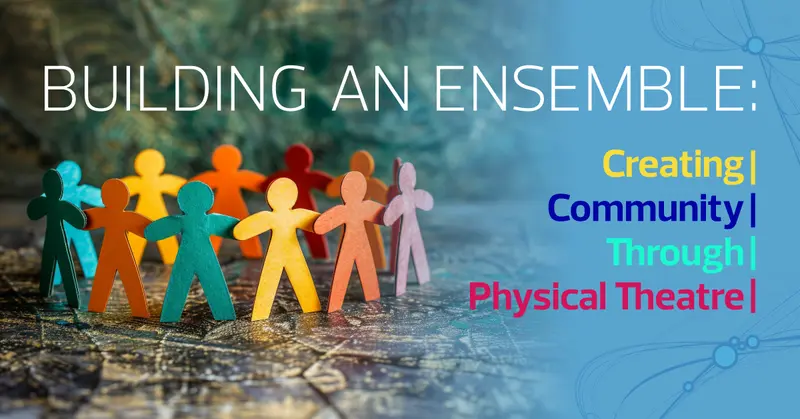
Building an Ensemble: Creating Community Through Non-Verbal Communication
Theatre in the classroom is more than lines, scripts, and stages. It’s about building a community. A strong ensemble creates a brave space for students to explore, take risks, and develop their own voice, both on and offstage. When students feel supported by their peers, they can create work that is collaborative, expressive, and powerful.
One approach to developing an ensemble is through non-verbal communication and physical theatre activities. These activities encourage students to connect through movement, eye contact, spatial awareness, and shared focus, rather than relying solely on spoken dialogue.
Ensemble-building is particularly effective when students are asked to work together on a piece without relying on dialogue. This can be especially empowering for groups with varied experience levels or for schools developing new theatre programs. In addition, non-verbal ensemble-building allows students to participate fully regardless of reading level, verbal confidence, or previous theatre experience.
Why Ensemble MattersA well-developed ensemble:
• Fosters trust and mutual respect.
• Encourages collaboration over individual spotlight.
• Builds the foundation for any performance style, from lighthearted comedies to serious dramas.
• Gives all students a voice and sense of ownership.
An ensemble-focused classroom emphasizes listening, awareness, and support. Students learn that they are responsible not just for themselves, but for the success of the group as a whole. That mindset carries into rehearsal, performance, and everyday classroom interactions.
Teaching Drama
Why Kindness Matters in the Drama Classroom (And How to Encourage It)
If you’ve ever been part of a theatre production, you know that drama isn’t just about acting — it’s about teamwork, trust, and putting yourself out there. That’s why kindness in the drama classroom isn’t just nice to have; it’s essential.
Think about it: theatre requires students to take risks. They have to speak in front of others, step into unfamiliar roles, and sometimes even make themselves look a little silly. That’s not easy! But when students know they’re in a supportive, kind environment, they’re much more willing to try, fail, and try again.
So how can we, as drama teachers, actively cultivate kindness in our classrooms? Here are a few simple but effective ideas:
1. Make encouragement the norm.• Start class with a “shout-out” circle where students recognize something great a classmate did.
• Encourage students to give positive feedback before offering constructive criticism. (A simple “I loved how expressive you were!” goes a long way.)
2. Model kindness in your feedback.• When giving notes, focus on growth rather than just what went wrong.
• Use “and” instead of “but” when offering suggestions: “Your character choices were strong, and if you add a bit more energy, it’ll be even stronger.”
3. Foster a “we, not me” mindset.• Remind students that theatre is a team sport — every role, onstage or off, matters.
• Have students switch roles occasionally so they appreciate all aspects of a production.
4. Create a no-mocking zone.• Establish a rule that everyone gets to try things without fear of being laughed at (unless it’s intentional comedy!).
• Call out unkind behavior gently but firmly. Drama class should be a place where students feel comfortable being brave.
5. Celebrate effort, not just talent.• Applaud students who take risks, even if the result isn’t perfect.
• Acknowledge growth and improvement, not just natural ability.
When kindness takes center stage, everything in the drama classroom becomes better: students feel braver, performances improve, and the whole experience becomes more fun. After all, theatre isn’t just about putting on a great show; it’s about building a great community.
New Drama Teachers
Calling All Theatre Teachers: How do I deal with angry parents/guardians?
Welcome to our video series, Calling All Theatre Teachers! In this series we’re going to answer questions that drama teachers have about stepping into a theatre program.
QUESTION: How do I deal with angry parents/guardians?Watch the video of our discussion of this question where Laramie shares his biggest suggestion for dealing with angry parents.
Click the button below for some giveaway docs! First, a tip sheet for dealing with parents. Second, a template audition packet and an example show contract that Laramie uses. Sometimes, you can circumvent angry parents by putting all the information out front and getting them to sign off on it. Note that Laramie suggests including a full rehearsal schedule for parents/guardians as well as a character breakdown.
How do YOU deal with angry parents/guardians?
Teaching Drama
Community Agreements in the Drama Classroom
Community agreements are a great tool to use at the start of a new term or semester, or at the beginning of the rehearsal process for your school show. Also known as learning or classroom agreements, community agreements are a collection of guidelines produced by both students and educators for how everyone agrees to work together in class or rehearsal. The difference between community agreements and rules is that rules are made and enforced from a position of authority (usually teachers, but also principals and/or school boards), while community agreements are created and maintained by everyone in the classroom. Community agreements are a good way to build trust with your students, as they are given a voice about how the classroom should be run. It helps you get to know your students better and learn about what they value in the drama classroom. Students adhering to the community agreements can also help to create a respectful and compassionate learning environment.
Community agreements should be phrased positively rather than in the negative, for example, “Actively listen to others while they’re speaking” rather than “Don’t talk while others are talking.” Here are a few examples of community agreements you might use in your drama classroom (you’ll find more in the giveaway below):
• Treat others the way you wish to be treated.
• Approach new topics with a beginner mindset: it’s safe to explore, make mistakes, and try again.
• Arrive on time, with all your equipment (scripts, scores, pencils, water, etc.), ready to work.
• If you don’t understand something, ask! (And be patient when someone asks a question; something might be obvious to you but new to them.)
• Be aware of time. Know the difference between a question and a comment, and decide if this is the right time to share.
• Be open to feedback.
• Cheer each other on.
• Celebrate our successes.
To make your community agreements, you’ll need a large poster board, some colourful Post-it Notes, and writing utensils. Write your class title or show title at the top or in the centre of the board in large letters, as well as “Community Agreements” (for example: “ADA201 Community Agreements” or “Fiddler on the Roof Community Agreements”). Have your students sit in a circle and give them each one Post-it and a pencil, place the board in the centre of the circle, and spread additional blank Post-its around the board. Take some time to brainstorm agreements, and have each student write one agreement per Post-it Note. If students have more ideas, they can take more Post-its, but each student should have the opportunity to share one Post-it before suggesting another one — this way, everyone has the opportunity to contribute. One at a time, have students share their community agreement and add it to the board. Some agreements might be similar, and that’s ok. Place similar agreements together on the board, and once everyone has shared their agreements, as a group you can determine the best phrasing.
If students are having trouble phrasing their agreements in a positive way, allow them to suggest alternate phrasings for the statement. If students have a question about a suggested agreement or disagree with a suggested agreement, allow time for them to voice these in a respectful manner. Revisions are allowed, but students must clearly explain their sides on the matter. Community agreements are “living documents,” meaning they can be periodically updated to better serve the needs of the class.
Once students have come up with their agreements, display the board in the classroom so you can refer back to it when needed. If you wish, have students sign the board to acknowledge that they have contributed to and will abide by the community agreements. In the future, if a student is behaving in a way that doesn’t align with the community agreements, you can gently guide them back to the board and remind them that these are the agreements that everyone in the class contributed to.
If you teach more than one drama class, it would be interesting to compare and contrast different classes’ community agreements. There will likely be overlap in suggestions but each class might have different priorities. Make note of common themes and make those your priority to adhere to, because your students' insights are invaluable and they’ll be putting their individual marks on your classroom environment, helping everyone to grow and shine.
Teaching Drama
Why Are Healthy Relationships Important in Theatre?
Theatre is all about communication and collaboration. Students come together to tell a story and create a collective experience for an audience. When students are working together, it’s important to maintain healthy relationships within their group. This doesn’t mean that the students are all best friends. It does, however, involve trust and respect, a sense of community, and effective problem solving.
Healthy relationships are built on trust, which is necessary when creating theatre.When they’re creating theatre, students need to be able to trust each other, no matter what role anyone is playing within the production. They need to be able to be vulnerable with each other and know that others in the production will support them. They need to trust that the actors will perform their lines and blocking accurately. They need to trust that stage management will call the cues correctly and that the technicians will complete their tasks efficiently. On top of that, they need to trust that their director (that’s likely you!) will help them grow in their roles and lead them through a successful production. By developing healthy relationships, students will build trust for each other, and vice versa — building trust leads to healthier relationships. They need to give and receive trust and respect.
_Read more about trust: _
• Establishing Trust With Your Students
• Warm-Up Exercises for Trust Building
Healthy relationships contribute to a sense of community.As we said before, students aren’t immediately going to become best friends when they work on a production. But they will be spending many, many hours together working on the show. They’ll be spending their time, talents, and efforts to achieve a common goal. Through this process, students will bond through the shared experience of putting on a show together. A common bond creates a community. And when others see and sense this feeling of community, they’ll likely want to join in. Which means your drama program will grow!
Read more about community:
• Community-Building Warm-ups for the Drama Classroom
• How to Build Community With Theatre
Having healthy relationships will help students solve problems effectively in the heat of the moment.When students do live theatre, the question is not whether something will go wrong, but when. Part of building and maintaining healthy relationships is figuring out ways to solve problems as a team without playing the blame game. How students (and teachers!) react in the midst of a theatrical “crisis” will affect their relationships. When issues arise, everyone needs to remain calm and go into problem-solving mode. It’s the ultimate improvisation challenge! Knowing you have a strong team that you can depend on in the middle of a stressful moment is extremely reassuring. And if a student does panic and react poorly in the moment, having those healthy relationships will make it easier for them to apologize, seek forgiveness, and repair the relationship afterwards.
Read more about problem solving:
• Problem Solving: When Students Don’t Work Well Together
• Problem Solving for Student Directors
So how can you help your students develop healthy relationships? Try some of these:
• Have students give each other Warm Fuzzies.
• Praise your students and let them know you appreciate them.
• Have students share their goals for the production with the Wish Jar exercise.
• Encourage students to get together as a group outside of rehearsal to practice.
• Have students explore their thoughts about healthy relationships by completing journal entries responding to questions on the topic (download some sample questions below). If they’re comfortable doing so, have them share their responses with their classmates. They may be surprised to discover that they have some thoughts in common with others.
Teaching Drama
Developing a Drama Teacher Community
Whether you’re a new drama teacher or you’ve been at it for years, please don’t try to go it alone. We’ve said many times before on the Theatrefolk blog that theatre is a collaborative effort. Even in a one-person show, you need others to help. It’s important to reach out and develop a community of people who can share resources, tips, and advice, support each other, and offer a place to vent and celebrate. Creating these connections requires a willingness to put yourself out there, but it’s so worth it. A great drama teacher community is a circle of support, and can even blossom into great friendships.
Here are some people you can potentially add to your circle of support!
1. Teachers at your school (but not just drama teachers)If your school has other drama teachers, this is the obvious place to start. These people will be your closest collaborators and you’ll be sharing resources and learning spaces with them on a daily basis. Additionally, it’s good to get to know teachers in similar arts subjects, such as music, dance, visual arts, and language arts. These people can be great resources if you decide to produce a show with your students.
Of course, it’s always in your best interest to be on good terms with as many teachers as possible at your school. You never know who will have some nuggets of wisdom for you (everyone was a new teacher at some point) or who might have a surprising connection. Maybe the chemistry teacher at your school is a neighbour of the drama teacher at the elementary feeder school in your district. Which brings us to the next group of people to reach out to…
*2. Other drama teachers in your city *This includes drama teachers at other high schools, elementary feeder schools, and even college or university instructors if your city has a performing arts post-secondary institution. Again, these people can potentially share lesson plans and resources such as costumes, props, and set pieces, and they’re a great source of advice and camaraderie. As well, it’s good to be able to share performance dates and potential show titles with each other. This way you can all avoid issues like three performances of Beauty and the Beast at three different schools on the same weekend.
3. Theatre companies in your communityThis can include both professional theatre companies and community theatre and youth theatre groups. For example, London, Ontario is home to the Grand Theatre (a professional theatre). It also has a thriving community theatre scene, including companies such as the Palace Theatre Arts Commons, London Youth Theatre Education (LYTE), Musical Theatre Productions, Original Kids Theatre Company, and many others. Making connections with people who are involved in other companies can create opportunities for field trips, workshops, guest speakers, costume and prop rentals or exchanges, and maybe even discounted theatre tickets. You may be able to connect with theatre specialists such as fight choreographers or intimacy directors. Many professional theatres also offer educator clubs, talkbacks, and professional development opportunities. Joining in on these groups can help you make all sorts of connections!
4. Online communitiesOnline communities are fabulous resources, particularly if you are in a remote or rural area or there aren’t many other drama teachers in your area. But even if there are lots of “real life” people in your drama teacher community, having an online circle of support is so helpful. It’s great to hear how educators in other cities, provinces, and countries run their programs and how their drama programs are similar and different to yours. The Drama Teacher Academy is one of these great communities. Not only is it packed with lesson plans and professional development opportunities, but it has a thriving private Facebook group full of educators who are eager to chat.
5. Other performing arts communities such as choirs, dance studios, concert halls, and performance venuesLook beyond drama and consider community connections in related fields. Choirs can introduce you to potential music directors for your upcoming musical. Dance studios could lead to potential choreographers as well as costume rentals or loans for large ensembles. Concert halls and performance venues can be great resources for performance spaces (especially if your school doesn’t have its own performance space) as well as connections for sound and lighting equipment sources. What other connections are out there? Think about thrift shops, tailors, musicians and bands, makeup artists, videographers, historical experts, and specialists in different areas. For example, perhaps you could reach out to the local Jewish community if you are doing a production of Fiddler on the Roof or The Diary of Anne Frank. The opportunities are truly endless, and the connections you’ll create are invaluable.
Teaching Drama
Global Citizenship in the Drama Classroom
Global citizenship focuses on the idea that all people have rights and responsibilities that exceed their identity as a citizen of a particular country or place; rather, the focus is on the world as a whole and our place within it. Global citizens are active in their community (the phrase “think globally, act locally” applies here) and work towards making the world more equal, fair, and sustainable. Global citizenship celebrates our diverse and different cultures but also encourages students to take ownership of their voices and use them to make positive changes for the future.
The drama classroom is a wonderful place to encourage students to investigate global citizenship, as the theatre already serves as a place to unite students of all different backgrounds, experience levels, and abilities with a common goal – to express themselves through creative storytelling. This lends itself well to exploring global citizenship, as the theatre has historically been used to bring attention to global and local issues. As well, the drama classroom is a safe place to learn about and celebrate various styles of theatre from different nations and cultures. Performance has often been used as a way for people to share their thoughts and opinions, raise awareness, and even provoke change.
The high school drama classroom is an even more appropriate place to study global citizenship, as high school students are at an age where they are becoming more aware of world issues, beginning to form opinions on various topics, and starting to advocate for the ideas they believe in. The drama classroom, being a safe place for students to express themselves, is a great environment for students to investigate the issues and problems that are important to them, and to figure out where they belong within the global perspective.
As an introduction to get students to begin thinking about global citizenship, start by brainstorming various issues that students may have heard about in the news recently, or that are of particular importance to them. These could include issues such as environmental and climate change concerns, gender inequality, racism, homophobia (and other LGBTQ+ issues), the political climate (including new laws that are being considered and changed), Indigenous issues, mental health, and so on.
From there, have students think about news articles, movies, television shows, books, songs, plays/musicals, and other forms of media that have depicted these issues in some way. For example, the musical Hairspray deals with segregation in the 1960s, and the current Broadway musical The Prom focuses on a young woman who wants to bring her girlfriend to her senior prom. How are these issues being depicted? Are the messages positive or negative? Why did they make students feel that way? Did the media’s portrayal of the issues make them want to learn more or take action? Why or why not?
Finally, have students brainstorm ways in which a drama student could use theatrical methods to express their thoughts and feelings about one of these issues. For example, students could write a monologue from the perspective of someone experiencing discrimination, create a song or spoken word poetry piece as part of a fundraising effort, or use a particular issue as a jumping-off point for devising a brand-new piece of theatre – think about shows like The Laramie Project and My Name is Rachel Corrie for inspiration. Theatrefolk also has a ton of issue-based plays available – click here to check them out.
If this all seems overwhelming, please don’t stress. You aren’t starting a revolution – you’re starting small. Remind yourself that even though you are introducing global citizenship within the drama classroom, it is not up to you to have all the answers. Rather, you are helping students to explore their thoughts and feelings about issues that potentially affect them, and giving them the opportunity, space, and resources to express these thoughts. Starting on a personal level with issues important to your students helps them start forming opinions and collecting ideas. From there, students can start to explore how their ideas and opinions relate to others on a larger scale.
Teaching Drama
Drama Activities for Community Service
Dramatic events are absolutely fantastic for reaching out into the community, fundraising, raising awareness for various causes, and having a great time while you’re at it. If your school has a requirement of community service hours in order for your students to graduate, it’s a great way for students to obtain those hours – or to add some volunteering experience to their resumes.
Here are some ideas for your students to get their creative and altruistic juices flowing. Many of these ideas will require some sort of performance aspect. This might be a great way to incorporate classroom work, devised performances, or scenes/songs from rehearsals of your current show. Adding a community service aspect prior to their final performances will give students some additional fire to get their projects completed and polished, while giving them valuable performance experience at the same time!
Get excited to give back!
• Visit a local retirement home or hospital and provide entertainment for the residents/patients.
• Lead a drama class or activity for a primary school, Brownies/Scouts group, Boys & Girls club, or other local youth group.
• Select a favourite charity to donate a portion of ticket sales to from an upcoming performance of your show.
• Create and perform a piece of work (such as a group scene or a series of monologues) that addresses a current issue that is important to your students (such as bullying, students’ rights, self-confidence, body issues – the list is endless).
• Host a coffeehouse evening at your school for students to sign up for and perform a piece of their choice – such as a song, monologue, or poem – with the admission fees being donated to a selected charity. If you wish, all pieces could relate to a particular theme. This also gives students the chance to volunteer in various capacities, including sound and lighting, publicity, box office, and hosting.
• For environmentally-focused students, figure out a way to create a low-impact performance – perhaps performed outside in natural light, with costumes and props made from repurposed items and music performed on acoustic instruments.
• Have students research plays and musicals that relate to current events or social issues. How could one of those plays be used as a jumping-off point for devising a new piece of theatre on the same topic, an outreach opportunity, or a fundraising venture?
• Volunteer to help with various technical or backstage roles for an elementary school production, such as costumes, props, backstage supervision, or operating sound and lights.
• Look into local opportunities where students’ performance or technical skills could be used to give back, such as children’s fun fairs, library reading programs, fringe festivals, or seasonal community events (such as a Halloween haunted house).
• Research local historical events, create a theatrical piece from them, and present it as part of a heritage event or town celebration.
This is only a handful of the interesting outreach ideas that students could employ for their community service projects. Use the included worksheet and Reflection to help students brainstorm and organize their ideas for a theatrical community service project.
Directing
Seven Tips for Student Directors in the Classroom
Do you include student directing in your program or are you thinking about introducing it this year? Tfolk playwright Clint Snyder reveals some tips for student directors.
Directing can be extremely difficult and exhausting in a school setting. If you are a student director, directing your first production, the task can seem almost impossible. Luckily, here are a few quick tips to making your first production a successful one.
1. Have Faith in Your Cast & CrewIt can be tough, particularly in a classroom setting, to make choices on who is best qualified for a role or position. If you are a student director, it can be even tougher. The last thing you want people to think is that you are making selections based off who you are friends with. The best thing to do is always to cast who would be most qualified for the position and to let everyone know that their input and work is valued. If they did not get the role they wanted offer them a crew position based on their talents. After all, theater is one of the few collaborative art forms.
2. Develop a Sense of CommunityYour cast and crew should feel like a family by the end of the production. Sure families fight and bicker, but at the end of the day they come together for a common goal. You should make it your job to create situations where they can bond together outside of rehearsal. Try visiting a local community or professional production as a group. This will give the students a chance to bond and also allow them to brainstorm for ideas that they could apply to their own production.
3. Plan in AdvanceWhen you can avoid it, never put yourself in a situation where you have to scramble at the last minute. Sure, there will always be last minute adjustments, but major setbacks can be avoided by taking on the big projects at full force before going into rehearsal. If there are rehearsal space restrictions because of the classroom setting, talk them over with your crew far in advance so you can brainstorm ideas together.
4. Devour the Script BeforehandBy the time rehearsals start you should have a familiar sense of what each character’s motivation is, where each scene is set, and the general atmosphere of the play. You should still be open to the artistic process and allowing your crew and cast to bring their own unique creative perspective to the production. However, it is essential that the director is aware of what their perspective on the production is. For example, my script Lord of the Pies is set in a pie shop during the supposed apocalypse. Ask your cast and crew what would be unique about the set based on the circumstances of the play?
5. Find a Unique TwistPushing yourself beyond the script to bring some unique directorial aspect to the production can be one of the most rewarding parts of the process. As long as it is done in the spirit of the production, you can find ways to elevate the material. For example, a director might collaborate with the makeup artist and set designer to make all of the actors in a dated piece to appear in black and white.
6. Stay PositiveThere is bound to be some negativity that arises in the production process, but the cast and crew rely on you to set the tone for the play. If you are in a bad mood every rehearsal, chances are the cast and crew will be too.
7. Don’t Forget to AdvertiseNever forget that you rely on an audience to feed the energy of the production. If a crowd is dull or small, the actors will feel it onstage. Don’t forget to take lots of pictures and utilize social media to get excited about the production that you’ve been working so hard on. Consider having other classes visit and watch the performance. You want the students to be proud of their hard work and showcase it to the rest of the school. The added excitement of having other students watching can be enough to elevate your production to the next level.
Clint Snyder is a playwright and actor who hails from Portland, Maine. He has a fond love of absurd comedy and currently has two plays published through Theatrefolk, To Kill a Mocking Birdie and Lord of the Pies.
Production
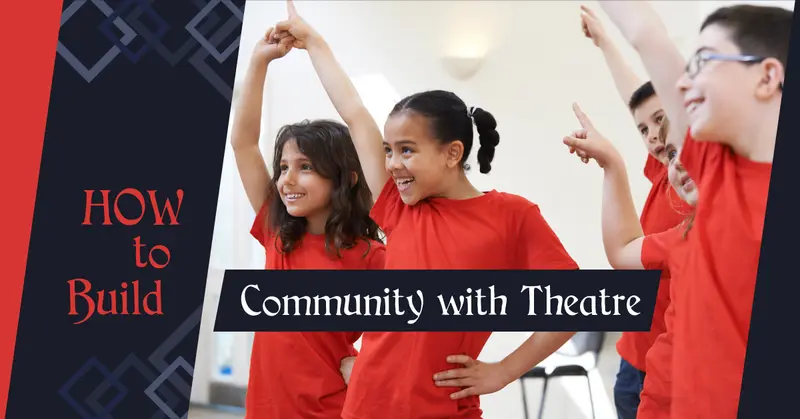
How to Build Community with Theatre
We were lucky enough to speak with two teachers at Northwest Middle School in Flowood, MS – Emily Wright and Genifer Freeman – about how the entire school (even the Principal) got involved in a theatre production. You can hear the entire podcast here. We’ll share with you how they did it, and how successful it was in building a sense of community in their school.
The Summer Reading BookAt Northwest Middle School in 2014, the entire school was assigned the same book for a summer reading assignment: Linda Sue Park’s A Long Walk to Water. The book is about the Sudanese civil war and the need for clean water in that region.
Each student (in the 7th and 8th grades) was responsible for reading the book over the summer break. Every discipline in the school had to incorporate the book some way into their curriculum. While it met with some resistance at first, the school community could hardly have imagined what a huge impact this project would have on both their community and a village in Sudan.
The Play’s the ThingTeacher Emily Wright was thrilled when she found a play called The Walking Boys by Robert McDonough, which was based on the story of Salva Dut from A Long Walk to Water. This play became the theatre program’s focal point to share with the school community at large.
It was a special experience when the show went onstage and Salva’s story really came alive. Teachers often try to get their students to think more globally, but this play gave the opportunity to bring it to life. It tells the story of children journeying through their homeland just trying to find refuge from the civil war. When the student performers realized they were the same age as Salva and these other boys, it really connected with them.
The Choral ConnectionThere was also a special group that helped to bring music to the play. While Emily was working with her theatre students to produce the play, Genifer Freeman, the school’s choral director, found a unique connection with music that would complement the project.
She searched for African-style music, as it was difficult to find text and songs that were written in the Sudanese language. Genifer worked with her newly-formed boys choir to choose a song called Kawouno Wan Gi Pi. It is a song with an African rhythm and a text that helped the students correlate (the song talks about water being thankful). It wasn’t your typical choir at all!
The Non-Theatre StudentsThe choir became the “Lost Boys” within the play. Having this group involved resulted in strong camaraderie among a group of students who came from different walks. There were football player students, really strong academic students, and students who had IEPs. Many students who were just not going to participate in a theatre activity in a traditional way.
They became a band of brothers. Many of them had not even read the text, due to learning difficulties.
The Art, Science, PE, and Math ConnectionsThe school’s art teachers designed beautiful African art to be hung on the wings of the stage, and in the school’s entryways.
The science teachers focused on the clean water project. The math teachers used the text to form equations – for example, the actual footsteps of the walk from their homeland to the refugee camps. The PE classes incorporated the walking part into their curriculum as well. All of these activities allowed students to connect with an event that happened on the other side of the world. It became personable.
The LeaderThe school principal, Mr. Jacob McEwen, was give the role of Salva’s father. He had never been onstage. In fact, he was quite nervous! But he committed to it for the students.
And because of that, he was no longer the principal. He was part of the cast and he got to feel the camaraderie and family connection that comes from being onstage with an ensemble. Everyone was involved in making him feel comfortable.
The Fundraising Tie-InBefore the summer even started, the school established a big fundraising tie-in goal for the end of the following year. The initial goal was to raise $8,000 to build a clean water well.
All the different clubs and organizations at the school did their own fundraising to make their mark and to donate in some way. The school sold tickets to the production. Students filled up water bottles with pennies, held bake sales, sold popcorn, asked for donations from businesses and parents. Little by little, it all added up.
The school ended up raising $17,000 – enough to build two wells and help with other mechanical repairs! It was a huge success.
When students saw this photograph and realized they had actually made their mark, they came to tears. In the photograph, the villagers are standing in front of the well that has the imprint “H2O for Life – Northwest Rankin Middle School” with the year that it was built – it is forever imprinted in that village.
Inspired? Hear the whole story on the Theatrefolk podcast. You might just be the next teacher to spearhead a project like this one at your school!
Classroom Exercise
“Improv Community” Game for Drama Students
This improvisation game is great for students who are brand-new to improvisation. It focuses on students going with the flow and joining in the scene, rather than trying to one-up another and “force the funny.”
One of the most important aspects of improv is the concept of “yes, and…”, which keeps the scene going. Students must accept then build onto their peers’ suggestions. For example: If one student says, “It sure is hot here in Florida!” their scene partner cannot reply with, “What are you talking about? It’s -30 degrees here in Winnipeg.” The scene would be officially dead!
Improv CommunityWith the game “Improv Community,” the focus is on listening and going with the flow. Divide students into groups of 5 to 6. The larger group size encourages more listening and being fully aware of what’s happening.
Assign each group a scene where people would interact a great deal, like a kindergarten classroom, a busy shopping mall, or a fitness centre. One student will start the scene, and then each member of the group will join in. Students don’t have to join the scene alone; they can grab another group member and have them join in at the same time. The trick is that the other students must go along with it!
Example
Let’s use the example of the kindergarten classroom. The scene could start with one student acting as the kindergarten teacher and setting up the room, and the second person to come on might be one of the kindergarten students, dragging their parent (a third student) in to see their classroom. The fourth, fifth, and sixth students might be additional kindergarten pupils, another teacher in the school, a principal, a special guest for show-and-tell… The possibilities are endless!
Students don’t get any time to prepare – since this is improv, all thinking has to be done in the moment. Encourage students not to come up with wild ideas or crazy scenarios. They need to create and commit to a real, honest character, and react appropriately to what’s going on around them.
Most Important Rules
The most important rule of “Improv Community” is that only one actor can speak at a time. That way the scene doesn’t devolve into everyone yelling at or over each other. This teaches students patience and listening skills. They need to work together to make the scene happen, while also listening to each other, so they can figure out when to say what their character wants to say.
The second rule of “Improv Community” is that each participant must speak at least three times during the scene. This will prevent one student from dominating the scene.
Here’s how the kindergarten class scenario might go:
Student #1 (teacher): Good morning Susan! How are you today?
Student #2 (Susan): I’m OK, Mr. Smith. I brought my mom to school today.
Student #1 (Mr. Smith): Hi, Mrs. Jones. What brings you in today?
Student #3 (Mrs. Jones): I wanted to speak with you regarding a problem Susan is having with another child in the classroom.
Student #4 (another parent): Excuse me, Mr. Smith! I need to speak with you. It’s an urgent matter regarding my son Joseph!
Student #1 (Mr. Smith): I’ll be happy to speak with you about your concerns about Joseph, Mr. Gray, once I finish speaking with Mrs. Jones.
Student #2 (Susan): Hi Joseph.
Student #5 (Joseph): Hi Susan. Want to play trucks?
Student #2 (Susan): Sure, as long as I get to be the blue truck.
…and so on, until each student has spoken three times each. Notice that once a character has been established, the student stays as that character. Of course, improv scenes don’t use a script, but this gives you an idea of how the scene might go. It’s simple, straightforward, and that’s all it needs to be.
Acting
The “Show Circle” and Why It’s Awesome
The “show circle” is one of my go-to theatre techniques, no matter whether I’m teaching a drama class or directing a production. Whenever it’s time for class or rehearsal to start, the first words out of my mouth are, “OK everybody, circle up!” I also use this technique to end class or rehearsal.
What is a show circle?It’s as simple as it sounds – everyone in the room comes together in a circle. Sounds simple, right? Depending on the situation, all students can either sit or stand in the show circle, but the key word here is EVERYONE. The show circle brings the full group of students and teacher together as equals in the classroom, with a common goal (a great drama class!) and ready to learn together. Think of King Arthur and his Knights of the Round Table. The show circle encourages a sense of teamwork and camaraderie among the group, and every member of the class is necessary to make the circle truly whole.
The show circle is a fantastic way to create community in the drama classroom.
First, it creates a sense of familiarity. Students know that once the show circle is called, it’s time to begin. By creating this ritual every day with students, they know it’s time to transition into “drama class brain” and start ancticipating the lesson at hand.
Second, it’s a multi-purpose technique. You can use show circles at the beginning of class to:
• Check in with students and see how they’re feeling
• Explain the lesson for the day
• Begin many different warmup or improv games (for brainstorming ideas)
• Create a makeshift “theatre in the round” playing space.
Show circles can also be used at the end of class to:
• Check back in with students and reflect on that day’s lesson
• To assign homework
• To impart any final words of wisdom to the class.
Show circles are especially useful if your students are doing a performance (whether that be in class or as an extracurricular production). Before the performance, gather the full group together. This can be done onstage or backstage. Assemble everyone in a circle. Start with various vocal warmups, like tongue twisters, scales, humming, and sighing. Once students are warmed up vocally, have everyone hold hands, link arms, or stand together shoulder to shoulder so they can be physically linked to each other. Lead the group in a breathing exercise where everyone breathes in together, then out together. Repeat as much as you’d like. Once everyone is breathing together in sync, pump your students up with words of encouragement. Remind them that while they are performing together, they are a team, and they need to think like a team so they can succeed as a team. Your class might have a cheer or chant that they use to get themselves energized for the performance – this is definitely the place to use it!
The most important thing to remember and respect about the show circle is that it’s a place of positivity. Show circles are not the place to critique or give notes – leave that for a different time in the class, or give notes individually or in a rubric. The show circle is a place for raising energy, getting focused, sharing thoughts and feelings, and coming together. Drama classes are very collaborative in nature, so creating a safe space like the show circle (where students can come together as a team) is invaluable.
Acting
Community-Building Warmups for the Drama Classroom
Creating rituals in the drama classroom is a great way to build community and a sense of teamwork – a feeling of “we’re all in this together.” The most easy, basic ritual is starting each class with a group warmup, to get students’ bodies moving and energized after they have been sitting for hours in other classes. The following exercise starts out really simple, then turns the tables on students by having them lead the warmup.
Basic Daily WarmupSometimes a simple warmup can be the most effective. I always start my classes with a body warmup and stretch-out, especially if my students have been sitting down for long periods of time before drama class. This can be as basic as putting on an upbeat song and leading students in warming up their bodies by running in place or doing jumping jacks. Follow this with stretching, starting from the top of the head and neck, then going down to the legs and feet. You can also include a vocal warmup and breathing exercises.
If you are short on time, here’s an easy body-and-voice warmup exercise:
As a group, have students shake the right hand vigorously while counting out loud, backwards from 10. Then shake the left hand and count back, the right foot and count back, and the left foot and count back. Start again with the right hand and count back from 9, and keep repeating the exercise until you get down to 1-1-1-1 (right hand, left hand, right foot, left foot). If you’re extremely short on time, count back from 5 to 1. Guaranteed to get your students warmed up in a jiffy!
You might also start with some games. Here are some great ideas to get you started!
• 3 Fun Physical Warmups
• 5 Collaboration Games for the Drama Classroom
Once students are in the habit of doing a daily warmup, turn the tables on them and try this…
Student-Led WarmupsGet a calendar and assign each student a date where he or she is responsible for leading the class in the warmup routine, exercise, or game. One week before their date, students must submit a planning handout that describes their warmup and how it will benefit the class. Students can create an original warmup exercise or game, or they can adapt a warmup exercise or game that they’ve done in class. If they use an existing exercise, they need to put their own spin on it. Ideas could include “theming” a warmup to an upcoming school event or holiday, or basing their warmup on a topic you’ve been studying in class (Greek playwright tongue-twisters?).
Students don’t need to reinvent the wheel here; the point of the exercise is to practice leadership skills and to think creatively. It also gives each student the chance to lead their classmates and take ownership of their portion of the class. And since everyone in the class gets a chance to lead, it encourages students to support each other. It also gives students the chance to get to know each other better by seeing the different spin that each student puts on their warmup!
Podcast
Theatrefolk Podcast: Middle School Theatre in a Rural Community
Episode 126: Middle School Theatre in a Rural CommunityPatrick Derksen works in a school with 200 students. In total. He’s a grade eight classroom teacher and playwright who decided five years ago to make theatre with his students.
Find out how he does it, why he thinks theatre is important in middle school and his advice for other rural teachers wanting to do the same.


.png)