Facebook Pixel Skip to main content

📣SCRIPT SALE! Treat yourself to an easier Fall. Save 30% on 5+ perusal scripts with code SPRING30 before May 3 and head into summer stress-free.

Cross Curricular

Curriculum Planning: Introductory Skill Building
Teaching Drama

Curriculum Planning: Introductory Skill Building

A well-organized curriculum plan will help you to stay calm, cool, and collected throughout the term, and will allow you to present your lessons confidently. It also helps your beginning drama students ease into the work you’re doing together. Your students who are new to drama will have varying levels of theatre-based knowledge and skill. No matter why students are taking your class, you’ll want to organize your lessons so that each class builds upon skills you’ve already taught, to help them gain confidence and grow. The goal is to provide lessons that will get them to a similar baseline of theatrical awareness and deepen their appreciation of theatre, as well as develop skills such as problem solving, creative and critical thinking, and self-expression. The following drama curriculum suggestions are based on successful introductory performance-based programs that I have run with students ranging from grades 3 to 12. Of course, you know your students best, so adapt as needed to suit their knowledge, skills, and temperaments. 1. Classroom rules and expectationsAlways start each new term with classroom expectations and rules, no matter how new or experienced your students are. What are the rules of the drama classroom, and how might they differ from, say, math or geography class? What routines will be implemented for each class — meaning, how will time be used in the drama classroom? What do you expect from your students, and what can they expect from you? How are they expected to treat one another during drama class? Get all this information out to your students right away, in multiple forms if necessary (paper syllabus, email, posted on Google Classroom or teacher’s website, etc.). You may want to have your students (and parents/guardians, if necessary) sign and return a code of conduct for the drama classroom. Be sure to include all known dates, times, and deadlines for assignments and performances. Boring? It doesn’t have to be. Try playing Act It Out to show students what drama class is all about. You’ll also want to include an introduction or refresher on topics such as check-ins and check-outs, bellwork, and reflections and exit slips if you plan to use them in your classes. 2. Theatre terms, etiquette, and historyTheatre comes with its own vocabulary. What’s the difference between stage right and stage left? Why is upstage both a noun and a verb? What is an ensemble? It will be helpful to create a glossary of theatrical terms for your students to get them all speaking the same theatrical language, so to speak. Theatre etiquette continues on where classroom expectations ended off. How do you expect students to behave while rehearsing versus being an audience member? While building costumes or painting a set? How is it different from classroom expectations and why is this important to know? This is also a good time to include a timeline overview of theatre history topics, such as Greek and Roman theatre, medieval theatre, and renaissance theatre. You can go deeper into topics as you introduce those skills (such as Greek theatre while studying masks) or do a thorough history unit all at once. 3. Non-verbal actingActing requires students to use their bodies, voices, and imaginations, which is a lot of work. Non-verbal acting helps students develop their storytelling and performance skills, practice making clear choices, and gain confidence in a low-stakes environment. Easing students in by focusing on just bodies and imaginations takes a lot of stress off the new drama student. Non-verbal acting also helps students improve their observation skills, as they need to be aware of what’s going on around them. Start by working on these non-verbal exercises that focus on gestures, portraying emotions, and subtext, all without using the voice. Continue with units on mime, tableau, and/or mask work. From there, you could move towards clowning, which can be non-verbal or verbal. 4. Scripted actingBefore introducing scripts, you’ll want to cover topics such as character development, scene analysis, and rehearsal techniques. From there, you can jump into scripts! I usually do two-person scenes first, then move on to small group scenes, as it’s easier to start with one partner before adding in more people. Two-person and group scene work can be a major unit if you want it to be, by rotating group members and presenting a variety of scripted scenes. You could also have students write and present their own scenes. From there, you can work towards monologues. Why group scenes before monologues? It’s super nerve-wracking and vulnerable to perform all by yourself! Once you’ve tackled monologues, you may want to work on audition techniques and have students go through mock auditions, especially if you’re planning a class or school production. 5. Specialty topicsPlaywriting, devised theatre, puppetry, introductory technical theatre (lighting, sound), introductory theatrical design (costumes, props, sets, hair and makeup), musical theatre (singing, dancing), stage management, producing — these are just some of the many exciting topics you can explore with your students. You will not have time to cover all these topics in an introductory course, but that is what upper years and specialty classes are for. If your schedule and budget allows, bringing in guest instructors or holding specialty workshops can really enhance your class work, and potentially pique your students’ interest in studying different areas of theatre in the future. A note on improvisation: “Improv” is an important topic in the drama classroom, but where it fits in the curriculum can vary. Some teachers prefer to teach it after non-verbal acting but before scripted acting, so students can explore thinking on their feet, active listening, and creative expression before focusing on precise script work. Other teachers prefer to teach it after scripted acting, to impress the importance of staying letter-perfect to the written lines and avoiding paraphrasing. As we always say, you know your students best, so schedule your improv classes wherever they best fit in your curriculum to suit their needs. How do you plan your curriculum? We’d love to hear from you. Share with us on our Facebook or Instagram pages!
Setting Up Your Theatre Curriculum
Teaching Drama

Setting Up Your Theatre Curriculum

Curriculum is the cornerstone of your entire teaching foundation. Your curriculum is the roadmap that tells you what, when, why, and how you will teach your students. However, there is no “official” curriculum for theatre, and if you have never set up a curriculum before, it can be daunting. If you’re a new theatre teacher worried about planning your curriculum, here are the steps you will need to take to get your curriculum up and running. Choose SubjectsAs stated above, there is no standard curriculum for theatre. However, there are fundamental ingredients of theatre and drama that should be included in any formal curriculum, including acting, history, and design. In addition, there are other subjects that you could include based on your training and interest as a theatre teacher, like playwriting, directing, and technical theatre. No matter what subjects you choose to include in your curriculum, it’s essential that you are confident in your knowledge of the materials to be covered. The most important rule of building a curriculum is: teach what you know! Do not include a subject you are not prepared to teach. If in the future you decide you want to expand your curriculum, take the classes or do the research necessary to make you “teacher fluent” in a subject before you include it in your curriculum. Choose Your FormatCurriculums are typically built in one of two formats: subject-based or chronological. Subject-based combines units within a subject that are taught under a specific heading. For example, an acting unit can contain lessons on pantomime, improvisation, monologues, and scenes, with the lessons introducing new skills as the days and weeks progress. After the acting unit you can move on to history and cover material from ancient theatre to modern times, and so on. A chronological curriculum would start with the ancient Greeks and cover all aspects of theatre during that time including acting, design, and playwrights of that era. Then you would shift to a different era, such as Roman theatre, and cover the same fundamental building blocks of acting, design, and playwrights. You would continue to move through different eras until you arrived at modern theatre. Both of these curriculums cover the same general information, but they are presented in different ways. Build UnitsOnce you have decided upon the format of your curriculum, you can begin to build the specific units you wish to present. Units form the building blocks of information for each major subject you teach. For example, the acting unit might include subcategories like pantomime, storytelling, improvisation, monologues, and scene work as the building blocks of acting. All of these subcategories fall under the general heading of “acting” so they will be part of your acting unit. Break down the other units in similar ways, choosing the specific topics and subcategories you wish to cover, and then determine the order in which you will present them to your class. Once you have assembled the units you plan to cover, you can begin to write your lesson plans. Write Lesson PlansLesson plans are the essence of teaching in written form. A good lesson plan provides maps, mission statements, launching pads, and a contract between you and your students. Writing lesson plans allows you to map out the content of your classes down to the minute, and track the progress of a classroom full of students towards mastering a subject. When you write a lesson plan, think about the What, Why, and How of the materials you are presenting: • What information do you want students to learn? • Why do they need to learn it? • How will you teach it? Then write your lesson plans in enough detail to execute them exactly as you envisioned. They will not always turn out that way (see below), but the more thought and detail you put into your lesson plans, the better chance they will have for success. If you want more information on how to write lesson plans, check out the Lesson Planning Toolkit. Reflect On Your CurriculumThere is an old military saying that I repurpose for teaching: “No lesson plan survives first contact with the students.” That means that no matter how exciting and well thought out a lesson plan is, it will change once students are involved. Sections will go faster or slower than expected. Student groups will act up unexpectedly. A sure-fire warm-up game will flop. You will learn a lot about a lesson plan the first time you present it to a class, but you won’t have time to think about it, because as soon as one class is over, the next class is already coming through the door! It’s important to set aside a chunk of time each week to reflect on your curriculum and make notes about what went well and what you need to change. If you don’t give yourself the chance to reflect on your curriculum while it’s fresh in your mind, you’ll find yourself making the same mistakes year after year. So give your curriculum the best chance to succeed by taking time to reflect.
Using Plays for Classroom Study
Distance Learning

Using Plays for Classroom Study

During a busy school year, when your theatre program is juggling packed schedules, limited rehearsal time, and competing priorities, putting on a full production might not always be possible. Who has the time when you are balancing lesson planning, rehearsals, admin tasks, and, oh, actually teaching your classes? But if a performance isn’t possible, that doesn’t mean that plays can’t have a place in your program. Scripts are still powerful tools for learning, creativity, and connection in the drama classroom. Scene analysis, character analysis, monologue performance, and cross-curricular connections can all be explored in any classroom setting. Here are some examples for using plays for classroom study. *Close Reading *Close reading is an analysis tool. Students read a text multiple times for in-depth comprehension, striving to understand not only what is being said but how it’s being said and why. Close reading takes a student from story and character to drawing conclusions on author intention. Close reading prompts students to flex their thinking skills by: • Teaching students to engage with a text. • Teaching students to be selective. We can’t highlight everything in the text, only the most important elements. • Teaching students to make educated decisions. All conclusions and opinions must be backed up with a text example. Close reading does not have to be laborious. You can start quite small, for example, with a play title, and have students individually or in groups analyze the what , the how , and the why of the play title. Your virtual students can work together in break out rooms, and your in-person students can work in socially distanced groups. Click the link at the bottom for a Close Reading Title Exercise! You can also close read images. Find a picture of a set from a production of the play you are studying. What is happening in the image? How is it happening (analyze the lighting, whether or not the set is realistic or abstract)? Why have the director and set designer chosen the specific look for the set? Pre/Post Read ExercisesGive students exercises that explore themes and subject matter before they study the play. For example, if a major theme of the play is friendship, have students discuss what it means to be a friend. Have students create friendship scenes (written or performed) that demonstrate the value of friendship. Another option is to give students personality traits of a character (without telling them the specific character) and have them create a physical movement (standing if in person, sitting if virtual). If the play takes place in a specific era or location (e.g., on an army base), have students do some research. What is life like on an army base? Post-read exercises should focus on bringing the play to life. Have students create a costume for a character, or a basic set design (depending on the tools they have available). Have students create a music playlist for a specific character or scene. If the play has monologues, have students choose, rehearse, and present a monologue. If you can have students rehearse scenes in your particular environment, do that. Cross-Curricular ConnectionsRead a play with students and connect it to a subject outside the drama classroom. What you do has always had implications outside of the drama classroom and now is no exception. For example, the play Drum Taps uses Walt Whitman’s poetry and takes place during the civil war. Can you connect virtually with the English or History department? Check out our full list of recommended cross-curricular plays here. Student Assignment: Study Guide for a PlayStudy guides are often prepared by a theatre company before students come to see a production of a play. Have your students demonstrate their knowledge of a play by putting together their own study guide. This is a bigger group project and one that can culminate a unit on a play, particularly if a production or scene presentations aren’t possible. It’s also a project that can be divided up among virtual and in-person students. Each person in a group can be assigned a specific part of the study guide. Start by dividing your students into groups and have each group find a production study guide online. Then have the groups compare and contrast the guides. What are the similarities and differences? As a class, decide on the sections for your study guide and divide the work up among students. Have each group present their guide as a digital presentation. While we don’t have production study guides, we do have some free classroom study play guides designed to challenge students to deepen their understanding and connection to the plays they’re studying. Complete with pre-read questions and activities, close reading analysis, and post-read activities, these comprehensive, easy-to-use study guides allow you to provide an in-depth & theatrical learning experience. Check out our complete list of classroom study guides here. (Plus, keep checking back for more!)
Theatrefolk Featured Play – The Myths at the Edge of the World by Matthew Webster
Featured Plays

Theatrefolk Featured Play – The Myths at the Edge of the World by Matthew Webster

Welcome to our Featured Play Spotlight. The Myths at the Edge of the World by Matthew Webster is a unique cross-curricular storytelling adventure, with excellent opportunities for mask and movement. Four campers are not only lost in the wood, they are lost at the edge of the world with no land, water, stars or sun. The only way to bring life back is to ask the right questions that will release stories from the wind. These stories come from all over: China, Africa, Native lore, and the Aztecs. Do you know the Myth of the Water Dragons? Or The Girl who Scattered the Stars? Perhaps you are at the edge of the world too… Why did we publish this play? How many times have you used Greek myths in your classroom? But what about the myths of other cultures? What about myths closer to home? One of the things that drew me to The Myths at the Edge of the World was that it incorporated stories that I had never heard of. It is a unique cross-curricular storytelling adventure with fantastic opportunities for mask and movement. Let’s hear from the author!1. Why did you write this play? This play was written as a collaborative project between a Theatre professor, a Dance professor and an Art professor. It was our intention to create a project where all three disciplines could contribute to a performance project. We decided that a theatre production would be the best way to weave these art forms together, and hit upon the idea of creation myths as the source material for the project. I then researched the stories and wrote the script. 2. Describe the theme in one or two sentences. A group of campers are lost in the woods. As they wonder out loud how everything around them came to be, the world suddenly disappears. With the help of The Wind, they must unlock stories of creation from around the globe in order to rebuild the world, and find their way home. 3. What’s the most important visual for you in this play? There are a lot of exciting visual possibilities in this play. Each myth presented provides an opportunity to create a unique visual environment, especially when you combine it with the specific cultures presented in the play. 4. If you could give one piece of advice for those producing the play, what would it be? Look for creative ways of telling these stories. Do not think in terms of realistic design when producing this play. Think instead about clever ways to bring the stories to the stage using shadows, puppets, masks and other kinds of fun theatrical magic. 5. Why is this play great for student performers? Besides exposing students to mythology from different parts of the world, this play gives students the opportunity to create characters that are non-realistic and bigger than life!
Theatrefolk’s Top 10: Cross-Curricular Plays
Featured Plays

Theatrefolk’s Top 10: Cross-Curricular Plays

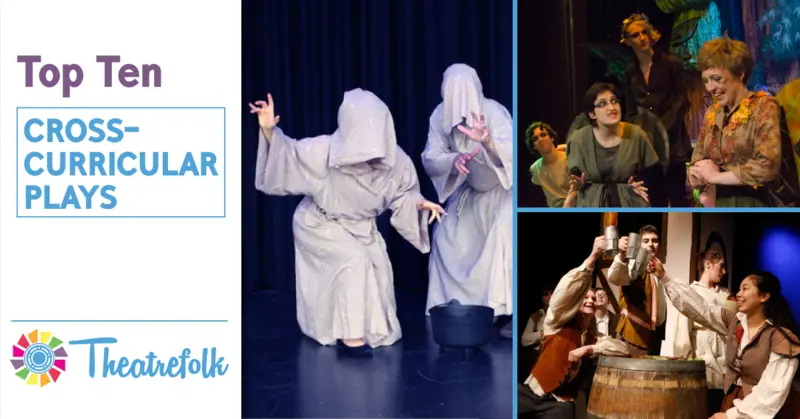
Time for a Tfolk Top Ten Plays For….Cross-curricular. Cross-curricular is a magic word for many admins and quite frankly there’s a good reason for that. Here in the 21st century we no longer live in an isolated world and students shouldn’t be taught in isolation. What we do in the drama classroom has always had implications outside of the drama classroom and it’s time to showcase that connection. If you want students to increase their critical thinking skills, their communication skills, and their collaboration skills, reach out across department lines! You can do plays that will interest your history department, english department, social studies, technology and more. Click the link and you’ll be taken to the webpage for each play. There you’ll get the details and read sample pages. Hand this list over to your student directors and see what they think. All the best with your search!
Global Citizenship: A Cross-Curricular Opportunity
Teaching Drama

Global Citizenship: A Cross-Curricular Opportunity

Here at Theatrefolk, we’re big on cross-curricular opportunities for students. We’ve got lots of cross-curricular plays, as well as exercises for students to try, such as A Picture Tells a Thousand Words, Writing Your Research and Speeches From History. Global citizenship is applicable to so many different subjects. It touches on real-life topics and issues that are current and important to students. As we mentioned in our introductory post about global citizenship, the goal of global citizenship is to celebrate our diverse cultures while encouraging students to take ownership of their voices and use them to make positive changes for the future. Using dramatic techniques and resources taught in the drama classroom helps students make these big topics and issues more manageable and accessible. Read on for some suggestions for including global citizenship-related topics and exercises in your drama classes and rehearsals. Social Studies / Humanities• Research local performance groups from different ethnic or cultural backgrounds and take your students to see them perform. Arrange for performers from these groups to come and teach a workshop for your students in their style of performance. • Research stories/legends/fairy tales from different nations (perhaps from your students’ various cultural backgrounds). Have students summarize the stories and present them in a series of narrated tableau scenes. • Have students create their own myth, legend, or morality tale to teach a lesson about being a positive global citizen. Have students write a scene (or series of scenes) that they could present for students at an elementary school. Science / Environmental Studies• Go green for your next production, and challenge yourself and your students: • To use e-copies of scripts/scores rather than printing out paper copies. • To use and re-purpose only props and costumes that already exist within your stocks or students’ own homes – no new purchases. • To figure out low-energy alternatives for lighting and sound that use reduced electricity – perhaps performing outdoors using natural light, and found objects/foley sound effects/acoustic instruments instead of electronic sound effects. • To produce only e-programs that audience members can read on their phones. • To sell concession items in reusable or recyclable packaging (or, hygiene permitting, without packaging at all) and have appropriate recycling bins available for waste. Politics• Have students research recent a political movement or event (locally, nationally, or globally) and challenge them to create and perform three short scenes: • A dramatic presentation of the event (such as a news report, or a re-creation of the event using mime or tableau), • A scene showing what might happen if the event continues on the way it’s currently going, and • A scene showing what could happen if the event goes in a different way. • Read plays (or scenes from plays) with your students that feature politically-charged or issue-based topics, such as Look Me in the Eye, Power Play, or Virtual Family (all available from Theatrefolk!) Challenge your students to make connections between the issues that arise in these plays and issues that are currently occurring in the real world. What are the similarities and differences? • Brainstorm with your students different ways that drama and theatre can be used to raise awareness and/or money for various issues or specific charities (for example, staging a production of Matilda: The Musical with a portion of the ticket sales going to a charity that promotes children’s literacy, or creating an information packet with resources for mental health and teen suicide prevention to accompany a production of Heathers: The Musical). Your students will have many other ideas for theatrical exercises and activities that promote global citizenship. Encourage them to share their thoughts and ideas on how they can use their voices to create change in their community, and eventually work towards making the world a more equal, fair, and sustainable place.
Using Statistics as Scene Starters
Teaching Drama

Using Statistics as Scene Starters

Looking for a new idea for some scene starters? Why not try using statistics? Using statistics offers a whole host of cross-curricular connections with drama class. Statistics are used in math, history, geography, political studies, sociology, and more. It gives students the chance to think differently about how scenes can be developed, and shows that ideas can come from just about anywhere. Here are two ways you can use statistics as scene starters: Silly Statistics and Serious Statistics. Silly Statistics – An Improv GameUse the Silly Statistics suggestions below as scene starters, or have students brainstorm their own ridiculous statistics. Students will use a statistic selected for them to improvise a debate. • Select two students to perform. One student will take the “pro” or agreeing side, while the other will take the “con” or disagreeing side. • Students will take on the persona of a knowledgeable, pompous debater, whether they are on the “pro” side or the “con” side. It doesn’t matter if they actually know anything about the topic or statistic – their job is to make it seem like they do. • Give the pair a silly statistic to argue. It doesn’t have to be realistic; in fact, it’s usually funnier if it isn’t. For example: “According to a recent study, only 57% of brown cows give chocolate milk.” • Flip a coin to decide which student will go first. • Both students will make an opening statement, introducing their side of the debate on the statistic presented. Going with the example above, the “con” side may say, “I cannot in good faith believe that only 57% of brown cows give chocolate milk. According to my research, this number should be much higher.” The “pro” side might then say, “Of course 57% of brown cows give chocolate milk; in fact, studies show that the darker shade of brown the cow is, the more chocolatey the milk.” • After each student gives their opening statement, they have one minute to improvise their debate. Students don’t have to use the full minute but they will be cut off after the minute is up. Serious Statistics – A PSA ProjectStatistics can be a great way for students to create a PSA (public service announcement) that can be performed in various ways. This exercise could be used as a cross-cultural or cross-curricular project if you wished. Have students select a topic that is important or interesting to them that they could search on their smartphones or classroom computer to find a statistic about. Here are some ideas to get them started: • Literacy • Gender issues • LGBTQ+ issues • Racism • Youth and politics • Issues in other countries • Environment/global warming • Screen time vs. physical activity • Local community concerns From there, students find a statistic on their topic and use it as a jumping-off point for a playwriting exercise They will write a monologue or scene that brings attention to or dramatizes the issue in some way. For example, if a student is interested in literacy, they might use this statistic: “According to First Book Canada, a quarter of Canadian households don’t own a single book.” (Source: https://globalnews.ca/news/3748748/rising-concerns-over-literacy-rates-in-canada/) They might decide to write a monologue about a child who doesn’t own a book, or a scene demonstrating how not owning books can affect a student at school. Your students can take this further and either perform the monologues or scenes as a live performance for their classmates, or create a video that can then be screened for the rest of the class. Students may wish to include different styles of performance within their scenes, such as movement/dance, mime, tableau, or poetry/verse/song.
Pitch Your Project: A Cross-Curricular Performance Challenge
Teaching Drama

Pitch Your Project: A Cross-Curricular Performance Challenge

In a scene from the Broadway production of The Curious Incident of the Dog in the Night-Time, the lead character Christopher explains how he solved a difficult math problem for his A-level exam. But it’s not just an actor standing there talking about the math problem – using dramatic storytelling, sound and lighting effects, video projections, and even confetti cannons, the math problem becomes a thrilling piece of theatre. If only all other school classes could be so exciting! (Just kidding – no offense meant to other classes.) But why not try using theatrical techniques to present material learned from other classes? Students learn in many different ways (for example, visual, auditory, and kinaesthetic learning styles), so presenting a project in an alternate method (besides a standard exam or essay) can be a fun and challenging way of not only sharing what students have learned, but presenting it to others in an informative and entertaining medium. Let’s try, shall we? Here we go… 1. Decide what subject you’d like to share, and narrow your focus.Let’s say that, like Christopher, your students would like to share what they’ve learned in math class. Once students have determined the class, they must narrow down that focus to one small topic. Math is a huge topic – you can’t talk about everything in one piece of theatre. Students should focus on one small aspect, such as the Pythagorean theorem. 2. Decide your method of presentation.How will students present their idea? There are many different theatrical methods they could employ: dramatic storytelling, creating a song or rap about the topic (à la Hamilton or Bloody Bloody Andrew Jackson), writing a scene about what people can use the Pythagorean theorem for, creating a video, presenting an infomercial or documentary- style scene showing Pythagoras coming up with his theorem, creating a dance or movement piece using oversized props – like the “BFF” song from the Spongebob SquarePants musical! If students are having difficulty coming up with a method, suggest that they approach the challenge by having to figure out a way to teach their particular topic to a group of elementary school students. How can they make the topic accessible and entertaining to a young group of students (who presumably have a shorter attention span)? This may help them narrow their scope. Challenge students to think outside the typical exam paper or essay approach, and even be a little silly. Doing a dance about math? Sure, they might feel goofy, but this challenges students to use their brains in a completely different way. 3. Execute the plan.Now that students have their topic and method of presentation chosen, it’s time to map out how they’re going to present their topic. Let’s say they’ve decided to create a dance piece using oversized props. They’ll need to choreograph the dance, design/build/acquire the props (perhaps they’ll create colourful cardboard cutouts of squares and triangles), choose appropriate music, find other students to learn the dance, and teach the dance to their cast. Students will list the steps they need to take, and then do the actual work to plan and prepare their presentation. 4. Present the creation.Once the pieces are complete, students will present them to the rest of the class. For a bigger challenge – invite the teachers from the different classes to watch the presentations. For the biggest challenge – go to the classrooms of the subjects, and present the pieces to those classes (for example, perform the Pythagorean theorem dance for a Grade 9 math class)!
Getting Other Departments Involved in Your Production
Production

Getting Other Departments Involved in Your Production

Creating a theatrical production is a group effort. For every student who appears onstage, there are even more students, staff members, and volunteers who help breathe life into the production. Those people are the unsung heroes – they may only appear to the audience as a name in the program, but their contributions are absolutely invaluable. Without the help of a team, the show doesn’t go on. Other than your own drama students and their parents and friends, what other people can you get involved in your production? Why not leverage the talents of the other teachers and departments within your school? Obviously the course offerings at each school are different. But, no matter what classes your school offers, look for any resources you can. You have an entire building full of people – both staff and students – whose talents could be a massive help to your show. Here are some examples: • English/Language Arts/Journalism: playwriting, dramaturgy, script analysis • Languages (French, Spanish, and so on): accent coaching, translations • Music: musical direction and coaching, participating as the show’s pit band/orchestra, adding a choral ensemble • History: studying the time period of the show’s setting, creating background information packages for the participants, advising on historical accuracy for sets, props, costumes, and character development • Visual Art: design and creation of sets and props, scenic painting, poster and program design • Business: show selection, creating a budget, marketing and publicity, running box office/concessions/front of house • Communication Technology: show photography, headshots, creating video projections or publicity trailers, graphic design, advertising, poster and program design, operating sound and lights • Fashion/Textiles: designing/creating/sewing costumes • Esthetics: hair and makeup • Technology: designing sets • Shop: building sets • Co-operative Education: students could receive hands-on learning about many different aspects of putting on a show, depending on the aim of their co-op placement • Volunteer Hours Requirements: some schools require their students to complete a certain amount of volunteer hours to obtain their high school diplomas. The drama teacher could sign off on volunteer hours amassed doing work on a theatrical production. I’m sure there are lots of other ideas that your students could come up with! As a class, brainstorm how different school departments could get involved with the show. Then, create an “ask” letter on how to approach them. Consider the following: • What department are you approaching? • What area do you want them to assist with? • What specific tasks do you want them to complete? • When do you need the tasks completed by? • What are the benefits to the department and/or students for participating? • How can you make this project useful/helpful for them? (Meaning – what’s in it for them?) Here’s a sample letter:Dear Ms. Jenson, We wanted to reach out to you to ask if some members of your Grade 10 Communications class would be interested in assisting our Grade 10 drama class in creating the playbill for our upcoming showcase performance. We are looking for a four-page colour program that includes our poster on the cover, a director’s note, the full cast and crew listing, as well as some performance photos. We would provide you with all the necessary information by March 30, and would need the final draft by April 22. We think this would be a great opportunity for your students to practice their skills using Photoshop and Microsoft Publisher. Perhaps you would consider this project for extra credit towards your class. We have seen examples of the work that your students produce and know they would be able to create a program that looks polished and professional. As well, we would be happy to give the students complimentary tickets to any of our performances (April 30-May 2). If you have any questions or concerns, please don’t hesitate to ask. Sincerely, John McMannis & Chelsea Swinton (Mr. Connor’s Grade 10 Drama class)
Using Drama in Other Classes
Teaching Drama

Using Drama in Other Classes

“Cross-curricular” is a huge buzz word. We’ve talked previously about how you can explore other subjects through drama, but what about drama in other classes? We recorded a podcast with two Theatrefolk playwrights who are also teachers: Taryn Templeuses drama in her Spanish classes and Amanda Murray Cutalo uses drama in her English classes. Both believe in the power of theatre for their students. How do they use drama in their classrooms? Use Stories to Teach LanguageTaryn teaches Spanish through stories, because she has found that students are much more likely to remember something if it’s in story form. For example, if a teacher was trying to teach the words “green” and “hippopotamus,” students might remember them. But, if the teacher told her class that there was a green hippopotamus dancing on a coffee table, the students get a more concrete image in their minds. As a further extension, the teacher can ask questions like, “What color is the hippopotamus? Where is the hippopotamus? What is it doing?” And all of this is done in the target language. The teacher is actually using the target language both to tell stories and to ask questions about them. Use Creativity to Teach LanguageOnce students are comfortable with the idea of storytelling to learn a new language, the students begin creating their own stories. They use costumes and props to build their language skills in a fun, engaging way as they perform the stories they’ve created. Use Performance to Teach VocabularyStudents demonstrate understanding of new vocabulary through short performances. For example, when Amanda’s class is learning new vocabulary words in her English class, she will introduce and go over the words, then give the students a situation. They have to write and perform a skit where they use as many words as possible in the correct way. Use Improv to Teach Novel StudyYou can grab any scene or storyline from a novel, and turn it into an improv activity. For example, in studying The Scarlet Letter, Amanda’s class had to improvise a puritan meeting where they’re deciding the fate of Hester Prynne. Another way to use improv is by having students write alternative scenes to plays that are studied – like The Crucible or A Streetcar Named Desire – and improvise these scenes. Use Acting to Build ComprehensionA cross-curricular approach can be much more kinesthetic. When students get up and actually perform a character, they are able to remember it more. They engage in and remember activities where they were completely immersed in the world that the author has created. *Click here to listen to the full podcast conversation with Taryn and Amanda. *
A Picture Tells a Thousand Words: Cross-Curricular Drama Classroom Project
Teaching Drama

A Picture Tells a Thousand Words: Cross-Curricular Drama Classroom Project

The phrase “a picture tells a thousand words” is pretty well-worn, yet the concept has proven true time and time again. Look at any picture that captures a moment in action – the words needed to explain it could go on for days. Some pictures hold many stories. Three children sit in front of a pile of rubble. Who are they? Are they related? Where are their parents? What was the building before it was destroyed? What are they looking at? What happens next? This concept makes pictures an excellent jumping off point for a cross-curricular drama classroom project. Cross-Curricular Project: History Comes to LifeObjective: To apply dramatic techniques to a moment in history Description: Students will work in groups to create a short scene. The jumping off point for the scene will be a photo that shows an unexpected moment in history. Materials: Students will need access to the internet to find photos on their own, or you will have to find a variety of photos and present them to the class. Instructions: 1. Divide Students into Groups Depending on your class size, keep the groups small (3-4 people). 2. Choose a Picture You can either have students choose their own photo or (if they aren’t allowed internet access) you’ll have to choose pictures for them and print them off. The requirement for the picture is that it has to take place during a historical event (a war, an invention, a significant era like the Depression, a significant person like a world leader). A few interesting sites that showcase unique historical pictures: - 40 Must See Historic Moments - 40 Rare Historical Photos 3. Brainstorm on the Picture Have each group write down their impressions, ideas, comments, and questions about their chosen picture. Remind students not to think ahead to the final project just yet. Focus on responding to the picture. Also, reject nothing. Accept everyone’s thoughts on the picture and write them down. Brainstorming sessions go awry when students start to censor or judge ideas as they come in. The best method is to write everything down without judgement. 4. Write an Inner Monologue Before they start working on their scene, give students a short monologue exercise. Have them choose a person in the photo, or (if there are no people) choose the photographer. Write a short, half-page inner monologue. What is this person thinking in this moment? What do they see? Who could they be talking to in their mind (a parent who’s not there, a loved one, an enemy, another person in the picture)? It’s always better when a monologue has a listener, even if that listener can’t hear what’s going on inside a character’s head! This is an individual exercise. Once completed, have students share their monologues in their groups. 5. Decide the WHO, WHAT, and WHERE Now that groups have a picture, brainstorm suggestions and a number of monologues. The first step in creating the scene is to come up with the who, what, and where. The criteria is as follows: • Decide the WHO. Who are the characters in the scene? • Everyone in the group has to be in the scene. • The characters in the scene could be from the picture, but they don’t have to be. They could be watching the scene from behind “the photographer.” • Identify the WHAT. What is happening in the scene? Remind students that they are illuminating the picture. What are the words that bring the picture to life? • Identify the WHERE. Where does the scene take place? It might not be clear in the picture. Make sure the scene has a specific WHERE. 6. Write the Scene Have students work together to write a 1-2 minute scene based on their WHO, WHAT, and WHERE. Students might need to do some additional research if the historical moment is unfamiliar to them. 7. Rehearse Give students time to rehearse. Depending on the length of the project, this could simply be a well prepared staged reading, or it could be a memorized and assessed performance. 8. Perform After each group performs their scene, show the rest of the class the picture they used. Ask students what they see in the picture and how the scene illuminated the historical moment.
How to Build Community with Theatre
Production

How to Build Community with Theatre

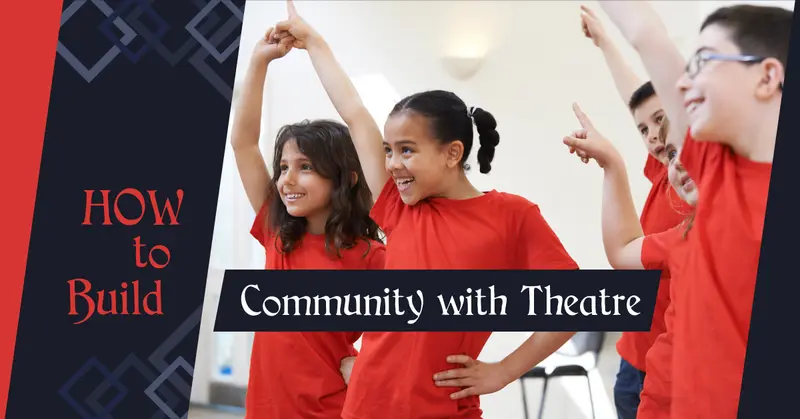
We were lucky enough to speak with two teachers at Northwest Middle School in Flowood, MS – Emily Wright and Genifer Freeman – about how the entire school (even the Principal) got involved in a theatre production. You can hear the entire podcast here. We’ll share with you how they did it, and how successful it was in building a sense of community in their school. The Summer Reading BookAt Northwest Middle School in 2014, the entire school was assigned the same book for a summer reading assignment: Linda Sue Park’s A Long Walk to Water. The book is about the Sudanese civil war and the need for clean water in that region. Each student (in the 7th and 8th grades) was responsible for reading the book over the summer break. Every discipline in the school had to incorporate the book some way into their curriculum. While it met with some resistance at first, the school community could hardly have imagined what a huge impact this project would have on both their community and a village in Sudan. The Play’s the ThingTeacher Emily Wright was thrilled when she found a play called The Walking Boys by Robert McDonough, which was based on the story of Salva Dut from A Long Walk to Water. This play became the theatre program’s focal point to share with the school community at large. It was a special experience when the show went onstage and Salva’s story really came alive. Teachers often try to get their students to think more globally, but this play gave the opportunity to bring it to life. It tells the story of children journeying through their homeland just trying to find refuge from the civil war. When the student performers realized they were the same age as Salva and these other boys, it really connected with them. The Choral ConnectionThere was also a special group that helped to bring music to the play. While Emily was working with her theatre students to produce the play, Genifer Freeman, the school’s choral director, found a unique connection with music that would complement the project. She searched for African-style music, as it was difficult to find text and songs that were written in the Sudanese language. Genifer worked with her newly-formed boys choir to choose a song called Kawouno Wan Gi Pi. It is a song with an African rhythm and a text that helped the students correlate (the song talks about water being thankful). It wasn’t your typical choir at all! The Non-Theatre StudentsThe choir became the “Lost Boys” within the play. Having this group involved resulted in strong camaraderie among a group of students who came from different walks. There were football player students, really strong academic students, and students who had IEPs. Many students who were just not going to participate in a theatre activity in a traditional way. They became a band of brothers. Many of them had not even read the text, due to learning difficulties. The Art, Science, PE, and Math ConnectionsThe school’s art teachers designed beautiful African art to be hung on the wings of the stage, and in the school’s entryways. The science teachers focused on the clean water project. The math teachers used the text to form equations – for example, the actual footsteps of the walk from their homeland to the refugee camps. The PE classes incorporated the walking part into their curriculum as well. All of these activities allowed students to connect with an event that happened on the other side of the world. It became personable. The LeaderThe school principal, Mr. Jacob McEwen, was give the role of Salva’s father. He had never been onstage. In fact, he was quite nervous! But he committed to it for the students. And because of that, he was no longer the principal. He was part of the cast and he got to feel the camaraderie and family connection that comes from being onstage with an ensemble. Everyone was involved in making him feel comfortable. The Fundraising Tie-InBefore the summer even started, the school established a big fundraising tie-in goal for the end of the following year. The initial goal was to raise $8,000 to build a clean water well. All the different clubs and organizations at the school did their own fundraising to make their mark and to donate in some way. The school sold tickets to the production. Students filled up water bottles with pennies, held bake sales, sold popcorn, asked for donations from businesses and parents. Little by little, it all added up. The school ended up raising $17,000 – enough to build two wells and help with other mechanical repairs! It was a huge success. When students saw this photograph and realized they had actually made their mark, they came to tears. In the photograph, the villagers are standing in front of the well that has the imprint “H2O for Life – Northwest Rankin Middle School” with the year that it was built – it is forever imprinted in that village. Inspired? Hear the whole story on the Theatrefolk podcast. You might just be the next teacher to spearhead a project like this one at your school!
Writing Your Research: A Cross-Curricular Exercise
Classroom Exercise

Writing Your Research: A Cross-Curricular Exercise

Cross-curricular projects are awesome in theory, especially in the drama classroom. They are a great way to demonstrate comprehension by taking information in one form and applying it to another. Such projects don’t always work in practice. Information does not always translate well into theatre. It’s not dramatic to have characters recite facts and statistics in a stiff way. “Oh dear brother, this is 1941. We would never wear such stockings. There’s a war on, you know!” No one talks this way. It takes work and skill to turn information into a play. Bottom line, the final product is a piece of theatre – be it a monologue, a scene, or a full play. The final product is not a textbook or an informational brochure. However you approach the work, theatre has to come first. How do you do this? Here’s how you can ease the transition from information to drama. Focus on CharacterFind the characters at the heart of your topic. Determine how they feel. Audiences don’t connect to buildings, locations, facts, or events. But a natural connection emerges when a character is having an emotional reaction. An audience doesn’t have to live through or experience the topic personally to connect to a character’s emotions. Don’t get Overwhelmed by ResearchIt is so easy to become overwhelmed by the amount of information surrounding a topic.You know all these details and want to include as much as possible because you think you’re doing the topic a disservice otherwise. Sometimes it’s better to put research to the side and let the facts come to the surface as they may. Particularly during the writing process. Don’t worry if you get things wrong initially, that’s what rewrites are for. Read the information, digest it, and then put it to the side while you write. This way you have a better chance of keeping the focus on the play rather than the research. Show, Don’t Tell Your StoryThat is the number one rule of playwriting. Show don’t tell. We don’t want to hear about the great fire of 1939, you have to find a way to show the fire. We don’t want to hear a narrator telling us something, we want to see a character reacting to a situation. Create images with your information. Audiences do not connect with facts and events, audiences connect to characters within those facts and events. ExerciseUse this practice exercise to get students accustomed to focusing on character and leaving facts to the side. Materials needed • Omaha Beach Info Sheet (download the sheet below!) • Pen/Paper Instructions • Hand out the info sheet on the WWII D-Day Invasion at Omaha Beach. • Direct students they have one minute to study the sheet. • At the one minute mark, direct students to turn the sheet over. They are not going to refer to the sheet while they write. • Direct students that they will write a monologue inspired by Omaha Beach. • At the top of the page direct students to write down the following: • The character in the monologue • Who is character talking to? • The location. • Students write the monologue. Remind them they can’t refer back to the sheet, and they’re just to let whatever information they remember come out in the writing. Also remind students to focus on bringing the character and the character’s emotions to life. • Students share their monologues.
Plays and the Common Core – a Perfect Fit
Teaching Drama

Plays and the Common Core – a Perfect Fit

In an age of seemingly endless assessments of our students’ ability to critically read and analyze literature, there is a dire need for them to experience a variety of texts in a variety of formats in order for educators to better train them to get at the heart of what a writer is doing. Because of this, dramatic works fit perfectly into any curriculum attempting to tie the Common Core standards to what the students, at the end of the day, know and are able to do. Of course, dramatic works are already mentioned in the Common Core as one genre with which our students should be interacting. But educators don’t always see them in the same light as more traditionally taught formats, like novels. It’s true that plays generally offer less student face-time with words than novels. However, they offer much more in the way of student engagement, unlike any other text-based medium. This significantly increases the likelihood of success in teaching them to see the literary techniques and authorial tricks-of-the-trade that the Common Core requires. “It’s one thing to read about something; it’s an entirely different thing to perform it.” The act of reading aloud, hearing the words, and portraying the ideas on the page makes clear what mere words cannot. It’s one thing to read about something; it’s an entirely different thing to perform it. Tone, theme, mood, inference, denotation/connotation, language use, structure, plot—all of this is present in plays and, to be sure, more easily seen by a “reader” because it’s literally seen by the reader. With our school’s work with my play Stereotype High, we hit every single one of these elements during our production. We had on-going discussions about theme, character motivations, word choice, the interrelatedness of the scenes, allusions to other works, teen language, and any number of other text specific issues wherein understanding the work was at the core of the discussion. As much as Stereotype High created multiple opportunities for students to explore all the standards of the Common Core, it’s not something specific to that particular play – it’s impossible to perform the words without interpreting them (and the characters saying them). And this is exactly why plays are a perfect fit with the Common Core. With regard to the general reading of dramatic works in the classroom, the following Common Core standards apply (grade nine standards, although there is little difference between these standards and the ones two grade levels above and below): Reading: Literary TextCCSS.ELA-LITERACY.RL.9-10.1 Cite strong and thorough textual evidence to support analysis of what the text says explicitly, as well as inferences drawn from the text. CCSS.ELA-LITERACY.RL.9-10.2 Determine the theme or central idea of a text and analyze in detail its development over the course of the text, including how it emerges and is shaped or refined by specific details; provide an objective summary of the text. CCSS.ELA-LITERACY.RL.9-10.3 Analyze how complex characters (e.g., those with multiple or conflicting motivations) develop over the course of a text, interact with other characters, and advance the plot or develop the theme. CCSS.ELA-LITERACY.RL.9-10.4 Determine the meaning of words and phrases as they are used in the text, including figurative and connotative meanings; analyze the cumulative impact of specific word choices on meaning and tone (e.g., how the language evokes a sense of time and place; how it sets a formal or informal tone). CCSS.ELA-LITERACY.RL.9-10.5 Analyze how an author’s choices concerning how to structure a text, order events within it (e.g., parallel plots), and manipulate time (e.g., pacing, flashbacks) create such effects as mystery, tension, or surprise. * CCSS.ELA-LITERACY.RL.9-10.7 * Analyze the representation of a subject or a key scene in two different artistic mediums, including what is emphasized or absent in each treatment. * CCSS.ELA-LITERACY.RL.9-10.9 * Analyze how an author draws on and transforms source material in a specific work (e.g., how Shakespeare treats a theme or topic from Ovid or the Bible or how a later author draws on a play by Shakespeare). **These two are of particular importance as, since most teachers are already incorporating Shakespeare and Greek drama into their classrooms, these standards completely apply to modern adaptations.* WritingUnlike most classical prose, plays inspire students to write plays. They’re shorter, more accessible, and tap into their authentic language so much more directly than any sort of prose can. CCSS.ELA-LITERACY.W.9-10.3 Write narratives to develop real or imagined experiences or events using effective techniques, well-chosen details, and well-structured event sequences. CCSS.ELA-LITERACY.W.9-10.3.A Engage and orient the reader by setting out a problem, situation, or observation, establishing one or multiple point(s) of view, and introducing a narrator and/or characters; create a smooth progression of experiences or events. CCSS.ELA-LITERACY.W.9-10.3.B Use narrative techniques, such as dialogue, pacing, description, reflection, and multiple plot lines, to develop experiences, events, and/or characters. CCSS.ELA-LITERACY.W.9-10.3.C Use a variety of techniques to sequence events so that they build on one another to create a coherent whole. CCSS.ELA-LITERACY.W.9-10.3.D Use precise words and phrases, telling details, and sensory language to convey a vivid picture of the experiences, events, setting, and/or characters. CCSS.ELA-LITERACY.W.9-10.3.E Provide a conclusion that follows from and reflects on what is experienced, observed, or resolved over the course of the narrative. LanguageUnlike the printed word, plays provide a spoken tone (and, possibly, a physical action) to a word that may further help a student understand new language. CCSS.ELA-LITERACY.L.9-10.4 Determine or clarify the meaning of unknown and multiple-meaning words and phrases based on grades 9-10 reading and content, choosing flexibly from a range of strategies. CCSS.ELA-LITERACY.L.9-10.4.A Use context (e.g., the overall meaning of a sentence, paragraph, or text; a word’s position or function in a sentence) as a clue to the meaning of a word or phrase. CCSS.ELA-LITERACY.L.9-10.4.B Identify and correctly use patterns of word changes that indicate different meanings or parts of speech (e.g., analyze, analysis, analytical; advocate, advocacy). CCSS.ELA-LITERACY.L.9-10.4.C Consult general and specialized reference materials (e.g., dictionaries, glossaries, thesauruses), both print and digital, to find the pronunciation of a word or to determine or clarify its precise meaning, its part of speech, or its etymology. CCSS.ELA-LITERACY.L.9-10.4.D Verify the preliminary determination of the meaning of a word or phrase (e.g., by checking the inferred meaning in context or in a dictionary). CCSS.ELA-LITERACY.L.9-10.5 Demonstrate understanding of figurative language, word relationships, and nuances in word meanings. CCSS.ELA-LITERACY.L.9-10.5.A Interpret figures of speech (e.g., euphemism, oxymoron) in context and analyze their role in the text. CCSS.ELA-LITERACY.L.9-10.5.B Analyze nuances in the meaning of words with similar denotations.
Teach any Lesson Through Drama
Teaching Drama

Teach any Lesson Through Drama

I was one of those math and science kids. But I also loved drama. I started university as a computer science student but left with a degree in theatre. I enjoyed studying calculus, chemistry, physics, etc. But when I think of the atom, when I think of all the lectures I sat through, the drawings, the protons, the neutrons, the electrons, the periodic table and so on, the clearest picture in my mind is still Venus Flytrap’s explanation on the TV show WKRP in Cincinnati. WKRP in Cincinnati, for the uninitiated, was my favourite sitcom. On this particular episode, one of the DJ’s (Venus Flytrap) befriended a cleaning woman at the station. Her son was getting involved with gangs and she asked Venus for help to straighten her son out. Here’s the resulting scene:
Speeches from History – A Cross-Curricular Unit
Teaching Drama

Speeches from History – A Cross-Curricular Unit

Here’s a unit you can use that combines technology, drama, and cross-curricular learning. Talk about a multi-purpose activity! Since the unit involves speeches, it’s probably best-suited to complement history and political science classes. However, there are also some excellent science- and technology-related speeches out there. A link to these can be found in the “More Speeches” resource at the end of this article. Choose a speechChoose a speech (or an excerpt) that is approximately one to two minutes long. Here are some speeches that stood out to me: • Amelia Earhart on Women in Flight • Jane Goodall on chimpanzee aggression • Louis Beats Schmeling • Harold Lloyd on Slapstick Comedy • Eyewitness Account of Hindenburg Disaster • Ronald Reagan on the Challenger Disaster These can all be found on history.com’s Famous Speeches in History website, which has dozens of audio clips for you to use. Feel free to use any other recording that might suit your specific needs better. Other sources for speeches can be found at the end of this article. Transcribe the speechType out a word-for-word transcription of the text of the speech. Do this task even if a transcription already exists. This step will help you get very familiar with the original recording of the speech, which will help you with the later steps. VocabularyAre there any words or phrases in the speech you’re unfamiliar with? Are there any words or phrases in the speech that seem outdated? What words would you change if you were writing this speech for yourself? ReflectionWhat’s your first impression of this speech? Think like a playwrightImagine that the speech is from a play and the text you’ve just transcribed is part of the script of the play. Re-listen to the speech. Note things like pauses and changes in tone. Update your script to include these changes. ReflectionIf you were the playwright, how would write the speech differently? Think like an actorImagine that the recording you’re working on wasn’t spoken by a real person. Imagine instead that the recording was delivered by an actor playing the role of that person. Reverse-engineer the actor’s performance. Note any beats, pauses, non-verbal sounds, and stumbles that the actor made in the performance. Mark up the script as you think the actor would have marked it up. Click here for information on how to mark up a script as an actor. Spend a few minutes researching the speaker, their era, and the events that lead up to the speech. Complete a character profile for the speaker. Click here for sample questions that can be used to help complete a character profile. Look at the places in the speech where the speaker stumbles, pauses, or makes non-verbal sounds. Decide for yourself why those anomalies are there. Are they on purpose, for dramatic effect? Are they there because the speaker is thinking about or struggling with what they will say next? Is the speaker distracted by something? ReflectionWhat parts of the research did you struggle with? How do actors fill in missing details when they prepare to portray a character? Be the actorYou are now going to learn, stage, and perform the speech. Here are some questions you, the actor, should consider when preparing the speech: • Who is the character speaking to? • Why is it important for the character to speak? • What is the character trying to achieve as a result of giving this speech? Stage the speech. Is the character sitting? Standing? Are they speaking to one person? A crowd? Give the character one significant blocking movement during the speech. For example, if they’re sitting at the beginning, have them stand at a significant moment in the text. Perform the speech with your blocking. Think about the tone, accent, pace, pauses, and non-verbal sounds that are present in the original recording. ReflectionIf you were the original speaker, how would you perform the speech differently? Would you be more passionate? More reserved? Would you speak more quickly or slower? Would the words come easy to you or would you struggle? If you were the director, what adjustments would you suggest to the original speaker to improve their delivery? Add some contextIt’s time to put your playwright’s hat back on. Imagine this speech is in a play and the speaker is the lead character. Write a brief outline of this play, placing the speech somewhere in the middle. What events lead up to the monologue? What events follow it? Describe three scenes from the play in more detail: • The scene that takes place before the speech. • The scene in which the speech takes place. • The scene that happens after the speech takes place. Describe three other characters in the play, at least one of whom is present for the speech. How do they relate to the lead character? How do they influence the lead character? How are they influenced by the lead character? Reflection Which role would you rather have in this play? Do you want to play the lead character or one of the other three you have invented? Final Reflection• How are real life events and theatre related? • How are they different? • Do you think speeches are a form of theatre? Why or why not? • What is the greatest speech you ever heard? What made it great? ModificationIt isn’t necessary to do this unit in conjunction with audio recordings. You can easily modify the unit to use just the text of a speech by skipping the transcription and “reverse-engineering” steps. More SpeechesHere are some excellent sources of speech texts: 25 Speeches that changed the world The 10 Greatest Speeches American Rhetoric – Top 100 Speeches (also has recordings of many of them) The History Place Great Speeches Collection Wikipedia’s list of speeches (most have click-through links to the text of the speech) 65 Groundbreaking Science Speeches (includes video) 40 Speeches on Technology (includes video) Great Speeches in History Podcast (updated very infrequently) This one is really neat – it’s a collection of speeches that were written but never delivered. Ted Talks – Probably the best source of speeches if you’re looking for tie-ins to current events and technology
Classroom Exercise: Verbatim Theatre
Classroom Exercise

Classroom Exercise: Verbatim Theatre

If you’re looking for a great cross-curricular activity for your drama classroom, delve into verbatim theatre. Verbatim: in exactly the same words, word for word Verbatim theatre uses a process in which a playwright interviews subjects on a particular topic or issue, records the responses, then uses those words exactly as they are — no changes. There are some challenges to this type of project: How do you construct a theatrical experience with this material? You can’t change things around to make them more dramatic. You’re bringing real people, speaking their own thoughts, to life. Why verbatim theatre?• This process is often used to share a specific story or event. It's ideal for exploring cross-curricular topics. • Verbatim theatre gives voice to people who would not normally have a platform. • The process creates dialogue in a way that most playwrights have to manufacture otherwise. The subjects speak naturally, so their dialogue includes all the ums, pauses, slang, regionalisms, repeated words, and other speech mannerisms that happen in conversation. • It’s a tool to study the physicality of a specific person or group of people. How do you imitate the gestures, physical stance, and expressions of someone else? Verbatim theatre is a great way for students to work on creating a physical character and hear/analyze natural dialogue. Examples of verbatim theatre• The Laramie Project - Moises Kaufman and the members of the Tectonic Theatre Project interviewed people in Laramie, Wyoming after the murder of Matthew Shepard. • Aftershocks by Paul Brown - This play is based on interviews of survivors of an earthquake and the effect of the disaster. • Twilight: Los Angeles, 1992 by Anna Deavere Smith - Based on interviews about the effects of the Rodney King trial and verdict. What’s the process?• Choose a topic or event as the source. • Find interview subjects. • Subjects must be real people speaking in their real voice. • The interviews must be recorded so that you can transcribe the text exactly. • When you perform the text, speaking verbatim is key. You’re bringing someone else to life through this process and it’s important to convey their thoughts and words exactly. How can I use this?• Choose a topic and have students interview each other. • Example: Students share with each other their opinions and stories about bullying. • Choose a specific question/story topic and everyone in the class has to find an interview subject. • Example: Interview a parent, uncle/aunt, or grandparent and ask the question, “What was high school like for you?” Adapting the processVerbatim theatre is widely thought of as an oral process: Subjects are interviewed and their words are used as text for a play. It makes sense; you’re going from one oral form to another. But when you’re using such a process in the classroom, you’re limited to events and topics that exist in the immediate world of your school, your students, and your community. Everything depends on who your students can find to interview. When you’re looking for cross-curricular activities, the immediate world can be limiting. Here are some suggestions to expand the concept of verbatim theatre and make it more flexible for a cross-curricular project using YouTube: • Explore a moment in history that has been recorded. • Example: The first nationalized television debate between Nixon and John F Kennedy. • Explore a moment in current events by taking different clips of the same individual talking about a specific event. • Example: Toronto Mayor Rob Ford accused of various activities caught on video. • Example: New Jersey Governor Chris Christie has been accused of holding back Hurricane Sandy funding. Research videos of him talking back in October about the hurricane and what he says now about the accusations. • Choose a specific topic and find YouTube clips that show a real person speaking on that subject. • Example: Marion Jones denying/admitting to using steroids. * * *