Facebook Pixel Skip to main content

📣SCRIPT SALE! Treat yourself to an easier Fall. Save 30% on 5+ perusal scripts with code SPRING30 before May 3 and head into summer stress-free.

Drama Classroom

Starting Fresh: How to Bring New Energy and Inspiration to Your Drama Classroom After the Holidays
Teaching Drama

Starting Fresh: How to Bring New Energy and Inspiration to Your Drama Classroom After the Holidays

The break is over. The decorations are packed away, your coffee mug has been upgraded to “extra large,” and it’s time to head back to the classroom. The post-holiday return can feel like a tough act to follow, both for teachers and students, but it’s also the perfect opportunity for a creative reset. Here’s how to start your new semester with renewed energy, enthusiasm, and inspiration. 1. Reflect before you reboot.Before diving into lesson plans, take a moment to look back. What went well last semester? What challenges popped up? Jot down some quick notes for yourself. If you can, remember to ask students to reflect at the end of each semester on what stood out, what confused them, what they would love to learn more about, and what unit they never want to repeat! All of this can help you refocus your goals and move forward. Try this: For a start-of-the-semester reflection, have students write one “Act I highlight” (something they loved or learned in a previous semester or drama class) and one “Act II goal” (something they want to achieve this semester). Additional Reading: The Reflection Collection: A Round-Up 2. Lead with a low-stress, high-fun activity.Ease everyone back in with an activity that sparks energy without overwhelming anyone’s post-break brain. Think short, creative, and collaborative. For example: * Big Tiny Twisted: A collaboration game. * Prompt Improvs: Put together a list of unique prompts and have students improv scenes. * Holiday Highlight Improv: Students act out exaggerated (and likely hilarious) versions of their holiday experiences. Additional Reading: 10 Low- or No-Prep Theatre Exercises 3. Reconnect the ensemble.After a few weeks apart, it’s natural for your ensemble dynamic to need a tune-up. Spend the first few classes rebuilding trust, laughter, and connection. Try this Ensemble exercise: The Ensemble Monologue. Additional Reading: 5 Tongue Twister Exercises for Ensemble-Building 4. Set new (attainable) goals.New Year, new semester, new opportunities! Invite your students to set personal and class-wide goals for the coming months. These could be performance-based (“I want to project better”) or teamwork-focused (“I want to help my classmates more”). Set your own teacher goals too. Maybe it’s integrating more student-led activities, exploring a new script, or simply remembering to breathe during tech week. Additional Reading: Student Goal Setting Exercise: The Wish Jar Drama Teachers: What’s Your Goal? 5. Try something new.Add a spark by introducing something fresh into your curriculum. It could be a new warm-up, a short play, a themed mini-unit, or a creative classroom project. Need inspiration? Search our Theatrefolk Learning Centre for ready-to-use ideas, activities, and classroom resources to make planning easy. Additional Reading: Drama Class Projects Using Plays for Classroom Study 6. Pace yourself (and your students).The temptation to jump right back into full gear is real, but remember: Students (and teachers!) are still adjusting after the break. Keep the first week light, reestablish routines, and let creativity grow naturally. A calm, confident approach sets the tone for the entire semester. Additional Reading: How do I Determine the Right Pacing for Units? Developing Classroom Routines and Systems Final BowThe start of a new year isn’t about reinventing everything; it’s about rekindling the spark that makes your classroom come alive. With a few intentional choices, you can turn that post-break slump into a standing ovation. Here’s to a semester full of laughter, learning, and theatre magic. You’ve got this! Looking for fresh classroom ideas? Explore our free resources, activities, and play recommendations at theatrefolk.com, and be sure to sign up for our drama teacher resource newsletter - everything you need to start your drama year strong!
Supplies and Equipment Every Drama Classroom Needs
Classroom Management

Supplies and Equipment Every Drama Classroom Needs

Drama classrooms come in a huge variety of sizes and styles. You may have a fabulous auditorium with a giant storage closet, a dedicated drama classroom, a shared space, or you may not have a classroom at all (hello, rolling supply cart!). No matter what type of space you have, you’ll need some essential supplies and equipment for your classroom. The items below are what we consider “drama classroom must-haves.” This article focuses specifically on supplies for the needs of the basic drama classroom, so you won’t see items like a lighting board or microphones. Those items are fabulous and necessary for productions, but here we’re talking about the day-to-day needs. It’s definitely possible to create beautiful theatrical pieces with an empty stage space and your students’ creativity, but the essential items below will make things easier: • As many pencils with erasers as you can get your hands on. Pencils, not pens — students need to be able to erase their script notes in the drama classroom. For bonus points, choose pencils with unique designs on them or put a bit of colourful tape or a dab of colourful nail polish on them, so they’re identified as classroom pencils and you’ll be more likely to get them back. • Highlighters, similarly labeled as your pencils. • Sticky notes in a variety of sizes and colours. • Clipboards, if you’re working in a classroom without desks. • A stopwatch or timer, for timing improvised scenes or rehearsals. • A noisemaker, such as a bell or horn, to let students know that their time is up. This saves you from having to shout over the classroom din. • Three to five small balls or beanbags, for various warm-ups and exercises. • A binder of monologues and scenes for classroom use. Organize your scenes and monologues with dividers indicating number of actors in the scene, comedic versus tragic, modern versus classic, and so on, for easy photocopying. • Scripts for students to study. Theatrefolk has a wonderful selection of play scripts to get you started. • A box of assorted hats for character work, costume inspiration, games such as Row of Hats, and drawing names out of a hat. If you’re short on storage space, consider soft, easy-to-fold-down hats such as bucket hats, ball caps, berets, or toques/beanies. • A box with a random assortment of small hand props for scene work and activities such as Speed Props. Some frequently seen onstage items you might include are a (non-breakable) mug/cup and saucer/tankard, a rotary phone, a magnifying glass, a lantern with a battery-operated candle, a hardback book, a newspaper, a wallet with fake bills/coins, a (non-breakable) hand mirror, a cafeteria tray, and a lightweight blanket or bedsheet. • Various types of tape — spike tape (in at least three different colours), gaff tape, scotch tape, painter’s tape. • A small portable sound system, such as a Bluetooth speaker or boom box with various adapter cords, for playing music in class. • If you have dedicated rehearsal space and/or storage, my number one classroom items are rehearsal cubes. They’re incredibly versatile for rehearsing and performing, and can be used as extra seating in your classroom in a pinch. If you have the type with hinged lids, you can also use them for temporary storage of props or costume items. What items would you add to this list? Let us know! Additional Resources:Your Drama Classroom Wish List Advice for New Drama Teachers: Planning Ahead
Creating a Safe Drama Classroom
Teaching Drama

Creating a Safe Drama Classroom

Safety is an important aspect of teaching any subject, including drama. It is essential that everyone walking into the drama classroom feels safe — physically, emotionally, and socially. Unfortunately we cannot make any place entirely risk-free, but we can take steps to make our drama classrooms comfortable for all learners. And as much as possible, we can include our students in the process. Here are five articles to get you started on safety in the drama classroom: • Safety First: Creating a Safe Rehearsal Space — this article is a great one to share with your students • 6 Theatre Safety Rules for Drama Teachers • Performing Outdoors: Safety Considerations • Safety Concerns in Distance Learning • Creating a Safe Space for your LGBTQ+ Students As a class discussion or as a journal prompt, have students respond to the following questions: • What does safety mean to you? • What does it mean to have a safe drama classroom? Why is it important? • Do you believe a safe space is possible? Is there another phrase that’s more appropriate? (Some prefer to use the phrase “brave space.”) • Are you comfortable in our classroom? Why or why not? • What is one thing that could be changed to improve the safety of our drama classroom? The responses to the last question can be particularly useful. If your students are worried about bullying, create a class code of conduct together. If students need allyship or a place to speak privately, you could hang up safe space posters and an office hours sign near the door. If the room seems inaccessible or cluttered, can it be rearranged to improve the flow of traffic? Can you acquire additional storage for costumes and props or get hooks installed for students to hang up their coats and bags, so there’s less chance of tripping over stuff? Do you have a first aid kit for your classroom, and does everyone know where it is? Taking these steps demonstrates to your students that you are committed to the safety of the classroom. You can also use our free worksheet (click below) to keep students thinking about safety. It’s a ten-question fill-in-the-blank worksheet, but watch out — there are more words in the word bank than blanks. An answer key is included. You may want to go over the answers as a class. Students may have chosen different words than the words indicated in the answer key, and it’s interesting to hear why they chose the words they did.
Your Drama Classroom Wish List
Teaching Drama

Your Drama Classroom Wish List

Some of the most interesting and creative theatre has been made without anything other than the brains and imaginations of groups of people. But having some fresh new tools, resources, and equipment in your drama classroom can really help to engage your students and help them take their creativity to new levels. With your students, take a look around your drama classroom and think about what could make your space that much better. Then, let yourselves think big with the following exercise. Use the printable worksheets at the bottom of this article to help your students stay organized. 1. Take stock of what you have in your drama classroom and what you wish you had. Think about the different areas of theatre and the tools and equipment you could use. Here are some ideas to get your wish list started: • A stack of new plays to read and perform • Practical and fun classroom resources • Exciting new lesson plans • A set of matching rehearsal cubes • A classroom set of plain white masks for mask work • A classroom set of hand puppets or a puppet theatre • Classroom supplies (folders, pencils, tissues, hand sanitizer, sharpie markers, dry erase markers, etc.) • Theatre or inspirational posters to decorate your classroom • A set of foldable flats or risers • Paint • New or more lights for your lighting grid (or an actual grid itself) • An upgraded sound system (tape recorder with Bluetooth, USB port, iPad, soundboard, microphones, etc.) • A new stock of makeup and fresh applicators • A gift card to a local costume shop or thrift store to replenish your costume stocks • A portable projector and screen • A rainbow of gaff and spike tape • An electric keyboard or piano • Storage containers • Tool kits with hammers, nails, pliers, screwdrivers and screws • A membership to the Drama Teacher Academy 2. Divide students into small groups. What do they think would be most beneficial to add to their drama classroom? Have each group choose an item and convince the class why it’s the most necessary. You might use the Elevator Pitch classroom exercise as a starting point and modify it so students can share the strengths, weaknesses, opportunities and threats of their chosen item. A SWOT analysis sheet is provided; click the link below. 3. Then, challenge students to figure out how they could acquire the item (or a similar item) in three different ways: for FREE, at COST, and if they had a CASH WINDFALL. These ways can be silly or serious but encourage students to envision at least one of the ways in a somewhat realistic manner. For example, let’s say a group of students thinks their drama classroom could benefit from a portable followspot with a stand. For their FREE solution, they might suggest using flashlights taped to broom handles as followspots. For their COST solution, they might compare brands on Amazon and fundraise with a showcase or bake sale or by singing telegrams. For their CASH WINDFALL solution, they might envision winning the lottery or getting a giant grant or sponsorship, and buying a whole fleet of followspots as well as a full professional lighting grid. Encourage them to think big! Each group will present their three solutions to the class. This exercise may encourage you and your students to actually go about acquiring one (or more!) of the items on your wish list. Speak to your principal or school board about how you might be able to bring your wishes to fruition. Create a fundraising showcase or similar event with your students. See if your parent council has funds available for some classroom upgrades. Good luck!
Group Exercise: Using Drama Skills Outside the Classroom
Classroom Exercise

Group Exercise: Using Drama Skills Outside the Classroom

Some students take drama class with the intention of becoming an actor, director, or playwright in the future. Many others take drama class simply because it’s fun. Some students take it because they think it’ll be easy, and of course there’s the group of students who are only in your class because all the other classes in that time slot were full. The goal of the following group exercise is to help students (particularly your more reluctant students or nay-sayers) learn about transferrable or “soft” skills that are taught and developed through studying drama, and how they can be applied to any career path or job they may choose to pursue. Even those students who think they’re not creative or only there because they have to be will be able to grow and develop useful skills that will serve them in the future. Instructions:1. Introduce the concept of transferrable or “soft” skills. These include skills like teamwork, communication, problem solving, time management, leadership, self-confidence, emotional awareness, and more. Discuss with your students what soft skills they can learn and develop while studying drama, and how. You can use these posts for reference: How Studying Drama Can Benefit Students Outside of the Drama Classroom and What Skills Do You Need to Work on a Show?. 2. Divide students into pairs or small groups. Give each group an occupation: doctor, lawyer, lifeguard, chef, prime minister, retail service associate, visual artist, esthetician, teacher, custodian, etc. Use the Tons of Occupation Prompts resource for more ideas. 3. Have students brainstorm or create a mind map of at least five skills learned and practiced in drama class that are related to the occupation, and how they are related. For example, in drama class, you practice time management skills by learning your lines promptly and completing your homework assignments on time. A doctor must have good time management skills to treat all their patients in a timely manner. An esthetician also must have good time management skills to see all their clients on time and clean their tools and work stations in between, so their appointments don’t run late. 4. Have each group present their lists to the rest of the class. After each group has presented, students will complete an individual reflection. Additional Resources: • Teaching Life Skills Through Virtual Drama Class • Finding Theatrical Opportunities Outside the Drama Classroom • Common Assumptions About Drama Class
How to Get Students to Answer Questions in Class
Teaching Drama

How to Get Students to Answer Questions in Class

It’s not always easy to get students to answer questions in drama class. Some students who are great performers avoid sharing their thoughts in an open discussion. Even when a participation mark is at stake, many students shy away from answering questions or speaking up in group discussions for a variety of reasons. Some students are shy or introverted and find it easier to perform a character rather than answer a question “as themselves.” Some students enjoy studying drama but don’t like speaking in front of large groups. Some students think they’ll look foolish or stupid in front of their peers if they don’t know the answer to the question being asked. Some students are intimidated by the more outspoken or opinionated students and don’t feel like they can get a word in edgewise. And some students, for whatever reason, simply don’t want to participate. However, it’s important for students to be given the opportunity to share their thoughts and opinions, as well as for them to actually speak up and join the conversation. Students need to feel that their contributions are valued, and hearing from different students is a great way for the class to consider new, creative ideas and points of view that they may not have thought of. This can lead to all sorts of interesting new scenes, improvisations, and playwriting adventures! Here are five suggestions for encouraging your students to participate more fully in discussions and answer questions in class: 1. Rotate responses.The simplest way to get responses from all your students is to just pick students to answer, rather than asking for volunteers or waiting for hands up. Let your students know that you will take volunteer responses, but you will also select students to answer if the same students keep raising their hands. This basically forces students to answer questions, but can stress some students out if they feel like they’re being put on the spot. 2. Treat it like a game.This is a more fun version of the first suggestion. Have students sit or stand in a circle during the discussion. When you are looking for an answer, toss a ball or beanbag to a student. The student who catches the ball answers the question, then tosses it to another student who answers the next question, and so on. The rule is that each student has to pass the ball to a new student each time before it can go back to a student who has already answered. 3. Post a schedule.Post a calendar on the wall and either assign students dates or let students sign up for dates. These dates are when students will be responsible for answering the questions in class. That way everyone will know when it’s their turn to answer questions, and they can prepare for it. 4. Try small group discussions.Divide students into partners or small groups and have them discuss the topic. It may be less intimidating for some students than answering questions in front of the entire class. Visit each group to check in with them and see how the discussion is going. Have groups take notes on what was discussed, indicating each group member’s contribution. You may wish for students to report back on what they discussed, either by submitting the written notes or orally. If you choose for students to present orally, they will still be speaking in front of the class, but they’ll have some time to prepare their thoughts in advance. This will hopefully alleviate some stress. 5. Offer different methods of answering questions.Some students are more successful responding in different ways than simply answering questions in class. If possible, try different methods of having students respond. Consider having students make brief voice or video recordings of themselves responding to your questions and submit them after class. This can be done using various smartphone apps, and gives students the opportunity to respond verbally – just in a different way. Written exit slips and reflections are always another option for students to answer your questions as well.
Global Citizenship in the Drama Classroom
Teaching Drama

Global Citizenship in the Drama Classroom

Global citizenship focuses on the idea that all people have rights and responsibilities that exceed their identity as a citizen of a particular country or place; rather, the focus is on the world as a whole and our place within it. Global citizens are active in their community (the phrase “think globally, act locally” applies here) and work towards making the world more equal, fair, and sustainable. Global citizenship celebrates our diverse and different cultures but also encourages students to take ownership of their voices and use them to make positive changes for the future. The drama classroom is a wonderful place to encourage students to investigate global citizenship, as the theatre already serves as a place to unite students of all different backgrounds, experience levels, and abilities with a common goal – to express themselves through creative storytelling. This lends itself well to exploring global citizenship, as the theatre has historically been used to bring attention to global and local issues. As well, the drama classroom is a safe place to learn about and celebrate various styles of theatre from different nations and cultures. Performance has often been used as a way for people to share their thoughts and opinions, raise awareness, and even provoke change. The high school drama classroom is an even more appropriate place to study global citizenship, as high school students are at an age where they are becoming more aware of world issues, beginning to form opinions on various topics, and starting to advocate for the ideas they believe in. The drama classroom, being a safe place for students to express themselves, is a great environment for students to investigate the issues and problems that are important to them, and to figure out where they belong within the global perspective. As an introduction to get students to begin thinking about global citizenship, start by brainstorming various issues that students may have heard about in the news recently, or that are of particular importance to them. These could include issues such as environmental and climate change concerns, gender inequality, racism, homophobia (and other LGBTQ+ issues), the political climate (including new laws that are being considered and changed), Indigenous issues, mental health, and so on. From there, have students think about news articles, movies, television shows, books, songs, plays/musicals, and other forms of media that have depicted these issues in some way. For example, the musical Hairspray deals with segregation in the 1960s, and the current Broadway musical The Prom focuses on a young woman who wants to bring her girlfriend to her senior prom. How are these issues being depicted? Are the messages positive or negative? Why did they make students feel that way? Did the media’s portrayal of the issues make them want to learn more or take action? Why or why not? Finally, have students brainstorm ways in which a drama student could use theatrical methods to express their thoughts and feelings about one of these issues. For example, students could write a monologue from the perspective of someone experiencing discrimination, create a song or spoken word poetry piece as part of a fundraising effort, or use a particular issue as a jumping-off point for devising a brand-new piece of theatre – think about shows like The Laramie Project and My Name is Rachel Corrie for inspiration. Theatrefolk also has a ton of issue-based plays available – click here to check them out. If this all seems overwhelming, please don’t stress. You aren’t starting a revolution – you’re starting small. Remind yourself that even though you are introducing global citizenship within the drama classroom, it is not up to you to have all the answers. Rather, you are helping students to explore their thoughts and feelings about issues that potentially affect them, and giving them the opportunity, space, and resources to express these thoughts. Starting on a personal level with issues important to your students helps them start forming opinions and collecting ideas. From there, students can start to explore how their ideas and opinions relate to others on a larger scale.
Communicating Classroom Expectations vs. Rehearsal Expectations
Directing

Communicating Classroom Expectations vs. Rehearsal Expectations

Have you ever stopped to consider your expectations of drama class compared to your expectations during show rehearsals? It’s interesting and useful to compare the two. Do you notice yourself being more strict in the classroom and more flexible during rehearsals, or vice versa? Are your classroom policies the same for an extracurricular production? Are your students aware of the possible differences in expectations? Clear communication about your expectations of your students in the drama classroom and in rehearsals is important, both so your time and efforts are respected by your students, and so your students feel that their time and efforts are respected by you. This creates a safe and positive environment for exploration, creativity, and fun, while achieving your goals at the same time. Behavioural Expectations:A respectful, positive attitude is the norm for both the drama classroom and rehearsals. In both cases, a clear explanation of your expectations for your students’ behaviour should be made available in written format (either digitally or in a written handout), or posted someplace where it is easy to see. That way, the expectations are easy to refer to, if/when it is necessary. If there are any differences in behavioural expectations between the classroom and rehearsal, you’ll need to explain the reason for the difference. For example, you may decide that in rehearsal, cell phones are permitted when students are not onstage, or that students may work in the hallway when they aren’t in the scene, while during class, cell phones must be put away and students must stay in the classroom at all times. Be clear about why the two situations are different so everyone is on the same page. Be aware of “unwritten” behavioural expectations as well. For example, it is not uncommon for students to become close to their teacher/director while working on a play with them, and come up with a nickname for that teacher, or even refer to the teacher by his or her first name during rehearsals. In this case, you may have to remind that student that they must refer to you as Mr./Mrs./Ms. _____ during class time. Again, be sure to explain why. Attendance & Lateness:Attendance and lateness policies should be basically the same for class as they are for rehearsal: be there, be on time, be ready to work. For rehearsals, however, students need to be made aware that schedules are generally made well in advance and if they are not there, it wastes everyone’s time because their scene partner is missing. In the drama classroom, it would depend on the topic being studied and if scene partners/groups were assigned for that particular day, or if the assignment is more individually focused. Students are still responsible for getting themselves caught up, either way. Consider your school’s policies in terms of consequences for frequent lateness or absences. Is it a three-strike policy? When does the vice principal or principal get involved? Are the same policies applicable for extracurricular activities, or are they different? For example, your rehearsal attendance policy might be if students miss rehearsal three times without explanation, they may be removed from scenes or from the show entirely. Conversely, you may not be able to remove a student from your drama class for frequent absences. Just as students receive notice of attendance and lateness policies from the school, give copies of your attendance and lateness expectations for rehearsal to your students at the beginning of the rehearsal period. You might even want to have copies of it available during auditions. If necessary, go over these expectations as a group, so each student is clear on your expectations and the possible consequences of missing rehearsal. Stakes & Goals:In a classroom setting, the stakes are much more individually focused. Students are focused on their own learning, their own grades, and their own performances. While there may be group work involved, ultimately their responsibility is their own performance. Conversely, in a rehearsal setting, while students will certainly want to improve their own personal dramatic skills, they also must focus on the success of the show as a whole. This means that they not only have to focus on their own work within the production, but the work of each and every cast and crew member, and see how each person’s contribution fits together to create the world of the show. Do your students’ expectations coincide with your own? Are your students clear about what exactly the expectations of them are for participating in drama class and/or the production? Their expectations may be vastly different than those above. Use the worksheet included below to help your students clarify their classroom/production expectations. You may even wish to fill it out yourself. You can then read over their thoughts and ideas and see how they compare to yours. If you notice any common threads, or if your students’ expectations do not match yours, this will give you a great jumping off point for classroom discussions. Your students’ responses may even make you reconsider your previous expectations. Either way, clear communication will only benefit your classroom and/or production experience in the long run.
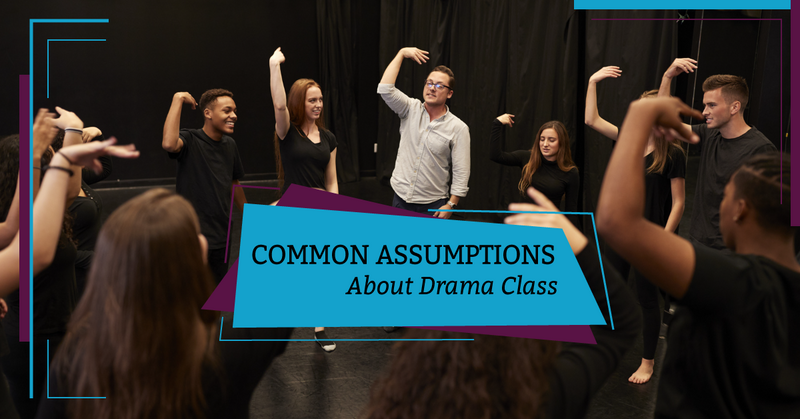
Common Assumptions About Drama Class
Teaching Drama

Common Assumptions About Drama Class

There are lots of reasons why students choose to take drama class. But unfortunately not all of them are positive reasons. On the other hand, students also come up with lots of reasons to avoid taking drama class. In this article, we look at four common assumptions students often have about taking drama class, with different thoughts about why these assumptions are false. 1. “I’m taking drama because it’s easy.”Teachers, we know that drama class isn’t easy. But unfortunately some students will take drama because they think they’re going to breeze through it, and not because they are actually interested in drama . At the beginning of the semester, it is useful to sit down with your students to find out their thoughts, expectations, and goals for taking drama. If students respond that they think drama class is easy, be sure to have them describe why. With that information, you can then work with your students specifically to teach them that drama class isn’t necessarily easy; it’s different, and that’s a good thing. Go through your course syllabus with your students and discuss the differences from other classes. For example, does your drama class have a final written exam, or a large practical project (say, selecting and directing a scene) instead? What does the project entail? How many hours might a student spend working on this project, compared to studying for a math exam? How much physical energy does a student spend choosing, memorizing, rehearsing, and performing a monologue (for example) versus completing an essay in English class? Which is “easier,” and why? If students don’t know, it’s okay. You can come back to this discussion when you are working on those specific units. This is also a great opportunity for students to work on their empathy skills. Remind students that just because one person thinks that something is easy, it doesn’t mean it is easy for everyone else. A word of caution – when working with students on the “easy versus different” concept, you will need to find a balance between sounding desperate to legitimize your drama program and scaring students into thinking they’ve signed up for an impossibly difficult class. It is important to listen more than speak, and allow your students to lead the discussion. It also may be useful to discuss how the skills in drama class can be applied to many different situations – in other classes and in the “real world” as well. Check out What Skills do you Need to Work on a Show for more. 2. “I’m only taking drama because I hate visual art/music/dance.”Students are required to have an arts credit in order to graduate, and many students take drama because they think they can’t draw, read sheet music, or coordinate their limbs. However, visual art, music, and dance feature heavily in drama classes! Students may not be learning traditional dance technique in drama class but they will be exploring different types of movement and ways of communicating by using their bodies (think mime, tableau, or stage combat). Students will explore different vocal sounds and sound effects, soundscapes, and how music can affect a scene. And if their drama class has a musical theatre unit, students may end up singing anyway! Maybe students don’t use pastels and gouache, but they will eventually design and create props, costumes, and sets, either by drawing/painting and constructing the items or by using found objects creatively. Drama is one of the most cross-curricular subjects out there, so regardless of students’ opinions on visual art, music, and dance, they’ll eventually use those skills in the drama classroom. Discuss the term “cross-curricular” with your students. Have them come up with ways students learn and practice cross-curricular skills in drama class, as well as how skills in the drama classroom can be used in other classes. Take it a step further and have students create brief scenes from this brainstorm – use the “Dramatic Rules” game as a framework. 3. “I’m not going to be an actor, so I’m not going to learn anything in drama class” or, “It’s not useful for the future.”We wrote a whole post about how studying drama benefits students outside the drama classroom! The skills that students learn in drama class are definitely transferable to so many life experiences, including time management, problem-solving, dealing with nerves when they arise, and growing confidence. On top of that, there is a myriad of theatrical jobs that are not acting jobs: technical roles, design roles, stage management, sewing, construction and carpentry, musical direction, choreography, front-of-house and box office roles, theatre management roles, and more. Drama class is not just for actors! 4. “You have to be super creative to take drama” or “I’m not creative enough to succeed in drama class.”When it comes down to it, creativity is all about trying new things. Students often feel that they aren’t creative. Or they compare their perceived creativity (or lack thereof) to that of others. Drama class is not about who is the most creative. It is about being brave and willing to try new things. Each student is different, and you never know what might inspire some unexpected creativity. There are so many fascinating aspects of drama class that there is bound to be something to make each student feel confident, successful, and creative. It could be one of many different types of design, stage management, playwriting, directing, singing, improvisation, creating scenic elements. It just takes bravery and patience on the part of students to find that particular thing that works for them. Check out our articles Kicking Creativity out of the Drama Classroom and Prompting Creativity in the Classroom for more.
“I’ll Just Do It Myself…” Encouraging Students to Work Together
Classroom Management

“I’ll Just Do It Myself…” Encouraging Students to Work Together

Encouraging students to work together is often a challenge. Some students worry that they’ll be saddled with peers who won’t pull their weight. Some students are super-shy and the idea of approaching others to work together can be terrifying. And still others don’t want to work in a group because their friends aren’t in the class, because they think the assignment isn’t worth their time, or because they’re just “too cool.” In such cases, students may decide that working in a group isn’t worth their time and that it would be easier for them to just do the work themselves. However, group work teaches a host of important skills that students can’t develop as effectively when working alone. Group work, particularly in the drama classroom, is important and necessary because: 1. It encourages students to listen to each other.Theatre is a collaborative effort, and each student will come to the group with different thoughts, ideas, goals, and expectations for the project. Just because one student has a whole bunch of brilliant ideas doesn’t mean that the rest of the group won’t have equally great ideas. Working in a group encourages students to keep their egos in check and to be open to new and different ideas on how to approach the project. 2. It develops students’ communication skills.Continuing on with the previous point, while students may have brilliant ideas, those ideas won’t be of any use if students can’t express themselves. Working in a group challenges students to communicate effectively. Whether it’s speaking up when another group member is steamrolling over everyone else’s ideas, solving a problem that has the group stumped, or dealing with conflict between group members, communication is key. How can students ensure that they are all heard and can contribute equally to the group work process? Here’s a method for brainstorming ideas (for a scene topic, a playwriting prompt, etc.). • Go around in a circle and have each group member add an idea to the brainstorming list, one by one. • Do this five times. • No editing or judgment – the point is for each student to contribute five ideas. However, going around in a circle and taking turns giving ideas ensures that one student isn’t left until the end with all the “good ideas” having been already suggested. As well, it’s important for students to communicate their expectations for success within the project. Students should take some time with their group members to describe what they feel are acceptable and unacceptable levels of participation and completion within the parameters of the project, as well as insight into other group members’ feelings about deadlines, the delegation of jobs, and so on. This gives them a greater level of understanding of each other and will help them to manage their expectations, both of themselves and of others within the group. 3. It helps students learn to delegate.As do-it-all directors and teachers, we know how stressful trying to do everything ourselves is. Now add on top of that additional classes, homework, part-time jobs, extracurricular activities, home life, friendships, and all the other worries and challenges facing students on a daily basis, and it becomes quite clear that students need to learn how to delegate group work. For example, if groups are staging a scene, perhaps one group member can be in charge of writing the scene while another one is in charge of editing. And another group member directs while a fourth group member is in charge of finding props and costumes. This way, each member is able to contribute – either in an aspect they feel confident about or in an aspect they want to learn more about. Both are beneficial! 4. It helps students learn to trust others.This can be a difficult one. Students can listen, communicate, and delegate. But when it comes down to the nitty-gritty of actually doing the work, students have to trust that the rest of the group is going to come through and complete their portion of the project. It’s not easy, but it’s part of the process! 5. It helps students develop empathy.Students need to learn to understand and work with students from different backgrounds, with different abilities, and with different levels of experience. Just because something is easy for one student doesn’t mean it is so simple for another. Furthermore, having different thoughts, opinions, and ideas in a group is a great thing because it encourages students to be more open-minded and develop a deeper understanding of others. It creates a richer, more diverse starting point for developing new and interesting theatrical creations.
Pros and Cons: Assigned Groups vs. Class-Chosen Groups
Classroom Management

Pros and Cons: Assigned Groups vs. Class-Chosen Groups

Group work is an enormous part of drama class. Students are always working in groups, whether for warm-ups, improvisation, scene work, playwriting, working backstage, and more. Even if your entire drama class was focused on monologues and one-person shows, students need to work in groups for dramaturgy, giving and receiving direction, assisting with technical needs, and feedback. So the ability to navigate group work is a skill that students need to develop. The tricky part of working in groups is often figuring out who the group members will be. Do you allow your students to select their own groups, or do you assign group members? Let’s look at some pros and cons of both selection methods. Assigned GroupsPros • Working in assigned groups gives students the opportunity to work with and get to know other students that they may not know as well. This could be the start of a new friendship! • Working in assigned groups helps students work on their communication and problem-solving skills as they learn to delegate the work and navigate different styles of learning. • Using assigned groups provides a sense of fairness. If the groups are selected in class by random grouping (such as drawing names out of a hat), then the students can see that the selection process was random and the same for everyone. Cons • Students may not be happy with their assigned group members, or even accuse you of “stacking” certain groups. They may think you put them with someone that they don’t get along with on purpose as a “punishment” or that a certain group member won’t pull their weight. • Students might feel shy or scared to do the vulnerable work in drama class with people they are less familiar with or don’t know. Despite the fact that they will eventually present their work in front of the rest of the class, it can be hard for students to open up during the work portion of the assignment. • Teachers can never know the full ins and outs of their students’ lives, and it is possible you could assign students to a group who you thought were best friends but are currently fighting, or students who used to date each other but have broken up, or any number of other conflicts. While your students will have to learn to deal with working with others in many different situations, it could cause problems in the short term. Class-Chosen GroupsPros • Students are generally happy because they get to work with their friends and appreciate being able to control who is in their group. • Some students also choose their groups strategically and select the people in class who they think are the smartest or most talented in order to benefit from those students’ skills and boost their own performance, marks, or overall group appearance. • Letting students select their own group members gives them the opportunity to demonstrate their decision-making skills and to solve problems on their own. They need to make smart choices about who they do and do not decide to work with. Cons • Inevitably, someone either always gets chosen last or doesn’t immediately find a group and needs help. This can be frustrating or embarrassing for the student who is left out, and potentially cause resentment for the other group members who didn’t necessarily want that student in their group in the first place. • Frequently, there are groups of students who really should not work together and it pretty much defeats the purpose of class-chosen groups if you have to go back and change the groups. • Particularly in younger grades, students of the same gender tend to band together, which can be difficult if you are working with scripts that require group members of different genders. (However, this could be turned into a pro if the group members find creative solutions to such casting challenges!) What do you think? What works best with your students? What works best for your curriculum?
How Do We Encourage Confidence in Students?
Teaching Drama

How Do We Encourage Confidence in Students?

Students nowadays are more connected, aware, and tech-savvy than ever before. Yet, with all that connection and knowledge, students are hyper-aware of their insecurities, their desires not only to fit in but also to succeed in every area of their lives, and the public nature of communication through social media and the Internet. Seemingly, everything is available for everyone to see, including students’ mistakes and failures. This can make students fearful of failure and reluctant to take risks – they know that others may be watching and ready to pounce on any perceived weaknesses. Students may feel that it’s easier not to try than to risk looking bad in front of their peers. Teachers must work with their students to help them feel confident and encourage them to push themselves out of their comfort zones. The drama classroom is a great place to do that, as the art of theatre is a practice – there is no such thing as perfection, but there is progress. And as with many other things, confidence is something that can be grown and developed. Try using the following five tips to help encourage confidence in your drama students. 1. Choose your words with care.This doesn’t mean having to be extra-flowery or unnatural, nor does it mean being afraid of constructive criticism. However, I have found that using words of affirmation throughout the learning process (before, during, and after the lesson) works because it encourages students to focus on what they’re doing well and to keep doing it. During the introductory section of the lesson, focus on encouraging your students to give their best efforts, and follow that up with brief and clear instructions. This way they can have the maximum amount of time available for actually practicing. During their work time, check in with students and affirm visible progress: “You’re on the right track,” “Keep at it,” or “Great question – let’s figure that out.” At the end of class, try to end on a positive note. Even if the class didn’t go as well as you’d hoped, focusing on ideas such as “What did we learn during today’s class?” and “How can we improve for tomorrow?” will help students to stay positive and feel confident, despite setbacks. Avoid using phrases like “This is easy” with your students. The concept you’re introducing may be easy for you, but, for some students, you could be presenting a very daunting task. (“What do you mean I have to say a monologue in front of the whole class? All by myself?!”) Which brings us to our second point… 2. Encourage risk-taking and trying new things in the drama classroom.Students need to know that not everything they attempt is going to succeed on the first, second, or thirty-fifth try. Maybe the joke in their improv scene that they thought was hilarious didn’t land, or a crucial prop got left behind, which threw off the entire flow of the scene. Work with students to frame failure not as an indicator of their abilities (or lack thereof), but as an opportunity to try again. “Maybe I just didn’t get this lesson as I should have. Let’s try again.” “What did I learn from this experience?” Failure is not the end of the world. Rather, it’s a chance to give it another shot or to go in a new direction. Maybe a different approach would work next time. 3. Embrace “beginner” mentality and focus on the process.Some students want to be good at everything right away – and will give up if they don’t succeed immediately. They don’t want to analyze their scene – they want to jump right up onstage and perform it. But learning takes time and effort. The theatre is a place of constant learning and practice. Think of a baby learning to walk: You need to learn to sit up, crawl, and stand first, all before you can walk. As well, remind students that not everyone is good at everything immediately, but everyone can and will be good at something. Maybe one of your students is not great at mime but they’re awesome at spoken-word poetry. Encourage your students to embrace their strengths but keep chipping away at their weaknesses. Practice makes progress! 4. Guide, but don’t overpower.As teachers, we must find the balance between being available to explain, clarify, and answer questions. But we also need to step back and allow students to think for themselves and come to their own conclusions. School is supposed to be a place where students grow and learn, not just regurgitate what the teacher says. Being able to think for themselves, analyze problems, deal with challenges, and come up with creative ideas and solutions are all important life skills that students need to develop. 5. Ask students directly what they need.“What do you need from me to help you feel confident in the drama classroom?” What works for some students doesn’t work for others. So ask them what helps them. Some students need discipline and strict deadlines, while others need affection and praise. Some students work better independently, while others prefer group work. Some students work better when they have a clear outline of what the plan is each day. Some students need time at home to review and process what they’ve learned. By asking students directly, you can better align yourself and your lesson plans to accommodate their different learning styles. This also shows that you are willing to work with your students to help them succeed. This could be a great Exit Slip or Reflection exercise to share with your students.
Brainstorming in the Drama Class: Coming up With More Ideas Than You Need
Teaching Drama

Brainstorming in the Drama Class: Coming up With More Ideas Than You Need

The title of this post is a bit of a misnomer because, truthfully, you can never have enough ideas! While you may not need every idea you’ve ever had at this very moment, the ideas you come up with can definitely be useful in the future. You never know when a past inspiration can become useful going forward. This exercise is inspired by entrepreneur James Altucher’s “idea machine” concept, which is simply to come up with ten ideas every day. The goal is to strengthen your idea-creating muscles so that coming up with new ideas becomes easier and easier. You can then use your ideas for pretty much anything within your drama classroom – ideas for future topics or lessons, ideas for classroom games and activities, ideas for shows you might produce in the future, ideas for a class-devised theatrical piece, ideas for playwriting… The list goes on and on. And if you are ever feeling blocked creatively, you can go back to your lists of ten ideas for inspiration. For at least one week at the beginning of class, write a prompt for students to use as a jumping-off point. For each prompt, each student will individually come up with ten ideas and write them down. At the end of the school week, every student will have generated 50 ideas each! Here are the rules:• Students must force themselves to write ten ideas. More is fine, but ten is the minimum. • If a student misses a class, they still have to complete their list of ten ideas for that day based on the prompt of the day. Consistent practice is the key to success in this exercise. • No self-censorship! Write it all down. Some ideas will be good. Some will be not so good. Some ideas will be downright silly or dumb. The point is not to judge yourself. It’s the practice of forcing yourself to come up with ten ideas daily that will help to strengthen the idea-creating muscles and help you to eventually come up with more good ideas than not-so-good ones. • I strongly encourage teachers to participate in this practice each day as well. Here are ten prompts to get your students started on creating their ten ideas lists:1. Ten ways to communicate onstage without using words. 2. Ten ways to create a scene using little to no technology. 3. Ten ways to costume your show with zero money. 4. Ten ways to get in contact with Lin-Manuel Miranda. 5. Ten ways to fundraise $1,000 for your upcoming production. 6. Ten different topics for a playwriting assignment. 7. Ten plays or musicals you’d like your school to produce. 8. Ten celebrities or well-known people to impersonate in an improv game. 9. Ten drama classroom activities that you’ve particularly enjoyed. 10. Ten more ideas for future “Ten Ideas” brainstorming sessions. You can build on each individual brainstorming session by having students come together into small groups (four to five students) to share their ideas, and come up with their top ten favourite ideas to present to the rest of the class. Have students look for patterns and similar ideas that they came up with individually, as well as ideas that combine well together to create an even more exciting idea. At the end of the week, students will complete and submit a Reflection. Where will your ideas take you and your class? The possibilities are endless!
Get Your First Day of Drama Class Started Out Right
Classroom Exercise

Get Your First Day of Drama Class Started Out Right

First impressions matter! Getting your first day of drama class started on the right foot is so important for setting the tone for the rest of the semester. No matter whether you have a classroom full of students who are brand-new to drama, a gang of seasoned drama pros, or a group of students who really don’t want to be there (and that’ll happen), you have a fabulous opportunity to help your students grow and develop in ways they can’t even imagine yet. So read on for three tips, as well as some helpful links, to help you get your first day of drama class started out right. 1 . Learn your students’ names, and share your classroom expectations.Demonstrating respect for your students will help them to respect you. And an easy way to show your students that you care and that you value them is to learn their names right away. Here are some tips to help you learn your students’ names quickly. And, while it’s not exactly fun to have to lay down the law right away, it is important for your students to know what the expectations in the drama classroom are. While there is lots of movement and creativity, it’s still a class – it’s not just time to run amok. You may choose to do this by having a class discussion, sharing details on your class syllabus, putting up posters around your classroom, or making it into a game. But, no matter what, be sure to make your expectations clear and share them in a timely manner. Here are some extra tips to try for sharing classroom expectations: • Learning the Rules: “Act It Out” game • 5 Ways to Quiet Down a Noisy Drama Class (Without Yelling!) 2. Find out more about your students and their personalities.Have the students get into pairs. Each pair conducts a mini-interview with each other. They need to find out four things: 1. Their partner’s name. 2. One thing their partner did in the summer. 3. One hobby or activity their partner does outside of school. 4. One “favourite” thing their partner likes: favourite colour, food, band, movie, etc. (Let students pick whichever “favourite” they want to share.) Give students three minutes to interview each other. Then then they will stand up with their partner and share each other’s answers with the class. This gives all the students a chance to get to know who is in the class and gain a glimpse into their personality. This can also help you, the teacher, get an indication of your students’ interests so you can tailor your classroom exercises and scene choices to topics and subject matter that your students would like. You can also try these three “getting to know you games” with your class: 3. Why are your students there?Have your students fill out a brief, private questionnaire (click below to download) describing why they’re taking drama and what they hope to get out of the class. Allow students to be honest by assuring them you will keep their answers confidential – remember, you may have students in your class who didn’t choose to take drama, but they are just as important to the group as your keeners. You may even wish to allow students to give their answers anonymously – have them fold their sheets in half and place the completed forms in a box. (If you go this route, you can stand with the box and check off that they’ve submitted the paper, should you wish to include this in the students’ participation marks.) Like the classroom mini-interviews, this allows you to dig even deeper into your students’ personalities, hopes, and goals for the semester. This information will help you shape your curriculum to focus on the units and lessons that will most benefit and challenge your students. Good luck, and may you and your students have much success! WANT MORE? Here are some BONUS articles for stating your year off right: • Day One of the Drama Classroom • Engaging the Non-Theatre Student in the Drama Classroom • Top 10 Classroom Management Tips for Drama Teachers • Student Goal Setting Exercise: The Wish Jar
The Inclusive Classroom: Drama Class for Students with Special Needs
Classroom Management

The Inclusive Classroom: Drama Class for Students with Special Needs

“Special needs” is a broad term that describes individuals who require assistance for disabilities that may be medical, mental, or psychological. Every student with special needs is different, and their needs are entirely unique. Students with autism or Asperger’s syndrome, dyslexia and other learning disabilities, blindness or vision impairment, ADHD, epilepsy or cerebral palsy may be considered to have special needs. But there are many more clinical diagnoses for special needs as well. With the advent of relaxed performances at professional theatres around the world (where shows are performed with reduced sound and lighting levels and the option to move around or leave and return to the performance as needed), and wonderful productions such as Deaf West Theater’s Broadway production of Spring Awakening, which featured actors who are hearing-impaired as well as actors who use wheelchairs, theatre is proving to be a wonderful place for all – regardless of abilities or disabilities. As drama educators, we have the opportunity to really encourage students to explore the world of theatre and to take steps to make sure it is accessible for any student who desires to learn more about it, to participate in it, and to grow a life-long love for theatre! Here are some tips to get started. 1. Identify the unique needs of each student.Every student is different, and any student with special needs is going to have different abilities and things that they can and cannot do. Make it a priority to meet with your students (or their families, if necessary) to discuss what their goals are and what they’d like to achieve by taking drama classes or participating in a production. The more information you have ahead of time, the better prepared you are to help your students to succeed. 2. Use proper language.Using correct language is important. There is some debate about whether people-first language or identity-first language is preferential. In people-first language, the aim is to not define students by a disability or health issue because it is considered to dehumanize them and define them as something that they are rather than a condition or trait that they have. In this case, it is proper to use terms like “student with autism” or “student with ADHD” rather than “autistic student” or “ADHD student.” On the other hand, identity-first language is also frequently used, particularly by those in Deaf culture, since being culturally deaf considered to be a source of positive identity and pride. Overall, it is a personal preference for each student. It is also important to avoid negative and ableist terms when referring to students with special needs. Avoid saying things like “he suffers from x diagnosis” or “she is a victim of x diagnosis.” Students with special needs are not victims or are suffering, and must not be patronized or treated in a way to bring shame or embarrassment. Nor are they worse-off or inferior for having special needs or a disability. A disability descriptor is simply a medical diagnosis. 3. See what you can do to help students succeed in drama.There are lots of ways you can assist students with special needs in the drama classroom. Focus on what your students can do, rather than on what they can’t do. Consider the following: • Ensure that your classroom or auditorium has the necessary infrastructure for students who use wheelchairs or walkers, such as ramps or lifts. • Provide large-print, Braille, or audio scripts for students who are blind or have vision impairment. • Provide visual cues such as signs or hand gestures for students who are deaf or hard of hearing. If possible, a video feed would be wonderful to help students who can’t hear auditory cues know when they need to go onstage. • Give scripts to students who have dyslexia or difficulty reading ahead of time, so they can prepare in advance. • Designate a quiet area for students with sensory concerns so they can relax or decompress during a high-energy or over-stimulating exercise or theatre game. • Learn more about augmentative and alternative communication methods for students with speech or language problems. For example, a student could use a voice recorder or iPad application (such as iConverse) to help them perform their lines. • Find out if your student would benefit from an aide, assistant, or interpreter. • Offer a relaxed performance of your next school show for audience members who could benefit from it. • Don’t rule out a student with special needs from performing in a production. If they are the best actor for the part – cast them! • Look for and study shows that feature characters with special needs. For example, the character Archie in 13: The Musical uses crutches because he has muscular dystrophy. The lead character Christopher in The Curious Incident of the Dog in the Night-Time has autism. Treat all of your students equally. A student with special needs may need some specific accommodations at times, but mostly they want to be part of what everyone is doing.
How Studying Drama Can Benefit Students Outside of the Drama Classroom
Teaching Drama

How Studying Drama Can Benefit Students Outside of the Drama Classroom

As drama educators, we obviously believe that the arts should be a crucial part of a student’s academic experience. Do a quick web search of “why study the arts?” and hundreds of articles in agreement with this will pop up! An arts education is extremely important and beneficial for students, as they will learn not only theatrical techniques but useful life skills as well. Here are just a few of the ways that studying drama can benefit students outside of the drama classroom. It’s a creative outlet – and a challenging one at that.Students need to learn a variety of means of expressing themselves and their thoughts and views on the world. What better way to learn this than through theatre? It challenges students to open their minds, to use their bodies and brains in different and exciting ways, to explore different worlds through scripts and scores and characters, and to tell a story in a variety of ways – through words, song, mime, tableau, puppetry, playwriting…the list goes on and on. They’re learning a huge host of skills.Many students who participate in drama class do not go on to become professional actors, designers, or technicians. But there are so many other important skills that they’re learning that can be used in their everyday lives, no matter what career they decide to pursue in the future. For example: • Reading and reciting from scripts increases their verbal and literacy skills. • Working with a director, musical director, and/or choreographer increases their listening skills. • Experiencing a variety of crew roles – such as stage manager, technical operator, or usher – provides practical job skills training that can be used in behind-the-scenes theatre careers or in the business side of theatre, or transferred to another type of career (being an organized stage manager can certainly transfer into being organized in a variety of jobs). • When students are practicing for an audition, they’re learning research and preparation skills, and learning how to take steps towards achieving a goal. • When they perform in front of their peers or an audience, they’re learning self-confidence and bravery. • When they are cast in a plum role, they’re learning how to accept their achievements with grace. • When they don’t get the part they want, they’re learning to deal with disappointment. • When they’re practicing their lines and rehearsing their choreography at home, they’re learning about the importance of giving their best effort and not letting their teammates down. • When they’re learning dance and stage combat moves, they’re practicing gross and fine motor skills, hand/eye coordination and muscle memory. • When they’re cast in a show with students they don’t know or don’t like, they’re learning how to deal with others and cultivate new relationships. • When they realize that they have a project due in another class the day before off-book day, they’re learning about time management. • When something goes wrong during a performance, they’re learning how to deal with the unexpected, how to stay cool in an emergency, how to roll with the punches and keep the show going on! Friendship.Taking a drama class or being involved in a school production creates incredibly strong bonds with others over a relatively short period of time. When students are working together with a group of like-minded people to create a cohesive piece of work, bonding is kind of inevitable! Some people don’t understand the long hours spent in the auditorium or in the drama classroom (“I can’t, I have rehearsal” is a common phrase uttered by drama students) and the many hours of work required outside of rehearsal. But a group of students who are all obsessed with the latest Broadway offering and randomly break into song and dance in the middle of the hallway? They get it, and they get each other.
The Drama Classroom: Divergent Learning
Classroom Management

The Drama Classroom: Divergent Learning

There is no more class that is more divergent than the drama classroom. You have the vast number of different students who end up in your classroom, some who want to be there and some who don’t. You also have the ability to look for many different solutions to a problem in the drama classroom. Playwright and teacher Steven Stack knows first hand that theatre is the perfect place for divergent learning to happen. Here are 5 tips he has from the the front lines: What is Divergent Learning?Divergent learning means to look for as many possible answers and solutions to the topic and material you are teaching. It’s looking at students not as a group of students but as a group of individuals. You adjust your teaching, your expectations, and your perspectives to the individual student. This way you can give them what they need to be better students, to learn more efficiently, and in some ways, to be better at life. How can I incorporate Divergent Learning in my classroom?• Change your perspective. Divergency is not something to be feared. It’s an opportunity to reach these students on so many levels and that’s the big thing. It’s a perspective shift. • Be willing to adjust. Understand that students are going to take you in various directions. • Create a community that embraces differences and supports one another. Where do I start?Here are a few ways Steven addresses divergent learners in his classroom: Community Building ‘Check In’s’: Students start each class by sharing (if they want to) something that’s on their minds. It can be funny; it can be what they had for breakfast; it can be something that’s stressing them out. But they share and everyone else listens. The sharing isn’t complicated, it’s one basic fact about themselves. Those in the circle don’t address or comment on what they hear. The teacher has to share something asl well. It’s a simple exercise but it starts creating community. It’s safe and students are listening to one another. Group Projects with Success based on Process Give students the challenge to audition, cast, stage, and perform a play within a week. Give them the script on Monday and tell them the performance is Friday. The students either succeed or they don’t succeed together. There are no stars. They have to work together for success. And the success is not based on the performance. It’s based on the process. If they did their best, that means they tried to put it together, they worked hard, and everybody was working together. They faced struggles but they dealt with those struggles. It’s an amazing exercise. Get Students to Discover Multiple Perspectives It’s critical to get students to take ownership of their learning decisions. Tell students: “When you’re answering this, don’t give me the answer you think I want. I don’t want that. I want you to own it. You do what you think is right.” Do a quote of the day where you pick various quotes about life, about empathy, various things about learning, and write them on the board. Have students reflect either in their drama journals or on a separate piece of paper. Ask them: What does this quote mean to you? Each day, push them to think a little more. The hope is that you plant these seeds and slowly see the progress as the students start to evolve their thinking, as they start to see that there are other viewpoints rather than just their own and other teachers. And then, they start to expand their thought process. Click here to listen to the full podcast or read the transcript.
The Drama Classroom: A seat for everyone at the table
Acting

The Drama Classroom: A seat for everyone at the table

Drama Teacher Podcast.Scott Giessler is a teacher and a playwright. He went into theatre teaching without any training. Not only is he still doing it, but he has a strong philosophy for how to do it. He’s well aware that what you need as a teacher isn’t necessarily what your students need. Scott is adamant that there is a seat for everyone at the table in the drama classroom. Learn from his experience by incorporating these tips into your own program, from the Drama Teacher Podcast. 1. It’s not about YOU, it’s about THEM.What you get excited about is not necessarily what’s going to light their fire . Get to know the needs of each particular group of students. What do they bring in the door with them? Realize that every year, every semester, as the group changes, so will their needs. You’ve got to constantly learn and adapt. 2. Build trust.In a math classroom, trust is going to be built with “I’m going to show you how to do this and, when it works, you trust me.” With a theatre class, you’re asking them to dig down into themselves and take some social risks. Building a relationship with them is key. If you don’t have a relationship with them, you won’t have the type of trust you need for them to take those social risks. 3. Find a place for everyone – well beyond the actors who already love theatre class.You have the guy who is in the construction trades class who, for some reason, gets dragged in because his girlfriend is in the program. We send him over to the scene shop and we can’t live without him. We’ve got the kid who doesn’t want anything to do with the stage but just loves the costume room . We have the kid who is really great with Photoshop and wants to do all the posters for us . We have kids who just want to be a part of the magic and end up being our house crew or backstage crew. Find the place that each student is comfortable, and you’ll be on your way to building a great program. 4. Help them realize that they are ALL an important part of the team.In basketball, if the third-stringer player doesn’t show up, well, it’s not really a problem because we’ve got two other strings to send in. Whereas, in theatre, anyone that doesn’t show up, it throws a monkey-wrench into the whole works. Embrace the concept that there is no unimportant cog in the machine. We need every last piece to make it move. Instead of “the show must go on,” the proper phrase really is “the show will go on as long as the people running it are a concerted group of people who care a great deal about the outcome.” 5. Include everyone. Don’t cut anyone out.For the same reason that a math teacher doesn’t throw a kid out of math class because he can’t get the hang of math, don’t cut a kid from a high school theatre program because he’s not very good at theatre. The moment they make a commitment to be there, they’re there and we’re going to invest time in them. More importantly, though, they’re investing time in others. Click here to listen to the full podcast or read the transcript. Scott’s got lots more to share, including details of his play Finishing Sentences.
Drama Class Exercise: Poll Your Class
Classroom Exercise

Drama Class Exercise: Poll Your Class

“I’ve got so much to say / if only you would listen!” That’s one of my favourite lyrics from School of Rock: The Musical. Students truly wish to be heard, and as teachers, it’s our responsibility to not only impart learning to our students, but to encourage them to explore, shape, and voice their opinions and thoughts. On top of that, it’s our responsibility to ensure that our students are indeed heard. What better way to find out exactly what your students want than to ask them directly? While we teachers do have to adhere to the assigned curriculum, we must try to find some flexibility to include topics, exercises, and scripts/shows that our students express interest in. Allowing students to have a say in what they’re studying gives them the opportunity to take real ownership of the material. This series of open-ended “Top 5” list prompts can be used in a variety of ways:• Students can fill out the entire sheet individually as a class handout. From there, students can discuss their thoughts and ideas in small groups or as a full class. Or, you can compare the answers and put the results together in a graph or chart (for example: “Top 5 Results for the Class’s Favourite Musical” or “Most Popular Wish-List Plays in Ms. Smith’s Grade 10 Drama Class”). That way, students can see if their answers are similar to their peers’ answers. • The topics can be used separately, as a start-of-class bellwork topic, • Or, as the basis of a post-class reflection topic. • Also, they can be used as full class brainstorm and discussion topics, or as prompts for students’ essays or opinion pieces. If you are using the questions as a true poll, the results of the poll can be used for determining what direction the drama class will take in that semester, or for figuring out what the drama club’s (or entire school’s) next production will be. The answers could also be used to shape drama curriculums or show choices for future years–how exciting for students to be able to have a say in the future of their drama education! The important thing for students to note is once they have listed up to five choices per topic, they need to be able to explain the “WHY” of their answers. Why should we study this topic in class? Why is this musical one of your favourites? Being able to explain the “WHY” is a skill that is so important for students to practice–they will be articulating their thoughts and opinions on tons of topics for the rest of their lives. That’s one of the wonderful things about drama class–the skills they are practicing (even those that don’t necessarily seem “theatrical,” like filling out a “Top 5” questionnaire) are transferable to so many different areas in the future. Conversely, if your students lack the background knowledge of shows they like, or don’t express many (or any) wishes of what to study, this can still be useful to you. These students are blank slates, and there is a real opportunity for the teacher to help guide them towards areas of interest in drama. Perhaps do a weekly introductory workshop in various types of theatrical styles for your students. Once the students have had their say, it’s up to you to use the valuable information they have given you. If your students express an interest in mime work, then use that as a direction for your class. If the students want to jump right into a production, use that as a goal–explain the steps needed for them to get to that point, and then work towards it. Together, by listening to and learning from each other, you and your students have the ability to make some real magic in the drama classroom!
5 Ways to Quiet Down a Noisy Drama Class (Without Yelling!)
Classroom Management

5 Ways to Quiet Down a Noisy Drama Class (Without Yelling!)

Drama classes are naturally noisy, chaotic places. Take a whole bunch of energetic, creative, enthusiastic students who have been sitting down in other classes for hours, fill them to the brim with great ideas…and then ask them to be quiet and focus on the work. It doesn’t exactly add up to an easy situation to control! Yes, drama class is fun. But you still need to have your students’ focus and quiet so you can teach amazing lessons without having to constantly raise your voice. And frankly, who wants to raise their voice anyway? You’ll end up with a strained voice, frayed nerves, and students who either resent or fear you, or eventually ignore you in spite of your bellowing. Ultimately, your goal is to not have to use these techniques at all. But in the meantime, here are five different ways I have used to request (not command!) quiet, without having to yell. Just Start the LessonAre you tired of waiting for your students to quiet down? Go ahead and start the lesson. The students who are nearest to you or really keen on learning the lesson will pay attention, and the others will realize soon enough and quiet down…or miss the lesson completely and be forced to play catch-up. This suggestion does have a few risks. Students may interrupt and say “I didn’t know you were starting” or demand that you re-explain what they missed. You have to decide if you will refuse to answer and make them figure out the lesson, or take time to go back and explain what they missed. Either way, it shows your students that you mean business – it’s class time, not social time. Clap BackTry a sound cue, like clapping out a pattern and having your class repeat it back to you (“clap clap clap-clap clap” is a common pattern). This signals that it’s time to stop talking and start listening. “And a hush fell over the crowd!”This is one I hear frequently at summer camps. The cue is the teacher saying “And a hush fell over the crowd!” and the students whisper back “Hushhhhhhhh…” and then quieting down. If you use this technique, be sure to reiterate with your students that the goal is to reply at a level of pianissimo, not double forte. “If you can hear me, do this.”I love this technique! Simply say, in a quiet voice, “If you can hear me, do this” accompanied by a gesture of some kind (touching your nose, patting your head, jazz hands, tapping your chin, etc). Those students who can hear you, do the gesture with you. Keep repeating “If you can hear me, do this” until the whole classroom is doing the gesture together. This technique can take a little while to get everyone’s attention, but you can make it into a game or competition by challenging your students to quiet down in less than three gestures. When All Else Fails…Stare at the CeilingThis technique works like magic for me. During the first week of classes, I tell my students, “I don’t like to yell, so when I want quiet, I’ll stare at the ceiling until you’re ready to work.” Then when students are talking, sit quietly at the front of your class and wait. And whenever I have done this in class, it works. Have patience! Students will realize quickly enough that they’re wasting their own time. Occasionally someone in the class will (loudly) whisper, “SHE’S LOOKING AT THE CEILING” and everyone quiets down after that, but I have found it works very well.