Facebook Pixel Skip to main content

📣SCRIPT SALE! Treat yourself to an easier Fall. Save 30% on 5+ perusal scripts with code SPRING30 before May 3 and head into summer stress-free.

Musical

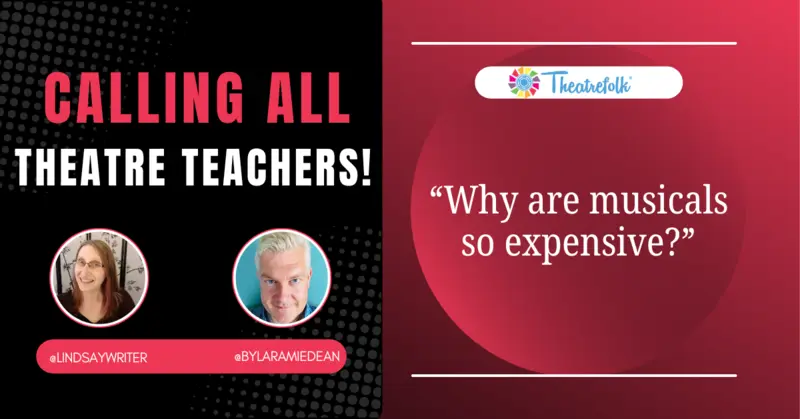
Calling All Theatre Teachers: Why are musicals so expensive?
Teaching Drama

Calling All Theatre Teachers: Why are musicals so expensive?

Welcome to our video series, Calling All Theatre Teachers! In this series we’re going to answer questions that drama teachers have about stepping into a theatre program. QUESTION: Why are musicals so expensive? Watch the video of our discussion of this question — Laramie shares exactly why he chooses to do musicals and why they are worth it! Click the link below for a worksheet to use when you need to apply for rights for a show. Do YOU put up musicals as part of your program? Why?
Time-Filler Activity: Blank: The Musical
Classroom Exercise

Time-Filler Activity: Blank: The Musical

If you’ve ever wished that there were a musical about your favourite topics or random ideas, then this time-filler activity will be right up your alley. You can structure this activity in a variety of ways, depending on how much time you have to fill: as an opening bellwork prompt, as a playwriting starter, as a brainstorming activity, as a full-on assignment, or as an opportunity to make your students laugh! It can be done individually, in pairs or small groups, or as a full-class exercise. The most basic version of this activity is to brainstorm as many ideas as possible to create titles of new musicals. The titles can be funny, dramatic, scary, serious, whatever you like, as long as it’s classroom appropriate. The words/phrases just have to fit into the title [Blank]: The Musical. Here are some ideas to get you started: • Kindergarten: The Musical • My Missing Sock: The Musical • The Year Was 2009, and I Was Just Born: The Musical • Bridgerton in Space: The Musical • Cake (But Not Ice Cream): The Musical • Lionel Messi: The Musical • Folding Chairs and Folding Tables: The Musical • A Million, Billion Squishmallows: The Musical If you’re doing the brainstorming version, be sure to have someone record all the ideas — you never know when someone’s suggestion will trigger a windfall of inspiration! The next step of this activity is to choose one title for your musical from the suggestions, and then come up with a variety of ideas to further develop the musical. Choose as many as you wish your students to complete or as time permits: • Three different possible storylines (for an added challenge, make all three storylines completely different) • Three different possible secondary storylines (or “B-plots”) • Three to five original song titles (for example, the opening introductory song, the “I want” song, a ballad, a comedic number, the villain song, an up-tempo dance number…) or a playlist of existing songs that could be used as numbers in a jukebox musical (remember that a jukebox musical uses well-known, previously-existing songs instead of original songs to further the action of the story) • A list of scenes that create an overview of the action of the play • A list of characters — names and a brief description of their role within the show • A list of unique moments or special effects that could be included in the script (for example, in Bridgerton in Space: The Musical, perhaps the actors will be suspended above the stage on wires to evoke a “Queen’s ball in zero gravity” effect) The third step of this activity is to choose one suggestion from the previous step (one storyline, one song title, one character, etc.) and further develop that. For example, take the storyline and write a show synopsis; take the song title, decide what character would sing it and why, and write lyrics for the song; or write a character analysis and/or a monologue for the character. You could also have students create a new technical aspect for the show, such as a set, costume, or prop design. For a full-class collaboration challenge, assign various students different aspects of the musical to develop, and see how they all fit together.
Tips for Casting a Musical Revue
Directing

Tips for Casting a Musical Revue

Musical revues are a great choice for a school production. There is no limit on how many students you can cast, you can tailor the casting of the show to fit the skills and talents of the students involved, and unless you choose a revue with strict casting requirements (for example, Shout! The Mod Musical is specifically written for an all-female cast), you aren’t bound by gender identity, race, sexual orientation, or age when casting the show. Let’s take a look at some tips for casting your musical revue. As a reminder, a musical revue is a style of musical theatre that combines singing, dancing, music, and sketches. The material included in a musical revue focuses on a particular theme. Some musical revues feature a single musical artist (such as A Grand Night for Singing, which features the music of Rodgers and Hammerstein, or Putting It Together, featuring the music of Stephen Sondheim) while others include pieces by many different artists. Some musical revues have a loose storyline but the overall theme is the main focus. Some examples of musical revues include Edges, Songs for a New World, The Theory of Relativity, Working, Side by Side by Sondheim, Red Hot and Cole, The No Frills Revue, Ain’t Misbehavin’, Beehive: The 60’s Musical, Monty Python’s Edukational Show, Forbidden Broadway, MTI’s Broadway Junior Revue: Pure Imagination and MTI’s Broadway Junior Revue: Raise Your Voice, A Pocketful of Rhymes, Jerry’s Girls, and Smokey Joe’s Café. Some musical revues require a specific number of performers while others are more flexible and allow for creativity when including more performers, adding an ensemble, and assigning songs to different performers. Always be sure to check with the licencing company to ensure that your ideas for your musical revue do not conflict with the requirements of the show as set out by the rights holders. If you are producing a musical revue that allows flexibility for casting, you could include every student who auditions, even students who aren’t the strongest singers. Many musical revues feature scenes or monologues between songs, and you can feature your stronger actors in those sections. Similarly, your students who love movement and dance can be featured as dancers in certain numbers. Shy or inexperienced drama students might only want to be in a couple of numbers or just in full-cast numbers, and that’s fine too — musical revues are a great way for them to dip their toe into the performing pool. During the audition process, create a spreadsheet with each student’s name in the first column, as well as a column each for “acting,” “singing,” and “dancing.” You can use this spreadsheet for a variety of purposes. You could rate their skill level in each area as displayed in the audition (3 for a highly skilled student, 1 for a less skilled student), have students give themselves a rating, or use it to indicate whether the student prefers acting, singing, or dancing. In the latter option, 1 indicates first choice, 2 indicates second choice, and 3 represents third choice. For example:
Creeptastic Plays and Macabre Musicals for Fall
Teaching Drama

Creeptastic Plays and Macabre Musicals for Fall

It’s spooky season, and if you’re looking for plays and musicals to frighten, horrify, and creep you out, you’re in the right place. Below you’ll find 10 scary plays from our own Theatrefolk library and 10 terrifying Broadway and off-Broadway musicals featuring scary creatures of all sorts, including ghosts, aliens, demons, and mutants. Introduce these plays and musicals to your students, read them as a class, and check out performances of them (many have filmed or movie versions to stream or purchase, or promotional clips to view on YouTube). You can also use the reading response worksheet as a resource, found at the bottom of this page. Have fun… if you dare! Plays from Theatrefolk that will scare the living daylights out of youFrom our own Theatrefolk catalogue, here is a selection of plays that are perfect for middle and high school students to study and perform. Livestream and Zoom options are available for most productions, and there are tons of opportunities for diverse casting choices. Whether you’re looking for a classic tale, a murder mystery, a scary comedy, or an all-out gorefest, we’ve got what you need! 1. Ashland Falls by Steven Stack A creepy, challenging play-within-a-play filled with twists, turns, drama, and intrigue. A mysterious new play director comes to Herbert Hoover High, where the on and offstage drama is about to make way for real-life revenge. Each student actor plays two vastly different roles, which makes this a great choice for senior drama students. 2. The Bottom of the Lake by Steven Stack The only thing that goes better together than chocolate, graham crackers, and marshmallows is summer camp and ghost stories. This play combines ghost stories, urban legends, comedy, and more, and has tons of great roles for female-presenting student actors. 3. Close Encounters of the Undead Kind by Jeffrey Harr A creepy collection of three plays that can be performed together or separately, featuring a terrifying teen support group, a Halloween that proves to be anything but boring, and a teen with an… unusual boyfriend. 4. Gothic Ghost Stories by Lindsay Price You’ve arrived early at Peveril House for the annual New Year’s Ball, and the family is eager to tell you some stories. Of course, with all the spiritual energy in Peveril House, the stories of choice are always ghost stories. With 49 characters, there are roles for everyone in your drama department, with doubling and tripling options for a smaller cast production. 5. Grim and Gruesome Grimm, adapted by Mrs. Evelyn Merritt from Jacob and Wilhelm Grimm A flexible and bloody adaptation of the classic Grimms’ fairy tales. Featuring decapitation, dismemberment, cannibalism, and a body count that keeps on growing. Lots of options for flexible casting and cast size, and various show lengths. 6. Hamlet, Zombie Killer of Denmark by Chris Stiles King Claudius plans to turn Denmark into the land of the undead and Hamlet must stop him! This adaptation blends the classic Shakespearean text with new lines written in iambic pentameter. 7. The Haunting of Chip Lake Lodge by J. Robert Wilkins A group of teens show up to the wrong location for their prom and things get worse from there, including mysteries, hauntings, curses, and giant rats. A spooky play for a small group of student actors. 8. Horror Movie 101: Failing Can Be Deadly and Horror Movie 102: Failing Just Got Deadlier by Steven Stack Two hour-long plays that are horrifying and hilarious. The teens in St. Claire keep getting killed while violating the rules of horror movies — so much so that a second play had to be written! Opportunities for double and triple casting, and the scenes can be performed together or as standalone pieces. 9. The Legend of Sleepy Hollow, adapted by Lindsay Price from Washington Irving This is the classic tale of Ichabod Crane and the Headless Horseman in a 30-minute run time, perfect for large groups of student actors. 10. Shuddersome: Tales of Poe, adapted by Lindsay Price from Edgar Allen Poe (Free Classroom Study Guide available!) Ghosts. Ghouls. Soul Suckers. Spectres. Shudders. Who better to bring the classic tales of Edgar Allen Poe to life… or death? This play has lots of opportunities for creative movement, costuming, and theatricality, and can be customized to fit the running time and casting choices you need. If you don’t see what you need here, there are lots more in our online catalogue. Just search for terms like “scary,” “horror,” “Halloween,” or “ghost” and you’ll find a plethora of plays to haunt you! Or reach out to our Play Concierge for specific recommendations! Macabre Musicals from Broadway and Off-BroadwayThe following shows have appeared either on or off Broadway, many of them also appearing on the West End. Many of these musicals now offer youth editions, written especially for high school students to perform. Some of these shows are based on films, books, and comics, which can be interesting to compare and contrast with clips from the musical. 1. The Addams Family: A New Musical, book by Marshall Brickman and Rick Ellis, music and lyrics by Andrew Lippa Charles Addams’ creepy, kooky, and altogether ooky family comes back to life onstage. When Wednesday Addams falls in love with Lucas, a “normal” guy, she begs her father Gomez to keep it a secret from his wife, Morticia. When the Addamses and Lucas’ family come together for a family dinner, chaos ensues. 2. Beetlejuice, book by Scott Brown and Anthony King, music and lyrics by Eddie Perfect Lydia Deetz and her father Charles move into a new house that is haunted by the previous owners, Adam and Barbara Maitland, who aren’t ready to give up their home despite being newly deceased. The Maitlands enlist the help of the bio-exorcist ghost Beetlejuice to help them get rid of the Deetzes; however, Beetlejuice has his own agenda. Based on the 1988 film starring Michael Keaton. 3. Carrie: The Musical, book by Lawrence D. Cohen (based on the novel by Stephen King), music by Michael Gore, lyrics by Dean Pitchford Carrie White has been bullied by practically everyone in her life, from the popular kids at school to her fanatically religious mother. When she is pushed too far (pig’s blood, anyone?), Carrie gets her revenge. The musical version of Carrie has an interesting history, originally premiering in 1988 and becoming a Broadway flop, then being revamped for off-Broadway in 2012. 4. Evil Dead: The Musical, book and lyrics by George Reinblatt, music by Christopher Bond, Frank Cipolla, Melissa Morris, and George Reinblatt Based on the Evil Dead movie franchise, this rock musical was first performed in Toronto before moving to an off-Broadway run at New World Stages. Five college students discover an evil book in the basement of an abandoned cabin in the woods and read it, unleashing unspeakable horror that turns everyone into demons one by one. Productions often feature a “splatter zone” where audience members get doused in stage blood. 5. Jekyll & Hyde, book by Leslie Bricusse (based on the novel by Robert Louis Stevenson), music by Frank Wildhorn, lyrics by Frank Wildhorn, Leslie Bricusse, and Steve Cuden Brilliant Dr. Jekyll attempts to cure his father’s mental illness, but inadvertently creates himself an evil alternate personality named Mr. Hyde. Mr. Hyde terrorizes London, and Dr. Jekyll must find a cure to control him before he takes over permanently. 6. Little Shop of Horrors, book by Howard Ashman, music and lyrics by Alan Menken Shy floral shop worker Seymour finds a mysterious plant that looks like a Venus flytrap. He names it Audrey II after his co-worker Audrey, who Seymour is secretly in love with. Seymour discovers that his plant feeds on blood, and as Audrey II quickly grows, it demands to be fed more and more. Based on the 1960 film The Little Shop of Horrors. 7. The Phantom of the Opera, libretto by Andrew Lloyd Webber and Richard Stilgoe (based on the novel by Gaston Leroux), music by Andrew Lloyd Webber, lyrics by Charles Hart, additional lyrics by Richard Stilgoe A series of increasingly frightening incidents occur at the Paris Opéra House, which are blamed on the “opera ghost” or “O.G.” The opera ghost is revealed to be a mysterious, disfigured musical genius living in the catacombs under the theatre. He falls in love with soprano Christine Daaé and as his love turns to obsession, will stop at nothing to make her his forever. As of 2023, Phantom is the longest-running show on Broadway, opening in 1988 and closing in 2023. 8. The Rocky Horror Show, book, music, and lyrics by Richard O’Brien The stage musical came first! The film version has achieved cult status, but the stage version premiered in 1973 on the West End and has been revived all over the world ever since. Newlyweds Brad and Janet take shelter from a rainstorm in the home of mad scientist Dr. Frank-N-Furter. With catchy songs like “Time Warp,” the show feels like a light-hearted homage to vintage sci-fi and B movies. However, the “horror” aspect of the title is appropriate as mysterious and murderous events occur throughout the night. 9. Sweeney Todd: The Demon Barber of Fleet Street, book by Hugh Wheeler, music and lyrics by Steven Sondheim Benjamin Barker is transported to Australia for a crime he did not commit. Fifteen years later, he returns to England, and vows revenge. Reinventing himself as barber Sweeney Todd, he kills his customers with his shaving razor and sends their bodies to his downstairs neighbour Mrs. Lovett, who disposes of them in a most sinister fashion. Based on the 1970 play Sweeney Todd by Christopher Bond. 10. The Toxic Avenger, book and lyrics by Joe DiPietro, music and lyrics by David Bryan Tromaville, New Jersey has been turned into a toxic waste dump. Nerdy Melvin Ferd the Third vows to clean it up and put a stop to whoever is responsible for leaving the drums of toxic goo everywhere. Melvin is attacked by goons, who toss him into a vat of toxic waste and leave him for dead. What they didn’t anticipate was Melvin transforming into a huge green mutant with a melted face, muscled body, and monstrous determination to save New Jersey. Based on the 1984 film of the same name.
Scene and Song Analysis Using Emojis
Classroom Exercise

Scene & Song Analysis Using Emojis

If you have a smartphone, it’s a guarantee that you’ve used emojis. Emojis are more than cute graphics on your phone — they’ve evolved into a unique visual language. While emojis themselves are a fairly new development (the first official emojis were invented in 1999 by Japanese artist Shigetaka Kurita), people have been using symbols to communicate for thousands of years. Students often have full conversations entirely with emojis. Emojis can give additional context and understanding to written language where tone isn’t always easily conveyed. In this exercise, students will pair up and analyse a short scene or musical theatre song using emojis. This exercise includes a warm-up, a full class introduction and discussion, partner work, and a full class analysis and discussion. Materials Needed Copies of a one-page scene from a play or lyrics to a musical theatre song, with each line/phrase/lyric numbered down the left. If possible, leave a fairly wide margin down the right-hand side of the paper, so students can write or draw emojis on that side. Alternatively, students can complete the assignment on their phone by making a numbered list (corresponding with the numbered line from the text) and putting their emojis next to the appropriate number for each line/lyric. Warm-Up or Bell Work Using emojis, make a timeline of what you’ve done today so far, hour by hour. For example, if you woke up at 7 am and drama class is at 11 am, you will choose five emojis, one to represent each hour of the day that you’ve been awake. Introduction As a full class, have students add emojis to the following sentences: • I’m sorry. • What do you think? • I’m not really sure. • I can’t believe he said that. • I can’t wait! Feel free to add additional sentences. Which emojis did your students choose for each one? Why? Did the emoji choice change the meaning of the sentence? If so, how? Exercise Instructions 1. Divide students into pairs. 2. Give each pair a one-page scene from a play or the lyrics to a musical theatre song. All groups will get the same scene/song. 3. Give a time limit to complete the assignment (or as much of it as they can complete within the timeframe). 4. Each pair will use emojis to represent the words, phrases, or emotions of the scene/song, line by line. Groups can use as many or as few emojis they wish, but they should aim for two to three minimum per line (unless it's a one-word line). Students can write or draw emojis on the right-hand margin of the scene/lyric page, next to the appropriate line. Alternatively, students can complete the assignment on their phone by making a numbered list (corresponding with the numbered line from the text) and putting their emojis next to the appropriate number for each line/lyric. 5. At the end of the time limit, discuss students' different interpretations of the emojis used, one line at a time. Here are some questions you might wish to ask: • Why did you use so many/few emojis for a particular sentence or phrase? • Did your emoji choice represent a literal word/phrase in the song, or did it have a more removed meaning? • For a particular sentence or phrase, did most students agree or disagree on an overall feeling/emoji choice? • Did any sentences or phrases have a large amount of disagreement on what emojis should be used? Which ones? What is causing the disagreement? Can students explain why they disagree and/or why they think their interpretation is correct? • How would you rate your understanding and/or enjoyment of the class work using emojis? 6. Each student will complete and submit an individual exit slip (found below). If you want students to submit their class work as well, have them either hand in the paper with the drawn/written emojis on the side, or take a screenshot of their work from their phone and email it to you (or upload it to your classroom webpage if you have one). Make sure students include both partners’ names on the emoji work, even though they will complete exit slips individually.
Plays & Musicals for Pride Month
Teaching Drama

Plays & Musicals for Pride Month

If you’re looking for plays and musicals to include in your drama classroom library, look no further — here are 42 plays and musicals featuring LGBTQ+ characters, stories, and themes. Introduce these plays and musicals to your students, read them as a class, and check out performances of them (many have filmed or movie versions). If you’re looking to perform a play with your students, be sure to check out the plays from Theatrefolk listed here — they’re perfect for high school students. And check out the other plays by our Theatrefolk LGBTQ+ authors on our site! Plays from Theatrefolk featuring LGBTQ+ Themes and CharactersFrom our very own Theatrefolk catalogue, these plays are fabulous for high school students to study and perform. Some even come with free classroom study guides. 1. Completely, Absolutely Normal: Vignettes About LGBTQ+ Teens by Bradley Walton (Free Classroom Study Guide available!) Ten interconnected vignettes with LGBTQ+ themes. 2. Red Tee by Lindsay Price (Free Classroom Study Guide available!) A vignette play that examines questions of identity and what happens when someone doesn’t fit in the way they’re expected to. 3. Bungee Jump Bear Trap by Lindsay Price A vignette play about taking risks and figuring it all out. 4. Life, Off Book by Scott Giessler Jeb is Ophelia’s fake boyfriend who is also a closeted gay man. What happens when Jeb and Ophelia have to lose the script and live life off book? 5. Pandemic Pancake by Lindsay Price Characters decide, for good and for ill, how they will respond to this evolving new world. 6. Anonymous by Allison Green The story of every teenager — it’s hard to be an individual when you’re trying to fit in. 7. Baalzebub by Rachel Atkins A group of girls is abandoned at a refugee camp in an unnamed war zone and are forced to survive together. A response to the classic novel Lord of the Flies. 8. Finding Jo March by Laramie Dean You should know right away that this is not a traditional adaptation of Little Women. 9. Moonbow Miraculous & Moonbow Miraculous: Competition Length Version by Kirk Shimano If someone has a secret they’ve been clutching to their heart, the moonbow’s glow will give them the courage to share their true selves 10. The Pretty Princess Dollhouse for Pretty Princesses by Emma Fonseca Halverson Gabi is suffering from metaphoric asthma. The walls are closing in and she can’t breathe. 11. Characters Behaving Badly by Lindsay Price This vignette play asks students to look at the concept of what it means to be “good” and “bad.” 12. Passing Period Purgatory by Christian Kiley Sometimes the hardest part of school is getting from one class to the next. 13. Thought Traps by Lindsay Price Ariane and Kate deal with people from their past who invade their head space. Will either be able to set themselves free? 14. 6ft Scenes by Lindsay Price A collection of 15 scenes in which no two characters get within 6ft of each other. As well, be sure to check out these Theatrefolk playwrights: Laramie Dean, Emma Fonseca Halverson, Bradley Hayward, Kirk Shimano and Bradley Walton. Musicals Featuring LGBTQ+ Themes and CharactersComing to you from Broadway and Off-Broadway, these musicals are packed with amazing songs and important themes. 1. Head Over Heels, book by Jeff Whitty, adapted by James Magruder, music and lyrics by The Go-Go’s A kingdom is threatened, unlikely lovers unite, and gender-fluid disguises are donned in a musical that preaches unconditional love and acceptance of everyone, no matter their gender or sexual identity. 2. Fun Home, by Lisa Kron and Jeanine Tesori, adapted from Alison Bedchel’s memoir Alison, an author and lesbian, reflects on her journey to discover and accept her identity, as well as her relationship with her father (a closeted gay man). 3. The Color Purple, book by Marsha Norman, based on the novel by Alice Walker, music and lyrics by Brenda Russell, Allee Willis, and Stephen Bray Celie, a teenage African-American girl living in Georgia, is given by her abusive stepfather to an even more abusive husband. Over the years, Celie finds ways to cope with life, including finding a potential lover in the fabulous Shug Avery. 4. La Cage aux Folles, book by Harvey Fierstein, music and lyrics by Jerry Herman Georges (owner of the La Cage aux Folles nightclub) and his partner Albin face the hardest challenge of their twenty-year relationship: meeting their son’s fiancee’s ultra-conservative, anti-gay parents. 5. Kinky Boots, book by Harvey Fierstein, music and lyrics by Cyndi Lauper Charlie Price teams up with drag queen Lola to save his failing shoe factory, and in the process, discovers that they aren’t so different after all. 6. Hedwig and the Angry Inch, book by John Cameron Mitchell, music and lyrics by Stephen Trask Genderqueer rock singer Hedwig Robinson shares her story — including the tale of her botched gender reassignment surgery — with the audience through monologues and rock songs. 7. Rent, book, music, and lyrics by Jonathan Larson Follows the ups and downs of a year in the life of a group of impoverished, artistic friends living in the East Village of Manhattan in the late 1980s, under the shadow of HIV/AIDS. 8. Bare: A Pop Opera and Bare: The Musical, book by Hartmere and Intrabartolo, music by Damon Intrabartolo, lyrics by Jon Hartmere Peter and Jason, students at a Catholic boarding school, have fallen in love with each other, but Jason — a popular athlete — fears losing his status if he is discovered to be gay. 9. Spring Awakening, book and lyrics by Steven Sater, music by Duncan Sheik, based on the 1891 German play _Spring Awakening _by Frank Wedekind In late 19th century Germany, with only each other for guidance, a group of young men and women travel the rocky path of adolescence, discovering their bodies, their sexuality, their minds, and themselves along the way. 10. The Boy from Oz, book by Nick Enright, revised book by Martin Sherman, music and lyrics by Peter Allen A musical telling of the story of Australian entertainer Peter Allen, from his humble beginnings, to his rise to fame, to his marriage to Liza Minelli, to the crumbling of their marriage due to Allen’s homosexuality, to his final concert before his death from AIDS. 11. The Prom, book by Bob Martin and Chad Beguelin, based on an original concept by Jack Viertel, music by Matthew Sklar, lyrics by Chad Beguelin Four struggling Broadway stars team up to help Emma Nolan have the prom of her dreams with her girlfriend, despite the actions of the homophobic PTA. 12. The Louder We Get (previously titled Prom Queen), book by Kent Staines, lyrics by Akiva Romer-Segal, music by Colleen Dauncey Based on the true story of Marc Hall, a gay Canadian teenager whose legal fight to bring a same-sex date to his Catholic high school prom made national and international headlines in 2002. 13. Falsettos, book by William Finn and James Lapine, music and lyrics by William Finn In 1970s New York, Marvin and Trina’s perfect family is broken apart when Marvin leaves Trina for a man named Whizzer. 14. Witness Uganda (previously titled Invisible Thread), book, music, and lyrics by Matt Gould and Griffin Matthews Based on the true story of Griffin Matthews. Matthews travels to Uganda for mission work after being kicked out of his church choir when the pastor discovered he was gay. 15. A Man of No Importance, book by Terrence McNally, music by Stephen Flaherty, lyrics by Lynn Ahrens Alfie and his amateur theatre group are determined to stage a controversial play at their local church. In the process of fighting for the play, Alfie is forced to confront his own homosexuality and share his true self with those around him. 16. Priscilla, Queen of the Desert, book by Stephan Elliott and Allan Scott, music and lyrics by various artists Drag queens Tick and Adam and transgender woman Bernadette travel across Australia in their bus named Priscilla. 17. Zanna, Don’t! by Tim Acito, additional lyrics and material by Alexander Dinelaris Set in Heartsville, USA, a city where homosexuality is the norm and heterosexuality is taboo. At Heartsville High, Zanna plays matchmaker and brings happy couples together, but heterophobia strikes when a pair of opposite-sex high schoolers discover their feelings for each other. 18. Jagged Little Pill, book by Diablo Cody, music by Alanis Morissette and Glen Ballard, lyrics by Alanis Morissette, with additional music by Michael Farrell and Guy Sigsworth The seemingly-perfect Healy family, including parents MJ and Steve and teenage children Frankie and Nick, struggles with challenges including addiction, sexual identity, and the pressure to keep up appearances. 19. My Mother’s Lesbian Jewish Wiccan Wedding, book by David Hein and Irene Sankoff, music by David Hein From the creators of Come From Away and based on Hein’s real family, David reflects on his mother coming out when he was 13, after divorcing David’s father, discovering Judaism, and falling in love with a woman who practices Wicca. Plays Featuring LGBTQ+ Themes and CharactersDramas, comedies, award-winners, and more. 1. She Kills Monsters by Qui Nguyen After the death of her sister Tilly and discovery of Tilly’s game scenario notebook, Agnes Evans delves into the world of Dungeons & Dragons to understand and grieve her sister. 2. The Laramie Project by Moisés Kaufman and members of the Tectonic Theater Project In 1998, university student Matthew Shepard was tortured, robbed, and murdered for being gay. The murder was deemed a hate crime. In the aftermath, the Tectonic Theater Project travelled to Laramie, Wyoming and interviewed hundreds of subjects both directly and indirectly related to the case. 3. Almost, Maine by John Cariani On one cold and magical midwinter night, the citizens of Almost, Maine experience love, loss, and the life-altering power of the human heart. One of the most produced plays in North American high schools. 4. Angels in America: A Gay Fantasia on National Themes by Tony Kushner A two-part, seven-hour, Tony-winning epic play primarily focusing on a gay couple from New York, with other intersecting storylines. 5. The Boys in the Band by Mart Crowley A group of gay men gather at Michael’s home to celebrate their friend Harold’s birthday. Michael’s friend from college, Alan, unexpectedly arrives, who has no idea that Michael or any of his friends are gay. 6. HIR by Taylor Mac After a dishonorable discharge from the military, Isaac returns home to discover his father has suffered a stroke, his sibling Max has come out as transgender, and his mother is ready to educate Isaac about the new post-gender world (while unknowingly appropriating Max’s experience). 7. The Normal Heart by Larry Kramer Passionate and confrontational activist Ned Weeks campaigns for awareness about an unidentified disease (HIV/AIDS) that is killing gay men in New York City, while tending to friends and lovers who are dying all around him. 8. As Is by William M. Hoffman Released shortly before The Normal Heart, Rich decides to return to his ex-partner, Saul, after contracting AIDS from his new lover. Seeking care, Rich reveals how doctors, family members, and friends reacted to people with AIDS. 9. The Shadow Box by Michael Cristofer Three different people, all dying of cancer, live out their final days in homey hospice cottages, and are interviewed by a psychiatrist for a psychological project.
Make Your Own Mini Musical Revue
Classroom Exercise

Make Your Own Mini Musical Revue

First things first: what is a musical revue? A musical revue is a style of musical theatre that combines singing, dancing, music, and sketches. The material included in the revue focuses on a particular theme. Some musical revues feature a single musical artist (such as Smokey Joe’s Café, which features the music of Leiber and Stoller, or Side by Side by Sondheim), while others include pieces by many different artists. Some musical revues have a loose storyline, but the overall theme is the main focus. Musical revues are wonderful for schools to create and perform, because the musical choices can be tailored to fit the skills and talents of the students involved. The following exercise challenges students to plan their own mini musical revue, and can be done via distance learning or live in class. Students will decide on a theme, choose the songs and the song order, and “dream cast” the show with performers. Performing is not required, but if desired, a performance option is included at the end of the instructions. Instructions:1. Introduce the topic of musical revues to your class (feel free to use the definition above). You may wish to show example videos or audio clips of some musical revues, such as Smokey Joe’s Café, Side by Side by Sondheim, Putting It Together, Red Hot and Cole, The No Frills Revue, Jerry’s Girls, A Grand Night For Singing, or Ain’t Misbehavin’. You may also want to discuss the differences between a musical revue and a jukebox musical, which also uses pre-existing songs but focuses on a full storyline (such as Rock of Ages, Mamma Mia, Head Over Heels, or American Idiot). 2. Have students select a topic or theme for the focus of their own musical revue. Some topics might include: • • Young love • Heartbreak • Songs of a certain era (1950s, 1970s, etc.) • A tribute to a certain artist or group • Friendship • Villain songs • Funny songs • Loneliness • Growing up • Taking action Students will need to consider how vague or specific their topic needs to be to work, and how to narrow down a wide topic. For example, if they want to do a musical revue about heartbreak, is that enough to go on? Or do they need to narrow their focus to revenge songs, ballads about broken hearts, or country songs about heartbreak? 3. Each student will choose five songs that go with their topic and select the running order for the songs. Students must describe their reasons for including the song (two to three sentences minimum per song). Students may wish to talk about the lyrical content, the musical style, or how the song makes them feel. For the song order, students need to know why they put the songs in the order they did. Did they put two ballads back to back to create impact, or alternate ballads and up-tempo songs for variety? 4. Students will choose a “dream cast” to perform the songs — a different artist or group per song. The dream cast could be friends, family members, teachers, classmates, celebrities, or musicians — anyone except the original artist. For example, if the student wanted to include the song “Thank U, Next” in their musical revue, they could have anyone sing that song except for Ariana Grande. If they choose a duet song — say, “Seventeen” from the musical Heathers, they would need to cast two performers to sing the two parts. Students may select whomever they feel would be best to sing the song, regardless of age, gender identity, sexual orientation, or race. Students must include their reason for selecting the performer(s) they did for each song. 5. Students will submit their write-ups to the teacher, as well as a brief response to the reflection at the end of this article. Optional Performance** :** If you are teaching a musical theatre class, or your students really want to perform, you can take this lesson a step further and have students stage and perform their mini musical revues. Students will form small groups and either use a musical revue that one of them created from the exercise, or create a new mini musical revue on a new topic. Each student must perform at least one of the songs (students may have to perform more than once depending on what songs were chosen, like if duets or group songs were included). Students should record themselves performing at home and submit their videos to the teacher, along with the running order. If your students are technically inclined, have them edit the videos together in the proper order. Have students include a written exit slip response that answers the following question: How did you determine which group member would perform each song?
Analyzing a Movie Musical
Classroom Exercise

Analyzing a Movie Musical

The following exercise has a straightforward premise: watch a movie musical and analyze it! This written exercise helps students practice skills including analytical and critical thinking, observation, problem solving, and creative thinking. Start by choosing a movie musical to analyze. You may select a movie for your students to view together in class, or let them each select one for approval and watch it at home. You may wish for all students to analyze the same movie musical, or have every student sign up for a different one. For this exercise, please ensure students select a live-action movie musical, rather than an animated film. Here are some suggestions: Mary Poppins, The Greatest Showman, Into the Woods, La La Land, The Phantom of the Opera, Les Miserables, Across the Universe, Mamma Mia!, Moulin Rouge, Sweeney Todd, Dreamgirls, Grease, A Star is Born, The Sound of Music, White Christmas, The Wizard of Oz, The Wiz, Gentlemen Prefer Blondes… there are lots of options! Students will select five of the following ten questions to answer after watching the movie musical. Alternatively, you can make this an independent study project (ISP) and have students answer all ten questions. Students will answer in full sentences, and yes, grammar and spelling counts! Distance learning: This assignment can be adapted for distance learning by having students watch their selected movie musical at home, complete the questions, and submit them electronically via email, Google Drive, Dropbox, or a similar program/app. Questions:1. Summarize the plot of the musical in one paragraph. Then, summarize the plot of the musical in one sentence. 2. What was your favourite song from the musical movie? • What character(s) sang the song? • What was the purpose of the song in the musical? • If the song were a monologue, how would that affect the plot? • If the song were omitted, how would that affect the plot? 3. Identify a scene from the musical that could only happen the way it did because it was done in a movie. Describe in your own words what happened in the scene. How might you adapt that scene for the stage? 4. List five advantages of doing a musical movie over doing a musical on the stage. (For example, you can do multiple takes if you make a mistake.) 5. List five advantages of doing a musical onstage over doing a musical movie. (For example, hearing the audience applaud a wonderful moment.) 6. Would you rather watch a musical movie or a live musical in a theatre? Why? 7. Choose five characters from the musical movie. Identify the actors who play those characters. Re-cast those characters with five different actors (current or past). Who did you select and why? 8. What year was the movie musical made? • Is it based on a stage musical, or is it an original creation? • Is it based on anything, or adapted from anything (such as a book or musical album)? • If it’s based on a stage musical, what year was the musical itself written? • Has the musical been performed on Broadway, the West End, etc.? When? • Are there any different film or stage versions or adaptations to your chosen movie musical? Are there any sequels or prequels? • What are they, and when were they made? 9. Critical Eye: Did you notice any mistakes, editing errors, or inconsistencies in the movie musical? Describe what happened. (If you didn’t notice any, skip this question.) 10. Why do you think people enjoy watching movie musicals?
Pros and Cons of Live Bands versus Backing Tracks
Production

Pros and Cons of Live Bands versus Backing Tracks

When working on a musical with your students, you will need to decide whether you will use a live band or backing (karaoke) tracks for the music. Whether you use a live band or backing tracks, there will be pros and cons. Just select whatever method is best for your students, your budget, and your production. Here are some pros and cons to help you make your choice! Live BandsPros: • It’s exciting for students to get to work with a live band or orchestra. My students always say the show “feels more real” when they get to work with a band. • A live band provides a huge, powerful sound for performers and audiences alike. • Some teachers will hire professional musicians to play for their shows, which is definitely exciting for students to perform with, but many will have students from their school’s music department perform as the show band. Having a live band or orchestra provides great opportunities for student musicians to get involved in the drama department, to improve their repertoire, to grow their musical resumes, and to have a lot of fun. • With live bands, the conductor can make adjustments on the fly if something goes wrong, such as tempo changes or adding additional repeats to cover a mistake (such as a quick change or set change that is taking too long). Cons: • Live bands can overpower performers onstage. With backing tracks, you can easily bring the sound down whereas live musicians can turn their own amps up or simply play their acoustic instruments loudly and ignore the conductor’s directions. If you use a live band, your student actors will need to use microphones to balance the sound. • Live bands don’t always sound exactly like the recordings, so your students will need to really listen to the band and follow along with the conductor. • Furthermore, musicians are human and will make errors. Musicians have to learn the music just like the student performers and often in a shorter amount of time. Musicians are not making mistakes purposely to mess with the performers and vice versa. Both performers and musicians must be patient and forgiving of each other. • There will be increased costs in time and money if you are paying professional musicians to perform. A live band will also need additional rehearsal time both on their own and with the actors (called a sitzprobe) so that they are not performing the music for the first time at a tech rehearsal or cue-to-cue (those rehearsals are stressful enough as it is without adding a brand new band to the mix). Backing TracksPros: • You will always get a consistent performance with a backing track because it never changes! Your students will know exactly what to expect and exactly what the music will sound like. • Tracks can be more affordable because you don’t need to hire a full band or take the time to rehearse a band. • Tracks are more and more accessible nowadays. Many musical licensing companies provide both vocal recordings and backing tracks as part of their performance rights packages. • Tracks are easy to rehearse with. Depending on your licensing rights, students may be able to take the tracks home with them and rehearse on their own rather than sitting with the sheet music and a piano, figuring out the notes. Cons: • Not all licensing companies provide backing tracks, so with some shows you MUST hire a live band or orchestra. Be sure to research this when making your decision on what show to do. • Since tracks are pre-recorded, they do not allow for adjustments on the fly. If your students speed up, slow down, or miss a cue, the music will just keep on going without them, and it can be challenging to get things back on track. • There are a lot of different kinds of backing track systems. Some companies use computer programs or apps and some provide CDs. You must have the appropriate playback equipment and amplification equipment available for whatever format you receive. • As with any other technology, using backing tracks is not foolproof. Technology can fail through power outages or damage to the equipment (such as a skipping CD). Always have a backup method available!
Directing Your First Musical (When You Normally Direct Plays)
Directing

Directing Your First Musical (When You Normally Direct Plays)

Congratulations – you are directing your first musical! You and your students will definitely face some challenges, especially if you normally direct plays. This is not to say that directing a musical is more difficult than directing a play – both are equally challenging, physically and mentally. They are just different. With that, here are ten things to think about and be aware of when directing a musical versus a play. 1. Students will have strong opinions on the show you’ve chosen.Musicals can be polarizing topics. Rarely do you hear about musicals that are “nice” or “fine” – for most students, musicals tend to fall into “love” or “hate” categories. Students also tend to be passionate and vocal about the musicals they like. For example, if your students are into newer, modern musicals like Heathers, American Idiot, or Bring It On, they may not be as thrilled if you select a classic musical such as The Music Man, Fiddler on the Roof, or Oklahoma (despite the name recognition). 2. Students will want to do musicals that you may not be able to do…or just can’t do, no matter what.This is a tough one because, as we mentioned, students tend to be passionate about the musicals they want to do. There are many musicals that the amateur rights are not yet available for – so you cannot currently produce shows such as Hamilton, Wicked, Dear Evan Hansen, or SpongeBob Squarepants: The Musical, despite your students’ pleas. Some musicals are incredibly difficult for younger, less experienced performers, such as The Phantom of the Opera (extremely demanding vocally) or Cats (heavy technical dancing), so you’ll have to be very confident in the skills and abilities of your students before selecting a show like those. Shows such as The Last Five Years have too small a cast to be able to do in a high school setting, and some school boards may not approve of productions with mature subject matter such as RENT, Avenue Q, or Spring Awakening. On top of that, many musicals, such as Hairspray, Ragtime, Thoroughly Modern Millie, and In the Heights, are written for performers of a specific race and if you don’t have students of the right ethnicity, you cannot perform those shows. Do not despair! There are still so many musicals out there for you to explore and discover. With new musicals being released all the time, there will definitely be a gem of a show out there for your students to do – you just may not have found it yet. 3. There can be many different versions of the same musical.Many theatrical licensing companies produce not only the “official” full-length versions of their shows, but also offer various modified editions of their shows specifically targeted for schools to produce. Take a peek around their websites and you’ll see high school editions, middle school editions, one-act versions, and even dual-language editions of some shows. You will need to do some research and carefully select what version of the show will be best for your students. If they’re available, listen to any music samples on the website and check the vocal ranges to see if they fit the abilities of your students. Do be aware that high school aged students will occasionally turn up their noses if you select a “junior,” “young performers,” “getting to know,” or “school edition” version of a musical. They might feel that they’re getting a dumbed-down or kiddie version of the show, despite the fact that these shows are especially modified so students can succeed. Generally, the changes include adjusting the original keys of the song to be easier for younger voices, removing some songs or scenes for timing, or adjusting the language to be more appropriate for school audiences (such as removing swear words). If you do decide to choose a different edition, note the differences so you can discuss these changes with your students. 4. Some of your go-to drama students may not audition for a musical.There are always some incredibly talented, hard-working, and dedicated drama students who will absolutely balk at the idea of singing and dancing onstage. Musicals are not for everyone, but do your best to either convince these students to audition anyway, or if they really do not want to sing and dance, to be involved in another way (stage management, backstage, front of house, etc.). Trying a musical can be a great way for students to discover new skills and talents they didn’t know they had! 5. Everything is more expensive.Acquiring the rights to produce musicals is more expensive because you’re purchasing both scripts and scores for you and your students, as well as paying for rehearsal tracks and additional staff (musical directors, choreographers, band members, and so on). You will also need an exceptional sound system and probably microphones to ensure your singers are heard over the band or backing tracks. 6. At the beginning of the process, you may not be doing as much as you normally do.Once casting is complete, you may feel, as director, that you are not doing much during the first month or so of rehearsals. This is especially true if you have a separate musical director and choreographer. With musicals, it is easiest if the songs and dances are learned first so there is more time available to rehearse and review. Certain songs may be blocked instead of choreographed. And, of course, there are scenes to work on that need to be just as good, meaningful, and memorable as the production numbers. Just be aware that the bulk of the work on these parts will come after the majority of the production numbers have been dealt with. 7. Don’t despair the first time your students do a stumble-through.It is inevitable that the first time your students do a stumble-through of the show, some (if not all) of the production numbers will fall apart. Musicals are incredibly physical, and students have been using their muscle memory for learning the songs and learning their dances. But it is a whole different ball of wax when students are putting the two together for the first time. Either the dancing will be awesome but students will forget to sing, or the singing will be gorgeous but the dancing is a disaster. This doesn’t even touch on students’ acting performances while they are singing and dancing! Keep a positive attitude and point out what did work well. Your students will be aware that they aren’t audience-ready yet…but reassure them that they will get there! 8. You will be reviewing…and reviewing…and reviewing…Speaking of muscle memory, your students will need to constantly review their lines, choreography, and vocals. Again, this is not to say that being in a musical is more difficult than being in a play – it’s just different. If your students are not experienced in singing and dancing while acting, they will need extra practice. Encourage your students to keep practicing and reviewing at home so you are not spending precious rehearsal minutes having to re-teach choreography and harmonies. You may wish to assign student dance captains, vocal section leaders, and/or a rehearsal pianist to assist with reviewing and polishing, especially if you are working on something else at the same time, or your musical director and choreographer are not available. Divide and conquer to max out your rehearsal time! 9. The technical needs for rehearsal are different as well.For rehearsals, you will need a set of backing (karaoke) tracks in the correct key and a sound system of some sort, or a rehearsal pianist (and piano or keyboard). You will also want to record the choreography so you and your students can refer back to it – you will need a digital camera or cell phone with recording capabilities, and a way of sharing the videos, whether that be a private YouTube channel, a Google Classroom, or another platform of a similar nature. Your stage manager may need to take photographs or make drawings of actor placements in production numbers, so students know where they should be standing and who they should be next to at different times. If you are using handheld microphones in the show, be sure to have students practice with something in their hands during rehearsal. They don’t need to have the exact microphone they will be using, but even having a similarly shaped object (like a water bottle) is important for students to practice holding the mic correctly, and figuring out what to do with it when they need to do something physical. 10. Despite the challenges, you will have an absolute blast directing a musical.Musicals are just another way of telling a story, and that is truly what theatre is – telling a story in different, interesting ways. Musical numbers occur when characters’ emotions are so strong that they can’t just say words – they need to sing about their feelings or express their thoughts through movement. That’s really cool! Your students might be nervous about doing a musical for the first time. Use this opportunity to share your thoughts on the matter too, as this is a new experience for you too. Students need to know that learning happens all the time, and adults are always learning, growing, and making mistakes as well. This will be a wonderful shared experience that you can all look back on together – good luck and have fun!
Creating Your Audition Toolkit – Songs
Acting

Creating Your Audition Toolkit – Songs

In our last post, we talked about creating a monologue notebook to help students collect and reflect on various monologues that could be useful for any upcoming auditions. In this post, we’ll be discussing how students can start their own audition toolkit for musical theatre auditions. This is also a great resource for teachers to have in their classrooms as well! 1. For musical theatre auditions, students will need to start amassing a collection of sheet music. Most musical auditions will require students to sing with an accompanist on piano. Some musical auditions may be performed a cappella (without accompaniment) but it’s good to be prepared. 2. Students need to be sure that their sheet music is actually in the correct key! They can check by plucking out the notes on a piano, or getting a friend to play while they sing. So many students simply sing along to the Broadway cast recording and memorize the words by listening to the songs over and over, but then are shocked to realize that the actual sheet music is written in a different key than what they are used to. Nobody wants to be caught at an audition with a piece in the wrong key – it causes stress for both the person auditioning and for the accompanist who may or may not be willing to sight-read the piece and transpose it to the “correct” key. 3. Students will need to have two binders for musical theatre auditions: a repertoire binder and an audition binder. A repertoire binder holds all the sheet music from every song they’ve ever learned. But don’t bring this to an audition! It’s probably large and unwieldy and difficult for accompanists to turn pages in. The audition binder should be a one-inch binder containing only the pieces that the student will be performing for that audition. The sheet music should be double-sided (for easy page turning) and clean – no rips or folds in the paper. Some people like to put their sheet music into plastic page protectors. If students go this route, they will want to be sure to invest in good-quality page protectors that do not stick or rip, and do not reflect glare from overhead lights. 4. Repertoire binders should be divided into three sections for the sake of organization: classic musical theatre, modern/contemporary musical theatre, and pop/rock. From there, students may wish to subdivide the sections into up-tempo pieces and ballads. Within the sections, pieces can be organized in alphabetical order or by date of when the piece was published. 5. Where can students find good pieces for musical theatre auditions? By listening to lots of musical theatre recordings and going to see as many shows as possible. Sheet music can be found in music stores, at local libraries, or purchased at websites like MusicNotes.com. Then it’s time for them to practice and see what works for them. Students should try singing along with the recording or getting the sheet music and trying to sing it for themselves. Here are some things to think about when selecting a song for a musical theatre audition: • Is the sheet music in their range (meaning, is it within the lowest and highest notes they are able to sing)? Do they have to push or strain to get through the song? If not, are they able to transpose the song into an easier key for them to sing? • Is the song a solo song (one character singing) or a song sung by multiple people? Too often I have heard students trying to use a duet song, sung by two different characters, and make it sound like one person is singing it. It tends to sound weird. There are tons of wonderful solo songs out there – leave the duets and group numbers for fun with friends. • What is the gender and age of the character singing the song? What is the context of the song within the show? What happened just before the song, to push the action of the song? These are all important for the student to know, to help them make good acting choices while performing their song. Wait – students need to act while they’re singing? Yes indeed! It’s not enough to just sing the song beautifully. Students must show the emotions of the character through their vocal inflections, volume, facial expressions, and physical gestures. Some musical theatre auditions will ask for ONLY a song to be presented (no monologue) and so students need to prove that they can act and sing at the same time!
5 Tips for Teamwork: Collaborating with Your Musical Director & Choreographer
Directing

5 Tips for Teamwork: Collaborating with Your Musical Director & Choreographer

Producing a musical is a big job – the cast sizes are generally bigger, the costs to produce the show are usually higher, and of course the artistic staff team is bigger. In addition to the director, a musical director and choreographer are necessary to get the job done. When directing a play, the teacher in charge has full responsibility for the overall outcome of the show; when doing a musical, the responsibilities are shared, but cooperation and collaboration are absolutely essential. A shared vision, clear communication, and unshakeable teamwork are the ingredients for creating a successful and memorable production. Here are five tips to help you on your way. 1. Be clear about your expectations.Before you even begin the process of auditions, casting, and rehearsing, sit down with your team and discuss your expectations for the show you are creating together. There are lots of questions that should be discussed in advance. Do you expect the full team to attend every rehearsal, or will some rehearsals be run by only one team member? (For example, does the musical director need to attend a blocking rehearsal? I personally prefer to have at least two team members present at every rehearsal.) Will you have the musical director teach vocals in one room while the director blocks a scene in another room? Who has final say in any casting disputes? Do the musical director and choreographer have the authority to make changes in their rehearsals, or do all changes have to be approved by the director? What is the overall concept/vision for the show? Are rehearsals casual or strict? What is the daily routine? What is the best way to communicate with each other outside of rehearsals – email, text, phone? Laying out your expectations in advance will help to maintain a smooth rehearsal process, and will give you the opportunity to discover any common ground or disagreements in advance. This will help you present a unified front to your students as well! 2. Set your schedules in advance.Create a calendar with your team in advance, and record any known conflicts right away. This will help you to figure out your daily rehearsal plans and use your time most effectively. There never seems to be enough time to get everything done, but with smart planning, you and your team can get a lot done in the time you have available. Plan ahead for certain rehearsals where you can separate to “divide and conquer.” But also make note of scenes/songs/moments where you should “tag team” and work together in rehearsal. You will need to allot more time to rehearsing singing and dancing than you probably want to, but that time will be necessary. (Remember that the students will need to learn their vocals, then their choreography, and then when you put the two together for the first few times, either the singing or the dancing proficiency will mysteriously vanish.) Be prepared to sacrifice some of your blocking time, but know that everything will come together in the end. 3. Let your team members do their jobs.Theatre is a collaborative medium – while you as director have your overall vision, you hired your musical director and choreographer for their skills and talents. Back off and let your team members do their jobs. Don’t micromanage your team. Otherwise, what is the point of them being there? While you should definitely know and communicate your wishes for a certain look to a dance or a particular mood you want in a song, let your musical director and choreographer know that before the rehearsal, and then let them lead. Lend your support, but don’t smother them. 4. Be aware of their strengths and weaknesses.Your musical director might be really great at teaching the students harmonies in a clear and concise way, but has a tendency to go over their allotted rehearsal time. Or perhaps your choreographer creates gorgeous dances, but the taller girls complain that they are always in the back row of the choreography. In your initial meeting, bring up this topic and share your own strengths and weaknesses as a director. For example, you might be great at pulling strong performances out of your students, but you are also impatient if a student forgets their lines. Or perhaps you get your blocking done really quickly but then forget to go back and revisit the scene again before your first stumble-through. Share your own strengths and weaknesses, and ask for your team’s help with improving your skills. In turn, help them with theirs. Create an atmosphere of trust and open communication. This will help your students feel that they can trust and communicate with the team. 5. Support each other.While creating a theatrical production is fun and fulfilling, it can also be very stressful. Be there for your teammates and support them as best you can. Listen to each other, communicate with each other, and back each other up. Be prepared to compromise. Remember your common goal: You are all working together to create the best show and best rehearsal experience for your students.
Creating Atmosphere Using Music
Classroom Exercise

Creating Atmosphere Using Music

When creating a theatrical piece, it’s important to engage as many of the five senses as possible, including sound. It’s easy when you’re working on a musical; the sounds of the show are written right into the libretto. However, when working on a play, this may be more challenging. Choosing just the right music can evoke immediate feelings of a certain era: think of the big band sounds of the 1920s and 1930s, the swinging sounds of the 1960s, or the synth-pop bubblegum sounds of the 1980s. Similarly, an eerie, dark pipe organ playing in a minor key can put an audience in mind of a haunted house, while medieval harps and flutes immediately bring to mind pastoral fairy tale imagery. For this exercise, students will create a playlist of songs/musical pieces that would be appropriate for a selected play (not a musical). Students may select their own play, or the teacher may assign a specific play to the entire class. The playlist must include:• One song for pre-show music (while audience is entering the theatre and taking their seats). • Songs for three important scene changes within the show. • Songs for three important/significant moments within the show (for example, a dance, a death, a moment when two characters meet for the first time, etc.). • One song for intermission music. • One song to use during bows. • One song for post-show music (while audience is exiting the theatre). • TOTAL: 10 songs The songs may include vocals or may be instrumental pieces. Students will either burn the songs to a CD or USB drive, or create a playlist on an approved app (such as Spotify, YouTube, or Apple Music). Students will also submit a written component, which will include the following:• A written list of the ten songs, including title of song, artist, and album. • For the scene changes, students will identify which scene change they selected a piece for, and why they selected that particular scene change. For example, they could choose a scene change where the setting of the play changes location, or one that foreshadows an event to come. • For the significant moments, students will identify which moment they selected a piece for, and why they selected that particular moment. • For all songs selected, students will indicate WHY they selected that particular piece. Examples may include evoking a certain time period, mood, or theme; significant lyrics in the song; creating a contrasting feel from the previous moment; and so on. • Students will also complete a final reflection, describing the overall mood/feeling that they are going for with their song choices. Distance Learning Adaptation This exercise can be completed individually by students as written, as an independent study project. Students will select songs to create their own 10-track playlist for an assigned play. They should create the playlist on an approved app, such as Spotify, Apple Music, or YouTube. Students will also complete the written component, and submit it electronically along with the link to their playlist. Alternatively, you can do this assignment as a full class project. 1. For the play your class is currently studying, act as director and decide the time period / atmosphere / mood of the piece that you would like for the play. 2. Each student will select one song or instrumental piece of music that they feel evokes the atmosphere you have chosen. Students should consider different aspects such as the tone, musical style, and mood of the song, lyrical content, and the time period of the song (either when it was actually written or the style it sounds like). 3. Along with the title and artist or composer of the song (as applicable), students will find and submit a link to the song (such as on Spotify, Apple Music, or YouTube). 4. As well, students will submit a written paragraph describing why they feel this song is appropriate for the atmosphere of the play. Students can reference a certain character, scene, line, moment, etc. 5. Create a playlist with all the songs selected by the students. Send students the link to the playlist for them to listen to. Do not include a list of what song each student submitted – keep it anonymous. 6. Students will listen to the playlist and submit a written response to the following questions: • In your opinion, which three songs were the most appropriate for the mood/atmosphere of the play? Why? • In your opinion, which three songs did not match the atmosphere of the play? Why not? • What was your favourite song on the playlist, other than the one you selected? Why did you like it? • What a was a song that you had never heard of before, that you discovered on the playlist? What was your reaction to it?
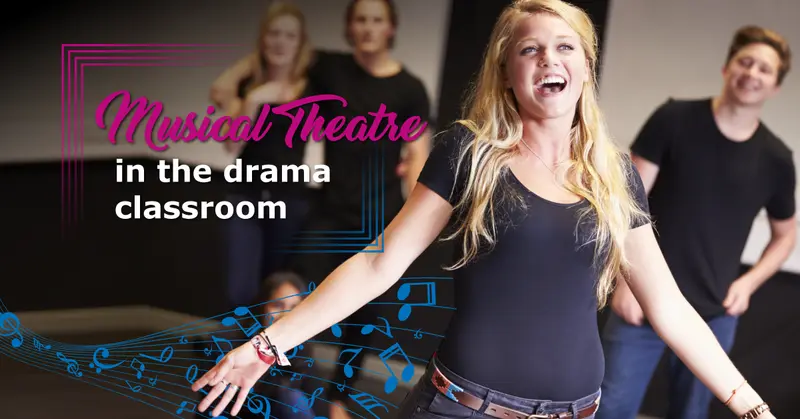
Musical Theatre in the Drama Classroom
Acting

Musical Theatre in the Drama Classroom

Have you ever considered including musical theatre in the drama classroom? Does the thought of singing in front of others scare your students to death? Does it scare you to death? If you’re going to offer a full range of theatre subjects in your curriculum, musical theatre is an important piece. We talked to teacher Colin Oliver about why he includes musical theatre in his program and why you should too, even if you have students who will never sing a note outside of class. Why teach musical theatre to young people?Musical theatre is a wonderful access point for so many people into the world of theatre. Even if the situations are not accessible or relatable, it’s the kind of heightened emotion of the high stakes emotion that young people are particularly drawn to. Why does singing speak to us in a different way than speech?Colin says, “I think that singing is, in some ways, more than just speaking. It’s such an emotionally expressive method of communication. I think it’s very hard to sing without emotion.” Why should the reluctant theatre student learn to perform musical theatre?With the study of voice – whether it be singing or projection – students learn a variety of helpful skill sets in terms of vocal control and projection, how to be heard clearly and safely, and those skills are applicable in a variety of fields. These are skills that everyone can benefit from, whether it be presentations in other classes or job interviews. When does a musical theatre unit have the greatest impact?Colin believes that higher grades (11 and up) in high school is a great time to introduce musical theatre. It’s key to have already established safety and community in the classroom, and a solid foundation in drama. One option is to do a ‘genre study’ so that different groups could study different genres; it provides choice and allows for flexibility. How do you lead a unit on musical theatre if not everyone ‘can sing’ or is comfortable singing?Colin starts his unit with an exercise called “drawing your voice.” Each student is given a sheet of paper and the instruction to “draw what you think your singing voice sounds like.” They then share their drawing and why it looks the way it does. Inevitably, every single student has some self-deprecating response about their voice – even the kids that are really, really strong singers. This allows students to be open about their insecurities, and realize that most people have the same trepidations about singing; it sort of levels the playing field. It then allows everyone to move forward together or to feel like they’re moving forward together. Does the musical theatre teacher have to sing?YES. Colin says: “I think that I can’t ask students to take a risk that I’m not going to take. I don’t think that’s fair. So, particularly in warmups, I model. Show them kind of what I’m talking about. But, even when I work with the small groups or one-on-one, I’ll sing the part for them or I’ll sometimes, when they’re nervous, I’ll sing it with them. Sometimes they just feel like they need a security blanket – a voice to hide behind until they’re comfortable with it. I think it’s really important to take that risk with them.” What other lessons do students learn in a musical theatre class?Students are being asked to take risks. They are out of their comfort zone and accomplishing something they’ve maybe never done before – which is a huge learning experience in itself. As a teacher, your goal is to get them to kind of convey or communicate character through a variety of different texts,so a song can be one of those texts and that is irrespective of whether or not they hit all the notes perfectly. They can still deliver a powerful emotional performance without hitting the notes properly. What advice do you have for teachers starting a musical theatre unit for the first time?• Acknowledge the fear that your students will have, and be as reassuring as possible. • Remember that it’s okay to not be an expert. It’s comforting for your students to see that you’re not a world-class singer and that you may be on a learning journey together. • Give students opportunities to perform for you before you evaluate them. It allows students to work through nerves, which will definitely take over if they aren’t given the opportunity to perform for you and their peers prior to evaluation. Click here to listen to the full podcast or read the transcript.
Directing the School Musical: 5 Tips for Success
Directing

Directing the School Musical: 5 Tips for Success

Directing a musical is a daunting feat. We spoke with three teachers about their experience directing musicals at the school level. From their experiences, we’ve got 5 tips to share that will help make your musical a success. Our guest experts: Roxane Caravan (high school), Kim Florio (high school), and Tricia Oliver (middle school). 1. Plan (well) aheadIt all takes time to have the right actors for a certain musical, explore the script and score, get the rights secured, and build a cast. So, you’ve got to plan well ahead. Kim works with high schoolers, and plans a few years out for her musicals. She says: “I look at my students and sometimes project 2-3 years out. What will they look like when they’re a senior and can I pick this show?” Because you need to have some of your key players before you choose said musical. I always say, “You can’t do Peter Pan unless you know you have Peter.” Roxane agrees: “I base a show on the talent that I know that I have and that I’m generally able to cast the show within reason. I think that that’s really important, as a director.” 2. Build a team and determine the scale of your production early onBefore any work starts with the cast, organize the background players, assign roles, and set the plan and schedule. Kim says: “You need to start thinking, “Okay, what scale am I going to do? Is it going to be large? How many people do I need to pull in? we reach out to our parents and say, “Hey, can you help build? Can you help find these costumes?” And so, that is a process. If you don’t have that in place before you meet all of your eager young high school students, then you’re kind of drowning. You need to go ahead and get that prepared so all of those facets are working while you’re teaching the students the material.” 3. Develop student leadershipA critical part of taking some of the load off the teacher is to develop student leaders. Have students with previous musical experience show the ropes to the newbies. Tricia directs middle schoolers, and says: “I love having that leadership – having somebody else to help hold the hand of the people who are brand new or coming through.” 4. Believe in your studentsEven if you have a group of enthusiastic singers at rehearsal, they may need to morph into dancers and actors and stretch beyond their comfort zone. As a teacher, you need to prepare your students enough so that they are never in a situation that they can’t handle. Letting them know that you believe in them goes a long way. Roxane tells us: “My students say, ‘If [the teacher] believes in us, then I’m going to believe in me.’ What an amazing thing!” 5. Don’t be afraid to choose a musicalTricia says: “I find that musicals energize a program in a way [that] straight plays don’t. The kids love to sing and dance and use those tools to tell the story. And having a chorus (that usually comes with a musical) gives new students an opportunity to be introduced to the stage!” Roxane says: “ Start small. Or do your own thing. If you’re not ready to hit it on your own with a big show, then do something creative on your own.” Listen to the entire podcast here!
How Do You Promote Vocal Safety?
Production

How Do You Promote Vocal Safety?

When you’re rehearsing a musical close to performance week, the last thing you want to hear is that one of your students can’t sing. Promoting vocal health in young singers is crucial. Here’s how some teachers do it with their students. You’ll notice they make a lot of the same points, which means they’re important! Tricia Oliver, Alabama“To constantly self-check and evaluate. Ask: How can I help them? How can I help my students get better on the stage? Students need to be educated on staying healthy and staying hydrated. Make sure they understand the voice is an instrument they need to take care of. Take every opportunity to talk to them about using their mind, using their body, and make sure they’re doing what they need to do vocally. And also to remember that students not only need the vocal warm up from the music teacher but also a vocal warm up from the drama teacher! Don’t forget to include projection exercises.” Joanna Fellows, Maryland“Drink water. Not only encouraging students to drink water but model drinking water. I have a bad habit of drinking a lot of caffeine, but I try hard to drink water in front of my students because it reminds them to drink water too. If you drink a diet coke at rehearsals they’ll think that’s what you do.” Kellybrooke Brown, Alabama“Just be quiet. If you’re in the cafeteria and it’s loud, listen instead of talk. You don’t always have to participate in the conversation. Preserve your voice. It’s so important and kids don’t really understand that. Your voice is your instrument and you have to take care of your instrument. Being quiet is number one.” Rebecca Cates, Kentucky“Warm up. Just as we do with any exercise involving our bodies we have to warm up. The vocal chords and the voice are no different. We have to make sure our muscles are working appropriately. If we don’t warm up our voices, we will have the same problems. Voices have to be taken care of just as any other part of the body.” Roxane Caravan, Florida“My phrase is: ‘Your body is a temple.’ My kids know it; I say it all the time. Stay out of loud places. Don’t eat lunch in the cafeteria. Don’t scream. Eat healthy. Drink nothing but water or herbal tea in the theatre. If you’re in the band you take care of your violin. If you’re in theatre, take care of your whole body. When doing marathon rehearsal weekends, we get parents to rotate and do meals so that no one goes out to get junk food. We make sure the kids eat healthy.” Lea Marshall, Florida“Find a good musical director! Find someone who’s knowledgeable and let them tell you what to do. If you don’t know something, it’s okay to delegate.” Connie Voight, Alabama“It is exhausting for them. I demand 100% and it can be exhausting. We talk about getting enough sleep, turning down fun things for staying home and getting homework done early. Go to your teachers and say, “I know this is going to be a miserable week. Can I get my assignments early?” That way you’re not stressed during performance week. Stress and weariness go hand in hand and that leads to getting sick. And if you do get sick, stay home.” Jared Benn, Pennsylvania“High schoolers aren’t aware of the taxing nature of performance. Use and abuse of the voice. What I preach as a requirement to be in my shows is preventive care. Drink water, get sleep, no screaming, wear a coat when it’s cold outside. It sounds elementary to adults, but to kids (who are willing to run around outside in the winter in their bare feet because they’ve just been at rehearsal) those reminders are very useful. There are things you can do that you’re in control of to help maintain your voice, to make sure you have the stamina to get through a whole show, rehearsal process, year. Yes there are things we can’t control, but let’s concentrate on the things that we can do to avoid putting ourselves in vocally vulnerable positions.”
Ten Rounds for your Next Warm Up
Classroom Exercise

Ten Rounds for your Next Warm Up

Want to get your students working together as an ensemble? Are you looking for a great vocal warm up that will improve their listening skills? Use rounds! A round is a short musical piece in which multiple voices sing the same melody but start the song at different times. When each singer gets to the end of the song, they return to the beginning and start again. Though simple, rounds have a beautiful cyclical sound that requires concentration and focus from your students. It’s easy to get caught up in another singer’s track! Instructions:• Divide your group into three or more sections. • Section One will start the round. • At the end of the first line of the verse, have Section Two start their track. • When they get to the end of the first line of the verse, have Section Three start their track. • Instruct students that when they get to the end of the song they need to go back to the beginning and start again. • Also instruct students to look for your signal to end the round. This means they not only have to listen to each other, but focus on you to know when to finish. RoundsRounds are simple melodies and usually four lines of verse. Don’t be fooled by their simplicity! It’s their simple nature that makes them work when repeated in the staggered fashion. Aside from being a great warm up, consider using rounds to end your rehearsals. The tone, the act of working together, and the ringing melody as the voices die out make this a lovely exercise. Click the title on each round to go to a recording. 1. Row, Row, Row, Your Boat Row, row, row your boat Gently down the stream Merrily, merrily, merrily, merrily Life is but a dream 2. Fire’s Burning Fire’s burning, fire’s burning Draw nearer, draw nearer In the gloaming, in the gloaming Come sing and be merry (Note: Third line can also be sung as: “In the glowing, in the glowing.”) 3. Three Blind Mice Three blind mice, three blind mice See how they run, see how they run They all ran after the farmer’s wife Who cut off their tails with a carving knife Have you ever seen such a sight in your life As three blind mice 4. Frere Jacques (Brother John) Frere Jacques, Frere Jacques Dormez-vous? Dormez-vous? Sonnez les matines, Sonnez les matines. Ding, dang, dong. Ding, dang, dong. Are you sleeping, are you sleeping Brother John? Brother John? Morning bells are ringing, morning bells are ringing. Ding, dang dong. Ding, dang, dong. 5. Make New Friends Make new friends, but keep the old One is silver and the other’s gold. 6. White Coral Bells White coral bells, upon a silver stalk Lilies of the Valley deck my garden walk Oh don’t you wish that you could hear them ring That can only happen when the fairies sing 7. Kookabura Kookabura sit in the old gum tree Merry merry king of the bush is he Laugh Kookabura, laugh Kookabura Great your life must be 8. I Like The Flowers I like the flowers, I like the daffodils I like the mountains, I like the rolling hills I like the fireside, when the lights are low Boom-dee-ah-da, Boom-dee-ah-da Boom-dee-ah-da, Boom-dee-ah-da 8. Ah Poor Bird Ah, poor bird Take your flight High above the sorrows Of this sad night. 10. Rose Rose, Rose, Rose, Rose Will I ever see thee wed I will marry at thy will, sir, At thy will. (another version- a little darker!) Rose, Rose, Rose, Rose Will I ever see thee wed. Aye sir, I will marry When I am dead. Bonus!You can sing these three different rounds together for more of a challenge • Oh Poor Bird • Rose • AND Hey, Ho, Nobody Home Hey, ho nobody home Meat nor drink Nor money have I none Still I will be very merry Hey, ho nobody home Have students write their own! Follow this criteria: • A simple melody. You could have them write new lyrics to an existing melody like Row Row Row Your Boat. • Four lines of verse. Have students study existing rounds, how do they use rhyme? How do they use repetition?
Song Analysis and Singing in Character
Acting

Song Analysis and Singing in Character

Have you ever listened to a singer who hits all the right notes but there’s still something missing? When you sing, especially in a musical, there are necessary elements. Having proper technique. Being able to breathe is immensely important. But the best singer is not always the one with the most polished technique. The best musical theatre performer is the one who finds the heart of the song. The heart of the character. The one who makes the song mean something. Makes it personal. Audiences connect to heart. They connect to personal stories. And if the person singing does this, that’s far more meaningful than a note held till next Tuesday. It’s not just about the notes. So, how do singers connect to the song beyond the notes? Ask questions!Analyze what you’re singing. Ask and answer questions about the character and the song. The more you know, the more you can draw from, the more depth you can create. A held note becomes an emotional connection if you can relate it directly back to the character. Start with these questions: Where is the character physically?And this doesn’t necessarily mean are they in the hall or the kitchen. This could mean: • Where are they in their life? • Where are they in relation to the other characters? • Where are they right before they open their mouths to sing this song? Example: ‘No One is Alone’ from Into the Woods. The baker has just lost his wife and must deal with raising his child alone. In ‘Close Every Door’ from Joseph and the Amazing Technicolour Dreamcoat Joseph has just been thrown into prison, with no hope of getting out. Where is the character emotionally?Musicals happen because they take characters to a point where they can’t do anything else but sing. So what is the emotional ‘why’ for the character that they have to break out into song? Example: ‘I Feel Pretty’ from West Side Story. Maria has no choice but to burst out in song because she’s so happy and so in love. And even in something as frothy as “You Can’t Stop the Beat’ from Hairspray each character has an emotional standpoint. Also ask yourself this: Does the character change their physical and emotional state by the end of the song? What does the character want?Is your character they trying to make a decision? Do they want to share their feelings about another character? Do they want happiness? A new life? Their old life back? This goes hand in hand with knowing the physical and emotional state of the character. Knowing what the character wants and communicating that in the song is the easiest way to connect to an audience. Example: After a boy runs away from her, Elphaba in Wicked sings ‘I’m not that Girl’ (as in the girl that boys like) but what she wants more than anything is to BE that girl. In ‘I could have danced all night’ from My Fair Lady Eliza wants her spectacular night (and her new turn in life) to go on and on and on. In ‘Music of the Night’ The Phantom (The Phantom of the Opera) wants Christine to love his music and love him. It’s so important to sing the want in the song, not just the notes that make up the song. What’s going on in the song?What is the story of the song? Make sure you understand what’s being said. What’s happening in the story up to this point. Sometimes musical numbers rely on metaphor and it’s easy to catch someone who is only spouting words without any thought behind them. Can you write a one line description of the song? Who is the character singing to?Is it a specific person? Is it to the audience? If it’s the audience that’s fine, but think about what the character is trying to communicate to the audience, or get the audience to do. Be specific, and ‘no one’ is not an answer. Example: When Annie sings ‘Tomorrow’ she is singing to her dog, but also to herself. She is convincing herself and the audience not to give up, there’s always tomorrow. Song Analysis‘Somewhere That’s Green’ from Little Shop of Horrors is a song that has some very funny lyrics and traditionally Audrey has a very funny voice so it’s easy to get trapped into focusing on those aspects when singing the song. It’s easy to play Audrey simply as a dope. But that’s pretty boring for you, and certainly boring for the audience. There is a lot of character in the song, and more importantly a lot of heart. There is a lot for a singer to connect to, and in turn bring that connection to the audience. At this point in the musical, we know Audrey works at Mushnik’s Skid Row flower shop and have met her abusive motorcycle riding dentist boyfriend Oren. Right before the song, Audrey reveals she might have feelings for the main character Seymour. Seymour is the completely opposite of her boyfriend. Click here to read the lyrics to the song. Based on what you read how would you answer the following questions? • Where is the character physically? • Where is the character emotionally? • Does the character change their physical or emotional state? • What does the character want? • What’s going on in the song? • Who are you singing to? Where is the character physically?: Audrey lives in the city, in ‘Skid Row.’ She is as far away from somewhere that’s green as humanly possible. She is in the middle of an abusive relationship (black eye, arm in a cast) She reveals that she likes Seymour and dreams about being with him in an ideal place. She’s never shared these thoughts before. Where is the character emotionally? Audrey is unhappy but doesn’t think she deserves better. (She sings about this in ‘Suddenly Seymour’ – Nobody ever treated me kindly, daddy left early, mama was poor. I’d meet a man and I’d follow him blindly…) coupled with this is a belief of how happy she’d be in her dream. Pure unhappiness and pure happiness all at the same time, that’s what makes her sing. Does the character change their physical and emotional state? Yes. She goes from the reality of her situation, to the dream of the white picket fence and then back to the reality of her situation. At this point in her journey, she can’t believe that she’ll ever escape. What does the character want? Audrey wants the white picket fence. She wants the suburb, the green grass, the TV dinner, and most importantly, the guy who will treat her right. What’s going on in the song? Audrey describes her ideal life. It highly contrasts her real life. Who is the character singing to? Crystal, Ronnette and Chiffon are in the moment with Audrey as are her audience. Audrey is also singing to herself. She needs to convince herself to keep up this dream of hers, despite her reality. Do this exercise with your students
Directing the Middle School Musical
Podcast

Directing the Middle School Musical

Episode 108: Directing the Middle School Musical Brian Borowka teaches a grade 8 musical theatre class which culminates in a production. He passes on his tips for directing a middle school musical, the challenges for casting an entire class and, his favourite/least favourite experience.
What kind of licensing/permission is required to play a song in a play?
Production

What kind of licensing/permission is required to play a song in a play?

When I was researching my blog post on copyright for choreographers, I stumbled on this excellent post that addresses a question many theatre directors have: “What kind of licensing/permission is required to play a song in a play?” Entertainment lawyer Gordon Firemark gives a very good summary of various scenarios, what types of rights are needed, and who should be contacted for those rights. I also encourage you to read through the comments at the end of the post. There are some very good questions and answers in there too.