Facebook Pixel Skip to main content

📣SCRIPT SALE! Treat yourself to an easier Fall. Save 30% on 5+ perusal scripts with code SPRING30 before May 3 and head into summer stress-free.

Production

Seriously Stylized Comedy: No Horse Town
Featured Plays

Seriously Stylized Comedy: No Horse Town

No Horse Town by Lindsay Price is all about style—style in the language with the specific manner in which the characters speak, style in the action with the numerous character ‘poses’ and the very stylized telling of what happened in the town of Heywood. Together with Heather Mortimer, the talented student performers at Carleton Place High School in Carleton Place, Ontario took a comedic journey through this no car, no horse, no street town and found that crossing the street in this small town is as daring and dangerous as it gets… “Carleton Place High School’s production of No Horse Town (shown here in rehearsal) won Outstanding Production at the Kingston and St. Lawrence District Sears Drama Festival! This was our first time competing. We will go on to compete at the Regionals in a month. Director, Peyton McClelland, also won an Award of Excellence for her hard work.” Congratulations, Carleton Place High School!
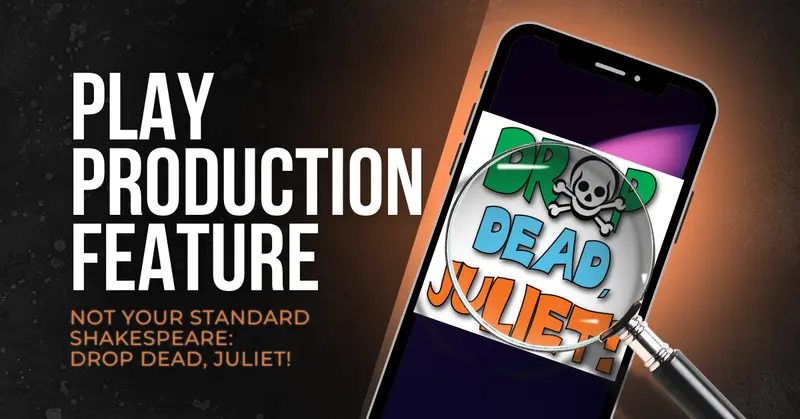
Not Your Standard Shakespeare: Drop Dead, Juliet!
Featured Plays

Not Your Standard Shakespeare: Drop Dead, Juliet!

Romeo and Juliet may never be the same, thanks to the comedic classical adaptation, Drop Dead, Juliet!, by Allison Williams. Director Catie Reardon and the drama students at Rio Grande High School in Albuquerque, New Mexico channeled their inner-Shakespeare with this one-act comedy. Not simply a spoof of the Shakespearean classic, this modern version takes on a life of its own. Juliet demands a new story – and in Drop Dead, Juliet!, she definitely gets it! “Drop Dead Juliet is almost ready for an audience, and my actors are having so much fun! Love, death, sword fights, what else does a good Shakespeare play need?!” Way to go, Rio Grande High School!
The First Rehearsal Read-Through: Yay or Nay?
Acting

The First Rehearsal Read-Through: Yay or Nay?

When working on a production with students, one of the first rehearsals (if not the very first rehearsal) is often dedicated to a full read-through of the script. This generally consists of the full cast assembling together in a room, sitting in a circle, and reading the full show out loud, with the a stage manager reading the stage directions. While this initial read-through can have many benefits, I’m going to go out on a limb and ask the question: “Is the first read-through an absolute necessity?” I must admit that for the past few shows I’ve directed, I have skipped the read-through altogether. Let’s look at some pros and cons of having a first rehearsal read-through. Yay!First, and possibly most importantly, it brings the cast together for the first time so they can get to know each other. It gives them a chance to hear the full show, out loud. This is especially important if it’s a show students aren’t entirely familiar with. If the show is a musical, students can hear the music as it will be performed in the show. If possible, let them all sing along. This is a great bonding opportunity and, for many of the students, it might be their only opportunity to sing some of the songs (especially the solos). It gives students the chance to notice any cuts or changes to the script, particularly if the show is based on a book or film, or if it’s a school or “junior” edition of a famous show. It gives you, the teacher/director, the opportunity to listen to the cast’s initial interpretations and thoughts of the characters and situations. You can listen for how lines sound, how jokes land, how words might be mispronounced, and how students react to the show. You may also notice potentially difficult or problematic scenes to block or choreograph. It gives you the chance to explain your vision for the show, and answer any questions that students may have about the script or show. With the cast fully in attendance, everyone will be able to hear and understand your plans. This is your chance to get them really fired up about the experience! It’s also your opportunity to explain rehearsal procedures and expectations, and convey any important information that the cast must know about, like rehearsal and performance schedules (including off-book day). Nay!A full read-through can be a lot to sit through, particularly for younger students. While it’s good practice for being quiet backstage, sitting for long periods of time can get tedious (especially for ensemble members, dancers, or students with few lines). They may feel that they are less important to the whole of the show. While we know this isn’t true, it’s important to remind students of their importance to the team (no matter how small or big their role is). It can get confusing if any roles are double-cast. Will you have your double-cast actors read in unison, or split up the lines? (Perhaps one actor can read during Act One, and the other during Act Two.) It can be seen as more beneficial to the cast than the crew. It may appear that there isn’t much for the assistant stage managers, designers, or techies to do during an initial read-through. You may want to figure out an alternative activity for the crew– perhaps they can start working on designs and planning at the same time. If you have limited rehearsal time, it may be more helpful to your schedule to skip the initial read-through in favour of getting right to work. I rarely schedule a read-through in my rehearsals anymore; rather, I like to start my first rehearsals by learning a big group number, or blocking a full-cast scene. This way, the full cast gets together and gets to know each other, but they also get right down to work. What are your thoughts on the initial read-through? Is it a vital part of your rehearsal process, or something you leave out? What are your best tips and tricks for having a great read-through? Share them with us! Kerry Hishon is a director, actor, writer, and stage combatant from London, Ontario, Canada. Check out her blog at www.kerryhishon.com.
A One-Act Movement-Based High School Drama: Backspace
Featured Plays

A One-Act Movement-Based High School Drama: Backspace

Writing may be a struggle but tackling Backspaceby Lindsay Price definitely is not. This movement-based high school drama explores personification in a unique and vivid manner. Where else can you bring a typewriter to life? The drama students at Great Bridge High School in Chesapeake, VA, under the direction of Dr. Shelley Nowacek, performed this one-act production with award-winning results: “We won conference for VHSL (Virginia High School League) with this show!” Congratulations, Great Bridge High School!
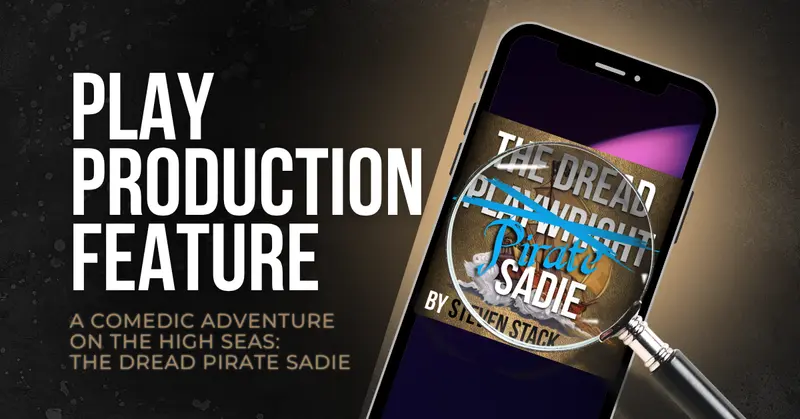
A Comedic Adventure on the High Seas: The Dread Pirate Sadie
Featured Plays

A Comedic Adventure on the High Seas: The Dread Pirate Sadie

Ahoy, Drama teachers: take high school to the high seas with Steven Stack’s The Dread Pirate Sadie. The swashbuckling students at Miss Edgar’s & Miss Cramp’s School in Montreal, Quebec set sail on this one-act comedy and tackle the perils of piracy with perfection. “This middle school play was everything…funny, entertaining, and witty, accompanied by stunning costumes and set design. Congratulations to the cast and to Ms. Mullin on such a successful production!” Amazing production, Miss Edgar’s & Miss Cramp’s School!
A Classical Comedy Shakespeare-Style: Mmmbeth
Featured Plays

A Classical Comedy Shakespeare-Style: Mmmbeth

Prepare yourself for some sensational Shakespearean silliness! Mmmbeth, by Allison Williams is a hilarious adaptation of the Scottish play where everything goes wrong in the best possible ways. Sara-Margaret Cates and the student performers at Tuscaloosa Academy in Tuscaloosa, Alabama performed this classical adaptation and had a great time doing so. “My upper school class performed Mmmbeth last spring, and had a great time! They had previously studied the original Scottish play, and found this interpretation to be a lot of fun. It was a great opportunity for many beginning actors to get out of their shells and be silly with Shakespeare. It was a great experience! – Sara-Margaret Cates” Fantastic job, Tuscaloosa Academy!
A Futuristic One-Act Drama: Look Me in the Eye
Featured Plays

A Futuristic One-Act Drama: Look Me in the Eye

How do you decide when to respect authority and when to question the system? Teenagers in Look Me in the Eye by Lindsay Price learn about the dark side of the utopian vision in this haunting futuristic drama. Under the direction of Kelli Connors , the drama students at Noble High School in North Berwick, ME took great care to bring this futuristic vision to reality. “We were going for a futuristic look in the play since it takes place in a future society. We went for a very angular costume look with the people who have status. This is why Rea has very rigid straight lines with a flair at the bottom for youth and Rea has straight lines that are broken up by somewhat curvy lines, but curvy lines that are not predictable or necessarily symmetrical. She has an appliqué of the fabric from her pants on her shirt with a unpredictable wavy shape that is intersected by a metallic straight line. All characters have some sort of metallic feature to their costumes. The set is meant to mirror this with sharp angles out of “metal” that has been riveted onto the walls or furniture. The only circular forms are the splatters on Vio’s pants and the set walls. These are reminiscent of blood splatters without being overly obvious in their color. As for the boxes they stand on, they bring their signs in with them and choose a box to stand on for the observation. The stripes have to do with status and there is a slight shuffle between Rul and Vio when they first enter the room as to who gets the box with the most stripes. We also added a multimedia element at the beginning of the play. A film plays on the monitor and talks about how we came to be the society we are now – a government propaganda film with voiceovers and underscoring. The film ends with an eye that watches them and moves with them which stays on the monitor through their time of observation. The Offense Officers are voices that are coming from above with a combination of sweeping spotlights and sirens. Every sound byte sounds electronic or automated…such as the opening of the box that holds the list, shown upstage of Vio in this first pic. I use a sound of dripping water throughout the show that serves as an element of sensory overload for the audience as well as the heartbeat of the show. The performers and the audience feel the effects of this form of control.” Amazing job, Noble High School!
Casting Challenge: Not Enough Actors!
Directing

Casting Challenge: Not Enough Actors!

Our next casting challenge is the exact opposite of our last post. What happens when you have fewer actors than named parts in the script? This can be a great acting challenge for students, as it will entail some of them taking on multiple roles in the same show. But it can get quite busy and complicated trying to keep their various character tracks and costume changes straight! Here are some suggestions for casting a show with fewer actors than named roles: • Search for creative doubling opportunities. See what characters could logically be played by one person. • Look for characters who only appear in Act One vs. Act Two. • Look for characters that only appear in one scene and then don’t come back. • Combine a group of similar roles into one role. For example, if your show has a big group of servants, all the servant roles become one single “Servant.” • Reassign lines to other characters , if it can be done and still make sense. For example, I directed a show where we had three “bad guys” and one of the three actors dropped out of the show two weeks before the show opened. We weren’t able to get a replacement, so we took that actor’s lines and dispersed them between the two remaining “bad guys.” (Don’t forget–you must always get permission from the playwright before making changes to the script!) • Creative quick-changes. Can students change costumes to become another character? Oftentimes a hat or jacket can make a big difference. But even without a costume change, this is a great chance for students to focus on really changing physicalities, voices, and mannerisms between characters! Two examples of this are the musical The Toxic Avenger and the play The 39 Steps, where casts of five and four actors (respectively) play a huge multitude of parts, often in the same scene! In The Toxic Avenger, there is even a song where one actress who plays two different roles sings a duet between those two characters–at the same time! • Consider cross-gender casting. Nine times out of ten you will have more girls than boys auditioning for shows. If you have an overabundance of girls, can a female actor play any of the roles? (Be sure to decide whether or not the girl will be playing a boy role as a boy, or if the character will be changed into a female– i.e. Simon becomes Simone, etc.) ExerciseThe following exercise challenges students to cast a show using their classmates, and then forces students to figure out how to recast the show when their classmates are taken away! Have each student complete this exercise individually. 1. Select a play or musical that the class will use for the basis of this exercise. (If you are already studying a particular production in class, so much the better.) If possible, select a play or musical with approximately the same number of named roles as there are students in the class. 2. Individually, students will cast the play using the dramatis personae (character list) in the script. They will also use their knowledge of the play itself and their classmates’ skills and dramatic ability. Students should include themselves on their cast list. 3. Once students have completed their lists, the teacher will put each student’s name on a slip of paper, and put the slips into a hat. The teacher will then draw out 25% of the slips of paper. For example, for a class of 20 students, five names will be drawn. These students now cannot be cast in the show. 4. Students must go back to their lists and create a second list, recasting their show without those five students in the mix. How will they reassign roles? 5. Students will note the reasons for their recasting choices below their second list. For example: “Jamie will now play the roles of both Ms. Carling and Miss Jones, because Ms. Carling only appears in Act 1 and Miss Jones only appears in Act 2.” 6. Then, after students have recast their show with one quarter fewer actors, the teacher will draw out 25% more names (going back to our first example, in the class of 20, now only ten names will be remaining). Now these students also cannot be cast in the show. 7. Students will go back to their second list and create a third list, recasting the show with only half the number of actors they originally had. Again, they must note the reasons for the recasting below their third list. 8. Students can get as creative as they wish for doubling and ensuring all the roles are covered. Depending on which students’ names get pulled out of the hat, you may end up with too many students of one gender–perhaps “Lord Smythe” becomes “Lady Smythe,” or perhaps a girl just ends up playing a male role. Maybe one student has a scene where he performs all the characters by himself, or perhaps another student plays every single “one-off” role themselves, with a multitude of quick-changes! The students’ intended casting will end up very different than what they originally intended. But as they say, “the show must go on!” 9. Once students have completed all three lists (including creative solutions for casting challenges), they will complete a reflection and submit all four pieces for evaluation.
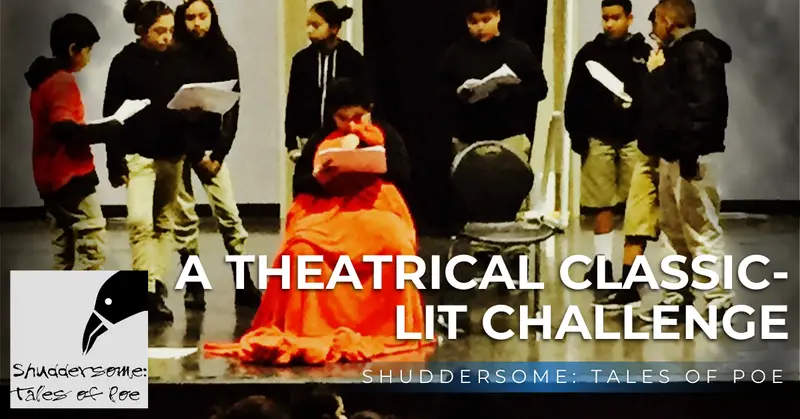
A Theatrical Classic-Lit Challenge: Shuddersome: Tales of Poe
Production

A Theatrical Classic-Lit Challenge: Shuddersome: Tales of Poe

Drama teachers, are you looking for a challenging, creative take on classic literature? Be inspired by this production of Shuddersome: Tales of Poe by Lindsay Price. Specters, ghosts and ghouls come alive in this vivid theatrical adaptation of some of Edgar Allen Poe’s best-known works. Included are The Tell-Tale Heart, The Raven, and The Masque of the Red Death. Under the direction of Katharyn King , the talented student performers at PUC Triumph Charter Academy in Sylmar, California took on and mastered these theatrical adaptations of the classics and appealed to fans of Edgar Allen Poe (and those who didn’t even know they were fans!). “My 6th grade cohort can be seen rehearsing The Tell-Tale Heart vignette from Shuddersome on Jan. 20 2017! I could not be more proud and the piece was easily the crowd favourite. I love these kiddos! – Katharyn King” Great job, PUC Triumph Charter Academy!
A Strong Character Comedy: Smarty Pants
Featured Plays

A Strong Character Comedy: Smarty Pants

Smarty Pants by Bradley Hayward is a fantastic comedy production for high schools or middle schools. Jeremy Toth and the students at Trinity Catholic School in Tallahassee, Florida recognized that this would not only be a great performance piece to showcase the various characters but would also be a perfect competition production. It sounds like the judges agreed! “I chose Smarty Pants because the story is great and I knew it would resonate with my students! Plus, it has simple set and costume needs which was perfect for our first year competing at the district Junior Thespian Festival! My students brought the play to life and were praised for their ability to bring eight distinct characters to life and maintain them throughout the whole play! We received straight superiors at the Festival and we were chosen as Critic’s Choice to represent our district at the State Festival in February where we received a Superior rating! The students were commended for their great sense of ensemble and ability to create and maintain distinct characters throughout the show! – Jeremy Toth” Congratulations, Trinity Catholic!
A Light Look at the Dark Side: A Lighter Shade of Noir
Featured Plays

A Light Look at the Dark Side: A Lighter Shade of Noir

When you think of ‘film noir’, do you think of comedies? If not, you definitely want to check out A Lighter Shade of Noir by Patrick Derksen. Mark Ogle and the student drama group at Butte High School in Picture Butte, Alberta took on this fabulously funny and high styling take on film noir and a great and successful time was had by all. “The school I teach at is grade 7-12. They never really had a theater project that had been done in the way that I was accustomed to from my days at the University of Lethbridge. I had 27 students, 5 of which were from our feeder school that were in grade 5/6, along with having 4 staff members participate in the play as well. It was amazing! Everyone was phenomenal and it steered one student to go into the Fine Arts program at the university as well. It definitely set us up for another one this year!! – Mark Ogle”
Current Communication Comedy: ths phne 2.0 the next generation
Featured Plays

Current Communication Comedy: ths phne 2.0 the next generation

Whether you’re technologically challenged or cellphone savvy, you’re sure to enjoy ths phne 2.0: the next generation _by Lindsay Price. This modern comedic vignette play will have audiences blogging, tweeting, and LOL’ing all the way to curtain call. Sheila Gatensby and the drama students at Blessed Cardinal Newman High School in Toronto, Canada performed the play and showed how "face to face is so yesterday“. “The design for the flats evolved out of a great group discussion – a true ensemble once they agreed on the concept -they each took a flat and chose what text would be on it making sure not to duplicate each other’s texts. Britney, our stage manager kept everyone on track! They had a great time with this show. – Sheila Gatensby” Way to go, Cardinal Newman!
Staging Your Show: “Same Show, Different Stages” Exercise
Classroom Exercise

Staging Your Show: “Same Show, Different Stages” Exercise

Different venues can have a huge effect on a production. They can create beautiful and intriguing staging options for directors and designers, and really surprise and enchant audiences. They can also pose many challenges to the production. For this exercise, students will compare and contrast different types of stages/venues and look at how different stages can affect how a show is performed. This exercise will help students think outside the box and come up with creative ideas about staging a show. Types of StagesHere are seven different types of stages/venues that shows could be performed on/in: • Proscenium stage (stage facing the audience, straight on) • Traverse stage (stage is surrounded on two sides by the audience) • Thrust stage (stage is surrounded on three sides by the audience) • Theatre in the round or arena stage (stage is surrounded by audience on all sides) • Black box theatre (a simple, unadorned performance space, usually a large square room with black walls and a flat floor) • Outdoor venue (student’s choice as to exactly where the outdoor venue is) • Site-specific or alternative venues (like a show set in a warehouse, hotel, hospital, etc.) Pre-KnowledgeYou might want to start this exercise by showing pictures of the seven types of stages. Project them on a screen so everyone can see. Instruction 1. Students select partners. Have each pair select a play or musical that they would be interested in staging. Each partner will then draw out of a hat one of the seven stages/venues listed above. That way, each pair has two different locations to compare. 2. Students will create a pro and con list for both venues they selected, comparing and contrasting strengths/weaknesses and advantages/disadvantages. Students should aim for a minimum of three pros and three cons per stage/venue. Here’s an example: Romeo & Juliet on a Thrust Stage PROS CONS - Easy to create a large unit set. - Can have a huge audience; lots of seating available around the stage. - Reminiscent of Stratford Festival, which is a classic venue for this kind of show. • Blocking is challenging on a thrust stage (sightline concerns; need to ensure all audience members can see properly). • Stage combat is also difficult to stage on a thrust stage (audience all around = more angles to see fake punches/slaps). • Where to store large set pieces?Romeo & Juliet in an Outdoor Venue PROS CONS • A great option for a special summer show (i.e. “Shakespeare in the Park” – marketing perk). • Could have a real balcony for the balcony and garden scenes. • No need to create extensive sets if we use a venue that is already beautiful (i.e. university courtyard). • What if it rains? • Can be difficult to hear outside; actors will really have to project. • Do we need special permission and/or a permit to perform stage combat outdoors (could be perceived as violence)? 3. Once students have created their charts, each pair will join another pair (to make a group of four) and the groups will share their charts with each other as well as make suggestions and thoughts. Once each group has completed their discussions, students will complete an individual reflection.
Choosing Your Artistic Team
Directing

Choosing Your Artistic Team

As a busy teacher and director, having a great artistic team is essential to a successful school production. Having a great team in place means that you have a supportive, enthusiastic group all working together to create an amazing experience for your students. It also takes the pressure off of you to have to run the entire production by yourself! The earlier you get your team selected and committed to the production, the easier it will be on you. It’s not just a matter of getting a “warm body” in the position—it’s imperative to get the RIGHT person in the position. Here are five things to consider when selecting your artistic team for your next production. 1. Establish what core artistic team members you need. Sit down and make a list of all the core artistic team member roles that you will need to fill for the production. For any show, you will need a stage manager and at least one assistant stage manager. Ideally, you will also want a producer, to assist with things like budget, acquiring rights and royalties, helping with publicity, etc. You might wish to take on an assistant director. Which roles will be filled by students and which ones will be filled by adults? If you’re doing a musical, you will need a musical director and choreographer. You’ll also need to decide whether you will use pre-recorded backing tracks (if they’re available), or if you will use a band/orchestra (which will require more team members during the run of the show). (Check with your musical director to determine whether you or they are hiring the musicians!) Depending on your show’s specific needs, you might also need to think about design, technical, and specialty team members right away. For example, if your show includes a lot of stage combat (like The Three Musketeers or Treasure Island), you will want to hire a fight director as one of your core team members. 2. Passion for the project. Are your potential team members excited about the title you have chosen? Why are they excited about it? Are they just doing it because they are required to commit to an extracurricular activity or because they are getting paid? Or are they genuinely excited about contributing to this particular production? The attitude and enthusiasm of the team members will directly impact the attitude and enthusiasm of the students involved. You want to ensure that your team is just as excited about the project as you are! 3. Scheduling. You might have the most excited team members on the planet, but they are useful to you only if they can attend the rehearsals. Will you set your schedule first and then hire team members that will fit the schedule? Or will you hire your team members and then fit the schedule around their availability? Are you willing to create a rehearsal schedule for a potential “part-time” staff member? For example: Let’s say your show rehearses Mondays, Thursdays, and Fridays, but your choreographer has a prior commitment on Mondays. Can you get away with having your choreographer only available for Thursday and Friday rehearsals, or do you need a larger time commitment from them? Be aware of performance dates, as well. Are you expecting the team members to be at every performance on top of all the rehearsals? 4. Compensation. It’s a touchy subject, but it must be addressed–is the role a paid or voluntary position? Be very upfront with potential team members as to whether or not the position is paid, and (if it is a paid position) how the payment works. Will the team member be paid an hourly rate or a lump sum? When will payment be received (on a weekly basis, or after closing night)? Does the team member need to sign a contract? On a related note… If you hiring an artistic team member who is not part of the school system, that person will most likely be required to provide a police background check. (Note: If this person is a minor, then most likely you can substitute the police background check with a vulnerable sector check.) The costs tend to be different depending on whether or not the position is paid or volunteer. You will want to check with your school board and police station to find out the requirements and costs, and whether or not the potential staff member will be required to pay for it themselves or be reimbursed. Ensure that this is taken care of before work begins with students! 5. The right mix of people. This is one of those things that is harder to gauge but can really affect a production. If at all possible, get the whole potential team together before auditions so you can see how everyone mixes with each other. Have your team members worked together before? Do your ideas blend together, or are people trying to talk over each other? If a conflicting idea is brought up, how is the conflict resolved? As the director, do you want to be the boss of the production, or do you want a more team-oriented approach? These are all important things to consider. Also realize that different team members will work well with different people. Just because Choreographer X did an amazing job on their last production, doesn’t mean that you will work well with that person, or vice versa. Kerry Hishon is a director, actor, writer, and stage combatant from London, Ontario, Canada. View her blog at www.kerryhishon.com.
A Character Study Comedy: Beauty and the Bee
Featured Plays

A Character Study Comedy: Beauty and the Bee

When two worlds collide sparks are bound to fly! Such is the case in the movement-based comedy _Beauty and the Bee _by Lindsay Price. Perfect for high school and middle school students alike, this is an excellent play with a strong focus on character study and development. Catherine is a high school beauty queen cheerleader. Cosette is a homeschooled spelling bee champion. Two sisters could never be farther apart. So when their worlds collide sparks are bound to fly. The buzzing in their brains gets so hot that life-sized giant bees enter the picture. Then the emotions explode! Sisters, spelling bees, fruit leather, fitting in, photographs, photo ops, say cheese… Andrea Watson and the talented performers at Stony Brook School in Westford, MA had a great time performing Beauty and the Bee and took some of the key messages to heart. “I had my students do some work on the different pressures they think the bees represent, and each of them is going to wear that pressure on their shirt (“be pretty” “be smart” “be the star”) _– _Andrea Watson” Great stuff, Stony Brook! Photo credit: ASA Photographic.
What Makes the Best Assistants?
Directing

What Makes the Best Assistants?

Theatre is such a collaborative art form. As the saying goes, “many hands make light work.” Theatrical production assistants come in many forms. Pretty much any crew member or artistic staff member can have an assistant. In my own theatrical history, I have held a number of assistant roles including: Assistant Stage Manager, Assistant Fight Director, Production Assistant, Assistant Director, and Director’s Assistant (the last two are very different positions, despite their similar titles!). An assistant’s most basic function is to make the life of the person they’re assisting easier, by helping with various tasks and taking on necessary responsibilities to get the particular job done. Assistants also have the opportunity to grow and expand their skills, by being mentored by and learning from those who have more experience. Today’s assistants might be (and should be!) those people running future shows. Assistant roles are a great way for new and upcoming drama students to get involved in productions and learn in a hands-on environment. With this in mind, what makes the best assistant? Here are the three must-have traits of a great assistant. 1. They’re organized souls.The best assistants know what’s on the schedule and what’s going to be worked on next. They have a list of what needs to be completed and by what deadline. Not only do they have everything important neatly noted (bonus points for colour-coordination!), but they’re always the first to show up and the last to leave. 2. They anticipate their leader’s needs.The best assistants have the answers to questions at their fingertips and they come up with creative solutions to problems. They also observe their leader and know what to do when situations arise. They get to know their director’s routines and habits, then act accordingly. The really awesome ones are proactive about helping things run smoothly. For example: During a production I directed of The Little Mermaid, my amazing Assistant Director, Ben, went ahead and typed up a list of students’ entrance and exit locations and posted it backstage for the actors to refer to—without my asking him to do so. He showed it to me, saying, “I know that when I’m in a show, I find this sort of thing useful, so I thought the actors might as well.” Awesome! 3. They know when to speak up…and when to be silent.There comes a point where the artistic staff members’ brains are so full that they need to just do something (anything else!) to clear their thoughts. The best assistants will help them achieve this—whether it’s by giving suggestions or alternatives, or staying quiet and letting the staff member talk through the issue. Remember, it’s up to the assistant to anticipate the needs of their individual leader. That could involve anything from getting them a coffee, to doing a line run with the actors, to being a placeholder for the Choreographer. I’ve seen all of these things happen before! Each artistic staff role is different. Each role has different responsibilities and demands. A lighting assistant might be taping down cables, while a Dance Captain is leading a warmup, while the Assistant Stage Manager is calling an absent actor. At the end of the day, an amazing assistant is an extremely valuable person to have around—train and treat them well, and keep them close. Kerry Hishon is a director, actor, writer, and stage combatant from London, Ontario, Canada. Explore her blog at www.kerryhishon.com.
The Green Grass Grows: They Eat Sunshine, Not Zebras
Featured Plays

The Green Grass Grows: They Eat Sunshine, Not Zebras

Drama teachers: How do you teach your students about what happens when their orderly way of life gets turned upside down? They Eat Sunshine, Not Zebras by Dara Murphy is the perfect comedy for high school and middle school students alike. Nothing stands in the way of the green grass. Until they wake up one morning to see a yellow dandelion in their midst. A dandelion will turn their orderly way of life upside-down. A dandelion must be destroyed. Isn’t that what you do when something is different? Under the guidance of Kate Olena, the talented students at Nichols Middle School in Buffalo, New York had a great time exploring the themes of this fun one-act comedy: “Theatre class is mandatory for 8-weeks each year at Nichols Middle School. I had a group of students who were very shy and only moved their hands onstage, if they moved at all! This play was perfect for my thrust stage in a multi-purpose space. The characters (mostly blades of grass) had no hands and were rooted to the floor, so they had to use their bodies in ways they had never done so before to express their views. The theme of the year was “Utopia/Dystopia”. The metaphor was not lost on our audiences. – Kate Olena” Way to go, Nichols Middle School!
Getting Organized: Create a Personnel File
Production

Getting Organized: Create a Personnel File

If one of your New Year’s resolutions is to get organized, then this post is for you! Teachers are busy people and have a million things to remember. Remembering every student who has ever worked on a show for you is a difficult (if not impossible) task. Yet when it comes to recruiting students for your next production, it is invaluable to have that information available to check back on. Creating and keeping an updated personnel file can help you stay organized. You can use it for keeping track of students’ volunteer hours, if they need you to sign off on volunteer work done, or if they’re applying to colleges or universities and want you to write them a recommendation letter. It can be used for volunteer retention–if you’re missing an important team member, you can simply look at your personnel file and reach out to students who have helped you out in the past. You can reach out to those people right away, since you know they’re experienced. A personnel file can also be used for volunteer recruitment–those students who have volunteered for you in the past might have friends or family members who are interested in helping out or learning more about theatre. The students can advocate for the experience, helping you gain some more recruits. I recommend having two files for personnel recording. The three formats I tend to use for personnel files are: Excel, Access, and Google Sheets. The first file is a general overview personnel file. This file lists the various backstage/technical/front of house roles (feel free to add/remove columns, depending on your program). Underneath, it lists the students’ names that are trained in those roles. This way, you can see exactly who you can tap if you need people for a particular role, or who you might be able to cross-train into another role. It’s also a good indicator of whether you need to train more people in a certain position. For example, you might have a ton of students who are trained lighting operators, but have a lack of students who are trained wireless microphone assistants. Update this file frequently–be sure to add names as soon as a student has successfully completed the role (perhaps after closing night of a show), and note if/when the student is no longer available (graduated, changed schools, moved, etc.). Don’t delete the names–perhaps change the colour of the font or cell fill, move the name to the bottom of the list, or move the name to a separate alumni page. It’s important to keep past students’ names on the list in case they contact you after the fact! The second personnel file is a more detailed file for each student. This file should include the student’s name, date added to your system, current grade, contact information, the show the student worked on, the date or season of the show, the role or position the student worked on, the total number of hours the student volunteered, and any additional notes (coaching, concerns, praise, etc.). This file could be either digital or hard copy and kept in a binder. Again, once the student moves on, you can move their file to an archival or alumni list. Don’t delete or throw out their file right away, in case they wish to access this information in the future. Taking a few minutes to create and set up personnel files will help you immensely in the long run. They will help you stay organized, keep accurate records, help with recruitment and retention, and let you have one less thing bouncing around in your busy brain!
Taking on the Producer's Role: Elevator Pitch
Production

Taking on the Producer's Role: Elevator Pitch

The following exercise gives students the opportunity to pitch their dream show to the rest of the class. This is a great exercise to do with students after you’ve polled your class. Now that they’ve identified which shows they are interested in working on, they are going to take the next step: discovering what it takes to get the ball rolling towards actually producing a show. This exercise combines students’ theatrical knowledge with a useful technique taught in business class: SWOT analysis. SWOT stands for Strengths, Weaknesses, Opportunities and Threats. A SWOT analysis is used to specify the objective of a business venture or project, and to identify and evaluate different internal and external factors (both positive and negative ones) to achieve the objective. In this exercise, the objective of the project is to select the best possible show for your drama class to produce. Students will select partners and decide on a show that they wish to produce. As a team, they will complete a SWOT analysis, identifying the following aspects of their show: • Strengths: Characteristics of the show that give it an advantage over other shows. • Weaknesses: Characteristics of the show that place it at a disadvantage relative to other shows. • Opportunities: Elements in the environment (the class itself, the school, the stage, etc.) that the class could exploit to its advantage to produce the show. • Threats: Elements in the environment (the class itself, the school, the stage, etc.) that could create obstacles for putting on the production. Students will fill out the following table with answers to each section:
Exploring Teen Issues Through Comedy and Drama: Puzzle Pieces
Production

Exploring Teen Issues Through Comedy and Drama: Puzzle Pieces

_Puzzle Pieces _by Krista Boehnert mixes humour and and drama to help high school students explore teen issues through a series of monologues. Keigan Page ‘s students at The American School in Vietnam performed the play and were able to truly connect with the characters they portrayed. “We launched a new senior level drama class this year called Advanced Performance Production. The purpose of this class was to become a theatre company. We are quite a small school, the class itself was only 6 students. With a student director we chose to perform Puzzle Pieces. The students connected with their roles in a way I have never seen high school students connect. The whole show was student run with the actors/director doubling as set designers, costumes, advertising etc. This was so important, it is not just about teen issues but speaks to people of all ages. – Keigan Page” Great stuff, American School!