Facebook Pixel Skip to main content

📣SCRIPT SALE! Treat yourself to an easier Fall. Save 30% on 5+ perusal scripts with code SPRING30 before May 3 and head into summer stress-free.

Spooky

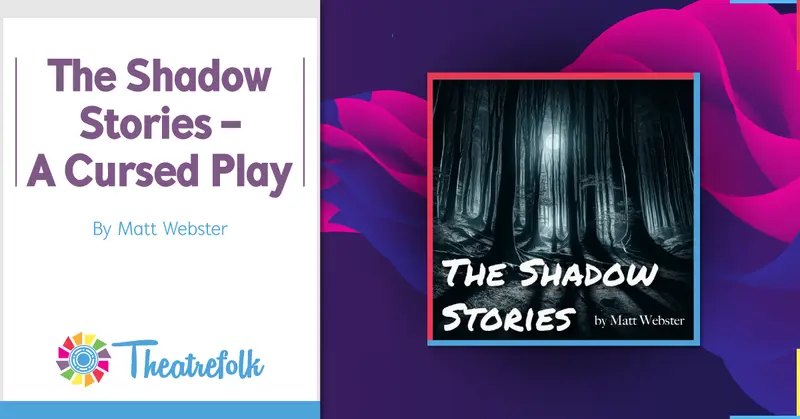
Theatrefolk Featured Play - The Shadow Stories - A Cursed Play
Featured Plays

Theatrefolk Featured Play - The Shadow Stories - A Cursed Play

Welcome to our Featured Play Spotlight! The Shadow Stories - A Cursed Play by Matt Webster is a perfect script for Hallowe'en or something spooky - plus an amazing ensemble opportunity for your group! Not all ghost stories are created equally: Some were never that scary. Some get lost in translation. Some lose their impact over time and fade into obscurity. But what happens when a story is so timeless - so terrifying - it takes root in your brain and demands to be told? An ill-fated storyteller is under the control of five very old, very dangerous stories from around the world: The Shadow Stories. The Shadows have a curse and a plan. Now all they need is an audience… Competition cutting suggestions included in the script. Why did we publish this play? Every culture has their own stash of scary stories and that's what immediately attracted us to The Shadow Stories play. We love having a wide variety of plays for the Halloween season and this play brings unique and unfamiliar stories from around the world! And that's just for starters. There's a great ensemble component to the play, unique characters and some interesting technical challenges for your tech students. If you're looking for something different for your fall class play, look no further! Let's hear from the author!1. Why did you write this play? I have wanted to write a play of ghost stories for a long time. Students love to tell ghost stories on stage, and these are some of the best ghost stories from around the world. 2. Describe the theme in one or two sentences. The theme is “What happens when a story takes root in your brain and demands to be told?”…but with a twist. 3. What’s the most important visual for you in this play? The most important visual is The Storyteller switching from haunted wretch to world class impresario in the blink of an eye. Almost as if they are cursed… 4. If you could give one piece of advice for those producing the play, what would it be? The one piece of advice I would give is to try to create the world of each story as thoughtfully as possible. Use costumes, music, lights - whatever theatre magic you have available to you - in order to build unique little worlds on stage for the stories to live in. The more comprehensive the worlds, the more believable the stories. 5. Why is this play great for student performers? This play gives students the chance to play all manner of characters - From a broken hearted lover to a vengeful spirit, from a ditzy tourist to a murderous nightmare. And the character of The Storyteller is a tour de force role. 6. Who is your favourite character in the play? OR Which character would you be in this play? My favorite characters in the show (if I had to pick them!) would be Derrick and Loni, the tourists on their Hawaiian honeymoon in The Night Marchers. They were a lot of fun to write. At the start of their story they are carefree and clueless, but by the end they are the architects of their own demise and their lives are destroyed. 7. What is your favourite line in the play? My favorite line of the play comes from the story The Terror of the Night Hag. I wrote this story in rhyming couplets, and there is a moment in the story where characters under attack from a supernatural force. As they are slowly being crushed, we hear their thoughts: “Horror growing, vision fading… Panic ever escalating! Lungs on fire and brain beseeching... I’m desperate for my mother's teaching!” I love the rhythmic wordplay, as well as the feeling of terror, packed into this couplet.
Spooky Special Effects Challenge
Classroom Exercise

Spooky Special Effects Challenge

Live special effects are exciting! They create memorable moments onstage that audience members will talk about long afterwards. But how is this theatre magic created? What elements go into bringing special effects to life onstage? Let’s have your students give it a go. And of course, since it’s fall, we’re going to add a scary element to this challenge. This exercise can be written, practical, or both. Students will first design their special effect, describing in detail how they would create the effect and what they would need to make it happen. If your resources allow, students will then build their special effect and present it for the rest of the class. Which student will creep out their classmates the most? Let’s find out! Instructions:1. Compile a collection of shows and scenes that feature a spooky special effect. This might include written scenes in established plays or video clips of theatrical productions. You can also brainstorm with your students about scary onstage moments they’ve seen or would like to see brought to life. You could even incorporate student-written scenes into this exercise. Here are some ideas to get you started: • A witch's bubbling cauldron • Ichabod Crane being pursued by the Headless Horseman, both on horseback • Beheading or dismembering a victim (this can be comedic as well, like in Monty Python’s Spamalot) • Dr. Jekyll transforming into Mr. Hyde • A witch or wizard casting a spell • Turning a human into a zombie (like in Evil Dead: The Musical) • Bringing Frankenstein’s monster to life on an electric table • Pushing a character into a coffin • Tossing a character through a window • Dumping pig’s blood on an innocent victim (like in Carrie: The Musical) • Characters discovering and walking through a secret passage • A jumpscare 2. Decide whether you would like students to work individually, in pairs, or in small groups. Have each student/group select a special effect to work on. 3. Next, students will figure out how they might bring their scary moment to life onstage. There are many components that go into making a special effect happen in live theatre. Think about lighting, makeup, creative movement and choreography, angling the action onstage a certain way (to hide things, magician-style), stage combat, sound effects, makeup, projections, special props, and so on. Each special effect for this challenge should include at least three different components mentioned above to bring it to life onstage. Special effects can be simple or elaborate. For example, a witch’s bubbling cauldron might involve putting a flashlight covered with coloured gels or tissue paper inside the cauldron so it glows, as well as a dry ice machine or bubble machine to create smoke or bubbles (or both!), with a sound effect of liquids bubbling and boiling playing over the sound system. If they don’t have a bubble machine, a student could sit behind the cauldron and blow bubbles with a bubble wand. If they don’t have a flashlight handy, a student could use the flashlight on their phone. For the moment where Dr. Jekyll becomes Mr. Hyde, the director may instruct the actor to writhe, bend, and vocalise in a dramatic fashion. (Depending on their directorial abilities, would students want to employ a choreographer or movement coach or choreograph it themselves?) Combine that with a haunting underscoring song, dramatic lighting, or possibly a tearaway costume piece (perhaps Jekyll’s jacket gets torn away with snaps or Velcro to reveal a brand-new coat in a different colour?) and they’ve got an exciting stage magic moment. 4. Students will create a write-up describing exactly how they would create their scary special effect, what technical elements they would need, and the approximate cost of materials. Let’s say students want to purchase a life-sized mannequin to chop the head off of. They’d need to search online to find out how much a mannequin would cost to purchase — a rental company wouldn’t likely rent them an item that they’re going to take apart. Students will need to think of any potential hidden costs, such as having to launder a stage bloody costume night after night. Students also should consider possible safety concerns with their chosen special effect. For example, if students choose to use buckets of stage blood in the scene from Carrie: The Musical, how will the blood be contained onstage? How will they prevent actors from slipping and falling in the liquid? How will they keep the stage clean in between scenes/shows? Will they wash Carrie’s prom dress every night (in between shows) or have a series of backup dresses? Which is more expensive: the materials used to make the dress or the cost of laundering a prom dress night after night? These potential safety concerns and additional notes should be included in the students’ write-up. Students may wish to incorporate a sketch or computer rendering of the special effect in addition to their write-up, if they feel it’s useful. For a greater challenge, have students come up with two designs: a low/no-cost version and a dream version with an unlimited budget. 5. Written work reflection question: How could your special effect help a (theoretical) project that you/your class/a neighbouring school is doing with this show or scene? Students should submit their completed reflections with the written work. 6. If you have the time and resources, the second part of the challenge is to bring the design to life onstage. Students will gather the materials they need, assemble the elements, rehearse the moment, and present it to the class. You can choose whether to have students complete this part of the process in class or assign it as homework. 7. For the practical portion, students will answer the following questions: • What was the easiest part of the practical portion? What was the most challenging? Why? • What changes or modifications, if any, did you have to make to your original design? • If your special effect was included in a show, what considerations would you need to address before, during, and after the special effect was used in the show? (For example, if you needed to bring a coffin on and offstage, would you have actors or stagehands carry it onstage, or would you put casters on the bottom so it could be rolled on and offstage?)
Creeptastic Plays and Macabre Musicals for Fall
Teaching Drama

Creeptastic Plays and Macabre Musicals for Fall

It’s spooky season, and if you’re looking for plays and musicals to frighten, horrify, and creep you out, you’re in the right place. Below you’ll find 10 scary plays from our own Theatrefolk library and 10 terrifying Broadway and off-Broadway musicals featuring scary creatures of all sorts, including ghosts, aliens, demons, and mutants. Introduce these plays and musicals to your students, read them as a class, and check out performances of them (many have filmed or movie versions to stream or purchase, or promotional clips to view on YouTube). You can also use the reading response worksheet as a resource, found at the bottom of this page. Have fun… if you dare! Plays from Theatrefolk that will scare the living daylights out of youFrom our own Theatrefolk catalogue, here is a selection of plays that are perfect for middle and high school students to study and perform. Livestream and Zoom options are available for most productions, and there are tons of opportunities for diverse casting choices. Whether you’re looking for a classic tale, a murder mystery, a scary comedy, or an all-out gorefest, we’ve got what you need! 1. Ashland Falls by Steven Stack A creepy, challenging play-within-a-play filled with twists, turns, drama, and intrigue. A mysterious new play director comes to Herbert Hoover High, where the on and offstage drama is about to make way for real-life revenge. Each student actor plays two vastly different roles, which makes this a great choice for senior drama students. 2. The Bottom of the Lake by Steven Stack The only thing that goes better together than chocolate, graham crackers, and marshmallows is summer camp and ghost stories. This play combines ghost stories, urban legends, comedy, and more, and has tons of great roles for female-presenting student actors. 3. Close Encounters of the Undead Kind by Jeffrey Harr A creepy collection of three plays that can be performed together or separately, featuring a terrifying teen support group, a Halloween that proves to be anything but boring, and a teen with an… unusual boyfriend. 4. Gothic Ghost Stories by Lindsay Price You’ve arrived early at Peveril House for the annual New Year’s Ball, and the family is eager to tell you some stories. Of course, with all the spiritual energy in Peveril House, the stories of choice are always ghost stories. With 49 characters, there are roles for everyone in your drama department, with doubling and tripling options for a smaller cast production. 5. Grim and Gruesome Grimm, adapted by Mrs. Evelyn Merritt from Jacob and Wilhelm Grimm A flexible and bloody adaptation of the classic Grimms’ fairy tales. Featuring decapitation, dismemberment, cannibalism, and a body count that keeps on growing. Lots of options for flexible casting and cast size, and various show lengths. 6. Hamlet, Zombie Killer of Denmark by Chris Stiles King Claudius plans to turn Denmark into the land of the undead and Hamlet must stop him! This adaptation blends the classic Shakespearean text with new lines written in iambic pentameter. 7. The Haunting of Chip Lake Lodge by J. Robert Wilkins A group of teens show up to the wrong location for their prom and things get worse from there, including mysteries, hauntings, curses, and giant rats. A spooky play for a small group of student actors. 8. Horror Movie 101: Failing Can Be Deadly and Horror Movie 102: Failing Just Got Deadlier by Steven Stack Two hour-long plays that are horrifying and hilarious. The teens in St. Claire keep getting killed while violating the rules of horror movies — so much so that a second play had to be written! Opportunities for double and triple casting, and the scenes can be performed together or as standalone pieces. 9. The Legend of Sleepy Hollow, adapted by Lindsay Price from Washington Irving This is the classic tale of Ichabod Crane and the Headless Horseman in a 30-minute run time, perfect for large groups of student actors. 10. Shuddersome: Tales of Poe, adapted by Lindsay Price from Edgar Allen Poe (Free Classroom Study Guide available!) Ghosts. Ghouls. Soul Suckers. Spectres. Shudders. Who better to bring the classic tales of Edgar Allen Poe to life… or death? This play has lots of opportunities for creative movement, costuming, and theatricality, and can be customized to fit the running time and casting choices you need. If you don’t see what you need here, there are lots more in our online catalogue. Just search for terms like “scary,” “horror,” “Halloween,” or “ghost” and you’ll find a plethora of plays to haunt you! Or reach out to our Play Concierge for specific recommendations! Macabre Musicals from Broadway and Off-BroadwayThe following shows have appeared either on or off Broadway, many of them also appearing on the West End. Many of these musicals now offer youth editions, written especially for high school students to perform. Some of these shows are based on films, books, and comics, which can be interesting to compare and contrast with clips from the musical. 1. The Addams Family: A New Musical, book by Marshall Brickman and Rick Ellis, music and lyrics by Andrew Lippa Charles Addams’ creepy, kooky, and altogether ooky family comes back to life onstage. When Wednesday Addams falls in love with Lucas, a “normal” guy, she begs her father Gomez to keep it a secret from his wife, Morticia. When the Addamses and Lucas’ family come together for a family dinner, chaos ensues. 2. Beetlejuice, book by Scott Brown and Anthony King, music and lyrics by Eddie Perfect Lydia Deetz and her father Charles move into a new house that is haunted by the previous owners, Adam and Barbara Maitland, who aren’t ready to give up their home despite being newly deceased. The Maitlands enlist the help of the bio-exorcist ghost Beetlejuice to help them get rid of the Deetzes; however, Beetlejuice has his own agenda. Based on the 1988 film starring Michael Keaton. 3. Carrie: The Musical, book by Lawrence D. Cohen (based on the novel by Stephen King), music by Michael Gore, lyrics by Dean Pitchford Carrie White has been bullied by practically everyone in her life, from the popular kids at school to her fanatically religious mother. When she is pushed too far (pig’s blood, anyone?), Carrie gets her revenge. The musical version of Carrie has an interesting history, originally premiering in 1988 and becoming a Broadway flop, then being revamped for off-Broadway in 2012. 4. Evil Dead: The Musical, book and lyrics by George Reinblatt, music by Christopher Bond, Frank Cipolla, Melissa Morris, and George Reinblatt Based on the Evil Dead movie franchise, this rock musical was first performed in Toronto before moving to an off-Broadway run at New World Stages. Five college students discover an evil book in the basement of an abandoned cabin in the woods and read it, unleashing unspeakable horror that turns everyone into demons one by one. Productions often feature a “splatter zone” where audience members get doused in stage blood. 5. Jekyll & Hyde, book by Leslie Bricusse (based on the novel by Robert Louis Stevenson), music by Frank Wildhorn, lyrics by Frank Wildhorn, Leslie Bricusse, and Steve Cuden Brilliant Dr. Jekyll attempts to cure his father’s mental illness, but inadvertently creates himself an evil alternate personality named Mr. Hyde. Mr. Hyde terrorizes London, and Dr. Jekyll must find a cure to control him before he takes over permanently. 6. Little Shop of Horrors, book by Howard Ashman, music and lyrics by Alan Menken Shy floral shop worker Seymour finds a mysterious plant that looks like a Venus flytrap. He names it Audrey II after his co-worker Audrey, who Seymour is secretly in love with. Seymour discovers that his plant feeds on blood, and as Audrey II quickly grows, it demands to be fed more and more. Based on the 1960 film The Little Shop of Horrors. 7. The Phantom of the Opera, libretto by Andrew Lloyd Webber and Richard Stilgoe (based on the novel by Gaston Leroux), music by Andrew Lloyd Webber, lyrics by Charles Hart, additional lyrics by Richard Stilgoe A series of increasingly frightening incidents occur at the Paris Opéra House, which are blamed on the “opera ghost” or “O.G.” The opera ghost is revealed to be a mysterious, disfigured musical genius living in the catacombs under the theatre. He falls in love with soprano Christine Daaé and as his love turns to obsession, will stop at nothing to make her his forever. As of 2023, Phantom is the longest-running show on Broadway, opening in 1988 and closing in 2023. 8. The Rocky Horror Show, book, music, and lyrics by Richard O’Brien The stage musical came first! The film version has achieved cult status, but the stage version premiered in 1973 on the West End and has been revived all over the world ever since. Newlyweds Brad and Janet take shelter from a rainstorm in the home of mad scientist Dr. Frank-N-Furter. With catchy songs like “Time Warp,” the show feels like a light-hearted homage to vintage sci-fi and B movies. However, the “horror” aspect of the title is appropriate as mysterious and murderous events occur throughout the night. 9. Sweeney Todd: The Demon Barber of Fleet Street, book by Hugh Wheeler, music and lyrics by Steven Sondheim Benjamin Barker is transported to Australia for a crime he did not commit. Fifteen years later, he returns to England, and vows revenge. Reinventing himself as barber Sweeney Todd, he kills his customers with his shaving razor and sends their bodies to his downstairs neighbour Mrs. Lovett, who disposes of them in a most sinister fashion. Based on the 1970 play Sweeney Todd by Christopher Bond. 10. The Toxic Avenger, book and lyrics by Joe DiPietro, music and lyrics by David Bryan Tromaville, New Jersey has been turned into a toxic waste dump. Nerdy Melvin Ferd the Third vows to clean it up and put a stop to whoever is responsible for leaving the drums of toxic goo everywhere. Melvin is attacked by goons, who toss him into a vat of toxic waste and leave him for dead. What they didn’t anticipate was Melvin transforming into a huge green mutant with a melted face, muscled body, and monstrous determination to save New Jersey. Based on the 1984 film of the same name.
Theatrefolk Featured Play: Horror Movie 101: Failing Can Be Deadly by Steven Stack
Featured Plays

Theatrefolk Featured Play: Horror Movie 101: Failing Can Be Deadly by Steven Stack

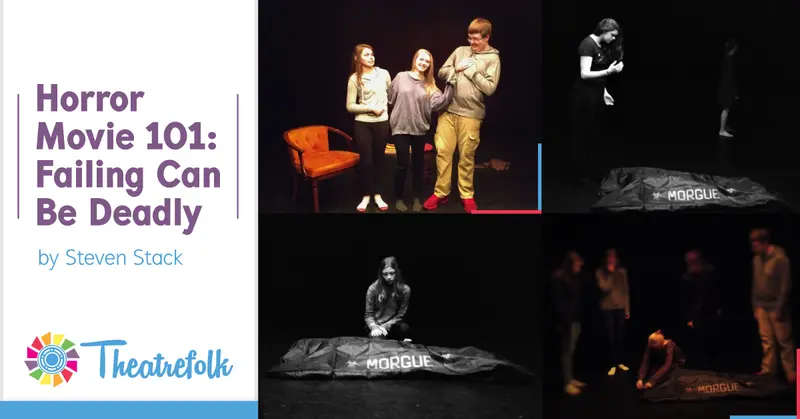
Welcome to our Featured Play Spotlight. Today we’ve got horror. That’s right horror theatre. We love this genre and love being able to offer it to you with Steven Stack’s new play Horror Movie 101: Failing Can Be Deadly. Surviving your teenage years is difficult enough. But in St Claire, where teens continually violate the rules of Horror Movie 101, it’s practically impossible. You know the rules: never open a door if someone knocks after the lights go out. If your car runs out of gas and a girl on the side of the road asks you to take her home to mother – don’t. Haunted houses are never a good idea, and neither are cabins in the middle of the woods. And if you use an ancient burial ground to bring some back, they’ll come back wrong. Everyone knows that. This collection of haunting, horrifying, harrowing AND humourous scenes will keep you laughing as you keep your eyes covered. Why did we publish this play? Horror Theatre is a genre that we just don’t often see on the stage. It’s the realm of movies with their scary music, their jump scares, and their ability to create buckets of blood. But that doesn’t stop playwright Steven Stack. Steven loves exploring this genre (have you read his Ashland Falls? The Bottom of the Lake?) and we’re thrilled to add Horror Movie 101 to our catalogue. Anything can happen on the stage and you don’t need a camera to create a jump scare. Plan this play for October right now! Let’s hear from the author! 1. Why did you write this play? Two reasons. One, we were doing a Halloween Show at the studio I work for and I needed something for it. But the main reason was that I love writing plays that mix horror, comedy, tragedy and strong characters and once the idea came to me about creating a one-act that featured scenes that took place in the same town and were connected, I was super excited about diving into the bizarre happenings of St. Claire, Minnesota. 2. Describe the theme in one or two sentences. The path that our life takes comes down to the decisions that we make or don’t make. And all of those decisions come to an end: one that is happy or one that is not. 3. What’s the most important visual for you in this play? Sarah looking at the body bag at the end of The One. That it, in some ways, sums up the themes of all the plays, even the comedies. 4. If you could give one piece of advice for those producing the play, what would it be? Play the truth of each scene and characters and really push to internalize the stories. This holds especially true for the comedies. I think there’s often a tendency for actors to play the “jokes” in comedies instead of playing the truth of the characters, who often don’t find their situations funny. And I think that, in the end, is what makes it funny. 5. Why is this play great for student performers? One reason is because it’s a mix of horror, humor, and tragedy which I believe anyone, especially teens, can get on board with. I think another reason is because this play forces actors to internalize deeply to create the truth of the various moments in order to have them work on stage.
Spread the Love: The Haunting of Chip Lake Lodge by J. Robert Wilkins
Featured Plays

Spread the Love: The Haunting of Chip Lake Lodge by J. Robert Wilkins

This week on Spread the Love we talk about The Haunting of Chip Lake Lodge by J. Robert Wilkins. Filmed live on location near a remote lodge.