📣SCRIPT SALE! Treat yourself to an easier Fall. Save 30% on 5+ perusal scripts with code SPRING30 before May 3 and head into summer stress-free.
Theatre History
Teaching Drama
Theatre History: Introduction to Outdoor Theatre
The sun is shining and the weather is getting warmer, so let’s take advantage of that and learn about outdoor theatre. There are many historical examples of theatre that was staged outdoors. Here is a brief overview of a few of them.
Ancient Greek Drama• Outdoor theatres consisted of an orchestra (stage), skene (scene building — a backstage area where actors changed), and theatron (audience viewing area). Circular seating was often built into the slope of hills.
Ancient Roman Drama• Theatres were man-made and both semi-circular and fully circular. The audience section (cavea) was not roofed, but awnings (vela) could be pulled over to provide temporary relief from rain or sunshine.
Mystery Plays (Medieval)• Mystery plays were performed by trade guilds, focusing on biblical stories that referenced their profession (for example, a baker’s guild would perform a reenactment of the Last Supper). These plays were performed outdoors on platforms mounted on wheels called pageant wagon stages and could be moved around.
Commedia dell’arte (Italian theatre)• Travelling commedia dell’arte troupes often performed outdoors on platforms, at outdoor festivals and celebrations, or in popular areas such as a piazza. Troupes preferred not to stay in one place for too long so audiences would be sad to see them go and more likely to invite them back.
English Renaissance Theatre• Public theatres were three stories high and built around an open space at the centre — essentially a platform surrounded by the audience on three sides, with the rear side for actors’ use. The theatres were open to the sky (open-air theatres).
• The Blackfriars Theatre came into regular use in 1599 and was roofed rather than open, which began the move towards indoor theatre.
Street Performances/Busking• Street performance is practiced all over the world and dates back to antiquity. Performances can be anything that audiences find entertaining, such as storytelling, poetry, singing, dancing, clowning, or mime, and can occur any place an audience happens to be.
Small Group Exercise:• Divide students into small groups. If you’re working online, send each group to their own virtual breakout room.
• Assign each group a different historical time period.
• Have students search for photo examples of the outdoor theatres of the era.
• Bring the class back together. Have each group show their examples to the rest of the class and give a brief verbal outline of any important details they discovered.
• Once all groups have shown their examples, discuss the following:
• What aspects of these outdoor theatres have endured throughout time?
• What do you think are some advantages and disadvantages of performing outside? Consider this for both performers and audience members.
Teaching Drama
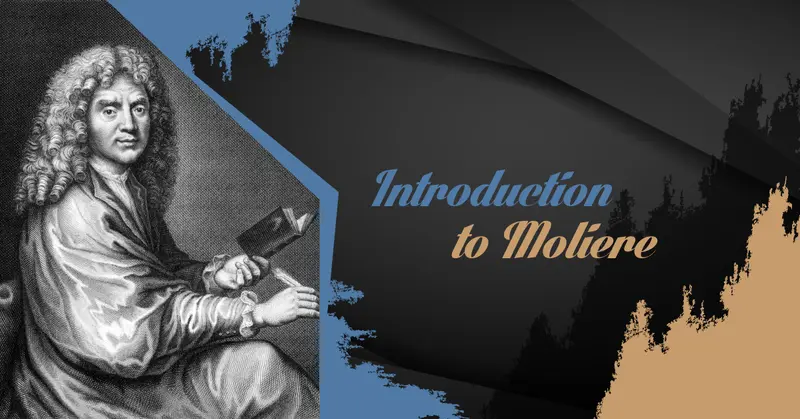
Introduction to Molière
If you study theatre history, it is a given that Shakespeare will make an appearance. But it’s not a given that you will hit upon 17th Century France and the works of Molière.
What was theatre like in 17th Century France?Theatre in 17th century France was defined by rules. Rules of society and structure, as well as rules of language, character behaviour, and story. This control placed on creativity seems odd when reviewing 17th century France as a whole, considering this time period was characterized by great change and transformation. There was war, as well as cultural and scientific advancements. There was also a growing gulf between the aristocracy and the lower classes, which helped fuel the French Revolution later in the 18th century.
At the beginning of the century, theatrical influences came from Italy. Italian commedia companies were popular and toured frequently – Molière was heavily influenced by Commedia dell’arte. Theatre architecture in France relied on Italian design. Plays were performed two to three times a week and, unlike in England, women were allowed on the stage.
The defining theatrical aesthetic was neoclassicism. Plays had to be submitted to the Academie Francaise to determine if they followed Neoclassical ideals.
What is Neoclassicism?1. Inspired by Ancient Greece and Rome.
2. Adhered to Aristotle’s principles of unity of time and space: one setting, one story, and the action was limited to 24 hours.
3. Plays followed a five-act form.
4. Use of special effects and elaborate staging.
5. Decorum had to be followed: characters were real (e.g. no ghosts) and behaved according to their status. Stories were believable.
6. Morality, manners, and good taste were essential.
7. Plays did not mix comedy and drama.
8. Comedies must end happily. Tragedies must end in death.
9. Comedic characters must be from middle and lower classes. The hero in a tragedy must be of the noble class.
10. The purpose of a play was to entertain and to provide a moral.
Who is Molière?Molière was born in Paris on January 15, 1622, and died on February 17, 1673. Molière is a stage name; his given name was Jean-Baptiste Poquelin and he was the eldest of six children. His father was an upholsterer who bought the title of Royal Upholsterer with the intention to pass on this royal appointment to Molière, who had different ideas. Molière’s mother, Mary Cresse, died when he was 12 years old.
At fourteen he went to the College de Claremont and later studied law at the University of Orleans. But his life took a turn in 1643 when he started a theatre company, Illustre Théâtre (Illustrious Theatre Company). He was both an actor and director. The company failed and Molière ended up in debtors’ prison. When he got out, the company spent thirteen years touring the provinces. It is then that Molière began writing plays. He learned his craft through production and performance.
On his return to Paris in 1658, Molière (who by now had taken the stage name so his family wouldn’t be embarrassed) and his company were able to perform for the king. This was a significant moment as theatre companies were not allowed to perform in Paris without permission. This would be the beginning of Molière’s theatre career in Paris and patronage by King Louis XIV. This patronage often saved Molière from harsh criticism of his life and work. It even extended to the King acting as godfather to his children.
Molière died of tuberculosis. Mythology says that he fell ill in the middle of a performance of The Imaginary Invalid and died soon after.
Major Plays• The School for Husbands (1661)
• The School for Wives (1662)
• Tartuffe (1664)
• The Misanthrope (1666)
• The Miser (1668)
• The Bourgeois Gentleman (1670)
• The Learned Ladies (1672)
• The Imaginary Invalid (1673)
Molière’s Writing StyleMolière’s writing was very much influenced by commedia dell’arte but his style grew from that influence. He is often relegated to the role of comic, frivolous playwright, perhaps because his plays thrive in their physical action and their snappy dialogue. But this interpretation misses the level of biting social satire that he brought to his work.
He wrote about the flaws of humanity, the humanity that he saw all around him each day. He created characters filled with extremes: misers, hypocrites, hypochondriacs, misanthropes. These characters were so driven by their extremes that they crashed through their stories with blinders on, unable to do anything but exude their fatal flaw. There are always characters who oppose these extremes in Molière’s work, expressing the moderate voice. Because he mocked the upper classes, he had a lot of enemies. He also made a great enemy in the church. At one point, the Archbishop threatened that he would excommunicate anyone who saw, performed, or even read Tartuffe.
Molière wrote in a time of rules. Neoclassicism was not just encouraged, it was enforced. And although Molière is thought of as a Neoclassical playwright, he often went against the rules of the form. For example, the maid Dorine in Tartuffe speaks with wisdom far above her station, which was against the Neoclassical principle of decorum. Also, the deus ex machina ending of Tartuffe where a god (or in this play, the king) dives in and saves the play at the last minute was not in line with Neoclassical rules. The Misanthrope was neither a strict comedy nor a tragedy. In the Neoclassical world, characters who exhibited extreme behaviour were supposed to atone and return to the fold of moderate behaviour. Though the main character in Tartuffe is arrested for his religious hypocrisy at the end of the play, there is no indication that he has changed his ways.
Molière and ShakespeareThere are many parallels between Shakespeare and Molière. Both acted in their own plays, played a part in running a theatre company, and had royal patronage. They both loved to play with language.
It seems though that Molière found himself up against critics and criticism more frequently than Shakespeare. His plays often hit too close to home. Perhaps Shakespeare found it easier to balance writing what he wanted to say while placating church and state. If Shakespeare wanted to criticize the present, he did so through dramatizing the distant past. Molière wrote for the here and now of his world, which is why he caused such an uproar. The only thing that saved Molière in many cases was his favour with King Louis XIV.
The biggest thing that Shakespeare and Molière have in common today, is that we still read them, talk about them, and produce their work. It says a lot about the universality of Molière – I think that lies squarely with his characters. They do things and say things that we can relate to today, even though they were set in a different century.
Classroom Exercise
Life is Meaningless: Theatre of the Absurd
Theatre is all about change. Not only do we want to look back and identify origins, but it’s also important to explore theatre history to see how the form evolves. Often that evolution comes from an intense reaction to the previous era: Romanticism embraced spectacle, melodrama, and emotion. Realism went in the opposite direction with real-life characters and situations.Â
But how do we connect students to eras that are difficult to relate to? It’s easy to say “XYZ is important,” but if students don’t find a connection with it then the impact is lost.
For example: Theatre of the Absurd.
The origins of Theatre of the Absurd (in a very brief and generalist overview) cover plays written mostly in the 1950s and 1960s with the main theme “life is meaningless.” To that end, traditional theatrical structure is often ignored, dialogue makes no sense, and characters are not grounded in reality. The playwrights most commonly associated with this are Samuel Beckett, Jean-Paul Sartre, Eugene Ionesco, Jean Genet, and Harold Pinter. Some well-known Theatre of the Absurd plays are Beckett’s Waiting for Godot, Sartre's No Exit, Genet’s The Balcony, Ionesco’s Rhinoceros & The Bald Soprano, and Pinter’s The Homecoming. Certainly, there are other playwrights and other plays written in the genre even to this day, but these are the playwrights and plays most units of study turn to.Â
It’s challenging for students to link the theme “life is meaningless” with what they see in a Theatre of the Absurd play. They know that what they see on the page doesn’t make sense, but they don’t make the connection that the reason it doesn’t make sense is because it explores a specific theme. They just think the stories, characters, and dialogue are dumb.
One way to connect students is to start with a visual introduction to an era instead of a textual introduction. Twenty-first-century students tend to be visual learners, so use images to initiate a discussion. How do we do that?
Most of those who originally wrote Theatre of the Absurd plays were in Europe during WWII; both Samuel Beckett and Ionesco were in France. If you search online for what France looked like during the war, what comes back are pictures of towns reduced to rubble. A total wasteland (a sample picture is included in the PDF download below). How could you have hope for the future in such a place?
When you start with an image that clearly defines “life is meaningless,” it becomes easier to see what influenced these writers and why they rejected the Realism era of plays. As much as Realism-era writers wanted to create “real life” on stage, it wasn’t real life. Theatre is a form with structure, dialogue, and characters, and this is what Theatre of the Absurd writers highlight by going in the opposite direction: a lack of structure, symbolic or one-dimensional characters, nonsense dialogue.Â
Introduction to Theatre of the Absurd Exercise• Show students a picture from France in the aftermath of WWII. Use one of the ones included in the download or find your own.Â
• Don’t give students context for the picture. Don't tell them where or when the picture comes from or mention Theatre of the Absurd.
• Have students write down their thoughts. What do you see? Where is this place? What emotions come up? What happened here? A worksheet is included in the download.
• Discuss their findings as a class. What are the similarities and differences in how students experienced the picture? Ask students: What would it be like to live in the place shown in this picture?Â
• Each picture has people in it. Have students write a monologue from the perspective of one of the people in the picture. Start by having students brainstorm their ideas (Who are they? What have they been through? What do they want? Who are they talking to?), and then write their monologue based on this information. Again, don’t tell students the origins of the picture or mention Theatre of the Absurd. A Brainstorm Worksheet is included in the download.
• Divide students into groups and have them share their monologues.Â
• Discuss the phrase “life is meaningless.” What does it mean? Explain to students that the picture was taken in France in the aftermath of WWII, when many places were reduced to rubble. Ask students: Can you imagine trying to live a normal life when everything is destroyed?
• Ask students: If you were writing a play, how might you show the theme of “life is meaningless”? What could you do to the structure, dialogue, and characters of a play to highlight the “life is meaningless” theme?
• You may want to use a model. Provide a monologue and have students suggest changes to the text. How do we make the structure of the monologue meaningless? How do we make the dialogue meaningless? How do we make the character meaningless? You can highlight some absurd elements such as repetition, circular plots, lack of communication, symbolic or representational characters. In the download, a sample monologue is provided along with a potential absurd version.Â
• Have students rewrite the monologue so that the structure, dialogue, and character fits the theme “life is meaningless.”Â
• Divide students into groups and have them share their pieces.Â
• Share with students that they have entered the world of the Theatre of the Absurd, just as many of those who originally wrote absurdist plays in the aftermath of WWII. The picture we worked with was taken in wartorn France. Can you imagine how a playwright seeing this world around them would feel that life is meaningless? How could you have hope for the future?
• At this point, you can dive deeper into the background of the Theatre of the Absurd, or share an absurd play with students.Â
Teaching Drama
The Three-Dimensional Theatre History Project
Theatre History is a necessary unit in any drama curriculum. To understand where we are, we have to explore where we’ve been. For example, to understand the role of the actor, it’s important to know that there was a specific point when Thespis (according to lore) stepped out of the ancient Greek chorus and began speaking individually.
But the danger with a theatre history unit is that you might slide into a pool of data, stats, and facts. In an age where information is at our fingertips, it’s not necessary to memorize in order to learn. We don’t need to know the year Thespis won his first competition because it’s a two-second Google search away. The 21st century student is fully aware of this and thus it’s become more and more difficult to get today’s students to connect to the distant past.
Furthermore, the drama class is more than pen and paper. In the drama classroom, we approach topics in a three-dimensional fashion. We don’t just read Shakespeare, we breathe life into the plays through performance.
The question then becomes: “How do we approach Theatre History in a way that avoids plotting dates on a timeline?” “How do we explore theatre history in a theatrical context – make it active, alive, and three-dimensional?”
The Three-Dimensional Theatre History ProjectObjective: To have students research a theatre history era from which they will demonstrate comprehension, apply knowledge, and design an original activity.
Description: Students will work in groups to research an era of theatre history from a specific perspective. From their research, students will prepare an oral presentation which includes a power point, and a short performance. Lastly, they will design an activity based on their era for the entire class.
Instructions:
1. Divide students into groups and either have them choose or assign a theatre history era.
2. Give students a set time limit to research that era.
3. Each group will need to define the focus of their presentation. That way, instead of an overly general presentation, groups will present the information from a specific viewpoint. For example, have them examine three playwrights from the same era and explain why they are important to that era (eg: Shakespeare, Marlowe, Jonson). Or have students pick three plays from the same era. Or have them come up with an essential question for their project, like “How does Shakespeare’s audience compare and contrast with the 21st century theatre audience?”
4. Oral presentations should be 10 minutes long. Every member of the group must speak during the presentation. A power point should be included as part of the presentatio. What visuals can groups include to portray their focus? Remind students that their presentation should not be a list of facts, but an exploration of their specific focus.
5. As part of their 10-minute presentation, groups will include a performance. It could be a scene from one of the plays of the era. It could be a modern scene that illuminates their focus. (For example: What was it like to be a groundling in Shakespeare’s day?) It could be original monologues from the perspective of individuals from the era. The point is to bring life to the era and to demonstrate comprehension of the era beyond the basic facts.
6. After the presentation, each group will teach a 5-minute activity to the entire class. It could be a modern game that is adapted to suit an element of the era. (For example: Use the principles of the game Huckle Buckle but come up with actions that fit the Globe Theatre – say “Huckle Buckle groundlings” and have everyone run to their partner and lie flat on the ground.)
Notes:
This is a three-week project. It will take students time to extend traditional research beyond an expression of mere facts and data. You will need to check in with the students consistently to make sure they are working and that tasks are distributed equally throughout the group. Emphasize to each group that part of their mark will be derived from acting tips and techniques they have learned in other units: projection, articulation, stage presence, self-confidence, and physical action.
Classroom Exercise
Connecting the Past to the Present: Modernizing a Scene
When working with historical theatre pieces by playwrights like Shakespeare and Marlowe, a common complaint is that their diction is difficult for students to understand. One way to help students connect with the material and understand it is to modernize the scene that they’re working on by placing it in the context of social media, television, or other media forms that they’re familiar with. Here is an exercise for students to increase their comprehension of the scene by translating it into modern language and mediums.
Divide students into groups and assign each pair a scene from the play that the class is currently working on. First, have students summarize the scene in five sentences or less. Then, have the students “translate” the scene line by line, from classical language to modern language. That way, they can decide on the most important and interesting parts of the scene.
From there, have students devise a performance that presents their translation to the rest of the class in a creative and modern way. These performances could be presented via live performance or a pre-recorded video project.
Here are some ideas on how students can present their translations:
• Two students narrate the scene as news reporters while the rest of the group performs. For example, here’s a take on a scene from Romeo & Juliet:
“Well Todd, the Capulets have really outdone themselves tonight with this great ball. Lady Capulet is ravishing in a gown by Valentino.”
“This just in: Sources are reporting that Romeo Montague and a number of his friends have crashed the party. No signs of any Montagues yet, but we’ll keep our eyes peeled. Back to you, Sarah.”
• Two students narrate the scene as sports commentators while the rest of the group performs. This is a great choice for active scenes or fight scenes. Here’s a sample that could work for Macbeth:
“And Macduff with a might swing of the sword; he nearly took off Macbeth’s arm with that one! But wait a minute… he’s saying something… WHAT?! He’s saying he was from his mother’s womb untimely ripped!!! Can you believe it?!”
“Yes fans, we have just learned that Macduff was born by Caesarean section, and I tell you, Macbeth is STUNNED. He certainly wasn’t expecting that from his opponent! But he’s continuing to fight! What is gonna happen next?!”
• Create a reality show , performing as the characters and using the modern lines translation of the scene. Include to-the-camera confessionals. For example, confessionals from A Midsummer Night’s Dream might sound like this:
HERMIA: “Can you believe that Helena said I’m “little and fierce”? I can’t help it that she’s taller than me! And then Demetrius and Lysander start FIGHTING over her?! I don’t get it! It’s like they’re under a spell or something!!!”
HELENA: “I did say that Hermia is “little and fierce” because she’s scary when she gets mad! However, I have NO idea why Demetrius and Lysander are acting so weird. Up until now, they were both in love with Hermia! Don’t get me wrong, it’s kind of nice to have the attention for once, but honestly it’s starting to freak me out!”
• Create a series of social media shares to document the scene, like faux Facebook posts, Twitter updates, Snapchat stories, or Instagram photos. These could be presented in video or Powerpoint form, or the shares could be made poster-sized and presented as a live performance. Here’s an example of a Twitter feed that might be created for The Taming of the Shrew:
@BiancaXO
dad says I can’t date till my sister does SO UNFAIR! #gonnabeanoldmaid @KatMinola
.@BiancaXO give it a rest you’re such a brat #dramaqueen @MusicHrtnsio
Got a plan on how I’m gonna see my girl @BiancaXO today LOL #litio #lute @VeronaPetruchio
@MusicHrtnsio this plan of yours better work I’m here to make cash money in Padua #dollabillsyo
Encourage students to push themselves outside their comfort zone and have some fun exploring classical scenes in a new and different way. Have fun!
Teaching Drama
Speeches from History – A Cross-Curricular Unit
Here’s a unit you can use that combines technology, drama, and cross-curricular learning. Talk about a multi-purpose activity!
Since the unit involves speeches, it’s probably best-suited to complement history and political science classes. However, there are also some excellent science- and technology-related speeches out there. A link to these can be found in the “More Speeches” resource at the end of this article.
Choose a speechChoose a speech (or an excerpt) that is approximately one to two minutes long.
Here are some speeches that stood out to me:
• Amelia Earhart on Women in Flight
• Jane Goodall on chimpanzee aggression
• Louis Beats Schmeling
• Harold Lloyd on Slapstick Comedy
• Eyewitness Account of Hindenburg Disaster
• Ronald Reagan on the Challenger Disaster
These can all be found on history.com’s Famous Speeches in History website, which has dozens of audio clips for you to use. Feel free to use any other recording that might suit your specific needs better. Other sources for speeches can be found at the end of this article.
Transcribe the speechType out a word-for-word transcription of the text of the speech.
Do this task even if a transcription already exists. This step will help you get very familiar with the original recording of the speech, which will help you with the later steps.
VocabularyAre there any words or phrases in the speech you’re unfamiliar with? Are there any words or phrases in the speech that seem outdated? What words would you change if you were writing this speech for yourself?
ReflectionWhat’s your first impression of this speech?
Think like a playwrightImagine that the speech is from a play and the text you’ve just transcribed is part of the script of the play.
Re-listen to the speech. Note things like pauses and changes in tone. Update your script to include these changes.
ReflectionIf you were the playwright, how would write the speech differently?
Think like an actorImagine that the recording you’re working on wasn’t spoken by a real person. Imagine instead that the recording was delivered by an actor playing the role of that person.
Reverse-engineer the actor’s performance. Note any beats, pauses, non-verbal sounds, and stumbles that the actor made in the performance. Mark up the script as you think the actor would have marked it up.
Click here for information on how to mark up a script as an actor.
Spend a few minutes researching the speaker, their era, and the events that lead up to the speech.
Complete a character profile for the speaker.
Click here for sample questions that can be used to help complete a character profile.
Look at the places in the speech where the speaker stumbles, pauses, or makes non-verbal sounds. Decide for yourself why those anomalies are there. Are they on purpose, for dramatic effect? Are they there because the speaker is thinking about or struggling with what they will say next? Is the speaker distracted by something?
ReflectionWhat parts of the research did you struggle with? How do actors fill in missing details when they prepare to portray a character?
Be the actorYou are now going to learn, stage, and perform the speech.
Here are some questions you, the actor, should consider when preparing the speech:
• Who is the character speaking to?
• Why is it important for the character to speak?
• What is the character trying to achieve as a result of giving this speech?
Stage the speech. Is the character sitting? Standing? Are they speaking to one person? A crowd? Give the character one significant blocking movement during the speech. For example, if they’re sitting at the beginning, have them stand at a significant moment in the text.
Perform the speech with your blocking. Think about the tone, accent, pace, pauses, and non-verbal sounds that are present in the original recording.
ReflectionIf you were the original speaker, how would you perform the speech differently? Would you be more passionate? More reserved? Would you speak more quickly or slower? Would the words come easy to you or would you struggle?
If you were the director, what adjustments would you suggest to the original speaker to improve their delivery?
Add some contextIt’s time to put your playwright’s hat back on. Imagine this speech is in a play and the speaker is the lead character. Write a brief outline of this play, placing the speech somewhere in the middle. What events lead up to the monologue? What events follow it?
Describe three scenes from the play in more detail:
• The scene that takes place before the speech.
• The scene in which the speech takes place.
• The scene that happens after the speech takes place.
Describe three other characters in the play, at least one of whom is present for the speech. How do they relate to the lead character? How do they influence the lead character? How are they influenced by the lead character?
Reflection
Which role would you rather have in this play? Do you want to play the lead character or one of the other three you have invented?
Final Reflection• How are real life events and theatre related?
• How are they different?
• Do you think speeches are a form of theatre? Why or why not?
• What is the greatest speech you ever heard? What made it great?
ModificationIt isn’t necessary to do this unit in conjunction with audio recordings. You can easily modify the unit to use just the text of a speech by skipping the transcription and “reverse-engineering” steps.
More SpeechesHere are some excellent sources of speech texts:
25 Speeches that changed the world
The 10 Greatest Speeches
American Rhetoric – Top 100 Speeches (also has recordings of many of them)
The History Place Great Speeches Collection
Wikipedia’s list of speeches (most have click-through links to the text of the speech)
65 Groundbreaking Science Speeches (includes video)
40 Speeches on Technology (includes video)
Great Speeches in History Podcast (updated very infrequently)
This one is really neat – it’s a collection of speeches that were written but never delivered.
Ted Talks – Probably the best source of speeches if you’re looking for tie-ins to current events and technology