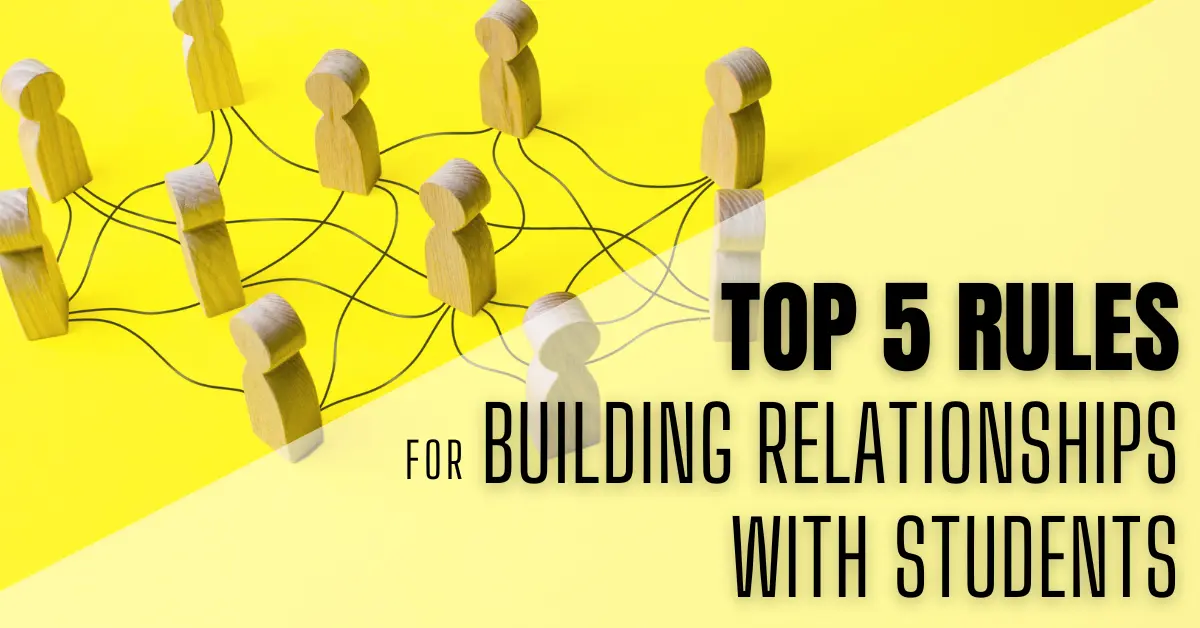
The relationship between a teacher and their students is the cornerstone of a successful classroom. From curriculum buy-in to effective classroom management, the quality of your classroom is the direct result of how you establish and nurture your teacher-student relationships.
Here are the Top 5 rules for building relationships with students.
Rule #1 - Be the Adult
Many new theatre teachers believe that the key to establishing a good relationship with their students is to be their friend. But students don’t need you to be their friend; they need you to be their teacher. That means you need to be the adult in the room. You need to be professional, caring, and consistent, even when that means you are enforcing rules and disciplining with appropriate consequences. Once you establish your relationship TO your students as a responsible, professional adult, you can work on your relationship WITH your students — which can be friendly, fun, and respectful.
Rule #2 - Set Boundaries
Theatre teachers are passionate about all things theatre, and that passion is shared by our students, especially when it comes to performance and productions. The passion for after-school productions means connecting with students well beyond normal school hours, and that can lead to an erosion of boundaries. Boundaries are necessary for the safety and well-being of both teachers and students. They are a fundamental part of a healthy relationship. Make sure you set appropriate boundaries, communicate those boundaries with your students, and ensure those boundaries are respected by both teacher and students.
Rule #3 - Listen
If you want to build a relationship with your students, they have to know that you care. The easiest way to show that you care is to listen to your students. Whether they are talking about a personal concern, a noteworthy accomplishment, or the latest pop culture trend, focus on what they are telling you and take the time to engage with them. These don’t need to be earth-shattering conversations. In fact, sometimes a passing conversation makes a huge impression on a student who realizes you are actually listening. And when a student knows you are listening, they also know you care.
Rule #4 - Take an Interest
To form a relationship, both parties must show an interest. When you don’t take the time to show interest in a student, they can never be more than a passing acquaintance. Being the adult in the room doesn’t mean you can’t take an interest in your students as people. By paying attention to their thoughts, hopes, and ideas, you demonstrate that you care for them as individuals, not just students, and that is the foundation for a strong and healthy relationship.
Rule #5 - Consistency
Relationships are built over time. You can’t develop a real relationship with your students if you don’t spend time with them. Even fleeting moments, if consistent, act as a mosaic, painting a bigger picture of the relationship between you and your students. Small moments add up to big memories, and when students look back over their time with you they will see that you made an effort to be a consistent presence in their lives. Your ongoing, intentional effort to get to know your students as people will show them that you are dedicated to building a caring, professional relationship with them.
By following these rules, you will establish and maintain a healthy relationship TO as well as WITH your students. These relationships will form the foundation of mutual respect and a shared love of theatre that will stay with your students for years to come.