
Facebook Pixel Skip to main content

Ontario, Canada
Grade 11 - Foundations - Concepts and Terminology

10 units • 2 professional development courses aligned to
C.1.2 - use correct terminology for the various components and processes of their own and others’ drama works

View all Standards for Ontario, Canada

C.1.2 use correct terminology for the various components and processes of their own and others’ drama works

This page lists 10 units and 2 professional development courses aligned to C.1.2 from the Ontario, Canada. Designed for drama teachers, these resources directly address C.1.2 - use correct terminology for the various components and processes of their own and others’ drama works

Commedia dell'Arte

by Todd Espeland

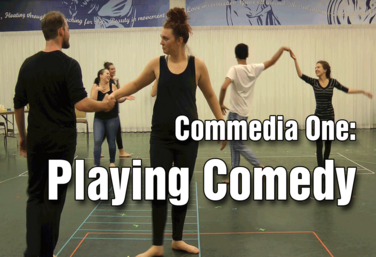
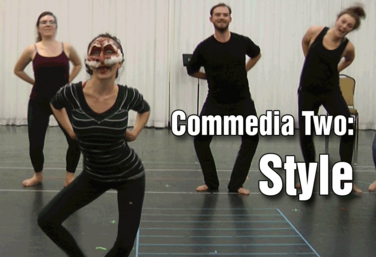
Commedia dell’arte is a 16th century masked acting form. It is the basis of all comedy, including all tv sitcoms. This form is characterized by masked types and archetypical characters and a specific way of playing comedy. To that end, this unit is divided into two parts. Part One focuses on the foundations of commedia - playing comedy. These principles will be important to learn when it comes to developing commedia characters, specifically the physicality of the characters. Part Two will cover lazzi. Note: there are links to video demos in many of the lessons of this unit.

Introduction to Musical Theatre: Movement

by Annie Dragoo

Musical theatre performers use their bodies to sing, to dance, and to act. We must think of our bodies as instruments and learn to use our instruments properly in order to be better musical theatre performers. The overall objective with this unit, by Annie Dragoo, is for students to demonstrate an understanding of the use of good movement as it connects to musical theatre. Some of the activities include using action verbs, moving as animals and inanimate characters, nonverbal communication and situational movement. Students will then perform a scene that will allow them to put to practice all the movement techniques they have learned.

Acting for the Camera

by Ruthie Tutterow

The purpose of this unit is for students to know the differences and practice skills for film versus stage acting. They should also know the basic vocabulary of acting for the camera. It will also be helpful for them to get practice in editing. By seeing both sides of the camera, they will gain valuable experience in seeing what works from both the producing and acting side. Students will be able to see and reflect on their work.

Virtual Acting for the Camera

by Ruthie Tutterow

The unit is adapted for a virtual environment. The purpose of this unit is for students to know the differences and practice skills for film versus stage acting. They should also know the basic vocabulary of acting for the camera. It will also be helpful for them to get practice in editing. By seeing both sides of the camera, they will gain valuable experience in seeing what works from both the producing and acting side. Students will be able to see and reflect on their work.

Character Creation: Superhero Series: Multi platform

by Lindsay Price and Kerry Hishon

This unit focuses on character creation: How do you create a character from the ground up? Use this unit as a precursor to a playwriting unit, to a devising unit, or to a class production. Using the archetypes of the superhero, the sidekick, and the supervillain, students work on exercises to help them create unique characters through physical and vocal qualities, character profiles, and theatrical writing. Because many of the exercises have an individual focus, this unit works in a distance learning environment or for your no-technology students.

Decolonizing Monologues

by Nicholas Pappas

In this unit, students will write a monologue authentic to their unique voice rather than to a Eurocentric canon model. We are going to decolonize the monologue. The goal in decolonizing monologues is to be inclusive of all voices in the classroom and to allow those voices to grow out of the unique style and cultural background of every student.

Foundations of Acting

by Annie Dragoo

Students will demonstrate an understanding of the foundations of acting. At the end of the unit, students will be able to understand the value of making rich acting choices on stage. This unit gives students an opportunity to explore and develop acting skills on a more advanced level, regardless of experience. They will explore skills, including voice, movement, emotional recall, memory, playing objectives, and character development culminating in a final scene.

Theatre Radically Reimagined: Exploring Artaud, Grotowski, and Boal

by Ruthie Tutterow

In this unit, students will learn about Antonin Artaud and how his ideas influenced avant-garde theatre in the 20th and 21st centuries. They will also learn how Jerzy Grotowski took Artaud’s theories into new directions. This is done through direct instruction. A culminating presentation will ask students to take common stories and reimagine them using some of these ideas. They will present a “pitch” of an avant-garde version of their story. In the second lesson, students learn about some of the ideas of Augusto Boal and try a session of Forum Theatre.

Introduction to Stanislavski

by Drama Teacher Academy
This is an in-depth unit with instruction and activities about the Stanislavski acting method. It is followed by scene work in which students learn how to score a scene, do a comprehensive character analysis, and use what they have learned in rehearsals in a performance. Students will also watch their own work and evaluate their process after the performance. The purpose of this unit is to give students an introduction and understanding of Stanislavski’s method and to put it into use as they prepare scenes for performance. After seeing their work, and spending time reflecting on how they used the principles of the method, students should take away a concrete understanding of how to prepare a role for performance.

Virtual Introduction to Stanislavski

by Drama Teacher Academy
The unit has been adapted for a virtual environment. This is an in-depth unit with instruction and activities about the Stanislavski acting method. It is followed by scene work in which students learn how to score a scene, do a comprehensive character analysis, and use what they have learned in rehearsals in a performance. Students will also watch their own work and evaluate their process after the performance. The purpose of this unit is to give students an introduction and understanding of Stanislavski’s method and to put it into use as they prepare scenes for performance. After seeing their work, and spending time reflecting on how they used the principles of the method, students should take away a concrete understanding of how to prepare a role for performance.

View all Standards for Ontario, Canada    Standards Master List