
Alberta, Canada
Theatre Studies Drama 30 (Early or Middle or Late drama)
7 units • 3 professional development courses aligned to
6 - recognize realism and selected other significant theatre styles
View all Standards for Alberta, Canada
6 recognize realism and selected other significant theatre styles
This page lists 7 units and 3 professional development courses aligned to 6 from the Alberta, Canada. Designed for drama teachers, these resources directly address 6 - recognize realism and selected other significant theatre styles
UNIT
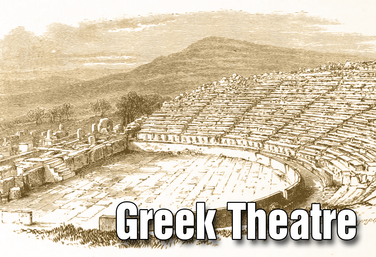
Ancient Greek Theatre
by Karen Loftus
This unit on Ancient Greek theatre focuses on the function of the chorus, the choral ode, and the details of the theatre space. It touches on plays and playwrights of the era, culminating in a final project of a modern version of Medea that includes a choral ode.
UNIT
Theatre of the Absurd
by Lea Marshall
WARNING: This unit is ABSURD. However, instructor Lea Marshall decided to do something really ABSURD with the unit, which was make it a bit more predictable. First, the unit takes two lessons to go over the Historical and Philosophical background of Theatre of the Absurd. It starts with just a visual exercise to really bring students into the emotional bleakness of the landscape and then group work to look at some of the other foundational elements that will drive the Absurdist movement into the Theatres.
Next, students break down absurd scripts into some “recognizable” elements of language, plot structure, acting choices, and storyline. With each lesson that introduces an Absurdist Element, there is an opportunity for students to “play” with the element. Then, students explore the element through an Absurdist text. This will help familiarize the students with the 4 Absurdist scripts used in the unit. These bite sized forays into the scripts will help students to choose a script to fully immerse themselves in for the final project.
As a final project, students will choose one script to work with, and choose the format of their project (performance, costume or set design, or playwright).
UNIT
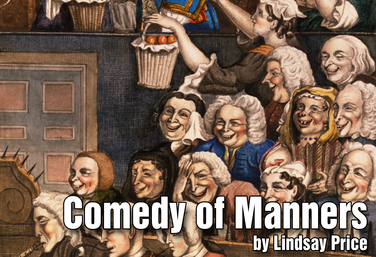
Comedy of Manners
by Lindsay Price
The Comedy of Manners is a style of comedy that satirizes the behaviour, actions, fashions, and “manners” of a segment of society. Because it has such specific characteristics – from plot to dialogue, to characterization, to costumes – it’s an excellent era for students to learn and apply.
In this unit students are introduced to the style, learn some background, and apply the traits of the comedy of manners. The unit culminates in the creation of a modern scene.
.png)
UNIT
Theatre of the Absurd
by Lea Marshall
We included this unit in our Distance Learning Curriculum because if any group of students would understand how the world turned upside down and then apply it to theatre, it would be the students dealing with a global pandemic.
First, we take two lessons to go over the historical and philosophical background of Theatre of the Absurd. We start with a visual exercise to bring students into the emotional bleakness of the landscape and then group work to look at some of the other foundational elements that will drive the absurdist movement into the theatres. Next, we break down absurd scripts into some “recognizable” elements of language, plot structure, acting choices, and storyline. In each lesson that introduces an absurdist element, there is an opportunity for students to “play” with the element.
UNIT
Anti-Realism
by Wendy-Marie Martin
This unit gives students an overview of the anti-realism movement of the late 19th century and early 20th century and introduces them to some key theorists, playwrights, and theatre makers involved in this movement. Students will be introduced to the “isms” of symbolism, Dadaism, surrealism, expressionism, and absurdism along with various manifestos and theories as we track the characteristics of each “ism.”
In a culminating project, students will design an “ISMS’’ Theme Park, which they will share with the class at the end of the unit. Their project will feature each of the five “isms” in the form of rides, themed concessions areas, entertainment options, and in-park characters.
UNIT
Tech Theatre Unit: Costuming When You Don't Sew
by Drama Teacher Academy
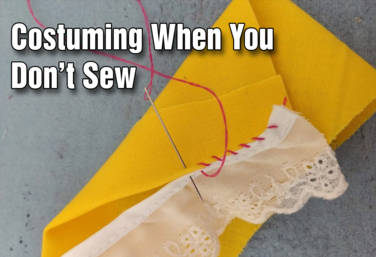
In this unit, students will take on the role of the costumer, which is different from a costume designer. It introduces costuming concepts in order to execute a costume. No complicated sewing is required, which is great if you don’t have the background, the access, or the resources to have a class of students create costumes.
Instead of making costumes from scratch, as a designer would, students will create costumes from stock, borrowed items, or low-cost finds. They will take finished products and adapt them into what they need to create the right atmosphere.
In order to help with their adaptations, students will try different distressing techniques and learn three SIMPLE stitches that they’ll be able to use over and over again. It’s a valuable tech theatre skill to teach students how to execute on costumes when you (and they) don’t sew!
UNIT
Absurdism: Beyond the Origins
by Drama Teacher Academy
In most units that cover the Theatre of the Absurd, the number of playwrights addressed are few and the time period is limited. While it is certainly true that the era identified as “The Theatre of the Absurd” was a reaction to the distorted reality of life after World War II, there are many environments that create distorted realities and many playwrights who use those realities as catalysts for absurdist plays.
In this unit, we will start with a traditional look at the Theatre of the Absurd and then expand our exploration beyond its origins.
View all Standards for Alberta, Canada Standards Master List