Show Notes
Episode Transcript
Welcome to TFP – The Theatrefolk Podcast – the place to be for Drama teachers, Drama students, and theatre educators everywhere.
I’m Lindsay Price, resident playwright for Theatrefolk.
Hello! I hope you’re well. Thanks for listening.
Welcome to Episode 133!
You can find any links for this episode at the show notes – theatrefolk.com/133.
When you’re directing a show, it’s really important – as opposed to only sort of important – to specify environment. Where does the play take place? How do the characters react to their environment? It’s especially important if you’re dealing with a less than realistic play.
If you’ve got a world or a script that doesn’t establish a place, you need to define that not – not only for your audience but for your actors. The more your actors know where they are, even if what they’re saying might not make sense, the more grounded they’re going to be and the more the audience will be able to connect.
It’s also important to establish environment in your classroom. Students are so aware of their surroundings and they will react accordingly. You know this; you’ve seen it time and time again.
So, what environment do you create in the classroom and onstage? We’re going to hear how teacher Chris Evans answers this specific question.
LINDSAY: Okay. So, here I am today and I am talking Teacher Chris Evans. Hello, Chris!
CHRIS: Hello, hello, hello!
LINDSAY: Tell everyone where in the world you are.
CHRIS: We are in Great Falls, Montana. We’re about 90 miles north of the capital of Montana, Helena.
LINDSAY: I have to say, Montana is one of the states I have never been to.
CHRIS: Well, consider this an invite.
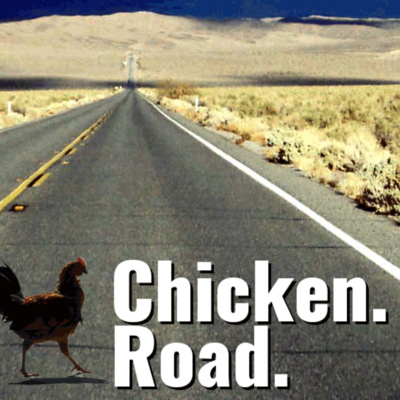
LINDSAY: Awesome. Okay! We’re kind of talking about director’s vision today and just how you’ve got to go from taking a piece of paper and turning it into a show. You recently directed my play, Chicken Road, and the reason that I asked Chris to come on today was because I was really taken by the pictures that you sent me about the production. I’ll put a link to Chicken Road down in the show notes, but it’s not a traditional script, right?
CHRIS: Right. Absolutely!
LINDSAY: The characters don’t have names and yet you seem to put a pretty identifiable stamp on it with your production.
CHRIS: One of the things that I first approached Chicken Road with was, “Where am I going to put this play?”
LINDSAY: Right.
CHRIS: And one of the things that I preach in my classes is place is so important – environment is so important. It affects everything we do.
LINDSAY: Yes, particularly with theatre, it’s a visual, isn’t it?
CHRIS: Absolutely. And so, my thought was (1) the play struck such an emotional chord with me that my first thought is, “What if we put this play at the site where, you know, this young man passed away?”
LINDSAY: Right.
CHRIS: What if these students are gathering at a vigil at the side of the road where this young man took his life? My thought was that was (1) it’s a very, very, very specific environment. It’s going to create… the environment itself is going to create emotions and I’ll tell you why in just a sec; (2) visually, it was very striking. Unfortunately, last year, about this time, we had one of our students at C.M. Russell High School passed away in an auto accident and the vigils were just absolutely heartbreaking – the students gathering at vigils, the emotion that was on their faces. What I wanted to do was create this very, very distinct, very specific environment and I believe it helped.
LINDSAY: You know, it’s so amazing when I talk to a teacher sometimes and that’s one of the hardest things they have – they see a script on the page – an abstract script – because this particular script doesn’t tell you where it is.
CHRIS: Exactly.
LINDSAY: It gives you some indication. It doesn’t tell you exactly who the characters are. They don’t have names and it’s like, “How do we make this a connectable theatrical experience?” and I think that you’ve basically hit it right on the head. It’s “What is everybody looking at?” and “How can we identify the environment?”
CHRIS: Yeah, place is so important. We tie certain memories, you know, and the question is always, “Where were you when this happened?”
LINDSAY: Yes.
CHRIS: “Where we you?” and we tie in these emotions and memories to where we were.
LINDSAY: Yeah, absolutely. You know what, how many times have we had to answer or ask that question? “Where were you when…?”
CHRIS: Exactly! You know, the last one – you know, it might be of our generation – was 9/11. You know, where were you? I remember exactly where I was.
LINDSAY: Yeah, me too. Is this something that you incorporate in your class when students are doing scene work?
CHRIS: Oh, absolutely, and I have three levels of classes. I have the intro, intermediate, and advanced. I begin it with intro and it’s everything we’ve been talking about. Your environment affects how you are, who you are, what you are. In fact, one of the things we’ve been working on lately, you know, the latest thing I said was, “Everything that has happened to you, every place you’ve been from moment of birth up until this point that I’m talking to you right now has created who you are.” And we can approach this from an acting character standpoint. And so, I’m very remindful of “What is your environment?” and I ask them to be specific. Classroom – is it cold in the classroom? What are the neon lights doing to you? Once we start adding these specifics in, they start having a little bit of fun. It gives them ownership over their creativity.
LINDSAY: Yes, because it’s something that they can easily draw on, isn’t it?
CHRIS: Yeah.
LINDSAY: “Okay, all right, I’m sitting in a room.” “Okay. What does the room look like?” I use the senses a lot when I’m asking students to describe… one of the exercise I get them to do – whether it’s playwriting or acting – is describe your character’s bedroom using the five senses. It’s fantastic how any student… it becomes an instantly creative exercise and it becomes an instantly visual exercise about who this character is.
CHRIS: You know, another thing that I give them as I talk about it is the sense of the other. We do a lot of monologue work and, you know, I tell them, “Look, you’re going to speak differently to me than you are to the principal, to your mother, to your sister.” You know, with this specific work and the specific work, it affects how they say the piece, especially in the intro when they start realizing, you know, “Yeah, it really does! I do speak differently to you, Evans, than I do to the principal,” and they tie that into their piece. How would you speak to a king versus how would you speak to a beggar?
LINDSAY: And then, at the same level, you know, the way that we speak in a library or in your parents’ kitchen is different than the way that you speak when you’re sitting in a coffee shop with your friends.
CHRIS: Absolutely.
LINDSAY: Love it! Okay. I’m so easily entertained. I just love hearing stuff like this and being able to sort of pass it along because sometimes it’s on everybody’s brain, right? Everybody knows this stuff. It just takes it a little pushing.
CHRIS: Yeah, and one thing that Chicken Road did bring forth, I wanted to share with you a few things. First of all, the week before we took this to the Montana Thespian Convention and we took overall outstanding production drama with Chicken Road but, unfortunately, about two weeks before, a young man in Missoula took his life by stepping in front of a semi.
LINDSAY: Oh, my gosh.
CHRIS: And, the week before and a few days before, we had done it for our high school. We do seven shows in a row in one day for our high school and one of the things that I wanted to let you know was I saw two girls who were very, you know, emotional after they saw it. They came up to me and they thanked me because what it did was it kept the memory of their friend who had attempted to take their life. It kept the memory of their friend alive. You know, I have to give credit to you in just that your work and our work speaks to teenagers and they’re very complex. They’re a very complex species. When they connect to something theatrically that’s not on an iPhone, that’s not on an iPad, that’s not in a movie theatre, when they connect to something that’s right in front of them, that’s important – that’s what keeps our stuff alive.
LINDSAY: Well, first of all, thank you. That’s lovely. Second of all, it’s completely possible. It is completely possible for them to connect to something that’s not on an iPad and that we should always continue to strive to find those doorways. I have to say, I’m really thankful. Do you have an open-minded administration that you didn’t get shut down?
CHRIS: We have a very open-minded administration.
LINDSAY: That’s great.
CHRIS: And the interesting thing is we are in smack dab in the middle of what is a very self-proclaimed conservative town. We have done a show that I wrote about school shootings. We’ve done two of your shows; we did Emotional Baggage and we’ve done Chicken Road. You know, one of the jokes I make as a high school teacher, I go through catalogs and, you know, so many of these shows are aimed at lowering the bar – in my opinion. You know, I keep finding this show I keep talking about – this Hamster Huey and the Barbecuey that went Kablooie – who cares? You know, what I want our kids and our kids want to do things that are challenging, that are fun, that are affecting. These kids want the bar raised, and through shows like Chicken Road, through shows like Emotional Baggage – you know, through other shows – we do that. We raise the bar.
LINDSAY: I think it’s important and I don’t think these kids are in any way… they’re not dumb by their environment.
CHRIS: No, no, no, no.
LINDSAY: I think “complex” is exactly the right word to use for them and I just think what a situation you are in to be able to address an issue in a theatrical manner. You know, instead of someone saying to you, “Oh, we can’t do that because it’ll make everybody upset.” It’s like, “Well, maybe it’ll make people talk and not hide their feelings.”
CHRIS: When we speak to the administration, I have a principal who’s been principaling for about twenty years and he was a state championship girls’ basketball coach and I walked in five years ago and this guy is one of the biggest supporters of our arts departments – including music, including art, including drama, including choir. He has been absolutely open to letting teachers to their job. If it’s a little controversial – I’ve done a couple of plays that are, you know, controversial – then he just said, “I don’t want to be surprised. Let me know what’s going on.”
LINDSAY: Yes. See! I know that a lot of our listeners are in the opposite position and some of them are struggling and that it is possible, isn’t it?
CHRIS: Oh, it is very possible! If I were to give a piece of advice, communicate. Communicate everything. Let even the most strict principal know what’s coming on because things I’ve read, a lot of people do things and they’re surprised when people are surprised. You know, read the play. Know your community and we can tie this back to place. Know where you’re doing theatre. You know, it’s all well and good to try and change the world, but you also have to get people into the theatre.
LINDSAY: This is a great tie-in! When you were doing it and you walked into the school five years ago, has this been a slow process up to Chicken Road? Was it something you were able to dive into? Like, how did you read your situation, read your environment to know how to proceed as a teacher?
CHRIS: It’s interesting because, when I moved to Great Falls, I came from a town about 160 miles south – Missoula, Montana. Missoula is – in a lot of aspects – the polar opposite – politically and socially – of Great Falls. You know, Missoula is considered the hippie cousin of Montana and I did a lot of my work at the University of Montana and, you know, they were not afraid to approach things that might rankle some people, ruffle some feathers. The thing that I found is, when people are engaged – either good or bad, when they’re engaged – theatre lives. When I talked to those girls about Chicken Road, the show we did about school shootings, my first year, there were people who went, you know, “Who’s going to go see a show about that?” Well, a lot of people because we talked about things that kids related to. We talked about things that parents related to. We did a talkback after one of the shows and I saw a woman crying and I approached her and I said, “What’s up?” She said, “I don’t want my son to become a shooter,” and, “My son, this very day, was bullied at high school and he came home crying and I came to see the show.” It got people talking. Chicken Road got people talking about suicide which is, you know, we should hold the mirror up. We should talk about things like this. You know, I think we have to because, you know, taboo doesn’t work in the theatre, you know?
LINDSAY: No.
CHRIS: Taboo doesn’t work in the theatre and these kids want to talk about this. My cast and I, we sat and we talked and, you know, I made sure everybody was all right, but we talked about the different aspects. When we lost this girl last year in the car accident, there were kids who were crying who were crying just to make sure that they were part of the grief. There were kids who were crying because they were directly affected by this. These are all the kids that you had in Chicken Road, you know. Every kid, every character that was in Chicken Road – one through fifteen – was there as I was walking through, seeing this grief.
LINDSAY: That’s the other thing too, as we keep talking about environment. That’s why I think, you know, people ask me all the time, “How can you write for this age?” and I’m like, “Well, because I don’t think, at the core of it, we’ve ever changed.”
CHRIS: No.
LINDSAY: I’m writing, really writing for myself as I was at fourteen, fifteen, sixteen, or seventeen. Yes, there’s lots of things that have changed but, environmentally, I think teenagers are the same in all the decades and that’s what we have to connect to. That’s the environment that we’re writing for and that’s the environment that ours shows should be about.
CHRIS: Yeah, I agree entirely. You know, with the stuff I’ve written, I took advice from a screenwriter, Ron Shelton – who did Bull Durham, Tin Cup – and somebody asked him, “Why do you write women characters so well?” and he said, “Because I write them as men.” And one of the things that I’ve seen through your work, through other work, why do people write teenagers as well? Because you write them as human beings.
LINDSAY: Yeah.
CHRIS: And they are. Warts and all, teenagers are human beings. They feel, they rage, they love – even if it’s only for five minutes. They do everything that we do at our age but it’s much more intense.
LINDSAY: And that’s what’s so scary, I think, about when you come across – because it happens all the time. It’s like, “Well, we can’t say this word. We can’t talk about this topic. The administration says we can’t.” It’s like, “What are you teaching your students? What are you setting them up for?” Because they’re going to be released from your school or your school district and basically plunged down an avalanche because none of that stuff is whitewashed in the real world. It’s all still there and students are still doing it.
CHRIS: You know, that’s one of the things that I tell them. You know, one of the things in my class is I tell them, I say, “Look, high school is not the real world. The real world can be a bit meaner. The real world can be a bit rougher. It can be great too! But, remember, high school isn’t about math and to be or not to be. High school is about putting you in a box with – our school – 1,400 other students and seeing if you can make it out. You know, it’s the greatest social experiment ever invented – in my opinion.” As they make it out, they learn. You know, they learn and, from what I’ve seen, teenagers know quite a bit more than I think some people give them credit for.
LINDSAY: Well, they absorb quite a bit more. You know, it’s very easy to denote the stereotypical teenager – the airhead girl or the jock who is playing sports and eating.
CHRIS: Yeah.
LINDSAY: Again – let’s hit the keyword – it’s all about they are very aware of their environment and what’s going on in their environment and reacting to it.
CHRIS: Yeah. Once again, our administration, our principal, our teachers, they have set up an environment at our school where our drama room is one of the things that I’ve always said I want that to be the safest room in the building.
LINDSAY: How do you do that? How do you set up your drama room as the safest room in the building?
CHRIS: What we do is we close the door and there is a deal. You know, it’s the Vegas rule. “What happens in our room stays in our room.” One of our mottos is, you know, “CMR – a better place to learn and teach, where relationships lead to success” and creating relationships with these kids makes things safe. If they have one person they can walk into the school and go, “Okay, I know this guy, I trust this guy,” you know, I don’t have to share life secrets but I can walk into the room, do my homework, say hi and feel that this is my room. You know, I’m a big believer in ownership. I’m not a dictator. If they come into my room, I have students who – during their open period – still find a way back to help during my intro classes, my advanced students, and I’m going, “Why aren’t you going home?” They go, “I can’t.” You know, “This is my place. I want to help. How do I help?” And so, you know, I think it’s safe because we treat them with respect and I had somebody really kind of kicked my thoughts into gear because I always said, you know, I asked a policeman at a teacher training I did once and they were talking about respect. I said, “Isn’t respect earned?” and he said, “Look, any of these kids, if these kids are getting up at 5:30 in the morning and they actually walk through the doors of that school to go to your class, they deserve your respect.” You know, that entirely opened up how I do a lot of things. It’s like, yeah, if you’re here, you deserve my respect. I don’t feed them a lot of hooey. I had a girl, I had her senior class president come in after one of our pep assemblies and she said, “What did you think?” and I said, “I didn’t like it. It was kind of sloppy,” and she was mad at me for about two days but her pep assemblies are getting better.
LINDSAY: Well, what does it serve? What does it serve to tell her that everything was okay?
CHRIS: I don’t think she’d trust me if she… there’s a reason she asked me.
LINDSAY: Yeah.
CHRIS: Because, if she knew it was great, she wouldn’t have asked me. If she was looking for confirmation that it was great, then she knew something was wrong. It’s the same thing. I have something in my class, in my advanced class, every single Friday; they have to do a minute-long monologue. Every single Friday, they have to do a monologue. It’s now effectually known as “Monologue Friday” and what they do, I have thirty kids, they do a monologue and then we sit down and we talk about notes and we talk about how they could have done it better, how it could have been worse. One of the things they start begging me for in advance is they say, “I want really honest notes, Evans.”
LINDSAY: They say that and then…
CHRIS: I know.
LINDSAY: And then, you give them.
CHRIS: And that’s one other thing. You’ve got to remember, in high school, and I said, “Look, I’m not creating Broadway here. What I want to do is I want to give you an appreciation,” and my advanced class, I do consider it college prep. College is not going to be as kind. They don’t have to be nice.
You know, there was one young man who was one of my best actors – he’s going to be a senior next year – but he’s lazy! I mean, the lines don’t get learnt until late and, you know, he’s kind of sometimes shuffles his way through rehearsal and I called him out. He said, “All right, Evans, give me an honest note.” I said, “Well, you’re one of the best actors I’ve got right now.” I said, “Nobody connects to you like an audience does.” I mean, audiences love this guy when he’s on. But, I said, “I think you’re lazy.” Things got real. All of a sudden, he’s started to tighten up his technique. He wants to be an actor and one of the things that I keep telling him and I said, “Look, yeah, you may connect to an audience like nobody else,” but I also said, “If you want to be an actor, there’s also 5,000 other guys who look just like you, who sound just like you, who also connect to an audience real well.” I said, “It all comes down to who’s going to want it more?” and I said, “I want you to want it more,” and things have begun to change. He still has fun but he wants it more now.
LINDSAY: I think the best thing that we can teach kids is this has very little to do with talent. It’s how much are you going to work for it?
CHRIS: Yeah.
LINDSAY: When there’s 5,000 of you who all look the same, you know, the person who gets the part is the one who doesn’t give up when they don’t get one thing.
CHRIS: Who wants it more, you know? I tell them at auditions, “You’re not entitled to a role.” I walked in day one, I said, “Seniors, you are on notice, best person for the role gets the role. Seniors are not entitled to a role,” and it was one of those where it’s like, “Okay, this guy means business,” and I cast sophomores. My second year, I did Noises Off where I cast a sophomore and people were like, “Okay…”
Entitlement is not allowed in my classroom.
LINDSAY: That’s what they’re going to learn in life! I think it’s a really good skill to learn – to work for what you want.
CHRIS: And I’m with you! You know, with three classes, you know, I end my day with an intro to theatre class and, every now and then, I look at where there is an energy in the room where these kids are ready to go and just conquer theatre and they’re having a blast and we have talks like this where it’s like, “You’ve got to come get it.” I talk about roles and auditions and I say, “Look, I’m holding the roles. Now, you’ve got to come take them from me. I’m not giving them out. You’ve got to take them from me.” That changes auditions a little bit. I say, you know, points. My classrooms and my curriculum is based on points. You want points in my classroom. You’ve got to come get them. I’m not going to give them out. As you were saying, that’s the way it works outside the high school. That’s the way it works out there. Bosses don’t care what’s going on for the most part; they want you to come do your work, do your job well, then go home.
LINDSAY: All right. Oh, this has been lovely! All right, as we wrap it up, let’s just bring it all back to creating that environment in your theatre piece.
CHRIS: Yes.
LINDSAY: What’s your advice for teachers out there in terms of how do you visualize and verbalize an environment for your cast so that they can make it come to life?
CHRIS: As you’re visualizing an environment, remember, every single detail counts. I mean, down to the phone cord, down to the type of phone, down to how high the roof is. The world is your oyster. It is your imagination. But, remember, you have to tie it back to how does the environment serve the play? The environment is another character in the play – the actors have to deal with it, the actors have to act against it, they have to act with it. You’re creating another character. How specific can you be?
LINDSAY: Awesome! Awesome, okay, we’re going to end on there. Boom! That was your mic drop right there.
CHRIS: Oh, nicely done!
LINDSAY: Thank you so much, Chris! It’s been lovely to have this talk and to hear your stories and share this stuff with our listeners.
CHRIS: Lindsay, thank you so much and thank you for raising the bar on writing for teenagers. As a theatre teacher and as a theatre guy, I appreciate it so much. I love good writing. You’re one.
LINDSAY: Thank you very much.
Thank you, Chris.
Okay. Before we go, let’s do some THEATREFOLK NEWS.
Let’s talk about Chicken Road.
Oh, I’ve got to sing! “It’s a play feature! It’s a play feature! It’s time to feature a play!” I guess I don’t really need to sing. I think that’s really funny that I just went, “Oh, I went right into it! No, I have to sing first!” It’s because I have a musical theatre performer just clamoring to get out of me. It’s the thing that I regret that my high school never did. We never did musicals and it’s like, “I could stand in the chorus. I could sway back and forth.” Oh, the things that we wish!
All right, back to Chicken Road which is not a musical and not a funny play at all.
On the page, this play lacks environment pretty purposefully. There is no location mentioned. In a lot of the productions I’ve seen of it, it takes place on a bare stage. That’s how I initially saw it. All the characters are numbered. They don’t have names. My reasoning for that as a playwright is to kind of make it an anyplace, anywhere, any person type of situation. Everywhere, teenagers are dealing with depression and with suicidal thoughts and it just doesn’t matter. It doesn’t matter what social class, what area of the country or any country globally. It really is a global issue.
The teenagers in the play are not only trying to grapple with a classmate’s death but the lack of explanation for his death. He seemed to be happy. He seemed to have it together. You know, doesn’t a presentation of happiness equal happiness? That’s another thing that I think is a global issue. Just because we want teenagers to be happy – or we see them as happy or we present an environment where they should be happy – for example, we don’t discuss bad issues ever – it doesn’t matter. Depression and suicide still happen.
What I want to do is I want to share a monologue from Chicken Road.
“I am a chicken. Full on. Winner, winner, chicken dinner. Yellow as they come. Always have been. Go ahead, laugh, you think I care? ‘What are you, a chicken?’ The grand supreme insult for the second grade. ‘Chicken! Big fat chicken! Bwak, bwak, bwak!’ I don’t care. I didn’t care. Not even in the second grade. I listened to my mother. ‘You get in trouble, run. You run the other way as fast as you can, baby, you understand? You run. They can’t catch you, they can’t hurt you.’ Mom was a self-taught expert in the Top 100 ways to avoid the hurt. ‘Don’t be stupid. What do you want to fight for? Why would you stand there for? You want to get blood on your clothes?’ Hurt was a thing you could see. Hurt was a thing that bruised and bled. “They can call you every name in the book but you’ll be fine, you’ll be all right, you’ll survive.” It never occurred to her – or me – to think about the hurt tin other ways. Inside hurt. Hurt without bruises. How do you run away from yourself? You can’t run away from the hole that grows inside. The big black hole that eats your light. I didn’t know him, but I know him. I understand him. I understand what it’s like to have something inside that grows and grows until there’s nothing left to do but go out to the highway and throw yourself in front of a semi. I get it. Sometimes I want it. I want to be released from the black hole so bad… but I was raised a chicken.”
All right, that’s Chicken Road by me!
Go to theatrefolk.com to read sample pages from Chicken Road or you can go to the show notes at theatrefolk.com/episode133. Get a direct link.
And that’s where we’re going to end. Take care, my friends. Take care.
Music credit:”Ave” by Alex (feat. Morusque) is licensed under a Creative Commons license.