
Monologues
Acting Exercise: The Ensemble Monologue
How do you take a monologue (meant for one person to deliver) and act it out as a group? How do you create an Ensemble Monologue? Analyze the MonologueHere’s a monologue from my play Funhouse....
You start with a list of descriptive characters. Here are some examples:
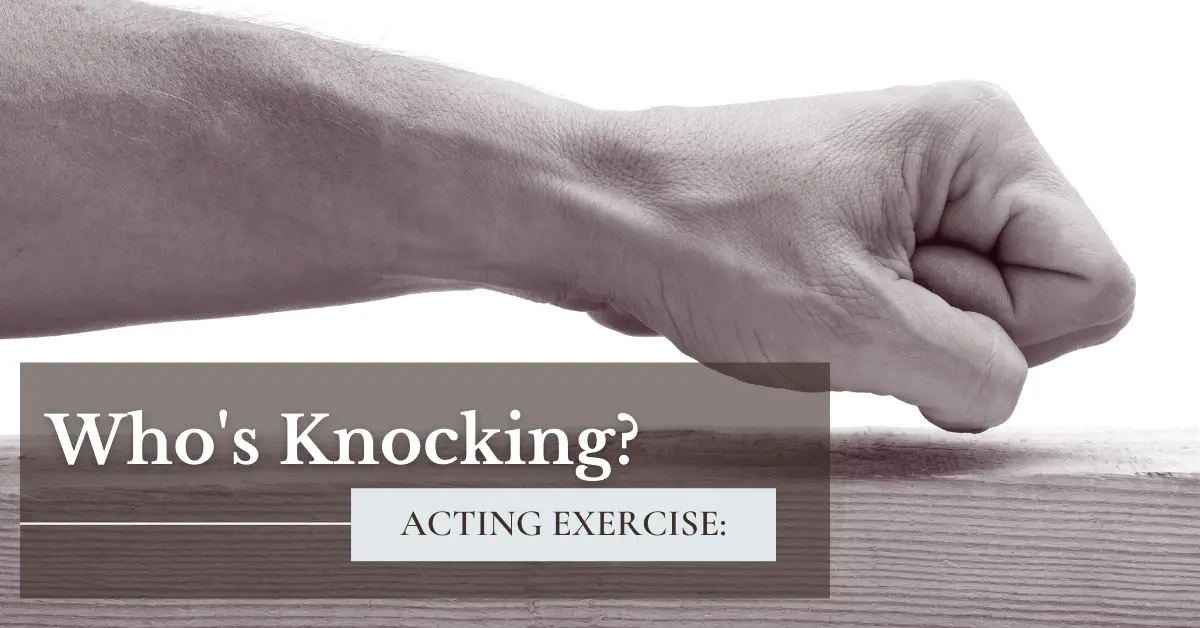
Write them down on separate pieces of paper and put the papers in a hat. One by one, students pick a character out of the hat. They leave the room, close the door, and knock on the door as the character.
The objective is to communicate who they are solely by how they knock on the door , so they can’t add any dialogue. They’re allowed to come in when the students in the room guess who they are.
Some of these are pretty difficult so feel free to coach the knocker and/or help out the class.
This exercise can be used as a fun warm-up. It’s great for beginners because it involves character creation without any pressure to be a “performer.” It can also be made more challenging for more experienced actors.
Subscribe for our exciting updates, insights, teaching resources, and new script releases. Plus, sign up now and get 4 plays and 2 lesson plans for FREE!