📣SCRIPT SALE! Treat yourself to an easier Fall. Save 30% on 5+ perusal scripts with code SPRING30 before May 3 and head into summer stress-free.
Exercise
Classroom Exercise
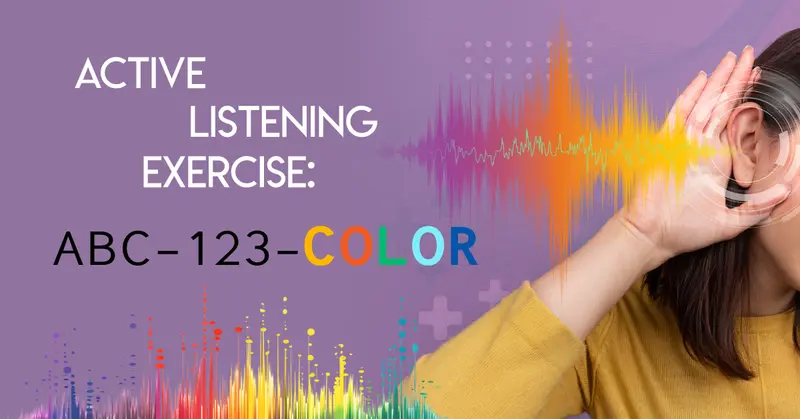
Active Listening Exercise: ABC-123-COLOR
Listening is an important skill in any classroom, but it’s especially important in the drama classroom. From classroom instruction, to game directions, to focusing on their fellow performers on stage, students are constantly required to listen. Active listening is a skill, and just like any other skill it can be improved with focused activities. Here is a simple activity that challenges students to actively listen in the face of increasing distraction. The game is called ABC-123-COLOR.
Instructions:• Put the entire class in a circle
• Choose one student to start the activity.
• That first student will make eye contact with another student across the circle, walk across the circle, say “A,” and move into the second student's place in the circle.
• As soon as they hear the letter, the second student will immediately choose a third student in the circle, make eye contact, and start to walk towards them.
• The second student will say the letter “B” to the third student and move into that student’s place in the circle.
• The third student will make eye contact with a fourth student, say “C” and take their place, and so on.
• This will continue until the students have successfully made it all the way through the alphabet.
• When the group has successfully made it through the alphabet, reset the circle and tell the students you will repeat the activity, and this time you will be adding numbers to the game.
• Choose a student to start with “A,” have them make eye contact with another student, and start the alphabet layer of the game.
• Once the alphabet is in play, turn to a different student in the group and say “1.”
• That student will choose a different person in the circle, make eye contact, walk towards them and say “2.”
• Two will make eye contact, move toward a different student, and say “3.”
• Three will continue to four and so on.
• If a student is given both a letter and number at the same time, they will make eye contact with one student and give them the next letter, then turn to a different student and pass them the next number, then take the place of that student.
• The group will simultaneously continue with both letters and numbers until the letter Z is reached.
• Reset the circle and tell the students that you are going to add colors to the game.
• Choose a student to start the alphabet.
• After that student begins, choose a second student to start with numbers.
• After letters and numbers are in play, choose a third student to start with colors following the same sequence: eye contact, move to student, say a color, take their place. Students may repeat colors.
• All three layers — letters, numbers, and colors — will continue simultaneously until students reach the letter Z.
When you add numbers and colors, the game gets much more challenging. Encourage your student to concentrate on the information that is given to them (letter, number, or color), provide strong and deliberate eye contact, and hyper-focus on what is happening in the circle. Active listening includes eyes, ears, and body, and requires concentration.
This game can be repeated on a regular basis throughout the semester. How do students improve their skills?
Discussion QuestionsUnpack the exercise:
1. How did your listening change as more layers (numbers and colors) were added to the game?
2. What strategies did you use to stay focused when the activity became more challenging?
3. What role did eye contact and body awareness play in being successful at the game?
4. How might you apply those same skills when working with scene partners or receiving directions in drama class?
5. What caused the game to break down when mistakes happened, and what helped the group recover?
Classroom Exercise
Drama Sensory Series: Storytelling Inspired by Taste and Smell
This month, we’re going to be using the five senses (sight, hearing, taste, smell, and touch) as the basis for exercises and theatre games. This week, we’re looking at exercises inspired by taste and smell. Bringing actual food and scents into the drama classroom may not be feasible due to safe food handling concerns, food and scent allergies and sensitivities, cultural and religious food restrictions, and potential mess. But you can use taste and smell as prompts for creating monologues, stories, and scenes both scripted and improvised.
Here are five exercises to try with your students that use scent and taste to inspire them, with five additional games and exercises in the giveaway below.
1. Food Characters – Have students brainstorm examples of foods with a distinct flavour descriptor, such as spicy curry, sour lemon sorbet, or plain oatmeal. Create a character description from this prompt, using the traits of the taste to form personality traits. For example, spicy curry might be an outspoken character, while plain oatmeal might be personified as steady and dependable but not particularly memorable. Students could also create a costume sketch, using the food as inspiration for costume elements. A cheeseburger character might have a bun for a hat, while a Christmas cookie character might wear a gingerbread-coloured dress with gumdrop buttons.
2. Scentscapes – Have students close their eyes and then talk them through a “scent tour” of a specific location. What does the scene smell like? For example, if your scene is set at a carnival, describe the scent of crisp fall air, the pungent odor of gasoline from the rides, and the various yummy smells of the food vendors such as cotton candy, candy apples, popcorn, and French fries. For a scene set at a beach, you might smell salty seawater, sunscreen, and various scents from picnics and barbeques. Have students then write their own scentscape for a scene set in a new location, for example, a school cafeteria, a space station, a Renaissance faire, or deep in the jungle. What would those places smell like? What descriptive words or phrases would evoke those scents?
3. Food Memories – Food often evokes strong feelings and memories. For example, a student might have fond memories of baking cookies with their grandmother, eating popcorn with their best friend while watching a movie, or laughing so hard that they sprayed Dr. Pepper out their nose. Have students think of a food and experience that they have a strong association with and write a descriptive monologue describing the situation, with a strong beginning, middle, and end. It can be from the perspective of the student, or they can create their own fictional scenario. This can remain a written assignment if the student feels that the monologue is very personal to them, or if time allows, have the students who wish to share read their monologues aloud.
4. World’s Worst Restaurant – For this improv game, you’ll need three student volunteers. Two students will act as restaurant patrons, and the third student will be the server. Give students a variety of prompts to demonstrate the world’s worst restaurant. Here are some ideas to get you started:
• The server really thinks the patrons should try the fish tacos and will stop at nothing until they order them.
• The restaurant has just run out of their signature meal (which the restaurant is named after).
• One of the restaurant patrons is allergic to everything on the menu.
• The patrons speak a different language from the server, and try to order their meals.
• One of the patrons discovers something in their soup.
• One of the patrons keeps changing their mind about the meal they ordered.
• One of the patrons asks to make many substitutions to their order.
• There is a weird smell coming from the kitchen.
• There is a weird smell, but it isn’t coming from the kitchen.
5. Murder Mystery Meal – In small groups, students will write a murder mystery or betrayal scene focused on a meal. One dish has been tampered with. Who poisoned it, why did they do it, and who will eat it? Present the scene to the rest of the class and see if they can guess whodunit.
Additional Resource:Tons of Food-Related Prompts
Classroom Exercise
Drama Sensory Series: Games & Exercises Focused on Hearing and Listening
This month, we’re going to be using the five senses (sight, hearing, taste, smell, and touch) as the basis for exercises and theatre games. This week, we’re looking at auditory-based exercises: actively listening, hearing each other, expressing ourselves and telling stories through music, sound effects, and silence. Here are some exercises to try with your students that use hearing and listening as their focus.
1. Active ListeningStart out by working on active listening activities with your students. Developing students’ active listening skills will benefit them not only in drama class, but in their everyday lives! 3-5-7 is a fun warm-up exercise for working on active listening. Hearing or Listening encourages students to consider how they feel when they’re not being heard or listened to. If you’re teaching online, here are some tips for encouraging active listening in the digital classroom as well.
2. Volume & Enunciation ActivitiesActors need to be able to be heard onstage. If your students have voices that are perfectly audible when they’re backstage but seem to vanish onstage, try any or all of the following exercises to help them improve their enunciation and volume (without shouting).
• 6 Tips to Improve Enunciation
• A Vocal Warm-Up for the Articulators
• Whisper and Shout
• Can You Hear Me Now?
• Projecting Your Voice Without Yelling
3. Auditory ObservationsOnce students have worked on their vocal skills, have them “observe” each other performing scenes or improv work, with the following catch: the observing students must close their eyes, be blindfolded, or turn their backs to the performing students, and give feedback specifically focused on what they heard. For example, they can comment on aspects such as vocal volume and expression, clarity and enunciation, use of accents, use of music and/or sound effects, and sound balance (e.g., is the background music drowning out the performers?).
If students need help giving feedback, try these resources: Effective Peer Feedback, Giving and Receiving Feedback, and Giving Feedback with Kindness.
4. The Rain Game challenges students to create a soundscape using only their bodies. What other auditory stories could your students tell, using just their bodies, their voices to create sounds, found objects from the drama classroom, or background music? Try having your students create a soundscape of the jungle, under the sea, a daycare centre, or a crowded subway using only materials they have available in the drama classroom or in their school bags.
5. Show PlaylistOne of my favourite parts of directing a production is creating a playlist of music to play during pre-show, intermission, and post-show. Assign each of your students a play to study and have them create a playlist of at least 10 songs that demonstrate and complement their vision of the show. Students will include a write-up of why they selected each song.
Note: If the show has an existing soundtrack, none of those songs can be included in the playlist! For example, if the student is creating a playlist for Romeo and Juliet, they can’t include the song “#1 Crush” by Garbage, because it was on the soundtrack for the 1996 film Romeo + Juliet by Baz Luhrmann.
6. The Sounds of SilenceWhat does silence sound like? Unless you are in a vacuum, there is no such thing as true silence. Have students sit quietly in the drama classroom or in the hallway for three to four minutes. (If time allows, you might wish to share videos of various performances of John Cage’s “4’33” for fun.) Students may not speak and must sit as still as possible during that time. Have them listen intently to the sounds that occur in the silence: the buzzing of the overhead lights, the murmurs of a teacher giving a lecture in a nearby classroom, footsteps in the hallway, a sneeze or sniffle, an uncomfortable giggle, an impatient exhale…
After the time is up, have students journal about what they heard and any observations or feelings that arose while listening. How can they apply this experience to their work in the drama classroom? Could these observations or this experience prompt a monologue or scene?
7. Radio PlaysRadio plays are the ultimate auditory theatrical experience. There are no visual aspects (they’re meant to be played on the radio, hence the name), so performers must rely on their vocal performances as well as sound effects and music to convey the story to the audience.
Check out Dead Men Don’t Do Radio Plays by Allison Williams and Arctic Adventure Theatre: The Case of the Crazed Crashers by Matt Webster, both from the Theatrefolk play catalogue, to get you started.
Classroom Exercise
10 Low- or No-Prep Theatre Exercises
Sometimes you just need exercises that are quick, easy, and don't require you to do extensive prep work. Maybe you’ve got a substitute teacher covering for you, maybe you’re just trying to survive tech week, or maybe it’s one of those days where you just can’t even. For those times, we’ve got you covered with the following low- or no-prep theatre exercises!
1. Middle School Miming: Great for high school students too, and requires no equipment other than your body and imagination. Start with Preparatory Skills, and then move on to Interacting with a Wall, and Interacting with a Door as your students gain confidence and skills.
2. "Ruin a Play": All you need is a list of titles of existing plays and/or musicals. Ruin the play, have a laugh, then have students invent a synopsis of the new show, create a cast of characters, and do a “dream casting” of the characters, using their friends and/or celebrities to play the roles. Bonus points for students explaining why they chose those particular people to play the roles.
3. Two Prompts: If you can print two lists of prompts from our website, you can play this game with your students! If you can’t print the lists, you can still play — just look at the lists on a Chromebook or on your phone.
4. Got a big group of students? Try a large group tableau exercise or even one of these two full-class tableau exercises. It’s helpful if you have a classroom with a large mirror or a digital camera to take photos so students can see themselves, but it’s not necessary to do the activity.
5. Character Analysis Exercise: Three exercises in one. Students can use it to analyze a character in a play the class is studying, a character they’re playing in a production, or a character in a play they’re writing themselves. Plus, the questions are right there in the article and ready to print.
6. If your students need inspiration for playwriting, look no further than the clothes they’re wearing. All students need to complete the Clothing Prompt playwriting exercise is a writing device and a piece of clothing or an accessory that they have on their person.
7. For more experienced drama students in a director’s craft class, challenge them with this problem solving exercise, which includes 10 scenarios, an exit slip, and an evaluation rubric. Students can complete the exercise individually, in pairs, or in small groups.
8. Choice board activities are great for self-directed learning. Here are two great choice board exercises ready to go for you: Portraying Emotions and Switching Genres. Both exercises even have rubrics included as a bonus.
9. If your students seem down or blue, have them complete a series of positive self-talk exercises. All they need is a writing device and/or a partner, depending on which of the exercises you choose to do. You give them the prompt and they respond to it, and hopefully completing the exercises helps students feel better about themselves.
10. Got 10 minutes to fill? Try one of these 10-Minute Time-Filler Activities when you’re short on time and need zero-prep activities. These activities range from improv to writing to cleaning out the drama classroom, and are quick and easy to implement. You’ve got this!
Classroom Exercise
Challenge Exercise: Abstract Tableau Scenes
Abstract theatre focuses on representing themes, ideas, situations, and emotions in a visual, stylized, symbolic way, rather than acting them out realistically. Using stylized physicality, students can express themselves in different and visually exciting ways. Let’s explore this through the lens of tableau scenes.
Instructions1. Divide students into groups of 6–8.
2. Give each group a prompt from which to create a tableau scene. Here are some ideas to get you started:
• Emotions: fear, joy, rage, anxiety, suspicion, boredom
• Colours
• Time: time passing, seasons changing, waiting for something to happen, growing up, a visual representation of a particular month or date
• Situations: falling in or out of love, feeling pressured, dealing with parents/guardians, worrying about the future, feeling left out
• Concepts: popularity, isolation, community, fashion, art, friendship, mess, growing up, safety, connectedness
3. Give students 10 minutes to come up with their tableau scene. If students need inspiration and time permits, you might have them do a word association exercise to come up with ideas to represent their theme.
Every student in the group must be part of the scene somehow. For the first attempts at this exercise, students may only use themselves in the tableau scene — no costumes, props, or furniture may be included. Feel free to add these during subsequent rounds of this exercise if you wish.
4. How can students make their tableau scenes visually interesting? Consider the following:
• Determine what the focal point of the scene is and build around that.
• Use different levels: high, medium, and low.
• Explore different ways to pose their bodies: sharp or bent angles, loose and flowing lines, curved or twisted poses, fluid versus flexed.
• Use their full bodies: angles and/or placement of the head, neck, shoulders, elbows, fingers, hips, knees, feet — not just arms and legs.
• Facial expressions are very important for portraying the emotion of the scene.
• Explore how pairs or trios within the group could pose together — near or touching — to create different shapes and images.
• Consider distance and proximity within the group. Are all the students grouped together? How close are they physically to each other? What could physical distance or nearness represent?
Remember that students must hold their frozen poses for at least 10 seconds, so while they of course want their poses to be visually interesting, they also need to be physically achievable! So don’t plan on doing a risky or difficult move like a backbend, split, or pose on one foot if it’s not already within your skillset.
5. Once the 10 minutes are up, have groups present their tableau scenes for the rest of the class. You can have groups share their prompt topic and then present their tableau scene, or have students not share their prompt and have the rest of the students guess what the prompt was, depending on their interpretation of the frozen picture presented.
6. Groups should hold their frozen poses for at least 10 seconds. If possible, take a photo of each group’s tableau so they can actually see what they created and reflect on it.
7. For each group, discuss any or all of the following:
• How did the students’ choice of poses in the tableau scene represent their concept?
• What immediately caught your attention in the scene? Why?
• What worked well?
• What didn’t work so well? What might they do differently next time?
8. Once all the groups have presented their tableau scenes, have each student complete an individual reflection (found below).
Classroom Exercise
Exercise: Full-Class Tableau
If you’ve got a large group of drama students but not a lot of time, try these two quick full-class tableau exercises. Students will work together to create full-class tableau scenes as fast as they can. The first exercise challenges students to collaborate with each other in a timely manner, and the second exercise requires students to practice their quick-thinking improvisation skills.
In these scenes, students may not use any props, costumes, or furniture pieces (no chairs, benches, or rehearsal blocks) to create their frozen tableau scenes. They can only use their own bodies and imaginations.
If possible, have a device available to take photos or videos, so you can capture your students’ work and have them look at what everyone is doing. Alternatively, if you have a classroom with a large mirror, have them perform the tableau scene facing the mirror so they can see what the full scene looks like.
Exercise 1: Small Groups, Full Scene1. Split the class into groups of 4–6 students.
2. Assign a full-class location prompt, such as the beach, a restaurant, or a playground.
3. Each group will have three minutes to plan a different section of the full-class tableau. For example, in the beach scene, one group of students might be sunbathing, one group might be swimming, and one might be playing volleyball. In the restaurant scene, one group might be a family out to dinner, one might be the chefs in the kitchen, and a third might be washing dishes. Work quickly; there’s no time to argue about roles.
4. Each group member must participate in the scene, but not everyone has to be a human character. In the playground scene, you might have one group who decides to portray a dog walker with a bunch of dogs — the students in that group can each play a different dog. Or in the restaurant scene, you might have one student in a group play the table and two students play chairs.
5. At the end of the three minutes, give students one minute to arrange themselves on one side of the room in a way that makes sense, and take their frozen tableau poses. Give them a cue (“3, 2, 1… Freeze!”) so they know when to hold the pose. Have students hold the tableau scenes for at least 10 seconds, so you can take photographs and/or students can see themselves in the mirror.
Exercise 2: Add Three1. Have students stand in a large circle.
2. Assign a full-class location prompt.
3. Select three students to go into the middle of the circle and start a tableau scene depicting an aspect of the location. For example, in the playground scene, these three students might start by pretending to play hopscotch, jump rope, or leapfrog. (You might wish to encourage these first students to select poses that are easy to hold, as they’ll be holding their frozen poses the longest!) Hold these poses for five seconds.
4. After five seconds, while the current three students remain frozen, choose three more students to jump into the centre of the circle and add on to the scene. They can either join in the current scene, or do something adjacent to the scene that is still related. For example, one student might join in the leapfrog chain, while the other two pretend to ride bikes nearby. Once all three students are in place, have the group hold the pose for another five seconds.
5. Keep repeating this process, adding three additional students and holding the poses for five seconds, until all the students are in the tableau scene. Have students hold the final tableau scenes for at least 10 seconds, so you can take photographs and/or students can see themselves in the mirror.
Tableau Tips:
• Blinking and breathing is always allowed in tableaux.
• Think about levels in your poses — high, medium, and low.
• Where is your audience? Remember to cheat out and avoid turning your back to the audience area.
• Focus on details, especially facial expressions, reactions, and eye focal points.
Directing
How to Teach Blocking without Boring Your Students
Blocking is fundamental to acting. Whether staging a two-person scene or 30-person musical number, how you arrange the actors onstage is an important part of the storytelling. Unfortunately, students don’t always have the attention span to take a deep dive into staging theories. So what do you do when you want to teach blocking but you don’t want to bore your students with abstract concepts? Stick to the basics and get your students on their feet. That way, they can actively demonstrate the principles of blocking. Here are three fundamental blocking concepts you can include in your curriculum, each with an exercise or activity you can do with your students so they can visualize the concepts.
LevelsLevels are a great way to break up the stage plane and add interest to a scene. Even a six-inch step or platform is enough to create a new performing area onstage. More importantly, changing the level of an actor will alter both their status and the audience's focus in the scene (both of which we will also cover in this post). Adding different levels to the performing space gives directors a whole new toolbox of options when it comes to blocking.
Levels Exercise
Place the following objects on the stage: an acting block, a chair, and a small step. Pick four students to get on the stage and interact with the objects to form a tableau. Three students will each use one of the objects as part of their pose, and the fourth student will strike a pose using only the stage floor. Have the rest of the class comment on how the use of different levels transforms the picture of the characters onstage. How do levels change your perception of a character? Have the four students switch objects, strike a new pose, and repeat the discussion. Do this until each student has had the opportunity to interact with each object.
FocusFocus tells the audience where to look. A director uses focus as a part of their blocking strategy to draw the audience's attention towards important action or information. A director can draw focus through movement, lighting, or character placement onstage. For example, upstage center is the strongest position onstage and naturally demands focus. Unfortunately, actors can “steal” focus by wandering, fidgeting, and participating in other unfocused actions. When an actor steals focus, the audience becomes confused and distracted, and the impact of a scene is ruined. When all performers work together to maintain the focus of a scene, audience attention is aimed where it is supposed to be, and the blocking has the intended effect.
Stealing Focus Exercise
Having access to the same three blocking objects (acting block, chair, step), have one student go onstage and strike a pose that they believe will get, and hold, the audience’s attention. The first student will pose and stay frozen in their pose. Then ask another student to go onstage and “steal” the focus from the first student by creating their own pose. The new student can also use the objects, but may not continuously move around the stage or physically touch the first student. When the second student has struck their pose, ask the class if that student was successful in stealing focus. Then ask for a third student to steal from the first two (still frozen), and ask the class the same question. Ask the class to explain why they believe focus was stolen or not. Continue the exercise until there are 10 students onstage.
StatusBlocking can help denote the status of a character. If you want a character to demonstrate their social status, where they stand can be as important as how they stand. The placement of a character onstage can elevate them both physically and socially, and conversely, reducing a character’s status can be demonstrated by their physical disposition on the stage. Directors who understand the connection between blocking and status can powerfully illustrate a character’s status by thoughtfully crafting their blocking.
High Status/Low Status Exercise
With the same three blocking objects onstage (block, chair, step), choose 10 students to step onstage and strike the most powerful pose they can. Their pose should demonstrate authority, power, and confidence. Ask the rest of the class to vote for which students created the highest status with their pose. Keep the top three vote getters onstage and send the remaining seven back into the audience. Have the class vote again, and keep the “winner” onstage in their pose. Have a discussion with the class about WHY they believe this person demonstrated the highest status. Next, choose 10 students to go onstage and strike a pose that demonstrates the LOWEST status possible. These poses should exhibit weakness, confusion, and/or hopelessness. Repeat the class voting process until a “winner” is chosen, and discuss why the winner created a believable low-status pose.
Classroom Exercise
Choice Board Activity: Switching Genres
Switching up the genre of an existing play can be a lot of fun. Take Shakespeare’s Romeo and Juliet — there have been lots of theatrical and film adaptations of that play, such as West Side Story (musical adaptation), & Juliet (musical POV adaptation), Gnomeo & Juliet (animated), Warm Bodies (zombie rom com), Romeo Must Die (martial arts film), Rosaline (alternate character POV film), and Football Romeo (modern high school adaptation).
In this choice board activity, students do just that: take an existing play and switch up the genre. Set it in outer space. Set it on a cruise ship. Set a modern play in the past, or modernize a historical play. If all else fails, add zombies. (For inspiration, check out Theatrefolk’s Hamlet, Zombie Killer of Denmark. Each student will explain their concept, then complete various tasks of their choosing to expand it.
Instructions:EVERYONE:
• Choose an existing play and read it.
• Switch the genre and write a synopsis of how you’d change it. Length: 1 page.
• Write an outline/timeline of the major moments of the play, according to your changes. Length: 1 page.
CHOOSE 3 TO SUPPORT YOUR GENRE SWITCH:
• Create a comparison chart of a changed/altered/adjusted character.
• Create a character sketch for a new character you’re adding to the play, and describe what existing character(s) they interact with and how they affect those characters.
• Write a monologue for a character. Length: ½–1 page.
• Write a new scene. Minimum length: 2 pages.
• Write a song for a musical adaptation (you may use an existing song as the melody/structure, or create an original song).
• Create an inspiration collage or mood board featuring colours, textures, sketches, photographs, or cutouts that illustrate the concept. (Minimum size: 12 inches by 12 inches)
• Create a new set design. Explain how it supports your adaptation.
• Create a costume design for one character. Explain how it supports your adaptation.
BONUS: For extra credit, students may complete and submit up to two additional choices from the list.
Extension Opportunity: If you’d like to expand this activity into a larger scale (such as an ISP or end-of-term project), you can have students create an elevator pitch for their adaptation, or do a complete show design for the production.
Additional Resources:
Costume Challenge: Modernizing a Classic Character’s Ensemble
Connecting the Past to the Present: Modernizing a Scene
Playwriting Exercise: Exploring Adaptation
Be sure to check out Theatrefolk’s catalogue of classical adaptation plays for inspiration.
Classroom Exercise
10 More Time-Filler Activities Or, What to Do With Those Pesky 10 Minutes
If you need something fast and simple to fill those final 10 minutes of drama class, we’ve got you covered! Try these 10 time-filler activities to keep your students occupied until the bell rings. If you need even more ideas, there are 10 more suggestions in the giveaway at the bottom of this article.
1. Brainstorm a list of prompts for improv scenes or playwriting. (We’ve got lots of lists to inspire you. See if you can come up with more ideas.)
2. Play “Would You Rather…” in different ways: writing down the answers, raising your hand to vote, moving to one side of the room or the other, or as a problem-solving challenge.
3. Try one of the 3 Quick and Easy Warm-Up Games With a Drama Class Twist. Another drama class twist game option is Giants, Elves, Wizards, a human-sized version of Rock, Paper, Scissors.
4. You can’t go wrong with Scenes from a Bag or Lines from a Bag. Have a paper bag full of prompts at the ready whenever you need to fill up a few minutes.
5. Similarly, have a small box of random items handy to pull out for a game of Speed Props. You can also have students grab items from their backpacks, or use items found around the classroom.
6. Give students a problem-solving scenario and have them figure out what they’d do in that situation.
7. Have students write tag team scenes in pairs. Make it quick and easy by giving the whole class the same prompts for character identifiers, location, and starting line.
8. Tell a word-at-a-time story as a class. This is a great exercise for both in-person and online learning situations.
9. Have students complete a journal entry. Here are some great self-reflection prompts to get your students started.
10. When all else fails, tidy the drama classroom! Pick up garbage, alphabetize the script library, dust behind and in between all those nooks and crannies. Make the space sparkle.
Classroom Exercise
Time Filler Activity: Mindful Minutes
If students are feeling stressed or anxious, it can be helpful to share some techniques and exercises to help them calm down, regulate themselves, and re-centre, so they can go about the rest of their day feeling a bit better. The drama classroom is often a safe haven for students. Maybe they’re worried about their upcoming audition, maybe they’re feeling anxious about participating in an improv exercise, or maybe they’re holding stress from a prior class or an event earlier in the day. If you’ve got a few minutes to fill, notice a tense or stressed-out student, or need a quick activity to switch up the energy of the room, try one of these mindfulness activities. They can be condensed or expanded to fit any amount of time required. And teachers — you might even find these activities useful if you’re feeling stressed out yourself!
1. Have students pause, stand, and stretch their bodies. Start at the top of the head and move down through the body — neck, shoulders, arms and hands, torso, hips, legs, feet. Or, lead them in a brief yoga sequence.
2. Have students sit or lie on the floor, and lead them through a visualization story or meditation. (As an extension of this activity, after students have had a few opportunities to participate in this exercise, have them write their own visualization stories, and then have them lead the exercise.)
3. Do an energy pass circle. Have students stand in a circle and hold hands with the students on either side of them. Have one student gently squeeze the hand of the student next to them. That student will then gently squeeze the hand of the person next to them, and so on around the entire circle. Once the squeeze has been sent around the circle, have students do the exercise again, only this time with their hands crossed in front of them, and then re-joining hands. Students will need to stand closer to each other to do the second energy pass.
4. Have students say out loud or write something kind about themselves.
5. Have students say out loud or write something that they’re proud of, or something that they’ve learned or accomplished in drama class.
6. Have students give a classmate a compliment. (For suggestions 4, 5, and 6, you could also have students write these prompts on a Post-it Note and stick them up somewhere in your classroom as a positivity display.)
7. Think about the characters in the play you’re currently studying or in rehearsals for. What mindfulness activities or exercises do you think they might do? For bonus points, do those activities.
8. Try one of the following breathing exercises:
• Box breathing: inhale for four counts, hold the breath for four counts, exhale for four counts, hold the breath for four counts, and repeat as many times as you wish.
• Flower breathing: imagine that you are holding a flower with a long stem. In your head, visualize the flower: what kind of flower is it? What colour is it? What scent does it have? Use your hands to mime picking the flower and holding it gently in front of you. Breathe in through the nose the “scent” of the imaginary flower for four counts, then exhale out the mouth for four counts. Repeat as many times as you wish.
• Laugh breathing: inhale for four counts, then exhale in four short bursts while saying “ha” and then a final slow “ha” at the end, exhaling all the breath remaining. It will feel/sound like this: inhale… ha, ha, ha, ha, haaaaaaaaa. Repeat as many times as you wish, changing the vowels of the exhale each round (hee hee hee, hi hi hi, ho ho ho, etc.) or varying the volume.
9. Do a “stop and sense” check. Identify the following:
• Five things you can SEE
• Four things you can TOUCH
• Three things you can HEAR
• Two things you can SMELL
• One thing you can TASTE (What does the inside of your mouth currently taste like? Coffee? A mint? Your lunch?)
Bonus points if the identifications are related to theatre or drama class.
10. Do a massage chain. Have students sit in a circle, facing the back of the person in front of them. (Students with long hair will need to tuck their hair over their shoulder or tie it back.) With students’ consent, students will place their hands on the shoulders and/or upper back of the student in front of them, and give them a gentle massage. Gentle two-finger taps or karate chops with the side of the hand can feel good too. After an agreed-upon amount of time has passed, have students turn and massage the shoulders of the student who was previously massaging them. Again, be sure students get consent from the student ahead of them before placing their hands on them.
Additional Resources:3 Mindfulness Techniques to Combat Pre-Show Nerves
Round-Up: Health & Fitness for Drama Students
Closure Practices for the Drama Classroom
Classroom Exercise
Time-Filler Activity: Blank: The Musical
If you’ve ever wished that there were a musical about your favourite topics or random ideas, then this time-filler activity will be right up your alley. You can structure this activity in a variety of ways, depending on how much time you have to fill: as an opening bellwork prompt, as a playwriting starter, as a brainstorming activity, as a full-on assignment, or as an opportunity to make your students laugh! It can be done individually, in pairs or small groups, or as a full-class exercise.
The most basic version of this activity is to brainstorm as many ideas as possible to create titles of new musicals. The titles can be funny, dramatic, scary, serious, whatever you like, as long as it’s classroom appropriate. The words/phrases just have to fit into the title [Blank]: The Musical. Here are some ideas to get you started:
• Kindergarten: The Musical
• My Missing Sock: The Musical
• The Year Was 2009, and I Was Just Born: The Musical
• Bridgerton in Space: The Musical
• Cake (But Not Ice Cream): The Musical
• Lionel Messi: The Musical
• Folding Chairs and Folding Tables: The Musical
• A Million, Billion Squishmallows: The Musical
If you’re doing the brainstorming version, be sure to have someone record all the ideas — you never know when someone’s suggestion will trigger a windfall of inspiration!
The next step of this activity is to choose one title for your musical from the suggestions, and then come up with a variety of ideas to further develop the musical. Choose as many as you wish your students to complete or as time permits:
• Three different possible storylines (for an added challenge, make all three storylines completely different)
• Three different possible secondary storylines (or “B-plots”)
• Three to five original song titles (for example, the opening introductory song, the “I want” song, a ballad, a comedic number, the villain song, an up-tempo dance number…) or a playlist of existing songs that could be used as numbers in a jukebox musical (remember that a jukebox musical uses well-known, previously-existing songs instead of original songs to further the action of the story)
• A list of scenes that create an overview of the action of the play
• A list of characters — names and a brief description of their role within the show
• A list of unique moments or special effects that could be included in the script (for example, in Bridgerton in Space: The Musical, perhaps the actors will be suspended above the stage on wires to evoke a “Queen’s ball in zero gravity” effect)
The third step of this activity is to choose one suggestion from the previous step (one storyline, one song title, one character, etc.) and further develop that. For example, take the storyline and write a show synopsis; take the song title, decide what character would sing it and why, and write lyrics for the song; or write a character analysis and/or a monologue for the character. You could also have students create a new technical aspect for the show, such as a set, costume, or prop design. For a full-class collaboration challenge, assign various students different aspects of the musical to develop, and see how they all fit together.
Classroom Exercise
Time Filler Activity: Everything You Know
Are you curious to know what your students know about a particular topic? Or do you wonder about what they actually retained from your last lesson? The following activity is a good way to find out quickly. The goal is simple: find out everything your students know about a particular topic in five minutes or less. It’s a great time-filler activity, or it can be used as an opening bellwork activity. You can do it as a full class activity, in small groups, or as an individual activity, and only a couple of supplies are required.
Materials Needed• Stopwatch
• Writing implements — pencil and paper or cell phones/tablets/Chromebooks (if you’re doing this individually or in small groups), or a blackboard/smart board (if you’re working with a full class)
Instructions1. Choose a time frame to work in. Use smaller increments for smaller groups — for example, 1–2 minutes for individuals, 3–4 minutes for small groups, and 5 minutes for a full class. Adjust as necessary, depending on how much time you have to fill.
2. If you are working in small groups or as a full class, select one person to be the note-taker (one per group). Choose the student who is the fastest writer/typist.
3. When the teacher says “GO,” students will write down everything they know about a particular theatrical topic. If they’re working individually, they’ll write out everything they know about the topic by hand or digitally. For some students, it might be faster to use talk-to-text technology or do a voice recording, and that’s ok too. If they’re working as a full group, you can have students shout out their answers, rapid-fire style, or have them raise their hands. Just be quick!
Point form notes are fine, but each point needs to be a complete thought and make sense. Students can always add extra notes or develop points further as necessary.
Some topics might include “Everything you know about…”
• Theatre etiquette
• Stage makeup
• The play the class is currently studying
• Stage combat
• Commedia dell’arte
• The lesson that we just finished today/yesterday
• A particular actor/playwright/theatrical historical figure
• Warm-ups
• What should be included in a show programme
• Improvisation
4. When writing “everything you know about…” students can write literally anything they can think of relating to the show. For example, if the topic is the play the class is currently studying, students could start with things like:
• Play title: The House
• Playwright: Lindsay Price
• There are 28 characters.
• It’s set in the present day, in October.
• There are four separate stories within the show.
• Liath appears in all four stories.
• Liath is pronounced “LEE-EH” (not “lee-ath”).
For “Everything you know about stage combat,” lists might include:
• If it isn’t safe, don’t do it.
• Stage combat = the illusion of violence.
• Stage combat must always be done under the supervision of a fight director.
• Never do a real slap.
• Always do a warm-up and fight call during pre-show.
• Run each fight twice during fight call: once at half speed and once at performance speed.
• The sound that a slap/punch/blow makes is called a “knap.”
And so on. They can talk about content, themes, characters, rules, definitions, memorable quotes, whatever they know about it. Once they’ve got the basics out of their brains, they can go deeper (within the time limit). The goal is to run out of time before they run out of ideas!
5. Students will write as quickly as possible for the full amount of time you’ve selected. When the timer goes off, students must stop writing immediately. If you’re working as a full class or small group, have students include their initials next to their answers, so you know who contributed what.
6. If time permits, you can have your students share their answers verbally, or have them submit the answers to you.
When you’re selecting a topic, you might choose one that you’ve recently studied in class to see what information your students have retained and can quickly recall. It’s an immediate assessment of what your students took away from the lesson. If there are noticeable sections missing in students’ notes, that gives you an idea of what needs to be reviewed. Remember that some students may not work well under pressure, and might be able to recall more information in a different setting. In that case, if time permits, follow up the activity with a class discussion.
Conversely, you might choose a topic that you haven’t yet focused on to gauge what knowledge your students currently possess. This way you can see what you could focus your lessons on, where your students’ interests lie, and where their knowledge gaps are.
Let us know how your students respond to this activity!
Classroom Exercise
Time Filler Activities: Symbol Stories
Sometimes you have a few minutes at the end of class where you need to keep your students occupied, but you don’t want to start a new exercise or let the class devolve into mindless chatter. Enter time filler activities! This month we’ll be sharing some great games and simple activities that you can whip out whenever you’ve got some spare minutes to fill. And you can always extend the gameplay out longer next class if you find that your students are really connecting with it.
Symbol Stories is a simple game that challenges students to invent a story using prompts from symbols on a set of three dice. It helps students to practice quick and creative thinking, as well as verbal communication skills.
Materials Needed:• Set of three oversized dice
• Paint or markers or cutouts of symbols to attach to the dice
• Scissors
• Glue/tape
• Small shallow box or bag (for storage)
Preparation:1. Select 18 different, easily identifiable symbol images (one for each side of the three dice) that you will draw, paint, or cut out to put on the dice. Some symbols might include a tree, a crown, a book, a squirrel, a pencil, a house, a key, a flower, a fish, a cake… there are lots of options.
See the giveaway below for a list of symbol prompt ideas.
2. Draw, paint, or cut out and glue a different symbol on each side of the dice.
3. Once the dice are dry and complete, place them into a small shallow box or a bag for safekeeping.
Activity Instructions:1. One student will roll the three dice.
2. Have them announce to the class the three symbols they’ve rolled, for example, a guitar, a bicycle, and an apple, or a chicken, a lollipop, and a mug.
3. The student will then make up and tell a story that includes all three items in some way.
4. The story can be in any style (funny, scary, dramatic, etc.) as long as it’s appropriate for the classroom. It doesn’t have to be long! It could be as simple as, “I was riding my bicycle down the street when I noticed a man sitting under an apple tree playing a guitar,” or “My sister’s pet chicken broke my favourite mug. I was so upset that I dropped my lollipop.” Or, the story can be as detailed as the student wishes, as time permits.
5. Have as many students tell stories as you have time to fill. You can have students each roll the dice and have different symbols for each story, or roll the dice once and have each student tell a different story using the same symbols. For example, if the dice roll is a crown, a squirrel, and a pencil, one student might tell a story about a royal squirrel wearing a crown writing a letter with a pencil, while another student tells a story about a person stealing a crown from a pencil-wielding squirrel. Or perhaps a queen with a crown writes a decree with a pencil that all squirrels have been banned from the country. See what interesting stories your students come up with!
Alternate Ideas:• If you don’t have oversized dice, you can use a set of index cards or plastic poker chips with one symbol per card or chip. For the chips, you can have students draw them out of a box or bag. For the index cards, turn them upside down (so the blank side is facing the student), shuffle the cards, and have students select three cards at random. Aim to have between 18–20 cards or chips.
• You could also simply print the prompt idea grid from the giveaway below, cut out the squares, and toss them into a hat or paper bag. Laminate the cutouts for extra sturdiness.
• Have one student tell the story while two additional students act out or mime the story at the same time, listening and reacting to what the storyteller says.
• Have a minimum or maximum amount of time that the story must fill. For example, the story must be shorter than 30 seconds, or the story has to be longer than a minute. Or, you could limit the number of sentences or words the storyteller can use.
• Instead of verbal storytelling, use the dice rolls as a scene or monologue writing prompt.
• Have students come up with as many different scenarios as they can (using all three dice rolls) in three minutes.
• Have students roll the dice or choose symbols for each other.
• Have students improvise a sales pitch for each symbol they roll.
• Create a single item or product using all three symbols, for example, a chicken-flavoured lollipop in a mug, or a lollipop-print mug for chickens.
Classroom Exercise
Exercise: Rope Storytelling
This storytelling exercise is based on a classic campfire game. Students will work together to tell a story, but who tells the story and where they start and pick up again is up to chance. This exercise is great for students to practice active listening, using good diction when speaking, and thinking on their feet, as well as working together to tell a story in an engaging and clear way.
MaterialsYou’ll need a length of rope, at least one foot in length per student (for example: 20 students = minimum 20-foot rope). Tie a knot in the rope about a third of the way down the length, then tie the two ends of the rope together so it becomes a circle. You should have two knots in the rope now, with different lengths of rope between each knot. You can tie ribbons or strips of fabric around the two knots if you need to make them more obvious.
For fun, if you want to embrace the traditional campfire game atmosphere, you can dim the lights, play soft nighttime nature sounds in the background, and/or set up a prop campfire in the middle of the circle, but these are optional.
Instructions1. Have students sit or stand in a circle, shoulder to shoulder, around the rope. Students will pick up the rope and hold it loosely with both hands.
2. One student will start telling a story about any topic. (If you need an opening line to get started, we’ve got lots of ideas here). Since this exercise is based on a campfire game, the stories tend to lean towards the spooky, mysterious, or paranormal, but of course your students can tell whatever story they like. Encourage students to use their voices and facial expressions to create excitement and really engage the listeners in the story they’re telling.
3. While they are telling the story, the full class will slide the rope gently and quietly through their hands around the circle, clockwise, without looking at the rope.
4. When the current storyteller feels a knot in their hands, they must stop speaking immediately, even if they’re in the middle of a sentence.
5. Whoever is closest to or touching the second knot must pick up the story exactly where the previous storyteller left off and continue it. Continue sliding the rope in the same clockwise direction and repeating the sequence — each student adds on to the story and stops when they feel a knot, and the student closest to the other knot continues. Some students will have shorter or longer additions because of the length of rope between the knots. Depending on how the student moves their hands, they might miss a knot and have to continue with another full rotation of the rope until they find a knot — that’s ok. Remember to slide the rope slowly or each story addition will be too short.
6. Continue adding on until your students run out of ideas, you run out of time, or one of the students comes up with a natural ending to the story.
7. Students will complete an exit slip after this exercise (found below).
Classroom Exercise
Warm-Up Exercises for Raising Energy
There are some days when your students are just not feeling their best. They’re tired, they’re dragging, they’re feeling “off.” So how do you combat these low energy times? Try these 10 warm-up exercises, tips, and ideas to get your students feeling refocused, rejuvenated, and re-energized.
You know your students best, so follow their lead when introducing energy-raising activities. Some students might jump right in, while others may need time to ease into the exercise. This also might change from class to class. Without sounding too woo-woo, let the vibe of the classroom and your instincts lead you.
1. Dance parties are always a great way to raise energy. Have students suggest fun, up-tempo (and school appropriate) songs, and create a playlist from their choices. Then pump the music and get everyone on their feet. For a fun alternative, add puppets to your dance party.
2. Create a go-to warm-up sequence — a simple dance, a series of stretches, any kind of physical movement — to a favourite piece of music. Then whenever you play it, have students stop what they’re doing and do the sequence to the music. You can also do this in the middle of rehearsals if you like, to shake up the energy.
3. Simple physical exercises or calisthenics are always an easy go-to. Try jumping jacks, push-ups, burpees, running in place or around the classroom, step-hop-clap sequences, or anything your students are able to do. Fun fact: Taylor Swift prepared for her Eras tour by singing her entire concert setlist while running on the treadmill. If it’s good enough for Taylor…
4. Try the Thunderstorm Soundscape exercise, in which students use their bodies to imitate the sound and feeling of a thunderstorm. Have them sit in a circle and lead them in a series of movements: hands slowly rubbing together, fingers snapping, thigh slaps, hand claps, fists pounding the floor, stomping their feet, each with increasing intensity and volume. The stomping is the most intense part of the “thunderstorm.” Then, reverse the order of the movements, reducing intensity and volume, as the “storm” goes away.
5. If you have adequate space, play Giants, Elves, Wizards or any version of Tag that you like — Blob Tag, Freeze Tag, there are tons of variations. Have your students come up with different theatrical versions of Tag — what would Musical Theatre Tag or Tech Tag look like?
6. Play a speed round of “Director Says”. Don’t bother trying to get students “out;” just get them moving as quickly as possible.
7. Switch up the atmosphere. If you have a lighting board, turn it on and go wild with colours or patterns during warm-up. Go into the hallway (without disturbing other classes!) or outside for the warm-up.
8. If your school and/or budget allow it, you might want to keep a small basket of healthy snacks in your classroom. A little pick-me-up snack may help students to feel re-energized. Encourage them to bring a water bottle to class as well, and give cues to drink water throughout the class. Sometimes we forget that eating and drinking have a huge effect on our mood and energy!
9. Mental exhaustion is just as tough as physical exhaustion. Raise your students’ spirits by giving the class a compliment or commenting when you notice something they did well. Boost individual students by subtly pulling them aside and letting them know that you’re proud of them, happy to work with them, or that you notice how hard they’ve been working lately. Make sure it’s genuine, because students can smell shenanigans from miles away! But a well-placed comment at just the right time can really make somebody’s day.
10. If your students have a favourite or go-to warm-up activity, let them take the lead on running it. This not only switches up the energy (having a peer run an exercise has a different feeling than having the teacher in charge), it aslo gives students a chance to flex their leadership muscles.
Additional Resources:Community-Building Warm-Ups
Fun Rehearsal Warm-Ups to Get Everyone Ready
Warm-Up Exercises for Trust Building
Classroom Exercise
Playwriting Exercise: Quill, Fountain, and Glitter Gel Pen Scenes
Taylor Swift famously described categorizing her songs as having "fountain pen," "quill pen," or "glitter gel pen" lyrics, referring to how the songs were written and the feelings they were meant to evoke. According to Taylor, fountain pen songs are modern, emotional, and deeply personal. Quill pen songs are old-fashioned-sounding, historical, and finely detailed. Glitter gel pen songs are upbeat, light, and youthful. Her songs are always written and performed in her unique voice, but the tone, structure, and artistic approach are different. It makes for an interesting writing challenge, but also creates a sense of variety and fun from song to song.
Let's take that concept and apply it to writing a scene for performance. In this exercise, students will come up with a premise featuring one or two characters, to be the basis of a short scene or monologue. The scene or monologue will be between half a page to one page in length. Students will write the scene three different ways, using Taylor’s three song categories as the basis for tone, style, and word choice.
Start by coming up with a premise for the scene. Some ideas might be:
• Someone preparing a favourite meal
• Someone cleaning their room and finding a long-lost item
• A parent and child going shopping for a particular item
• A baseball player about to go up to bat
• Someone sharing a secret with a friend
Create a brief outline for the scene, decide on the name(s) of the character(s), and note any pertinent personality traits or necessary details. The outline can be as simple as “Susan (parent) and Demi (child, age 13) need to get a new pair of pants for Demi.”
Then, students will write the scene three different ways: fountain pen style, quill pen style, and glitter gel pen style. As a reminder: fountain pen songs are modern, emotional, and personal; quill pen songs are old fashioned, historical, and detailed; and glitter gel pen songs are upbeat, light, and youthful. So for example, in the scene about the clothing store, in a fountain pen scene, Susan and Demi might disagree about what pants to get, and Demi has a monologue about how their parent doesn’t understand how the pants they want to wear represent their personality and how they’re viewed in the world. In the quill pen scene, Susan and Demi might have to purchase the materials and notions and sew the pants themselves, and have deep conversations while they work together to make the pants for Demi. In the glitter gel pen scene, Demi might break into song about all the different pants and how surprised they are to discover that they’re actually having fun with Susan, trying on the pants. In all three scenes, Demi is getting a pair of pants, but each scene is totally different in tone and structure.
Now you may have students saying, “Three different ways? I can barely write a scene one way!” Not to worry, we have lots of ways to help students figure out how to approach the different styles of writing. Have students consider the following when they’re planning their writing:
• Perspective: Think of writing from the perspective of an adult, an elderly person, or a child.
• Time period: Write from the time of the present, the past, or the future.
• Slang words or phrases: How would words like rizz, groovy, awesome, balderdash, or forsooth affect the scene?
• Cultural references: Do the characters communicate using telephones, letters, or social media? Are they fans of lute music, The Who, or robo-trance music of the year 2347?
• Amount of words used: “Why yes, of course mother” has a much different tone than “Yeah ma,” as does “Alas, I wish to possess that item” versus “I want that.”
• Contractions: “Do not” versus “don't” sounds very different.
• Types of words used: Think about simple words and phrasing versus complex language, and who is using the words. For example, a five year old wouldn't likely use the word "conversely" when they’re talking.
• Amount of details you include, and which details.
• Style of scene: dramatic, comedic, historical, musical…
Once students have completed their writing, have them read their scenes aloud to a partner or small group (or have other group members read the scenes aloud to them). Listen for things like consistent details, tone differences, anachronisms, and whether or not the scenes flow well. If any edits or revisions are needed, students should make those changes, then submit their three scenes to the teacher.
Alternate Exercise: If students are overwhelmed by the thought of writing one story three different ways, have them work in groups of three. The groups will come up with one scene premise, and each student in the group will write the scene in one of the three styles (fountain pen, quill pen, or glitter gel pen style). Groups must ensure that the details of all the scenes are consistent between group members; only the style of writing will change. Groups will submit all three scenes together as a package.
Classroom Exercise
Exercise: Creating a Styled Theatrical Photograph
This exercise combines fine art (photography) with drama class. Students will select physical items reminiscent of a play or musical, and arrange them to create a styled still life photograph. These photos can be used for inspiration and mood boards, marketing and advertising, or classroom décor.
Students will need a digital camera or smartphone to take photographs, and access to a variety of items (costumes, accessories, props, etc.) to use for the content of the photo. Students can use items from the classroom, items from home, or a combination of both. This exercise can be completed as an in-class project, or at home as a homework assignment or distance learning assignment.
Instructions1. Choose a play or musical for a topic. Read the script and/or watch the show (live or recorded).
2. Select a minimum of five objects that evoke the mood of the show or are referred to in the show. For example:
• Romeo & Juliet: wedding ring, dagger, vial of poison, letter, masquerade mask
• Peter Pan: bow & arrow, bag of pixie dust, fairy statue, teddy bear, cutlass
• Rock of Ages: 1980s microphone, can of hairspray, cassette tape, Slurpee cup, t-shirt with "The Bourbon Room" logo
• The Phantom of the Opera: ballet slippers, rose, Phantom mask or masquerade mask, sheet music, chandelier
Avoid using items that include text with the title of the show on them.
3. Choose a background. The background of the photo should enhance the photograph. For example, a Phantom themed photograph might use red velvet fabric as a background to represent theatrical curtains, while a Rock of Ages themed photograph might use a scarred wall or a 1980s band poster.
4. Arrange the items in a visually pleasing way. Style the photo in a still life (three-dimensional) or flat lay (bird’s eye view) layout. Try different arrangements until you’re happy with the look.
5. When composing the photo, students will need to think about how the lighting and the positioning of the camera will affect the photograph. Should the photo be bright and light, or dark and moody? Should the camera be positioned up close or far away from the items? Any effects should be done “in-camera,” meaning avoiding cropping or adding filters after the fact.
6. Students will select their best photo and submit it. Decide if you want students to submit their photos electronically or print them.
7. Once all the photos are submitted, post them around the classroom or create a slideshow. See if students can guess the production from the photographs!
Classroom Exercise
Beyond Happy and Sad: Exploring Emotions with Middle Schoolers
Theatre is all about conveying emotions onstage through our voices, gestures, facial expressions, and body language. With middle schoolers, who are often in the midst of learning how to deal with their own emotions, it’s not always easy for them to know how to portray feelings onstage, or even have the language to describe how they’re feeling. Let’s help them figure it out.
Materials
You’ll need a thesaurus or the ability to do a web search for synonyms, as well as a dictionary and your blackboard/whiteboard or a large piece of paper to write on.
Instructions
1. If you’re using a large piece of paper, turn it horizontally so it’s long. On one side of the paper (or blackboard/whiteboard), write the word happy. On the other side write sad or angry. You can make two lists if you’d like to work on both sad and angry. Draw a horizontal line between the two emotions to connect them. The centre of the line represents neutral. For example:
HAPPY ------------------------ (Neutral) ------------------------ ANGRY
You could also draw a small vertical line down the middle to represent neutral.
2. Imagine that the horizontal line is a spectrum. The outer edges are the happiest and angriest you can ever be in your life. The closer to the centre (neutral), the less intense the emotions are.
3. Have students brainstorm other emotions that are similar in tone to happy and angry, then determine where they fit on the spectrum. Use a thesaurus or this page of emotion prompts if they need help. Which is a more intense happy feeling: content or glad? Excited or ecstatic? Which is a more intense angry feeling: annoyed or irritated? Furious or fuming? Where would they put each emotion on the spectrum? Aim for a minimum of five words per side.
If students don’t know what a word means, have them look up the definition and share it with the class.
4. Help your students understand what each emotion word might feel like. For each emotion, have students fill in the blanks: When (event) happens, I feel (emotion). Or I feel (emotion) when (event) happens, but I feel (different emotion) when (different event) happens. You can then use these sentences as prompts for students to practice portraying the different emotions.
For example: "I feel happy when I have my favourite breakfast. I feel thrilled when I get a birthday present. I feel overjoyed when the present is a new puppy!"
OR
“When my brother drinks the last juice box in the fridge, I feel annoyed. When he won’t share the TV, I feel angry. When he blames me for something I didn’t do, I feel furious!”
5. Have students write (using the printable worksheet below) or discuss:
• How do their bodies feel? (Tense? Tight? Hot? Cold? Jumbled up? Something else?)
• What do their faces do? (Smile? Frown? Stare? Turn red?)
• What does their voice do? (Cheer? Scream? Gasp?)
• What actions do they do? (Jump up and down? Clench their fists? Kick something? Fall to the ground? Cover their ears?)
• How do they demonstrate the different levels of emotion?
6. Have students stand up and act out the small scenes they created from the fill in the blanks in steps 4 and 5. Check out Tips to Help Students Raise the Stakes in Drama Class for help with this. You also might consider having students use the movie Inside Out as a reference. How do the Emotions stand? Move around? What do their faces do?
7. Reflection / Exit Slip Questions: “How can this exercise make you a better actor?” or “How can this exercise help you with your role in our class performance/school show?”
Additional Resources:
Choice Board Exercise: Portraying Emotions
Physicalizing Emotions: How to Make Emotional Performances Consistent and Repeatable
Classroom Exercise
Getting Bums in Seats: Theatre Marketing Exercises
What is the difference between marketing and advertising? Marketing is the process of identifying potential customers and getting them interested in your product or service — in this case, the show you are producing with your student actors. Marketing involves communicating to, connecting with, and actively engaging the target audience. Advertising falls under the umbrella of marketing, because advertising activities (such as radio, television, print, or social media advertisements, as well as in-person events) all help with marketing goals. In short: advertising is one facet of the marketing package.
So, what’s our overall goal when marketing a show? In colloquial terms, it’s to “get bums in seats,” which just means to get audience members in to see your show. You and your students can create the most compelling, thrilling, entertaining theatrical piece imaginable, but you definitely need to have people come and see it!
Challenge your students to use their business brainpower and have them complete the following theatrical marketing exercises. You can use these exercises as theoretical lessons, or actually have your students work towards marketing their upcoming production to potential audiences. Let’s go!
1) Identify your audience.Take a piece of paper and fold it in half vertically, so you have two columns. In the left column, write “Who is your ideal audience?” Brainstorm answers to the following questions: How old are they? What types of shows do they like? What do they do in their spare time? How much money do they have to spend on tickets? Add any other details you think are relevant.
In the right column, write “Who is your actual audience?” Answer the same questions from above, using what you know about the people living in your school district who are likely to come see your school’s production.
If you have any data about ticket sales or audience facts from previous productions, see if your students can look at the data and extrapolate any useful information from it. (For privacy purposes, don’t share any personal information such as names or contact information about your previous patrons with your students. Stick to quantifiable information, like how many adults versus students versus seniors attended, did they come to a matinee or an evening performance, did a play or a musical sell more tickets, etc.)
2) Choose a potential show.(For a theoretical project; if your students are working on marketing a show you’re actually producing, feel free to skip this step. Or, you could have your students complete this step anyway as if you hadn’t already selected the show.)
Have students pair up and decide what shows they’d like to produce. Here are some posts that can help your students with show selection: Choosing a Play for Production, Top 5 Rules for Choosing a Play for Performance, Choosing Shows You’re Passionate About, and Putting on a Class Production: What To Produce?.
Have students complete a SWOT analysis or project pitch to convince the rest of the class that their show should be the one selected to pursue. Once each pair has a proposed show and an analysis, as a class, narrow down your options and decide which show you’ll focus your marketing campaign on.
3) Compare and contrast.Compare your selected production to your ideal and actual audience lists. Do you think it will appeal to either or both of your potential audiences? Why or why not? Answer the following questions:
• What makes THIS production a must-see?
• What forms of advertising can you employ, and for what audience? Radio? Billboards? Social media? Snail mail? In-person events? (Grandma Sally may not see the show on social media, but she might hear about it on the radio, whereas Micah from Close By High School may have seen a video on Snapchat advertising the show.)
• What other methods could you employ to reach your ideal and/or actual audience lists?
• If you feel that your show would appeal to only your ideal audience (not your actual audience), how can you present the show in a way that would be more appealing to your actual audience?
4) Make a choice.Students will complete two of the four following tasks, as well as the “One More Choice” task (for a total of three tasks out of five). Students may complete additional tasks for extra credit, as time permits. Remember to tailor your work towards the specific audience members whose attention you are trying to grab.
• Tagline exercise: Create a catchy tagline (a short piece of text meant to capture the essence of your product or service) to advertise your show. It can be a line or lyric from the show, but you can’t use an already established tagline from an existing marketing campaign for that show.
• Branding exercise: Design an overall visual look for your show’s print media (posters, social media profile photos and headers, logo, etc.). What colours, fonts, and images will you use to create a cohesive look?
• Scripting exercise: Write a script for a 30-second commercial (radio or television/social media) to advertise your show. Bonus points if you actually create the audio or video ad!
• In-person exercise: Plan a live, in-person event to publicize your show. Will you have your cast walk in a parade? Hold a flash mob at the local mall? Hand out flyers during a school event? Run a fundraiser for a charity related to an issue in the show? How will you grab your audience’s attention and make them remember to buy tickets?
• One more choice: Choose one of the 10 Ways to Publicize Your Show and complete that task. Write a detailed journal entry about how you went about completing the task.
5) Take action!If your students are working on an actual show your school is producing, use the work they’ve completed to spread the word about your show! During or after the show, reach out to audience members to learn how they found out about the show and see how students’ marketing skills pulled them in.
Additional Resource:
The Drama Teacher Podcast: Marketing the Arts
Classroom Exercise
Lines from a Bag
This rehearsal exercise takes its name from one of my favourite improv games, Scenes from a Bag. If your actors are feeling a bit shaky or uncertain with their lines during the rehearsal process, try one of these three simple rehearsal exercises. The basic premise of each variation is drawing a slip of paper out of a hat and starting a scene using the prompt that’s on the slip. This keeps your student actors on their toes because they don’t know what will be drawn from the bag! You’ll need some small slips of paper, a writing tool, a bag to draw the slips of paper out of, and a copy of the script for reference.
Three Ways to Play:1. Write each actor’s name on a small slip of paper and put the slips in a bag. Draw a name. That student will say any line they have in the play — any act, any scene. The next student must say their line, then the next, and so on to continue the scene. When you get to the end of the scene or the beginning of a song (if you’re rehearsing a musical), draw a new name and start again.
2. Select some random lines from the script. Write the lines on small slips of paper, but don’t write the character name. Put the slips in a bag and then draw one at random. Start and continue the scene. For a bigger challenge, only put the first few words of the line on the slip of paper and have the student recite the rest of the line. (You may want to write the act, scene, and character name in small letters on the edge of the slip in case you don’t think you’ll know who is supposed to start the line — just don’t share it with the students unless they get really stuck.)
3. Write a selection of numbers on small slips of paper that correspond with the number of pages in the script. Then draw a number out of the bag and turn to that page in the script. Have a student choose a second number between 1 and 10 to determine the starting line. Count down the page to the selected line number — for example, if the number is 4, count down four lines from the top of the page. (If there are fewer lines than the selected number — like if the line is at the end of a scene — choose the closest applicable line.) Say the line aloud, but don’t include any vocal intonations or the character’s name that says the line. Students must continue the scene.
If your students enjoy some friendly competition, divide them into two teams. Students who say their lines correctly and in the correct order earn points for their team — one point per correct line. The team with the most points at the end of the session wins. To make it extra challenging, if a student forgets their line or needs to be prompted to say their line, they lose a point for their team.
This exercise is a good way to see for yourself how your students are doing with their line memorization work. After the exercise, you may wish to check in with your students and see how they’re feeling. Some students might be feeling anxious or unprepared. Ask them, “What is the next step? What action can you take today to help make you feel more confident for the next rehearsal?” You can share 9 techniques to help students memorize their lines to help them out. Then, re-visit the Lines from a Bag exercise at a later rehearsal to see how far they’ve come with their memorization work.
Related Articles:
Tips For Memorizing Lines and Advice to Actors If They Forget Their Lines
Dealing With Rehearsal Rut
Feeling Stuck? Go Back to the Basics
How to Deal with Rehearsal Burnout