Breathing is more than just the inhale and the exhale. This is especially true for actors. As a beginning actor, the relationship between you and your breath might be exactly the same as in everyday life: You don’t notice it unless you’ve got stage fright, or you can’t say a line because you’re out of breath. But if you want to improve as an actor the best thing you can do is start paying attention to how you breathe.
When you control the breath as an actor, you control everything. You control your vocal technique, your body, your nerves. You’re in control, period. It seems like a simple thing to do — breathe — but it’s amazing how many of us forget to do it! If your breathing is tight and shallow you won’t be able to express (physically or vocally) to the best of your ability. It goes further than just the inhale and the exhale.
The breath has a direct effect on how an actor presents their work. Conquer this simple action and you’ll take your acting to the next level.
Spend Time “Feeling” How You Breathe
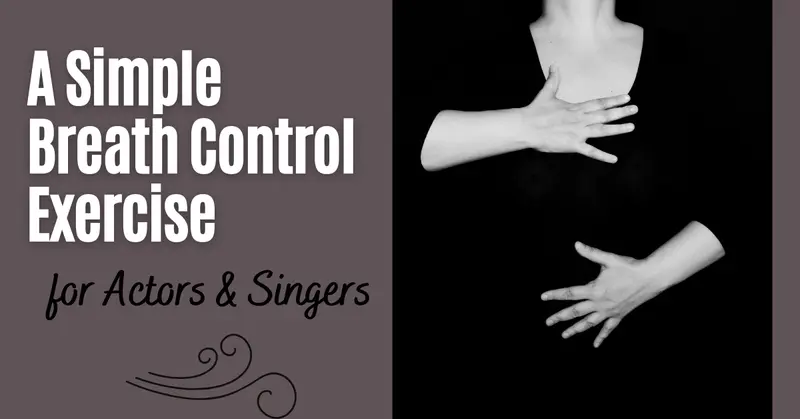
- Start by standing up straight. Be aware of your posture. The way you stand will affect your breath. If you’re slouching, you’re shortening your lung capacity.
- Pay attention to your breath as you inhale and exhale. What happens to your body? Are there any places you hold tension? Are you breathing from your diaphragm or your chest?
- As you breathe in, watch your shoulders. They should stay in place. Don’t crunch them up to your ears.
- Once you spend some time breathing standing up, change the parameters. Breathe lying down on your back, lying on your side, bent over in a forward bend, a side bend, a back bend. Jog around the room. Hold a difficult balance pose. What happens to your breath in each posture? When does your breath get shallow? When is it difficult to maintain a slow rhythm? Do you ever forget to breathe?
- Try to speak in each pose. What happens to your voice when your body position compromises your breath?
Breathing Warm-up: Breath of Fire
Here’s an interesting yoga breath exercise that is supposed to “wake you up.” Try it with your students. It may feel a little silly. Make sure everyone closes their eyes.
- Sit cross-legged with your back straight. Tip! If you slouch when sitting cross-legged, it will be easier for you to sit up straight if you sit on the edge of something so that your hips are higher than your knees (e.g., a rolled-up blanket, three or four small pillows).
- Close your eyes.
- Keep your mouth closed.
- Breathe quickly in and out through the nose. Keep the breath short and forceful. The inhale and the exhale are equally short. Avoid emphasizing just the exhale; make both equal. Do this for 20 seconds and then breathe normally.
Breathing Exercise for Projection
- Inhale fully and exhale on a vowel sound. Start quietly and build the sound throughout the exhale. Stay in control; keep the sound going for the entirety of the exhale.
- Inhale fully and exhale on a vowel sound. Start loudly and decrease your volume throughout the exhale. Stay in control; keep the sound going for the entirety of the exhale.
- Inhale fully and exhale on a vowel sound. This time move back and forth between a loud and quiet sound throughout the exhale.
- Inhale fully and exhale on a 10 count going from loud to soft.
- Inhale fully and exhale on a 10 count going from soft to loud.
- Stand onstage and whisper a speech. Make it a stage whisper, loud enough for someone to hear at the back of the theatre.
- This exercise is done in pairs. Everyone lines up, with the pairs facing each other. Each pair starts a conversation. After 20 seconds, tell the lines to take three steps back. The pairs must continue their conversation. After another 20 seconds, the lines take another three steps back, and so on. Discuss afterwards. Were you able to stay relaxed? What was hard about the exercise? Did you strain your voice?
Controlling Nerves and Stage Fright
This is a great exercise to quiet the mind and get breathing under control. It gives your student actors something to focus on. As they count in their head, make the count even and steady, like a metronome. Focus on the count, not the breath. The breath will take care of itself.
- Breathe in for a count of two, and exhale for a count of two.
- Breathe in for a count of four, and exhale for a count of four.
- Breathe in for a count of six, and exhale for a count of six.
Want more? Download our Breathing Exercises Resource!