Facebook Pixel Skip to main content

📣SCRIPT SALE! Treat yourself to an easier Fall. Save 30% on 5+ perusal scripts with code SPRING30 before May 3 and head into summer stress-free.

Character Study

Character Study in the Drama Classroom
Teaching Drama

Character Study in the Drama Classroom

Ideally, we want students to study characters and bring them to life through scene work. But what if you have students who have been away during rehearsals and you need a related activity for them to complete? Or you need an emergency lesson plan that focuses on individual work? Character study could be just what you’re looking for. Analyzing characters in class is a great way to help students move from simply reading a text to truly understanding it. A well-designed character study lesson (click below to download one right now!) does far more than teach students to identify traits; it develops critical thinking, empathy, textual analysis, and self-reflection skills. From Reading to Critical ThinkingAt its core, a character study lesson invites students to ask deeper questions: Who are these people? What motivates them? What evidence supports our interpretations? To answer these questions, students need to engage with the text. This can be highlighting key details, lines, and moments; distinguishing between facts (unchangeable information directly stated in the text) and assumptions (interpretations that may vary from reader to reader); and inferring character traits. Have students support their conclusions with textual evidence. Instead of saying, “This character is selfish,” they must prove it with a quote from the script. Building Empathy Through PerspectiveCharacter analysis can also build empathy. Have students reflect on their analysis with questions such as: • Who do you connect with most? • Who do you connect with least? • Who would you want to play or not want to play, and why? This gives students the opportunity to explore identity, perspective, and personal values. Imagining what a character looks like, how they move, and how they think pushes students to see the world through someone else’s lens. The reflective writing component can transform analysis into personal growth. Students must synthesize what they’ve observed and explain their thinking clearly in their own words. This reflection reinforces self-awareness, independent thought, and ownership of interpretation. Because analyzing a character is subjective, and there is rarely one “correct” answer, students learn that their insights are important.
Theatrefolk Featured Play: Snapshot: Bee-u-ti-ful
Featured Plays

Theatrefolk Featured Play: Snapshot: Bee-u-ti-ful

Welcome to our Featured Play Spotlight. Snapshot: Bee-u-ti-ful is a competion-length version of Beauty and the Bee, and an awesome character piece for your next competition! Do you get along with your sister… or is she the freak? And more importantly, does she think you’re the freak? Meet Catherine: high school royalty. Cheerleader. Pageant queen. Meet Cosette: homeschooled genius. Spelling bee champ. Knows way too much about rats. When Cosette enters Catherine’s glittering, chaotic high school world, the collision is nuclear. A sharp, weird comedy about sisters, status, and the sting of standing out — where the pressure to fit in gets so intense it conjures GIANT TALKING BEES. Yes. Literal bees. With opinions. Witty, wild, and full of emotional honey, this play asks: what does it really mean to belong… and can one photo fix a fractured bond? Sisters. Spelling bees. Frenemies. Freak-outs. Say cheese. Let's hear from the author! Why create a competition version?The original, Beauty and the Bee, is just too long for most high school competitions. I love this play and I love the characters in it. I feel like I could go into any school and meet Catherine, Cosette, and Julian in the halls. And can I mention life-sized bees one more time? I want this play to have more productions and I hope a competition length version can make that happen! 1. Why did you write this play?This play can be found in a longer length on our site as "Beauty and the Bee." The inspiration was simple. I love spelling bees and watched them for years. I'm fascinated by spelling bee participants. How do they keep those words in their heads? Some participants are so charming. Some, so obnoxious. A unique and intriguing community! It was only a matter of time before such a character made it into one of my plays. It was a natural progression to throw an opposite character into the mix, make them sisters, and then make them have to talk to each other. 2. Describe the theme in one or two sentences?A play about family, relationships and learning how to hold on who you are. 3. What's the most important visual for you in this play?The characters talk about the photographs that have been taken of them throughout their lives and how pictures, frozen in time never really tell the truth, even if they want them to. Where does the truth lie? In the picture or just outside the frame? 4. If you could give one piece of advice for those producing the play, what would it be?This play is all about character and relationships, so do the work to make your actors bring these three dimensional characters to life. Spoiler alert - the mom is the most impactful character who never makes an appearance. 5. Why is this play great for student performers?This is a great script to show students strong character wants and what characters are willing to do to get what they want. It also theatricalizes abstract concepts: in the play the sister's heads are so full of conflict they manifest life-sized bees. And when are you ever going to have the chance to play a life-sized bee? 6. Who is your favourite character in the play?The Bees! They are the characters I would love to play. The bees represent the buzzing in your brain when you are trying to hide from something that you should really face. 7. What is your favourite line in the play?"And you are living in a dream world. A bubble. A dream world surrounded by a bubble wearing a sweater vest. There are no sweater vests in high school! It’s a vicious place where the weak get tossed onto the tundra to be devoured by wolves."
Theatrefolk Featured Play - With Liberty and Justice For All
Featured Plays

Theatrefolk Featured Play - With Liberty and Justice For All

Welcome to our Featured Play Spotlight. A powerful and timely piece, With Liberty and Justice for All by Jeyna Lynn Gonzales brings student voices to the stage, capturing a moment in history while reflecting the ongoing fight for justice. It’s June 2020. Set on a street in downtown Atlanta, With Liberty and Justice for All follows eight people as they attend a BLM protest. They come together as a community, share their voices, and share their stories. But as day turns to night, as the curfew comes and goes, it’s every person for themselves. There’s only one thing on their mind: run. A timely and poignant play with incredibly strong performance potential from a variety of actors. Why did we publish this play? At Theatrefolk, it's important to us that student voices are heard in the characters that appear in our plays. We want students to be able to see themselves on stage. This is a key factor in With Liberty and Justice for All. Jeyna Lynn writes in her author's notes: "There are too many people who have never seen a character share their same name, and there are too many people who have never watched a play that represents their lives and/or history." Adding to that, it's such a well written play with a timely message. Let's hear from the author! 1. Why did you write this play?The world has many ways of making one feel powerless, and this play is my resistance to that oppression. In the midst of the pandemic, I felt the need to speak up. Five years later, I've seen little change and cannot emphasize enough the importance of empathy, education, and accountability. 2. Describe the theme in one or two sentences?With Liberty and Justice For All is a deeply moving piece of docu-theatre that features stories inspired by advocates challenging oppression. It is both a time capsule and a mirror held up to society. 3. What's the most important visual for you in this play?The most important visual in this play is the end of Scene 13: Please Rise. 4. If you could give one piece of advice for those producing the play, what would it be?Be fearless. Speak up for both yourself and others who may not have the privilege of being listened to. 5. Why is this play great for student performers?Theatre helps students build social-emotional learning skills by practicing understanding other perspectives. This play is great for students to study and perform because it introduces them to critical thinking and discussion. It provides a safe environment for students to begin forming their own views about the world outside of their neighborhood or see their community's stories represented. 6. Who is your favourite character in the play? OR Which character would you be in this play?My favorite character in the play is Ona. I think she is courageous, inspirational, and a beacon of hope. 7. What is your favourite line in the play?My favorite line in the play is "And I took her portrait."
Theatrefolk Featured Play - The Happiness Shop
Featured Plays

Theatrefolk Featured Play - The Happiness Shop

Welcome to our Featured Play Spotlight. The Happiness Shop by Lindsay Price is an excellent class project that explores important issues for students. Three middle school students find themselves in an odd curiosity shop. They don’t know what it is, where they are, or how they got there. But that’s no surprise. The Happiness Shop is not like any other. It is filled with Roppets. A Roppet is not quite a robot and not quite a puppet. A Roppet is completely happy all the time. Full of smiles, hugs and hi-fives. Isn’t that all it takes for a middle school student to be happy? They’re too young to have problems. Blake, Melanie and Wally know that’s not true. They all have pretty big problems. But in the shop they have one question to answer and one question only: What would you do to be completely happy? Let's hear from the author! 1. Why did you write this play?I wrote this play specifically for middle school students after a couple of eye opening experiences. First, I watched a 13 year old boy deliver one of my monologues in a competition. The character in the monologue talks about his life and how his family treat him after a suicide attempt. The monologue was written for a 16 year old character and the impact of seeing it done by a 13 year old was huge. Does suicide happen in middle school? Secondly the director of one of my plays shared a rehearsal exercise she did with her cast in which her middle school students wrote on post-it notes the positive and negative things they say to themselves or hear others say to them. The negative board had three times more post-its than the positive one. (The exercise is included in this play's free Classroom Study Guide.) Do middle school students get depressed? I’m the first to admit, until writing this play I did not fully realize that middle school students could experience depression. I thought depression didn’t hit until high school. That’s when I started researching the topic. I found that not only do middle school students get depressed but it’s often overlooked as laziness, and ignored because they’re “too young” to be depressed. Many times the issue is never addressed. I knew I had to bring this issue to life in a play. 2. Describe the theme in one or two sentences?Happiness does not come from burying your feelings and pretending to be happy. Students suffering from depression are not alone in their feelings and they don’t need to suffer alone. 3. What's the most important visual for you in this play?The Roppets. They are supposed to be completely happy and smile all the time. But what's hiding behind those smiles? 4. If you could give one piece of advice for those producing the play, what would it be?Be prepared for discussions. You never know how students are going to be affected by being in the play. You may want to discuss the play with the guidance department. You are not a therapist and shouldn't take on that role. 5. Why is this play great for student performers?The play demonstrates the different faces of middle school depression and the different choices made because of it. Not all the choices these students make are good ones. I feel that’s important to stage. I think, too, it's important to show positive choices. 6. Who is your favourite character in the play?Phoenix is Melanie's best friend and I absolutely loved writing for them. The character is weird and loves being weird. They are not popular and are often bullied, but still has a great outlook on their life. They see their bullies as sad animals and never lets the bullies actions affect them. 7. What is your favourite line in the play?"Oh you did help me. You helped me see myself."
The Female Edison
Featured Plays

Theatrefolk Featured Play: The Female Edison

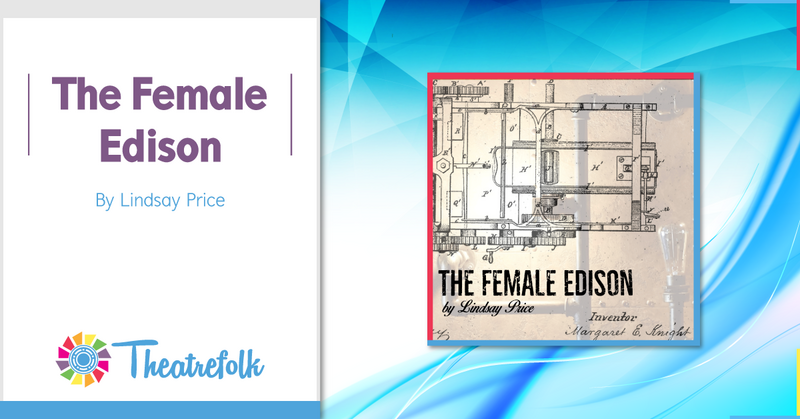
Welcome to our Featured Play Spotlight. The Female Edison by Lindsay Price is an incredible ensemble piece with something for everyone! Margaret E. Knight was a 19th century inventor with two big but forgotten stories. At 12 years of age, while working at a textile factory, she invented a part to improve the safety of a power loom. How did she not only get mill management to listen to her idea but implement it? As an adult, she invented a machine to mass-produce flat bottom paper bags. This invention was eventually stolen from her so she hired a lawyer to take the case to court. The defense was that “there is no way a woman could have invented this.” How did Margaret persist and secure her place in the annals of invention? NOTE: There are also two independent one-act versions of the script available that can both be performed without any knowledge of the other: Patterns & Power: The Female Edison and Failure & Fortitude: The Female Edison. Let's hear from the author! 1. Why did you write this play?A lot of times I go down rabbit holes of research because of some observation that came across my world view. That's what happened which led me to Margaret E. Knight and her paper bag machine invention. There isn't a lot about her online, but everything I read made me excited to share her story theatrically. 2. Describe the theme in one or two sentences?Failure and fortitude are the touchstones for every inventor, but even more so for 19th century female inventors. 3. What's the most important visual for you in this play?I love seeing the 19th century machines come to life through actors. I knew, writing this for schools and student performers that any of the machines would have to be actor driven rather than actual set pieces. It took a long time in my research to figure out how to turn a power loom into three different action sets and how to turn Margaret's mass-produced paper bag machine into action. But I love the results. 4. If you could give one piece of advice for those producing the play, what would it be?There's a lot of ensemble work in this play and a lot of moving pieces as actors enter and exit. The more you practice transitions the smoother the flow of the piece will be. Also, don't be put off by the number of traditional male roles. It is my intention that the majority of the roles are played by the actors who best suited for the role regardless of their gender. 5. Why is this play great for student performers?It has everything! Some history, characters fighting and succeeding through great adversity - I mean, someone tried to steal Margaret's patent for the paper bag machine to the point that she had to go to court and get it back. In a time period when a married woman wasn't even allowed to put her own name on a patent, the fact that she won her case is remarkable. Further to that, there is so much ensemble opportunity in the play. You can really expand the cast size if you want. 6. Who is your favourite character in the play? OR Which character would you be in this play?Margaret all the way! I love her story. She had everything against her: no schooling, no desire to be "normal" in an era that really required women to be and act in a certain way, and in court, the man who stole her patent said that "there was no way a woman could have understood such mechanical complexities" And yet she still persevered. 7. What is your favourite line in the play?"I am not a cog in any machine."
Theatrefolk Featured Play - The Battle of Image vs Girl
Featured Plays

Theatrefolk Featured Play - The Battle of Image vs Girl

Welcome to our Featured Play Spotlight. The Battle of Image vs Girl by Johanna Skoreyko is a moving duet piece about female body image. One Girl. One Mirror. Against the world. Why did we publish this play? We have a long history with this play. It was originally published as part of a collection of student writers. When that was discontinued, we asked to publish it in a collection of short plays for young women. When that was discontinued we wanted to continue to have the play available because it is a script that does not and cannot let go. It is intense, it is uncomfortable, it is raw and authentic. Let’s hear from the author! 1. Why did you write this play?I wrote this play as an assignment for a High School English class. I remember that I brainstormed ideas for my play until a few days before the deadline for the assignment-- nothing felt quite right. Finally, with the pressure upon me, I sat down and the whole play just poured out of me. The conversation that the main character has with her mirror self was in many ways an authentic conversation I was having in real time as I wrote it. It was very cathartic. I had just returned from a year as an exchange student in Germany, where my host sister (who I was very close to) had anorexia and bulimia, and I was still processing the conflicting emotions I had: fear and worry for her, and jealousy of her extreme thinness. Although I didn't have an eating disorder, I thought constantly about what I ate and exercised obsessively. I was very critical of my body. I wanted to be healthy and strong, but I also completely understood why she starved herself, and that scared me. 2. Describe the theme in one or two sentences.Control is the opposite of self-acceptance. 3. What’s the most important visual for you in this play?The smashed mirror at the end. 4. If you could give one piece of advice for those producing the play, what would it be?Update the references and the language in the play to make it reflect the way teenagers talk today. I think it should sound current. 5. Why is this play great for student performers?I think it's visually striking, easy to produce, and I like that it's an opportunity for two actors to get really deep into character study together, and maybe to dissect their own critical internal voices too. And I love that it has the raw, dramatic emotionality of a real teenage voice. 6. Who is your favourite character in the play?When I performed this for my High School Drama class, my sister took the role of the main character, and I played the mirror. It was a very powerful release to speak the vicious meanness that I heard in my head. Letting it out revealed how absurd and how wrong the voice was. 7. What is your favourite line in the play?The final line of the play, "It's only a phone," (which was "It's only a camera" in 2001). The character's anxiety about her lost phone was an example of the anxiety she felt about not being in control, and her eating disorder was born of a desire to get that control back. Letting go of the phone and just going to bed was a really important symbolic gesture, and I like the simplicity and lightness with which it ends this really intense scene.  Get your copy of The Battle of Image vs Girl right here, right now!
Theatrefolk Featured Play – Characters Behaving Badly by Lindsay Price
Diversity

Theatrefolk Featured Play – Characters Behaving Badly by Lindsay Price

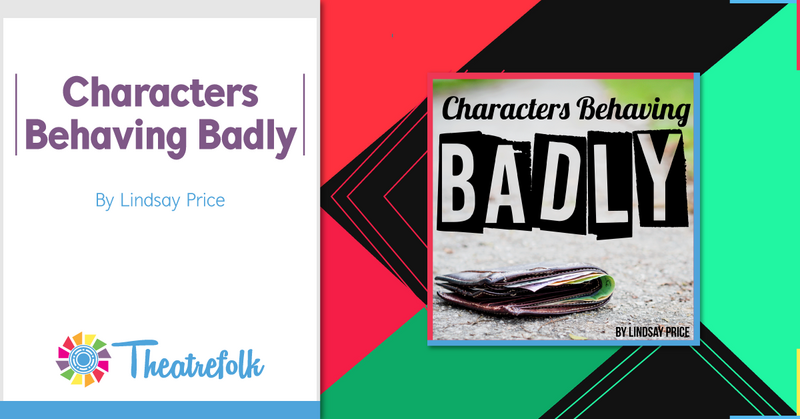
Welcome to our Featured Play Spotlight. The vignette play, Characters Behaving Badly, by Lindsay Price, asks students to look at the concept of what it means to be “good” and “bad”, as well as what it means to play a character with whom they might not agree. Perfect for class performances! If you saw a wallet on the ground, bulging with money, and no one around, would you take it? What’s the worst thing a person can do? Is it murder? Is it lying? Is it getting an A-? What defines “good” and “bad” behaviour? Can “good” people have “bad” thoughts? Let’s hear from the author!1. Why did you write this play? Over the years, I have witnessed a lot of young or student actors being reticent to take on a “bad” character because they felt it would reflect in their own personal character. “If I play a bad character, then I am seen as a bad person.” Which leads to a great question: What does it mean to be “good” or “bad”? And who gets to decide what is “good” or “bad?” And there was my starting point. 2. Describe the theme in one or two sentences. What does it mean to be “good” or bad?” What does it mean to play a “bad” character. 3. What’s the most important visual for you in this play? There’s a moment when a character holds up a wallet full of money and asks the other characters and the audience if they would take it if they found it on the ground. Would you? 4. If you could give one piece of advice for those producing the play, what would it be? It’s a vignette play so it’s easy to default to a blackout between every scene. If you look at the script, it’s specifically designed to avoid that. Blackouts suck the life out of the drive and forward motion of a play. Use choreographed transitions and music to move from moment to moment. 5. Why is this play great for student performers? Not only are the characters great for analysis in this play, the question around what is “good” and what is “bad” is an excellent topic for discussion. How do your students define the two?
Theatrefolk Featured Play – Split by Bradley Hayward
Featured Plays

Theatrefolk Featured Play – Split by Bradley Hayward

Welcome to our Featured Play Spotlight. Split by Bradley Hayward is an emotional, theatrical, ensemble-driven play that your student performers are sure to love. Children of divorce are united through humor in this honest and theatrical look at the day to day reality of growing up in a family that’s been torn apart. As these teenagers navigate a winding road that includes new bedrooms, new siblings and new responsibilities, they begin to put the pieces of their broken homes back together. Why did we publish this play? First of all the play has such a theatrical journey. The most important aspect of an issue play is how it’s theatricalized. _Split _has wonderful physical moments, like the symbolic rebuilding of the home at the end. It’s so lovely. Second, Bradley has such a keen ear for writing for teen aged characters – the voice of each character, and how they deal with the issue just leaps off the page. Lastly, it’s always a plus when issue plays include humour. Variety of tone is key and Bradley knows exactly how to use tone to great effect. Let’s hear from the author!1. Why did you write this play? While the play is inherently about divorce, that word is never uttered once in the entire script. I wanted to write a play that celebrates love, among family and friends, by showing what happens when that love is threatened. 2. Describe the theme in one or two sentences. The play is about how people react when their lives are split in different directions, and the variety of approaches they take in order to put the pieces back together. 3. What’s the most important visual for you in this play? The closing moment of the play, when the characters finally feel safe enough to set foot into the home they build together, always brings me to tears. It is my favourite moment in any of the plays I have written. 4. If you could give one piece of advice for those producing the play, what would it be? All of the characters are well developed; however, they have a limited number of lines each to get their stories across to the audience. This makes it a great play for young actors to read between the lines of dialogue to come up with a back story for each character. I would suggest having each actor write a biography for their characters, which will help them with any motivation they might need while performing the play. 5. Why is this play great for student performers? Since the scenes are so short, learning the lines should not be too difficult. This opens up student actors to really dig deep into every single moment they are on stage, and make each of those moments count. 6. Do you have any advice for people looking to perform this play online or socially distanced? The entire play is split into short scenes, not unlike you would see on TikTok. I think it would be interesting to see an online production as though it was a collection of TikTok videos put together, and then have the final scene be the first time the entire cast of characters are together in one place.
Character Study: Self-Awareness
Classroom Exercise

Character Study: Self-Awareness

The following exercise helps students learn self-awareness (which is one of the categories of social and emotional learning) and apply it by analyzing characters in a play that they are currently studying. Seeing fictional character examples will help students gain a deeper understanding of the concept of self-awareness. This exercise can be done as a class, individually, in partners, or in small groups. It can be done in person, virtually via distance learning, or as a written homework assignment. 1. Introduction: What does it mean to be self-aware? What traits does a person who is self-aware possess? As a group, have students suggest various attitudes or characteristics that people who are self-aware display. These might include: • Identifying the emotions you’re feeling • Understanding the emotions you’re feeling and the thoughts you’re thinking • Understanding the connection between your thoughts, feelings, and behaviours • Having a realistic perception of yourself • Knowing your strengths and weaknesses • Knowing your limits • Having self-worth • Demonstrating a growth mindset and willingness to learn • Being able to reflect on your experiences and identify what you’ve learned • Believing that you’re capable of doing what it takes to achieve a goal • Recognizing your own coping mechanisms • Defining your own beliefs without being influenced by others Optional discussion: Do you or someone you know have these traits? How does self-awareness affect you in your everyday life? How can you improve your own self-awareness? Give examples. 2. Using a play your class is currently studying, have students identify one character who displays self-awareness. Give proof from the text. Answer the following: How does this character’s self-awareness benefit them? If students are having trouble finding a character that is self-aware, remind them that it’s a rare person who is fully self-aware all the time. Look for moments of self-awareness in the character to start. 3. Next, have students identify one character that lacks self-awareness. Give proof from the text. Answer the following: How does this character’s lack of self-awareness hinder or harm them? 4. Bonus Question: Are there any instances in which a character’s self-awareness hinders or harms them, or a character’s lack of self-awareness benefits them? Give proof from the text. 5. Students will complete and submit a final reflection (click below).
Theatrefolk Featured Play – Not Going Anywhere by Emma Fonseca Halverson
Diversity

Theatrefolk Featured Play – Not Going Anywhere by Emma Fonseca Halverson

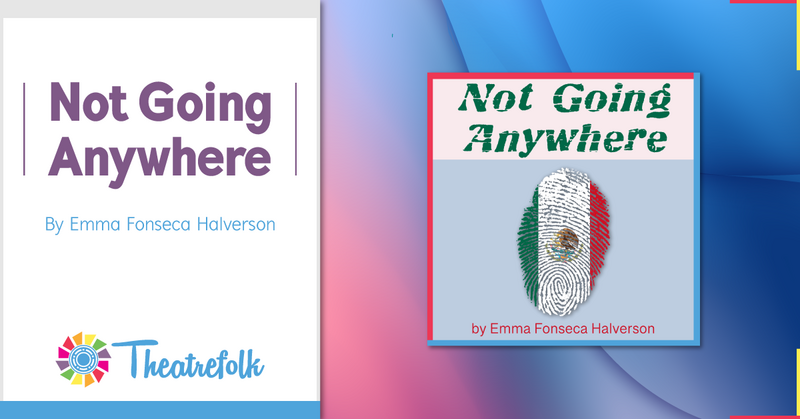
Welcome to our Featured Play Spotlight. Sometimes you come across a play that demands to be read, performed and shared. Not Going Anywhere by Emma Fonseca Halverson is one of those plays. The Mexican family of Ale, Miguel, Mami and Papá are struggling to get by while ICE attempts to tear them apart. Miguel wants nothing more than to not go anywhere, whereas Ale is desperate to leave and pursue theatre. This works out while Miguel works and helps out at home, and Ale goes to class and rehearsals, but when Miguel isn’t there anymore, Ale must choose between her future and her family. Why did we publish this play? We’re thrilled to be able to share Not Going Anywhere. Emma has created compelling characters and a story that, for many students, will hit close to home. The piece crackles with authenticity. It should be performed, it should be read and discussed in class. The story of what happens to Ale in the play is not uncommon – what happens when you have to choose between your future and your family? Let’s hear from the author!1. Why did you write this play? This was at the start of quarantine when I wrote the first draft, and I was sitting at home a lot stewing in my thoughts about the world. My cousin who had lived with us had also just been forced to go back to Mexico without warning, and it the topic of immigration and ICE was very fresh on my mind. It was definitely a source of processing a lot of my own feelings that really helped me have an outlet. 2. Describe the theme in one or two sentences. What are obligations to ourselves and to our families? How does family impact the choices we make in our lives? Family and culture would be the biggest themes in my eyes. 3. Why is this play great for student performers? It views immigration through a teenagers eyes, and explores topics I think a lot of teenagers think about; and relate to family, culture, future, and identity. 4. Do you have any advice for those producing this play online or socially distanced? I would say that even though the physical touch would be gone, to focus on the non- physical affection between the characters and their words.
Theatrefolk Featured Play – Completely, Absolutely Normal: Vignettes About LGBTQ+ Teens by Bradley Walton
Diversity

Theatrefolk Featured Play – Completely, Absolutely Normal: Vignettes About LGBTQ+ Teens by Bradley Walton

*Welcome to our Featured Play Spotlight. * Completely, Absolutely Normal: Vignettes About LGBTQ+ Teens by Bradley Walton is a collection of ten interconnected vignettes with LGBTQ+ themes that are unified by the emotion and humanity found in anyone who is completely, absolutely normal. A girl’s big moment of coming out takes an unexpected turn. High school sweethearts holding hands in public for the first time are greeted by hatred. A transgender teen struggles with an unaccepting best friend. Why did we publish this play? This play is about human contact and showing that all human contact is normal. As we see this concept being challenged and legislated against, it’s important to take a stand and provide a voice for students. All students. Let’s hear from the author!1. Why did you write this play? When I started writing this play, I didn’t know it was going to become “this play.” It began as a monologue about a teenager coming out at their dad’s grave. That monologue gave way to a second vignette, and then a third, and…you get the idea. Now, as to why I wrote this play after I knew that this play was turning into “this play”… I wanted to show that human emotion is universal regardless of sexual orientation or gender identity. 2. Describe the theme in one or two sentences. LGBTQ+ teens are completely, absolutely normal. 3. What’s the most important visual for you in this play? The visual simplicity of the play as a whole is very important for me. It’s a bare stage show. There’s no fancy lighting. It’s stripped-down and intimate, with all of the emphasis on character and emotion. 4. If you could give one piece of advice for those producing the play, what would it be? Include questions in the audition paperwork to find out what students are comfortable and not comfortable portraying onstage—ask if they’re okay with doing a same-sex kiss, and find out if there are roles they don’t want to play. Don’t ask for explanations, and respect their answers. 5. Why is this play great for student performers? It is bursting at the seams with great acting opportunities featuring characters with complex emotions. 6. Do you have any advice for people looking to perform this play online or socially distanced? The play has ten scenes. Five of them are monologues and the other five have two characters. Socially distanced performance shouldn’t be a huge issue for 90% of the show, but the scene “Brave” is specifically about a couple holding hands and kissing. In light of the current pandemic, I think the hand-holding could be mimed, and I would be okay if the kiss was omitted (the end of the scene wouldn’t be as powerful, but the dialogue would still make sense). I could also see the show being performed like a staged reading, with the two-person scenes performed by students on opposite sides of the stage delivering their dialogue directly out to the audience. I have a hard time imagining the play being done online. I feel like it demands a level of connectivity with the audience best achieved through in-person performance. A staged reading-style approach might work. But with that being said, if someone has a vision for an online production that they think would be fabulous…go for it. Just keep that sense of audience connection at the front of your mind.
Theatrefolk Featured Play – A Deep, Poetic Journey Into Something by Forrest Musselman
Featured Plays

Theatrefolk Featured Play – A Deep, Poetic Journey Into Something by Forrest Musselman

*Welcome to our Featured Play Spotlight. * A Deep, Poetic Journey Into Something by Forrest Musselman is a dramatic character study for high school student performers with excellent movement opportunities. Jane wants to break out of her box. Colour cows green and the sky purple. She wants a deep poetic journey into something. The problem is she has no idea where to start. As events spiral out of control around her, that box is looking better all the time. Will Jane choose to hide inside or change her life? Why did we publish this play? How many of you have students who feel trapped or boxed in? All they want is to be themselves, which can be the hardest thing to be. In “Deep Poetic” the main characters wants to break out of the box and doesn’t know how. The play’s artistic storytelling and use of shadow offers a really unique approach to this issue which we knew would resonate for both the teens in the show and those watching. Let’s hear from the author!1. Why did you write this play? I wanted to write a play for teens that explored the whole idea of feeling like you don’t fit in anywhere. It’s a pretty universal feeling for teens and I wanted them to know that it’s okay. 2. Describe the theme in one or two sentences. It doesn’t matter what the end result is going to be, it’s the journey of getting there that’s the most important. 3. What’s the most important visual for you in this play? The shadow work, for sure. 4. If you could give one piece of advice for those producing the play, what would it be? Have the shadow screens and lights ready to go as soon as possible. The more time the actors have to play with body shapes and pictures, the better. 5. Why is this play great for student performers? It’s a great movement piece that allows for some experimentation. And it’s a story about themselves. 6. Why is this play great for online performances? You wouldn’t necessarily have to have the shadow imagery. So feel free to omit it as the story is strong enough without it.
Theatrefolk Featured Play – Myth-o-logues by Janice Harris
Distance Learning

Theatrefolk Featured Play – Myth-o-logues by Janice Harris

*Welcome to our Featured Play Spotlight. * Myth-o-logues by Janice Harris is a fantastic one-act and classroom resource. Pick and choose from this must-have collection of monologues from Greek Mythology’s greatest characters. Great for in-class and online study and performances! Cassandra (the Trojan prophetess no one believes) is here to be your Greek mythology tour guide. She’ll lead you through stories of war, relationships and the origins of good and evil. She’ll share all before old Charon ferries the whole audience across the River Styx. Will you listen? Will you learn? Will you believe? Why did we publish this play? I love this title. It describes this play perfectly – a collection of monologues about Greek myths. This is a great way to introduce both (myths and monologues) in one package. You can even put them all together for a unique monologue driven production – which will make it really accessible for an online performance. Middle school teachers – you will want this play in your classroom! Let’s hear from the author!1. Why did you write this play? I wrote this play because I wanted to give my students a more comprehensive understanding of traditional Greek stories and characters, particularly in the context of the study Greek theatre history. 2. Describe the theme in one or two sentences. The topic of the play is Greek Mythology. The theme changes with each character as the performers explore the characters— faithfulness, loss of love, revenge, power, etc. 3. What’s the most important visual for you in this play? At this particular time, I visualize an online performance. See below. 4. If you could give one piece of advice for those producing the play, what would it be? I would encourage those producing this play to have your actors do a lot of research on the whole storyline of each character. This will strengthen the portrayal of each character as the students do the character study needed for a successful performance. 5. Why is this play great for student performers? This play is good for student performers for several different reasons. The monologues are of different lengths, so a student can choose one that fits his/her comfort level. (My method for assigning monologues or scenes is for students to submit several choices. I make the final assignment.) The subject matter is cross-disciplinary. The material can be performed by a beginning or advanced level student. Character study is necessary for a successful performance. 6. Do you have any tips or suggestions for those who are performing this play online? I think this play is particularly suited to an online performance. I can picture a performance of individual actors appearing on the screen. As narrator, Cassandra could be in the center. The focus could shift from actor to actor, the screen could fade in and out. There is a great opportunity for students working on the technical side of the performance online. Actors could easily perform in their own rooms or yards, in a garden, or even on a stage, observing social distancing. There is plenty of room for creativity in an online performance. Get your copy of _Myth-o-logues _right here, right now!Not right for your group right now? Search our play catalogue to find one that your performers will love!
Theatrefolk Featured Play – Ten Minute Play Series by Lindsay Price
Featured Plays

Theatrefolk Featured Play – Ten Minute Play Series by Lindsay Price

Welcome to our Featured Play Spotlight. The Ten Minute Play Series by Lindsay Price is a collection of short plays with interesting and engaging parts, challenging stories and complex characters. Find an option that works for your group with Ten Minute Play Series: All Girls, Ten Minute Play Series: Girls and Guys and Ten Minute Play Series: Be Challenged. Why did we publish this play? The ten minute play format is an interesting animal. It’s not enough time to tell a complicated story, or even a complete story. And yet, it can provide a vivid window into a moment or a character. In that regard we look at the form as a great challenge, and wanted to present that challenge with our Ten Minute Play Series. A lot of these plays translate well to an online platform. They take place in one location and most of the scenes are duets. Focus on the character development and relationships in the scenes. Acting is acting whether it’s in person or online. Let’s hear from the author!1. Why did you write these plays? Ten minute plays are great for classwork, they’re great for getting students to focus on bringing a character to life in a short period of time, and they’re great when you want to feature a lot of students in performance. 2. What are the most important visuals for you in these plays? Each play focuses on characters and relationships. Visualizing a relationship is always a good play to start when you’re working on a play, especially a ten minute play. You want an audience to instantly know what the relationship is all about and they’re going to make that determination by what they see. 3. If you could give one piece of advice for those producing these plays, what would it be? Do the character work. Know the characters inside and out so you can bring them to life instantly and vividly. 4. Why are these plays great for student performers? You want to give your students as many performance opportunities as you can in a class situation. Ten minute plays are going to help you achieve that goal. 5. Why are these plays great for online performances? In these times, traditional productions may not be possible. But that doesn’t mean students can’t perform or focus on character work, vocal skills, and the physicalization needed to bring a play to life. Acting is acting whether it’s online or onstage. Challenge your students with these short plays to present them as fully as possible in an virtual environment. Get your copy of The Ten Minute Play Series – All Girls, Girls and Guys, and Be Challengedright here, right now!Not right for your group right now? Search our play catalogue to find one that your performers will love!
Theatrefolk Featured Play – Sweep Under Rug by Lindsay Price
Featured Plays

Theatrefolk Featured Play – Sweep Under Rug by Lindsay Price

Welcome to our Featured Play Spotlight. Sweep Under Rugby Lindsay Price is a great conversation starter for both actors and audience. A great piece for actors who want to tackle something outside their comfort zone. Sweep Under Rug envisions a future where struggling families are placed in the “Bobby Sue” program. A “Bobby Sue” is a guardian of sorts, someone who warns against missteps and guides its owners along the “appropriate” path in life. But what happens when people want to think for themselves? Why did we publish this play? Sweep Under Rug is a futuristic “what if” issue play. There’s a lot to unpack and a lot for students to explore onstage and off. There’s costume design, and character specific language. There’s a very specific set and script analysis. It has a small cast, so it doesn’t get done as often as other plays, but it’s important to have plays that present a challenge, a question to answer, and provide a lot to discuss. Let’s hear from the author!1. Why did you write this play? I love looking at issues and exploring them in a theatrical manner. Issue plays must be theatrical. I also love “what if” ideas. “What if” in the future the poor were segregated and monitored by an in-house robot? What does that look like? The play was inspired by some friends who work with refugees and those below the poverty line who want to get out from under their situation but stigma and government red tape hold them back time and time again. 2. Describe the theme in one or two sentences. What if a group of people were told what to do every step of their lives and what if they didn’t want to be told what to do anymore? 3. What’s the most important visual for you in this play? The Bobby-Sue is a characterization of the red-tape holding back those below the poverty line. She is a government placed robot and represents the control and the lack of individual choices of the other characters. She must be a huge presence! 4. If you could give one piece of advice for those producing the play, what would it be? Each character speaks in a specific manner. Spend time analyzing their language. How does the language represent who the character is and what they’re going through in this situation? 5. Why is this play great for student performers? This play takes place in the future, the characters are affected by a specific situation, and that situation also affects character language. There’s a lot here for students! A great character study, a great analysis piece, and a great “what if” discussion starter. Get your copy of Sweep Under Rug right here, right now!Not right for your group right now? Search our play catalogue to find one that your performers will love!
Theatrefolk Featured Play – Free by Lindsay Price
Featured Plays

Theatrefolk Featured Play – Free by Lindsay Price

*Welcome to our Featured Play Spotlight. * Free by Lindsay Price is a strong character-driven drama that will leave your audience thinking, complete with a variety of casting options. Two teenagers come across an abandoned picnic. A sign in front of the picnic says, FREE FOOD. Promisetown has been in dire straits ever since the local factory closed two years ago. The townspeople attempt to divide the food fairly, but end up struggling to reconcile their belief systems with their greed. A stranger appears out of nowhere, offering to solve their problems, but ends up altering the town’s course forever. Free is now available in three versions – Free Version 1 (6M+10W+3E), Free Version 2 – with more parts for females (4M+12W+2E), and Free: Competition Version (2 M, 5 F, 11 Any Gender, 2 M or F). Why did we publish this play? Free has a lot going on with a simple easy to stage concept within a traditional storytelling script. There’s an issue to think about, there’s a twist ending and there’s character work. The situation is something out of the ordinary but not so far removed that students can’t put themselves in the same scenario and infer their own income. A great script to explore! Let’s hear from the author!1. Why did you write this play? I love starting a play with a question and this play offers a big one – how do you reconcile your belief system with your personal struggle? Putting characters in a place of struggle is always going to be interesting to write about and interesting to watch. 1a. Why did you create a competition version of this play? Free is one of my earliest plays and I absolutely adore it. When I worked on the competition length version, I hadn't read the play in many years and it was delightful to reacquaint myself with it. I love the moral dilemma it presents and how the characters respond to the dilemma. However, it's too long for many of the one act competitions our customers participate in. I want this play to have more productions, so a competition cut was the right choice. And I'm so glad I did it! 2. Describe the theme in one or two sentences. Desperation vs responsibility. 3. What’s the most important visual for you in this play? The pile of food. It is the centre piece of the whole play. It determines how every single character acts and reacts. 4. If you could give one piece of advice for those producing the play, what would it be? Character, character and more character. Do character profiles. Establish backstory for each character and the backstory for the relationships between the character. This community has been through a lot and it’s important for every actor to be on the same page before the play even begins. 5. Why is this play great for student performers? The play takes an absurd situation and puts realistic characters right in the middle of that situation. A great exploration for any student actor. 6. Who is your favourite character in the play? My favourite character in the play is Mrs Steele. She is essentially the "villain" of the piece, but every choice she makes is for the good of her family. She makes bad choices, but she only has her family in mind when making them. That would be an interesting character to play! 7. What is your favourite line in the play? My favourite line in the play is "Fun? Having my lungs come out my nose is fun?" This line is said by Jack and the moment really shows off a side to his personality that we don't see once the story gets going. It's important, even in dramas to make characters more than the drama.
Theatrefolk Featured Play – Floating on a Don’t Care Cloud by Lindsay Price
Featured Plays

Theatrefolk Featured Play – Floating on a Don’t Care Cloud by Lindsay Price

*Welcome to our Featured Play Spotlight. * Floating on a Don’t Care Cloud by Lindsay Price is a powerful and emotional issue-based play that is a theatrical and vivid personification of drugs. Jamie Peel is a pothead. He lives in his own world, a bubble, a cloud that calls his name and reaches out to him. His sister TJ has watched him slowly drift away and doesn’t know what to do. Is she overreacting? Is it in her imagination? Should she tell somebody what she sees? Will Jamie ever talk to her again if she does? Will everyone see her as a snitch? Is it just pot? An emotional tightrope between a sister and a brother and what really happens in the world of teenage marijuana use. Why did we publish this play? This play takes an issue and makes it theatrical. The theatre has to come first. Our stance on issue plays is that it’s not the job of the play to solve the issue, or point a finger. It’s the job of the play to show characters dealing with, struggling with, sometimes failing within an issue. This way the play ends and the conversation begins. Let’s hear from the author!1. Why did you write this play? Issue plays are important to me, not because they provide answers but because they ask questions. I think of the final moment of this play as the beginning of the conversation that should happen afterward. 2. Describe the theme in one or two sentences. An emotional tug of war between siblings and what happens in the world of teenage drug use. 3. What’s the most important visual for you in this play? The Cloud! It turns drug use into characters and allows Jamie to interact with others as he sinks deeper and deeper into addiction. 4. If you could give one piece of advice for those producing the play, what would it be? Don’t go all slow with the Cloud. That will drag the pace of the play. 5. Why is this play great for student performers? Personification is a wonderful theatrical element that all actors, let alone student actors, should explore.
Student Drama Success: The Exile and the Onion Girl
Featured Plays

Student Drama Success: The Exile and the Onion Girl

The Exile and the Onion Girl by Lindsay Price is a vividly modern adaptation of Aeschylus’ play, The Libation Bearers. Ore has been exiled for 10 years, working as a goat herder. Onee has been banished to the kitchen – 10 years is a long time to cut onions. Their mother murdered their father and it’s time to avenge his death. Who cares if all Onee wants is her mother’s love? Who cares if Ore can’t remember what his father sounds like? In Argos, it’s an eye for an eye, blood for blood, and watch what you say in front of the Domestics. They’re always watching, always listening. But blood is very complicated. And more blood doesn’t necessarily solve problems. Sarah Hankins and the incredible student drama group at Clinton High School in Clinton, MS took their production of The Exile and the Onion Girl to the Secondary School Theatre Festival at the Southeastern Theatre Conference (SETC) in Louisville, Kentucky. Two of the students involved in their production shared their thoughts on their experiences: “I’m really glad we chose this production because it flows so smoothly and provides an excellent platform for me to learn more about the art of performing , not to mention the fact that we have advanced from both Dramafest and MTA with it! I can’t wait to perform in it again. ~ Julia M. With Price’s skillfully modernized version of a classic Greek Tragedy paired with the hard work of the Clinton Arrow Theatre department, The Exile and the Onion Girl has become one of the most rewarding plays I have had the pleasure of being involved in. ~ Aaron G.”
Theatrefolk Featured Play – Chemo Girl and Other Plays by Christian Kiley
Featured Plays

Theatrefolk Featured Play – Chemo Girl and Other Plays by Christian Kiley

Welcome to our Featured Play Spotlight. Chemo Girl and Other Playsby Christian Kiley is an incredible dramatic collection of plays that can be performed as a full night of theatre or as a cutting for competition. A collection of plays that examine the impact of cancer as seen through the eyes of teenagers. Characters deal with the difficulty of saying the word cancer out loud, the difficulty of admitting a friend or family member has the disease, and the difficulty of finding the energy and the attitude needed to fight. Why did we publish this play? We are incredibly proud to publish Chemo Girl and Other Plays. Not only do we respect Christian Kiley as a writer, we love that he trusted us with this particular work as it comes out of his own fight against cancer. Christian has fully theatricalized “the C word” and examines the impact of cancer through the eyes of teenagers – that’s a perspective we don’t often see with this disease. Let’s hear from the author!1. Why did you write this play? In May of 2012, I got really sick and was diagnosed with Hodgkin’s Lymphoma. I wanted to do something meaningful, powerful even, while I was undergoing chemotherapy. I started writing “Red Rover” and I realized that I had a story to tell. One that I hoped would give people insight into the experience of battling cancer and maybe even inspire people to fight. 2. Describe the theme in one or two sentences. Chemo Girl and Other Plays is a look at the resiliency people, particularly young people, have in fighting cancer. We are strong, stronger that we know, and we have to dig deep to find the courage to overcome life’s biggest challenges. 3. What’s the most important visual for you in this play? I have been amazed with the artwork, photographs, and moments in productions that I have seen of Chemo Girl and Other Plays. I love this question because my answer can change based on a production I have not seen yet (a version of the play that has yet to be produced). My favorite image in the collection of plays is when Camille swims down to attempt to cut the red wire. This is an image that exemplifies the bravery and resiliency required to overcome one of life’s biggest challenges. 4. If you could give one piece of advice for those producing the play, what would it be? I know this is true for Theatre in general too, but, push the limits, explore your imagination. Experiment, explore, and say yes to creative ideas! One of the things I am most proud of with this play is that it relies almost entirely on the actors individually and as an ensemble to create the world of the play. It is a great challenge for a group of dynamically talented actors to rely on themselves. Embrace the challenge! 5. Why is this play great for student performers? It hands the issue, the fight, over to talented young people. They are the ones that very soon will have their hands on the wheel that guides the direction of our future, our planet. For me, Jasmine Hamming (the very talented student director) guided the production of Chemo Girl (2012) so beautifully when I was out, not at school, receiving treatment, and returned to see the product, I honestly said what I honestly felt, that I could not have done a better job. I was honored and humbled that a student could convey such love and respect to a mentor/teacher in such a profound way. In the handful of productions of Chemo Girl and Other Plays that I have seen in Southern California (and they have been high-quality productions), I have been struck by how much the experience has meant to the students. Our young people want to fight for noble causes, they want to make the world better. This play is my small contribution to the myriad of possibilities available for artist-students to fight the good fight.
Theatrefolk Featured Play – Prom Night by Sylvia Davenport-Veith
Featured Plays

Theatrefolk Featured Play – Prom Night by Sylvia Davenport-Veith

*Welcome to our Featured Play Spotlight. * In Prom Night by Sylvia Davenport-Veith, an unlikely romance between the outcast and the linebacker brings prom night magic. Prom night has not been fun for Imena Hart. She fought off her date, tore her dress, broke her high heel, left her glasses at home and her mother won’t stop calling. Dillon McGinty’s not having a ball, either. His date wasn’t named Prom Queen, so she got drunk and accused Dillon of not being fun anymore. This unlikely pair meet in the woods on a moonlit night in their fancy clothes. They tell the truth, share secret wishes and find out what’s behind the “uncool” Catholic girl and the linebacker Prom King. Together, Dillon and Imena create their own prom night magic. Why did we publish this play? What drew us to the play was the clear characters that go beyond the stereotype of “Prom King” and “Geek Girl.” A sweet story without ever being cloying – this would be a showstopper of a competition piece. Let’s hear from the author!1. Why did you write this play? From first grade through senior year, I was an awkward, shy girl who lived on the outside of the social world of my peers. I had no problem getting up on stage and acting, but I could barely converse with others in real life. Of course, no one asked me to the Prom. Like Imena, I liked old music and old movies, and I was certain I had no appeal. Everything changed when I attended college and met many different types of people who found me interesting and attractive! I ended up teaching high school students for 25 years and chaperoned countless dances and Proms. I wanted to write a play about a girl who realizes her potential on Prom Night, instead of waiting for college. In order to do that, I had to create the right characters to surround this awkward girl and bring her out of herself. Grace shows her that being “cool” doesn’t always end well. Dillon shows her that what she thinks and feels make her a unique and fascinating person. She doesn’t have to feel bad about the books she reads or the music she likes or the way she looks. She just has to be herself. One final thing: I wrote this play with diversity in mind. 2. Describe the theme in one or two sentences. The play emphasizes the importance embracing one’s own individuality as well as summoning the courage to take a chance. 3. What’s the most important visual for you in this play? I have to say that the play is written to provide many visuals for the audience. Imena’s stumping around on a broken heel in a torn dress; Grace’s drunken antics; Dillon’s mocking dance moves; the romantic pantomime, ending in a kiss; Dillon’s lifting Imena onto the tree stump so he can dance with her better; their romantic slow dance as the lights go down. Directors should make every effort to make the play a series of memorable visuals. 4. If you could give one piece of advice for those producing the play, what would it be? Casting is the key. This is for actors who are mature enough to open themselves up and play for keeps. 5. Why is this play great for student performers? I directed the first production of Prom Night, and the student actors were completely immersed in the characters. Each had past stage experience and were masterful with the comic timing. Additionally, after Grace passes out, Imena and Dillon were able to move easily into the deeper parts of the play. Later, they were able to look into each other’s eyes and make the stage kisses tender and real. Nothing was artificial. The audience loved every moment, and the actors told me that had a ball!