Facebook Pixel Skip to main content

📣SCRIPT SALE! Treat yourself to an easier Fall. Save 30% on 5+ perusal scripts with code SPRING30 before May 3 and head into summer stress-free.

Classical Adaptation

End of Year: Play Adaptation Project
Classroom Exercise

End of Year: Play Adaptation Project

The play adaptation project, where students adapt a text into a play, is a great end-of-year project for advanced drama students. It involves every aspect of the theatre process, from playwriting to performing. Students get to apply everything they’ve learned and they don’t have to worry about coming up with a story from scratch; they just have to focus on how they’re going to bring it to life onstage. Review the project steps and see if this is something that would work for your students and situation. Introduce the task and project criteria. 1. Introduce the task and project criteria.Students will work together to choose a text, write the adaptation, organize and execute technical elements, and perform it for a specific audience, for example, fourth and fifth graders from a nearby feeder school. The chosen text has to allow for a cast of a certain size (which will be specific to your own situations) and be appropriate for the specific audience. It also must be something that can be performed on a school stage and can be technically achieved by the class. Students are responsible for the entire process and are the actors, producers, directors, playwrights, and technicians. 2. Pick the source material.This is an area where you can give students ownership of the project from the very beginning, including picking the source material that they will adapt into a play. Once you have discussed the criteria, students should come to the next class with text suggestions. As a class, brainstorm title suggestions, discuss how each fits the criteria, make a final list, and then each student should be allowed a vote. The final text will then be chosen and students will read it as a class. 3. Cast the production.This may be a different step than you’re used to: casting the show before it’s even been written. In this process, the story is divided into scenes and the actors script their own scene during rehearsals. Do what works best for your situation and your students. Here’s how you cast early in the process: • Identify all the necessary characters. • Every student has to complete an audition “activity.” For example, they do a short improv scene related to the story. • Those watching take notes: What are the strengths of the actors in the scene? What are some areas of improvement? What character would be a good fit? • Students can identify a part they’d like to play. • All students then vote on who will play which part. All of the ownership for casting is on the students. • Consider having a conversation with students about how they may not get the role they want, or they may get a smaller role than they want. That is how casting works. Also, those who have smaller roles are given larger technical roles. 4. Assign technical roles.All students are assigned a technical role in the show. As stated above, if a student has a smaller acting role, they will have a larger technical responsibility. Students can choose what crew area they would like to work in (costumes, sets, props, sound, stage management, assistant direction), or if you feel it works better for your situation, you can assign roles. The role with the most responsibility is the stage manager. They will monitor progress across the different technical crews, and start writing daily rehearsal reports to identify what was done and what needs to be done. 5. Make a plan.Decide on and share a regular routine for rehearsals and technical work. For example, every Monday discuss with students the plan for the week when it comes to adaptation and technical work. Decide how students will divide their time between adaptation and tech responsibilities. During the week the stage manager will check in with each crew to see what they’re working on, what they need, and fill out the rehearsal report. These reports can let you know which groups need support or time management suggestions. Then Friday is the Production Meeting. Each technical crew will present what they have worked on and groups will share their scenes. More on the production meeting in a moment. 6. Begin scene-by-scene adaptation.Break the text into sections or chapters. The actors who are in each section are responsible for coming up with dialogue and determining action. To continue with the concept of student ownership, consider having a student director, or if you’re directing, assistant directors. Their task is to check in with each group, support consistency between the groups, and act as a coach. After scenes are presented on Fridays, the class will discuss and offer feedback. Groups will then rehearse scenes as they are finalized. The length of the play is going to depend on your situation, your selected audience, and how much experience you’ve had with this type of work with your students. Perhaps the first time you do it, it’s a 15-minute play. If you return to the project year after year, you can work up to something closer to an hour. Keep in mind that the longer the final product, the more time you will have to dedicate to the adaptation. 7. Have weekly production meetings.As mentioned above, every Friday is sharing day: a weekly production meeting. Each acting group will present the scenes they have worked on during the week, and each technical group will share their completed work and upcoming goals. As a class, students will discuss: • Continuity of story telling • Design cohesion • What is working and what needs adjustment • Any decisions they need to make Your directors, assistant directors, and stage managers will work as a team to take notes on these discussions and execute during the next rehearsals. 8. Facilitate rehearsals.The above routine should carry your students throughout the rehearsal process. Groups will continue building individual scenes, discussing and deciding on script choices, and directors/assistant directors will focus on consistency and cohesion of the overall product. As students finalize the script, they will then need to transition to traditional rehearsal activities, memorizing lines, solidifying blocking, practicing transitions between scenes. Your stage manager should keep an eye on how the different technical teams are progressing and if more time needs to be allotted during rehearsals to build technical elements. Your job is to remain as much of a facilitator during this process as possible, rather than a decision-maker. 9. Do final run-through and performance.Then it’s time for the final run-through and performance! Conduct dress rehearsals with a complete script and all the technical elements in place. Have students discuss what final changes need to be made. After students perform, emphasize how they did all the work themselves. Celebrate the ownership, collaboration, and final product! Final Thoughts for Teachers The first time you take on this project, you’ll probably experience a lot of trial and error. Let it happen and note any changes you’ll need to make for next time. Be open to flexible outcomes (like shortening the piece if needed). It takes time to build accountability and ownership. Students don’t always all of a sudden become self-managing and task-focused. Having a structure in place is helpful. Observe how students in leadership positions (like a director or stage manager) talk to their peers. Enjoy the process! It’s a great way to allow students to demonstrate what they’ve learned as well as practice important life skills like collaboration and communication.
Theatrefolk Featured Play - Agatha Rex
Featured Plays

Theatrefolk Featured Play - Agatha Rex

Welcome to our Featured Play Spotlight. Agatha Rex by Lindsay Price is a modern high school adaptation of Antigone, transforming the Greek chorus into a dynamic ensemble opportunity. Available in a competition-length version too! Possible expulsion, expulsion, expulsion. Agatha is a girl who stands up for her beliefs, regardless of the consequences. As student council president at Thebes High, she vigorously defends a student who is unfairly punished. Based on her actions, she could be expelled and lose an important scholarship. Set in a modern-day high school, the play translates the original Greek chorus into a fantastic ensemble opportunity. Let's hear from the author! 1. Why did you write this play?I love adaptations, and Antigone is an epic play - adapting it is always a fun challenge. The original story translated seamlessly to the high school stage: Antigone defies the king to honor her brother, while Agatha defies the principal to support hers. Both Agatha and Antigone stand up for what they believe in, no matter the consequences. In this modern version, Agatha isn’t faced with a life-or-death choice—apologize or die—but her actions will still change her life. She risks losing everything she’s worked for, all for a brother who may not even be worth the sacrifice. 1b. Why did you also write a competition length version?Agatha Rex is one of my more popular plays for production and for classroom study because of its link to Ancient Greek Theatre. I've had many teachers ask for a competition length version of this play and it's been great to be able to adapt my adaptation! 2. Describe the theme in one or two sentences?Do you stand up for your beliefs, regardless of the consequences? How do you define right vs wrong? 3. What's the most important visual for you in this play?The "Greek Chorus" of students who observe the action and comment on it. 4. If you could give one piece of advice for those producing the play, what would it be?Agatha Rex is a great example of an ensemble that has a lot to do and can't stand around being wall paper. The Greek Chorus in the original is transformed into an ensemble of high school students. Frankly, it's the toughest part in the play – they set the scene, they set up the world of the play and its characters. The ensemble acts as foils for Agatha (both encouraging her to act and then backing away when she asks for their help) they are the atmosphere of the play. They act as the voice of the student body. And they have to do it in unison. 5. Why is this play great for student performers?This play has a lot to offer from offering a modern look into an Ancient Greek play, to the ensemble work, to the strong character development, to the discussion of the themes. How do you define right from wrong? What would you do in a similar situation? Should someone be punished less harshly because they are a good student? What are your thoughts on personal responsibility? 6. Who is your favourite character in the play? OR Which character would you be in this play?Eunice, the head hall monitor, is my favourite character! I would love to play her. 7. What is your favourite line in the play?Any time the chorus called Dr Creon "Cromagnon."
Theatrefolk Featured Play - Instant Austen: Jane Austen at Warp Speed
Featured Plays

Theatrefolk Featured Play - Instant Austen: Jane Austen at Warp Speed

Welcome to our Featured Play Spotlight. Are you ready for a high-energy journey through romance, wit, and charm? Then you're ready for Instant Austen: Jane Austen at Warp Speed by Treanor Baring! Instant Austen: Jane Austen at Warp Speed offers a lively, modern twist on Austen’s six timeless classics. This is Austen like you’ve never seen before—playful, fast-paced, and anything but old-fashioned. Perfect for middle and high school performers, these engaging adaptations breathe new life into Austen’s works, making them accessible, fun, and free from the burden of homework. Perform the entire canon in just an hour, or choose specific novels for shorter scenes and competition-length performances. Why did we publish this play? We love plays that reimagine classical works with a fresh perspective—it’s a fantastic way to introduce students to classic literature. Treanor’s playful, fast-paced adaptation weaves together six Jane Austen novels, and each scene is more delightful than the last. Originally designed for virtual performance, the play transitions seamlessly to the stage. If you're seeking a lively production that accommodates a large cast and offers cross-curricular connections, Instant Austen is an excellent choice. Let's hear from the author! 1. Why did you write this play?I adore Jane Austen and wanted to share her with a younger generation. Her stories are surprisingly modern and the characters are totally relatable. But the language can seem a little remote. When I reread the books to adapt them, I saw that we say the same things, just in a different way. So I wanted to translate what I love about Austen into how we talk now. 2. Describe the theme in one or two sentences?A recap of Jane Austen’s five novels told in modern language, and condensed into a funny, accelerated retelling. 3. What's the most important visual for you in this play?The narrator sitting in place with a large book while the other characters race through the dialogue. Because the pace is so fast, the connection between the characters as they interact with each other is really important. The narrator is the audience’s guide, and a stand in for the reader. They offer a sense of continuity. 4. If you could give one piece of advice for those producing the play, what would it be?Stage it in a way that suits your program. It’s been done with characters coming and going from behind a portable chalkboard, or as a full blown on stage ensemble piece. So go with what works for your students. 5. Why is this play great for student performers?It has a lot of variation in characters, a few large parts, but also lots of opportunities for smaller parts, props, sound effects and other crew. Mainly, it’s fun. In the productions I’ve seen staged so far, the actors have really gotten into it. 6. Who is your favourite character in the play? OR Which character would you be in this play?I put a lot of myself into the narrator: someone who loves Jane Austen and gets carried away with explaining things. I’ve also heard that lots of actors love playing Lizzie Bennet and Emma. 7. What is your favourite line in the play?Last line of the play: “Cake is always a good idea.”
Choice Board Activity: Switching Genres
Classroom Exercise

Choice Board Activity: Switching Genres

Switching up the genre of an existing play can be a lot of fun. Take Shakespeare’s Romeo and Juliet — there have been lots of theatrical and film adaptations of that play, such as West Side Story (musical adaptation), & Juliet (musical POV adaptation), Gnomeo & Juliet (animated), Warm Bodies (zombie rom com), Romeo Must Die (martial arts film), Rosaline (alternate character POV film), and Football Romeo (modern high school adaptation). In this choice board activity, students do just that: take an existing play and switch up the genre. Set it in outer space. Set it on a cruise ship. Set a modern play in the past, or modernize a historical play. If all else fails, add zombies. (For inspiration, check out Theatrefolk’s Hamlet, Zombie Killer of Denmark. Each student will explain their concept, then complete various tasks of their choosing to expand it. Instructions:EVERYONE: • Choose an existing play and read it. • Switch the genre and write a synopsis of how you’d change it. Length: 1 page. • Write an outline/timeline of the major moments of the play, according to your changes. Length: 1 page. CHOOSE 3 TO SUPPORT YOUR GENRE SWITCH: • Create a comparison chart of a changed/altered/adjusted character. • Create a character sketch for a new character you’re adding to the play, and describe what existing character(s) they interact with and how they affect those characters. • Write a monologue for a character. Length: ½–1 page. • Write a new scene. Minimum length: 2 pages. • Write a song for a musical adaptation (you may use an existing song as the melody/structure, or create an original song). • Create an inspiration collage or mood board featuring colours, textures, sketches, photographs, or cutouts that illustrate the concept. (Minimum size: 12 inches by 12 inches) • Create a new set design. Explain how it supports your adaptation. • Create a costume design for one character. Explain how it supports your adaptation. BONUS: For extra credit, students may complete and submit up to two additional choices from the list. Extension Opportunity: If you’d like to expand this activity into a larger scale (such as an ISP or end-of-term project), you can have students create an elevator pitch for their adaptation, or do a complete show design for the production. Additional Resources: Costume Challenge: Modernizing a Classic Character’s Ensemble Connecting the Past to the Present: Modernizing a Scene Playwriting Exercise: Exploring Adaptation Be sure to check out Theatrefolk’s catalogue of classical adaptation plays for inspiration.
Theatrefolk Featured Play - Commedia Chekhov
Featured Plays

Theatrefolk Featured Play - Commedia Chekhov

Welcome to our Featured Play Spotlight. Dive into Commedia Chekhov! This lively adaptation by Lindsay Price introduces your students to Anton Chekhov through the vibrant, over-the-top world of Commedia dell’Arte. Featuring The Proposal, The Anniversary, and The Bear, these short plays blend classic Commedia traits with themes of love, money, and hunger—perfect for classwork, competitions, and showcases! Let's hear from the author! 1. Why did you write this play?I love "what if" questions when I write plays. So, what if a realist playwright was combined with a highly physical stock character form? As a writing challenge, I wanted to explore both worlds and find out how they fit together. Where are they on the same page? Surprisingly, there is a lot of overlap. Can Chekhov be played through the lens of commedia? It’s been a great experience and I hope you feel the same! 2. Describe the theme in one or two sentences?Commedia is all about love, money and hunger and all three themes come up in each of the plays in Commedia Chekhov to the extreme! 3. What's the most important visual for you in this play?The physical extremes all the characters go to to get what they want. My favourite example in The Proposal when all three characters use the "good chair" to demonstrate status or thrust status on someone else. 4. If you could give one piece of advice for those producing the play, what would it be?I encourage and strongly suggest you and your students read the stage directions. Normally, I’m a strong advocate of writers putting what they want presented on stage in the text. If it’s in the text then it’s in the character and the story. But rules are always meant to be broken and in this case, the stage directions will give your students some inspiration into how they can physicalize the characters within a commedia context. For example, there are a number of lazzi in the script and they are entirely written in the stage directions.  The physical is the most important element of these characters and that won’t always come out in the text. Can your students and should your students find their own interpretation? Of course! But the stage directions are going to give you a good running start.  5. Why is this play great for student performers?If you study commedia dell'arte as part of your curriculum, this play would be an excellent opportunity to explore the character aspects of commedia and character physicalization with your students. 6. Who is your favourite character in the play?Merchutkina from The Anniversary is not a commedia master (vecchi) type character (the ones who generally have power) but she is high status from beginning to end. She never gives up. She never lets someone who “seems” higher status have the upper hand. She would be SO much fun to play! 7. What is your favourite line in the play?Merchutkina spends the play trying to get her husband's money and she tries everything and anything to do so. When she's called out for lying about the fact that she said she was an orphan she says: "I’m an emotional orphan. This is triggering!"
Theatrefolk Featured Play - Lord of the Pies
Featured Plays

Theatrefolk Featured Play - Lord of the Pies

Welcome to our Featured Play Spotlight! Lord of the Pies by Clint Snyder is a hilariously fun one-act parody of Lord of the Flies that you need in your classroom. A pie shop erupts into panic after Franny, a brash cat-lady, announces the arrival of the apocalypse. Franny starts to reconstruct society (called Frannyland) in the tiny pie shop and takes out anyone who stands in her way with baby food and scotch tape. Is the apocalypse real? Will the bathroom serve as an adequate prison? Why is there a muffin tin in a pie shop? Lord of the Pies answers these questions and more. Why did we publish this play? We get a lot of adaptation and parody pieces based on classic works. It's always a joy to read one that's done well! I have much respect for the parody form. It takes a great deal of skill to not only take a work in another genre and transform it into a play, but then on top of that to turn the work on its ear. Lord of the Pies is a wonderful example of parody, it had me giggling from the title right on through to the last word on the last page. Let's hear from the author!1. Why did you write this play? I’ve always had a strong connection to Lord of the Pies since high school and have found the added apocalyptic themes added in to still ring relevant today.. 2. Describe the theme in one or two sentences. A strange woman enters a pie shop and envelopes everyone into end-of-the-world panic, much to her pleasure as their newfound leader. 3. What’s the most important visual for you in this play? The muffin pan of authority.… 4. If you could give one piece of advice for those producing the play, what would it be? Have fun, take charge and let yourself have fun with your cast-mates. 5. Why is this play great for student performers? It’s an absurd large cast/ simple set play that allows students to develop strong characters, but still have fun and learn to enjoy the dramatic process as well as learn practical theatrical skills. 6. Who is your favourite character in the play? While Franny is definitely a powerhouse and a star, Janice has an innocent but incredibly intelligent honesty that I find endearing. 7. What is your favourite line in the play? “What we need first is a source of food. Can anyone think of a source of food we could find in a pie shop?”
Theatrefolk Featured Play - The Shadow Stories - A Cursed Play
Featured Plays

Theatrefolk Featured Play - The Shadow Stories - A Cursed Play

Welcome to our Featured Play Spotlight! The Shadow Stories - A Cursed Play by Matt Webster is a perfect script for Hallowe'en or something spooky - plus an amazing ensemble opportunity for your group! Not all ghost stories are created equally: Some were never that scary. Some get lost in translation. Some lose their impact over time and fade into obscurity. But what happens when a story is so timeless - so terrifying - it takes root in your brain and demands to be told? An ill-fated storyteller is under the control of five very old, very dangerous stories from around the world: The Shadow Stories. The Shadows have a curse and a plan. Now all they need is an audience… Competition cutting suggestions included in the script. Why did we publish this play? Every culture has their own stash of scary stories and that's what immediately attracted us to The Shadow Stories play. We love having a wide variety of plays for the Halloween season and this play brings unique and unfamiliar stories from around the world! And that's just for starters. There's a great ensemble component to the play, unique characters and some interesting technical challenges for your tech students. If you're looking for something different for your fall class play, look no further! Let's hear from the author!1. Why did you write this play? I have wanted to write a play of ghost stories for a long time. Students love to tell ghost stories on stage, and these are some of the best ghost stories from around the world. 2. Describe the theme in one or two sentences. The theme is “What happens when a story takes root in your brain and demands to be told?”…but with a twist. 3. What’s the most important visual for you in this play? The most important visual is The Storyteller switching from haunted wretch to world class impresario in the blink of an eye. Almost as if they are cursed… 4. If you could give one piece of advice for those producing the play, what would it be? The one piece of advice I would give is to try to create the world of each story as thoughtfully as possible. Use costumes, music, lights - whatever theatre magic you have available to you - in order to build unique little worlds on stage for the stories to live in. The more comprehensive the worlds, the more believable the stories. 5. Why is this play great for student performers? This play gives students the chance to play all manner of characters - From a broken hearted lover to a vengeful spirit, from a ditzy tourist to a murderous nightmare. And the character of The Storyteller is a tour de force role. 6. Who is your favourite character in the play? OR Which character would you be in this play? My favorite characters in the show (if I had to pick them!) would be Derrick and Loni, the tourists on their Hawaiian honeymoon in The Night Marchers. They were a lot of fun to write. At the start of their story they are carefree and clueless, but by the end they are the architects of their own demise and their lives are destroyed. 7. What is your favourite line in the play? My favorite line of the play comes from the story The Terror of the Night Hag. I wrote this story in rhyming couplets, and there is a moment in the story where characters under attack from a supernatural force. As they are slowly being crushed, we hear their thoughts: “Horror growing, vision fading… Panic ever escalating! Lungs on fire and brain beseeching... I’m desperate for my mother's teaching!” I love the rhythmic wordplay, as well as the feeling of terror, packed into this couplet.
Featured Play - The House
Featured Plays

Theatrefolk Featured Play - The House

Welcome to our Featured Play Spotlight. Are you ready to visit The House by Lindsay Price? Perfect for a class project or large cast production, with roles for all levels and possibly doubling. So much for your technical students to dive into! Do ghosts make a house haunted, or are houses evil to begin with? Three teens enter a haunted house prepared to answer this question. They are ready to search the house top to bottom, share stories, and document what they see. But what if what they find isn’t anything they’ve prepared themselves for? Did that door just creak open on its own? Who’s walking upstairs? Was that a scream? Only the Chosen Ones know… and they’re watching you… There is an option to make this long one act play into a two act play - and don't miss the Competition-Length version too! Let's hear from the author!1. Why did you write this play? This play was written specifically for a theatre company - Fort Wayne Youtheatre. We talked about the structure of the play they needed, the cast size, and they wanted a subject matter that would fit around Halloween. I love writing a set criteria and The House was the result! 2. Describe the theme in one or two sentences? Do ghosts make a house haunted, or are houses evil to begin with? Three teens enter a haunted house prepared to answer this question. 3. What's the most important visual for you in this play? The Shudders! These are the ghosts who roam the house and live in the grey world between past and present. I love having a character just walk through the shadows of a scene, not trying to steal focus, but if you notice them, it gives you pause. And, no spoilers, but they make the end of the play gave me the complete "shudders" the first time I saw it! 4. If you could give one piece of advice for those producing the play, what would it be? There is a decided mix of humour and horror in the play, take care to decide clearly which tone is needed in a moment. And the deeper you get into the play, the less funny everything should become. Draw your audience in! 5. Why is this play great for student performers? Great teen characters, a large ensemble, and lots of fun challenges for your tech crew. 6. Who is your favourite character in the play? Raimy. I love their sense of humour and I love showcasing characters who are comfortable in their off-kilter personality. 7\ What is your favourite line in the play? "Why do all haunted houses look the same? Big and old and dark and what is this? Victorian? Why is there never a haunted condo? Or a haunted hammock?"
Theatrefolk Featured Play: Winnie-the-Pooh
Featured Plays

Theatrefolk Featured Play: Winnie-the-Pooh

Welcome to our Featured Play Spotlight. High school and middle school performers around the globe will love Lindsay Price's theatrical adaptation of the first A.A. Milne book, Winnie-the-Pooh. Join Pooh Bear, Piglet, and all their friends in the Hundred Acre wood as they hunt Woozles, find lost tails, survive floods, and search for the North Pole. A wonderful collection of stories filled with the characters you know and love. And don’t listen to Eeyore – it won’t rain, and it will end well! A full-length play with one act suggestions. Let's hear from the author! 1. Why did you write this play? I was so excited when I found out that the first Winnie-the-Pooh was in the public domain. I started working on this adaptation as soon as it was in the clear! It’s such a classic story with fabulous characters — I knew that it would be a great theatrical adaptation. 2. Describe the theme in one or two sentences. Friends and stories go hand in hand. 3. What's the most important visual for you in this play? The set as described in the script is very much a set of "play." It's cardboard cutouts and rivers made of cloth and risers that double as a variety of locations. The "play" of the story is very important to the "play" of the script! 4. If you could give one piece of advice for those producing the play, what would it be? Do not be bound by what you know of the costumes and the characterizations of any animations you've seen of the Winnie-the-Pooh story. Most of it is under copyright anyway so there's no point in copying. Come to your own conclusions on what the character's look like and should dress like. I've seen a couple of productions already and was so thrilled to see their unique interpretations! 5. Why is this play great for student performers? It's a well known story and a great opportunity to "play." 6. Who is your favourite character in the play? Piglet is by far my favourite character in the original and as such in the play. My memory of Piglet from the animation is that they are very cute and small and that is played up. In the original stories, Piglet is someone who tries time and time again to be brave and fails miserably. That’s fun to watch. They also want the spotlight quite a bit, which is a great character flaw to play with. Eeyore is also much more of a blowhard in the original text than I remember in the animations. Another great character flaw to play with. 7. What is your favourite line in the play? I love the language in this play so much! But if I have to choose, my favourite lines in the play are anytime the characters try to spell. They mangle it horribly and no one ever comments or criticizes them. For example when Owl tries to spell "A very happy birthday with love from Pooh" it comes out HIPY PAPY BTHUTHDTH THUTHDA BTHUTHDY. Get your copy of Winnie-the-Pooh right here, right now! Not right for your group right now? Search our play catalogue to find one that your performers will love!
Theatrefolk Featured Play – A Midsummer Night’s Dream
Diversity

Theatrefolk Featured Play – A Midsummer Night’s Dream

*Welcome to our Featured Play Spotlight. * You don’t want to miss this one act annotated version of A Midsummer Night’s Dream – Shakespeare’s magical tale of mischievous fairies, and love potions (cutting and notes by Lindsay Price from the original by Shakespeare). The classic tale of mischievous fairies and love, set in the Athenian woods. Great blend of comedy and romance. ““What a triumph! Thank you SOOO much for this rendition of Midsummer – it was brilliant, and my students adored it.”” ~Debra Gress, SCH Academy| Let’s hear from the author!1. Why did you adapt and annotate this play? It’s one of Shakespeare’s most accessible works and the characters are fabulous to play. 2. Describe the theme in one or two sentences. The appearance and reality of love and relationships. 3. What’s the most important visual for you in this play? That first moment when Bottom appears with a donkey’s head instead of his own and the chaos that erupts among the mechanicals! 4. If you could give one piece of advice for those producing the play, what would it be? Don’t get so caught up in the unfamiliar language that you forget character development. Shakespeare creates vivid characters. Make sure students understand who they’re playing, what they want, and how they’re going to get what they want. Then make sure everyone understands every word they’re saying. Comprehension and character go hand in hand with Shakespeare. 5. Why is this play great for student performers? Character, character, character! Fun characters to physicalize, relationships to explore, and a love potion to create chaos. Get your copy of A Midsummer Night’s Dream_ _right here, right now!Interested in studying this play with your class? Don't miss our FREE classroom study guide! Not right for your group right now? Search our play catalogue to find one that your performers will love!
Theatrefolk Featured Play – Finding Jo March by Laramie Dean
Diversity

Theatrefolk Featured Play – Finding Jo March by Laramie Dean

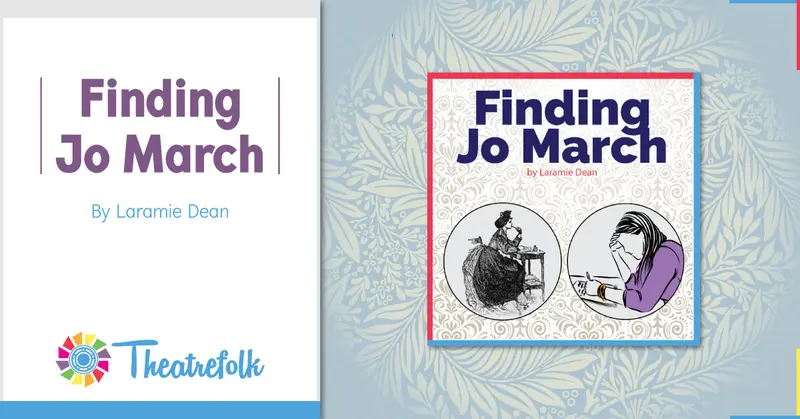
Welcome to our Featured Play Spotlight. You should know right away that Finding Jo March by Laramie Dean is not a traditional adaptation of Little Women. A young writer dives into the world of Louisa May Alcott’s most famous novel in order to bring the story to life (with a little help from their friends). Suddenly the March sisters are back, and the writer is one of them… Jo! But as the lives and loves of Meg, Jo, Beth, and Amy unfold, the present constantly threatens to pull the writer back into reality where a tragedy they have yet to deal with waits. It’s about telling someone else’s story so you can find your own. Why did we publish this play? I have seen this play develop for awhile now and it’s a delight to be able to share it with the world! _Finding Jo March _is a heartbreaking, uplifting, and unique take on its original source material _Little Woman. _It beautifully combines past and present. It sees the story through a LGBTQ+ lens through a connection between Jo March’s story, and the play’s main character story with their identity. You must pick up this play and share it with your students. Let’s hear from the author!1. Why did you write this play? I’ve loved Little Women since I was a kid and read my tattered, illustrated paperback copy to pieces. I was intrigued by the challenge of bringing a new adaptation to the stage and playing around with time: was there a way to allow the March sisters and their friends to participate in the 1860s and today? I also wanted to write something for my students to explore LGBTQ issues from different perspectives, especially since several are underrepresented and rarely, if ever, see people like themselves on stage. 2. Describe the theme in one or two sentences. It’s about telling someone else’s story so you can find your own. 3. What’s the most important visual for you in this play? The moment when Amy falls through the ice. It’s the climactic moment of Act One and can be done very simply with lights and music. 4. If you could give one piece of advice for those producing the play, what would it be? Create trust with your actors. Allow them to have fun and to be themselves. Encourage them to express in words how they relate to the characters in the play, the ones they’re embodying and the others as well. 5. Why is this play great for student performers? It gives them some great comedic moments as well as incredibly heartwrenching scenes (try not to tear up when the Writer’s father abandons them and their mother). It also allows your students of different sexual orientations or gender identities to see themselves represented in a play they get to experience for themselves. 6. Do you have any advice for people looking to perform this play online or socially distanced? Live music will help. Get your copy of Finding Jo Marchright here, right now!Not right for your group right now? Search our play catalogue to find one that your performers will love!
Theatrefolk Featured Play – The Burgundy Letter by Kirk Shimano
Diversity

Theatrefolk Featured Play – The Burgundy Letter by Kirk Shimano

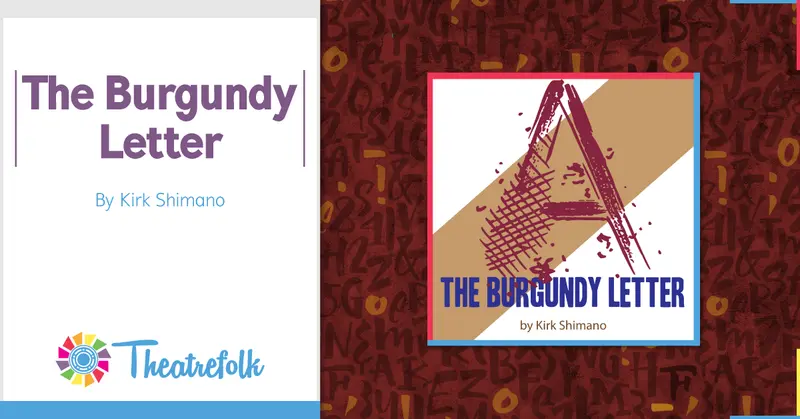
Welcome to our Featured Play Spotlight. The Burgundy Letter by Kirk Shimano is a comedic retelling of the classic novel The Scarlet Letter set in a high school and reframed for a digital age. In an online community, Hester90 is publicly shamed and shunned for a racial slur against another student, but refuses to name her cohort in the hateful conversation. RoChi wants the conspirator found out and humiliated. Climate_Dale wants everyone to come to his annual Earth Day address. How do we strike a balance between holding individuals accountable while still having compassion for those who apologize for their mistakes? Why did we publish this play? We love adaptations here at Theatrefolk and The Burgundy Letter is an excellent example. It’s a comedic retelling of the classic novel The Scarlet Letter set in a high school and reimagined for a digital age. There’s a lot to be explored about how public shaming currently works in social media and this play offers so much in terms of conversation about how we can strike a balance between holding individuals accountable for what they say while still having compassion for those who apologize for their mistakes. Add to that, we love complex teen characters and this play has so many wonderful roles for student actors to play! This play might have our favourite character name of all time:
Theatrefolk Featured Play – Grim and Gruesome Grimm by Mrs. Evelyn Merritt
Featured Plays

Theatrefolk Featured Play – Grim and Gruesome Grimm by Mrs. Evelyn Merritt

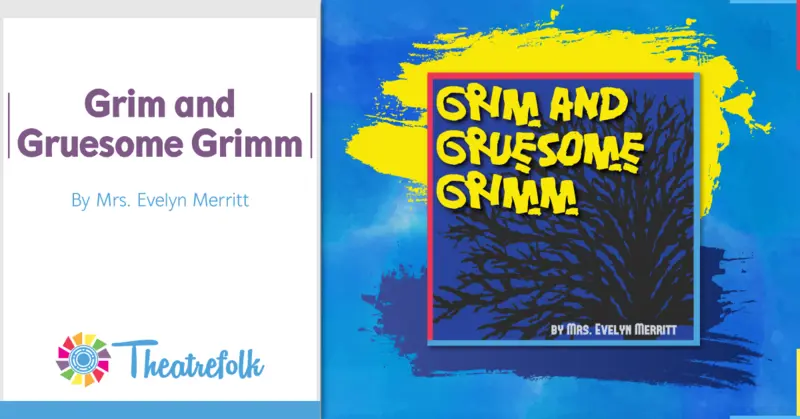
*Welcome to our Featured Play Spotlight. * Tired of fairy tale adaptations that are sickly sweet? Enter Grim and Gruesome Grimm! This adaptation of Grimm’s Fairy Tales by Mrs. Evelyn Merritt is not for the faint of heart – but it’s definitely for your student performers! The original Grimm’s Fairy Tales are far from sweet, naive, innocent, syrupy, or charming. They are not typical at all: Death. Cannibalism. Death. Burial alive. Death. Burned alive. Death. Kidnapping. Death. Beheading and body parts. Death. These tales are not for the faint of heart! Join us for a grim and gruesome stroll through dark forests and nasty characters. Don’t keep a body count. A playful and theatrical adaptation with flexible genders, flexible cast size, and two one act lengths. Why did we publish this play? Grimm’s Fairy Tales are classics. But more often than not, the classic versions are not the original versions. And mostly that’s because there’s a lot of death, beheadings, cannibalism, and more in the original versions and that’s not, oh, acceptable in today’s kids stories. But in a high school play? Absolutely! We love our Halloween and horror themed play section (especially our plays with horror/humour) and Grim and Gruesome Grimm fits right in. Just don’t ask for a watered down kid version – we’re keeping in all the cannibalism. Let’s hear from the author!1. Why did you write this play? I love fairy tales, all kinds of fairy tales. Even the scary ones! I’ve always shared the PG versions of Grim and I love having the opportunity to share the not so PG versions. 2. Describe the theme in one or two sentences. Never turn your back on your stepmother. 3. What’s the most important visual for you in this play? There’s a couple of particularly gory story moments that are done more theatrically than straight up horror gore. That’s just not possible on stage. I think it’s important to always keep the theatre of a play in the visuals rather than try for realism. 4. If you could give one piece of advice for those producing the play, what would it be? Everything is done on stage. All the costumes, the props, the sound effects, let the audience see it all! 5. Why is this play great for student performers? It’s a great play for having fun with character and the fact that any student can play any character. It’s all about taking on a role. Put on a crown and you instantly become a king with the right posture and attitude. The roles do not have to be binary or limiting. Anyone can become anything in a fairy tale.
Theatrefolk Featured Play – The Gorgon Sisters by Laramie Dean
Featured Plays

Theatrefolk Featured Play – The Gorgon Sisters by Laramie Dean

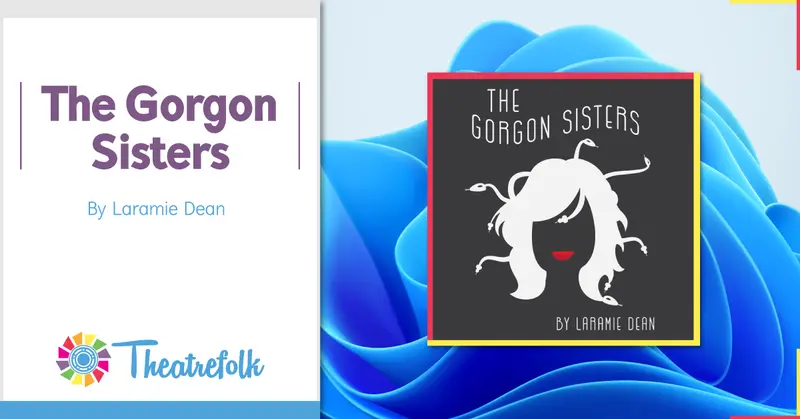
*Welcome to our Featured Play Spotlight. * The Gorgon Sisters by Laramie Dean is a fabulous take on some Ancient Greek characters – complete with lots of casting flexibility and suggested cuts for one-act competitions. The story is everything to Stheno, the oldest gorgon sister. And this story is a big one, a hero’s quest. And not some lame quest like the one Perseus went on for a girl. Stheno wants to bring her sister Medusa back to life. It’s impossible, and everyone tells her so – Hades, Heracles, Athena… but for someone like Stheno, the impossible just takes a little longer. Why did we publish this play? This play is a win-win-win all around: cross-curricular material, with the Medusa myth told in such a unique way. It’s easy to stage with great characters. If you’re looking for something new in the Ancient Greek canon, The Gorgon Sisters is for you! Let’s hear from the author!1. Why did you write this play? I was commissioned to write a play about Greek mythology by Teresa Waldorf, who was, at that time, the head of the educational tour branch of the Montana Repertory Theatre. I’ve been fascinated by Medusa since I saw her fight Harry Hamlin in CLASH OF THE TITANS when it ran on TV when I was wee; I was unaware that there were two other Gorgon sisters left alive after Perseus claimed her head, and immediately I thought what a good story that would make: the baddest of the bad, the worst Gorgon of all, trying to become a hero and bring her beloved sister back to life. 2. Describe the theme in one or two sentences. People you love will always be with you, no matter where you go or the distance between you. 3. What’s the most important visual for you in this play? Making Stheno look as cool as possible: she has a hairful of snakes, for Hades’ sake. And wings. And scales! 4. If you could give one piece of advice for those producing the play, what would it be? Have fun with the tech and design. Cast as many people as you want and then dress ‘em up. The Greeks gave their gods and monsters a lot in the way of visuals: go nuts with props and costumes. 5. Why is this play great for student performers? It’s funny. It’s also incredibly sad: dealing with grief is never easy. It has unexpected moments, particularly with characters like Hades, who audiences probably remember best dramatized from Disney’s Hercules. This guy is a little different. Stheno is a strong, determined, and intelligent woman and a great role. 6. Why is this play great for online performances? We performed it at my school early last fall as a staged reading with costumes, props, and masks. It worked just fine. Concentrate on the words and the characterizations; encourage students to go even bigger, especially vocally. Tell them to have fun!
Theatrefolk Featured Play – Shuddersome: Tales of Poe by Lindsay Price
Featured Plays

Theatrefolk Featured Play – Shuddersome: Tales of Poe by Lindsay Price

*Welcome to our Featured Play Spotlight. * Shuddersome: Tales of Poe by Lindsay Price is a creepy, cross-curricular masterpiece with tons of flexibility, theatricality and a whole lot of fun. The thumping of a heartbeat. The creek of a door. The howl of a bitter wind. The gong of a clock tower. The clang of alarm bells. The sound of beating wings getting closer and closer… Specters, ghosts and ghouls come alive in this vivid theatrical adaptation of some of Edgar Allan Poe’s best-known works. Included are The Tell-Tale Heart, The Raven, and The Masque of the Red Death. Poe’s words rise from the page like corpses from the grave. Be careful. Do you hear that tap, tap, tapping? Let’s hear from the author!1. Why did you write this play? Adaptation is my favourite form of playwrighting and I love the creepy, scary, macabre stories of Edgar Allan Poe. I thought it was a perfect marriage. Little did I know. This play was actually a huge challenge to write. Taking a piece of literature from one medium and transforming it into another, is not easy. Poe writes in a way where it’s the single reader’s imagination that takes charge of the interaction. The story lives in the mind of the reader. In a play, we can’t be inside everybody’s head at the same time. We need action and theatricality to do the work. It took over a year to find the right balance of staying true to Poe’s intention and creating a theatrical experience, but I’m really happy with the outcome. 2. Describe the theme in one or two sentences. Death, Morality, Revenge, Jealousy, come to life from the page like corpses from the grave. 3. What’s the most important visual for you in this play? The Shudders. They are Poe’s specters, ghosts and ghouls staring you down from every corner of the stage. 4. If you could give one piece of advice for those producing the play, what would it be? Watch the tone. If everything is played with the same creepy feeling, then the play is going to come across as one note. Which I know is not your intention! 5. Why is this play great for student performers? I’m often told by teachers and students that this play is a challenge. It’s not easy stuff. But it’s a rewarding challenge. It’s creepy and cross-curricular which makes it great for classroom study. There is also a number of different of storytelling styles that offers student performers a wide variety of challenges. There’s even a humourous story! (Did you know Poe wrote comedies?) 6. Do you have any advice for people looking to perform this play online or socially distanced? If you’re performing socially distanced, explore how the the isolation between characters impacts the creepy atmosphere of the storytelling. Light and sound will also be your best friends. The Raven would work very well with the different characters in their own areas of light. If you’re doing The Bells virtually, I’d suggest not using unison speaking and play with how the text sounds using individual speakers. Have fun with it! Explore different options, you won’t know if something works or not until you try.
Playwriting Exercise: Exploring Adaptation
Classroom Exercise

Playwriting Exercise: Exploring Adaptation

Adaptations are super fun to perform. It’s really cool to see a favourite book, film, or even board game come to life before your eyes onstage. On top of that, you can put many different spins on an adaptation. Some adaptations are modernized, some are set in a different location, and some are turned completely on their head! Theatrefolk has over 50 different adaptations in our play catalogue — be sure to check them out. There are many different types of adaptations. Some are direct “page-to-stage” adaptations of famous stories such as Alice in Wonderland, Anne of Green Gables, The Wizard of Oz, Charlie and the Chocolate Factory, and more. There are also adaptations that put an interesting spin on the source material. The play Puffs is a humorous adaptation of the Harry Potter series, focused on the less-featured Hufflepuff House at Hogwarts. The Broadway musical Mean Girls is an adaptation of the movie starring Lindsay Lohan, which itself was adapted by Tina Fey from a nonfiction self-help book called Queen Bees and Wannabes by Rosalind Wiseman. When students are exploring what source material to adapt, they’ll have to consider some of the following ideas: 1. What are the most important moments of the story to adapt? You can’t adapt everything, so some moments may need to be changed or omitted for length and pacing. Action** :** Choose a story that you’d like to adapt and create a timeline of the most important moments in the original story. Why are those moments important? Do they drive the action forward? If not, are they really necessary? 2. How many characters are in the story, and which are the most important? Are these characters interesting? Would you want to play them onstage? Do they drive the action of the story forward, and how? If there are too many characters, could some of them be combined or omitted? Alternatively, if there are too few characters, could you add an ensemble? Action** :** Create a list of characters that appear in the story. How many are there? Are there too many or too few? (Hint: There isn’t a wrong answer to this question — it’s your adaptation!) Describe each character in two sentences: who they are, and how they contribute to the overall story. 3. How will you make the story theatrical? There are scenes in every story that are challenging to bring to life onstage. For example, in the musical James and the Giant Peach, directors must figure out how to create characters who are insects onstage (such as Spider, Grasshopper, and Earthworm), as well as stage the giant peach itself, which floats in water, is attacked by missiles, and squashes James’ aunts! Action** :** Choose a scene from the story and describe in detail how, as a playwright, you might bring it to life onstage. If you wish, brainstorm as a class some scenes from books, movies, or television and how you’d adapt them. For example, if you were adapting Aladdin, how would you make the Genie appear from the magic lamp, or how might you make the magic carpet fly? If you were adapting The Hunger Games, how would you stage Katniss shooting her bow and arrow? For a bigger challenge, describe two ways you could make the action appear onstage — one high-tech version and one low-tech version.
Theatrefolk Featured Play – The Wind in the Willows adapted by Todd Espeland
Featured Plays

Theatrefolk Featured Play – The Wind in the Willows adapted by Todd Espeland

*Welcome to our Featured Play Spotlight. * The Wind in the Willows adapted by Todd Espeland is a lively and theatrical adaptation of a wonderful classic from Kenneth Grahame. Mole just wants to make friends, Rat just wants to hang by the river, and Toad just wants everything to go zooooooooom. None of that prepares our friends for the fight to save Toad Hall from Fox and his wicked weasels. Join them in this in this character-driven thrilling adventure through the Wild Wood and out into the Wide World! Gender flexible. Easy to stage. Excellent ensemble and tech student opportunities. Why did we publish this play? I love an adaptation that takes a world created in one form and brings it to life on the stage. Todd has done just that with this play. It’s easy to stage, the characters are vividly drawn and the text is full of theatricality and humour. So much fun! Let’s hear from the author!1. Why did you write this play? I have always liked the story of The Wind in the Willows. It is filled with great characters. My background is in mask and Commedia and the story always felt to me like it had Commedia types in its characters. So I wrote it with that idea in mind. 2. Describe the theme in one or two sentences. It is about the strength of friendships and believing in someone and helping them become the best person they can be. 3. What’s the most important visual for you in this play? The moment at the end of the play with all of Toad’s friends on one side of the stage, defending him, and the Fox and Weasels on the other side of the stage backing down from them. 4. If you could give one piece of advice for those producing the play, what would it be? Trust the absurd, over the top Commedia like comedy of the play. Trust the archetypes in the characters and play them like they were Commedia characters. They may not correspond to classic Commedia characters, but they are all “types”. Trust their character drives and how the comedy comes out of their drives/needs. 5. Why is this play great for student performers? It gives them a chance to play characters with big needs and characters who play a lot of tactics to get those needs. It teaches them to play “Truth in Size”. If you indicate or play generically BIG, the comedy doesn’t work. Just like in the Simpsons these characters have big needs but those needs are very real for them in the theatrical world of the play. There needs to be an honesty to their large characterizations. That’s why Commedia, when it works, is so much fun. The audience gets sucked into this large theatrical world that is very real of the characters in it. 6. Do you have any tips for those who are performing this play online? This is a great play for online because it is character driven. Characters using tactics to get their needs from other characters. Any physical business comes out of playing a tactic. Sometimes it is easy to just play the physical business and not play the tactics through your voice and body. Online you have to really be precise about playing your tactics. If you are planning on doing this show socially distant than I suggest doing a lot of physical characterization work. You will have to use more stage than normal and having specific physical characters will not only help the actors to play off each other but it will fill the stage with these unique physical characters to watch.
Theatrefolk Featured Play – The Wonderful Wizard of Oz Adapted by Laramie Dean
Featured Plays

Theatrefolk Featured Play – The Wonderful Wizard of Oz Adapted by Laramie Dean

Welcome to our Featured Play Spotlight. There’s no place like home. And there’s no adaptation of L. Frank Baum’s classic novel like Laramie Dean’s The Wonderful Wizard of Oz! Dorothy and Toto get swirled into a cyclone and find themselves dropped in the land of Oz – a land where scarecrows talk, lions are cowardly, and witches are very real. In this fantastic adaptation of the original L. Frank Baum novel (there are no singing munchkins here) every fantasy element is easily and practically staged with just 10 cubes. You too can bring winged monkeys to life! Gender flexible. Excellent ensemble opportunities. Budget friendly. Why did we publish this play? Laramie Dean staged his version of The Wonderful Wizard of Oz when he didn’t have a lot of extras at his disposal – no sets and no special effects. What we’re left with is a fantastically easy to stage piece that uses imagination, collaboration and ensemble theatricality to its utmost. I loved reading this script and seeing a unique version of the story come to life with the use of a few cubes and a stage full of actors. 1. Why did you write this play? I’ve been in love with the story of The Wonderful Wizard of Oz since I was a wee child. My mother used to read it to me, and then, when I learned to read, I would pore over it at every opportunity. It’s a highly adapted story, and I was super inspired by all the various versions (books, movies, TV shows) I enjoyed as a child. 2. Describe the theme in one or two sentences. Empathy is essential. Think about how your choices impact other people. 3. What’s the most important visual for you in this play? I love the end of Act 1, where we finally see the Wicked Witch for the first time, surrounded by all her evil creatures. 4. If you could give one piece of advice for those producing the play, what would it be? Think theatrically! Often the simplest choice is the most interesting. How can you use fabric, masks, puppets, and simple props to let your performers tell the story? 5. Why is this play great for student performers? The Wonderful Wizard of Oz offers student performers a chance to perform many different characters and demonstrate their versatility. 6. Do you have any tips for those who are performing this play online? It’s a familiar story that relies a lot on vocal and emotional resonance. Be big! Be bold! Don’t be afraid to make big choices!
Theatrefolk Featured Play – Jane Austen, Completely Zoomed by Treanor Baring
Distance Learning

Theatrefolk Featured Play – Jane Austen, Completely Zoomed by Treanor Baring

*Welcome to our Featured Play Spotlight. * Jane Austen, Completely Zoomed by Treanor Baring is a fast-paced, witty modern take on Austen’s six classic masterpieces. Suitable for online presentation, adaptable for in-person performances, this is not your great-great-great-great grandmother’s Jane Austen. Choose to perform the canon in its entirety for a total of one hour, or select among the novels for shorter or competition-length performances. Middle and high school players will delight in bringing to life these relatable homework-less romps through Jane Austen’s beloved novels. Why did we publish this play? We were so delighted to receive this collection – Jane Austen adapted with a wonderful tongue in cheek tone and specifically for virtual performances. This collection covers so many bases from classical literature, to tech suggestions for your tech crew (there’s lots for your costume and sound design students), to the acting style of the shows. It’s a win across the board. Let’s hear from the author!1. Why did you write this play? I’ve always liked Jane Austen. I wanted to give theatre students something really fun and funny to perform. They aren’t stuffy, musty novels to me. They’re witty and wickedly comic. Because I wanted to base this adaptation on the books, not the recent film adaptations, it gave me incentive to read them all again. I felt it was important to write a “complete Jane Austen” to give people exposure to some of the lesser known novels. And a wide choice about which ones and how many to perform. 2. Describe the theme in one or two sentences. Jane Austen’s classic novels about finding the person you can trust and love forever come to life in a modern way. Really fast, totally fun. 3. What’s the most important visual for you in this play? The slides. Besides the dialogue, there are commentary slides that offer a lot of humor. They could even be spoken by an additional character if need be, but they’re an important part of the storytelling comedy. 4. If you could give one piece of advice for those producing the play, what would it be? Feel free to use this in the way that best suits your program. This play is written to be flexible. The performances can be on line, live, in person, on stage, any way circumstances allow. You can pick two plays out and just do those. Or one. Or all five. Go big with period costumes, or keep it simple and have students wear colorful t-shirts. You can treat this like a teleplay and produce it with in class students to show on line. Or if you’re fortunate enough to be in a place where audiences can be live, it can be performed on stage. Of course, it can performed with everyone remote. You can change your mind about how you perform it at any time. 5. Why is this play great for student performers? Lots of different parts. Lots of humor. Lots of modern references. Lots of character development possible for all the characters, even the smaller parts. 6. Why is this play great for online performances? Characters look right at the audience or camera and deliver their lines. It’s written with the “third wall” broken in a lot of places. The narrator explains the plot developments, and who is who. It’s all very accessible.
Theatrefolk Featured Play – Myth-o-logues by Janice Harris
Distance Learning

Theatrefolk Featured Play – Myth-o-logues by Janice Harris

*Welcome to our Featured Play Spotlight. * Myth-o-logues by Janice Harris is a fantastic one-act and classroom resource. Pick and choose from this must-have collection of monologues from Greek Mythology’s greatest characters. Great for in-class and online study and performances! Cassandra (the Trojan prophetess no one believes) is here to be your Greek mythology tour guide. She’ll lead you through stories of war, relationships and the origins of good and evil. She’ll share all before old Charon ferries the whole audience across the River Styx. Will you listen? Will you learn? Will you believe? Why did we publish this play? I love this title. It describes this play perfectly – a collection of monologues about Greek myths. This is a great way to introduce both (myths and monologues) in one package. You can even put them all together for a unique monologue driven production – which will make it really accessible for an online performance. Middle school teachers – you will want this play in your classroom! Let’s hear from the author!1. Why did you write this play? I wrote this play because I wanted to give my students a more comprehensive understanding of traditional Greek stories and characters, particularly in the context of the study Greek theatre history. 2. Describe the theme in one or two sentences. The topic of the play is Greek Mythology. The theme changes with each character as the performers explore the characters— faithfulness, loss of love, revenge, power, etc. 3. What’s the most important visual for you in this play? At this particular time, I visualize an online performance. See below. 4. If you could give one piece of advice for those producing the play, what would it be? I would encourage those producing this play to have your actors do a lot of research on the whole storyline of each character. This will strengthen the portrayal of each character as the students do the character study needed for a successful performance. 5. Why is this play great for student performers? This play is good for student performers for several different reasons. The monologues are of different lengths, so a student can choose one that fits his/her comfort level. (My method for assigning monologues or scenes is for students to submit several choices. I make the final assignment.) The subject matter is cross-disciplinary. The material can be performed by a beginning or advanced level student. Character study is necessary for a successful performance. 6. Do you have any tips or suggestions for those who are performing this play online? I think this play is particularly suited to an online performance. I can picture a performance of individual actors appearing on the screen. As narrator, Cassandra could be in the center. The focus could shift from actor to actor, the screen could fade in and out. There is a great opportunity for students working on the technical side of the performance online. Actors could easily perform in their own rooms or yards, in a garden, or even on a stage, observing social distancing. There is plenty of room for creativity in an online performance. Get your copy of _Myth-o-logues _right here, right now!Not right for your group right now? Search our play catalogue to find one that your performers will love!