Facebook Pixel Skip to main content

📣SCRIPT SALE! Treat yourself to an easier Fall. Save 30% on 5+ perusal scripts with code SPRING30 before May 3 and head into summer stress-free.

Choice Board Activity: Switching Genres

Switching up the genre of an existing play can be a lot of fun. Take Shakespeare’s Romeo and Juliet — there have been lots of theatrical and film adaptations of that play, such as West Side Story (musical adaptation), & Juliet (musical POV adaptation), Gnomeo & Juliet (animated), Warm Bodies (zombie rom com), Romeo Must Die (martial arts film), Rosaline (alternate character POV film), and Football Romeo (modern high school adaptation).

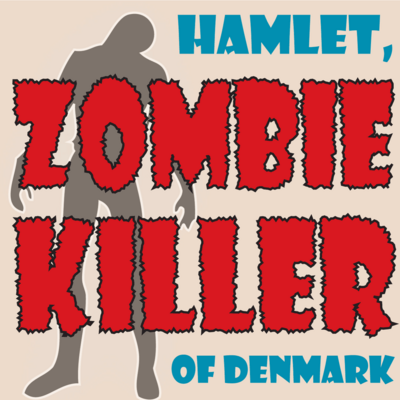
In this choice board activity, students do just that: take an existing play and switch up the genre. Set it in outer space. Set it on a cruise ship. Set a modern play in the past, or modernize a historical play. If all else fails, add zombies. (For inspiration, check out Theatrefolk’s Hamlet, Zombie Killer of Denmark. Each student will explain their concept, then complete various tasks of their choosing to expand it.


Instructions:

EVERYONE:

  • Choose an existing play and read it.
  • Switch the genre and write a synopsis of how you’d change it. Length: 1 page.
  • Write an outline/timeline of the major moments of the play, according to your changes. Length: 1 page.

CHOOSE 3 TO SUPPORT YOUR GENRE SWITCH:

  • Create a comparison chart of a changed/altered/adjusted character.
  • Create a character sketch for a new character you’re adding to the play, and describe what existing character(s) they interact with and how they affect those characters.
  • Write a monologue for a character. Length: ½–1 page.
  • Write a new scene. Minimum length: 2 pages.
  • Write a song for a musical adaptation (you may use an existing song as the melody/structure, or create an original song).
  • Create an inspiration collage or mood board featuring colours, textures, sketches, photographs, or cutouts that illustrate the concept. (Minimum size: 12 inches by 12 inches)
  • Create a new set design. Explain how it supports your adaptation.
  • Create a costume design for one character. Explain how it supports your adaptation.

BONUS: For extra credit, students may complete and submit up to two additional choices from the list.


Extension Opportunity: If you’d like to expand this activity into a larger scale (such as an ISP or end-of-term project), you can have students create an elevator pitch for their adaptation, or do a complete show design for the production.


Additional Resources:
Costume Challenge: Modernizing a Classic Character’s Ensemble
Connecting the Past to the Present: Modernizing a Scene
Playwriting Exercise: Exploring Adaptation
Be sure to check out Theatrefolk’s catalogue of classical adaptation plays for inspiration.

Products Referenced

Football Romeo

by Lindsay Price

A hilarious full length modern take on the clash between school cliques. Inspired by Romeo and Juliet.

Denmark is plagued with zombies in this gruesomely comic adaptation of Shakespeare's Hamlet.

Click here for a free evaluation rubric.
Download For Free

Related Articles

Choice Board Exercise: Portraying Emotions
Classroom Exercise

Choice Board Exercise: Portraying Emotions

Here’s a choice board exercise that’s all about emotions. You can use this list for students to complete single tasks (just have students select one assignment out of the many advertised below), or have students complete several tasks as a larger cumulative assignment. All the choices are focused on having students portray the selected emotion in different mediums. This can help students to think creatively, explore different ways of portraying emotions, and solve problems through quick thinking. If you wish for students to use these choices as a cumulative exercise, they must select one task from each category (List, Playwriting, Tech, and Performance) to complete and submit. Tasks from the Tech category and a few from the Performance category have the option of working with a partner, but most tasks are for one student to complete. For the Performance category, students must complete one solo task AND one pair/trio task. 1. Start by selecting an emotion for the entire class to study. Use our collection of Emotion Prompts if you’d like options beyond happy, sad, or angry. 2. Use the following categories and lists for students to select their tasks. List Tasks (choose one) • List 10 songs (preferably from musical theatre) that evoke the chosen emotion. • List 10 plays and/or musicals that feature or focus on the selected emotion. Note a specific moment (act and scene) from each play where the emotion is present. • List 10 quotes from plays or musicals in which the character demonstrates the selected emotion. Playwriting Tasks (choose one) • Write a monologue that evokes the chosen emotion. (Length: ½ page minimum) • Write a two-person scene in which one character expresses the selected emotion. (Length: 1 page minimum) • Write a two-person scene in which both characters express the selected emotion, and something happens at the end of the scene to change the mood. (Length: 1 page minimum) • Write a three-person scene in which one character expresses the chosen emotion, and the other characters try to change their mood. (Length: 1 ½ page minimum) Tech Tasks (choose one — can be done with a partner if students wish) • Create a lighting design that evokes the selected emotion. • Create a set model (for example, in a shoebox) that helps maintain the mood of the chosen emotion. • Select a character from a play that expresses the selected emotion, and create a costume design (full-colour sketch or live creation) that develops that emotion further. • Build a prop that would cause a character onstage to feel the selected emotion. Performing Tasks (choose one solo and one pair/trio task) • Solo: Choose and perform a monologue from an existing play that evokes that emotion. (Please submit a copy of the monologue.) • Solo: Write and perform an original monologue that evokes that emotion. (Students must submit their original script as well.) • Pair/Trio: Create a series of three tableau scenes that evokes the selected emotion. • Pair/Trio: Create a mimed scene in which one of the characters expresses the chosen emotion. • Pair/Trio: Choose and perform a scene from an existing play that portrays the emotion. Each student must have lines. 3. After the students have performed, they will submit all written and practical work, as well as an individual reflection response (found below). 4. Bonus: Students may select and complete one additional task from the Tech, Playwriting, or Performance categories for up to five additional bonus points.
All About Choice Boards
Classroom Exercise

All About Choice Boards

A choice board is a visual tool that teachers can use in their classrooms to allow students to… make choices! Choice boards consist of two or more options of activities for students to complete. The teacher specifies what choices are available, and the student selects what activity (or activities) they’ll do. Some choice boards are simple — choose one of two options listed. Some choice boards are more complex; for example, nine options are displayed in a grid and students will select and complete three of them. Choice boards are great because they give students the opportunity to choose how they engage with the material they’ve been studying and demonstrate what they’ve learned in their own way. Students can choose an activity that allows them to play to their own strengths or an option that’s new and challenging. They might wish to study a favourite topic in depth or explore a new topic. Choice boards are also great for accommodating different learning styles. For example, students may have more success submitting journal entries or reflections if they can choose whether to complete a written entry, a video entry, or an audio recorded entry. For a homework assignment, you might provide links to a written article, a video, and a podcast (all on a similar topic), have students read/watch/listen to one of them, and create a response to or answer questions about the content. Choice boards give students freedom within their learning, which also requires them to take responsibility for their choices. Letting students choose their own activities allows them to pick options that are interesting to them, or that they can connect to on a deeper level, which leads to more meaningful learning. Choice boards can be as simple as two options listed on a whiteboard or as fancy as grids, bingo cards, photos, pictures, or objects. They can be useful for remote or asynchronous learning, as they allow students to work at their own pace (within the allotted time frame). You can post choice boards in whatever digital classroom your school uses, and students can select and submit their assignments virtually, by the indicated deadline. Here are two sample choice board activities. (For other examples and activities, see the downloads at the bottom of this article!) For a performance-based choice board: • Students will select and rehearse a 30-second monologue of their choice. Students may either perform their monologue live in class on Friday or record a video of their performance and submit it by Thursday at 7 pm. Please submit the title of the monologue and your choice of performance style to Ms. Smith by the end of Tuesday’s class. For a playwriting choice board (choose one of the following): • Write a half-page monologue where the main character expresses a strong emotion. • Write a one-page scene where the main character interacts with one other family member. • Write a one-page scene where the main character does something for the first time with a group of people. • Write a one-page scene where two other characters talk about the main character. The following exercises also feature activities that you could use for choice boards: • Superhero Series: Final Performance • Playwriting Exercise: Advertisement Prompt • Costume Challenge: Modernizing a Classic Character’s Ensemble
Drama Sensory Series: Bringing All The Senses Together
Classroom Exercise

Drama Sensory Series: Bringing All The Senses Together

This month, we’ve used the five senses (sight, hearing, taste, smell, and touch) as the basis for exercises and theatre games. For our final week, we’re taking all five senses and bringing them together to create a full theatrical sensory experience. As a recap, check out our previous sense-based posts: • Sight-based games & exercises • Games & exercises focused on hearing and listening • Storytelling inspired by taste & smell • Movement & physicality-based exercises (touch) Final Activity: Director’s Vision Choice Board• Students will select a play or musical to create their director’s vision for. • Students will decide on their overall concept/vision for the play or musical. • Students will complete various tasks for each of the senses, demonstrating how their choices contribute to their overall vision for the show. See below for student task ideas. Feel free to add additional choices or alter the ones suggested. This project can be completed individually or in pairs. Instructions 1. Describe your overall vision for the show in one phrase. For example: “Shrek the Musical in outer space,” or “a gritty Mafia-style Romeo & Juliet.” If students would prefer to just do the show as written, that’s fine too. 2. For each sense section, select two tasks to complete. For advanced students or for a larger project, complete all three tasks per sense. 3. Complete and submit all work, including a detailed list of different mediums used (video links, links to Spotify or Apple Music playlists, physical vs. digital mood boards, shoebox-sized dioramas, etc.). 4. If any choices require a live performance, you’ll need to book a time block to perform your piece(s) for the class and teacher. (Teachers: Be sure to block off class dates/times for performances, and provide students with a list of available dates and times so they can complete their tasks.) 5. Respond to the reflection questions (include this with your full submission) found in the giveaway below. Sight • Create a visual timeline of the show from beginning to end, using a long roll of newsprint. Include instances that occurred prior to the show that trigger the situations within the show. Find or draw images to add to the timeline and use appropriate fonts in the style of your director’s vision. • Create a connections board showing how all the characters in the show are related to each other: marriages, family members, friendships, work colleagues, and so on. Create or find images of each character in the style of your director’s vision and attach them to a bulletin board or poster board, use yarn or string to connect the characters, or create a digital version. Do not omit any characters; if someone isn’t connected to anyone, note that on the board. Include broken connections, such as former friends, exes, or enemies. Use a different colour of yarn to illustrate those connections. • Rehearse and perform a brief (five-minute maximum) selection from the play or musical. A live performance or video performance is acceptable. You may perform by yourself or have additional students assist you as needed. You can wear rehearsal blacks, use costumes/clothing from your own closet that support your vision of the show, or use one item to identify each character. The teacher will decide whether you may perform with script in hand or must have it memorized. Sound • Write a song for a musical adaptation of a play, or a new song for a musical (you may use an existing song as the melody/structure, or create an original song). For bonus points, record yourself performing the song (audio only or video/audio is acceptable) and submit it with your lyrics. • Create a playlist of music to play during pre-show, intermission, and post-show. Choose a minimum of 10 songs that demonstrate and complement your vision of the show. Include a write-up of why you selected each song. Note: If any version of the show has an existing soundtrack, none of those songs may be included in your playlist. • Create a soundscape of at least five sound effects and three pieces of incidental (background) music that support your concept of the show. Include a list of where each sound effect/piece of music is included in the script (act, scene, line/cue). Touch • Create a shoebox-sized 3D model or diorama of your set. Include small cutout figures of at least two characters, as well as models or cutouts of any moving aspects of the set. Include notes about any important transitions and scene changes and how they would work. • Create a texture design board/scrapbook for your show. Include tactile materials such as fabric swatches, trims and buttons for costumes, wallpaper samples or carpet samples for sets, or small hand props (any props must fit in a shoebox-sized container). Submit at least five textures/items, and include a write-up explaining the purpose of each item. • Create a hairstyle and makeup look for a character on yourself, another student, or a mannequin that supports your vision of the show. Include close-up photographs of the front, both sides, and the back of the face and head, and/or a time-lapsed video of you creating the look. Scent & Taste • Look through your script and note any references to food or drinks. This could include any scenes that are set somewhere people might eat and would require food props onstage, such as a wedding, BBQ, banquet, or picnic. Make a list of those items and estimate the quantities of what you’d need for a weekend run of four performances. For bonus points, look up or create a recipe for one of the food items. • Or, if there are no food references in the script… What types of food were served in the geographic area or time period your show is set in? Create a sample menu of what people would commonly consume. Consider factors such as the economic status of the characters; for example, royalty would dine better than peasants. • Create a signature drink and snack that could be sold at the concession stand for the show. For example: “Queen of Hearts’ cherry lemonade” or “Mad Hatter’s sweet iced tea,” and “March Hare’s tea biscuits” for a production of Alice in Wonderland. Include a design for how you’d style the price list and/or the actual snacks/drinks. For example, you might include “eat me” and “drink me” tags on the snacks and drinks for the Alice suggestion. • Create a written “scent tour” of the scenes in the play, using descriptive language. What does the world of your play smell like? For example, if the show is set in a carnival, describe in detail the scent of crisp fall air, the pungent odor of gasoline from the rides, and the various smells of the food vendors such as cotton candy, candy apples, popcorn, and French fries. Note any scent changes from scene to scene.