📣SCRIPT SALE! Treat yourself to an easier Fall. Save 30% on 5+ perusal scripts with code SPRING30 before May 3 and head into summer stress-free.
Diversity
Teaching Drama
The Drama Teacher as Ally: Advocating for LGBTQIA+ Students
The drama classroom is a unique space with tremendous potential for allyship and advocacy. It’s often a haven for students who feel “othered” in more traditional school environments, especially LGBTQIA+ students. Being a conscious, active ally in your drama classroom goes beyond just being welcoming; it means intentionally creating a space where all identities are seen, respected, and celebrated. Here are some tips for advocating for your students both within and beyond the drama classroom.
Advocating Within Your Drama ClassroomWithin your classroom, you have the opportunity to model allyship daily. Your drama classroom can be the space where it’s safe to take risks, make mistakes, and try again. It’s a place where, given the opportunity, students can truly be themselves.
• Include a clear statement in your syllabus and classroom agreements about respect, inclusion, and anti-discrimination.
• Let students know that misgendering, homophobic language, and transphobic behaviour won’t be tolerated.
• Choose plays and texts that include queer voices and characters, and work by LGBTQIA+ playwrights. Include these choices as part of your regular teaching, not just in a “Pride unit.” Choose pieces that celebrate and uplift LGBTQIA+ joy, representation, and excellence.
• Offer flexible casting options. For example, instead of saying “We need a girl to play Juliet,” try “We need someone comfortable with Juliet’s role — anyone interested?”
• In playwriting, devised theatre, and improv, let students develop characters and performances that reflect their lived experiences, while still respecting their boundaries.
• Always use consent-based practices in physical theatre exercises, blocking, and ensemble work. For example, always ask “Is it ok if I place my hand on your shoulder here?” rather than physically moving an actor into place.
• Lead conversations on how theatre can be a tool for social change and visibility.
• Introduce and discuss intersectionality: how gender, sexuality, race, and class all interact in performance and casting.
Advocating Beyond Your Drama ClassroomExpanding your advocacy beyond the classroom is where real systemic change can start to take root. As a teacher and an ally, you can use your voice and position to improve the broader school culture for LGBTQIA+ students.
• Collaborate with your school’s GSA (Gender & Sexuality Alliance), or help start one if it doesn’t exist. Volunteer your classroom as a meeting space, or offer to be a staff advisor.
• Seek out professional development opportunities that centre on inclusive education and equity, especially ones taught by members of the LGBTQIA+ community. Look for topics such as inclusion, intersectionality, and trauma-informed approaches. Share these learning opportunities with your colleagues.
• Support inclusive school policies, such as gender-neutral bathrooms, dress code updates, and curriculum representation. Push for school forms and databases to include preferred names and pronouns.
• Speak up in staff meetings and curriculum discussions when LGBTQIA+ issues are being ignored or minimized. If necessary, partner with like-minded colleagues to present a unified front when advocating for change.
• Be a mentor and visible ally to colleagues. Other staff might want to be allies but feel unsure or nervous. Your openness and willingness to learn can inspire others.
When LGBTQIA+ students see their identities respected beyond one safe classroom (hopefully, yours!), it helps to build a school environment where they can actually belong and thrive. Even small acts of advocacy can and will ripple outward.
Featured Plays
June Reading List: Plays to Celebrate Gender Diversity & Inclusivity
As we start putting together this summer's reading list, how about diving into some amazing plays that celebrate gender diversity and inclusivity? There's a whole world of stories out there just waiting to be discovered, offering endless possibilities for your students to connect with powerful characters and inspiring narratives.
These plays are perfect for embracing the magic of diverse storytelling and will make a fantastic addition to your stage or classroom this summer!
Teaching Drama
Tips for Supporting Nonbinary Drama Students
We want our drama classroom to be a safe space for our LGBTQ+ students. Within that umbrella are nonbinary students. The term nonbinary can mean different things to different people, but generally it refers to someone whose gender identity isn’t exclusively defined as male or female (regardless of the sex they were assigned at birth). Nonbinary identifiers can include genderqueer, agender, genderfluid, and more. Read on for some tips on supporting nonbinary students in your drama classroom.
1. Here are some basic reminders to keep in mind for all nonbinary students, not just those taking drama:
• Use students’ names and pronouns correctly. If they've changed their name, don't use their deadname. If you or your students misgender another student, make the correction immediately.
• A start of term survey for your students can be helpful for ensuring student safety and inclusivity.
• Don’t make assumptions about anyone’s gender or pronouns. You can’t tell someone’s gender by looking at them.
• Use gender-neutral greetings and comments when interacting with your students as a group, such as “Good morning everyone” rather than “Good morning boys and girls.” Even phrases like “You guys did a great job!” can be exclusionary.
• Continue to educate yourself on how to be an ally to your students. The Trevor Project has many great resources that can get you started.
2. Representation is important. Study and perform plays and musicals that feature nonbinary characters. Some examples include musicals like & Juliet or Head Over Heels, or Theatrefolk plays such as Completely, Absolutely Normal: Vignettes About LGBTQ+ Teens, Red Tee, Passing Period Purgatory, Finding Jo March, and Thought Traps. Look for scripts with gender-expansive casting opportunities. Research and present profiles of nonbinary performers and playwrights.
3. When casting plays or scene work, don't make assumptions about your nonbinary students and what roles you think they’re comfortable playing. Oftentimes, nonbinary students are typecast as animals or fantasy characters, only cast in roles that are traditionally written as male, or only considered for roles that are specifically written as nonbinary or gender non-specific.
Communicate with your students to see what type of roles they are interested in and comfortable playing. Some nonbinary students might be excited to play roles of any gender, while others may not be comfortable playing a character of the sex they were assigned at birth.
You might introduce the idea through an exit slip in class, such as “Name your top three dream roles to play in the theatre” or “What roles do you think would be a great acting challenge for you?” For school productions, an audition questionnaire (found in the giveaway in this post could be useful for the casting process. You can ask questions such as, “Are you comfortable playing a role that is written as male/female/nonbinary (circle all applicable)” and “List the top three roles in this show that you are most interested in playing.”
4. Be aware of issues that affect nonbinary drama students. For example, many plays specifically indicate only male and female roles, awards are given specifically to male and female performers, and dressing room areas may not adequately meet students’ needs. Some students may not come from supportive homes, and, for example, might use one name at school and a different name at home. In this case you may need to ensure your show programmes indicate the name that the students’ family is ok with or aware of. Even schools and school districts can have different rules, regulations, or laws regarding LGBTQ+ issues, which may restrict what you’re able to teach and what students can learn about directly in school.
There is a large possibility of exclusion (especially when you consider intersectionality — students may have faced additional exclusion due to race, disability, sexual identity, or class), and this may make your nonbinary students feel disrespected or unsafe. Some nonbinary students may feel like the only reason they were cast was to fill a “diversity quota.” Beyond acting, what opportunities are available for nonbinary student directors, designers, technicians, and playwrights? What steps can you take to find solutions for these issues?
Additional Resources:
Creating a Safe Space for your LGBTQ+ Students
Thoughts on Gender & Casting
Plays & Musicals for Pride Month
Teaching Drama
What Does It Mean to “Educate Yourself”?
The phrase “educate yourself!” gets thrown around a lot, especially online. It’s tough when, as a teacher, you are trying to learn more about topics you’re unfamiliar with so you can better support your students, and then you get stopped in your tracks. But please keep trying! Your students need that from you, even if they don’t say it.
So what can you do to “educate yourself” about LGBTQ+? Here are some tips:
1. Be proactive.Don’t wait until a problem arises or a student comes to you for help. Start now!
2. Read books and articles, listen to podcasts, and watch videos written and created by LGBTQ+ people.Get information from people with lived experiences. Remember that everyone’s experiences are different, but they’re all important and valid. Create a resource file (such as a reading list) of LGBTQ+ creators that you can share with your colleagues and direct students to. Make sure the work you’re consuming was created by LGBTQ+ folks, rather than just about LGBTQ+ folks.
3. Don’t force your LGBTQ+ students to answer questions unless they’re willing to do so.This is a hard one, because your students are right there and you interact with them every day. Some of them might be thrilled and honoured to answer questions and share resources, while others won’t be comfortable taking on that responsibility. (And their reasons are nobody else’s business!) Never assume someone wants to be an “expert.”
4. Show support by attending events and making purchases from queer theatre-makers.Show your support with your dollars. Many free resources on social media have links to tip jars and other ways to support creators financially. Help bring marginalized voices to the forefront. Amplify LGBTQ+ voices and creations. If you aren’t able to support them financially, share their work (with proper credit given) so more people can experience their creations. You can also volunteer to help out with LGBTQ+ led events and causes.
5. Know that sometimes as an ally, your role is to be quiet and listen.Believe students’ experiences if they choose to share them with you. Listen, listen, and listen some more. Don’t pry, but ask how you can best support them, within your own capacity. Try not to jump in with your own personal stories. Be aware of your own privilege when listening to others (which is uncomfortable but necessary), and don’t make it about you.
Disclaimer: Check with your administration and district policy on anything discussed in this article with regard to LGBTQ+ (LGBTQIA, LGBTQ2S), as laws vary from region to region.
Teaching Drama
Start With One Thing
There is a lot of talk about what teachers should be doing to create inclusive classrooms for LGBTQ+ students. But the amount of information and resources available can be overwhelming. Where do you start? What’s the right thing to do? Teachers are not therapists and shouldn’t take on that role. In some areas, teachers may be prohibited from being inclusive.
This can put teachers in a difficult position.
Every teacher wants the best for their students. So what can they do, regardless of their situation, to create an inclusive environment? These are the Theatrefolk 2021–2022 Equity, Diversity & Inclusion Advisory Panel’s suggestions:
* Know your students’ names and greet them by name every day. Don’t underestimate the connection that alone can make.
* As much as possible, use gender neutral terms.
* There are many “out” theatre artists. Bring some visibility to those identities by hanging posters that feature those artists.
* One panel member told us, “I don’t get called on the carpet for things that my students create. It’s not me doing it, it’s the students.” What can your students create and bring into the classroom that promotes inclusivity?
* Start networking. You might feel like you’re the only one in this situation, but you’re not. Take comfort in knowing that you’re not alone.
* Prioritize time for connection and community in your classroom. Establish yourself as someone who students can come to for anything.
* Refer to everyone the way they wish to be referred to.
* Don’t group students by gender for activities. If you need to categorize students, do it in any other way. For example, use a deck of cards and group by suit or number, or have students line up by height, birthday, or alphabetical order and then pair them up.
Disclaimer: Consult your administration and district policy about anything discussed in this article with regard to LGBTQ+ (LGBTQIA, LGBTQ2S), as laws and policies vary.
Diversity
Spanish Plays and Translations
Are you looking for plays for your Spanish students? These plays are available for productions or classwork and all have relatable and relevant themes, with modest technical requirements. Perfect for student performers!
Teaching Drama
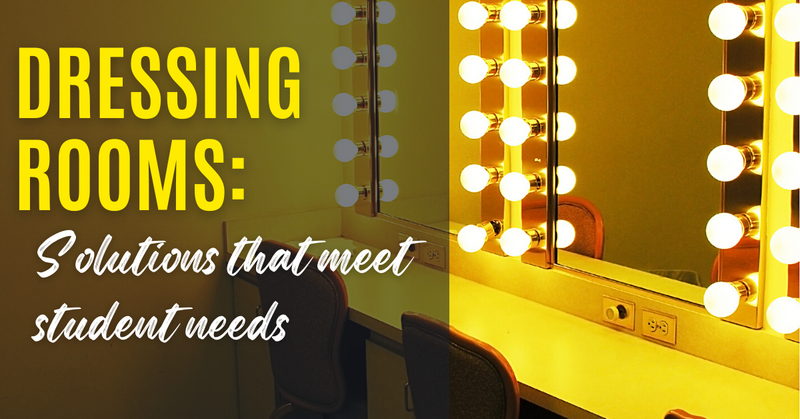
Dressing Rooms: Solutions that Meet Student Needs
Let’s talk about dressing room setups. When your students are getting ready for a show, are they comfortable with their changing facilities? Does your setup meet the needs of all your students? What’s your policy on student privacy?
There are many reasons why a student might need a different dressing room setup without being singled out in the process. You may have trans and non-binary students. You may have students who are uncomfortable changing in front of others because of modesty concerns or body image issues.
Many students need a private space to change, so put an option in place before it becomes necessary. Make the option commonplace and available to all students, regardless of their reason.
We went straight to the source to get the inside scoop from those who’ve been there: drama teachers.
We asked: When getting ready for a show, how do you make your actors comfortable and not single anyone out? How do you address students who want privacy for changing? What solutions have you tried?
Separate stallsI worked in a youth theatre that simply had one big dressing room area with several stalls for changing. (Picture the changing stalls when you try on clothes in a store.) It was great! Everyone had privacy to change and everyone was together in the dressing room area to do makeup and such. There was no need for binary male/female spaces. (Jennifer R.)
We’ve made these pop-up changing rooms available to anyone who would like to use them. (Laura M.)
Editor’s note: Need a simpler/cheaper solution? If you have drop ceilings, you can push sheets between the metal grid and the ceiling tiles to make your own pop-up changing room. You can also put a clothes hanger in the ceiling and hang a sheet off of it, or ask parents for pop-up shower tents.
Student choiceLast year one of our trans boys was met with a rapturous chorus from the other boys from their changing room announcing, “_____ your costume’s in here!” Our students have the option to change in the changing room of their choice and I make an announcement to the entire cast that the backstage bathrooms are available to anyone. What has worked for us is to give everyone the same message and not make trans kids feel any more segregated than they already may be. So no one-on-one chats, for instance. Just mutual respect. This works for us, and each year the number of trans kids participating has increased. (Georgina C.)
I typically have three dressing spaces (male, female, and gender neutral), and students are allowed to select whichever one they’d like. They’re also welcome to use the bathroom stalls if they want more privacy. All wig and makeup assistance is done in my black box space (so that people are going in and out of various dressing rooms). I have closed off areas backstage for costume changes if needed. (Heather C.)
If you have a trans person in your company it’s important that you don’t “out” them or make them identify publicly as trans if they choose not to. I worked on a show with a trans person who identified themselves to me as trans but opted not to reveal this to the company. They were happy in the shared dressing room of their identifying gender and wore base layers to avoid any need to change in front of anyone, although each dressing room has a private bathroom area. It also sparked us, as a theatre, to create a policy around transgender company members for the future so we have a careful and respectful process in place. The biggest and most helpful thing was asking this cast member to advise us about what they wanted/needed and following that carefully. We regularly checked in with them, usually over email, to keep their anonymity and to see if our plans were working and they felt supported. It worked well. (Sally G.)
I have a non-binary student. For a recent school performance, the students were given a survey to fill out asking their dressing room preferences: male, female, or gender neutral. The students’ survey responses were used to assign dressing room spaces. (Lynn K.)
Base layersEditor’s note: Be aware of students with body issues who may be uncomfortable being in their undergarments around others.
All kids are required to have an under layer — a neutral-colored tank top and slim-fitting shorts or leotard. (Rebecca D.)
My kids all wear “underclothes” (tank top and shorts/leggings) so any changes that need to happen can happen anywhere. They go to whatever bathroom to make the initial change, then that’s what they wear under costumes. (Andi C.)
In my youth theatre, everyone must be dressed in undergarments that allow for changing anywhere. Usually a dance liner or black tank top and spandex shorts. No issues. (Roberta W.)
Set a scheduleCurrently we have set dressing room times because we just block off a space in our costume shop. Anyone who is uncomfortable with that uses a bathroom. This works for gender and other possible modesty needs. (Shelby S.)
Finding non-traditional spacesA few years ago, we arranged for a student to use one of the private bathrooms in the main office as their changing room. (Jim D.)
We don’t have dressing rooms. We don’t judge anyone for where they dress. Some go in my bathroom, some dress backstage, some go in the student bathrooms. No one talks or discusses who goes where. Many of my students identify as trans or non-binary… respect is a norm. Not having dressing rooms helps this, I think. Nothing is identified and because there really is no privacy my students are told to wear underclothes like leggings and undershirts under their costumes and show up that way for comfort’s sake. (Wendi J.)
We are lucky that we have single-use bathrooms available in the backstage area. Wearing the underclothes is key as well. I allow students to arrive very early if they want to. (Joanne F.)
Get creative and innovative with makeshift dressing rooms. Any kind of tri fold partition will work. That way you don’t have to identify gender. It’s for anyone to use. It’s an option for everyone. (Cynthia W.)
I used to use the facility restrooms. I have a number of students who aren’t comfortable with changing in front of others, for modesty or body image issues. That’s not the best solution, but it’s another alternative. (Michael A.)
Disclaimer: Check with your administration and district policy on anything discussed in this article with regard to LGBTQ+ (LGBTQIA, LGBTQ2S), as laws vary from region to region.
Teaching Drama
The Importance of Pronouns
The Theatrefolk 2021–2022 Equity, Diversity & Inclusion Advisory Panel shares its thoughts on pronouns.
“I grew up with a mom and two sisters. There was a lot of female power. Growing up with that I felt feminine. As I grew older, and discovered about myself, sometimes in my look and the way I present myself, it’s ‘they’.” ~ Julie Z. (she/they)
*What are pronouns? *They act as a substitute for and often a short form of other nouns. When referring to people, they are used instead of a person’s name. There are gender-specific pronouns (He/Him and She/Her) and there are nonbinary pronouns (They/Them, Ze/Hir, Ve/Vir). There are also individuals who use a combination of pronouns (She/They). Note: This is by no means the entire list of pronouns!
It is an assumption that everyone wants to use gender-specific pronouns. It is an assumption that you can guess a person’s pronouns by looking at them or hearing their name, or that only some people choose their pronouns.
*Why are pronouns important? *If someone uses a gender-neutral pronoun, that means they’ve probably thought long and hard about it. They have determined that who they are inside, their identity, cannot be encapsulated by existing gendered pronouns. It is a measure of respect for that person to use their chosen pronouns, whatever they may be. There are a lot of pronouns out there, just as there are a lot of different identities out there. Pronouns are fluid. Some change their pronouns as they figure out who they are; some change their pronouns depending on who they’re talking to.
Should I ask, “What is your personal pronoun?” or “What is your preferred pronoun?”The best way to ask is “What pronouns do you use?” or “What pronouns should I use for you?”
For some, personal pronouns lean toward being gendered. Saying “these are my preferred pronouns” means those are the pronouns they want to use. Some use “preferred” pronouns because “personal” makes it sound like they’re private and not to be shared.
For some, “preferred” means there’s an option, as opposed to “these pronouns are the only ones that should be used.” To that end, they prefer “personal” pronouns.
Should I ask everyone their pronouns?Absolutely. But to be clear, everyone means EVERYONE. Do not single out students you assume are LGBTQ+ or who you think look like they would have a different pronoun. Never force someone to share their pronouns or question a student for what they share.
Normalize the act of sharing pronouns in your classroom culture. Make it commonplace to identify your pronouns and have a procedure in place for students to do so.
What if I misgender someone?It all comes back to respect. If your goal is to respect all of your students, do your best to use their chosen pronouns. Talk slower than you’re used to. Think about what you’re saying. And if you do misgender someone, don’t make the situation about you by exaggerating your remorse or making a long apology. Acknowledge it, correct yourself, and move on. As it is with everything in life, the more you practice the easier it will become. It takes time.
And if you see students misgendering others in your classroom, consider tactics for accountability. You want students to feel safe. Respecting a person’s identity is a big part of securing student safety.
How can I explain the importance of pronouns to someone?Inclusion is an important conversation. So why is it such a hard sell? Why is it easy for some to talk about supporting inclusion but not use a student’s pronouns when talking about them? Why is it hard to change a student’s name on the school roster so that a substitute teacher doesn’t use someone’s dead name? Some people are resistant to gender identity issues and avoid taking action that could help make a student feel safe and included.
How do you frame the importance of pronouns for these individuals? Here are some suggestions:
• Everyone wants their students to succeed. Using their chosen pronouns is conducive to students’ success.
• If a colleague emphasizes the importance of community in the classroom, say that not using a student’s pronouns demonstrates that not everyone is welcome in their community.
• SEL (social and emotional learning) is a hot topic. What better way to build relationships and show social awareness than to establish these inclusive and safe spaces?
• Emphasize that pronouns are part of a student’s identity. Gender identity does not equal sex. Body parts do not equal identity.
• Do you have a group or club for LGBTQ+ students? Have the student leaders come in and talk to your staff. It’s important to listen to the students’ perspectives, and see and hear how students want to be seen and heard.
• Make the nickname argument. We as a society have no problem when students (or anyone) want to be called by a different name than what is on the school roster:
• The roster says “Allison” but the student wants to be called Ally.
• The roster says “Amelia” but she goes by Minnie.
• The roster says “Robert” but no one has ever called him anything but Bud.
Why are we okay with these names — names that aren’t “official” — but we’re not ok with a name or pronoun they request?
• Demonstrate what it feels like. Say to your male colleague, “If I were to call you Miss Smith repeatedly, no matter how many times you corrected me, how would that make you feel?”
What else can I do?• Again, normalize talking about pronouns. The more it happens, the better.
• Put your pronouns in your email signature and Zoom profile name.
• If you use name tags, use ones with a place for a pronoun.
• Do something for International Pronouns Day (next year’s date is October 19, 2022).
• Be aware if a student only wants their pronouns used in specific environments (like your classroom).
Finally, it’s important to know that there are many pronouns. And they change. There’s no reason people shouldn’t be able to choose how they wish to be identified. Perhaps you won’t understand their choice. You don’t need to. But it’s up to you to welcome, to respect, to be open, and see what a difference that makes.
Disclaimer: Check with your administration and district policy about anything discussed in this article with regard to LGBTQ+ (LGBTQIA, LGBTQ2S), as laws vary from region to region.
*Terminology: *
L = Lesbian. Women sexually/romantically attracted to women.
G = Gay. Men sexually/romantically attracted to men.
B = Bisexual. People sexually/romantically attracted to their own and other genders.
T = Transgender. People whose gender identity differs from the sex they were assigned at birth.
Q = Queer/Questioning. An umbrella term with a variety of meanings. Used by some individuals who don’t identify as straight or cisgender and do not conform to traditional societal norms with regard to gender and sexuality, or who are questioning their sexuality or identity.
I = Intersex. An umbrella term. A person born with sex characteristics that do not fit binary definitions of male and female.
A = Asexual. People who feel little to no sexual attraction to others.
2S = Two-Spirit. An umbrella term used by some Indigenous people who identify as having both a male and female spirit.
Teaching Drama
LGBTQ+ Inclusive Questions for Your Beginning of the Year Survey
The Theatrefolk 2021–2022 Equity, Diversity & Inclusion Advisory Panel shares its thoughts on LGBTQ+ inclusive questions for your beginning of the year survey.
What strategies do you use to get to know your students at the beginning of the year or semester? Certainly you’ll learn about them from what they share in your class, how they approach assignments, and how they work with others. But there are some specific details that won’t come to light in the day-to-day routines of your class. A student survey can help you learn those details.
Potential questions can range from personal reflections to learning preferences. The answers will give you insight into your students’ goals for your class, what they want, and how they express their individuality. For example:
• What three words describe you best?
• What’s your favourite movie or book or song?
• What are you most proud of?
• What is your favorite way to learn?
But there are other key questions to consider, particularly for your students in the LGBTQ+ (LGBTQIA, LGBTQ2S) community. The answers to these questions are key to student safety and inclusivity. Student safety is extremely important. Inadvertently outing students to their peers, families, and/or other teachers may lead to bullying, abuse, etc.
Consider the following inclusive questions for your LGBTQ+ students:
• What is your name on the official school roster?
• What is the name you would like me to call you in class?
• May I use this name with parents and other teachers?
• What kind of experiences and stories do you enjoy seeing on stage?
• What kind of experiences and stories do you wish you could see more of on stage?
• What pronouns do you use?
• Note: Give examples with this question (he/she/they/ze/etc.). Sometimes a student might be wondering what they are. Give them a choice! Be sure to add etc. at the end of the list — there are always more pronouns out there.
• What pronouns should I use for you?
• Is there anything you would like to discuss with me regarding pronouns/names?
• Can I share this with substitute teachers?
• Who are the adults in your home?
• Is there anything I need to know about you to make your experience more comfortable or safe this year?
• Are there any daily traditions, routines, or habits that I should be aware of?
• Virtual students
• Do you work with or without headphones?
• Are you in a space by yourself or do you work with others around?
Note: This is not a document that you pull out when you assume you have an LGBTQ+ student. Don’t assume. Give students the opportunity to share that information with you. These questions should be normalized as part of your classroom procedures for getting to know your students.
Disclaimer: Check with your administration and district policy about anything discussed in this article with regard to LGBTQ+ (LGBTQIA, LGBTQ2S), as laws vary from region to region.
*Terminology: *
L = Lesbian. Women sexually/romantically attracted to women.
G = Gay. Men sexually/romantically attracted to men.
B = Bisexual. People sexually/romantically attracted to their own and other genders.
T = Transgender. People whose gender identity differs from the sex they were assigned at birth.
Q = Queer/Questioning. An umbrella term with a variety of meanings. Used by some individuals who don’t identify as straight or cisgender and do not conform to traditional societal norms with regard to gender and sexuality, or who are questioning their sexuality or their identity.
I = Intersex. An umbrella term. A person born with sex characteristics that do not fit binary definitions of male and female.
A = Asexual. People who feel little to no sexual attraction to others.
2S = Two-Spirit. An umbrella term used by some Indigenous people who identify as having both a male and female spirit.
General
Theatre Educator Profile: Julie
At Theatrefolk, we celebrate the theatre educators who share their stories and continue to make their classrooms and stages a warm and wonderful place for all students.
Julie Zatko is a Northwest Ohio based theatre director and educator. She is passionate about presenting new and bold works, juxtaposed with educating and creating theatrical opportunities for young thespians. For 13 years she held the position of theatre advisor for Rossford High School (Rossford, OH). While advisor, she directed a total of 38 productions ranging from classics to family musicals. Three of her productions were chosen as full length features for the Ohio EDTA Theatre Conference.
She is currently involved with the The Toledo Repertoire Theatre, where she has directed main stage (Fun Home, A Gentleman’s Guide to Love and Murder) and Young Rep (West Side Story, The Crucible, All Shook Up) productions. She holds a seat on their Education Committee, and frequently teaches Young Rep acting/directing/playwriting/improv classes. She is currently directing Godspell for The University of Findlay. She holds a BA in the Arts (The University of Toledo, 2000).
1. What was it like for you as an LGBTQ+ teen?
Like every other teen, with some anxiety , show tunes, glitter, and coping mechanisms to boot. It was a rollercoaster of emotions. Scared anyone would find out. Unsure of relationships when they found out the truth about you. Confusion at the overwhelming tsunami of feelings you had. Relief when you found your support. Excitement when you finally found “the one”, fully realizing what was right in your world. Growing up in this world is hard enough. In this day and age we must recognize the importance of individual growth, support, and building a healthy generation that is able to progress.
2. What’s important to you in terms of supporting LGBTQ+ teens today in your classroom?
Visibility. Understanding. Respecting their pronouns. Our young students are more advanced than we realize. Many have a strong idea of who they want to be, and how they want to get their. Guidance is important. Even though they have an idea of who they are, materials and personal recognition will only help them make smart decision for their future. Lastly, make sure they feel included. Seeing themselves in your curriculum will make them feel a part of your program. Taking that extra time can do more good than you realize.
3. What is one thing you’d like to change in the drama classroom in terms of LGBTQ+?
Its simply more inclusion. Showing every student the LGBTQ+ community existed way before they walked in your classroom. Share history. Names, plays, works of art, etc. Solidify that we exist, and our work is immeasurable.
4. What is something you want to share with teachers who have LGBTQ+ students?
First off, if you are a part of the community, and live authentically, you are doing more than you realize by just being there. Many students have shown up because they knew “I was like them”. Even without saying it, they know, and they are really excited by you, and your support. I don’t need to tell anyone the word is drastically changing. Even in the last few years students have let it be known the importance of pronouns, and what they want to be called. They are communicating feelings we have to hear. Be there. Hear them. Work with them to make the space inclusive, positive, and nurturing. They are the future, we just have to make sure they have one.
General
Theatre Educator Profile: Jimmy
At Theatrefolk, we celebrate the theatre educators who share their stories and continue to make their classrooms and stages a warm and wonderful place for all students.
Dr. Jimmy Chrismon is a theatre educator with 17 years of experience in the public schools of North and South Carolina. He currently teaches full time as an Assistant Professor of Theatre Teacher Education at Illinois State University. He was an adjunct theatre faculty member at Winthrop University and Central Piedmont Community College. He has also worked for The Children’s Theatre of Charlotte and The Lake Norman School of the Arts. He has acted, directed, designed, and produced professionally for 24 years. He received his Bachelor of Arts Degree in Theatre Education from The University of North Carolina at Charlotte where he was a North Carolina Teaching Fellow. He received his Master of Education Degree in Theatre Education from The University of North Carolina at Greensboro. He completed his Doctor of Education Degree in Curriculum and Instruction from Gardner-Webb University. His dissertation was entitled “A Study of Theatre Teacher and School Administrator Perceptions of Traits, Characteristics, and Instructional Practices and Their Possible Role in Teacher Evaluation.” His current research focuses on trauma informed directing practices in the theatre classroom. He is the creator and host of THED Talks Podcast.
He currently resides in Bloomington, Illinois with his husband, three children, and multiple fur babies. His professional affiliations include The American Alliance for Theatre Education, The Illinois Theatre Association, The Southeastern Theatre Conference, and The Educational Theatre Association.
1. What was it like for you as an LGBTQ+ teen?
As a gay teen I was heavily involved in church where my identity as a gay man was shunned. It was something to be ashamed of and hide. I dated girls, but it never felt right. There was only one out gay person at my school, who I didn’t think I could be friends with so I avoided him. Even going into college, there were few out queer individuals in our theatre department. I went through conversion therapy and endured the consequences and aftermath of that practice until I stopped going and began to embrace that part of me with the help of friends and teachers.
2. What’s important to you in terms of supporting LGBTQ+ teens today in your classroom?
In terms of supporting LGBTQ+ teens, when I was in the classroom as a high school theatre teacher I wanted my classroom and rehearsal space to be one that students felt loved and celebrated. It was and is important to me that my student know they are loved exactly as they are, right here and right now. I wanted my students to feel seen and represented in the work we did, with the scripts on my shelves, and posters in my room. I never tolerated language that could hurt my queer students. I was a fierce advocate for them. I never felt safe being an out teacher in SC, but my students knew they had an ally in me. In the work I do now, that hasn’t changed. I simply adjusted my lens to college undergraduate students preparing to teach theatre. Every course I have deals with DEIA topics in theatre education, and I don’t shy away from the LGBTQ+ topics, nor do I shy away from being my authentic self with my students. For me that is further representation that I did not have in my theatre teacher training.
3. What is one thing you’d like to change in the drama classroom in terms of LGBTQ+
One thing I would like to change in the drama classroom in terms of LGBTQ+ topics is the representation of real and authentic queer characters in the plays available for educational theatre. I am not speaking of plays that focus on a LGBTQ+ character or topic, but simply have characters who happen to be LGBTQ+. I also think stronger representation of transgender and non-binary characters is so badly needed in theatre in general, but specifically in educational theatre.
4. What is something you want to share with teachers who have LGBTQ+ students
I want teachers to know we have an awesome responsibility and privilege to meet our students where they are. We get to know them better than most teachers in the school. We experience and explore emotions with them because they trust us. We must create spaces where they get to be their authentic selves and where their authentic selves are celebrated. Along the same lines, is to be understanding and accepting of the fact they are children and they shouldn’t have their lives figured out yet. They may explore their identity and go through many iterations of who they are as they discover that. Be present with them. Also, it is imperative to know your community norms and work within those norms. You can still be an ally in a super conservative area, it just may look different than in a more progressive area. Nonetheless, your LGBTQ+ students, whether they are out or they don’t feel safe enough to be out, see you. They look to you. They need you.
General
Theatre Educator Profile: Cynthia
At Theatrefolk, we celebrate the theatre teachers who share their stories and continue to make theatre and the classroom a warm and wonderful place for all students.
A veteran teacher of 26+ years, Cynthia is a current high school theatre teacher, Thespian club sponsor, SAGA club sponsor and parent to three LGBTQ+ children.
“After putting up the show “She Kills Monsters,” and becoming a sponsor of our school’s SAGA club, my Southern Baptist church “home” called me in to “question” me regarding my “motives” and my teaching in my public school job. I immediately removed my (and my children’s) membership. After this, my youngest child felt comfortable enough to come out to me as transgender (AFAB). I am still very much in the midst of my deconstruction as I work to learn as much as I can and be as supportive as possible of my personal children as well as my LGBTQ+ students.”
1. What’s important to you in terms of supporting LGBTQ+ teens today in your classroom?
• RESPECT: NOT using their dead name (providing instructions so that SUBS don’t use their dead name either; using correct pronouns).
• Providing them with a safe space to express themselves.
• Allowing them to see themselves and/or characters that represent them both in plays/literature and on stage.
2. What is one thing you’d like to change in the drama classroom in terms of LGBTQ+
Freedom to utilize LGBTQ+ materials/topics without having to be “censored” and without having to provide 30 day in advance written notice to allow the option of “opting out.” This completely hampers my ability to have “teachable moments.” It also makes me paranoid when doing improv activities or sharing student-created writing — if a student brings up an LGBTQ+ subject and someone complains, will I be legally liable? I would love to see theatre teachers unite against such anti-LGBTQ+ legislations and actually have legal representation for us to prove that this is detrimental to both our students and our teaching.
3. What is something you want to share with teachers who have LGBTQ+ students
Regardless of whether or not you “understand” or “agree with” multiple genders or other LGBTQ+ issues, it is your responsibility and mandate as an educator to show respect and compassion to our LGBTQ+ students. Even when you make mistakes, most LGBTQ+ truly appreciate that a teacher is “trying.”
It is also important to seek out training for inclusivity/respecting diversity beyond what is offered at your school (if anything).
Teaching Drama
Current Events: Diversity in Theatre Lesson
The following lesson was created for students to discover, appreciate, and display respect for diverse, real-life issues and events in the theatre world. It can be done live in class, assigned as homework, or as part of distance learning. You may wish for students to submit this as a written assignment or create an oral presentation from the information.
Instructions:1. Students will complete an online search for a current event in the theatre world where diversity is the focus. This event could be expressed as a written article, a podcast, a video, or another news source.
Topics might include casting choices, opportunities for transgender and nonbinary actors, LGBTQ+ issues in theatre, lack of diversity in current shows being performed, opportunities for performers with disabilities, representation in current theatre productions or in playwriting, diversity in technical and artistic staff roles (not just actors), successes of and accolades for diverse theatre-makers, neurodiversity in theatre, and so on.
Here are some notable events in the last few years that might help get your students on track:
• Brittney Johnson was the first Black woman to be cast as Glinda in Broadway’s Wicked, which premiered in 2003 (2020).
• Ali Stroker was the first performer who uses a wheelchair to win a Featured Actress Tony Award, but had to be seated backstage during the category presentation and could not join her castmates onstage during their Best Revival of a Musical win because there were no ramps available in the theatre (2019).
• Mj Rodriguez, a Black, transgender actress, was cast as Audrey (traditionally cast as a white, cisgender actress) in Little Shop of Horrors at the Pasadena Playhouse (2019).
• Beaumaris Theatre (Australia) canceled their production of Little Shop of Horrors after accusations of whitewashing (2021); this follows a similar incident when a different Australian company cancelled their production of In the Heights due to the same complaints (2017).
If students are having difficulties finding articles specifically about theatre, you may wish to permit them to include events in television or film as well.
2. Have students respond to the following questions as either a written response or a oral presentation:
• What event did you choose and why? What format is your event expressed in (written article, podcast, video, or other news source)?
• Identify the main focus of the author(s). What is the heart of the issue being presented? Summarize it in your own words in one sentence. Why is this topic important?
• What is the tone? Is it informational, inspirational, biased, accusatory, critical, uplifting, gossipy? What do you think the author’s intention is, based on the way they presented the information? Is it effective? Why or why not?
• Is there a call to action? Consider how the information brings awareness to the issue in the theatre world going forward, or how the issue could have been improved or fixed. If there isn’t a call to action, create one. What do you think it could be?
3. Discuss afterward. What did students learn? What surprised them? What could students do in the classroom or upcoming productions to address the issues raised?
General
Theatre Educator Profile: Michelle
At Theatrefolk, we celebrate the theatre educators who share their stories and continue to make their classrooms and stages a warm and wonderful place for all students.
Michelle (she/her) has been an out and proud middle-school theatre teacher in Wake County, North Carolina since 2014. She acts as an advocate for diverse students through her work on the school Equity team and as an advisor to the student-led SAGA (Sexuality And Gender Alliance) group. At home, she enjoys spending time as a single mom with her 4 year old (AMAB) son, and as a partner to her girlfriend.
1. What was it like for you as an LGBTQ+ teen?
Growing up I had no idea I was different in any way other than being the weird theatre kid. I assumed because I wasn’t interested in boys my age that I was just more mature than them. Also, I thought I was being realistic about the future, or lack thereof, a high school relationship would have. Coming from a smaller town, there was zero representation from adults in my schools, and the familial adults in my life grew up in a time when, if you did identify as queer, and even if everyone knew it, it just wasn’t talked about. So when I did finally realize my attraction to the (predominantly) same-sex, it was a bit shocking, not only to the people around me, but to myself as well. It made life more challenging in some ways, but it also made a lot of sense. Even at a young age, I was the kid in the room challenging my Sunday school teacher about why LGBTQ+ people weren’t going to get into heaven, not to mention many other seemingly-divisive moral code’s handed down to me through the adults in my life. It was lonely not realizing the part of my identity that has now helped me to connect more fully as a person, not only to a welcoming community, but also to the people in my life with whom I have experienced love.
2. What’s important to you in terms of supporting LGBTQ+ teens today in your classroom?
My number one goal in my class is to make sure that every student who enters my room can find a space that is welcoming, different, and safe. I want student’s to feel as if they have an adult in their world that can act as an advocate and support system, and who is a role model for LGBTQ+ kids so that they can see a future as an out and proud adult living and working in the world. Too many queer students find themselves trapped in a cycle where they think the trauma they are experiencing now, when they have little control over their lives, will never end. And because of that, they self-harm or worse. They have no idea that it actually can get better. I want to be the catalyst for positive change in the potential of every student. If I can help one student through as they explore identities, I feel like I’ve done my job.
3. What is one thing you’d like to change in the drama classroom in terms of LGBTQ+
I would love to see more mainstream shows have the ability for characters to be either gender or gender non-conforming, without it being all about that character. “Normalizing” queer characters in every story being told would be a huge step in visibility within the theatre community and the public at large. Having a character’s gender not matter enough to the storyline to make a huge difference if it can be the director’s choice from school to school. Not that I don’t love queer-centered stories, but I think we rely on them too heavily to be the only source that fills the “diversity” quota in theatre. Queer-centered stories are still very important towards understanding the lives of LGBTQ+ people, but unless we can integrate them into all stories without a second-thought, we’ve not completed all our goals. Students struggle with seeing themselves as character’s in a show, which makes them hesitate to audition for roles. Or they would like to change a character’s gender to align with their own, but are unsure if the director would be open to the idea. These dilemmas often exclude, by their own choice sometimes, students from participating in theatre when they otherwise might have.
4. What is something you want to share with teachers who have LGBTQ+ students
I want to be blunt: It isn’t about you. Let me repeat: It isn’t about YOU. Your personal ideas or opinions on identity and sexual preference should not influence your ability to embrace and connect to every child who walks through your classroom door. Please stop equating gender and sexual preference with sex. It’s not “inappropriate” to talk about, and by making it seem that way, you are potentially harming many students. Student’s know who they are and who they want to love, and for those student’s still exploring aspects of their identity, the dismissal of these things can make it that much harder for them to accept and embrace themselves. And taking it a step further, you have kids who do not identify anywhere within the LGBTQ+ community who have family members, moms, dads, siblings, cousins, who do fall somewhere in that spectrum. No one is asking you to publicly announce your support in a huge parade. You can disagree with the concept without disparaging students’ identities and families. Because it isn’t about you. It’s about helping young people grow into responsible, moral humans for our future.
Teaching Drama
Be human, open, and honest: Using BIPOC material in the classroom
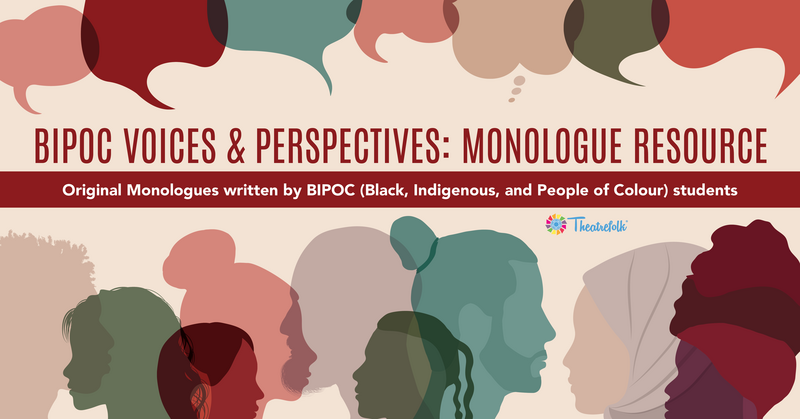
Our 2020-2021 Equity, Diversity & Inclusion Advisory Panel shares some thoughts on using BIPOC material (like the monologues in the BIPOC Voices and Perspectives Monologue Resource) in the classroom. And if you’re not, consider the reasons why. What’s stopping you? How can you overcome those obstacles?
1. Do your research.Do your dramaturgy. If you’re going to use BIPOC material, take care of those characters and those who write from that perspective. Research the background. Research unfamiliar words, phrases, and events. Know what you’re talking about before you talk about it.
2. Ask for help.Don’t be afraid to ask for help. Be okay with not knowing all the answers. Come from a place of honesty. If you’re uncomfortable working with BIPOC material, bring someone in to talk to your students. Reach out to others.
3. Be student centred.Be a student-centred teacher. The era of the “sage on the stage” is over. Give students agency in what they learn and how they learn it. If you teach a community of students that differs from your own, that community should have a focus in your curriculum. For example, perhaps you usually invite theatre professionals in to talk to your students. Make space for a BIPOC stage manager, director, designer, or actor.
4. Be open minded.Some people are uptight when it comes to conversations about race. Many people are afraid of their own stereotypes and preconceived notions. But the worst thing you can do is ignore the identities of your students. Don’t be afraid to take on bilingual material because you don’t speak the language. Actively model anti-racist behaviour and be open to deprogramming yourself in that regard. Start from a place of truth. Acknowledge when you make a mistake. Address how you can get past these obstacles.
Everyone’s stories are important. Sit back. Listen. Don’t bring negative energy. Ask for help. Be human, open, and honest.
Teaching Drama
Plays & Musicals for Pride Month
If you’re looking for plays and musicals to include in your drama classroom library, look no further — here are 42 plays and musicals featuring LGBTQ+ characters, stories, and themes. Introduce these plays and musicals to your students, read them as a class, and check out performances of them (many have filmed or movie versions).
If you’re looking to perform a play with your students, be sure to check out the plays from Theatrefolk listed here — they’re perfect for high school students. And check out the other plays by our Theatrefolk LGBTQ+ authors on our site!
Plays from Theatrefolk featuring LGBTQ+ Themes and CharactersFrom our very own Theatrefolk catalogue, these plays are fabulous for high school students to study and perform. Some even come with free classroom study guides.
1. Completely, Absolutely Normal: Vignettes About LGBTQ+ Teens by Bradley Walton (Free Classroom Study Guide available!)
Ten interconnected vignettes with LGBTQ+ themes.
2. Red Tee by Lindsay Price (Free Classroom Study Guide available!)
A vignette play that examines questions of identity and what happens when someone doesn’t fit in the way they’re expected to.
3. Bungee Jump Bear Trap by Lindsay Price
A vignette play about taking risks and figuring it all out.
4. Life, Off Book by Scott Giessler
Jeb is Ophelia’s fake boyfriend who is also a closeted gay man. What happens when Jeb and Ophelia have to lose the script and live life off book?
5. Pandemic Pancake by Lindsay Price
Characters decide, for good and for ill, how they will respond to this evolving new world.
6. Anonymous by Allison Green
The story of every teenager — it’s hard to be an individual when you’re trying to fit in.
7. Baalzebub by Rachel Atkins
A group of girls is abandoned at a refugee camp in an unnamed war zone and are forced to survive together. A response to the classic novel Lord of the Flies.
8. Finding Jo March by Laramie Dean
You should know right away that this is not a traditional adaptation of Little Women.
9. Moonbow Miraculous & Moonbow Miraculous: Competition Length Version by Kirk Shimano
If someone has a secret they’ve been clutching to their heart, the moonbow’s glow will give them the courage to share their true selves
10. The Pretty Princess Dollhouse for Pretty Princesses by Emma Fonseca Halverson
Gabi is suffering from metaphoric asthma. The walls are closing in and she can’t breathe.
11. Characters Behaving Badly by Lindsay Price
This vignette play asks students to look at the concept of what it means to be “good” and “bad.”
12. Passing Period Purgatory by Christian Kiley
Sometimes the hardest part of school is getting from one class to the next.
13. Thought Traps by Lindsay Price
Ariane and Kate deal with people from their past who invade their head space. Will either be able to set themselves free?
14. 6ft Scenes by Lindsay Price
A collection of 15 scenes in which no two characters get within 6ft of each other.
As well, be sure to check out these Theatrefolk playwrights: Laramie Dean, Emma Fonseca Halverson, Bradley Hayward, Kirk Shimano and Bradley Walton.
Musicals Featuring LGBTQ+ Themes and CharactersComing to you from Broadway and Off-Broadway, these musicals are packed with amazing songs and important themes.
1. Head Over Heels, book by Jeff Whitty, adapted by James Magruder, music and lyrics by The Go-Go’s
A kingdom is threatened, unlikely lovers unite, and gender-fluid disguises are donned in a musical that preaches unconditional love and acceptance of everyone, no matter their gender or sexual identity.
2. Fun Home, by Lisa Kron and Jeanine Tesori, adapted from Alison Bedchel’s memoir
Alison, an author and lesbian, reflects on her journey to discover and accept her identity, as well as her relationship with her father (a closeted gay man).
3. The Color Purple, book by Marsha Norman, based on the novel by Alice Walker, music and lyrics by Brenda Russell, Allee Willis, and Stephen Bray
Celie, a teenage African-American girl living in Georgia, is given by her abusive stepfather to an even more abusive husband. Over the years, Celie finds ways to cope with life, including finding a potential lover in the fabulous Shug Avery.
4. La Cage aux Folles, book by Harvey Fierstein, music and lyrics by Jerry Herman
Georges (owner of the La Cage aux Folles nightclub) and his partner Albin face the hardest challenge of their twenty-year relationship: meeting their son’s fiancee’s ultra-conservative, anti-gay parents.
5. Kinky Boots, book by Harvey Fierstein, music and lyrics by Cyndi Lauper
Charlie Price teams up with drag queen Lola to save his failing shoe factory, and in the process, discovers that they aren’t so different after all.
6. Hedwig and the Angry Inch, book by John Cameron Mitchell, music and lyrics by Stephen Trask
Genderqueer rock singer Hedwig Robinson shares her story — including the tale of her botched gender reassignment surgery — with the audience through monologues and rock songs.
7. Rent, book, music, and lyrics by Jonathan Larson
Follows the ups and downs of a year in the life of a group of impoverished, artistic friends living in the East Village of Manhattan in the late 1980s, under the shadow of HIV/AIDS.
8. Bare: A Pop Opera and Bare: The Musical, book by Hartmere and Intrabartolo, music by Damon Intrabartolo, lyrics by Jon Hartmere
Peter and Jason, students at a Catholic boarding school, have fallen in love with each other, but Jason — a popular athlete — fears losing his status if he is discovered to be gay.
9. Spring Awakening, book and lyrics by Steven Sater, music by Duncan Sheik, based on the 1891 German play _Spring Awakening _by Frank Wedekind
In late 19th century Germany, with only each other for guidance, a group of young men and women travel the rocky path of adolescence, discovering their bodies, their sexuality, their minds, and themselves along the way.
10. The Boy from Oz, book by Nick Enright, revised book by Martin Sherman, music and lyrics by Peter Allen
A musical telling of the story of Australian entertainer Peter Allen, from his humble beginnings, to his rise to fame, to his marriage to Liza Minelli, to the crumbling of their marriage due to Allen’s homosexuality, to his final concert before his death from AIDS.
11. The Prom, book by Bob Martin and Chad Beguelin, based on an original concept by Jack Viertel, music by Matthew Sklar, lyrics by Chad Beguelin
Four struggling Broadway stars team up to help Emma Nolan have the prom of her dreams with her girlfriend, despite the actions of the homophobic PTA.
12. The Louder We Get (previously titled Prom Queen), book by Kent Staines, lyrics by Akiva Romer-Segal, music by Colleen Dauncey
Based on the true story of Marc Hall, a gay Canadian teenager whose legal fight to bring a same-sex date to his Catholic high school prom made national and international headlines in 2002.
13. Falsettos, book by William Finn and James Lapine, music and lyrics by William Finn
In 1970s New York, Marvin and Trina’s perfect family is broken apart when Marvin leaves Trina for a man named Whizzer.
14. Witness Uganda (previously titled Invisible Thread), book, music, and lyrics by Matt Gould and Griffin Matthews
Based on the true story of Griffin Matthews. Matthews travels to Uganda for mission work after being kicked out of his church choir when the pastor discovered he was gay.
15. A Man of No Importance, book by Terrence McNally, music by Stephen Flaherty, lyrics by Lynn Ahrens
Alfie and his amateur theatre group are determined to stage a controversial play at their local church. In the process of fighting for the play, Alfie is forced to confront his own homosexuality and share his true self with those around him.
16. Priscilla, Queen of the Desert, book by Stephan Elliott and Allan Scott, music and lyrics by various artists
Drag queens Tick and Adam and transgender woman Bernadette travel across Australia in their bus named Priscilla.
17. Zanna, Don’t! by Tim Acito, additional lyrics and material by Alexander Dinelaris
Set in Heartsville, USA, a city where homosexuality is the norm and heterosexuality is taboo. At Heartsville High, Zanna plays matchmaker and brings happy couples together, but heterophobia strikes when a pair of opposite-sex high schoolers discover their feelings for each other.
18. Jagged Little Pill, book by Diablo Cody, music by Alanis Morissette and Glen Ballard, lyrics by Alanis Morissette, with additional music by Michael Farrell and Guy Sigsworth
The seemingly-perfect Healy family, including parents MJ and Steve and teenage children Frankie and Nick, struggles with challenges including addiction, sexual identity, and the pressure to keep up appearances.
19. My Mother’s Lesbian Jewish Wiccan Wedding, book by David Hein and Irene Sankoff, music by David Hein
From the creators of Come From Away and based on Hein’s real family, David reflects on his mother coming out when he was 13, after divorcing David’s father, discovering Judaism, and falling in love with a woman who practices Wicca.
Plays Featuring LGBTQ+ Themes and CharactersDramas, comedies, award-winners, and more.
1. She Kills Monsters by Qui Nguyen
After the death of her sister Tilly and discovery of Tilly’s game scenario notebook, Agnes Evans delves into the world of Dungeons & Dragons to understand and grieve her sister.
2. The Laramie Project by Moisés Kaufman and members of the Tectonic Theater Project
In 1998, university student Matthew Shepard was tortured, robbed, and murdered for being gay. The murder was deemed a hate crime. In the aftermath, the Tectonic Theater Project travelled to Laramie, Wyoming and interviewed hundreds of subjects both directly and indirectly related to the case.
3. Almost, Maine by John Cariani
On one cold and magical midwinter night, the citizens of Almost, Maine experience love, loss, and the life-altering power of the human heart. One of the most produced plays in North American high schools.
4. Angels in America: A Gay Fantasia on National Themes by Tony Kushner
A two-part, seven-hour, Tony-winning epic play primarily focusing on a gay couple from New York, with other intersecting storylines.
5. The Boys in the Band by Mart Crowley
A group of gay men gather at Michael’s home to celebrate their friend Harold’s birthday. Michael’s friend from college, Alan, unexpectedly arrives, who has no idea that Michael or any of his friends are gay.
6. HIR by Taylor Mac
After a dishonorable discharge from the military, Isaac returns home to discover his father has suffered a stroke, his sibling Max has come out as transgender, and his mother is ready to educate Isaac about the new post-gender world (while unknowingly appropriating Max’s experience).
7. The Normal Heart by Larry Kramer
Passionate and confrontational activist Ned Weeks campaigns for awareness about an unidentified disease (HIV/AIDS) that is killing gay men in New York City, while tending to friends and lovers who are dying all around him.
8. As Is by William M. Hoffman
Released shortly before The Normal Heart, Rich decides to return to his ex-partner, Saul, after contracting AIDS from his new lover. Seeking care, Rich reveals how doctors, family members, and friends reacted to people with AIDS.
9. The Shadow Box by Michael Cristofer
Three different people, all dying of cancer, live out their final days in homey hospice cottages, and are interviewed by a psychiatrist for a psychological project.
Teaching Drama
Creating a Safe Space for Your LGBTQ+ Students
In 2021, you would think we’d be at a point where inclusivity and acceptance are the norm. However, LGBTQ+ students are still frequently the victims of bullying, harassment, and discrimination, and are often made to feel alone, uncomfortable, scared, or unsafe in school. In drama class, we ask our students to open themselves up and take risks every day. This can be difficult for students who feel that just being themselves is risky. We say drama class is a safe space but for some students, no space feels safe.
Let’s help our students feel comfortable and safe in our drama classrooms. Read on for some tips and ideas for creating a safe space for your LGBTQ+ students.
1. Stay up to date on current issues and terminology.This is particularly important if you do not identify as LGBTQ+ yourself. Language is ever-evolving. Do you know what the acronym “LGBTQ+” stands for? Start there! Listen to your students, and take it upon yourself to learn. Stay up to date with issues and changes in the LGBTQ+ communities. Familiarize yourself with signs and symbols used in LGBTQ+ culture. Check your own language. Avoid heteronormativity (the assumption that the “default,” “preferred,” or “norm” is heterosexual/straight), consider your own biases in relation to LGBTQ+ concerns, and learn about things like the differences between gender and sex, and pronoun usage.
Click here for some introductory information about pronouns in the drama classroom, andthoughts on gender and casting.
2. Be a visible ally to your students.Try hanging a rainbow flag in your office, displaying a safe space poster or sticker in your drama classroom, or wearing a rainbow pin. This lets students and other faculty members know you are supportive, and that anti-LGBTQ+ language or bullying behaviour will not be tolerated. Even if your students don’t say anything directly to you about it, knowing that you are an ally may be helpful or comforting to them.
3. Study LGBTQ+ topics in your curriculum.Representation is important. To this end, read and perform plays featuring LGBTQ+ characters and written by LGBTQ+ playwrights. Show examples of LGBTQ+ performers, and encourage students to write about topics that are relevant to them. Be inclusive in your choice of source materials. Check out plays such as Completely, Absolutely Normal: Vignettes about LGBTQ+ Teens by Bradley Walton, available from Theatrefolk.
4. Be available to your students.You may have students who approach you in clear-cut ways. They may come out to you, confide in you, or ask you direct questions. You also may have students who test the waters first. They might show you a photo of a transgender performer, mention a pride item they purchased recently, or drop a term such as “two-spirit” into a conversation. How you respond to those students is important; they’re watching and listening to your reaction to see if you’re someone they can trust. Observe and respond genuinely. Students can sense a fake or insincere reaction a mile away. Show interest, ask questions (as appropriate — don’t interrogate the student or expect them to educate you), and listen, listen, listen.
Teaching Drama
Pronouns in the Drama Classroom
Respect and inclusivity are vital in the drama classroom. One way to demonstrate respect and inclusivity is to use students’ personal pronouns correctly. How does a person wish to be referred to in the singular third person in the English language? This includes (but is not limited to) he/him, she/her, they/them, ze/hir, and no pronoun (use my name). Some people use multiple pronouns (she/her and they/them, for example).
You can’t assume what someone’s pronouns are just by looking at them, by what their name is, or by what they’re wearing. As well, pronouns are not necessarily indicative of a person’s gender or other identities. We want our students to be comfortable expressing themselves, and using a student’s preferred pronouns helps foster a more inclusive environment in your drama classroom. Read on for three tips to help you incorporate this inclusive language into your classroom, whether it’s in-person or online.
1. Introduce yourself.Start your class with introductions: “Hi, my name is Mr. Taylor, and my pronouns are he/him.” That shows students that you are aware of the concept of pronouns, that you are open to sharing your own pronouns, and that they can share theirs in your classroom. There’s even a gender-neutral honorific: “Mx.” (pronounced “mix” or “em-ecks”), for those that prefer a gender-neutral title.
When preparing for an upcoming production, you can also include a section for pronouns on audition forms in the personal information portion: Name, Age, Grade, Pronouns.
2. Group considerations.Rather than addressing your students by phrases such as “good morning boys and girls” or “ladies and gentlemen, may I have your attention?” choose gender-neutral terms such as “students,” “people,” “friends,” “everyone,” “loyal subjects” – well, maybe not that last one, but you get the idea! Be conscious of your words when referring to groups of people. Even seemingly casual phrases like “what are you guys up to?” have gender-specific connotations. As well, avoid dividing students into groups by gender (“girls will work on Scene 1 and boys will work on Scene 2”).
3. Educate yourself.The website www.mypronouns.org is a fantastic resource and a great place to start for more information about personal pronouns. You’ll also want to learn more about gender identity terms such as gender expansive, transgender, cisgender, agender, genderfluid, non-binary, and genderqueer. The website https://pflag.org/glossary is another great resource for learning terminology.
If you make a mistake and use incorrect pronouns for one of your students (this is called misgendering), apologize, and be sure to use the correct pronouns going forward. Find out if the student would like you to use that moment to educate others (for example, explain to the rest of the class what happened, how to use correct pronouns, and why) or just leave it. Each person’s reaction will be different.
Look at films, television shows, and other media to see representation of people using personal pronouns, and how they do it. For example, in the show The Chilling Adventures of Sabrina, the actor Lachlan Watson (who is non-binary and uses they/them pronouns) plays Theo Putnam, a transgender boy (previously “Susie”) who uses he/him pronouns. As well, learn more about plays and musicals that deal with gender identity and use of pronouns, such as Head over Heels by Jeff Whitty and James Magruder, Hedwig and the Angry Inch by John Cameron Mitchell and Stephen Trask, or Hir by Taylor Mac.
Please be aware that there is no universal agreement on terms relating to gender identity and pronouns. Language is always evolving. However, continually educating ourselves on these matters will help us support our students and help them feel safe and respected in the drama classroom, exactly as they are.
Diversity
Theatrefolk Featured Play: Life, Off Book by Scott Giessler
Welcome to our Featured Play Spotlight. If you’re looking for a show with a flexible cast and great opportunities for ensemble work then prepare yourself for Life, Off Book by Scott Giessler.
In this movement-based drama, Ophelia and Jeb have a relationship that’s like a well-built theatre set. It looks great on the outside, but an empty shell on the inside.
Ophelia is a phenomenal dancer and actress who’s constantly afraid. Jeb is Ophelia’s mild mannered fake boyfriend who is also a closeted gay man. What happens when they have to tear themselves away from the script and live life off book?
Why did we publish this play?
As our submissions manager Nick Pappas said when he recommended this play “It gives me the feels.” Life, Off Book is a play that has a lovely blend of character journey, artistic imagery (if you’re inclined there’s opportunity for music and dance), and a heart felt message. It’s a play teens should be in, should see, should experience.
Let’s hear from the author!
1. Why did you write this play?
I work with many students that are slowly working their way out of the “closet” and go through many of the things the show covers. I also know many students who are afraid of real relationships. I wanted to create a story that handled this subject matter in a way that did not feel preachy or whiny and would give them a sense of confidence for who they are. I also wanted to create a show that would highlight the arts community of a high school that was not cartoonish or cliché in the way that so many TV shows or movies do.
2. Describe the theme in one or two sentences.
It’s important to live your life with love and hope; not fear. You only really start living a worthwhile life when you put away your fear and let the chips fall where they may.
3. What’s the most important visual for you in this play?
I love the moment that Ophelia peels the facades off of the set pieces.
4. If you could give one piece of advice for those producing the play, what would it be?
Look to find what’s real in this story to you. Make this your world, and make these characters and narrators people you know; and don’t be afraid to present this subject-matter. It’s 2018, and this is your world now.
5. Why is this play great for student performers?
Thanks to the exhaustive workshopping with high school students, the dialogue and story are very relevant, clever, and very engaging. It’s real but not too heavy. There are a variety of personalities for actors to connect to. It also highlights a lot of different kinds of talents if you have dancers or musicians.