đŁSCRIPT SALE! Treat yourself to an easier Fall. Save 30% on 5+ perusal scripts with code SPRING30 before May 3 and head into summer stress-free.
Experimental Form
Featured Plays
Theatrefolk Featured Play â Sixteen in 10 Minutes or Less by Bradley Hayward
*Welcome to our Featured Play Spotlight. * Being sixteen isnât easy. Choosing a play collection that illustrates the ups and downs of being sixteen is. Sixteen in 10 Minutes or Less by Bradley Hayward is a collection of plays that can be performed as a full-length evening of entertainment, or as one or more stand-alone plays that stand perfectly well on their own.
The lives of seven teenagers become intertwined in this humorous and oftentimes bittersweet collection of ten minute plays. From extracting a gummy bear out of a new set of braces to coping with bullies, these characters share their innermost hopes and fears with each other, ten minutes at a time. As the audience drops in on these intimate moments, they will come to understand that being sixteen isnât always easy.
Why did we publish this play?
We adore a flexible play here at Theatrefolk. This play is a suite of 10 minute plays on what itâs like to be 16 that can be done individually or all together for a full evening of theatre. We also adore well written three dimensional characters which Bradley Hayward is exceptional at creating. Itâs so easy to short change or stereotype teen characters. Bradley offers a wealth of multi-faceted personalities who face the sweet and bittersweet of teen life.
Letâs hear from the author!1. Why did you write this play?
I wanted to write a character driven full length piece that would be accessible to a wide variety of performing groups. So I devised the idea of short plays that would work well independently, but also overlap enough to create a moving piece of theatre as a whole.
2. Describe the theme in one or two sentences.
Each of the plays has its own individual theme, but the overall theme is how sixteen year olds maneuver the challenges of making human connections while still in the process of discovering their own identities.
3. Whatâs the most important visual for you in this play?
In the first scene, Friend Request, the characters are all communicating through Facebook messages in a very static way. The dialogue is performed straight to the audience and none of the actors physically interact. But then in the final scene, Status Update: A Symphony, the actors are working together to create a fluid piece. The dialogue overlaps, the characters make eye contact, and the final image of the play is when all of the characters physically connect by holding hands. This visual gives me chills every time because it shows the overall theme of making connections and how that affects self identification.
4. If you could give one piece of advice for those producing the play, what would it be?
I highly recommend that actors sit in on rehearsals of the scenes they are not in at least once. Almost all of the characters are referenced in each of the individual plays, so hearing what perspective the other characters have of yours will help inform how you play the role.
5. Why is this play great for student performers?
First and foremost, this play is about allowing student actors to dig deep into the characters they are playing. Each character has a back story that is only hinted at, so it is up to the actors to discover and even create their own histories in order to enrich their performances. And because the play is broken up into a series of short plays, rehearsals are easier to schedule, which allows for more in-depth scene study.
6. Do you have any tips or suggestions for those who are performing this play online?
The plays would be perfect for online performances because they are all about teenagers talking to each other, and quarantine has forced us all to communicate via services like Zoom and Facetime, so young actors should be very comfortable with this already. Also, the plays Friend Request and Status Update: A Symphony are already written as online dialogues, so those plays in particular seem like they were tailor made to be virtually produced!
Featured Plays
Theatrefolk Featured Play â The Art of Rejection: Two One-Act Plays by Christian Kiley
Welcome to our Featured Play Spotlight. The Art of Rejection: Two One-Act Plays by Christian Kiley consists of two one-act plays that expertly combine realism with the abstract, and include characters that high school students can really relate to.
R is the only letter in a sea of numbers. Potential sits in a chair. These two one acts â Art of Rejection and Chaired can be performed separately or together.
The Art of Rejection: R is the only letter in a sea of numbers. Always picked last for kickball, never part of the âinâ crowd, never gets the girl. What is a letter to do to get through life? An avant-garde look at the price of popularity.
Chaired: Potential sits centre stage in a chair. At times Potential is forced to remain seated by family, teachers and friends. At other times Potential will do anything not to stand. Itâs better to stay in place, not move, not reach out. Sometimes the hardest thing to do is just stand upâŚ
Why did we publish this play?There are two one acts in this fabulous collection. It could be something that you easily divide up in a large class. What I like about the plays is their tone â the dialogue is definitely realistic but the situations sway to absurd. If youâre looking for a transition piece for your students before they do something outside the realism box, pick up The Art of Rejection. Easy to stage, costume and both have little to no set! Who doesnât love that?
Letâs hear from the author!
1. Why did you write this play?This goes back to my junior high days when the school yard was the primary location for bullying. I wanted to capture the feeling of being bullied and rejected for the audience and then give the protagonist the opportunity to get a unique kind of revenge or have an epiphany (which I think R and Potential both experience in different ways). This is truly how I felt in junior high and parts of high school. It is an exaggerated version of it. But the plays grew from seeds of truth.
2. Describe the theme in one or two sentences.Is popularity worth it or is it just conformity with a prettier paint job? When you dig deeper, there is a special kind of courage it takes to be yourself, to discover your full potential and grow into it.
3. Whatâs the most important visual for you in this play?Definitely when R turns into a tree. It is so unexpected and outside the realm of anything I would have thought of normally. That physical transformation at the end of âThe Art of Rejectionâ is shocking and stunning.
4. If you could give one piece of advice for those producing the play, what would it be?Let the entire production spring forth from the actors. Let the actors represent as much of the world as you think they can. Turn it over to them. The piece is a celebration of minimalism in that way.
5. Why is this play great for student performers?It taps into an energy that I still feel today and I see and feel with the students I teach. Most Theatre students have been R or Potential for at least parts of their lives. And they have been around people like the other characters for so long that they have already engaged in the character study (everyday). I asked one of the actors who played a bully in both plays how he was able to do it (he is such a nice person) and he said, âthere are people like this everywhere, you donât even have to look for them, they are part of your daily life.â
Featured Plays
How does the world see you?: Box
How do middle-schoolers deal with perception and the boxes that we all find ourselves in? Lindsay Priceâs vignette play, Box, examines these issues while providing great small scene and monologue opportunities.
Sometimes we choose the way the world sees us. Black box â indestructible. Jewelry box â plain on the outside, shiny on the inside. Sometimes our box is defined by others â our parents, our friends, our enemies. A box built by others can feel small, confined, impossible.
How do we handle the boxes imposed upon us because of our gender? Our race? From peer pressure? From parent pressure? Do we have to live with our box for the rest of our lives? Can we change?
Directed by Shannon Boatwright , the drama group at Chapin Middle School in Chapin, SC stepped out of their comfort zone and ensured their production of Box was a soaring success:
âMy 7th grade honors kids had a blast, learned valuable lessons, made connections and pleasantly surprised me in the end with an incredible performance. And despite losing internet access school wide the day of the show, having to connect to a fellow teacherâs iPhone hot spot to run my sound, and having a choir mic literally fall apart at the start of the performance, well, it all magically somehow came together and our audience LOVED it. (And so did my administration, which was super awesome!)
Having to work hard, focus, commit to something outside of their comfort zone and then reap the fantastic benefits of seeing the whole piece come together and be an important part of it created a priceless experience. They worked really hard and were VERY proud of their work in the end.â
Featured Plays
The Bullied, the Bully, and the Bystander: Funhouse
Funhouse by Lindsay Price looks at the bullied, the bully, and the bystander through mostly non-verbal vignettes. Life for the bullied is like a funhouse, but the funhouse is anything but fun.
How can you stand your ground when youâre on a falling floor? How can you move forward when youâre caught like a mouse in a maze? How can you win Whac-A-Mole when youâre the mole? How can you like yourself while standing in a distorted hall of mirrors?
There are no cotton candy answers here.
Directer Shannon McDowell shared an update on the student group at Pearl Junior High School in Pearl, MS and how the experiencing of performing Funhouse was truly a moving experience that impacted everyone involved:
âThank you for such a powerful script. While the cast received an Excellent rating â and their director was chosen as Best Director â I was prouder of the reaction we received from the audience. Students, teachers, parents, community members and administrators were all affected by the performance. I have started reading scripts for next year, and I am sure I will find something just as fantastic. Of course, Theatrefolk is my go to.â
Featured Plays
Why did the chicken cross the road?: Chicken.Road.
Why did the chicken cross the road? Why is the sky blue? Whatâs two plus two? Why did he kill himself? Find out with Lindsay Priceâs issue-based drama, Chicken.Road.
A group of teenagers grapple with unanswered questions as they struggle to understand why someone would run out on to the highway in front of semi. Especially when that someone seemed to have it all.
Hereâs a chicken. Hereâs the road. Thereâs the other side. What do you do when there is no answer?
Director Lynne Comartin led the talented student performers at Tecumseh Vista Secondary School in Tecumseh, Ontario to a multi-award-winning performance. The show received Outstanding Production at the District level for the National Theatre School Drama Festival and advanced to the Regional level, where they received Awards of Merit for Monologue work and Ensemble Work. They were also able to spend time with the playwright, Lindsay Price, to have all of their questions asked and answered:
âThe whole experience of participating in Regionals was so rewarding for these students. They will always remember this! Thank you for being a part of their day. I believe that meeting you and having the chance to ask you questions about their characters was a huge highlight for them that they will never forget.
Once again, a million thanks for coming to see our show. More importantly, thank you for writing such great plays for young people, especially a play like Chicken. Road. which engages the participants and the audience in a much-needed dialogue about suicide. We thoroughly enjoyed the process of talking about the text and exploring the implications of the words and actions even though we shed many tears in the process. The journey through the text allowed my students to open up about their feelings and share their stories with one another. I think they are better people for it.â
Featured Plays
Student-directed success: Emotional Baggage
Are your students ready to take their theatrical techniques to the next level? Emotional Baggage by Lindsay Price is ready for you! The most unique play we sell, it is based solely on action and has no dialogue.
Seven strangers meet in a train station. Instead of luggage, they all carry their âemotional baggage.â
They must confront themselves and one another. Everybody carries emotional baggage with them. Whatâs yours?
Suitable for performance and in-class work, the play focuses on non-verbal storytelling through mask and movement.
Drama teacher, Jeannine LeSann was excited to share her studentsâ success with us. As a student directed production, the talented ensemble at Esterhazy High School in Esterhazy, Saskatchewan were trailblazers as the first EHS production to earn this award.
âWe performed at our Regional Drama Festival and won Best Overall Production!
I just thought I would pass on this success to you along with some images of the play for you to look at. The best thing about this is that the play was actually student directed and this the directorâs final year with us. It is so great that he is able to have success with such a great play and a dedicated cast.â
Featured Plays
Theatrefolk Featured Play â darklight by Lindsay Price
Welcome to our Featured Play Spotlight. Sadness. Hopelessness. Irritability. Anger. Hostility. Angst. Doubt. With teenage depression and anxiety rates on the rise, plays like darklight by Lindsay Price are more relevant than ever.
darklight examines depression and anxiety in teens. Characters fight their inner thoughts, search for their truths, and have surreal conversations with death. Some fail, some find hope.
This is a relevant and necessary issue to explore.
Letâs hear from the author!
1. Why did you write this play?
It is becoming more and more evident that depression and anxiety are consuming students. That means itâs a topic that must be discussed â itâs vital that students know they are not alone in their struggle.
2. Describe the theme in one or two sentences.
A theatrical examination of depression and anxiety in teens.
3. Whatâs the most important visual for you in this play?
There is a character called Luz who searches for those in need. She carries a lantern throughout. Her job is not to solve issues, or offer neat and tidy solutions. Her purpose is simply to hold a light. To let those in struggle know that even in the darkest night there are stars.
4. If you could give one piece of advice for those producing the play, what would it be?
There are many sad moments in the play. Itâs a sad topic. Donât âplayâ the sadness. Donât overdramatize the emotions, which is extremely hard to resist sometimes, for sure. For example there is a character who is everyoneâs best friend, who appears happy, well adjusted and together but he suffers from terrible depression. But you canât play the sadness because no one sees it in him.
5. Why is this play great for student performers?
Itâs an opportunity for discussion, community and communication on a topic that is happening to them and around them every day.
Featured Plays
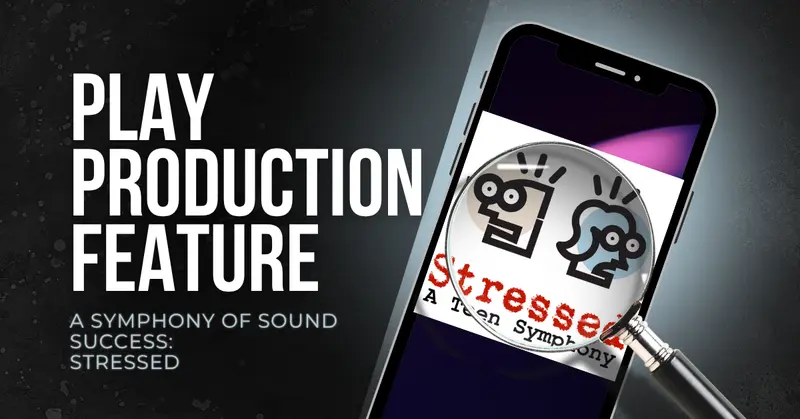
A Symphony of Sound Success: Stressed
A symphony of sound. A symphony of character. Vivid themes. Vivid characters. Stressed by Alan Haehnel is a true theatrical experience for any drama students looking for a bit of a challenge and a whole lot of fun.
For Alex, itâs school. For Josh, itâs his girlfriend. For Carmen, itâs dealing with her coach. And Mindyâs frustrated with her parents. Stress is driving this quartet crazy â so much so they canât stop talking about it.
This play is a symphony of sound and character. A challenging but incredibly fun piece.
The incredibly talented group of student performers that make up the Stromness Drama Club off the northeastern coast of Scotland in Orkney , didnât stress at all about their production of Stressed. In fact, they thrived!
âEvery year we try to put on a youth production as part of the Scottish Community Drama Associationâs one-act play competition. This year we were fortunate (or good!) enough to win the youth trophy and also to come 3rd overall. We also won the Northern Divisional Youth Final and will be competing at the Scottish Finals as well.â
Featured Plays
Theatrefolk Featured Play â Have You Heard? by Krista Boehnert
Welcome to our Featured Play Spotlight. If youâre ready to explore the power of the rumour, youâll want to check out Have You Heard? by Krista Boehnert. This monologue-based one-act drama is extremely relatable and a great way to stretch your performers.
âDid you hear? Have you heard? Promise not to tell anybody?â
Everybody knows a secret. Some keep them quiet. Some let them loose. Some make them larger than life. Secrets, lies and rumours are the subject of Have You Heard?
This monologue-based play follows what happens in a school when rumours and secrets spin out of control. What makes a secret more powerful: When itâs the truth? Or when itâs a lie?
Why did we publish this play?
Have You Heard? not only presents a great acting challenge, but also a directing challenge. And to top it all off, it has a thought-provoking theme. Itâs a one, two, three punch and thatâs why we published it. If youâve got a small program, or youâre doing multiple one acts, or you want to stretch your group in competition, have a look at this play.
Why is this play good for online platforms?
This play is monologue based â all the characters share the story through individual monologues. This makes it ideal for an online platform performance where students are in their own spaces.
Letâs hear from the author!
1. Why did you write this play?
I wanted to explore a couple of things with this piece. First was the power of rumour. Rumours grow and change and morph as more and more people breathe life into them. When rumours gain momentum itâs hard to find the truth. Things get murky. I wanted to look at all the various angles of that.
The other thing I wanted to present with the piece was a play where the two main characters never set foot on the stage. They donât have any lines whatsoever. The characters you do meet are forced to speculate on the motivations and feelings of Josh and Mr. Pender, but the audience never hears from them directly. The audience is ultimately left to formulate their own opinions of what the truth is.
2. Describe the theme in one or two sentences.
A not-so-innocent lie is believed to be true. The ripple effect leaves no one untouched.
3. Whatâs the most important visual for you in this play?
The opening and closing scenes where the cast appears as an ensemble. For the majority of the play they appear individually, but in those opening and closing moments theyâre united in their vulnerability and strength.
4. If you could give one piece of advice for those producing the play, what would it be?
Itâs a monologue-based play, but donât be shy about involving the cast throughout. There are many opportunities for the whole cast help bring the monologues to life through tableau, silently acting the story as a character tells it, small interactions with the speaking character like placing a comforting arm around their shoulders as they speak, etc. The script lends itself to collaborative staging despite its monologue-based structure.
5. Why is this play great for student performers?
On the content side, I think its extremely relatable. Openly talking about the impact of rumours is a good way to shine light on something we all grapple with.
On the performance side itâs a great opportunity to work with monologues. It allows students to really grow a character, and in a different way than theyâre used to â through dialogue with other characters. With this play, they must build their character using the clues in the monologue and develop it for themselves from there.
In addition to character development, itâs also a great acting challenge for learning and performing long sections of text. The experience of performing a piece like this will help build skills for more complex performances in the future, like Shakespearian soliloquys.
6. Do you have any tips for those looking to perform this play online?
Both Have you Heard? and Puzzle Pieces? lend themselves nicely for online performance. As a monologue-based play, it allows for that intimate connection between the audience and a single performer. Settings in the performance space provider (such as Zoom) can be set to highlight the speaker, which results in the performer filling the whole screen, rather than the audience seeing all actors at once, if the director wishes to present it this way.
The plays are flexible, however, and do lend themselves to an ensemble performance as well. While actors are performing their monologues, the remaining actors can support the performances in a variety of ways. The director and cast can choose if all actors participate, or if only a select number do. If not all actors are participating in the scene, the director can ask them to simple turn and face their back to their camera, or walk out of frame thus âleaving the stage.â
The staging for Have you Heard? and Puzzle Pieces is flexible regardless of the staging environment â live, virtual, live-streamed. In their simplest form, each scene can be performed with only the actor(s) in the scene who are speaking being âon stageâ (or on screen depending on the scenario). The bulk of both plays are monologues, so for the majority of the play, you could have a single actor on stage/screen.
To enrich the performance experience for the audience, I would recommend engaging cast members to enhance the monologues by employing tactics such as mime, tableaux, use of props and costume add-ons, virtual backgrounds and reaction buttons. This creates a space where the audience and the cast are all part of each âmonologue momentâ and heightens the impact of each charactersâ story/experience by bringing it more fully to life.
Featured Plays
Telling a Story Without Words: Emotional Baggage
Emotional Baggage. We all have it but how do we deal with it? The characters within this one-act dramedy by Lindsay Price carry theirs with them at all times. They convey their stories and struggles solely through actions and gestures. Thatâs right â this play has no words! Because of this, the play relies heavily upon the charactersâ gestures and music to take the place of dialogue and convey the story. Jennifer Denty and her student group of performers at Northern Lights Academy in Rigolet, Newfoundland were not only up to the challenge but surpassed it with an award-winning performance.
âMy drama team from Northern Lights Academy just finished the High School Labrador Regional Drama Festival and we took second place! We also won best music (we used 30% from the script and added our own), best staging, and best director. Plus, one of my students (he played Overbearing Mother) won for physical comedy and my student who played Well Rounded Person won an acting merit award.â
Congratulations, Northern Lights Academy!
*Photo credit: Jennifer Denty
Featured Plays
Tuna Fish Advice
How do you rehearse a play like Tuna Fish Eulogy?Head over to the sample pagesto see what Iâm talking about. This is no walk in the park. The play is in a ladder format, which means the actors read their lines from top to bottom instead of left to right. Itâs a great way to showcase choral speaking because itâs clear when characters speak at the same time. But the format is a challenge. Elmira District Secondary School took the notion of âchallengeâ to a whole new level when they took a play written for four actors and turned it into a play for 18. Now 18 people have to figure out whoâs speaking what and when. I talked to the cast about their experience and what advice they would give to other casts.
Production
Spread the Love: Tuna Fish Eulogy by Lindsay Price
This week on Spread the Love, Craig and Lindsay talk about Tuna Fish Eulogy, a ladder play for high school students. Filmed live on location next to the the sea. Well, itâs actually a lake, but use your imagination.
Featured Plays
Theatrefolk Featured Play: Drum Taps, adapted by Lindsay Price from Leaves of Grass by Walt Whitman
âThe poems in Drum Taps represent Walt Whitmanâs firsthand account of the Civil War. See the words, the emotion, the blood come to life in this theatrical adaptation. This is not your traditional readers theatre or poetry recital. This is flesh and bone words breathed to their fullest humanity. This is struggle and pain. This is confusion and contradiction. This is war.â
The primary danger in theatricalizing a series of poems is that such adaptations tend to be static â they amount to not much more than a poetry recital with lights and costumes. Iâm not dissing poetry recitals, Iâm just saying that theyâre not inherently theatrical. By the way â can you believe âdissingâ passed my spell checker but âtheatricalizingâ didnât?
I wasnât quite sure what I was expecting when Lindsay told me she was working on an adaptation of Leaves of Grass, a collection of US Civil War-era poems written, modified and rearranged over an entire lifetime by Walt Whitman. I wasnât familiar with the poems at the time nor, being Canadian, did I have that much knowledge about the US Civil War. But my main concern was this: will it be theatrical?
I am proud to report that it is. Even just reading the script I could see the actors, hear the chaos, smell the gunpowder, feel the loss. I canât wait to see a production of this!
Two versions are included in the same book: A small cast version (5 actors â 2M+3W) and a large cast version (20 actors â 6M+14W) . The casting is very flexible, however, and is limited only by the directorâs imagination. Genders can be switched for many characters and the cast size can be expanded or contracted fairly easily. Both versions run about 35 minutes, ideal for most contest requirements.


.png)


.png)