Facebook Pixel Skip to main content

📣SCRIPT SALE! Treat yourself to an easier Fall. Save 30% on 5+ perusal scripts with code SPRING30 before May 3 and head into summer stress-free.

High School Plays

Theatrefolk Featured Play – Characters Behaving Badly by Lindsay Price
Diversity

Theatrefolk Featured Play – Characters Behaving Badly by Lindsay Price

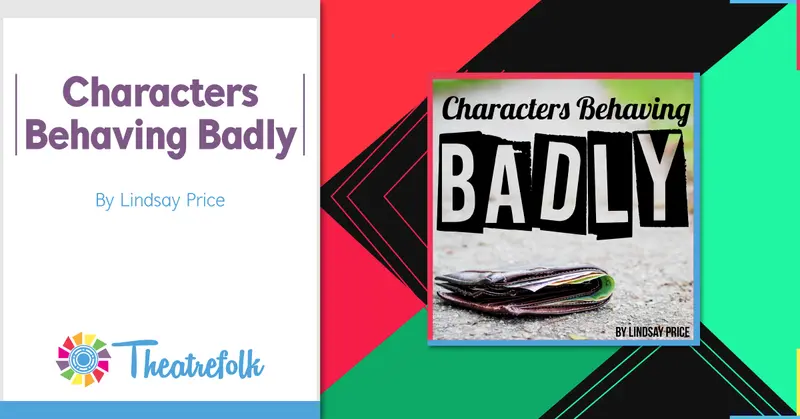
Welcome to our Featured Play Spotlight. The vignette play, Characters Behaving Badly, by Lindsay Price, asks students to look at the concept of what it means to be “good” and “bad”, as well as what it means to play a character with whom they might not agree. Perfect for class performances! If you saw a wallet on the ground, bulging with money, and no one around, would you take it? What’s the worst thing a person can do? Is it murder? Is it lying? Is it getting an A-? What defines “good” and “bad” behaviour? Can “good” people have “bad” thoughts? Let’s hear from the author!1. Why did you write this play? Over the years, I have witnessed a lot of young or student actors being reticent to take on a “bad” character because they felt it would reflect in their own personal character. “If I play a bad character, then I am seen as a bad person.” Which leads to a great question: What does it mean to be “good” or “bad”? And who gets to decide what is “good” or “bad?” And there was my starting point. 2. Describe the theme in one or two sentences. What does it mean to be “good” or bad?” What does it mean to play a “bad” character. 3. What’s the most important visual for you in this play? There’s a moment when a character holds up a wallet full of money and asks the other characters and the audience if they would take it if they found it on the ground. Would you? 4. If you could give one piece of advice for those producing the play, what would it be? It’s a vignette play so it’s easy to default to a blackout between every scene. If you look at the script, it’s specifically designed to avoid that. Blackouts suck the life out of the drive and forward motion of a play. Use choreographed transitions and music to move from moment to moment. 5. Why is this play great for student performers? Not only are the characters great for analysis in this play, the question around what is “good” and what is “bad” is an excellent topic for discussion. How do your students define the two?
Theatrefolk Featured Play – Moonbow Miraculous by Kirk Shimano
Diversity

Theatrefolk Featured Play – Moonbow Miraculous by Kirk Shimano

*Welcome to our Featured Play Spotlight. * Moonbow Miraculous is an absolutely incredible dramedy for middle school and high school student performers that is filled with vivid characters and relevant messaging. A must-read for productions or classwork! “If someone has a secret they’ve been clutching to their heart, the moonbow’s glow will give them the courage to share their true selves.” Moonbow Miraculous is a series of vignettes exploring the theme of coming out, reflecting the infinite diversity of experience by adding everything from robots to talking donuts into the mix. It’s a celebration of choices, courage, and the joy of self discovery. Why did we publish this play? We love this play. We loved it from the very first time we read it. It is filled with vivid characters and wild imagination. It has a heartfelt and relevant message. It provides wonderful acting opportunities for all students. Kirk has said about the origins of this play that “At some point in our lives, we will all face the challenge of having to define what we are (and what we are not), and I hope sharing this fun journey makes that process feel a little less lonely.” We stand by this 100%. Let’s hear from the author!1. Why did you write this play? While there are a number of great stories about coming out, they tend to focus on a single person’s experience and their personal obstacles. By juxtaposing multiple vignettes, I wanted to explore the many different ways we find ourselves. I also wanted a chance to just play in the sandbox of imagination, which is how we ended up with a story with talking donuts and non-binary robots. 2. Describe the theme in one or two sentences. This play explores that no matter how different we might be, we all have that moment when we discover who we are and declare that to the world. It’s a terrifying process that is ultimately worth the risk. 3. What’s the most important visual for you in this play? The final moment is a simple holding of hands, but it’s a symbol of the kinship that I hope anyone experiencing this play feels. 4. If you could give one piece of advice for those producing the play, what would it be? I hope that this play welcomes theatricality, so I wouldn’t want anyone producing the play to get too caught up in exactly what a robot should look like or how to stage a rainstorm. Instead, I think the key element is to tap into the humanity of all of the characters (especially the ones that aren’t actually human) in order to draw the audience in. 5. Why is this play great for student performers? Thematically, I expect a lot of students are at a time in their lives when they are exploring their identities in just the way that many of the characters in this play are. Hopefully, they’ll be able to see themselves in these roles in a way that they will find rewarding. Logistically, there’s an endless opportunity in the number of ways these characters can be presented, so I think any group of students can find a way to perform this show. 6. Do you have any advice for people looking to perform this play online or socially distanced? Each of these scenes is an interaction between two individuals, so I think the key is to figure out a way to convey this intimacy online. For example, I think taking extra care to make sure their eyelines meet up so that we can see them sharing in a conversation will help to build the sense of a personal interaction.
Theatrefolk Featured Play – The Pretty Princess Dollhouse for Pretty Princesses by Emma Fonseca-Halverson
Diversity

Theatrefolk Featured Play – The Pretty Princess Dollhouse for Pretty Princesses by Emma Fonseca-Halverson

Welcome to our Featured Play Spotlight. Complex characters, excellent scene work opportunities and great for competitions – The Pretty Princess Dollhouse for Pretty Princesses by Emma Fonseca Halverson is an incredibly theatrical play for high school student performers. Gabi wants to be a writer. Elena wants a family to love and a happy life. Gabi wants doors – doors that open and allow her to leave. Gabi is suffering from metaphoric asthma. The walls are closing in and she can’t breathe. Elena knows the doors are there, she just doesn’t want to open them. She thinks the walls keep her safe. She thinks Gabi is living in a fantasy world. Two friends, on the verge of their adult life, realize they have very different viewpoints on how they want to live. Excellent scene work for competition. Why did we publish this play? We first met Emma when she submitted her play Not Going Anywhere and knew we wanted to work with her again. Emma’s play The Pretty Princess Dollhouse for Pretty Princesses is Theatrefolk’s first commissioned piece. We gave Emma the criteria and left the rest up to her; she 100% delivered. I love the theatricality of play – you can go to town on the set or leave things very minimal. The two characters are well drawn and complex, this would be an excellent piece to draw scene work from for competition. We’re thrilled to have Emma’s play in our collection! Let’s hear from the author!1. Why did you write this play? I wrote this play to demonstrate an internal struggle between two opposing desires. The desire to stay with what is familiar and good, and the desire to take the risk for more. This is something I can relate to, as I know many of my teen peers can relate to, as we must make life changing decisions at such a young age, the pressure and conflict can be very real. 2. Describe the theme in one or two sentences. The theme of this show can be interpreted in different ways- but I would say it’s about yearning- for one another. and for the ‘right’ answer. 3. What’s the most important visual for you in this play? The most important visual in my eyes is the candlelit set. Although designers do not need to use real candles, a dim lighting will create a stark contrast to the abrasive lighting at the end, and sets the tone for the production. 4. If you could give one piece of advice for those producing the play, what would it be? One piece of advice I would give to anyone producing this play is to add your own personality! It can be as simple or as flashy as you would like. 5. Why is this play great for student performers? This play is good for student performers because it is simple enough to be a classroom project, yet the themes are ones that many teens may be able to find some relatability in. I hope students can see themselves in these characters. 6. Do you have any advice for people looking to perform this play online or socially distanced? This play can definitely be performed online! My peice of advice is focus on the characters, and no set at all can work perfectly fine. Get your copy of The Pretty Princess Dollhouse for Pretty Princessesright here, right now!Not right for your group right now? Search our play catalogue to find one that your performers will love!
Theatrefolk Featured Play – The Haunting of Chip Lake Lodge
Featured Plays

Theatrefolk Featured Play – The Haunting of Chip Lake Lodge

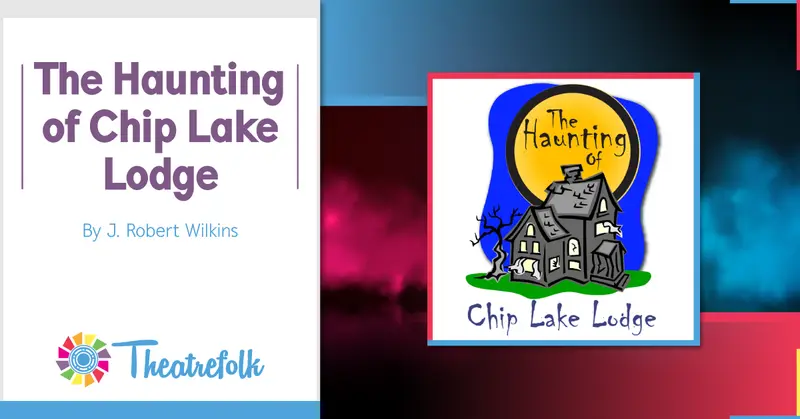
Welcome to our Featured Play Spotlight. _ _ The Haunting of Chip Lake Lodge by J. Robert Wilkins is all about a great story with fantastic characters. Plus wonderful opportunities for technical elements – from the set, the lights, the sound and the supernatural. Four high school seniors, Amy, Jennifer, Stephanie and Justin, arrive at a country lodge for their prom. But things go askew from the start. They show up at the wrong lodge, their car won’t start, the phone goes dead, and disco music plays inexplicably. The lodge is haunted! The teens are unwillingly drawn into a slightly deranged plot to free the spirit from the curse of Chip Lake. If only Justin can overcome his fear of giant rats, they may be able to save the day. It all leads to a bizarre prom night no one will forget! Why did we publish this play? The Haunting of Chip Lake Lodge _ is part mystery, part comedy, part supernatural, and all entertaining! One of my favourite genres on the Theatrefolk site is our Halloween-esque plays. I love how our authors use theatrical conventions to bring spooky stories to life. _Chip Lake Lodge is no exception. Add to that a wonderful sense of humour, characters that are exceedingly fun to play, and a great challenge for a teen tech team – it all makes for a fabulous theatrical experience! Let’s hear from the author!1. Why did you write this play? I wrote the play for the annual Dinner Theatre at my school. 2. Describe the theme in one or two sentences. Teens working together to overcome adversity. 3. What’s the most important visual for you in this play? The daunting environment of the set. 4. If you could give one piece of advice for those producing the play, what would it be? Embrace the stereotypes. That is the source of the humor. 5. Why is this play great for student performers? I believe the performers can identify with the stereotypes and their emotions. But the main thing is that they can have fun through exaggeration. There is no serious messaging here.
Theatrefolk Featured Play – Finding Jo March by Laramie Dean
Diversity

Theatrefolk Featured Play – Finding Jo March by Laramie Dean

Welcome to our Featured Play Spotlight. You should know right away that Finding Jo March by Laramie Dean is not a traditional adaptation of Little Women. A young writer dives into the world of Louisa May Alcott’s most famous novel in order to bring the story to life (with a little help from their friends). Suddenly the March sisters are back, and the writer is one of them… Jo! But as the lives and loves of Meg, Jo, Beth, and Amy unfold, the present constantly threatens to pull the writer back into reality where a tragedy they have yet to deal with waits. It’s about telling someone else’s story so you can find your own. Why did we publish this play? I have seen this play develop for awhile now and it’s a delight to be able to share it with the world! _Finding Jo March _is a heartbreaking, uplifting, and unique take on its original source material _Little Woman. _It beautifully combines past and present. It sees the story through a LGBTQ+ lens through a connection between Jo March’s story, and the play’s main character story with their identity. You must pick up this play and share it with your students. Let’s hear from the author!1. Why did you write this play? I’ve loved Little Women since I was a kid and read my tattered, illustrated paperback copy to pieces. I was intrigued by the challenge of bringing a new adaptation to the stage and playing around with time: was there a way to allow the March sisters and their friends to participate in the 1860s and today? I also wanted to write something for my students to explore LGBTQ issues from different perspectives, especially since several are underrepresented and rarely, if ever, see people like themselves on stage. 2. Describe the theme in one or two sentences. It’s about telling someone else’s story so you can find your own. 3. What’s the most important visual for you in this play? The moment when Amy falls through the ice. It’s the climactic moment of Act One and can be done very simply with lights and music. 4. If you could give one piece of advice for those producing the play, what would it be? Create trust with your actors. Allow them to have fun and to be themselves. Encourage them to express in words how they relate to the characters in the play, the ones they’re embodying and the others as well. 5. Why is this play great for student performers? It gives them some great comedic moments as well as incredibly heartwrenching scenes (try not to tear up when the Writer’s father abandons them and their mother). It also allows your students of different sexual orientations or gender identities to see themselves represented in a play they get to experience for themselves. 6. Do you have any advice for people looking to perform this play online or socially distanced? Live music will help. Get your copy of Finding Jo Marchright here, right now!Not right for your group right now? Search our play catalogue to find one that your performers will love!
Theatrefolk Featured Play – Passing Period Purgatory by Christian Kiley
Featured Plays

Theatrefolk Featured Play – Passing Period Purgatory by Christian Kiley

Welcome to our Featured Play Spotlight. Passing Period Purgatory by Christian Kiley is an extremely relevant and relatable high school drama. This is a play you will definitely want to read and allow your student performers to bring to life. Sometimes the hardest part of school is getting from one class to the next. No one wants to make eye contact. No one wants to reach out when they see others in need. It’s toxic out there in the hallway of purgatory. So what do we do? How can we look after others if we can’t even look after ourselves? You might be late for class, but you’re on time for the meaningful change that’s going to take place. Are you willing to stand up? Why did we publish this play? Passing Period Purgatory is about how hard it is to get from one place to another and the obstacles in our way. It takes place in a school hallway, but it’s a concept that affects us all. How do we survive the toxicity that is building in school hallways, and in our lives? How do we survive when there is so much trying to take us down, be it because of our identity, our expression, or just being alive. How do we be ourselves? I love the theatricality of this piece (Chorus members are a collection of Toxic individuals), I love the message of the piece (we survive toxicity together) and the relevancy of the play. It is a play for right now, for the classroom, for production, for competition. I encourage all of you to give it a read. Let’s hear from the author!1. Why did you write this play? As a teacher, I see and hear stories about passing periods on a regular basis. It’s a source of anxiety for many of our young people. I think it’s of critical importance to be aware of the energy that is present in our schools. Young people may not want to come to school for the Chemistry test that they hastily crammed for but they should feel safe to be their most authentic selves. I wanted to write a play that we could produce at my high school in an actual hallway (though your production can be produced in your theater, drama room, or virtually) to encourage every student/person to help elevate the collective positive energy and eliminate the negativity in our schools. 2. Describe the theme in one or two sentences. There is nothing more worthy of standing up for than your true self. 3. What’s the most important visual for you in this play? When the Non-Toxics stand up to the Toxics (pg. 25). When each Non-Toxic stands in front of a member of the Toxic Chorus and they fall to the ground. I like big moments that require immense physical commitment. This is an opportunity for such a moment. 4. If you could give one piece of advice for those producing the play, what would it be? Connect with what you are experiencing in your school and community. Just like no two productions are the same, no two schools/communities are the same either. What makes your school unique and extraordinary is the ability you and your students have to bring about positive change. 5. Why is this play great for student performers? I hope it relates to their experiences but more importantly their desire and commitment to make their lives and the lives of those around them better. The reality of this play is right outside their classroom doors. *6. Do you have any advice for people looking to perform this play online or socially distanced? * I would be really excited to see how a director and cast might approach that. I would say there is a lot of opportunity to push the envelope as it relates to the sound of the Toxics (vocal distortion, etc.) And the visual design of play would be interesting as it relates to the actors and their distance from the camera. And one thing I didn’t think of until I read this question is that an online or socially distanced production can truly give the audience the sense of isolation that a student can feel during passing periods.
Theatrefolk Featured Play – The Burgundy Letter by Kirk Shimano
Diversity

Theatrefolk Featured Play – The Burgundy Letter by Kirk Shimano

Welcome to our Featured Play Spotlight. The Burgundy Letter by Kirk Shimano is a comedic retelling of the classic novel The Scarlet Letter set in a high school and reframed for a digital age. In an online community, Hester90 is publicly shamed and shunned for a racial slur against another student, but refuses to name her cohort in the hateful conversation. RoChi wants the conspirator found out and humiliated. Climate_Dale wants everyone to come to his annual Earth Day address. How do we strike a balance between holding individuals accountable while still having compassion for those who apologize for their mistakes? Why did we publish this play? We love adaptations here at Theatrefolk and The Burgundy Letter is an excellent example. It’s a comedic retelling of the classic novel The Scarlet Letter set in a high school and reimagined for a digital age. There’s a lot to be explored about how public shaming currently works in social media and this play offers so much in terms of conversation about how we can strike a balance between holding individuals accountable for what they say while still having compassion for those who apologize for their mistakes. Add to that, we love complex teen characters and this play has so many wonderful roles for student actors to play! This play might have our favourite character name of all time:
Theatrefolk Featured Play – Thought Traps by Lindsay Price
Featured Plays

Theatrefolk Featured Play – Thought Traps by Lindsay Price

*Welcome to our Featured Play Spotlight. * In the high school dramedy, Thought Traps by Lindsay Price, even happy people have issues. Will they be able to set themselves free from the past who invade their thoughts? Ariane walks around with her own personal black cloud. She throws up barriers, lashes out and refuses to tell anyone what she’s thinking. Kate is the exact opposite. Happy, bubbly, outgoing and personable. But even happy people have issues. And there are more similarities between the two teens: both Ariane and Kate deal with people from their past who invade their head space, and pull them into thought traps. Will either be able to set themselves free? Why did we publish this play? The story of Ariane and Kate from Thought Traps exists in another form at theatrefolk.com; in our a cappella musical, Shout. We love the story of the characters so much that the question came up – can we adapt their story into a non-musical one act? The answer is yes! Although, it wasn’t a simple copy & paste. In musicals, characters express their thoughts and emotions through song. In _Thought Traps _songs have to become conversations, or even new characters. The adaptation was a challenge but an extremely worthwhile one. The great thing about adaptation is that we can also adapt to the present times – the original story was written fifteen years ago and many things have changed. The characters in _Thought Traps _are living fully in today’s world. For example, gender identity is an important conversation in the play and the language characters use to express themselves is grounded in the now. We love being able to offer another option for these characters and this story. Let’s hear from the author!1. Why did you write this play? The story of Ariane and Kate exits in another form at theatrefolk.com; in our a capella musical, Shout. I love their story and decided to see if I could turn it into a non-musical one act. A great challenge and a satisfying one – songs in which characters expressed their thoughts had to be turned into dialogue, and in some cases all new characters! The title Thought Traps came directly out of this new writing. 2. Describe the theme in one or two sentences. Ariane and Kate deal with people from their past who invade their head space. Will either be able to set themselves free? 3. What’s the most important visual for you in this play? Essa and Andy are the “thought traps” for Ariane and Kate respectively. Make it clear visually that these characters aren’t “real,” even though they’re based on “real” people in the world of the play. They’re thoughts taking up space in Ariane and Kate’s head. 4. If you could give one piece of advice for those producing the play, what would it be? Don’t foreshadow Kate’s story. She is bright, happy and positive for a lot of the play. Her inner struggle is not part of her every day persona, until she learns what happens to her brother. 5. Why is this play great for student performers? The characters are interesting and unique teenagers. Playing unique characters their own age is a great place for students to start with character development. Get your copy of Thought Traps right here, right now!Not right for your group right now? Search our play catalogue to find one that your performers will love!
Theatrefolk Featured Play – Not Going Anywhere by Emma Fonseca Halverson
Diversity

Theatrefolk Featured Play – Not Going Anywhere by Emma Fonseca Halverson

Welcome to our Featured Play Spotlight. Sometimes you come across a play that demands to be read, performed and shared. Not Going Anywhere by Emma Fonseca Halverson is one of those plays. The Mexican family of Ale, Miguel, Mami and Papá are struggling to get by while ICE attempts to tear them apart. Miguel wants nothing more than to not go anywhere, whereas Ale is desperate to leave and pursue theatre. This works out while Miguel works and helps out at home, and Ale goes to class and rehearsals, but when Miguel isn’t there anymore, Ale must choose between her future and her family. Why did we publish this play? We’re thrilled to be able to share Not Going Anywhere. Emma has created compelling characters and a story that, for many students, will hit close to home. The piece crackles with authenticity. It should be performed, it should be read and discussed in class. The story of what happens to Ale in the play is not uncommon – what happens when you have to choose between your future and your family? Let’s hear from the author!1. Why did you write this play? This was at the start of quarantine when I wrote the first draft, and I was sitting at home a lot stewing in my thoughts about the world. My cousin who had lived with us had also just been forced to go back to Mexico without warning, and it the topic of immigration and ICE was very fresh on my mind. It was definitely a source of processing a lot of my own feelings that really helped me have an outlet. 2. Describe the theme in one or two sentences. What are obligations to ourselves and to our families? How does family impact the choices we make in our lives? Family and culture would be the biggest themes in my eyes. 3. Why is this play great for student performers? It views immigration through a teenagers eyes, and explores topics I think a lot of teenagers think about; and relate to family, culture, future, and identity. 4. Do you have any advice for those producing this play online or socially distanced? I would say that even though the physical touch would be gone, to focus on the non- physical affection between the characters and their words.
Theatrefolk Featured Play – The Butterfly Queen by Christian Kiley
Featured Plays

Theatrefolk Featured Play – The Butterfly Queen by Christian Kiley

*Welcome to our Featured Play Spotlight. * The Butterfly Queen by Christian Kiley looks at the nature of sacrifice and putting others first, and is an opportunity to have a truly transformative experience with your students. One teacher protects her class from danger. One bystander helps someone timid overcome a fear. One stranger saves another from a burning building. We all have the capacity to put others before ourselves regardless of the consequences. That is the theme of The Butterfly Queen. A touching ensemble piece where sacrifice is as simple as a pair of wings. Why did we publish this play? Christian is a long time Theatrefolk playwright and we are always thrilled to share his work. In _The Butterfly Queen _Christian explores how sacrifice can be passed forward and how the impact we have on others can be immense. This is a beautiful play with a vivid extended metaphor. The premiere production of _The Butterfly Queen _won its district festival with almost perfect scores. It’s easy to see why. Let’s hear from the author!1. Why did you write this play? I continue to be disturbed deeply, as I know many others are, by the violence in our schools. There are many brave people who have sacrificed their lives to save their students. In my small way, I wanted to honor those courageous teachers. 2. Describe the theme in one or two sentences. We not only have the power to positively change someone’s life; we can save someone’s life. 3. What’s the most important visual for you in this play? The transformation when Miss Victoria reveals her butterfly wings. 4. If you could give one piece of advice for those producing the play, what would it be? Heart. Allow your heart to lead you during this process. It will take you back to your childhood and the people you love(d) with unconditional regard. 5. Why is this play great for student performers? The students I serve and work with are the best at connecting with the depth of emotion involved in life. This is a chance for our talented young people to do just that. 6. Why is this play great for online performances? I am curious as to how I might approach this if I were to direct it in an online production. I think creating a classroom that is separate for each actor (their private space) and making it communal, sharing it, finding common connections between the actors and their living/playing spaces would be a challenge that I would love to see articulated. Like most great questions, the answers of the talented people producing the play will always be best. Get your copy of _The Butterfly Queen _right here, right now!Interested in studying this play with your class? Don't miss our FREE classroom study guide! Not right for your group right now? Search our play catalogue to find one that your performers will love!
Theatrefolk Featured Play – Completely, Absolutely Normal: Vignettes About LGBTQ+ Teens by Bradley Walton
Diversity

Theatrefolk Featured Play – Completely, Absolutely Normal: Vignettes About LGBTQ+ Teens by Bradley Walton

*Welcome to our Featured Play Spotlight. * Completely, Absolutely Normal: Vignettes About LGBTQ+ Teens by Bradley Walton is a collection of ten interconnected vignettes with LGBTQ+ themes that are unified by the emotion and humanity found in anyone who is completely, absolutely normal. A girl’s big moment of coming out takes an unexpected turn. High school sweethearts holding hands in public for the first time are greeted by hatred. A transgender teen struggles with an unaccepting best friend. Why did we publish this play? This play is about human contact and showing that all human contact is normal. As we see this concept being challenged and legislated against, it’s important to take a stand and provide a voice for students. All students. Let’s hear from the author!1. Why did you write this play? When I started writing this play, I didn’t know it was going to become “this play.” It began as a monologue about a teenager coming out at their dad’s grave. That monologue gave way to a second vignette, and then a third, and…you get the idea. Now, as to why I wrote this play after I knew that this play was turning into “this play”… I wanted to show that human emotion is universal regardless of sexual orientation or gender identity. 2. Describe the theme in one or two sentences. LGBTQ+ teens are completely, absolutely normal. 3. What’s the most important visual for you in this play? The visual simplicity of the play as a whole is very important for me. It’s a bare stage show. There’s no fancy lighting. It’s stripped-down and intimate, with all of the emphasis on character and emotion. 4. If you could give one piece of advice for those producing the play, what would it be? Include questions in the audition paperwork to find out what students are comfortable and not comfortable portraying onstage—ask if they’re okay with doing a same-sex kiss, and find out if there are roles they don’t want to play. Don’t ask for explanations, and respect their answers. 5. Why is this play great for student performers? It is bursting at the seams with great acting opportunities featuring characters with complex emotions. 6. Do you have any advice for people looking to perform this play online or socially distanced? The play has ten scenes. Five of them are monologues and the other five have two characters. Socially distanced performance shouldn’t be a huge issue for 90% of the show, but the scene “Brave” is specifically about a couple holding hands and kissing. In light of the current pandemic, I think the hand-holding could be mimed, and I would be okay if the kiss was omitted (the end of the scene wouldn’t be as powerful, but the dialogue would still make sense). I could also see the show being performed like a staged reading, with the two-person scenes performed by students on opposite sides of the stage delivering their dialogue directly out to the audience. I have a hard time imagining the play being done online. I feel like it demands a level of connectivity with the audience best achieved through in-person performance. A staged reading-style approach might work. But with that being said, if someone has a vision for an online production that they think would be fabulous…go for it. Just keep that sense of audience connection at the front of your mind.
Theatrefolk Featured Play – The Date by Steven Stack
Distance Learning

Theatrefolk Featured Play – The Date by Steven Stack

*Welcome to our Featured Play Spotlight. * The Date by Steven Stack is a theatrical horror masterpiece that’s written specifically for online performances. You don’t want to miss this one! Chris is about to go on his first online date. He’s practiced the steps for success, he has his best friends as a dating model, what could go wrong? Only everything. Demons on a date are never good. Why did we publish this play? Steven Stack is a master at creating theatrical horror. It starts funny so you’re guard is down and that’s when the demons start coming. We love his approach and we love _The Date! _It’s great for online performance because the whole play takes place on an online date. With friends. Of course. 1. Why did you write this play? I thought of a girl I knew growing up, and even though we went to school together from 1st through 12th grade, for some reason in mind, she’s always the sweet first-grader that sat across from me at lunch. She died recently, and I don’t think her life turned the way she dreamed of as that first grader because, in some ways, the universe had other plans. I also wrote for the students I’ve taught over the years that thought they were invisible. 2. Describe the theme in one or two sentences. That you never really know someone else’s story and what they would be willing to do to what they feel is the right thing or just to matter for once. 3. What’s the most important visual for you in this play? The moment Felicia sees the drawing on Jinny’s wrist. From that moment on there’s tension beneath the surface because Felicia knows that something is off. 4. If you could give one piece of advice for those producing the play, what would it be? Let the honesty come through each character while focusing on levels and pacing. 5. Why is this play great for student performers? It allows students to play 4 diverse and realistic characters with concrete wants in an environment that takes advantage of the online medium. Plus, it’s funny, sad, and disturbing. 6. Do you have any tips for those who are performing this play online? Focus on internalizing the characters because there is limited movement so connecting with your character is vital. Also, take full advantage of the online element, especially when it comes to the shadows. Get your copy of The Date right here, right now!Not right for your group right now? Search our play catalogue to find one that your performers will love!
Theatrefolk Featured Play – Chicken. Road. by Lindsay Price
Featured Plays

Theatrefolk Featured Play – Chicken. Road. by Lindsay Price

Welcome to our Featured Play Spotlight. Chicken. Road. by Lindsay Price is an issue-based play for high school performers that is not an answer to the issue, but an amazing forum to start the discussions. Why did the chicken cross the road? Why is the sky blue? What’s two plus two? Why did he kill himself? A group of teenagers grapple with unanswered questions as they struggle to understand why someone would run out on to the highway in front of semi. Especially when that someone seemed to have it all. Here’s a chicken. Here’s the road. There’s the other side. What do you do when there is no answer? Why did we publish this play? Our philosophy at Theatrefolk is that issue plays should start conversations, not be the answer to the issue. Chicken. Road. is all about questions, especially the big one “Why would someone who has it all, kill themselves?” The play shows students struggling with this questions and others, and it presents a possible doorway for teenagers to share their own struggles. The original staging for the play is very simple – a line of students. There is no identified set. This would translate easily to a virtual platform, in fact, the isolation that some of these characters feel would make for a vivid image in a virtual production. Love the play but need a shorter version? Check out Chicken. Road. Competition Version too! Let’s hear from the author!1. Why did you write this play? The question “why” is always the first people often ask when someone they know commits suicide. And that’s because they want a clear cut answer – two+two=four. And the truth is there is no answer. I wanted to explore that question in a theatrical context. I also feel that issue plays should start conversations rather than be the one and only answer. That was definitely my goal for the script. 1a. Why did you write a separate Competition Length version of this play? One of the challenges with some of my plays is their length—plain and simple. Schools that compete with 30-minute productions can’t perform 50-minute plays, no matter how strong the material. Recently, I’ve taken on the challenge of revisiting several of my longer works, aiming to preserve their integrity and intention while making them more concise. It’s been an exciting project, and I’ve loved reconnecting with pieces I haven’t read in over a decade. I’m eager to see if this streamlined version of Chicken. Road. can find a new audience. 2. Describe the theme in one or two sentences. Suicide cannot be easily explained. 3. What’s the most important visual for you in this play? There’s a moment in one of the final monologues in which the best friend of the teenager who killed himself describes the reaction from his mother: “She wants to throw her swarm of questions at me and watch me die from the stings.” I think that is a vivid picture of someone who is desperate to find an answer, and someone who just doesn’t have the answer. 4. If you could give one piece of advice for those producing the play, what would it be? Yes, this is a serious subject and should be treated seriously. But also remember that this is a play. It has to be theatrical. There has to be a variety of tone. An audience will turn off if the play is one note from beginning to end. There’s some humour in the play, don’t ignore or downplay it. 5. Why is this play great for student performers? This is a topic that some adults would rather not discuss with teens. They don’t want to touch sensitive subjects – if they don’t talk about them, they don’t happen. Which of course is the opposite of how to address a sensitive topic. Students need to talk, to figure out how they feel, and to express their opinions. Refusing to talk about suicide helps no one. 6. Why is this play great for online platforms? The staging of the play is very simple – a line of students. This would translate easily to rows of Zoom boxes.
Theatrefolk Featured Play – Virtual Family by Christian Kiley
Featured Plays

Theatrefolk Featured Play – Virtual Family by Christian Kiley

Welcome to our Featured Play Spotlight. Virtual Family by Christian Kiley examines our relationship with and dependence on technology. Who needs to go outside when you’ve got a screen to show you what outside should look like? Who needs to do chores when laundry can be folded at the push of a button? And who needs a real family, anyway? Isn’t it better to talk through text messages and receive preprogrammed communications from your parents? Sure it is. Live safe and sound in the Virtual Family, a soothing world where complete dependence on technology is the name of the game. When technology takes away all your ills, conflicts, and concerns, you become a happier human being. Right? Virtual Family has three endings to choose from. Why did we publish this play? If you’re a fan of Black Mirror, this is the play for you. Virtual Family explores the potential of our future relationship with technology. We love plays that take place in a completely different world. It’s not the present, it’s the possible. In the theatre, you can create any place, any time, and have your characters be anything. As long as you explain the rules of the world, your audience will be engaged. This play is all about future technology and isolation from the “outside world.” It would make perfect sense to stage this play on a virtual platform! Let’s hear from the author!1. Why did you write this play? It was over ten years ago but I think it had to do with my genuine fear that technology was becoming a bigger and bigger part of our lives. I still remember, as a kid, having to actually stand up and walk to the television to change the channels and hearing the click, click, click of the dial. To that younger version of myself, a cell phone would basically be a PAD. I continue to be fascinated by technology and the benefits and challenges that it presents to human beings. 2. Describe the theme in one or two sentences. Virtual Family investigates the potential dependence human beings have on technology. Can something with such upside potential, actually cause more harm than good? 3. What’s the most important visual for you in this play? The way the actors playing the PADs interact with the human characters. There are great opportunities for dynamic interaction. One moment that comes to mind is when PAD and PAD 2 “Initiate sleep sequence.” And the PADs try to get the children ready for bed like a parent (but a robot-parent). 4. If you could give one piece of advice for those producing the play, what would it be? Experiment with physicality. It might be easy to become complacent with the blocking. Push the limits and give the PADs power to create a world that would be hard to leave (that is the dilemma at the end (with three possible endings for the cast to choose from). Creating a world that is inviting and ultimately hard to walk away from is essential. 5. Why is this play great for student performers? This is a very relevant issue for current student-artists. Young Theatre artists are actually taking time and investing in moments of sans technology connection. I strongly believe that they can lead the way in illustrating that people don’t need to be reliant on technology. 6. Do you have any advice for people looking to perform this play online or socially distanced? Virtual Family would be fun and engaging to produce via video conference in that it would really play up the isolation that can be caused by technology. It brings a whole new meaning to “going outside” and this is very relatable, particularly with the circumstances of the play as it relates to social distancing and quarantine. Get your copy of Virtual Family right here, right now!Not right for your group right now? Search our play catalogue to find one that your performers will love!
Theatrefolk Featured Play – Water. Gun. Argument. by Alan Haehnel
Featured Plays

Theatrefolk Featured Play – Water. Gun. Argument. by Alan Haehnel

*Welcome to our Featured Play Spotlight. * Water. Gun. Argument. by Alan Haehnel is a thought provoking and powerful piece in a docu-theatre style. An argument is a lie you choose to believe and defend. Every year the students of Ratherford High participate in a squirt gun competition called Assassin. There are rounds, rules and judges. It’s the oldest game in the world, right? Kids trying to shoot at each other with play guns? It’s become a national phenomenon, so what’s the harm? If there was an actual school shooting, of course they’d stop playing. And a squirt gun would never be mistaken for a real gun, right? An argument is a lie you choose to believe and defend. Why did we publish this play? We feel that issue plays should ask questions rather than provide solutions. The last act of an issue play is the discussion afterward. Water. Gun. Argument. presents a thesis that offers a lot of opportunity for in-depth discussion: ‘”An argument is a lie you choose to believe and defend.” Is a water gun always a water gun? What if it’s mistaken for the real thing? Alan Haehnel is a long time Theatrefolk writer and we are proud to include his latest in our catalogue. Let’s hear from the author!1. Why did you write this play? I have always been fascinated by the tension between one’s philosophy and one’s actions. In other words, why do we believe something yet act in a way contrary to that belief? I felt the game of Assassin, which has become a tradition at the liberal school where I teach, really encapsulates this conflict. How do students come from families that regularly preach against violence and guns yet gleefully engage in this activity that celebrates both? 2. Describe the theme in one or two sentences. Our actions reveal our true philosophies. 3. What’s the most important visual for you in this play? Probably the blackout that comes just before the gunshot. Truthfully, though, this is a play that relies much more on the commitment of the actors to good, honest, vulnerable performances than on stage visuals. 4. If you could give one piece of advice for those producing the play, what would it be? Don’t let things like costuming, sets, etc., take up too much time. This is an acting piece and cannot succeed without a strong focus on acting. 5. Why is this play great for student performers? Water. Gun. Argument. is a play that will engender great thoughts and discussions for performers and audiences alike. Teenagers like to make some trouble; this play, well-presented, will do that, in a good way. 6. Do you have any tips for those who are performing this play online? Since this is a play, essentially, about building arguments, having everyone speaking directly into the “camera” and not able to move or interact much should work well. Keep the focus on faces, well-lit; make sure the backgrounds in individual homes aren’t distracting.
Theatrefolk Featured Play – Commence by Christian Kiley
Distance Learning

Theatrefolk Featured Play – Commence by Christian Kiley

Welcome to our Featured Play Spotlight. Commence by Christian Kiley is a gift to the Class of 2020. It is intended to be performed in a video conference call or meeting, and is specifically geared toward actors who are not in the same physical space. A group of students have an online meeting with their principal while they’re all under quarantine. They want to regain normalcy and recoup what they’ve lost as seniors: prom, school play, graduation. But nothing is normal. Everyone is losing things. It’s a scary and uncertain time, like a fire has destroyed memories that haven’t happened yet. Why did we publish this play? Christian sent us Commence as a response to his experiences teaching in the virtual world/classroom and the response(s) from his students. It’s a play about trying to find normalcy when nothing is normal. My favourite image in the play is “It’s like a fire has destroyed memories that haven’t happened yet.” This play is specifically written to be performed on an online platform, so teachers don’t have to worry about adapting the script. It’s ready to be virtually performed as is. Let’s hear from the author!1. Why did you write this play? This play is a gift to the Class of 2020. I know that a one-act play will never make up for what this talented group of students lost during the COVID-19 quarantine but I felt compelled to do something for them. In many ways, this is a farewell to many of the seniors I have taught for three, four years. I still haven’t had the chance to see them, have a proper goodbye, and cheer them into their bright futures. 2. Describe the theme in one or two sentences. Commence is about appreciating life’s culminating moments and not complacently allowing them to slip away. When you have earned something and don’t get it, you have a right to seek it out. Commence! 3. What’s the most important visual for you in this play? The series of moments that take place during the makeshift graduation ceremony. These moments allow for coordinated and organic blocking and physicality. 4. If you could give one piece of advice for those producing the play, what would it be? Be fully in the moment, even when you aren’t speaking. Many low status characters, especially in video conference plays, seem to be adrift, rather than being connected. Listening, reacting, and letting moments impact you, your character are critical parts of the experience. 5. Why is this play great for student performers? It looks at students coming to terms with losing something they have spent most of their lives working toward. As a teacher, it is the energy I felt on March 13 (when we were told we would be engaging in distance learning). It is my perspective on the journey I was on with the seniors I mentor and teach. 6. Do you have any tips for those who are performing this play online? Don’t be afraid to connect to the real feeling of this play. When it was first announced that we were transitioning to distance learning, there were a wide range of responses. Tap into the range of emotions that you are feeling, they are all useful in this play (and in your work as an artist and actor). Because it is a video conference call, that most likely will be produced as a video conference play, the circumstances of the play line up with the circumstances of the life situation perfectly (or imperfectly but in a relevant way). Get your copy of Commence right here, right now!Not right for your group right now? Search our play catalogue to find one that your performers will love!
Theatrefolk Featured Play – Sweep Under Rug by Lindsay Price
Featured Plays

Theatrefolk Featured Play – Sweep Under Rug by Lindsay Price

Welcome to our Featured Play Spotlight. Sweep Under Rugby Lindsay Price is a great conversation starter for both actors and audience. A great piece for actors who want to tackle something outside their comfort zone. Sweep Under Rug envisions a future where struggling families are placed in the “Bobby Sue” program. A “Bobby Sue” is a guardian of sorts, someone who warns against missteps and guides its owners along the “appropriate” path in life. But what happens when people want to think for themselves? Why did we publish this play? Sweep Under Rug is a futuristic “what if” issue play. There’s a lot to unpack and a lot for students to explore onstage and off. There’s costume design, and character specific language. There’s a very specific set and script analysis. It has a small cast, so it doesn’t get done as often as other plays, but it’s important to have plays that present a challenge, a question to answer, and provide a lot to discuss. Let’s hear from the author!1. Why did you write this play? I love looking at issues and exploring them in a theatrical manner. Issue plays must be theatrical. I also love “what if” ideas. “What if” in the future the poor were segregated and monitored by an in-house robot? What does that look like? The play was inspired by some friends who work with refugees and those below the poverty line who want to get out from under their situation but stigma and government red tape hold them back time and time again. 2. Describe the theme in one or two sentences. What if a group of people were told what to do every step of their lives and what if they didn’t want to be told what to do anymore? 3. What’s the most important visual for you in this play? The Bobby-Sue is a characterization of the red-tape holding back those below the poverty line. She is a government placed robot and represents the control and the lack of individual choices of the other characters. She must be a huge presence! 4. If you could give one piece of advice for those producing the play, what would it be? Each character speaks in a specific manner. Spend time analyzing their language. How does the language represent who the character is and what they’re going through in this situation? 5. Why is this play great for student performers? This play takes place in the future, the characters are affected by a specific situation, and that situation also affects character language. There’s a lot here for students! A great character study, a great analysis piece, and a great “what if” discussion starter. Get your copy of Sweep Under Rug right here, right now!Not right for your group right now? Search our play catalogue to find one that your performers will love!
Theatrefolk Featured Play – Floating on a Don’t Care Cloud by Lindsay Price
Featured Plays

Theatrefolk Featured Play – Floating on a Don’t Care Cloud by Lindsay Price

*Welcome to our Featured Play Spotlight. * Floating on a Don’t Care Cloud by Lindsay Price is a powerful and emotional issue-based play that is a theatrical and vivid personification of drugs. Jamie Peel is a pothead. He lives in his own world, a bubble, a cloud that calls his name and reaches out to him. His sister TJ has watched him slowly drift away and doesn’t know what to do. Is she overreacting? Is it in her imagination? Should she tell somebody what she sees? Will Jamie ever talk to her again if she does? Will everyone see her as a snitch? Is it just pot? An emotional tightrope between a sister and a brother and what really happens in the world of teenage marijuana use. Why did we publish this play? This play takes an issue and makes it theatrical. The theatre has to come first. Our stance on issue plays is that it’s not the job of the play to solve the issue, or point a finger. It’s the job of the play to show characters dealing with, struggling with, sometimes failing within an issue. This way the play ends and the conversation begins. Let’s hear from the author!1. Why did you write this play? Issue plays are important to me, not because they provide answers but because they ask questions. I think of the final moment of this play as the beginning of the conversation that should happen afterward. 2. Describe the theme in one or two sentences. An emotional tug of war between siblings and what happens in the world of teenage drug use. 3. What’s the most important visual for you in this play? The Cloud! It turns drug use into characters and allows Jamie to interact with others as he sinks deeper and deeper into addiction. 4. If you could give one piece of advice for those producing the play, what would it be? Don’t go all slow with the Cloud. That will drag the pace of the play. 5. Why is this play great for student performers? Personification is a wonderful theatrical element that all actors, let alone student actors, should explore.
Theatrefolk Featured Play – Free by Lindsay Price
Featured Plays

Theatrefolk Featured Play – Free by Lindsay Price

*Welcome to our Featured Play Spotlight. * Free by Lindsay Price is a strong character-driven drama that will leave your audience thinking, complete with a variety of casting options. Two teenagers come across an abandoned picnic. A sign in front of the picnic says, FREE FOOD. Promisetown has been in dire straits ever since the local factory closed two years ago. The townspeople attempt to divide the food fairly, but end up struggling to reconcile their belief systems with their greed. A stranger appears out of nowhere, offering to solve their problems, but ends up altering the town’s course forever. Free is now available in three versions – Free Version 1 (6M+10W+3E), Free Version 2 – with more parts for females (4M+12W+2E), and Free: Competition Version (2 M, 5 F, 11 Any Gender, 2 M or F). Why did we publish this play? Free has a lot going on with a simple easy to stage concept within a traditional storytelling script. There’s an issue to think about, there’s a twist ending and there’s character work. The situation is something out of the ordinary but not so far removed that students can’t put themselves in the same scenario and infer their own income. A great script to explore! Let’s hear from the author!1. Why did you write this play? I love starting a play with a question and this play offers a big one – how do you reconcile your belief system with your personal struggle? Putting characters in a place of struggle is always going to be interesting to write about and interesting to watch. 1a. Why did you create a competition version of this play? Free is one of my earliest plays and I absolutely adore it. When I worked on the competition length version, I hadn't read the play in many years and it was delightful to reacquaint myself with it. I love the moral dilemma it presents and how the characters respond to the dilemma. However, it's too long for many of the one act competitions our customers participate in. I want this play to have more productions, so a competition cut was the right choice. And I'm so glad I did it! 2. Describe the theme in one or two sentences. Desperation vs responsibility. 3. What’s the most important visual for you in this play? The pile of food. It is the centre piece of the whole play. It determines how every single character acts and reacts. 4. If you could give one piece of advice for those producing the play, what would it be? Character, character and more character. Do character profiles. Establish backstory for each character and the backstory for the relationships between the character. This community has been through a lot and it’s important for every actor to be on the same page before the play even begins. 5. Why is this play great for student performers? The play takes an absurd situation and puts realistic characters right in the middle of that situation. A great exploration for any student actor. 6. Who is your favourite character in the play? My favourite character in the play is Mrs Steele. She is essentially the "villain" of the piece, but every choice she makes is for the good of her family. She makes bad choices, but she only has her family in mind when making them. That would be an interesting character to play! 7. What is your favourite line in the play? My favourite line in the play is "Fun? Having my lungs come out my nose is fun?" This line is said by Jack and the moment really shows off a side to his personality that we don't see once the story gets going. It's important, even in dramas to make characters more than the drama.
Student Drama Success: The Exile and the Onion Girl
Featured Plays

Student Drama Success: The Exile and the Onion Girl

The Exile and the Onion Girl by Lindsay Price is a vividly modern adaptation of Aeschylus’ play, The Libation Bearers. Ore has been exiled for 10 years, working as a goat herder. Onee has been banished to the kitchen – 10 years is a long time to cut onions. Their mother murdered their father and it’s time to avenge his death. Who cares if all Onee wants is her mother’s love? Who cares if Ore can’t remember what his father sounds like? In Argos, it’s an eye for an eye, blood for blood, and watch what you say in front of the Domestics. They’re always watching, always listening. But blood is very complicated. And more blood doesn’t necessarily solve problems. Sarah Hankins and the incredible student drama group at Clinton High School in Clinton, MS took their production of The Exile and the Onion Girl to the Secondary School Theatre Festival at the Southeastern Theatre Conference (SETC) in Louisville, Kentucky. Two of the students involved in their production shared their thoughts on their experiences: “I’m really glad we chose this production because it flows so smoothly and provides an excellent platform for me to learn more about the art of performing , not to mention the fact that we have advanced from both Dramafest and MTA with it! I can’t wait to perform in it again. ~ Julia M. With Price’s skillfully modernized version of a classic Greek Tragedy paired with the hard work of the Clinton Arrow Theatre department, The Exile and the Onion Girl has become one of the most rewarding plays I have had the pleasure of being involved in. ~ Aaron G.”