Facebook Pixel Skip to main content

📣SCRIPT SALE! Treat yourself to an easier Fall. Save 30% on 5+ perusal scripts with code SPRING30 before May 3 and head into summer stress-free.

Performance

10 Tasks for Drama Students During Post-Show
Directing

10 Tasks for Drama Students During Post-Show

You did it! Your performance is done. But we don’t want all your students to just disappear after the curtain closes, especially if you’ve got more performances coming up. This article is focused on creating a quick and easy post-show routine for your students after each performance. If everyone chips in and helps out, it shouldn’t take longer than 10–15 minutes after the show ends. For more information about the big clean-up after your final performance (where the set is torn down, the theatre is cleaned from top to bottom, and the space is returned to its regular state — aka, strike), please check out this article: Four Tips for an Effective Strike. Teachers, share these tasks with your drama students so they know exactly what to do after each performance. Print this page out for students to keep with their scripts, or post it backstage to refer to. Feel free to adapt/eliminate any tasks as appropriate to your show. 1. All students: Complete all your assigned tasks BEFORE you go out into the house to see your friends and family. If one person leaves early, everyone will think they’re allowed to leave early, and then nothing will get done and the backstage will be a disaster. Many hands make light work — if everyone pitches in, then everyone will get to leave on time. Student actors: Before leaving the dressing area, remove your costume and get back into your personal clothes. Leave all props and equipment backstage; don’t bring anything show-related out into the public area. Technicians, stage management, and front of house can stay in their basic black clothing to complete their tasks, unless they wish to change. 2. All students: Clean up after yourselves! Every student involved in the show must contribute to keeping the theatre and backstage clean and tidy at all times. Clean as you go — you can tidy during the show, when you aren’t onstage, and during intermission. 3. Actors: Care for your costume. The costume team is there to help you, but they aren’t there to pick up after you. Ensure your costume is hung up neatly in its assigned position (on the costume rack, on a labelled hook, etc.) and all your shoes and accessories are accounted for. This will keep you from going back onstage the next day looking like a wrinkled wreck. If any part of your costume is broken or missing, let the costume team know right away. 4. Actors, props team, and assistant stage managers: Check to make sure all props are back in their storage area, especially any props that you yourself handle. Make sure they’ve been retrieved from wherever they were left (backstage, in the wings, onstage, etc.) and in good condition. If they need repairing or a touch-up, let the props team know right away. Make sure any prop weapons are safely stowed away in a locked container. 5. Technicians (lighting, sound, mic assistant, etc.), stage management, and front of house staff: Complete your individual closing duties as directed by the appropriate department head. Make sure all technical equipment is shut down correctly. Remove batteries from microphones. Remove any garbage from your workspace. Make sure any food items are stored safely and/or disposed of. Go through the audience area and pick up any items left behind (snacks, drinks, programmes, lost & found items, etc.). Sweep and/or mop the stage. 6. All students: take all your personal items home with you: backpacks, personal clothing, water bottles, etc. Student actors may want to take home costume items if they’re sweaty or dirty and wash them, but only do this with express permission from the costume team. They might have a laundry schedule already, and you don’t want to accidentally ruin or forget that item at home. 7. Stage management: Leave a “ghost light” on in the theatre before you shut off all the lights. A ghost light is a small, single-bulbed light (usually a floor lamp of some sort) that shines on the dark stage throughout the night when the theatre is closed and unoccupied. This is not only for superstitious purposes (you’re supposed to leave a light on to keep the “theatre ghost” company even when actors aren’t present in the theatre) but also for practical purposes — this way people don’t trip in the dark. Your school may have different routines for turning off the lights; either way, follow the proper procedure for closing up the theatre. 8. Be sure to SIGN OUT on the attendance form before you leave! 9. If you are meeting with friends or family members in the audience after the show, please keep these visits brief. Don’t linger for ages at the school; someone has to lock up (likely your teacher) and they want to go home too. Arrange to meet with your visitors somewhere out of the theatre after the show. 10. Hydrate and get a good night’s sleep. You need to be rested and ready to do the show again the next day! What other post-show tasks are your students responsible for completing prior to heading out for the night? Share your ideas with us!
10 Tasks for Student Actors During Pre-Show
Directing

10 Tasks for Student Actors During Pre-Show

The hour before a performance starts is always an exciting and potentially nerve-wracking time. Everyone is feeling their feels, there are many moving parts and tasks that need to be completed in a limited amount of time, and everything needs to be done as calmly and efficiently as possible. But some students don’t know exactly what they’re supposed to be doing when they get backstage, and inadvertently add to the chaos. For those students who need a little guidance, here are 10 tasks that student actors should complete prior during their pre-show time. Print this page out and post it backstage. Feel free to adapt/eliminate any tasks as appropriate to your show. 1. Know when your call time is. Different performers may have different call times for a variety of reasons. Always arrive a few minutes before your call time and SIGN IN on the attendance form. Don’t expect the assistant stage manager to chase you down or text you to find out where you are. 2. Review any notes or updates that have been sent out or posted from the director or stage manager. If the notes have been posted backstage, initial the sheet next to your notes to indicate that you have read them. If you need clarification on what the note means, be sure to ask the appropriate person (stage manager, director, costume or props team, etc.). 3. Stay hydrated. This will help you maintain your vocal health and keep you feeling well. Only drink plain water when you’re in your costume, because you don’t want to accidentally spill anything and stain it. Make sure your water bottle is labeled with your name, and be sure to take the water bottle home with you after each performance (water bottles are one of the most frequent items left in the backstage area). Never leave your water bottle on the props table. 4. Keep the backstage tidy. The backstage crew members are not your servants and should not have to pick up after you. Keeping the backstage area clean and tidy demonstrates respect to everyone involved in the show, and keeps the chaos level to a minimum. Pick up your garbage, clean up any spills immediately, hang up your costume neatly, stay away from the props area unless you’re checking to ensure your prop is in the right place, and keep your personal items to a minimum and out of the way. 5. Check in with your scene partners and see how they’re doing. Communicate and let each other know if anything has changed or needs adjusting prior to showtime. 6. Warm yourself up physically and vocally. Participate in group warm-ups and show circles, as they’re important not only for actually warming up, but for also community bonding. But also do your own warm-ups; you know your body and voice best, and you may need to do additional physical or vocal work to get your body prepared for showtime. That may involve additional stretching, running in place, jumping jacks, shaking your limbs, humming, scales, vocal exercises, checking in with your vocal director — whatever you need to do to be physically ready. 7. Warm yourself up mentally. If you’ve had a bad day, or you’re feeling tired or nervous, or you’ve got a test the next day, you have to do your best to set that aside for a couple of hours until the performance is done. There are exceptions to this rule; for example, if you’re genuinely sick or injured, or if there is a family or personal emergency, then you need to let your director and/or stage manager know as soon as possible so they can put a backup plan in motion. Otherwise, you need to get into the actor mindset and get ready to perform. You might prepare by meditating or doing breathing exercises, listening to some music that pumps you up, doing a silly dance with your castmates — again, whatever works for you to be mentally ready, that doesn’t interfere with anyone else’s pre-show preparation. 8. Do your own personal pre-show checks. The backstage crew will have tasks and checks assigned to them to complete, but mistakes may occasionally happen and things can be missed, so it’s always best to ensure that anything you personally wear or use is in place, for your own peace of mind. Make sure your costume is clean and complete (all accessories and both shoes accounted for), all your props are where they need to be, and everything is in good working order. Don’t touch anyone else’s stuff. If a problem arises, notify the appropriate person immediately; don’t wait until it’s too late to do anything about it. 9. Complete any special requirements for pre-show, such as fight call, lift call, intimacy check-ins, microphone checks, or special hair and makeup application. Do these as quickly and efficiently as possible and get off the stage. 10. Be a great team player. Respect your cast and crew mates by staying out of others’ way and remaining calm and cool backstage. Everyone has their own way of preparing for a performance, and their own tasks to complete prior to showtime. Don’t add to the stress and chaos. Avoid things like monopolizing the bathroom or the makeup mirrors, don’t run around backstage, stay out of the way of technicians and crew members trying to do tech checks and sweep the stage, and help each other out. You’re all working together to achieve the same goal: putting on a fabulous show. The more you can do for each other, the better the show will be.
Calling All Theatre Teachers: How many performances should my program do within a year?
New Drama Teachers

Calling All Theatre Teachers: How many performances should my program do within a year?

Welcome to our video series, Calling All Theatre Teachers! In this series we’re going to answer questions that drama teachers have about stepping into a theatre program. QUESTION: How many performances should my program do within a year?Watch the video of our discussion of this question — Laramie shares how many he did at the beginning of his teaching career, and how many performances he does now. Click the button below for a worksheet to help you organize your thoughts on writing down your goals for your program when it comes to in-class performances and extra-curricular performances, as well as a Reflection to help you to look back on a year of performances and consider changes for the next year. How many performances do YOU put on in a school year?
The Last Few Weeks Before Showtime
Directing

The Last Few Weeks Before Showtime

The last few weeks before showtime can be weird. The initial excitement has worn off but things are not quite ready for performance, so a lot of rehearsal is spent reviewing and doing things “one more time” even though it’s never just one more time. It can also be stressful, especially if you feel like things are behind schedule or students aren’t in a good headspace. Everyone probably feels tired and unfocused. But don’t let weirdness or stress get you down! Try these tips to get back on the path to a fantastic show. 1. Mix things up. Rehearsal slump may have set in, so it’s time to bring fresh energy into the rehearsal room. Try rehearsing backwards, starting the run at different scenes, doing line runs, or letting your student assistant director run rehearsal. Invite a trusted guest to watch a run-through and give feedback. Sometimes having an audience helps shake things up for students. 2. Rehearse with costumes and props. As soon as you have costume and prop items, add them to rehearsals. It’s too much to try and add them all at once, especially right before showtime. Use rehearsal props if necessary, and definitely have students rehearse in the shoes (link: /blog/need-rehearse-characters-shoes) they’ll be wearing in the show. 3. Review and practice transitions. Messy or slow transitions bring the flow and pacing of a show to a grinding halt. Do not leave this until the last minute. Who does them? Who moves what? What is the cue to begin the transition? Where do people doing the transition enter and exit, and where do the items go once they’re offstage? 4. Choreograph and practice bows. Some directors leave bows until the last minute because they think it’s bad luck. However, like transitions, messy or unnecessarily long bows take audiences out of the moment. Plan them out and practice them whenever you rehearse or run the final scene of the show. Come up with clever groupings for bows so the audience isn’t sitting (or standing!) for ages. 5. Take breaks. It seems counterproductive when there’s so much to do, but even a five-minute water break can help. Make sure YOU take a break too — have students hold their questions and resist the urge to check your emails. Get up, leave the rehearsal room for a moment, and visit the washroom. Take care of your basic human needs! 6. Do run-throughs. By this point you’re hopefully doing run-throughs of the show, or at least one of the acts. Make notes of what needs review or what has been missed during blocking/choreography rehearsals (there’s always something) and schedule time to address that. As well, ask students what they think they need to work on. Work on that. 7. Have your technicians and crew members come to rehearsal to learn the show. Some student technicians only join the show during tech week, and then have to learn the show super quickly, which can be stressful. Whenever possible, have any students who will be working offstage on the show (running crew, stagehands, costume dressers, sound and lighting technicians, spotlight operators, wireless mic assistants, etc.) watch rehearsals earlier in the process so they’ll know in advance what their responsibilities will entail. Have the stage manager call out cues during run-throughs so students will know what to expect. (This is important for onstage students as well! There will be way less confusion when students know they have to pause for a sound effect or exit/enter in a blackout before tech rehearsal, and sometimes this gets missed in rehearsals for whatever reason.) 8. Share something exciting. Maybe you’re having great ticket sales, your show shirts have arrived, or one of your social media posts about the show has gained a lot of traction. Good news is always welcome! If you share good news at the beginning of rehearsal, it can set a positive tone for the rest of your time together that day. If you share good news at the end of rehearsal, everyone gets to leave on a positive note, regardless of how the rehearsal went. 9. Praise your students. We’re all guilty of occasionally leaning too heavily on constructive notes. We know we’re picking apart all the little details because the students are doing a great job and notes help to make their performances even better. But there comes a point when you need to pump your students up, and positive praise can enhance the really great moments. If your student hears you saying “That was hilarious!” or “Great work, that moment was amazing!” they’re likely to apply that same energy to the rest of their performance. 10. Persevere. You’re almost there. Showtime will arrive quicker than you expect. And if things seem bad at the moment, remember that the “theatre fairies” always seem to sprinkle their magic dust and pull things together in the end. You’ve got this! Additional Resources:Tips to Keep Your Rehearsals Focused Round-Up: Dealing With Production Challenges Tips and Tricks for a Less Stressed Tech Week
Tips for Running a Relaxed Performance  of Your Show
Production

Tips for Running a Relaxed Performance of Your Show

Sensory-friendly, or “relaxed” performances of theatrical shows, are becoming more prevalent and popular for theatre-goers. A relaxed performance is where the theatrical atmosphere is adapted to better accommodate audience members who may benefit from a more relaxed environment. This may include audience members with autism or sensory processing sensitivities, audience members with disabilities, or families with babies or young children. Relaxed performances are a wonderful way for audience members who may not otherwise be able to experience live theatre to do so. Adaptations at a relaxed performance may include: • Providing patrons with informational materials in advance that describe what to expect at the performance to reduce potential anxiety about the experience • Keeping the house lights dimmed (rather than fully out) during the performance • Reducing the volume of the music and/or microphones • Adjusting, reducing, or omitting effects that may startle theatregoers • Allowing audience members to get up, move around, leave and re-enter, or vocalise quietly during the performance • Designating a quiet area nearby for audience members who may benefit from it • Having additional resources available, such as closed captioning devices, noise-dampening headphones, large-print versions of the show programme, or an ASL translator So, what do you need to do to hold a relaxed performance of your show? Here are some tips:1. If possible, engage experts to help you, such as one in diversity, equity, and inclusion, an ASL translator, and/or a developmental services worker who can advise you on ways to accommodate patrons. You may also wish to reach out to people from various disability communities and ask them firsthand what they would most benefit from to have a great theatre experience. 2. Choose a date and time for the relaxed performance, and clearly indicate it on all your promotional materials. A matinee or a morning performance might be better for young theatregoers and parents than an evening performance. 3. Go through your show and note any potential concerns, such as special effects, loud music, or startling moments (e.g., explosions or gunshots). Think about the performances of your actors as well. A character who screeches, yells frequently, or has a grating character voice might need to be adjusted for the relaxed performance. Ask your students what moments occur in the show that they think might be an area of concern. 4. Make adjustments to your technical systems (such as reducing the lights or lowering the sound volume) ahead of time. If your technical systems allow it, pre-program a full, separate relaxed performance technical plot. This way your operators won’t have to adjust everything in the moment. 5. Explain to your students what a relaxed performance is, and the benefits of having one. Inform them of the changes you’ll make to the show for that performance, and make them aware of anything that might occur (such as vocal crowd reactions or audience members walking around and/or leaving during the performance). Performing at a relaxed performance may be a new experience for your students, and they might be thrown off by the changes. 6. If possible, do a run of the show with your students with all the relaxed performance accommodations in place ahead of time, so they aren’t surprised on the day of the performance. This is especially important if there are acting changes. Remind students that even though the volume of the performance may be slightly different, the energy, enthusiasm, pacing, and commitment must remain the same. 7. Spread the word to communities who might enjoy attending a relaxed performance (e.g., developmental education teachers, special needs companies and communities, early childhood education centres, and new parents). The more you reach out, the more audience members you’ll bring in! 8. After the performance, you may wish to reach out to your audience members and ask them what they thought about the experience. What did they like? What could you adjust for a future relaxed performance?
Tips to Help Students Raise the Stakes in Drama Class
Teaching Drama

Tips to Help Students Raise the Stakes in Drama Class

“Bigger! Louder! More, more, more!” We always want our drama students to push themselves to be larger than life onstage and in class. How can we help our students raise the stakes and bring more energy to their work? Here are some tips to try if your students are holding back, or not “going for it,” or their scenes seem bland, safe, or small. • Many students don’t want to put themselves out there because they are worried about how their peers will view them. It may be helpful to do some trust building exercises to help your students feel more comfortable taking risks together. Try using Warm-Up Exercises for Trust Building, and employ the tips in Establishing Trust With Your Students. • You Want Me To Do What Onstage? is another good resource that can help you and your students delve into what’s holding them back onstage. • Dealing With Nerves has five suggestions for helping your students overcome their nervousness and give a bigger, bolder performance. • Try baby steps. Work on gradually going bigger with your students. The rehearsal exercise Turn Up The Volume helps students to grow their vocal and emotional performances. • Be silly together. Show your students that you’re willing to jump in and do the exercises with them. Elephant Walk is a fun way to be silly in class together, in a low-pressure way (no talking allowed). • Add criteria that make everyone bigger. Have students do acting exercises or scene work where everyone has to stand or move in ballet second position (legs wide and arms open) or shout their lines. • Have students work through exercises with raised stakes in the classroom. Try Worst Case Scenario, What’s The Worst That Could Happen?, and the “What If?” Game. • Some students genuinely don’t know how to make their performances bigger. If your students are having a hard time understanding how to portray bigger emotions onstage, or their emotional performances are inconsistent, try using the tips in Physicalizing Emotions: How to Make Emotional Performances Consistent and Repeatable. • Embrace the “and.” Have you heard the quote, “Feel the fear, and do it anyway”? Students can be nervous AND give a strong performance. Students can be worried about their scene work AND push through to do their best. Ask your students — when have they been nervous or scared and pushed through it? If you’re comfortable doing so, share a story about a time when you were nervous or anxious and how you overcame it. • In a hurry? Here are three quick video tips for dealing with low energy onstage. • How can you get your students to raise the stakes in playwriting? • Challenge students to use better adjectives. For example, rather than a character being upset, angry, or happy, try using devastated, furious, or ecstatic. • Try putting your character in a bigger situation. What would happen if your character were punished (or worse) for not achieving their goal? What if the reward for achieving their goal was even bigger than you had originally thought? • Have students write reflections on the topic of raising the stakes, taking risks, and being bold and brave. You can find a selection of reflection questions in the download below.
Performance Options: Live Stage, Virtual or Livestream?
Production

Performance Options: Live Stage, Virtual or Livestream?

Choosing a play for your group can be tough enough. Figuring out the best way to perform it given the current environment can seem overwhelming. We want to keep things as simple as possible for you – you’ve got enough on your plate! Over 90% of our play catalogue is available to perform as a Live Stage performance, a Virtual performance or a Livestream performance. No stress required! Our performance license covers all three options – your license remains the same even if your platform changes. What are my options?Live Stage PerformanceA Live Stage Performance is a traditional theatrical performance in which the play is performed on stage or similar performance venue for a live audience of any size. Virtual PerformanceA Virtual Performance is a performance on an online web conferencing platform such as Zoom, Microsoft Teams, Skype, or Google Meets where performers are geographically isolated from one another and not together on a stage. Livestream PerformanceA Livestream Performance is a traditional performance that is livestreamed to the Internet as the actors are performing. Instead of watching the show live in the theatre, the audience watches virtually from their home or other location.
Pitch Your Project: A Cross-Curricular Performance Challenge
Teaching Drama

Pitch Your Project: A Cross-Curricular Performance Challenge

In a scene from the Broadway production of The Curious Incident of the Dog in the Night-Time, the lead character Christopher explains how he solved a difficult math problem for his A-level exam. But it’s not just an actor standing there talking about the math problem – using dramatic storytelling, sound and lighting effects, video projections, and even confetti cannons, the math problem becomes a thrilling piece of theatre. If only all other school classes could be so exciting! (Just kidding – no offense meant to other classes.) But why not try using theatrical techniques to present material learned from other classes? Students learn in many different ways (for example, visual, auditory, and kinaesthetic learning styles), so presenting a project in an alternate method (besides a standard exam or essay) can be a fun and challenging way of not only sharing what students have learned, but presenting it to others in an informative and entertaining medium. Let’s try, shall we? Here we go… 1. Decide what subject you’d like to share, and narrow your focus.Let’s say that, like Christopher, your students would like to share what they’ve learned in math class. Once students have determined the class, they must narrow down that focus to one small topic. Math is a huge topic – you can’t talk about everything in one piece of theatre. Students should focus on one small aspect, such as the Pythagorean theorem. 2. Decide your method of presentation.How will students present their idea? There are many different theatrical methods they could employ: dramatic storytelling, creating a song or rap about the topic (à la Hamilton or Bloody Bloody Andrew Jackson), writing a scene about what people can use the Pythagorean theorem for, creating a video, presenting an infomercial or documentary- style scene showing Pythagoras coming up with his theorem, creating a dance or movement piece using oversized props – like the “BFF” song from the Spongebob SquarePants musical! If students are having difficulty coming up with a method, suggest that they approach the challenge by having to figure out a way to teach their particular topic to a group of elementary school students. How can they make the topic accessible and entertaining to a young group of students (who presumably have a shorter attention span)? This may help them narrow their scope. Challenge students to think outside the typical exam paper or essay approach, and even be a little silly. Doing a dance about math? Sure, they might feel goofy, but this challenges students to use their brains in a completely different way. 3. Execute the plan.Now that students have their topic and method of presentation chosen, it’s time to map out how they’re going to present their topic. Let’s say they’ve decided to create a dance piece using oversized props. They’ll need to choreograph the dance, design/build/acquire the props (perhaps they’ll create colourful cardboard cutouts of squares and triangles), choose appropriate music, find other students to learn the dance, and teach the dance to their cast. Students will list the steps they need to take, and then do the actual work to plan and prepare their presentation. 4. Present the creation.Once the pieces are complete, students will present them to the rest of the class. For a bigger challenge – invite the teachers from the different classes to watch the presentations. For the biggest challenge – go to the classrooms of the subjects, and present the pieces to those classes (for example, perform the Pythagorean theorem dance for a Grade 9 math class)!
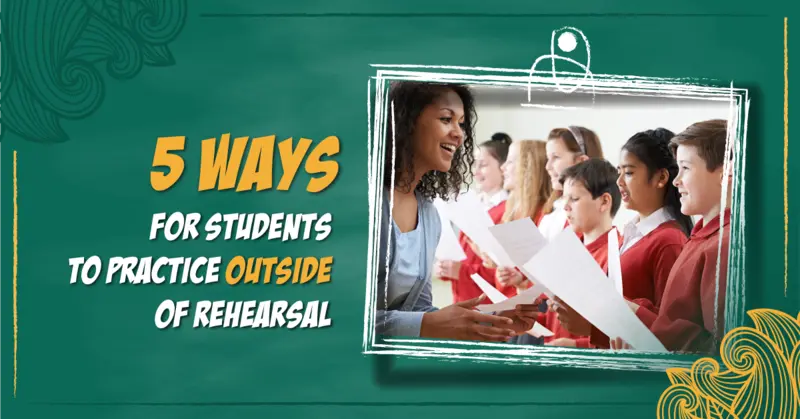
5 Ways for Students to Practice Outside of Rehearsal
Acting

5 Ways for Students to Practice Outside of Rehearsal

Rehearsal time is precious–there’s usually never enough of it–so when rehearsing a school production, you and your students will want to use your time together as effectively as possible. Practicing outside of your designated rehearsals is absolutely essential to help students succeed! Here are five ways that students can practice outside of rehearsal, so that they can maximize their in-rehearsal productivity: 1) Prepare in advance Students should look ahead on the rehearsal schedule and review material in advance. If the plan for next rehearsal is to block Act 2, Scene 4, students should review their lines and cues ahead of time, so they’re fresh and familiar. When students get to rehearsal, they should be ready to work. Please note – unless they are specifically told to, students should not memorize their lines prior to rehearsal. Directors will most likely have a certain vision for how the student’s character will be portrayed, which might not be the same as what the student prepared. It can be difficult to undo the work that a student has already done. 2) Use technology It’s the rare student who doesn’t have a smartphone these days. Phones can be distracting; but when used creatively, they can be useful rehearsal tools. Students can film themselves performing and then watch it back critically, looking for tics or bad habits like slouching, mumbling, or playing with their hair. Students might also wish to record dance or combat choreography to watch later while practicing at home, as a video reference. Students can also use a voice-recording app to review their lines. Have students record themselves saying their cue lines and leave spaces in between for their actual lines. Then, have students play back the recording and recite their lines aloud along with the recording. 3) Get together with a group Encourage students to get together with their friends to work on their theatrical pieces outside of rehearsal. This helps students to not only review their work but also bond with their castmates. It’s fun to get together with friends and practice – why not socialize and get some review in at the same time? Students could do line runs, plunk out notes on the piano, review choreography, watch a film adaptation, listen to the cast album… 4) Mix up learning styles There are three main learning types – visual, auditory, and kinesthetic. Visual learners might read and re-read their lines, or copy them out onto cue cards or post-its and put them up where they can read them all the time (like on the bathroom mirror while brushing your teeth). Auditory learners might record themselves saying their lines and listen to the recording over and over, or listen to the cast recording of the show rather than read the sheet music. Kinesthetic learners need to get up and get physical – actually walk through the blocking while reviewing lines, get up and do the choreography over and over, or practice while doing another activity, like working out or going for a walk. If students feel that they’re stuck or like they have hit a roadblock with their review, encourage them to try a different learning style on their own time. 5) Make healthy choices Performing is very physical. It’s important for students to keep themselves in good health both physically and mentally, so they are able to focus in rehearsals and performances. Encourage students to take care of themselves by eating nutritious food, drinking tons of water, getting some exercise and stretching, and getting lots of sleep. Remind them to plan their schedules ahead of time, so they can keep up with their studies and not feel stressed about balancing rehearsals, homework, and the rest of their lives! It’s also a good idea for students to be aware of what other activities they’re involved in and make smart choices – just before show week might not be a good time to take up any extreme sports or scream their guts out at a concert!
10 Tips from Do-It-All Directors
Directing

10 Tips from Do-It-All Directors

We recorded a podcast featuring 9 teachers from all over the country, in both middle school and high school programs, to find out what makes them able to do it all when directing a play. Here are 10 of their best tips: 1. Build a program that allows students to develop responsibility and grow their skills.“I give a lot of the responsibility to the students. When we get ready to move our show onto the stage from the shop, kids each have a specific task to do. And they’ve kind of come up in the ranks so they’ve earned that responsibility and they’re very competent, very hard-working, and very talented. I do leave the majority of it up to them. That helps me a lot because it frees me up to be more of a director than someone who’s in the trenches backstage.” 2. Have patience.“Just have patience that, in the end, the result is most of the time going to be excellent: the kids are going to be excited, the parents are going to be happy, and the school system and the community are going to benefit. You know, the show doesn’t have to be perfect. We’re going to miss sound cues. Sometimes, the light board is not going to come on. Whatever the situation, you’ve just got to be a little patient and a little bit flexible and just proud that the kids get the opportunity even if every show is not to perfection.” 3. Plan carefully and well in advance.“I always make sure that I’ve got my season picked out at least by June of the previous year. That allows me to spend a good deal of the summer planning. It also allows me to give roles to students and that’s been a huge asset– training kids. “Hey, Noah, we’re doing these shows next year and I need you to be the sound designer so I need you to start researching.” Being able to give different roles to students, give them the time to work on it, and then as well as for me to come up with, “Okay, we’re going to build this so we need that, that, and that.” I try to set up our rehearsal schedule as early in advance as possible.” 4. Pick one thing and do it well.“Choose one thing to learn each year and really concentrate on it in your production. I tried to do everything and it just was very overwhelming. I was way too scattered on my first production, to have everything at the level that I wanted it to be at. I know that in maybe five years I will have it at a level that is a little bit more professional, but I’m just going to have to really concentrate on studying one area each year and work on that. Then, that’ll carry through to the next year and I will pick another area.” 5. Set high expectations for your students.“I ask them (my students) to be little bit more mature and, you know, if I run into something, I have to say to them, “Guys, if you can’t help me do this, we can’t do this.” So, I just really put it out there for them and they really step it up , so I’m pretty lucky.” 6. Don’t give up.“Eventually, it gets better. You find things that work. A lot of times you fail and a lot of times you make mistakes. But that’s how we learn and that’s how we grow as educators and directors. Don’t give up because there are times that it’s hard and there are times that you just feel like you want to throw in the towel and you think to yourself, “What is this for?” But then, on those opening nights, when those kids are standing onstage taking their bows and the audience is standing and giving them a standing ovation–that’s what it’s for. It’s for them.” 7. Use recycled materials.“One year, I used all recycled materials for every piece of scenery. We had to have a great big wall that got knocked down in the middle of a particular play. We just asked people to bring in their garbage boxes and we used craft paper that had been used to cover the tables in the art room and we covered them all with that and then we wrote graffiti on them. And so, the whole set was this big recycled project.” 8. Involve the parent community with specific tasks.“I have found that the parents of my students and cast members are not unwilling to become involved. It’s that they literally don’t know what to do. I think that the first and foremost step should be communicating with them the exact jobs that are needed. Be as specific as you can: “We need somebody who is skilled with carpentry to volunteer some time–any time you have–to help us build some acting blocks or to build some canvas flats for us.” Listing off as specifically as possible what is needed is an important element. I think what winds up happening is you start to develop a culture that’s sort of (for lack of a better term) an underground culture of knowledge of what’s needed.” 9. Use a contract.“It’s in the student contract that the parents actually have to contribute to the production and that helps take some of that stress of actually getting it all done off of me. We try to offer enough different kinds of jobs, like bringing water backstage for the kids. That’s not something that requires a whole lot of time, but it’s time that somebody has to take, and it helps out the production.” 10. Count on your students.“When people are feeling the struggle, I think that the answer is always right in front of you–to use your students and to give them responsibility. What a wonderful teaching moment!”
Exploring Spoken Word Poetry
Acting

Exploring Spoken Word Poetry

Spoken word is poetry that is meant to be performed for an audience, rather than just read on a page. Spoken word has a freedom to it. Spoken word poems can use alliteration, rhyme, repetition, slang and word play…but there aren’t specific rules or a certain format to follow. Spoken word poems don’t have to follow a certain meter or have a set number of lines. However, this doesn’t mean that that spoken word poems are wishy-washy. They are meant to be highly personal and full of emotion, opinion, and attitude – which makes spoken word so perfect for students to explore. It allows students the opportunity to share their thoughts, and provides a platform for them to do so. It also builds on important performance skills taught in the drama classroom, including memorization and rehearsal, vocal projection, enunciation, tone, gestures, facial expressions, and confidence. So, let’s get students exploring spoken word poetry! Here’s an exercise that will help them develop a piece to be performed. 1. Start with a topic that evokes strong, personal feelings.This is not the medium to play it safe. Think in grandiose terms: my greatest success, my worst fear, my most hated experience, my biggest goal in life, the issue that I feel most strongly about. I am a huge fan of brainstorming – take 2 minutes and have students brainstorm a list of words or sentences about one of the topics listed above, or another topic of your choosing. Remind students that what they write is meant to be performed. If they aren’t comfortable sharing their thoughts on a certain topic, they should go in another direction with their topic. 2. Develop clear visual imagery around the topic.If your topic had a visual image, what would it be? What colour is your topic? How does it look, feel, smell, taste? If your topic was a person, what would they be like? Have students create a mood board by cutting out imagery from magazines or printing photos off the internet to make a visual inspiration of their topic. 3. How do these images translate verbally?Students will take their mood boards and brainstorm lists and use them to inspire their piece of spoken word poetry. On a new piece of paper, have students write the following words: • I see • I hear • I smell • I touch • I taste • I feel • I think • I wonder • I want • I am Students will then complete the sentences in relation to their topic. Once those ten sentences are complete, cross out the “I” and first verb, and voila – students have a whole series of imagery that can be sorted, re-arranged, and worked around to make their spoken word poem. 4. Practice and perform.Once students have their poems written, it’s time to practice and perform. All spoken word pieces must be memorized. In class, allow students to partner up and perform for each other as a practice round, before having students perform for the entire class. Remind students about the qualities of good performance: projection, ennuciation, variety in tone, gesture, eye contact with the audience, and emotional expression. This is not a poetry recital, it’s a spoken word performance!
Create and Perform a Radio Play
Classroom Exercise

Lesson Plan: Create and Perform a Radio Play

Radio plays are theatrical performances that are purely auditory; they’re meant to be performed on the radio, hence the name! There is no visual aspect, so performers must rely on their vocal performances as well as sound effects and music to convey the story to the audience. Radio plays are fantastic for students to practice and develop many performance skills like projection, diction, and using emotion, without the pressure of actually getting up and performing in front of others. It also gives students the opportunity to creatively work with playwriting, selecting appropriate music, and creating sound effects. The following exercise gives students the chance to create their own radio play using a children’s story as the source material. They will then have the opportunity to perform their play for the rest of the class (either a live or pre-recorded performance). Click below for a four class Lesson Plan version of the exercise! Pre-Assignment: Play examples of radio plays for students. This will reinforce for students that all storytelling aspects have to be oral – there are no visuals! You should also look for some examples of radio play script formatting. It’s a different medium than a regular stage play. 1. Selecting the Source Material Students will form groups of 4-6. In their groups, students will select a children’s story to adapt into a radio play. 2. Writing the Play Students will adapt the children’s story into a script. Remind students to follow the radio play script formatting. Many radio plays use a narrator to set the tone of the story, switch between scenes (“Meanwhile, back at the ranch…”), and to keep the action going between character’s lines. Focus on creating really clear, strong, descriptive lines by using adjectives and “sense” words (sight, smell, taste, touch, sound) to set the mood. For example: • “Jessica sauntered into the room in a shimmering green evening gown.” • “The scent of freshly-baked cinnamon cookies made Mike’s mouth water.” • “A frightened Kyle peeked out the window to see a tall, sinister-looking man skulking around the garbage cans.” • “The wolf grinned menacingly, revealing a huge set of glistening-white, razor-sharp teeth.” 3. Choosing Appropriate Music and Sound Effects Students will choose at least 3 clips of music (one for the beginning of the piece, one for a significant part of the middle of the piece, and one for the end) to use in the play, as well as at least 5 sound effects. These sound effects can be found online or in a sound effects library, or they can be created live. Students must ensure that the music and sound effects are appropriate for the scene while not overpowering the vocal performances. 4. Casting and Rehearsing the Play Students will each take a role in the play and develop an appropriate character voice for their part, focusing on clear diction and enunciation, and showing emotion. Remember that there’s no visuals, they have only their voice to work with. Students should rehearse their roles so they are comfortable and familiar with their words. Performances do not have to be off-book, but will be MUCH easier if students are well-rehearsed. NOTE: If there are not enough roles to go around, one student can be solely in charge of performing the sound effects, or the narrator role should be split up. Alternatively, students can adapt their play to include more characters. 5. Performing the Piece Students have two options to perform the piece: LIVE: Students will perform the piece live, in front of the rest of the class. The rest of the class will face away from the performers while they are presenting, so the group cannot use visual clues to tell the story. Music and sound effects will be performed as part of the presentation, either performed live or by utilizing prepared music and sound effects (on a computer, CD player, or MP3 player). PRE-RECORDED: Most cell phones come with an audio recorder, or students can create their performance using a microphone and audio recording software on their computers (like Audacity or Adobe Audition). Music and sound effects will be performed during the recording, either performed live or by utilizing prepared music and sound effects. The recorded performance will be brought to the class and played for the rest of the class to listen to.
Shakespeare Set in Another Time
Acting

Shakespeare Set in Another Time

Since Shakespearean plays have been around for hundreds of years, we need to shake things up by trying new ideas in order to make these shows different and exciting. One of the most wonderful things about Shakespearean plays is the freedom to be able to set them in another time and place. Here’s a classroom exercise that will get your students thinking outside of the box when it comes to Shakespeare! There are three variations to this exercise: 1. Students all work on the same play but with different time settings; OR 2. Students all work on different plays set in the same time and place; OR 3. Each group has a different play and a different time setting. Divide students up into groups. Have each group select a Shakespearean play and a time setting. Here’s a list of time settings, places, archetypes and themes to get you started: • Traditional English Renaissance • American Frontier (“Wild West”) • Paleolithic (dinosaurs/cavemen) • 1860’s American Civil War • Roaring 20’s (flappers) • 1950’s Greasers • 1960’s (“Mad Men” or “surf culture”) • 1970’s Hippies/Flower Children • 1980’s “Yuppies” • Outer space (modern or retro) • Vaudeville • Steampunk • Circus • Edward Gorey/Charles Addams/Tim Burton • Modern (current year) Students will need to research the history, fashions, political backgrounds and world events that occurred during that time and use it to create a design or performance concept for their selected play. As a group, they will choose PERFORMANCE or DESIGN, and they will complete the assigned tasks listed below. For a greater challenge, have students complete both sections! DesignThe group will work together to create a themed scrapbook, illustrating the play’s concept. Include the following parts: 1. A set design sketch. 2. A colour scheme, with swatches/fabric samples. 3. Costume design sketches/tear sheets for four characters. 4. A playlist of five songs to be used for atmospheric music, pre- or post-show music, or for the final curtain call (for bonus points, include a CD with the songs). 5. A brief write-up that describes why the concept was chosen for that particular show, and how the concept is going to be used to tell the story. 6. The scrapbook itself should resemble the concept as well. For example, for a Wild West concept show, perhaps the scrapbook has fake bullet holes in the cover; or for a circus concept show, the scrapbook is shaped like a circus tent. PerformanceThe group will work together to learn and present a 5-minute scene from the assigned play, illustrating the concept through performance. Have students include the following parts: 1. Pre- and post-scene music. 2. All group members must have lines, and all lines must be memorized. 3. At least one costume item or accessory for each student that illustrates the concept (for example: cowboy hats for a Wild West concept scene). 4. Three or more props that demonstrate the concept (for example: perhaps for a modern concept scene, a letter might be read from a smartphone – or for a Paleolithic concept scene, a letter might be in the form of smoke signals or a cave painting). 5. Students should think about how they can present the concept through their performances. Have them think about accents, jobs, or tasks, and how the characters carry themselves. A steampunk Romeo & Juliet will look and sound very different than a 1950’s greasers Romeo & Juliet! For example, think about the party scene in Romeo & Juliet – a 1950’s greaser version might have the characters at a sock hop, while the steampunk version might have the characters waltzing! Have all students complete a reflection after the assignment is completed/presented.
5 Tips for Preparing a Monologue with Confidence
Acting

5 Tips for Preparing a Monologue with Confidence

Monologues. The word can send shivers down the spine of the bravest actor! It’s just you up there on stage with all those words. When faced with a monologue, will you sink like a rock or shine like a star? Here are five tips to help you prepare a monologue like a champion! 1. If you get to select your monologue, choose one you really like.If you need a monologue for an audition, competition, or class project and you get to choose your piece, that’s fantastic! You are already at an advantage because you get to choose the piece yourself. Pick a monologue that you really like. You’ll be more eager to work on the monologue and practice it if you love the piece you’re performing. 2. Break down the monologue.Monologues can be intimidating because they are a huge chunk of text on a page. Breaking them down into smaller chunks can help you memorize the lines and really understand what the character says or feels. Read through the monologue and separate it into sections or “beats.” A change in thought or topic is a different beat. Make a note about the overall theme or topic of each beat (try to keep it to one or two words). The theme/topic words will help jog your memory when memorizing your monologue. This is why you make a note in your own words — so it makes sense to you! Then re-write or type out the monologue in the beat sections for memorization purposes. Smaller chunks of lines are often less intimidating to learn than pages of text. See the giveaway below for an example. 3. Get memorization out of the way early.Memorizing lines is just the tip of the iceberg. It is even better to get your lines memorized (accurately!) as quickly as possible. This will help alleviate stress when you go to perform. You’ll be able to focus on your character and movements instead of struggling to remember the next word. There are lots of ways to memorize monologues – try reading it out loud, recording your voice and listening to it, typing it out, or handwriting it. Experiment with different techniques to see what works for you. 4. Record yourself performing the monologue, then watch the recording.As part of your rehearsal process, use a smartphone or digital camera to record yourself performing. Then watch the recording while taking notes on the performance. It can be hard to watch yourself perform, but it is an incredibly useful process. You will be able to see first-hand exactly what you are doing well, and what you can improve on. You might notice that you have great facial expressions while you’re performing – awesome. Keep that! You might notice that you have a nervous habit you didn’t realize, such as smoothing your hair or clothes, leaning or swaying, or looking around without a focus. Perhaps you can’t understand yourself because you’re speaking too quickly or softly. Write down what you did well and what you can improve on. Then, try again! 5. Focus on your character and block everything else out.The most important part of your monologue preparation should be to create a three-dimensional character. As you prepare, think about your character and what he or she wants. Keep that goal or desire in your head at all times, to keep you focused. Bonus! How do you deal with performance nerves? Worried about a test, something your friend said, or the actual performance itself? Here are a couple of tricks to eliminate external worries so you can focus on the task at hand. • Take a slip of paper and for two minutes write down all your worries. After the two minutes are up, crumple up the paper or rip it up and throw it in the garbage. Get those worries out of your head and away from you! • If you’re worried about the performance itself, try this visualization technique: Imagine yourself performing your monologue with confidence. Imagine yourself walking onstage calmly, performing the monologue with clear diction, strong characterization, and crisp movements. Imagine the audience giving you a standing ovation! How does this visualization make you feel? Hopefully, it makes you feel calm, cool, and confident. Now get out there and wow the audience with your performance! Kerry Hishon is a director, actor, writer, and stage combatant from London, Ontario, Canada. Check out her blog at www.kerryhishon.com.
What Play Do I Do Now?
Production

What Play Do I Do Now?

Some drama teachers have their whole production year figured out before the first day of school. If you’re doing a big musical, you need to get that paperwork started way in advance. Or maybe you need to coordinate using the theatre space with other departments – you need to know what you’re doing and when. Or, if you’re lucky, you have an engaged drama club and they’re reading the plays and deciding what they want to do ahead of time. But sometimes all that planning goes out the window. You choose a play, hold auditions and the actors you think you’re going to have don’t show up. Or you choose a small cast play and are faced with a flood of wonderful auditions. And sometimes, just the act of choosing a play is the issue. It can be an overwhelming and frustrating experience. Auditions loom and you still haven’t chosen a script. If you’ve stared at a stack of play catalogues with panic in your eyes, we here at Theatrefolk are ready to come to the rescue! Ok. We’re not a superhero. But we can give you some guidance to what we have available and how you can swiftly navigate our catalogue. If you’re frustrated with your search, or if you have to make a last minute decision NOW, have a look at the following plays. With each play there’s a link to the website page where you can read free sample pages. Enjoy! Top SellersWant something popular? Try these! Hoodie by Lindsay Price Hands down, our most popular one act. Hoodie is a middle school play about self image and appearance. Great for classes, and the kind of play that lets you cast every kid who auditions.
Preparing for Competition: Important Pre-Performance Considerations
Directing

Preparing for Competition: Important Pre-Performance Considerations

This post is the third of three posts about preparing for the typical high school competition. Part One looked at the most important question when choosing your competition piece. Part Two looked at the most common performance issues and how to fix them in rehearsal. In Part Three we’re going to look at important pre-performance considerations on the day of competition. I have watched many schools set up before their performance. In one example, there were 22 pre-sets. In this particular competition, every school was given the same amount of time do a walkthrough of the performance area (5 minutes). Every school was given the same amount of time to pre-set immediately preceding their performance (2 minutes). Every school had to carry their set the same distance from the “green room” to the stage. And every school had the same amount of performance time (45 minutes) in which some, none, or a lot of time can be eaten up by moving their set on to the stage. It’s fascinating to watch how differently schools approach their pre-performance time. Some barely use the walkthrough time given to them. Some frantically try to mash in a multitude of exercises. Some had to bound off the stage as their allotted time counted down. It was clear which schools had rehearsed moving their set and which had not – I was amazed to see how many schools struggled with moving their set, to the point of struggling to fit it through the doorway from one room to another. It was not my job to judge anything that happened in the pre-set. But from a nerves standpoint, I can’t but think that schools who struggled in the pre-set were extra nervous when they started to perform. Day of Pre-Performance To Do’sKnow your time rules. Make sure every performer knows exactly how long they have in each section: walkthrough, pre-set, performance. Make sure each performer knows the job they have to do, and how much time it takes in the pre-set. And if you have to set up your set during your performance time, every performer should know how long that eats into the show time. No one should ever utter the phrase “I didn’t know!” Further to that, encourage performers to help each other in times of struggle. Create a community among your actors, encourage them to work together and that will ease any panic that may occur due to unforeseen time problems. Know your space. “Measure twice cut once” is the old adage. Know how big your set is, how narrow an area it needs to fit through, and any unusual elements, such as walking a riser down an aisle that may have people on either side. Know how many steps lead up to the stage. Know if there is a upstage cross. Know where actors have to stand so they won’t be seen by the audience. Know everything, and again, don’t hold back on that information. Be a community. Your stage manager should know, your actors should know, everyone needs to know the information which will help you, as a community of performers, get the best out your limitations. Rehearse your set up. Make the set up part of your show. If you have a walkthrough, mark out where everyone goes in the pre set. Think of the set up like a choreographed section before your play, and not a frenzied dash out of character. Go through it over and over again so that you present yourself as professional and efficient. People notice when you’re professional and also when you’re running around like a chicken with your head cut off. Always strive for the former. Have a warm up routine in place. There is nothing more nerve wracking than waiting to perform. When I was an actor it was never the onstage time that rattled me, it was always the moments before! Make warm ups a habit, create a routine that you do before every rehearsal. And then instead of letting nerves get the better of you as you wait to get on stage, go through your routine. Sometimes, all you need to do is warm up your body, and run through a few breathing exercises to cure those vocal issues I talked about on Thursday. Some other things to think about*Don’t look at the judges. * Really. Don’t try to make eye contact during the show, don’t address monologues to the judges, tell your parents not to turn around and stare at the judges afterwards. Your job is to perform the play to the best of your ability. Do that and not get involved with anything else. Which brings me to…. *Don’t read into what the judges are doing. * You are only in the performance space for a short time. A judge has been there all day. I judged from 8 o’clock in the morning till 6:45 at night. That means, judges need some release. That means they may be drinking a coffee. They may be laughing with each other. They may be chomping on candy. And after the show, they may look like they loved your show, or they may not. They may stand up and start pacing. They may yawn. You have no idea what that means toward your score. You just don’t. So don’t guess by their action, as their actions may have nothing to do with your show. Again, focus on your job and don’t get involved with figuring out what it means if a judge scratches his head four times during your show. Don’t believe everything the judges say. Remember it’s only one person’s opinion. Theatre is subjective and yes it’s a judge’s job to be objective but what if one judge felt actor A was great and another thought actor A was overdoing it? Who’s right? It’s subjective. Now having said that if you have three judges and every single one wrote “Watch your diction” on their form, then it’s a pretty good guess that your diction needs work. The rule of three is always a good rule of thumb – if three people say such and such needs work, you can’t be pig headed about it. Remember to have fun. Oh, I know it’s hard to have fun during a competition. And some people think winning and striving to win trumps everything, even having fun. But if you’re not having fun with your performance, what’s it all for? What’s the point? When you’re having fun, you’re more relaxed and that is always going to benefit your performance.
Video Tip – Performing Abstract Plays
Directing

Video Tip – Performing Abstract Plays

Today we offer a video tip from Lindsay. How do you get the most mileage out of abstract plays?
Do You Perform Monologues with a Secret Scene Partner?
Acting

Do You Perform Monologues with a Secret Scene Partner?

The stage can be a lonely place when you’re performing a monologue. It’s just you. Well, you and your wits. And your anxieties. Maybe your fears, too. Sure there’s an audience, or maybe a stern-looking judge, or a roomful of fellow competitors. But if something goes wrong, or you need someone to play off of, you’re stuck with your aforementioned wits. I’m one of those actors who likes acting with other actors. So when I perform monologues I always smuggle an SSP with me. What’s an SSP? It’s my Secret Scene Partner, of course! I think that the most important question to ask yourself when preparing a monologue is this: Who are you speaking to? So many times, I see students speaking their monologues to a generic “Nameless Faceless Void.” This will never be the best acting choice. The best acting choice is always the most specific acting choice. Here’s how to create your very own SSP. PhysicalIs your SSP… • Standing? Sitting? • Moving? Still? • Taller or shorter than you? • Male? Female? Human? Animal? Alien? • Pointing a gun at you? • Putting gum in your hair? • On fire? Drowning? Walking on a tightrope? Putting their head in a lion’s mouth? Drawing mustaches on portraits in the museum? Emotional/PsychologicalHow is your SSP responding to your monologue? Are they… • Listening attentively? • Mocking you? • Ignoring you? Deaf? • Talking overtop everything you say? • Crying? • Laughing at your serious monologue? • Crying at your funny monologue? Actor-y Questions• What do you want from your SSP? Do you get it? • What does your SSP want from you? Do they get it? • What is your SSP’s journey during your monologue? Once you’ve sketched out your SSP, try your monologue again. Then, change your choices and try the monologue again. Try a variety of SSP scenarios. Think outside the box. Try SSPs that have nothing to do with the play. Try SSPs that you think are completely wrong for the play. Avoid safe choices, the ones that are easy on your character. Choose the one that challenges your character the most; this will always be your most interesting choice as an actor.