📣SCRIPT SALE! Treat yourself to an easier Fall. Save 30% on 5+ perusal scripts with code SPRING30 before May 3 and head into summer stress-free.
School Plays
Featured Plays
A Student-Driven Success: The Canterbury Tales
Great characters, lots of humour, strong ensemble work and a lively adaptation of a classic collection. Lindsay Price’s The Canterbury Tales is all that – and so much more.
Chaucer’s classic collection of tales comes to life in a brilliant full-length adaptation.
A group of travelers set out for Canterbury on a pilgrimage. To pass the time they entertain each other with a storytelling contest. Best story wins a prize.
Each and every performer gets a chance to shine in this spirited, charming script.
The student performers at Los Alamitos High School in Los Alamitos, California all had the chance to shine – as they tackled this comedic adaptation from top to bottom, giving their own unique twist on the production:
“We opened The Canterbury Tales last night and it went SO well! This show was 100% designed and built by students: sets, costumes, props, lighting, sound, publicity, stage management, and run crew.”
Featured Plays
Theatrefolk Featured Play – Nerd Herd by Christian Kiley
Welcome to our Featured Play Spotlight. It’s time to channel your “inner nerd” and join Christian Kiley’s Nerd Herd as they go on the adventure of their lives. A funny and endearing look at love, dreams, slushes, and the unexpected twists and turns that life takes when you’re saving the universe.
Herman, Louis, and Francene are fanatical fans of Gallactica! – the hottest show on television. They watch every episode, quote lines from the show, and predict future episodes. When they learn that Gallactica will be at the upcoming Comic Book Palooza, Herman suggests they attend. It will be the best quest three friends could ever undertake!
But these three friends aren’t exactly being honest with one another. Herman loves Gallactica… but Francene is more in love with Herman, and Louis is head-over-heels for Francene. Will the truth come out? Sometimes the quest you want becomes the quest you need.
Why did we publish this play?
Nerd Herd is a delight. I love that the characters are funny and flawed. Flaws are important – we need to see characters struggle in order to connect with them. I worry that we’re taking all the struggle out of things. Everyone thinks Gallactica is perfect- she’s saved the earth many, many times. But she’s far from it. And all she really wants is some popcorn and a slush. Don’t we all? Read this play. Do this play.
Let’s hear from the author!
1. Why did you write this play?
Yes! I am a nerd, I was a nerd, I shall forever be a nerd! As a kid I had all the Star Trek shirts. Gold for Captain Kirk, blue for Spock, red for Scotty, and those nameless characters who were soon to be melted down to cell juice by an alien creature.
My wife and I disagree on this but I love the fantasy genre. I grew up on a steady diet of Star Trek and Star Wars. It was a time when you could not stream anything (unless you count water) and your favorite show was something you waited for in a state of exuberant agony.
I also like underdogs. I cheer for the undersized quarterback, the upstart entrepreneur, and the undervalued student. This play is for them. And me. And us.
2. Describe the theme in one or two sentences.
I would say the theme is to look at and appreciate what you have, what is right in front of you, the present moment. Herman has these great friends but he is caught up in this fantasy world (so much so that he does not see the amazing things right in front of him).
3. What’s the most important visual for you in this play?
Any moment when a mask comes off (literally and figuratively).
Masks, costumes, and covers. The idea of what we appear to be versus what we actually are. This is articulated in my favorite quote (mentioned above). Elaborate costumes are fun but they do not always do justice to what is underneath.
4. If you could give one piece of advice for those producing the play, what would it be?
Find or rediscover your inner nerd, bring her/him out to play. The cast of our production at Etiwanda High School had such an unabashed joy that it was infectious. I think we have all been starstruck by a show, musician, or iconic character. Tap into that!
5. Why is this play great for student performers?
This show has fun, quirky, multi-dimensional characters who go through changes. Anyone who has felt like an ardent fan of anything can relate to this play. My inner fanboy cries out for (insert name of star). But truthfully, it is a journey of self-discovery. Who am I under the mask?
Featured Plays
Theatrefolk Featured Play – The Tragicomedy of Julia Caesar by Dave Hammers
Welcome to our Featured Play Spotlight. The Tragicomedy of Julia Caesar by Dave Hammers is a fantastic adaptation that lets students have a great time with Shakespeare – all while letting the audience see what’s going on behind the scenes.
Sarah and Dave think it would be fun to direct a play for drama club. And they both love Julius Caesar. What could go wrong?
How about a drama diva who wants to play the lead, wants her way with the story, and wants a post-death dance number? Rome is now in Georgia, Brutus is allergic to peanut butter, and there might be a giant killer robot on his way to crush Caesar’s enemies. Nothing wrong at all.
Why did we publish this play?
Parodies are tricky. You can play them totally wacky. Or you can find the balance between taking a story way left of centre and still find a genuine quality to the story. The Tragicomedy of Julia Caesar has that balance, and better still a million parts for girls in a Shakespeare play that is pretty bereft of female characters.
And on that note, this play has character, character, and more character. The best comedies are always based in strong characters who when they go after what they want, chaos ensues. You’ll never see Rome….Georgia in the same way again.
This full length is easy to stage, incredibly fun to play and a great way to open the door to Shakespeare.
Let’s hear from the author!
1. Why did you write this play?
The year before I wrote it, my school put on a parody of Hamlet, and as we were staging the production, I honestly just kept saying to myself “I could do this, I could take a Shakespeare play and write a parody of it.” And so once we were finished, I sat down and tried to write one myself, and Julia Caesar was the result.
2. Describe the theme in one or two sentences.
I think the major theme is the “chaotic fun” that surrounds a school play production.
3. What’s the most important visual for you in this play?
Brutus eating the peanut butter and jelly sandwich, placing it calmly back on the plate, and then falling face first into it as she “dies.”
4. If you could give one piece of advice for those producing the play, what would it be?
Have fun with it. It really is all about the fun and craziness that often surrounds putting on a play production at a school.
5. Why is this play great for student performers?
It’s fun, it allows the students to be their dramatic selves, and also helps them to learn a little about Shakespeare and Roman history as well.
Featured Plays
Theatrefolk Featured Play – The Snow Show by Lindsay Price
“There is the Grand Canyon of difference between ‘Yes, I can ski’ and ‘Yes, I can ski Smelly Dogface.’”
Welcome to our Featured Play Spotlight. Let is snow, let it snow, let it snow! The vignette play, The Snow Show, by Lindsay Price is a character driven toboggan ride through every experience you’ve ever had with snow.
Cross your fingers and toes for six more weeks of winter. Stick your tongue out to catch the first snowflake. Wish for a snow day. Make a snow angel. Stand at the top of the most intense, intimidating ski hill ’cause those girls said you were cute.
Love snow, hate snow, never seen snow, this play is for you. Whether you live in Juno or San Francisco, Toronto or Orlando, your audience will get frostbite for The Snow Show.
Let’s hear from the author!
1. Why did you write this play?
I wanted to have a winter time play that wasn’t connected to a specific holiday. Having said that, it’s amazing how many situations, themes and characters there are surrounding the topic of snow.
2. Describe the theme in one or two sentences.
A character driven toboggan ride.
3. What’s the most important visual for you in this play?
This play has one of my favourite scenes in it – “Remember the Burrito” about wishes coming true if you catch the first snowflake of winter on your tongue. The wishes of seven year olds are a lot different than the wishes of teenaged girls. So seeing two teens with their tongues stuck out as far as they can with wishes on their mind is a lovely image to me.
4. If you could give one piece of advice for those producing the play, what would it be?
Have fun and remember the joy of playing in the snow as a kid. There’s a wonderment to many of the scenes, and a wistful nostalgia because none of us are kids any more. And no blackouts. :)
5. Why is this play great for student performers?
There’s a wonderful variety of characters, pacing, and scene types – all of which can be pretty much played on a bare stage. It’s all in the acting and the imagination.
Featured Plays
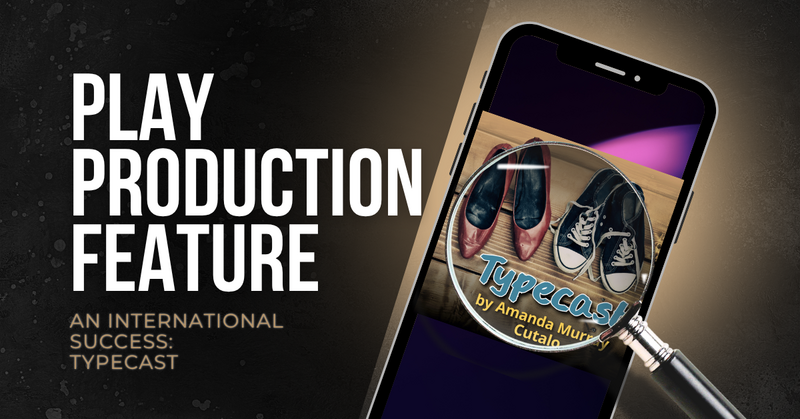
An International Success: Typecast
“TYPECAST: To cast a performer in a role that requires characteristics of physique, manner, and personality similar to those possessed by the performer.”
In the comedy Typecast by Amanda Murray Cutalo, students have all mysteriously been cast in the “wrong” roles. However, it was definitely the right play for the talented student performers at Tsumeb Gimnasium in Tsumeb, Namibia. Translated into Afrikaans as “Roltomtalie”, and under the direction of Petri van Wyk, this incredible team brought their own international flair to their production of Typecast.
The auditions for an upcoming production of Cinder White are underway and Ms. Thespis, the drama teacher, is greeted by a small group of students, each with a particular “look” and personality – the “diva,” the “quiet girl,” the “nice girl,” to name a few. To Ms. Thespis, casting this show seems like a no-brainer. However, when she comes down with a case of appendicitis, Ms. Ball, the gym teacher, needs to step in and direct the show, mostly because she feels guilty for balding Ms. Thespis’ pet ferret.
The other snag is that the students have all mysteriously been cast in the “wrong roles”- the “nice girl” is now the villain, the diva only has 2 minutes onstage, and the quiet, almost inaudible, “ensemble” girl is now playing a leading role with actual lines! As these characters awkwardly venture into unknown territory, they are forced to see themselves as more than their “type” and learn to, in the words of Ms. Ball, “play the roles they’re all totally wrong for.”

Featured Plays
Mime, Masks and Movement: Emotional Baggage
How do you tell a story without using dialogue? Emotional Baggage by Lindsay Price is an incredibly unique offering for students that focuses on non-verbal storytelling through mask and movement.
Seven strangers meet in a train station. Instead of luggage, they all carry their “emotional baggage.”
They must confront themselves and one another. Everybody carries emotional baggage with them. What’s yours?
The performers of the non-profit group, Offtopic Theatre Co. , in the Fraser Valley of British Columbia took on this incredibly unique play and received award-winning results at the Fraser Valley Zone Festival, including a special certificate for Artistic Risk. These pictures they shared with us definitely show how much can be shared without ever saying a word.
Featured Plays
Theatrefolk Featured Play – Santa’s Zombie Apocalypse by Bradley Walton
Welcome to our Featured Play Spotlight. Does anything say ‘Christmas’ more than Santa… and zombies? We don’t think so! Our newest holiday play, Santa’s Zombie Apocalypse by Bradley Walton is ideal for middle school and high school performers and will definitely give everyone a holiday experience they won’t forget.
When Santa is trapped by zombies (who have somehow gotten into the North Pole toy shop) two reindeer fawns are determined to save the day. But as they make their way through the toy shop encountering wayward zombies and stranded elves, they learn that saving the day is not as easy as it sounds. And it’s certainly not like any video game they’ve ever played. And why is that zombie eating a doll’s head?
Optional multimedia elements turn this play into a live-action video game. The script also includes suggestions for multilingual performers and gender-neutral casting.
Why did we publish this play?
This play is an absolute delight. It’s perfect for the holidays, especially if you want something a little less saccharine and a lot more zombies. Don’t you want to see a zombie say ‘All I want for Christmas is braaaaaains…..?' Add to that a completely gender neutral cast, great costume opportunities and best of all – tech options for your digital savvy students. I could go on and on but you’d be better off reading the play yourself!
Let’s hear from the author!
1. Why did you write this play?
I’d had the title kicking around in my head for years, but never had a reason to write a play to go with it. Then the annual spring play that I direct for my school got moved to December, and suddenly I had a very compelling reason. The problem was, I’d only had four students audition the previous spring. I was hoping for more this time around, but I figured I needed to plan for a cast of four, just in case.
So how do you do a play called “Santa’s Zombie Apocalypse” with 4 people? I hit on the idea of a reindeer fighting its way through the toy shop, one room at a time, to rescue Santa from zombie. In each room, the reindeer fights a zombies and rescues or interacts with an elf or one other character. One person could play all of the zombies, one person could play the reindeer, and one person could play all of the other parts, so I could get by with a cast of 3 if I really had to.
Conceptually, it sounded a lot like a video game, and there’s how the video game elements in this play originated. Likewise, the video phone bits came about as a way for characters in different parts of the toy shop to talk to each other if they were all being played by the same person. Of course, when we had auditions, I had way more than 4 people try out, and the script evolved from there.
2. Describe the theme in one or two sentences.
Don’t assume the person that you’re following knows what they’re doing, and don’t be afraid to ask questions.
3. What’s the most important visual for you in this play?
The zombies, because this is a family-friendly show and they need to look like zombies without being overly gory or frightening to children in the audience. For our production, my wife concocted a scheme of neon green makeup with red, white, and purple accents, and that worked great. Having the zombies dressed in Christmas outfits added to the effect.
4. If you could give one piece of advice for those producing the play, what would it be?
I’m not gonna lie: All of the optional technical elements for this play–the video game stuff, the captions, the video phone bits–are a lot of work, but they’re TOTALLY worth it in the end. Try to include as many of them as you can. The payoff is huge.
5. Why is this play great for student performers?
This is great for schools with a lot of diversity in their student bodies because the elves can all speak different languages. It’s great for schools with less diverse student populations because the elves can also all speak English. There’s a lot of flexibility in casting. It has fun, manageable roles for novice performers, and meaty leads with big arcs and emotional complexity. Plus, it’s called “Santa’s Zombie Apocalypse“. What’s not to love about that?
Featured Plays
Theatrefolk Featured Play – Ashland Falls by Steven Stack
Welcome to our Featured Play Spotlight. Are you looking to keep your audience on the edge of their seats? The high school mystery, Ashland Falls by Steven Stack is an intense theatrical experience that is easy to stage and comes with a twist ending that will make them question everything they’ve witnessed…
A school receives a mysterious script about a girl who died long ago. The director disappears. A new director arrives just in time and knows all about the story of the play. In fact, she seems to know it too well. And how did she get the dead girl’s ring?
Are the students of Herbert Hoover High too wrapped up in miscues, awful accents, and stolen boyfriends to notice? Revenge is coming. Who will pay the price when the real world and the play collide?
Each actor must play two vastly different roles in this spine-tingling comedy thriller.
Why did we publish this play?
I love mystery/horror plays. When I say “horror,” I’m not talking about slasher films. Horror can be creepy and mysterious and that’s why I love Ashland Falls.
With the play-within-a-play structure you have first a modern day high school cast and then their character counterparts. This presents a fantastic character showcase for your students. It’s easy to stage and has all the spine-tingling effects needed in a creepy theatrical experience. Plus, there’s humour to throw everyone off the scent. You’ll keep the audience on the edge of their seats with Ashland Falls.
Let’s hear from the author!
1. Why did you write this play?
One of my favorite plays in the world is Noises Off. I’ve acted in it two times (with the third coming up in two years), and I always wanted to write a play-within-a-play. I also knew I wanted to mix teen issues, horror, comedy, and a British ghost story. Once I knew what elements I wanted, I played in the creative sandbox until an idea appeared.
2. Describe the theme in one or two sentences.
For the first act: The rehearsal process is a melodrama within itself. Second act: There’s no limit to what some will do for family.
3. What’s the most important visual for you in this play?
When Ashley Donovan appears at the end of the first act behind Carrie, who cannot see her.
4. If you could give one piece of advice for those producing the play, what would it be?
To take the time for all actors to develop both of their characters’ backstories by creating character bios, discussions, improv, and any other ways that allow that actor to create to distinct three-dimensional characters.
5. Why is this play great for student performers?
This play is great for student performers because you get to play two fun and challenging characters, with one requiring you to develop a British accent. On top of that, it’s set in the world of high school acting and allows the actor to play a variety of genres including drama, comedy, and horror.
.png)
Featured Plays
All the Wonder of Wonderland: Alice
Follow us down the rabbit hole to discover wonderful adventures in the theatrical adaptation, Alice by Lindsay Price. Based on Lewis Carroll’s classic book, this one-act adaptation is a ton of fun for student performers and includes special effects that are practical, economical and entertaining.
Alice follows the white rabbit down the rabbit hole into Wonderland, where she meets a cornucopia of strange creatures.
A caterpillar gives advice, the Mad Hatter and March Hare are always at tea time, and the Queen of Hearts continually cries, “Off with her head!”
The Cheshire Cat says everyone in Wonderland is mad, and therefore Alice must be too. Has Alice lost her head? Only the Cheshire Cat knows for sure.
The drama students at Rio Grande High School in Albuquerque, New Mexico were truly wonderful in their production of Alice, and teacher Caitlin Reardon was happy to share their success with us!
.png)
Featured Plays
A True Ensemble Project: The Canterbury Tales
Are you looking for a great ensemble piece that gives every performer a chance to shine? Look no further than the classical adaptation, The Canterbury Tales by Lindsay Price, where Chaucer’s classic collection of tales comes to life.
A group of travelers set out for Canterbury on a pilgrimage. To pass the time they entertain each other with a storytelling contest. Best story wins a prize.
Great characters, lots of humour, and strong ensemble work. Text uses modern English.
Co-directed by Kimberly Schooley and Bronwyn Wyngaard the students from Bishop Mackenzie International School in Lilongwe, Malawi were all able to take part and shine throughout this production, showcasing their talents and involving everyone from beginning to end:
“The Canterbury Tales was the perfect play for a large, combined middle and high school cast in our international school in Malawi, known as “the Warm Heart of Africa.” The individual tales provided manageable parts for less experienced actors, and the pilgrim roles gave my more experienced students a wonderful platform to polish their skills. I was even able to include the extra students that auditioned by doubling some characters (the best was Death cast as two creepy old women played by a boy and a girl wandering around the stage together and speaking in unison).
The costuming and set design we did as an afterschool activity on its own, which included even more student ownership of the process. I have directed many of Theatrefolk’s scripts, because they are wonderfully written with children in mind, while at the same time providing the adults in the room with plenty of sophisticated and not so sophisticated laughs. The audience reception for our two-night run was overwhelmingly positive. Thanks, Theatrefolk and Lindsay!”
Featured Plays
Theatrefolk Featured Play – Labeled by Lindsay Price
Welcome to our Featured Play Spotlight. Labeled by Lindsay Price can definitely be labeled a fantastic dramedy for high school students.
It’s easy to stick a label on someone. You’re late, you’re a loser. You’re in detention, you’re bad. You’re slow, you’re not smart enough.
We do it every day. We’ve done it in the past, we’ll do it in the future. And these are the kinds of labels that are near-impossible to remove.
In three separate but connected scenes, characters push against the labels stuck on them by others.
Let’s hear from the author!
1. Why did you write this play?
Being Labeled is something students have had to deal with since the beginning of time. I thought about backtracking on that statement, but I think it’s true – looks label you, actions label you, relationships label you, where you live, who your parents are, all these things can slap a sticky reputation on your back whether you deserve it or not. That’s important to write about and it’s important to show students fighting those labels in a variety of ways.
It’s interesting to note that I actually wrote one of the scenes for a different play. When that play didn’t work out (which happens all the time) I didn’t want to let go of the characters in the scene. Sometimes the play you start writing, isn’t the one that ends up in the finished product.
2. Describe the theme in one or two sentences.
How do you survive your label?
3. What’s the most important visual for you in this play?
A character stands on a chair and shouts “The Titanic is fake!” It’s a great surprise moment, a great visual, especially in the response of the other characters, and a great story after the outburst.
4. If you could give one piece of advice for those producing the play, what would it be?
When you do the scene with the semi-circle of chairs don’t catch sitting-itis. No one wants to watch a scene where people sit for 10 minutes. Find out the different ways your character would use a chair, climb over a chair, get protection from a chair and so on. Think about the pictures you’re creating in your staging – you want the audience to be engaged.
5. Why is this play great for student performers?
The characters are telling student stories. Everyone in the cast and every one in the audience will connect to not being heard, to being dismissed, to being misunderstood, and wanting something more.

Featured Plays
Anxiety Never Looked So Good: Anxiety is Orange
Does orange make you anxious? The vignette play for high school and middle school performers, Anxiety is Orange by Lindsay Price will help you navigate through it!
Colours can be symbolic. Red is fiery. Purple is royal. Blue is calming. Sometimes, colours can take on too much meaning. I can’t date you – you wear wenge! He sent yellow flowers! Orange gives my brother anxiety!
Join the characters in this vignette play as they navigate the world, each other, and the greens, greys, blues, reds, pinks, yellows, and oranges around them.
Director Zack Kattwinkel from Brickell Academy for Advanced Academics and Arts in Virginia Beach, VA was excited to share the success that his talented student performers had with this play. Their hard work and dedication to their performances was evident and the production was a resounding success.
“The kids had so much fun with it!”
Featured Plays
Theatrefolk Featured Play – Fidget by Bradley Hayward
Welcome to our Featured Play Spotlight. Why do kids find it so hard to stop moving? Check out the issue-based comedy, Fidget by Bradley Hayward to find out.
Kids are constantly being told to hold still. But that’s impossible when all they want to do is move forward at warp speed.
From disputes with friends and troubles at home, to negative self-image and unfortunate sugar highs, this vignette play explores the need to fidget in a world that gets more stressful every day. Jam-packed with rich characters and unique theatricality, this entirely gender flexible play is sure to entertain audiences of all ages.
Why did we publish this play?
We are always looking for middle school specific material that focuses on middle school aged characters in the present dealing with middle school issues. Fidget is a perfect example of such a play.
Not only is it ideal for a middle school audience, it’s ideal for middle school performers. The actors and the audience will fully be able to relate and connect to this play. And with the vignette framework, you can work on the show in a class period with simple staging and costumes. It’s a win-win.
Let’s hear from the author!
1. Why did you write this play?
I wanted to write a play for middle school performers because I am constantly inspired by how fearless young actors are about expressing themselves. The energy, the intelligence, and the heart they project in real life translates extremely well to the stage and so it was my goal to provide them with smart material that speaks to the fast-paced world they are living in today.
2. Describe the theme in one or two sentences.
Fidget is about how the need to move is what drives us forward, and the ability to hold still is what allows us to appreciate how far we’ve come.
3. What’s the most important visual for you in this play?
I get goose bumps when Devin literally sees the many colours of his personality stretch across the entire stage. It’s a visual representation of the moment when we step into the light and realize who we truly are inside.
4. If you could give one piece of advice for those producing the play, what would it be?
The actors should be in near-constant motion. Think of the many different ways people move, from large actions to barely detectible ticks, and show them all to the audience. This will give extra importance to the moments when the characters do hold still, so select these moments wisely.
5. Why is this play great for student performers?
Regardless if the actors have an abundance of acting experience or have never been on a stage before, there is something for everyone to do. There are so many opportunities for unusual movement, so even if someone is too shy to speak, they can still take part in telling the story. The gender neutral characters and flexible cast size allow the play to be produced by almost any group. It is also a great selection for student directors, as the script is split into smaller scenes for easy rehearsal.
Featured Plays
Theatrefolk Featured Play – Cobweb Dreams by Lindsay Price
Welcome to our Featured Play Spotlight. Cobweb Dreams by Lindsay Price is a fun-filled fantasy, filled with friendship and fairies. A great play for high school and middle school students that runs parallel to the events of Shakespeare’s A Midsummer Night’s Dream.
Cobweb is not having a good time as part of Titania’s train. She dreams of a life where she plays pranks all day long and doesn’t have to be a stuffy, stuck-up fairy in waiting. If only it was a simple as crossing the brook to be part of Oberon’s train!
But life in the woods is not simple. The King and Queen fight tooth and nail, Cobweb fights to make her dreams come true, and her friends fight to keep her from being turned into a toadstool. A mortal with a donkey head has wandered into the grove and the flower fairies blame Cobweb. Oh will this midsummer night never end?
Let’s hear from the author!
1. Why did you write this play?
Adaptation is my favourite form of writing, and I’ve always been a little obsessed with the four lines that the fairies have in A Midsummer Night’s Dream. What’s happening with the fairies, when the other stories are taking place?
2. Describe the theme in one or two sentences.
A fun-filled forest fantasy about friendship, self-image, and fairies.
3. What’s the most important visual for you in this play?
The different fairy groups were such fun to write because they each have distinct traits: The water fairies are bubbly, the flower fairies are snobby and the woodland fairies are down to earth tomboys. Creating the look for each will give you a wonderful visual landscape tot he piece.
4. If you could give one piece of advice for those producing the play, what would it be?
This is a character driven fantasy piece so focus on those two elements. Make each fairy group unique physically and have fun with the costumes!
5. Why is this play great for student performers?
At the heart of it, the play is about friendships and figuring out who you really are. These are great themes for students to explore whether or not they’re in the context of a Shakespeare story!
Featured Plays
Theatrefolk Featured Play – Baalzebub by Rachel Atkins
Welcome to our Featured Play Spotlight. A response to the classic novel, Lord of the Flies, Baalzebub by Rachel Atkins is a full-length or one-act ensemble piece that offers excellent inclusive, diverse and gender-expansive opportunities in casting.
What would a group of girls do if they were abandoned alone, at a refugee camp, in an unnamed war zone, away from adults and civilization? As time passes without rescue, the girls face the adult challenges of creating and maintaining a working society, as they struggle to cooperate, understand their differences, define themselves, and survive. Will they establish civility or fall back to savagery?
Why did we publish this play?
Rachel writes strong female characters with great emotional impact. That alone is a great reason to publish this play. But she goes further – the play clearly suggests inclusive, racially conscious and gender-expansive choices in casting. Having plays that welcome gender flexibility is a major initiative here at Theatrefolk. Lastly, it’s an adaptation, or more specifically a response to a classic work – _Lord of the Flies. _How does this tale of civility and savagery reflect through a gender flexible lens? It was not hard at all to accept _Baalzebub _for publication.
Let’s hear from the author!
1. Why did you write this play?
I was commissioned by Seattle Public Theater to write a play for their youth program. The director and I brainstormed a range of ideas that could serve their company of young actors. Our conversation covered both the current refugee crisis, and William Golding’s quote about Lord of the Flies: "A group of little boys… are more like scaled-down society than a group of little girls would be” — and putting those two ideas together just made sense. I wanted to write a play that would be both empowering and community-building for an ensemble of young women.
2. Describe the theme in one or two sentences.
Community vs. the individual
Identity
Power
Order vs. chaos, peace vs. war
And how all of the above relates to gender.
3. What’s the most important visual for you in this play?
The song—which isn’t just a visual, so maybe this answers a different question, but their “performance” of it is important: the way the characters personalize it, the ways they use it to bring themselves together and establish their community, and how it morphs through the play as the characters and their relationships change
4. If you could give one piece of advice for those producing the play, what would it be?
Be willing to think outside the box for inclusive casting. For example: the first production had 2 boys playing Sam and Isis as girls, 3 non-binary actors as Juno, Ali and Diamond, and younger (elementary and middle school age) actors playing Baby and Sister. This is an ensemble piece, which benefits from as diverse an ensemble as possible—by whatever definition diversity holds in your community.
5. Why is this play great for student performers?
Opportunities to build ensemble both on and off the stage. The songs and rituals can come from your actors’ own experiences, interests, abilities and strengths. Helping your cast develop their own community will serve the community within the play. Also, particularly if you’re working with a more homogenous or privileged population, this play provides a chance to connect with the world at large. Bring in members of your local refugee support organization to talk to the cast. Coordinate a donation drive during the production. This play has served as a jumping point for young actors to also become activists.

Featured Plays
A Memorable Melodrama: Little Nell and the Mortgage Foreclosure
Looking for a melodrama with all the traditional fixings? Young heroine, dashing hero, moustache-twirling villain…. With it’s broad appeal and easy staging, Little Nell and the Mortgage Foreclosure by John Donald O’Shea is a great choice for some great fun.
High school and middle school students alike will love this delightful melodrama replete with broad comedy, memorable characters, and plenty of booing and hissing for the stovepipe-hat-wearing villain!
Nell Pureheart and her wise old Auntie Nora are about to lose the family homestead to unscrupulous banker Wiley Whiplash. Whiplash will forgive the mortgage under one condition: Nell must marry him!
Nell and Nora call on heroic Casey Cleandeed to save the day. Unfortunately, despite his recent law degree, he’s not very bright. The play follows a side-splitting trail of intrigue and deception until the truth about the homestead is finally revealed!
Fortunate enough to be directed by the playwright himself, the drama team at Alleman High School in Rock Island, IL had a ton of fun mastering the melodrama!
Featured Plays
Theatrefolk Featured Play – Camel Dung and Cloves by Dara Murphy
Welcome to our Featured Play Spotlight. Camel Dung and Cloves by Dara Murphy is not your average tea party. With rich, eccentric parts for girls, the twists and turns in this high school play are definitely worth checking out.
Sara enjoys the ritual of making and drinking tea. Maybe she enjoys it a little too much.
Sara pays Empy to join her at a tea party. Empy is eager to make a quick buck. But what are Sara’s motives? What about the bones in the black box? And what exactly is in the tea?
Why did we publish this play?
Dara Murphy started sending us plays when she was a student and the first thing that struck us was her black sense of humour. We love it. (Don’t believe me? Check out Magic Fairy in the Microwave.) Now Dara is a drama teacher with less time to write but we’re thrilled to be able to share her work with you, including this dark and twisted gem.
Do you have girls who are tired of being stereotyped and enjoy dark and twisted? Camel Dung and Cloves has got rich and eccentric roles for girls with plot turns that never stop coming.
Let’s hear from the author!
1. Why did you write this play?
I was inspired by an email from Theatrefolk that said they needed more plays with female characters. I didn’t have a story in mind, but I suddenly had an image of a tough girl poking around in a girly-girl room. I was curious to write the play and explore the girls’ characters and dynamics. It was a fun play to write!
2. Describe the theme in one or two sentences.
The theme of this play is how easily people can deceive others by taking advantage of their assumptions and expectations.
3. What’s the most important visual for you in this play?
I think of two contrasting visuals. The beginning image is of a tough female character overpowering a sweet girl in her own room. The final image is that same tough character, now totally subdued, in a room that has suddenly overpowered her.
4. If you could give one piece of advice for those producing the play, what would it be?
You might want to make some of the props “larger than life” so they are easy to see. If everything doesn’t fit in one box, the girls can also take props out from under the bed.
5. Why is this play great for student performers?
I think this is a fun play to act because the characters are so mysterious and devious. The ending is also surprising and unexpected. Oh, and they get to say words like “pig fetus”.
Featured Plays
Theatrefolk Featured Play – darklight by Lindsay Price
Welcome to our Featured Play Spotlight. Sadness. Hopelessness. Irritability. Anger. Hostility. Angst. Doubt. With teenage depression and anxiety rates on the rise, plays like darklight by Lindsay Price are more relevant than ever.
darklight examines depression and anxiety in teens. Characters fight their inner thoughts, search for their truths, and have surreal conversations with death. Some fail, some find hope.
This is a relevant and necessary issue to explore.
Let’s hear from the author!
1. Why did you write this play?
It is becoming more and more evident that depression and anxiety are consuming students. That means it’s a topic that must be discussed – it’s vital that students know they are not alone in their struggle.
2. Describe the theme in one or two sentences.
A theatrical examination of depression and anxiety in teens.
3. What’s the most important visual for you in this play?
There is a character called Luz who searches for those in need. She carries a lantern throughout. Her job is not to solve issues, or offer neat and tidy solutions. Her purpose is simply to hold a light. To let those in struggle know that even in the darkest night there are stars.
4. If you could give one piece of advice for those producing the play, what would it be?
There are many sad moments in the play. It’s a sad topic. Don’t “play” the sadness. Don’t overdramatize the emotions, which is extremely hard to resist sometimes, for sure. For example there is a character who is everyone’s best friend, who appears happy, well adjusted and together but he suffers from terrible depression. But you can’t play the sadness because no one sees it in him.
5. Why is this play great for student performers?
It’s an opportunity for discussion, community and communication on a topic that is happening to them and around them every day.
Featured Plays
A Superior Spin on a Classic Tale: Hamlette
“Hamlette! Mark me! Why art thou wearing so much eyeliner?”
Imagine if you will that “Hamlet” was not “Hamlet” at all, but “Hamlette” – a woman!
Hamlette by Allison Williams is a twisty-turny interpretation of the classic Danish tale that is great for competitions. Why spend four hours telling the story when five actors can get the job done in thirty minutes?
Under the direction of Valerie Marsh , the incredibly accomplished student performers at Bridgewater-Emery High School in Emery, SD were not only able to get the job done but achieved “superior” results along the way:
“We had a lot of fun rehearsing and performing Williams’ play. We advanced to the South Dakota High School Activities Association’s State One-Act Play Festival, earning a “Superior Play” award. Three of the cast members also earned “Superior Performer” awards. Thanks for a well-written, hilarious script!”
Featured Plays
Theatrefolk Featured Play – Ariadne’s Thread by Judith White
Welcome to our Featured Play Spotlight. It’s time to bring Greek mythology to life! Ariadne’s Thread, the Adventures of Theseus and the Minotaur by Judith White is a fantastic modern version of Theseus and the Minotaur, complete with an active chorus.
“The thread’s on the spool,
The spool’s wound tight,
You must feel it in the dark, cause there is no light…””
Theseus is a young man on an adventure. As he makes his way to Athens to meet his father he must fight bandits, carnivorous pigs, and travel the underworld.
He offers himself as tribute to rid the land of the murderous minotaur. But the story isn’t as simple as it seems. King Minos’ daughter Ariadne is willing to help, but only if Theseus promises not to kill the minotaur. How will Theseus get out of the labyrinth alive?
Why did we publish this play?
There is a reason that Greek myths have survived the test of time. They have great stories and great characters. Ariadne’s Thread is no different.
While telling a story that is as old as time (Theseus meet Minotaur, Minotaur meet Theseus) Judith has crafted a play that is not your every day retelling of this myth. This is a fantastic modern version with a very active Greek Chorus. Do you have a unit on choral speaking? Read this play, now.
Let’s hear from the author!
1. Why did you write this play?
I have been intrigued by Ariadne, the Minotaur, and Theseus since I was a teenager. As I researched the story, finding many different versions of the myth, I found myself thinking about the Minotaur – how he was deserted and alone, and condemned to the depth of the labyrinth. My mind teemed with questions. How would he feel? Who else, among those young actors performing the play, might feel abandoned and alone, deserted by family, bereft of friends? What makes Asterion strike out and kill? And what about his half-sister, Ariadne? And Theseus, his half-brother by Poseidon? I was intrigued and informed by the questions – the human questions – surrounding the myth.
2. Describe the theme in one or two sentences.
Theseus follows his destiny, listens to an inner voice, and Ariadne, whose powers have deserted her, regains her creativity and her own voice. Together, they transform Asterion, discover his source of anger, and release him to the sea. They all risk going deeper into their emotional selves – as do actors.
3. What’s the most important visual for you in this play?
I enjoy Theseus trip beneath the sea. Also, the confrontation between Theseus and Asterion, the Minotaur when we learn why the Minotaur is so angry: one child is preferred by his father, Poseidon, and we see the results in the neglected child, Asterion.
4. If you could give one piece of advice for those producing the play, what would it be?
Work as an ensemble; enjoy creating the chorus and the varied characters, small and large.
5. Why is this play great for student performers?
All the myths have eternal lessons. This one is about emotions, hidden deep in the labyrinth of our souls, which may erupt in negative ways. It also speaks to the transforming power of love – and the hero’s quest, involving great risk, wit, and inner strength. There are parallels in the brother/sister/half-sibling relationships. And the play has humor too, to balance the serious stuff. Lots of juicy characters. (Not just the pigs- the Crommyon Sow. )