📣SCRIPT SALE! Treat yourself to an easier Fall. Save 30% on 5+ perusal scripts with code SPRING30 before May 3 and head into summer stress-free.
School Plays
Featured Plays
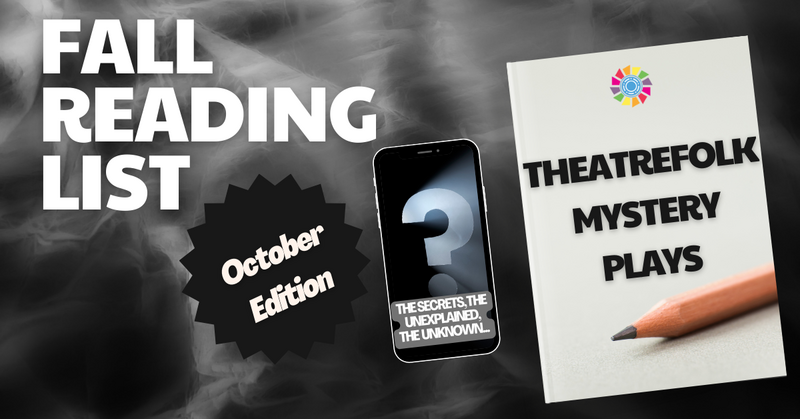
October Reading List: Mystery Plays
Ready to add a little mystery to your drama classroom? We’ve put together a list of plays full of secrets, twists, and unexpected turns that are sure to captivate your students.
Whether they’re uncovering hidden clues or piecing together the puzzle, these scripts will have your performers and the audience hooked. Ready to crack the case? Dive into our mystery play picks!

Featured Plays
September Reading List: Plays for Competition
As you gear up for competition season, why not check out some of our top picks for standout plays? These scripts are bursting with memorable characters and fantastic stories, giving your students the perfect material to showcase their talent.
The right play can really set your students apart in the competition scene. These selections are not only engaging but also offer plenty of moments for your actors to shine. Add one of these plays to your competition lineup, and get ready to see your students make their mark!

Featured Plays
August Reading List: Theatrefolk's Longest Play Titles
As you start sourcing scripts for the school year, why not dive into some of Theatrefolk's longest and most delightfully titled plays? These epically named scripts promise not only rich characters and fantastic stories but also a whole lot of fun just pronouncing their titles!
These plays offer endless opportunities for creative exploration, and unforgettable performances. Add them to your collection and watch your students bring these wonderfully lengthy titles to life on stage or in the classroom!

Featured Plays
July Reading List: Issue-Based Plays
As you start planning for the new school year, why not explore some incredible issue-based plays? These thought-provoking scripts tackle real-world challenges and spark meaningful conversations in your classroom or on stage.
These plays are perfect for fostering meaningful discussions and bringing diverse voices to your stage or classroom. Add them to your collection and watch your students engage with drama that truly matters!
Featured Plays
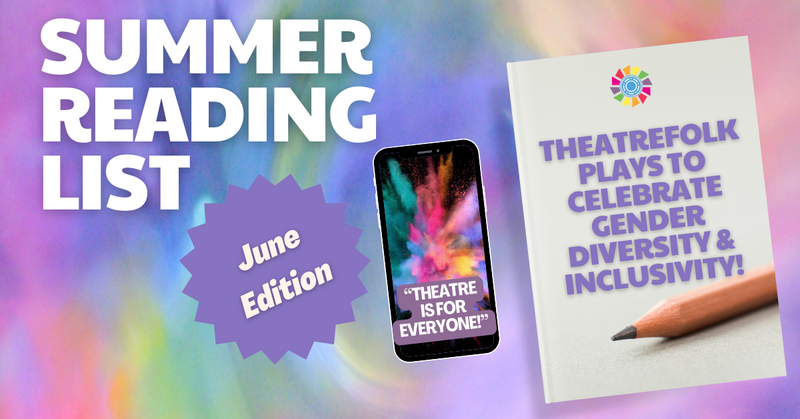
June Reading List: Plays to Celebrate Gender Diversity & Inclusivity
As we start putting together this summer's reading list, how about diving into some amazing plays that celebrate gender diversity and inclusivity? There's a whole world of stories out there just waiting to be discovered, offering endless possibilities for your students to connect with powerful characters and inspiring narratives.
These plays are perfect for embracing the magic of diverse storytelling and will make a fantastic addition to your stage or classroom this summer!
.png)
Featured Plays
May Reading List: Animal-Inspired Play Titles
As we start thinking about ideas for next year's season, why not dive headfirst into the entertaining world of plays featuring animals in their titles? So many creative opportunities and endless possibilities for your student performers to bring these captivating characters to life.
These plays are designed to help you unleash the magic that celebrates the wild spirit of storytelling. Perfect options to grace your stage or classroom next year!
Featured Plays
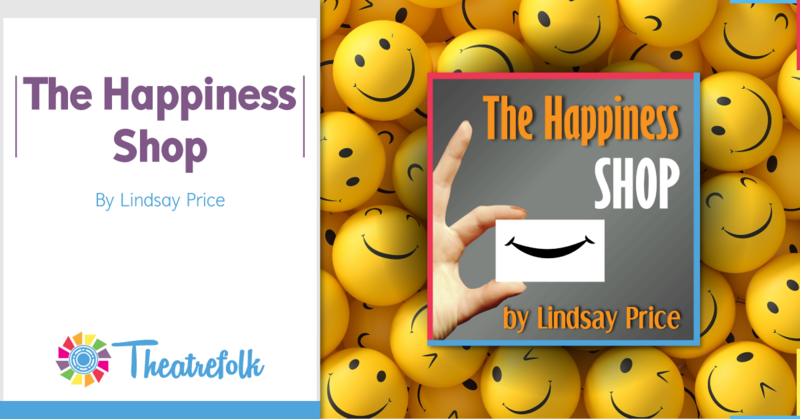
Theatrefolk Featured Play - The Happiness Shop
Welcome to our Featured Play Spotlight. The Happiness Shop by Lindsay Price is an excellent class project that explores important issues for students.
Three middle school students find themselves in an odd curiosity shop. They don’t know what it is, where they are, or how they got there. But that’s no surprise. The Happiness Shop is not like any other. It is filled with Roppets.
A Roppet is not quite a robot and not quite a puppet. A Roppet is completely happy all the time. Full of smiles, hugs and hi-fives. Isn’t that all it takes for a middle school student to be happy? They’re too young to have problems.
Blake, Melanie and Wally know that’s not true. They all have pretty big problems. But in the shop they have one question to answer and one question only: What would you do to be completely happy?
Let's hear from the author!
1. Why did you write this play?I wrote this play specifically for middle school students after a couple of eye opening experiences. First, I watched a 13 year old boy deliver one of my monologues in a competition. The character in the monologue talks about his life and how his family treat him after a suicide attempt. The monologue was written for a 16 year old character and the impact of seeing it done by a 13 year old was huge. Does suicide happen in middle school?
Secondly the director of one of my plays shared a rehearsal exercise she did with her cast in which her middle school students wrote on post-it notes the positive and negative things they say to themselves or hear others say to them. The negative board had three times more post-its than the positive one. (The exercise is included in this play's free Classroom Study Guide.) Do middle school students get depressed?
I’m the first to admit, until writing this play I did not fully realize that middle school students could experience depression. I thought depression didn’t hit until high school.
That’s when I started researching the topic. I found that not only do middle school students get depressed but it’s often overlooked as laziness, and ignored because they’re “too young” to be depressed. Many times the issue is never addressed. I knew I had to bring this issue to life in a play.
2. Describe the theme in one or two sentences?Happiness does not come from burying your feelings and pretending to be happy. Students suffering from depression are not alone in their feelings and they don’t need to suffer alone.
3. What's the most important visual for you in this play?The Roppets. They are supposed to be completely happy and smile all the time. But what's hiding behind those smiles?
4. If you could give one piece of advice for those producing the play, what would it be?Be prepared for discussions. You never know how students are going to be affected by being in the play. You may want to discuss the play with the guidance department. You are not a therapist and shouldn't take on that role.
5. Why is this play great for student performers?The play demonstrates the different faces of middle school depression and the different choices made because of it. Not all the choices these students make are good ones. I feel that’s important to stage. I think, too, it's important to show positive choices.
6. Who is your favourite character in the play?Phoenix is Melanie's best friend and I absolutely loved writing for them. The character is weird and loves being weird. They are not popular and are often bullied, but still has a great outlook on their life. They see their bullies as sad animals and never lets the bullies actions affect them.
7. What is your favourite line in the play?"Oh you did help me. You helped me see myself."
Featured Plays
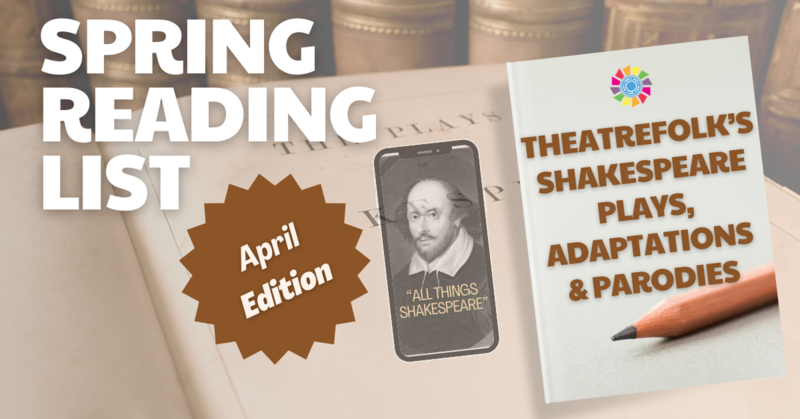
April Reading List: All Things Shakespeare
As April takes centre stage, we're diving into the world of all things Shakespeare. With incredible plays, adaptations and playful parodies, we're here to help you bring the world of Shakespeare to life, whether it's in your classroom or on the stage.
So grab your favourite quill and parchment, and let's celebrate the Bard's birthday in style with these phenomenal plays!
Featured Plays
March Reading List: Plays With Iconic Characters
As March takes centre stage, we're stepping into a world full of iconic characters from well-known stories. Each play in this month's lineup includes beloved characters, ready to leap off the page and onto your stage or classroom.
So, grab your popcorn, settle in, and immerse yourself in our March Reading List. These plays promise to take you on unforgettable adventures alongside some of literature's most memorable characters. It's time for an adventure like no other!
Featured Plays
February Reading List: Plays with 'Emotional' Titles
As February unfolds, we're shifting our focus to a collection of plays enriched with emotion-laden titles, each one carefully crafted to deliver nothing but the best for your stage or classroom.
So, grab a comfy spot, settle in, and dive into our February reading list. Let these plays be an emotional thrill ride that deliver unforgettable experiences. Get ready to ride the emotional wave!
Featured Plays
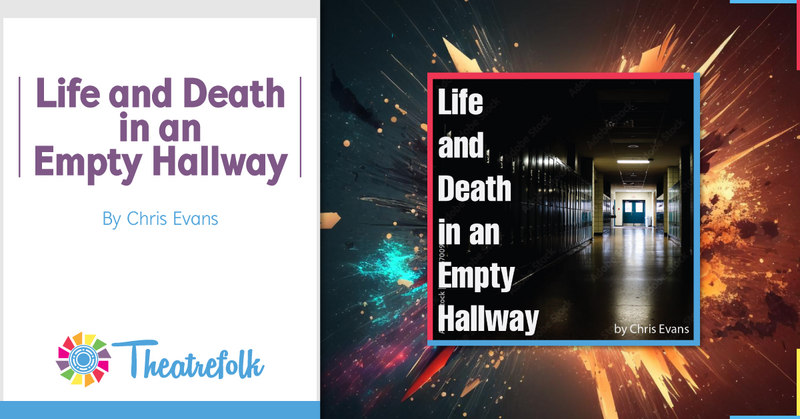
Theatrefolk Featured Play - Life and Death in an Empty Hallway
Welcome to our Featured Play Spotlight! Life and Death in an Empty Hallway by Christopher Evans is an intense and honest drama with excellent character opportunities. A must-read and a springboard for important conversations.
Rick stumbles into a school hallway, alone. His breath is labored and there is blood on his chest. An announcement says that a fire has been reported in the building and everyone must evacuate.
He is visited by people from his life, some of whom have nothing kind to say. Is he hallucinating? And who is the voice from the classroom, calling for help? Will help come?
Why did we publish this play?
Chris writes striking work, and works that strike out. You cannot sit quietly and watch his plays, or forget about them the instant you leave the theatre. We firmly believe that we need plays in our catalogue that say things and create dialogue, and often that dialogue centres on topics people don't like or fear. I knew the moment I read this play that Theatrefolk should publish it.
Let’s hear from the author!1. Why did you write this play?
The spark came from a mass shooting training for our local police and fire departments. I was given what to play as a victim and was to play it through until they stopped the exercise. I was given chest wound injuries and was told to wait for rescue (lay down in front of a specific door) in a remote part of the school. While I was there on the floor I heard another actress who I couldn’t place screaming for help. It took a long time to get to me as there was also smoke and announcements blaring. The idea hit me. This scenario should be explored in the form of a short play. I also had wanted to work in a Christmas Carol three ghosts theme into a play for a long time and it fit into this play perfectly.
2. Describe the theme in one or two sentences.
The actions you take in life have repercussions (good and bad) beyond you.
3. What’s the most important visual for you in this play?
Elizabeth’s (the unseen girl) final entrance into the play.
4. If you could give one piece of advice for those producing the play, what would it be?
Don’t overthink it. Have actors connect and play the words. They’ll surprise you.
5. Why is this play great for student performers?
It's age-appropriate. It has some very dramatic passages the student actors crave to get their hands on..
6. Who is your favourite character in the play?
Journey - the guide in the play.
7. What is your favourite line in the play?
Lots of good lines but Journey’s monologue about the bizarre life and death of Canadian Daredevil Karel Souchak is one the anchors of the piece to me.
Featured Plays
January Reading List: Colourful Play Titles
As January unveils its wintry palette, our attention shifts to a vibrant selection of plays designed to add some theatrical warmth to your stage or classroom. From dazzling tales to vivid narratives, these scripts are a kaleidoscope of colour, ready to light up the winter scene.
So, cozy up and explore our January reading list. Let these plays paint a beautiful picture that transforms your season into an unforgettable experience. Embrace the drama, and let the colours of January come alive on your stage!❄️🎭

Featured Plays
December Reading List: Holiday/Winter Plays
As December unfolds its festive charm, our focus turns to a collection of plays crafted to bring holiday magic to your stage or classroom. From heartwarming tales to whimsical narratives, these scripts promise to capture the joy and spirit of the season.
So bundle up and check out our December reading list. Let these plays be the delightful touch that elevates the season, transforming it into a memorable experience.

Featured Plays
Theatrefolk Featured Play - Franz Kafka Cancels His Cell Phone Plan
Welcome to our Featured Play Spotlight! Prepare to embrace the slightly off-balance world of the absurd with Kirk Shimano's Franz Kafka Cancels His Cell Phone Plan. Your students will enjoy stepping into some truly unconventional characters, while revelling in something totally unique.
A modern absurdist play that takes elements from three of Franz Kafka’s works (The Castle, The Trial, and The Metamorphosis) and puts them into the context of the everyday absurdities of our 21st century lives.
Will Franz Kafka ever succeed in escaping his mobile phone contract? Will the Inspector’s mysterious charges ever be revealed? And will someone turn into a giant insect somewhere along the way?
Why did we publish this play?
We love absurd works and it's awesome to be able to introduce students to Franz Kafka in a theatrical format. We also love adaptations, and Kirk is a master at transforming and distilling a text to make it not only theatrical but completely relatable. If you're studying the Theatre of the Absurd, pick up this play to give your students something modern and unique to read as part of your unit. Or if you want something that's never been done before for your next competition, start right here!
Let’s hear from the author!1. Why did you write this play?
I read The Metamorphosis when I was in high school and it’s a story that has always stuck with me. I was compelled by Kafka’s ability to make the strangest events seem almost mundane. Writing this play was my chance to live in that world for awhile, to take some of our everyday frustrations and elevate them to somewhere fantastical and to take some of the ways our real world feels off kilter and turn them into something fun!
2. Describe the theme in one or two sentences.
This play is about how our institutions can run you in circles and leave you feeling entirely alone, when in fact you are the only one who is seeing reason.
3. What’s the most important visual for you in this play?
Early in the play, Gardena tells Kafka that she does not have a phone while scrolling through her phone. While this is a small moment, I think it encapsulates the tone of the entire play, in which we will be told one thing but clearly shown another. It cuts to the heart of the ways we are sometimes challenged to accept a situation which clearly cannot be true.
4. If you could give one piece of advice for those producing the play, what would it be?
Whenever I revisit Kafka’s writing I am always surprised by how much he undersells the absurdity. In places where we might expect the protagonist to yell with surprise, we instead get a small sigh. I think there might be a temptation to play some of the events in this play broadly to get a big audience reaction, but I would encourage anyone producing the play to always remember that for all of the characters in the play, it’s just a boring regular Monday.
5. Why is this play great for student performers?
I think that each of the characters in this play is strongly distinct from the others, and I hope that each of their lines of dialogue provides a glimpse into their psyches. I think student performers will really enjoy the puzzle of figuring out how to present each character, and then working together to tell the story with them together. I really encourage students to explore a character even if it might not be their standard “type” and give something surprising to the audience.
6. Who is your favourite character in the play?
At heart, I’m definitely a Franz Kafka, because I’m more likely to try to make amends even if the world around me is collapsing. But because I would want to use the casting as a chance to explore another side of me, I would definitely play Gardena. Her ability to see the most amazing event and respond to it with pure boredom is something that I find endlessly entertaining.
7. What is your favourite line in the play?
“What if I am the only one who feels trapped in circles within circles and others would be repulsed to join me?”
Featured Plays
Theatrefolk Featured Play - The Plucky Pie Murder
Welcome to our Featured Play Spotlight! The Plucky Pie Murder by Dara Murphy is an incredible way to challenge perspectives and find humour in unexpected places. A black comedy extraordinaire!
The star quarterback of Riverview High School has been charged with murder most fowl! Rooster, to be precise.
Plucky the mascot has been done in and all fingers point to the football player - even his own.
A farce of a trial ensues featuring an inept judge, an unprepared defence lawyer, and an Egg-Girl.
The audience plays the jury in this hilarious black comedy. Two possible endings!
Why did we publish this play?
The Plucky Pie Murder is a black comedy extraordinaire. It's the play to choose if you're in the rare position of having a lot of guys in your drama class or club. We love how Dara writes plays. Some may call it weird, which I would consider a compliment. She's said that she likes "finding humour in unexpected places." She also likes that humour can be used "to challenge people's perspectives." It's important to us to have plays that challenge people's perspectives! Sit back and enjoy the ride with this play.
Fun fact: When we accepted The Plucky Pie Murder Dara was the youngest playwright in our catalogue. She had written the play for a high school assignment and her teacher submitted it to us.
Let’s hear from the author!1. Why did you write this play?
I wrote The Plucky Pie Murder when I was in grade 12. It was a drama class assignment that asked us to write a one-act play. I don't remember how I got the idea for the script, but at the time I enjoyed TV shows like Murder She Wrote and Matlock. My teacher liked my play, and at the end of the school year, she recommended that I submit it to Theatrefolk. I was very excited when Theatrefolk said they were interested in publishing it! My mom even flew us to California so we could watch the first performance. That experience cemented my love for writing and theatre.
2. Describe the theme in one or two sentences.
This play is a courtroom drama and a football game rolled into one. I would say the theme is the importance of getting to know a person beyond simply looking at their mascot costume, job, reputation, or appearance.
3. What’s the most important visual for you in this play?
My favorite visual is the waterboy keeping the defense team hydrated during the court proceedings.
4. If you could give one piece of advice for those producing the play, what would it be?
If you produce this play, I would recommend keeping the pace of the dialogue very snappy. This will help the jokes land, and it will keep the energy high. People could even talk over one another.
5. Why is this play great for student performers?
This play is great for student actors because it's a lot of fun. It's goofy and silly, and it would be perfect for an energetic group. The jokes come and go quickly, and there's never a dull moment.
6. Who is your favourite character in the play?
If I were in this play, I would want to be Ms. Duncan because she's a serious lawyer who gets to pepper everyone with important questions.
7. What is your favourite line in the play?
It's hard to pick my favorite line. I like the section when Mr. Teedle is questioning the forensic specialist on whether the mascot costume is a rooster or a chicken. I also like Mr. Teedle's hopeless opening statement: MR. TEEDLE: Okay, to begin I would like to say that my client is innocent. Very… innocent. So innocent, you could throw him into a lake and he would sink… Ha ha, little witch joke there. So, to close my opening statement I would like to repeat that the innocence of my client is very… ah… very big. Thank you.

Featured Plays
November Reading List: Plays for Veterans/Remembrance Day
This month we turn our thoughts to Remembrance Day and Veterans Day. If you're looking for meaningful and impactful performances to mark this important time of remembrance, we have a curated list of plays that will help you do just that.
Our November collection features plays designed not only to pay tribute but also to start and continue important discussions with your students - whether on the stage or in the classroom.
.png)
Featured Plays
October Reading List: Plays for Halloween
October has arrived and Halloween magic is in the air! If you're a fan of thrilling tales, spooky stories and things that go bump in the night, then this is the list for you!
Our October list is all about Halloween so prepare to send shivers down your spine and ignite your imagination with these fantastic perusal plays. Perfect for the stage or classroom!
Featured Plays
September Reading List: School-Themed Plays
September has arrived and it's time to hit the books - but with a twist! This month, we're showcasing a wonderful assortment of plays, all set within the hallowed halls of education.
It's time to build your September reading list! So grab a cup of tea, find your favourite reading spot, and cozy up with these fantastic perusal plays. Celebrate these plays on the stage or in the classroom!
Featured Plays
Theatrefolk Featured Play – Funhouse by Lindsay Price
*Welcome to our Featured Play Spotlight. * Funhouse by Lindsay Price is an incredibly unique and challenging vignette-style play that is an excellent catalyst for conversations around bullying.
This play looks at the bullied, the bully, and the bystander through mostly non-verbal vignettes. Life for the bullied is like a funhouse, but the funhouse is anything but fun.
How can you stand your ground when you’re on a falling floor? How can you move forward when you’re caught like a mouse in a maze? How can you win Whac-A-Mole when you’re the mole? How can you like yourself while standing in a distorted hall of mirrors?
There are no cotton candy answers here.
Why did we publish this play?
A lot of our plays come from listening to customers. A piece of feedback from middle school teachers we received is that they loved our non-verbal play _Emotional Baggage _but the concept was a little beyond their students. Could we provide one specifically for middle school? With a larger cast? _ _
Funhouse looks at the bullied, the bully and the bystander through mostly non-verbal vignettes. When looking at other plays on the topic, there wasn’t a lot we liked – many end with a bully-bullied confrontation in which the bully instantly sees the error of their ways and promises to be a better person. And they all lived happily ever after. This never happens in real life. Can bullies change? Of course! But not in one moment on stage. It’s so destructive to show such a fairy tale ending because there will be students in the audience watching the show, being bullied, knowing their situation is not being represented. And therein lies a huge problem.
Issue plays are tricky because they deal with issues that are happening right then, right now to someone watching the play. It’s not therapy, it’s not an informational brochure and theatricality must always preside, but the issue play does have some responsibility to address the reality of the issue.
Having said that, just as you can’t show the sitcom “everyone loves each other” happy ending, you can’t go to the other extreme and show flat out no-win annihilation. Because then that student sitting in the audience, being bullied, has the very terrifying thought of, “Well there’s no hope, is there?” And that is something we’re not prepared to sit on the shoulders of a 10- or 11-year-old.
_Funhouse _has the right balance between the extremes, in a theatrical context and that’s why it’s in our catalogue. It’s unique and a great catalyst for post show discussion on the issue of bullying. It’s a challenging piece, but by no means is it beyond the middle school scope.
Let’s hear from the author!1. Why did you write this play?
I heard from middle school teachers that they loved the non-verbal elements in Emotional Baggage but were looking for a middle school specific play, and could it have a larger cast? Done and done! I had seen a number of plays that addressed the topic of bullying and wasn’t happy with what I saw – a lot of bullies seeing the error of their ways. I wanted to write something different.
2. Describe the theme in one or two sentences.
The funhouse aims to turn reality upside-down – it shows you a distorted version of yourself in a mirror. It tilts the floor away when you least expect it. It jumps out at you from the shadows. It distorts the truth. It’s a vivid image for what life is like for the bullied.
3. What’s the most important visual for you in this play?
Sometimes the bullies win. That’s important to show. These acts are vital to the reality of the play, for indeed they are vital to showing the reality of what a bullied student must face.
4. If you could give one piece of advice for those producing the play, what would it be?
It’s a play that relies primarily on action rather than dialogue, so that’s going to be your focus. How does action tell the story in each moment? It’s a challenging play but by no means beyond the middle school performer scope.
5. Why is this play great for student performers?
The scope of bullying is pretty far reaching these days, from physical to verbal, to the different ways boys bully than girls, to the insidiousness of cyberbullying. This play offers a opportunity for students, in the play and watching the play to engage in conversations on this, unfortunately, extremely relevant issue.
Get your copy of Funhouse_ _right here, right now!Not right for your group right now? Search our play catalogue to find one that your performers will love!
Featured Plays
Theatrefolk Featured Play – Thought Traps by Lindsay Price
*Welcome to our Featured Play Spotlight. * In the high school dramedy, Thought Traps by Lindsay Price, even happy people have issues. Will they be able to set themselves free from the past who invade their thoughts?
Ariane walks around with her own personal black cloud. She throws up barriers, lashes out and refuses to tell anyone what she’s thinking.
Kate is the exact opposite. Happy, bubbly, outgoing and personable.
But even happy people have issues. And there are more similarities between the two teens: both Ariane and Kate deal with people from their past who invade their head space, and pull them into thought traps. Will either be able to set themselves free?
Why did we publish this play?
The story of Ariane and Kate from Thought Traps exists in another form at theatrefolk.com; in our a cappella musical, Shout.
We love the story of the characters so much that the question came up – can we adapt their story into a non-musical one act? The answer is yes! Although, it wasn’t a simple copy & paste. In musicals, characters express their thoughts and emotions through song. In _Thought Traps _songs have to become conversations, or even new characters. The adaptation was a challenge but an extremely worthwhile one.
The great thing about adaptation is that we can also adapt to the present times – the original story was written fifteen years ago and many things have changed. The characters in _Thought Traps _are living fully in today’s world. For example, gender identity is an important conversation in the play and the language characters use to express themselves is grounded in the now.
We love being able to offer another option for these characters and this story.
Let’s hear from the author!1. Why did you write this play?
The story of Ariane and Kate exits in another form at theatrefolk.com; in our a capella musical, Shout. I love their story and decided to see if I could turn it into a non-musical one act. A great challenge and a satisfying one – songs in which characters expressed their thoughts had to be turned into dialogue, and in some cases all new characters! The title Thought Traps came directly out of this new writing.
2. Describe the theme in one or two sentences.
Ariane and Kate deal with people from their past who invade their head space. Will either be able to set themselves free?
3. What’s the most important visual for you in this play?
Essa and Andy are the “thought traps” for Ariane and Kate respectively. Make it clear visually that these characters aren’t “real,” even though they’re based on “real” people in the world of the play. They’re thoughts taking up space in Ariane and Kate’s head.
4. If you could give one piece of advice for those producing the play, what would it be?
Don’t foreshadow Kate’s story. She is bright, happy and positive for a lot of the play. Her inner struggle is not part of her every day persona, until she learns what happens to her brother.
5. Why is this play great for student performers?
The characters are interesting and unique teenagers. Playing unique characters their own age is a great place for students to start with character development.
Get your copy of Thought Traps right here, right now!Not right for your group right now? Search our play catalogue to find one that your performers will love!