Facebook Pixel Skip to main content

📣SCRIPT SALE! Treat yourself to an easier Fall. Save 30% on 5+ perusal scripts with code SPRING30 before May 3 and head into summer stress-free.

Theatrefolk Featured Play: Typecast

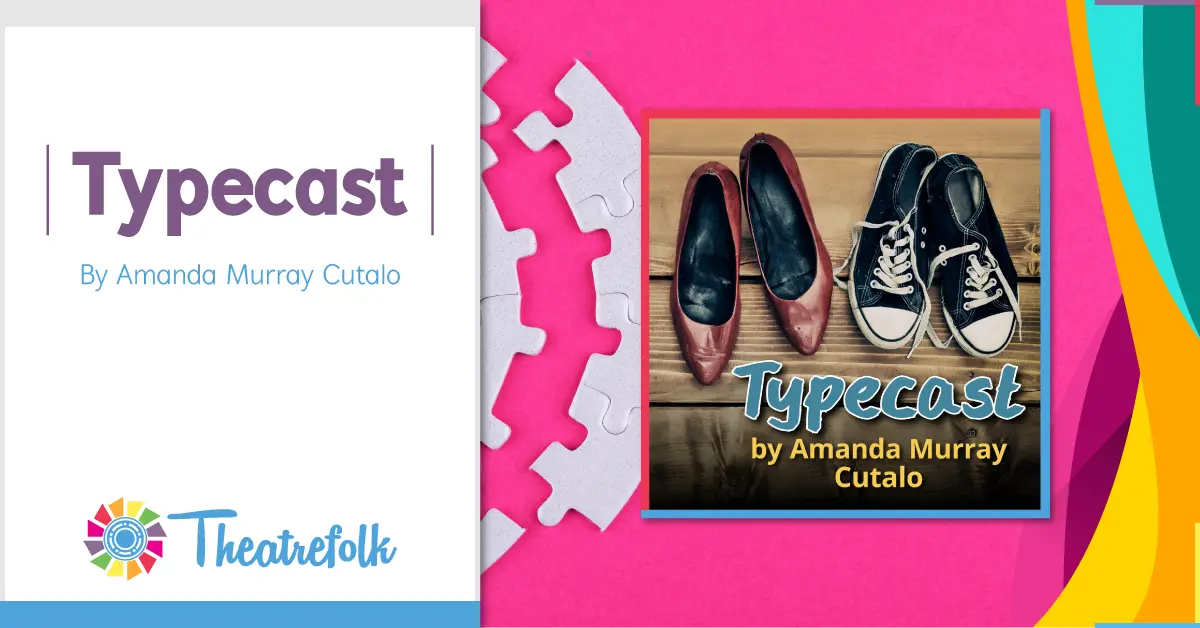
Welcome to our Featured Play Spotlight. Typecast by Amanda Murray Cutalo is a fantastic comedy for students, featuring a heartwarming message and memorable characters.

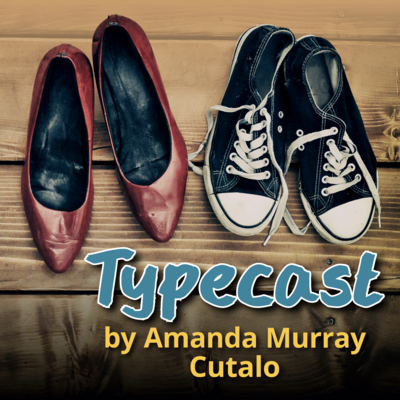
The auditions for an upcoming production of Cinder White are underway and Ms. Thespis, the drama teacher, is greeted by a small group of students, each with a particular “look” and personality – the “diva,” the “quiet girl,” the “nice girl,” to name a few. To Ms. Thespis, casting this show seems like a no-brainer. However, when she comes down with a case of appendicitis, Ms. Ball, the gym teacher, needs to step in and direct the show, mostly because she feels guilty for balding Ms. Thespis’ pet ferret.

The other snag is that the students have all mysteriously been cast in the “wrong roles”- the “nice girl” is now the villain, the diva only has 2 minutes onstage, and the quiet, almost inaudible, “ensemble” girl is now playing a leading role with actual lines! As these characters awkwardly venture into unknown territory, they are forced to see themselves as more than their “type” and learn to, in the words of Ms. Ball, “play the roles they’re all totally wrong for.”

Why did we publish this play

I love the themes and the concepts that Amanda writes about. She truly has her students' stories at heart. This play is all about the whole notion of typecasting and putting people into specific roles - which happens in plays and in life. It's not out of a place of malice but a place of "well that person's going to be great in that role because they're already like that." But what happens when characters are cast against type? They must venture into unknown territory and see themselves as more than their "type?" I think it's a fantastic play with a lovely message and great characters.


Let's hear from the author!


1. Why did you write this play?

As an actress and a director, I am very familiar with the experience of being typecast and typecasting. We all have certain looks and mannerisms that inform others about who we are and what they can expect from us, both in the real world and in the imaginative world of theater. Sometimes this information is true, other times it's false, but always, it reflects only a piece of who we truly are. As actors, our “look” (and the types of characters we play as a result) often becomes the story that we’re most comfortable telling about ourselves, on and off the stage. As directors, we often cast actors who fit the “look” we’re going for.

I wanted to write a play that would explore what happens when an actor, or rather a whole group of actors, has to play roles that they are all “completely wrong for”- to play roles that no one, including themselves, believes that they could successfully pull off. Oh, and throw in a basketball coach named Ms. Ball to direct the play, rather than an actual theater director. I loved the idea of creating different journeys for each of these characters as they stumbled along in their discomfort and helped each other figure it out along the way.


2. Describe the theme in one or two sentences?

Leaving your comfort zone can be a scary thing, but it’s worth it, because there might be some amazing discoveries waiting for you on the other side.


3. What's the most important visual for you in this play?

There are multiple scenes in this play when the actors refuse to take their new roles seriously. They desperately want to return to the roles that are comfortable for them, or to leave the production altogether. Ms. Ball does not allow that, and to show them that quitting is not an option, she makes them run laps around the theater, along with various other exercises you’d see at a typical basketball practice. So many of the scenes open in the same way- with a bunch of annoyed actors running laps around the theater while the others rehearse.


4. If you could give one piece of advice for those producing the play, what would it be?

They have the chance to go on the same journeys that their characters do. Ironically, this play does call for a bit of typecasting. It makes sense to cast students who fit the various “looks” and character types that exist in this show. However, each of these actors, who might be very comfortable playing these roles, will also have to play the roles that they’re “completely wrong for,” just as their characters do. Having directed this show twice myself, one of my favorite parts of the rehearsal process was watching students make new discoveries about themselves in these roles. They, too, discovered that they were more than the “best friend,” the “leading lady,” the “stage manager,” the “ensemble girl,” the “ingenue.” In these moments, they learned such exciting things- that they could deliver the line in a bolder way, that they could move about the stage without a touch of fear, or that they could bring emotional depth to a scene.


5. Why is this play great for student performers?

Support students in this process of discovery and model healthy risk-taking as much as you can. In the beginning of our most recent production of Typecast, we sat down together as a cast, and each actor talked about comfort zones, both for their character and themselves. They each identified the moments/aspects of their role that made them the most comfortable, as well as the moments/aspects that made them the most uncomfortable, and shared why. I also shared a few of my own areas of discomfort as an actor and director. From this opening discussion, we were able to create a spirit of risk-taking and promise that we would encourage and celebrate one another to step outside of their comfort zones during the production. And then the fun began!


6. Who is your favourite character in the play?

Ms. Ball is probably my favorite. She’s the basketball coach who steps in to direct the production of Cinder White because she kind of owes it to the drama teacher. There was a whole ferret incident that went down between them, which I won’t go into that. I like to write characters who are a little rough around the edges. Ms. Ball is certainly not the person you would hope to be your director. She’s prickly and unrelenting, but she's also completely devoted to the production and the actors, though she’d never admit it out loud. What I like the most about her is that all of the transformations and realizations that happen in Typecast are because of her. The actors in Typecast see themselves as totally wrong for these parts because they’re completely out of their comfort zones. Ms. Ball is the only one who demands that they go there. She doesn’t let any of them off the hook.


7. What is your favourite line in the play?

There’s one character in Typecast named Audrey. She has basically been a glorified set piece in all of her previous shows, and for this show, she is cast as one of the leads, Prince Pleasant. Throughout the whole rehearsal process, no one can hear her at all. And sometimes, she even gets so scared that she crawls up in the fetal position and becomes “the rock,” as if she were a set piece again. My favorite moment/line happens during a lot of chaos; the drama director is yelling at the basketball coach for messing everything up, and Audrey just stands up and says in full voice, “I am not the rock anymore!” I love those moments when voiceless characters find their voices. When they finally see something in themselves that we, as the audience, knew was there but they did not. To me, this line celebrates the moments when we finally find the courage and willingness to trust ourselves.


Products Referenced

Typecast

by Amanda Murray Cutalo

Students have all mysteriously been cast in the “wrong” roles.

Related Articles

An International Success: Typecast
Featured Plays

An International Success: Typecast

“TYPECAST: To cast a performer in a role that requires characteristics of physique, manner, and personality similar to those possessed by the performer.” In the comedy Typecast by Amanda Murray Cutalo, students have all mysteriously been cast in the “wrong” roles. However, it was definitely the right play for the talented student performers at Tsumeb Gimnasium in Tsumeb, Namibia. Translated into Afrikaans as “Roltomtalie”, and under the direction of Petri van Wyk, this incredible team brought their own international flair to their production of Typecast. The auditions for an upcoming production of Cinder White are underway and Ms. Thespis, the drama teacher, is greeted by a small group of students, each with a particular “look” and personality – the “diva,” the “quiet girl,” the “nice girl,” to name a few. To Ms. Thespis, casting this show seems like a no-brainer. However, when she comes down with a case of appendicitis, Ms. Ball, the gym teacher, needs to step in and direct the show, mostly because she feels guilty for balding Ms. Thespis’ pet ferret. The other snag is that the students have all mysteriously been cast in the “wrong roles”- the “nice girl” is now the villain, the diva only has 2 minutes onstage, and the quiet, almost inaudible, “ensemble” girl is now playing a leading role with actual lines! As these characters awkwardly venture into unknown territory, they are forced to see themselves as more than their “type” and learn to, in the words of Ms. Ball, “play the roles they’re all totally wrong for.”
Theatrefolk’s Top 10: All Girls Plays
Featured Plays

Theatrefolk’s Top 10: All Girls Plays

Time for a Tfolk Top Ten Plays For…All Girls! You have an abundance of girls in your program and you want good parts for everyone. With all of these plays either all the characters are girls or gender-flexible. Click the link and you’ll be taken to the webpage for each play. There you’ll get the details and read sample pages. All the best with your search! Ten Minute Plays: All Girls Juliet and Ophelia in the afterlife. An eggplant in a bridesmaid dress. Seeing the light about your best friend and then joining the Slow Songs Make Me Puke Club. A collection of short plays with interesting, engaging, and vivid parts for girls. Every one is a winner. Just Girls Talking What starts as a meeting to finalize frivolous graduation ceremony details ends with one young woman faced with a life-changing decision. Five girls on five different paths hit head-on in a collision of values that leaves the viewer asking: What would I do? Nice Girl Mia does her friends’ homework, lets people cut in line and pretends to be someone she’s not. Being nice requires a lot of sacrifice and frustration. Mia reaches her breaking point as she tries to find the balance between being her true self and being “the nice girl.” Typecast Ms Thespis casts by look and personality – the students are okay with their set roles. Until one show when Ms. Thespis is away and all the girls are cast against type. They’re forced to learn to play the roles they’re totally wrong for. Smarty Pants All the parts in this play are gender neutral with names provided. Dallas can’t wait to show off in her new Advanced Placement class. But there’s more Play-doh than Plato and more colouring than Van Gogh. What kind of advanced class is this? Will Dallas figure out Kindergarten High or will she flunk? Who’s the real smarty pants? Flaky Lips Two young women live in separated societies. One skin colour on this side. One skin colour on that side. They have never seen what the other looks like, until circumstances throw them together. A small cast but a challenging acting opportunity. Carrying The Calf A teenager fed-up with being bullied drags her reluctant friend to a self-defence class. But more important than the karate training, the instructor challenges the group to find self-confidence, independence, and to choose their own destiny. Diverse roles. They Eat Sunshine, Not Zebras All the parts are gender neutral in this look at conformity and individuality through the metaphor of grass and a single dandelion. A dandelion will turn the field upside-down. A dandelion must be destroyed. Isn’t that what you do when something is different? Virtual Family In the Virtual Family, you don’t need to go outside, or do chores, or even have a real family. When technology takes away all your ills, conflicts, and concerns, you become a happier human being. Right? All the roles are gender neutral. Ten/Two Ten short two-person plays (inspired by the numbers 10 and 2!) in a variety of themes and lengths. Excellent for classwork and for competition. 8 of the 10 plays are either for 2 women or have “either” characters.
Theatrefolk Featured Play: The Dread Pirate Sadie by Steven Stack
Featured Plays

Theatrefolk Featured Play: The Dread Pirate Sadie by Steven Stack

Welcome to our Featured Play Spotlight. Today we’re excited to share a swashbuckling comedic adventure with you – The Dread Pirate Sadie by Steven Stack. Sadie wishes to leave her life on the high seas to pursue her true passion: theatre. But there’s a problem. She’s not just Sadie; she’s The Dread Pirate Sadie, the most feared pirate in all the land. And there’s another problem. She’s a horrible pirate. Not only that, Sadie’s lost her boyfriend, her last play was attended by approximately no one, and Blacklegs, the world’s second-most-feared pirate, is after her. Will Sadie ever open that little theatre in the woods? Or will she find herself at the wrong end of Blacklegs’ sword? Yes, girls can be pirates too. Your cast will love this comedic swashbuckling adventure. Why did we publish this play? The title tells you everything you need to know: there are pirates and pirates who write plays. Who hasn’t heard of the deadliest pirate on the high seas, Sadie who is quick with a blade be it sword or ball point pen? Well, you probably haven’t heard of her because she’s a horrible pirate. The best thing about this play is that the majority of the pirates are girls and there’s nothing made of it. Black Legs is a good pirate, not just for a girl, she’s a good pirate. Period. The characters are pirates who just happen to be girls and that means this play has so many juicy fun roles that girls never get to play. Yes, girls can be pirates! And don’t miss The Dread Pirate Sadie: Competition Version - a swashbuckling adventure tailor-made for your next competition stage! Let’s hear from the author! 1. Why did you write this play? At first I wrote a 10 minute version for a show at the end of the year that needed a pirate scene but then I really loved the characters and wanted to further flesh out their journey. Plus, it really turned into a play about female empowerment that just happened to feature pirates. 2. Describe the theme in one or two sentences. This play is all about being true to the person you really are no matter what and that anyone can be a pirate. 3 What’s the most important visual for you in this play? Sadie excitedly handing out scripts of the play she wrote and each of the crew’s individual response. It serves to show Sadie’s true self and her crew’s feeling about her. 4. If you could give one piece of advice for those producing the play, what would it be? Push to make all the characters as authentic, big, and as piratey as possible. And don’t forget to find what each of the characters truly crave the most. 5. Why is this play great for student performers? Pirates, sword fights, empowerment, and straight-up ridiculousness. Plus, who doesn’t like to have a legit reason to talk like a pirate?