Facebook Pixel Skip to main content

National Core Arts Standards
Refine new work through play, drama processes and theatre experiences using critical analysis and experimentation - Grade HS Accomplished

6 units • 3 professional development courses aligned to
TH:Cr3.1.HSII.c - Re-imagine and revise technical design choices during the course of a rehearsal process to enhance the story and emotional impact of a devised or scripted drama/theatre work.

View all Standards for National Core Arts Standards

TH:Cr3.1.HSII.c Re-imagine and revise technical design choices during the course of a rehearsal process to enhance the story and emotional impact of a devised or scripted drama/theatre work.

This page lists 6 units and 3 professional development courses aligned to TH:Cr3.1.HSII.c from the National Core Arts Standards. Designed for drama teachers, these resources directly address TH:Cr3.1.HSII.c - Re-imagine and revise technical design choices during the course of a rehearsal process to enhance the story and emotional impact of a devised or scripted drama/theatre work.

Puppetry

by Jenny Goodfellow

This unit on Puppetry is designed for middle school and up, to introduce students to the material and get them comfortable with performing in a safe and low exposure environment. This is a unit that builds to a culminating experience for your students. Each lesson is designed to explore techniques, provide opportunities for creative collaboration among your students, and give them opportunities to perform. Some of the lessons require materials to build or create puppets. Puppetry can be as easy as drawing a face on your finger for finger puppets, to actually purchasing your own finger puppets for students to use. While the focus of this unit is puppetry, your students will explore other skills as well. There’s the obvious ones of creative thinking, teamwork, and problem solving. They are also going to explore storytelling, performing skills, and playwriting.

Sound

by Karen Loftus and Josh Hatt

Students will be able to demonstrate their knowledge of sound effectiveness. How do we use sound to create a technically effective performance?

Introduction to Technical Theatre: Distance Learning

by Lindsay Price

When an audience watches a piece of theatre, they never see what goes on behind the scenes or know the people who work to make the production look their best. But theatre is a collaboration between what happens onstage and off. This distance learning unit will introduce students to the world of technical theatre. Through video, they will learn information on specific technical theatre roles and how they work together, types of stages, parts of a theatre and stage geography, and then apply this knowledge through synchronous exercises. For example, students will take on the role of a producer and decide how a budget will be divided among different departments. They will practice the calls a stage manager uses. The culminating assignment has students solve a common technical theatre issue: a unique stage direction in a play. NOTE - Please read the Troubleshooting Hyperdocs instructions in the Overview, if you are having issues. If your students have trouble accessing the videos, try VERSION 2 Hyperdoc links provided under each module.

Introduction to Technical Theatre: Flipped Learning

by Lindsay Price

When an audience watches a piece of theatre, they never see what goes on behind the scenes or know the people who work to make the production look its best. But theatre is a collaboration between what happens onstage and off. This flipped learning unit will introduce students to the world of technical theatre. Through video, they will learn information on specific technical theatre roles and how they work together, types of stages, parts of a theatre and stage geography, and then apply this knowledge through in-class active-learning exercises. For example, students will take on the role of a producer and decide how a budget will be divided among different departments. They will practice the calls a stage manager uses. The culminating assignment has students solve a common technical theatre issue: to design, create, and implement a solution for a unique stage direction in a play.

Tech Theatre Unit: Costuming When You Don't Sew

by Drama Teacher Academy

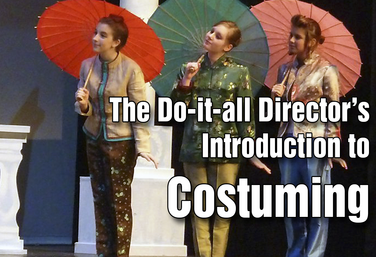
In this unit, students will take on the role of the costumer, which is different from a costume designer. It introduces costuming concepts in order to execute a costume. No complicated sewing is required, which is great if you don’t have the background, the access, or the resources to have a class of students create costumes. Instead of making costumes from scratch, as a designer would, students will create costumes from stock, borrowed items, or low-cost finds. They will take finished products and adapt them into what they need to create the right atmosphere. In order to help with their adaptations, students will try different distressing techniques and learn three SIMPLE stitches that they’ll be able to use over and over again. It’s a valuable tech theatre skill to teach students how to execute on costumes when you (and they) don’t sew!

Technical Theatre: Leadership in Theatre

by Michelle LoRicco
This Technical Theatre unit is designed to empower student leaders to analyze management roles in producing theatre while also using collaborative activities and reflection exercises to strengthen soft skills that every student should have. The unit covers the roles of producer, director, technical director, and stage manager, and ends in a culminating project.

View all Standards for National Core Arts Standards    Standards Master List