Facebook Pixel Skip to main content

Texas Essential Knowledge and Skills for Theatre Arts
HS 117.318 LIV - Foundations: Inquiry and Understanding

5 units • 5 professional development courses aligned to
C.1.A - create and demonstrate theatre preparation and warm-up techniques.

View all Standards for Texas Essential Knowledge and Skills for Theatre Arts

C.1.A create and demonstrate theatre preparation and warm-up techniques.

This page lists 5 units and 5 professional development courses aligned to C.1.A from the Texas Essential Knowledge and Skills for Theatre Arts. Designed for drama teachers, these resources directly address C.1.A - create and demonstrate theatre preparation and warm-up techniques.

Voice

by Anna Porter

3 lessons
In this unit, students will be introduced to a key element of performance: the voice. Students will explore how to thoughtfully communicate character, story, and emotion vocally. Students will begin by exploring articulation so that they understand the importance of clearly communicating their words onstage. They will further build on this with the following lesson on the different vocal varieties of pitch, tone, rate, and volume. The final lesson helps students explore vocal characterization as well as the details and layers that can bring that character to life vocally. This unit study of the voice culminates in a final puppet show where students are asked to bring a story and character to life by using vocal variety, articulation, and characterization.

Introduction to Musical Theatre: Movement

by Annie Dragoo

9 lessons
Musical theatre performers use their bodies to sing, to dance, and to act. We must think of our bodies as instruments and learn to use our instruments properly in order to be better musical theatre performers. The overall objective with this unit, by Annie Dragoo, is for students to demonstrate an understanding of the use of good movement as it connects to musical theatre. Some of the activities include using action verbs, moving as animals and inanimate characters, nonverbal communication and situational movement. Students will then perform a scene that will allow them to put to practice all the movement techniques they have learned.

Introduction to Stanislavski

by Drama Teacher Academy

6 lessons
This is an in-depth unit with instruction and activities about the Stanislavski acting method. It is followed by scene work in which students learn how to score a scene, do a comprehensive character analysis, and use what they have learned in rehearsals in a performance. Students will also watch their own work and evaluate their process after the performance. The purpose of this unit is to give students an introduction and understanding of Stanislavski’s method and to put it into use as they prepare scenes for performance. After seeing their work, and spending time reflecting on how they used the principles of the method, students should take away a concrete understanding of how to prepare a role for performance.

Virtual Introduction to Stanislavski

by Drama Teacher Academy
6 lessons
The unit has been adapted for a virtual environment. This is an in-depth unit with instruction and activities about the Stanislavski acting method. It is followed by scene work in which students learn how to score a scene, do a comprehensive character analysis, and use what they have learned in rehearsals in a performance. Students will also watch their own work and evaluate their process after the performance. The purpose of this unit is to give students an introduction and understanding of Stanislavski’s method and to put it into use as they prepare scenes for performance. After seeing their work, and spending time reflecting on how they used the principles of the method, students should take away a concrete understanding of how to prepare a role for performance.

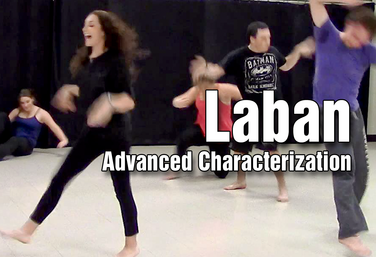
Laban: Advanced Characterization

by Drama Teacher Academy

7 lessons
This is an advanced acting unit in playing character through the Laban movement technique. Students will explore dance theorist Rudolf Laban’s eight efforts and their component parts; turn these elements into physicalizations through which one can express character; use Laban efforts and connect them to a character’s voice and body; and demonstrate knowledge through the creation of an original character. Reminder: This is an advanced acting unit. You will need students who can do work on their own outside of class time, commit to movement and sound, and commit to making instinctual choices.

View all Standards for Texas Essential Knowledge and Skills for Theatre Arts    Standards Master List