



Facebook Pixel Skip to main content

📣SCRIPT SALE! Treat yourself to an easier Fall. Save 30% on 5+ perusal scripts with code SPRING30 before May 3 and head into summer stress-free.

Have You Heard?

Have You Heard?

by Krista Boehnert

Everybody knows a secret. Some keep them quiet. Some let them loose. Some make them larger than life. Secrets, lies and rumours are the subject of Have You Heard?

This monologue-based play follows what happens in a school when rumours and secrets spin out of control. What makes a secret more powerful: When it's the truth? Or when it's a lie?

Drama Character Study Experimental Form Issue-Based Monologue-Friendly Plays

Average Producer Rating:

Recommended for High Schools

Running Time
About 45 minutes
Approximate; excludes intermissions and scene changes
Cast
5 Characters
2 M3 F
Set
Simple Set
Length
24 pages
Free Excerpt

What to order?

Not sure what you need to order? Check out our pricing and ordering guide.

Performance Royalty Fees

Royalty fees apply to all performances whether or not admission is charged. Any performance in front of an audience (e.g. an invited dress rehearsal) is considered a performance for royalty purposes.

Exemption details for scenes and monologues for competition.

5 Characters
2 M, 3 F

Characters in this play are currently identified as male or female. Directors are welcome to assign any gender (binary or non-binary) to any character and modify pronouns accordingly.

CLEO [F] 10 (monologues) lines
17, Was dating Steve until the accident. Wants a fresh start. Three monologues.
ZAK [M] 13 (monologues) lines
16, Sick of living in the shadow of his parents. Six monologues.
JAKE [M] 12 (monologues) lines
17, Tired of trying to be seen as cool. Six monologues.
ZOE [F] 12 (monologues) lines
17, Always been a good student, until recently. Six monologues.
MATTIE [F] 12 (monologues) lines
15, Has nightmares when she sleeps. Five monologues.

Praise for Have You Heard?

Amanda Vandermeer
Canton High School
This piece is powerful and the students felt like they were making theatre that made a difference.
TAMMY ALLEN
Palm Bay Magnet High School
We recently presented this play for our District Thespian play festival, and was one of the top-ranked Superior-rated productions, won Best Program Design, and was selected for State.

More Plays Like Have You Heard?

Puzzle Pieces

by Krista Boehnert

An exploration of teen issues through a series of monologues. The characters speak frankly about their fears, their futures, and their day to day life.

A Box of Puppies

by Billy Houck

We can all relate to feeling small in a big world. The characters in A Box of Puppies share their insecurities, their frailties and how they cope.

With Liberty and Justice For All

by Jeyna Lynn Gonzales

Voices from a BLM protest.

Stressed

by Alan Haehnel

Stress is driving a teen quartet crazy - so much so they can't stop talking about it. This play is a symphony of sound and character.

The Battle of Image vs Girl

by Johanna Skoreyko

One Girl. One Mirror. Against the world.

Chemo Girl and Other Plays

by Christian Kiley

A collection of plays that examine the impact of cancer as seen through the eyes of teenagers. Can be performed as a full length or one acts.

From the Drama Teacher Learning Centre

Happy International Women’s Day!
General

Happy International Women’s Day!

March 8th is International Women’s Day – and what better time to highlight some amazing women within the Theatrefolk community. Join us in celebrating these phenomenal playwrights and authors and their incredible contributions to the world of student theatre. Plus, keep reading to see our Top 10 Plays for Female Casts at the end of the post! Rachel Atkins • Baalzebub (and One Act Version)
Theatrefolk Featured Play – Puzzle Pieces by Krista Boehnert
Featured Plays

Theatrefolk Featured Play – Puzzle Pieces by Krista Boehnert

Welcome to our Featured Play Spotlight. Puzzle Pieces by Krista Boehnert is a monologue-based play that is a fantastic vehicle to introducing monologues to your student performers. Puzzle Pieces explores teen issues through a series of monologues. The characters speak frankly about their fears, their futures, and their day to day life. The serious dramatic scenes are balanced with humour, and the play is ultimately uplifting. The characters choose to embrace life and all its struggles, rather than shy away from it. Why did we publish this play? Monologues are a challenge. They are also inherently theatrical – they don’t often happen in real life. This is exactly why you should be tackling monologues in the classroom and in your theatre. Puzzle Pieces is an excellent play to introduce monologues to your student because the entire play is made up of monologues. Characters talk frankly about their fears, their futures and their day-to-day lives. I’ve loved this piece since I first read it for it’s characters, it’s structure, and it’s message. Why is this play good for online platforms? Because this play is written in monologue form, it adapts really well to a virtual performance format. Characters connect directly to the audience, and this will work whether they are on stage, or they are staring right into their computer camera. Let’s hear from the author!1. Why did you write this play? I wanted to experiment with format and write a monologue-based play. The characters in Puzzle Pieces each share their own story – the plotlines of the characters don’t intersect. This is both challenging and liberating for the director and actors when producing the play. Puzzle Pieces is instead woven around a common theme all characters are grappling with, which allowed me to explore a multitude of storylines rather than diving into just one topic. 2. Describe the theme in one or two sentences. Growing up is complicated. You can try to be picture perfect, but real life is messier than that. 3. What’s the most important visual for you in this play? Each character brings their own experience and story to the play. They each embody a puzzle piece for how a life can take shape, and for how to navigate life. The variety in their approaches is my favourite visual in the play. 4. If you could give one piece of advice for those producing the play, what would it be? Although the play is monologue-based, it should be a collaborative experience both in the rehearsal and performance. Because the characters’ worlds don’t intersect, there is lots of rooms for character development that can be tackled by the individual actors, or as a collective. The staging can also be more collaborative than solitary. Actors can support each other with the monologue performances whether that be direct contact, like holding their hand or comforting them while they speak, or acting out scenes they describe in their speech. It’s very open to experimentation and interpretation, so don’t be shy about trying different ways to bring the play to life. 5. Why is this play great for student performers? It’s a great opportunity for practising character development, for learning how to prepare and perform monologues, and for experimenting with creative staging – both with their own monologues, and in supporting their fellow cast members as they perform their pieces. 6. Do you have any tips for those looking to perform this play online? Both Have you Heard? and Puzzle Pieces? lend themselves nicely for online performance. As a monologue-based play, it allows for that intimate connection between the audience and a single performer. Settings in the performance space provider (such as Zoom) can be set to highlight the speaker, which results in the performer filling the whole screen, rather than the audience seeing all actors at once, if the director wishes to present it this way. The plays are flexible, however, and do lend themselves to an ensemble performance as well. While actors are performing their monologues, the remaining actors can support the performances in a variety of ways. The director and cast can choose if all actors participate, or if only a select number do. If not all actors are participating in the scene, the director can ask them to simple turn and face their back to their camera, or walk out of frame thus “leaving the stage.” Using the example of Jamie from Puzzle Pieces, talking about playing football, some staging options for supporting cast in a virtual environment include: • Mime – actors can silently act out playing football, crowd members cheering, etc. • Tableaux – actors can strike various poses that indicate a football game or game attendees • Props – actors can hold up football themed props – jerseys, pompoms, football, foam fingers, cowbells, popcorn buckets, etc. • Costume add-ons – team jackets, jerseys, ball caps – to help set the “game day” scene • Virtual Backgrounds – actors can turn on virtual backgrounds that mimic signs people hold up at football games to cheer the team on • Reaction Buttons – actors can engage their “applause” or “Thumbs up” reaction buttons to indicate crowd cheering the football team on The staging for Have you Heard? and Puzzle Pieces is flexible regardless of the staging environment – live, virtual, live-streamed. In their simplest form, each scene can be performed with only the actor(s) in the scene who are speaking being “on stage” (or on screen depending on the scenario). The bulk of both plays are monologues, so for the majority of the play, you could have a single actor on stage/screen. To enrich the performance experience for the audience, I would recommend engaging cast members to enhance the monologues by employing tactics such as mime, tableaux, use of props and costume add-ons, virtual backgrounds and reaction buttons. This creates a space where the audience and the cast are all part of each “monologue moment” and heightens the impact of each characters’ story/experience by bringing it more fully to life.
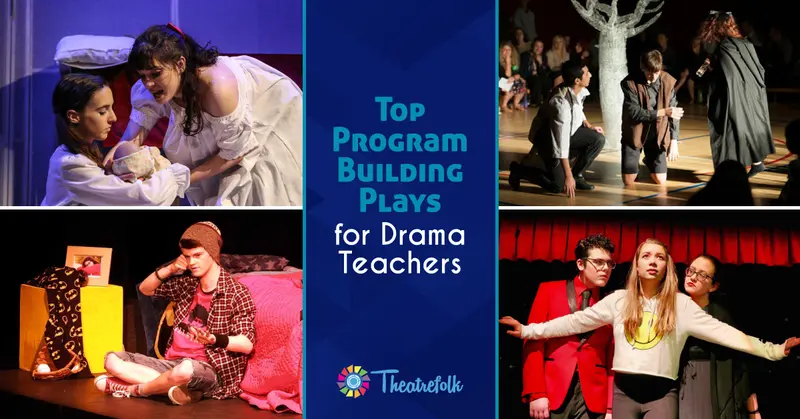
Theatrefolk’s Top Program-Building Plays
New Drama Teachers

Theatrefolk’s Top Program-Building Plays

Time for a Tfolk Top Plays List For….Building a Theatre Program. You’ve had a large group of seniors graduate. You’re starting at a new school that doesn’t have a theatre program You’re taking over a program that needs some serious love. What plays should you choose to build your program? Click the link and you’ll be taken to the webpage for each play. There you’ll get the details and read sample pages. All the best with your search – and with building your program! Choose a play with a familiar link that people know. Use the familiar as your hook.
Monologue Competitions: How to compete confidently
Podcast

Monologue Competitions: How to compete confidently

Episode 206: Monologue Competitions: How to compete confidently How can you encourage your students to compete with confidence? Learn from the source! Student Kelsey Gilmore was chosen as critics choice for monologues and best in show in her district for her monologue performance. What did she do? How did she prepare?
Theatrefolk Featured Play – Have You Heard? by Krista Boehnert
Featured Plays

Theatrefolk Featured Play – Have You Heard? by Krista Boehnert

Welcome to our Featured Play Spotlight. If you’re ready to explore the power of the rumour, you’ll want to check out Have You Heard? by Krista Boehnert. This monologue-based one-act drama is extremely relatable and a great way to stretch your performers. “Did you hear? Have you heard? Promise not to tell anybody?” Everybody knows a secret. Some keep them quiet. Some let them loose. Some make them larger than life. Secrets, lies and rumours are the subject of Have You Heard? This monologue-based play follows what happens in a school when rumours and secrets spin out of control. What makes a secret more powerful: When it’s the truth? Or when it’s a lie? Why did we publish this play? Have You Heard? not only presents a great acting challenge, but also a directing challenge. And to top it all off, it has a thought-provoking theme. It’s a one, two, three punch and that’s why we published it. If you’ve got a small program, or you’re doing multiple one acts, or you want to stretch your group in competition, have a look at this play. Why is this play good for online platforms? This play is monologue based – all the characters share the story through individual monologues. This makes it ideal for an online platform performance where students are in their own spaces. Let’s hear from the author! 1. Why did you write this play? I wanted to explore a couple of things with this piece. First was the power of rumour. Rumours grow and change and morph as more and more people breathe life into them. When rumours gain momentum it’s hard to find the truth. Things get murky. I wanted to look at all the various angles of that. The other thing I wanted to present with the piece was a play where the two main characters never set foot on the stage. They don’t have any lines whatsoever. The characters you do meet are forced to speculate on the motivations and feelings of Josh and Mr. Pender, but the audience never hears from them directly. The audience is ultimately left to formulate their own opinions of what the truth is. 2. Describe the theme in one or two sentences. A not-so-innocent lie is believed to be true. The ripple effect leaves no one untouched. 3. What’s the most important visual for you in this play? The opening and closing scenes where the cast appears as an ensemble. For the majority of the play they appear individually, but in those opening and closing moments they’re united in their vulnerability and strength. 4. If you could give one piece of advice for those producing the play, what would it be? It’s a monologue-based play, but don’t be shy about involving the cast throughout. There are many opportunities for the whole cast help bring the monologues to life through tableau, silently acting the story as a character tells it, small interactions with the speaking character like placing a comforting arm around their shoulders as they speak, etc. The script lends itself to collaborative staging despite its monologue-based structure. 5. Why is this play great for student performers? On the content side, I think its extremely relatable. Openly talking about the impact of rumours is a good way to shine light on something we all grapple with. On the performance side it’s a great opportunity to work with monologues. It allows students to really grow a character, and in a different way than they’re used to – through dialogue with other characters. With this play, they must build their character using the clues in the monologue and develop it for themselves from there. In addition to character development, it’s also a great acting challenge for learning and performing long sections of text. The experience of performing a piece like this will help build skills for more complex performances in the future, like Shakespearian soliloquys. 6. Do you have any tips for those looking to perform this play online? Both Have you Heard? and Puzzle Pieces? lend themselves nicely for online performance. As a monologue-based play, it allows for that intimate connection between the audience and a single performer. Settings in the performance space provider (such as Zoom) can be set to highlight the speaker, which results in the performer filling the whole screen, rather than the audience seeing all actors at once, if the director wishes to present it this way. The plays are flexible, however, and do lend themselves to an ensemble performance as well. While actors are performing their monologues, the remaining actors can support the performances in a variety of ways. The director and cast can choose if all actors participate, or if only a select number do. If not all actors are participating in the scene, the director can ask them to simple turn and face their back to their camera, or walk out of frame thus “leaving the stage.” The staging for Have you Heard? and Puzzle Pieces is flexible regardless of the staging environment – live, virtual, live-streamed. In their simplest form, each scene can be performed with only the actor(s) in the scene who are speaking being “on stage” (or on screen depending on the scenario). The bulk of both plays are monologues, so for the majority of the play, you could have a single actor on stage/screen. To enrich the performance experience for the audience, I would recommend engaging cast members to enhance the monologues by employing tactics such as mime, tableaux, use of props and costume add-ons, virtual backgrounds and reaction buttons. This creates a space where the audience and the cast are all part of each “monologue moment” and heightens the impact of each characters’ story/experience by bringing it more fully to life.
Theatrefolk’s Top 10: Plays for Advanced Actors
Featured Plays

Theatrefolk’s Top 10: Plays for Advanced Actors

Time for a Tfolk Top Ten Plays For…Advanced Actors. You have students who can go to the next level. They are ready to tackle scripts beyond the norm of character development and realistic story lines. You want to raise the bar and we want to help you do that. Check out our top ten plays for advanced actors. It’s a great mix of issue driven, ensemble driven, character driven work. Click the link and you’ll be taken to the webpage for each play. There you’ll get the details and read sample pages. All the best with your search! Clowns With Guns A theatrical and absurd look at the repeated and seemingly endless cycle of school violence. This story is mean. There are guns. This play packs a theatrical punch. Censorbleep The Bleep Bleep Girls are the greatest group in school. They know what’s best. And when students try to stand up for themselves, or don’t do the “right” thing, they get dealt with. A great character driven piece where teenagers are turned into garbage and disappear. Breathless Three girls named Summer. Summer Adams is looking for love in all the wrong places. Summer Robertson is hanging on through her battle with cancer. And Summer Davis refuses to lose, even at the expense of her body and her friends.Three races of discovery. Will they crash or fly? A beautiful mature character piece with strong female leads. The Blue and the Grey Charlie is surrounded by ghosts: her father, a classmate’s sister, and the grey. Who are the grey? Civil war soldiers. A chance for an ensemble to build a haunting, exhilarating, and theatrical landscape. Power Play A gunshot is heard. Which of the five characters did it and why? Was it the Goth girl? The football star? What are the realities and the stereotypes of high school violence? Violence is about power. So is high school. This play has absurd moments, vivid characterization, and a powerful message. Stroke Static Russ is an eighty-three year-old man in a nursing home struggling with multi-infarct dementia. But in his mind he sees himself as a boy of eighteen, and thus is played by a young actor. The ensemble plays a variety of real and imaginary characters in Russ’ mind. A heartbreaking look at what goes on in the mind of someone who can’t communicate. Tick Talk The teenagers in Tick Talk have a lot to say, but no way to say it. Most characters are limited to only ONE WORD for the whole play. A fascinating challenge for actors: What happens when a character has just one word to express hopes, fears, and frustrations? What if they have something terribly important to say but can’t? Emotional Baggage One of the most unique plays we sell. There’s no dialogue. The play is based solely on non-verbal storytelling through mask and movement. Seven strangers meet in a train station. Instead of luggage, they all carry their own “emotional baggage.” Chemo Girls and Other Plays A collection that examines the impact of cancer through the eyes of teenagers. Characters deal with the difficulty of saying the word out loud, the difficulty of admitting a friend or family member has cancer, and the difficulty of finding the energy and the attitude needed to fight. Have You Heard? A play formatted solely in monologue. The story follows what happens in a school when rumours and secrets spin out of control. What makes a secret more powerful: When it’s the truth? Or when it’s a lie?
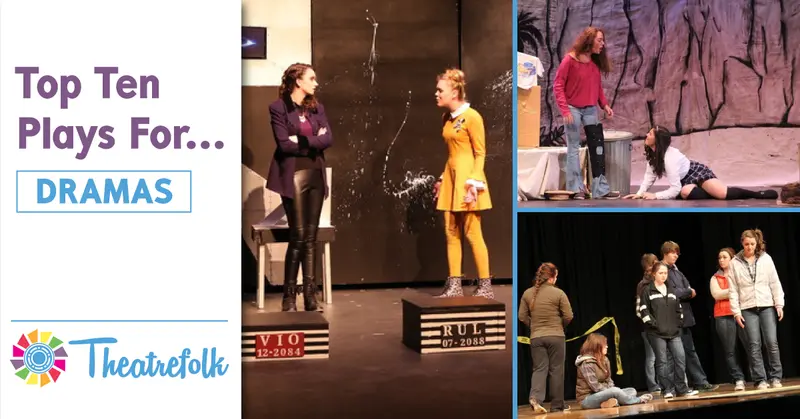
Theatrefolk’s Top 10: Dramas
Production

Theatrefolk’s Top 10: Dramas

Time for a Tfolk Top Ten Plays About…Dramas. Issue plays that don’t talk down to your students. Theatrical explorations of serious topics. Read one, read them all! Click the link and you’ll be taken to the webpage for each play. There you’ll get the details and read sample pages. All the best with your search! Look Me In the Eye Teenagers in the future are obedient, polite, and respectful. Everything about their life is black and white, right or wrong. This is due in large part to the government-required “Observation Sessions.” But there is a dark underside to this utopian vision. Sometimes life is grey. Chemo Girl A collection that examines the impact of cancer through the eyes of teenagers. Characters deal with the difficulty of saying the word out loud, the difficulty of admitting a friend or family member has cancer, and the difficulty of finding the energy and the attitude needed to fight. Chicken. Road. Why did the chicken cross the road? Why is the sky blue? What’s two plus two? Why did he kill himself? A group of teenagers grapple with unanswered questions as they struggle to understand why someone who seemed to have it all would commit suicide. Have You Heard Everybody knows a secret. Some keep them quiet. Some let them loose. This monologue-based play follows what happens in a school when rumours and secrets spin out of control. What makes a secret more powerful: When it’s the truth? Or when it’s a lie? Upon a Sea of Dreams: A Journey on the Titanic An amazing character-based drama with a unique look at this infamous event. In a tiny third class cabin sisters plan for a new life in America. Suddenly the ship stops moving and sirens blast. The girls are told to stay in their cabin. Another passenger says the ship is sinking. The Waking Moment Julie would do anything to be just like her best friend Rhonda. She gets her wish when she wakes up one morning in Rhonda’s bed – but nobody seems to notice. Julie quickly realizes that Rhonda’s perfect world is actually a nightmare. Deals with sexual abuse. Anonymous We all have our stories. “New and old, complete and untold.” Anonymous is a story of every teenager: the new kid trying to fit in, the best friends, the love interests, the kid in the corner with their secret, the group of individuals each trying to belong. The teenagers of Anonymous have no names because they are “Me” and “You.” They are everyone. Discovering Rogue Rogue has the best beachfront property – right on the ocean. Her home is a cardboard box but she doesn’t mind. Others, though, mind very much. They want Rogue to leave the beach. Now. But Rogue isn’t just running away from home; she’s running away from herself. Breathless – Three girls named Summer. Three races of discovery. Will they crash or fly? A beautiful character piece with strong female leads. Clowns With Guns (A Vaudeville) – A theatrical and absurd look at the repeated and seemingly endless cycle of school violence. This story is mean. There are guns. BONUS! NEW DramaThe Blue and the Grey – Charlie is surrounded by ghosts: her father, a classmate’s sister, and the grey. Haunting, exhilarating, theatrical. Planning on performing one of these or another Theatrefolk play? Let us know all about it with pictures and highlights – we might even feature you on our site! Click here to submit your story.
What Play Do I Do Now?
Production

What Play Do I Do Now?

Some drama teachers have their whole production year figured out before the first day of school. If you’re doing a big musical, you need to get that paperwork started way in advance. Or maybe you need to coordinate using the theatre space with other departments – you need to know what you’re doing and when. Or, if you’re lucky, you have an engaged drama club and they’re reading the plays and deciding what they want to do ahead of time. But sometimes all that planning goes out the window. You choose a play, hold auditions and the actors you think you’re going to have don’t show up. Or you choose a small cast play and are faced with a flood of wonderful auditions. And sometimes, just the act of choosing a play is the issue. It can be an overwhelming and frustrating experience. Auditions loom and you still haven’t chosen a script. If you’ve stared at a stack of play catalogues with panic in your eyes, we here at Theatrefolk are ready to come to the rescue! Ok. We’re not a superhero. But we can give you some guidance to what we have available and how you can swiftly navigate our catalogue. If you’re frustrated with your search, or if you have to make a last minute decision NOW, have a look at the following plays. With each play there’s a link to the website page where you can read free sample pages. Enjoy! Top SellersWant something popular? Try these! Hoodie by Lindsay Price Hands down, our most popular one act. Hoodie is a middle school play about self image and appearance. Great for classes, and the kind of play that lets you cast every kid who auditions.
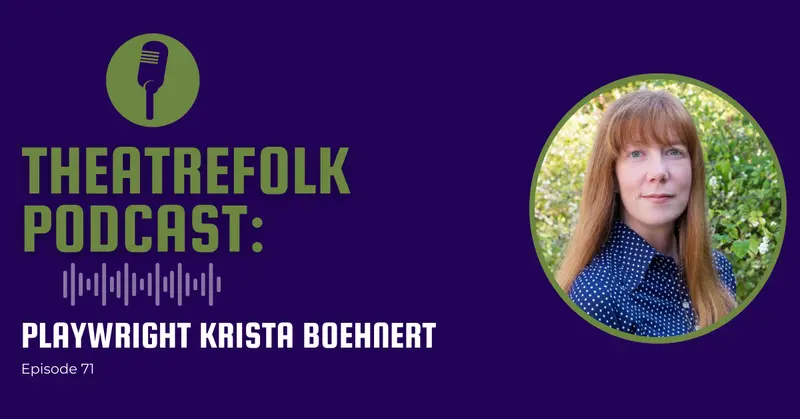
Theatrefolk Podcast: Krista Boehnert
Podcast

Theatrefolk Podcast: Krista Boehnert

Episode 71: Krista BoehnertKrista Boehnert is the author of two distinct plays in our catalogue – Have You Heard? and Puzzle Pieces. Both plays are completely written in monologue form. Listen to Krista talk about her writing process and how her sister was a big help in the development of her plays!
Theatrefolk Podcast: Pop Star Broadway: YouTube Fireside Chat
Podcast

Theatrefolk Podcast: Pop Star Broadway: YouTube Fireside Chat

Episode 55: Pop Star Broadway: YouTube Fireside ChatIn this edition of the YouTube Fireside Chat Lindsay and Craig look at pop singers who take on Broadway. Do they work the same theatre magic or do they leave us cold? Should pop singers stay off the stage?
Social Issue Plays for High Schools / Middle Schools
Teaching Drama

Social Issue Plays for High Schools / Middle Schools

Our website lists all of our plays with social issue themes but it struck me that they’re only lumped as “issue plays” without a good guide to sorting out which title addresses which issue. So I’ve categorized them for you to hopefully give you a helping hand in your quest to find the perfect script for your school. Check them out. As usual, all of the titles have extensive free sample pages for you to read. I think you’ll find the writing honest, fresh, and believable – three qualities sadly lacking from a lot of “teen-issue” plays out there in the world. Alienation / Feeling Alone in the World• Anonymous by Allison Green • The Art of Rejection: Two One Act Plays by Christian Kiley • A Box of Puppies by Billy Houck • Constantly, Incessantly, All The Time by Billy Houck • Huge Hands by Billy Houck Body Image• Body Body by Lindsay Price • The Four Hags of the Apocalypse Eat Salad at their General Meeting by Lindsay Price • The Battle of Image vs. Girl by Johanna Skoreyko • Hoodie by Lindsay Price • Breathless by Wendy-Marie Martin Censorship• Censorbleep by Lindsay Price Human Rights• Look Me in the Eye by Lindsay Price • Sweep Under Rug by Lindsay Price Racism• Flaky Lips by Lindsay Price • With Liberty and Justice For All by Jeyna Lynn Gonzales • Not Going Anywhere by Emma Fonseca Halverson • The Burgundy Letter by Kirk Shimano • Let Me In by Sholeh Wolpe *** Rumours and Lies• Have You Heard? by Krista Boehnert • The Redemption of Gertie Greene by Taryn Temple Individuality• Hoodie by Lindsay Price • Virtual Family by Christian Kiley • The Happiness Shop by Lindsay Price • A Deep, Poetic Journey Into Something by Forrest Musselman • Carrying the Calf by Shirley Barrie • Monster Problems by Lindsay Price • Stereotype High by Jeffrey Harr • Sixteen in 10 Minutes or Less by Bradley Hayward • Nice Girl by Amanda Murray Cutalo • Pressure by Lindsay Price • They Eat Sunshine, Not Zebras by Dara Murphy • The Super Non-Heroes by Taryn Temple • Smarty Pants by Bradley Hayward Identity• Box by Lindsay Price • Labeled by Lindsay Price • We Are Masks by Lindsay Price • Stressed by Alan Haehnel • Anonymous by Allison Green • Constantly, Incessantly, All The Time by Billy Houck • The Super Non-Heroes by Taryn Temple School Violence• Huge Hands by Billy Houck • Power Play by Lindsay Price • Clowns with Guns (A Vaudeville) by Christopher Evans • The Butterfly Queen by Christian Kiley • Life and Death in an Empty Hallway by Christopher Evans • Water. Gun. Argument. by Alan Haehnel Sexual Abuse• The Waking Moment by Bradley Hayward • Breathless by Wendy-Marie Martin Substance (alcohol & drug) Abuse• Bottle Baby by Lindsay Price • Floating on a Don’t Care Cloud by Lindsay Price • One Beer Too Many by Billy Houck Suicide• The Bright Blue Mailbox Suicide Note by Lindsay Price • Chicken. Road. by Lindsay Price • The Butterfly Queen by Christian Kiley Teen Pregnancy• The Pregnancy Project by Lindsay Price • Among Friends and Clutter (one scene) by Lindsay Price Illness/Health• Chemo Girl by Christian Kiley • The Other Room by Christian Kiley • Red Rover by Christian Kiley • Waiting Room by Christian Kiley • Breathless by Wendy-Marie Martin • Shreds and Patches by Robert Wing • Inanimate by Christian Kiley • Constantly, Incessantly, All The Time by Billy Houck Depression/Anxiety• darklight by Lindsay Price • Fidget by Bradley Hayward • Among Friends and Clutter (one scene) by Lindsay Price • Constantly, Incessantly, All The Time by Billy Houck • who are we, who we are by Forrest Musselman Bullying• Finishing Sentences by Scott Giessler • Funhouse by Lindsay Price • Power Play by Lindsay Price • The Redemption of Gertie Greene by Taryn Temple • Sixteen in 10 Minutes or Less by Bradley Hayward • Carrying the Calf by Shirley Barrie Divorce• Split by Bradley Hayward Gender• Life, Off Book by Scott Giessler • Anonymous by Allison Green • Baalzebub by Rachel Atkins (Baalzebub – One-Act Version here) • Completely, Absolutely Normal: Vignettes About LGBTQ+ Teens by Bradley Walton • Finding Jo March by Laramie Dean • Thought Traps by Lindsay Price Empathy• Discovering Rogue by Christian Kiley • Boat by Lindsay Price • We Are Masks by Lindsay Price • The Butterfly Queen by Christian Kiley Dependence on Technology• Virtual Family by Christian Kiley • Inanimate by Christian Kiley
Spread the Love: Have You Heard by Krista Boehnert
Featured Plays

Spread the Love: Have You Heard by Krista Boehnert

Lindsay and Craig spread the love for Have You Heard? by Krista Boehnert.
We accept

In addition to the above payment methods, Purchase Orders are accepted from US and Canadian Schools.

Info for your purchasing department