

Featured Plays
Choosing one act plays for middle school is not an easy task.
The students are at a very in-between point in their lives. They no longer want to be seen of as ākidsā yet many are not quite ready to tackle heavier issues. Play selection is a total āyour mileage may varyā situation. It depends on each specific set of kids. Some will be content with fairy tales while others will want intense make-āem-cry dramas.
Here is a direct link to all of our one act plays for middle schools.
I reached out on our Facebook page for some feedback from middle school teachers: āWhat are the major factors you need to consider when selecting a one act play for your middle school?ā
Here are some of the more representative responses we got.
āLarge cast size (25-35) for my classes, appropriate for their age, doesnāt focus on typical angst of the MS student, it needs to be mostly funny (theyāll get enough serious stuff at the HS level), and I LOVE vignettes which allow me to cast many kids in roles The Snow Show ~ Jessica Landry Stafford
āIt has to have a message. My students donāt like fluff. They want something to sink their teeth into. It also has to have a good ending. I have found most one act plays just drop off and donāt have strong endings.ā ~Leslie McKibben
āCast size over 20. Smart script. Age/audience appropriate but not talking down to teenagers. Would love to see more stories that werenāt necessarily anchored in school angst.ā ~Aidan OāHara
āA play āthe cast and crew will care about.ā Most middle schoolers are not yet such experienced theatremakers that theyāll enjoy doing any show for any reasonāthe story needs to engage them pretty quickly for them to commit to the process.ā ~Becky Schlomann
āI always think about the talent that I have available at the school and choose a show that will make all their talents shine. I want to pick a show that will both challenge the students, but also engage them and nurture their love for theatre.ā ~Bethany Kennedy
āNo more mangling of fairy tales or Shakespeare! Something that they can sink their teeth into without being angsty. Heavier on girls. Boy roles where they donāt have to be āmanly.āā ~Amy Medina
āOpportunity, creative challenges, meaningful and accessible character development. LOVED Tick Talk for middle schoolers in particular, BTW.ā ~Jessica Shulman McGettrick
As you can see, the answers are wide and varied. Thereās no magic bullet. Thereās no āone size fits allā play for a middle school group. Choosing a one act play for middle schools depends heavily on the group of kids that you have at the time.
Here are some of the main factors brought up by our Facebook fans.
AppropriatenessAppropriate is in the eye of the beholder. It would be impossible to say whatās āappropriateā because standards vary.
Our customers request plays that run the gamut between requests to remove all references to dating from a play (a play that doesnāt show a date, it just uses the world) to our most challenging plays, some of which arenāt even on our recommended list of plays for middle schools.
Cast sizeThis one was almost universal. A large cast size is important. This is particularly tough in a one act play format. Writing a play that has a lot of characters isnāt challenging, but it is challenging to develop them all, to give them individual traits so the actors feel like they can contribute as individuals to the production.
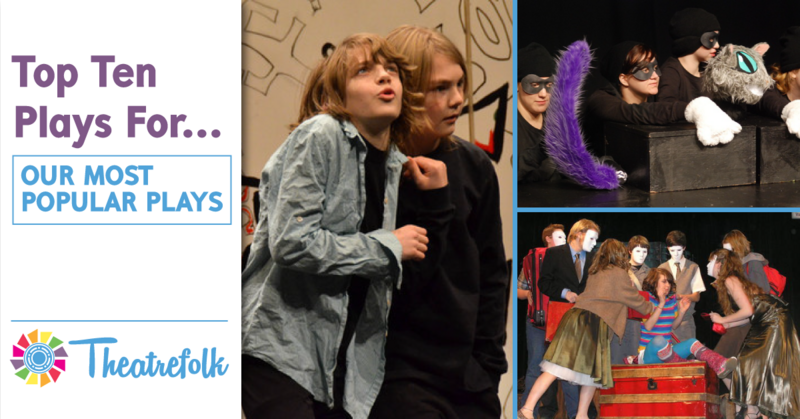
Some of our one act plays that achieve this nicely are:
⢠Funhouse ā a bullying play with a cast of 20
⢠The Absolutely Insidious and Utterly Terrifying Truth About Cat Hair ā A fun play with a long title and a huge cast.
⢠Shuddersome: Tales of Poe ā A very large cast adaptation of Poeās most theatrical stories
⢠Lord of the Pies ā a delicious parody of Lord of the Flies
Students Can Relate to ItThe plays we publish and promote for middle schools tend to have the majority of characters of student age (except in the case of literary adaptations). Itās important that the characters and the situations they find themselves in are realistic and relatable. Not necessarily how adults see the middle school student, but how they see themselves.
The Play Stretches the PerformersItās important that the play stretch them as performers. But āstretchā doesnāt have to mean āa different age, like grandparentsā In the professional world, for example, Iāve always played roles that fit my age and every experience Iāve had has stretched me as a performer.
A meek student can be stretched by playing a bully. A straightlaced student can be stretched by playing a troubled kid. Typecasting is lovely and it makes casting easy, but if youāre looking to stretch kids then itās important to cast against type sometimes. At the end of the day the most important thing in educational theatre is the studentsā learning experience.
For example, our middle school play The Happiness Shop looks at the issue of Middle School Depression. This is a serious topic and allows middle school students to tackle a big issue in a theatrical manner.
The Fractured Fairytale DebateSome people on our Facebook post said they love fractured fairytales, others are sick of them. Thatās what makes art so wonderful ā there are plays to suit every taste.
We donāt have any fractured fairytales but I donāt think thereās a single thing wrong with them besides the fact that itās very easy to write a bad one. Iāve seen so many come through our submission process that just arenāt theatrical. They are just re-worded versions of fairytales ā parodies or spoofs. They are funny on the page and thatās probably the medium they belong in.
The best way to tell if a script is theatrical or not is to ask yourself these questions: How will staging this play (bringing it to life) differ than just reading it? What parts of the script would be enhanced by live performers? Can you visualize the script in action when you read it? Do you see people moving? Are there moments that will affect the audience? If you struggle to answer these questions then thereās probably not much theatre written into the play.
I have no doubt that weāll publish a fractured fairytale at some point but when we do it will also work as an engaging piece of theatre.
Here are a couple of examples of **adaptations/parodies that work as theatre:**
⢠Drop Dead, Juliet! ā Juliet tries to change her inevitable death at the end of the play and engages in a battle of wills with William Shakespeare.
⢠Circus Olympus ā A collection of Greek myths come to life. The script encourages liberal use of circus skills ā whatās more theatrical than a Greek myth & circus mashup?
⢠Rebootililzation ā Not a one act, but this clever play incorporates a ton of fairtytale and literature based characters.
More Girls than BoysThis is a purely logistical issue. More girls audition for middle school shows than boys. Pretty much all of our plays have more girls than boys for this very reason. We also try our best to get some gender-neutral characters in there for casting flexibility.
Bradley Haywardās Apostropheās and Sixteen in Ten Minutes or Less are both fantastic choices for flexible casting.
Simple StagingIn our experience, the middle school budget is limited. The middle school play is more about putting as many students on stage, rather than having the most elaborate staging. We got you there, too. We always aim for scripts that are easy to stage. Our running joke is that most of our plays can be staged with two chairs and a cube and if youāre really pressed for budget, then one of the chairs could be cut.
Personal TasteBecky Schlomann had this to say about what kinds of plays she looks for: āSomething I personally like. Iām going to be spending more time with the script than anybody, and if at the beginning of the process I hate it, by the end of the process Iāll be ready to poke my eyes out.ā
This is the main reason that every play on our website comes with an extensive free excerpt. That way there are no surprises when you order a play for production, and you donāt have to order a dozen perusal scripts based on a catalogue blurb only to end up disappointed that none of them appeal to you.
There are a lot of one act plays for middle schools on our website. If that overwhelms you, feel free to email us or use our live chat through this page. Tell us your likes, dislikes, cast size, and the age of your group. Weāre always happy to send recommendations your way.