

Facebook Pixel Skip to main content

📣SCRIPT SALE! Treat yourself to an easier Fall. Save 30% on 5+ perusal scripts with code SPRING30 before May 3 and head into summer stress-free.

who are we, who we are

who are we, who we are

by Forrest Musselman

who are we, who we are addresses anxiety and depression in teens. Clay is having issues because of his mother’s failing health. At the beginning of the play he finds himself inside his own brain, where he meets other teens from his school who are also suffering. Clay learns to listen and ask for help as the first step on his road to recovery.

An excellent ensemble piece with a variety of movement and staging opportunities.

Drama

Average Producer Rating:

Recommended for High Schools

Running Time
About 30 minutes
Approximate; excludes intermissions and scene changes
Cast
17 Characters
3 M14 F
Set
Simple set
Free Excerpt

What to order?

Not sure what you need to order? Check out our pricing and ordering guide.

Performance Royalty Fees

Royalty fees apply to all performances whether or not admission is charged. Any performance in front of an audience (e.g. an invited dress rehearsal) is considered a performance for royalty purposes.

Exemption details for scenes and monologues for competition.

17 Characters
3 M, 14 F

Characters in this play are currently identified as male or female. Directors are welcome to assign any gender (binary or non-binary) to any character and modify pronouns accordingly.

ANNIE [F] 52 lines
SHE’s dealing with depression and Clay’s best friend.
NORA [F] 19 lines
SHE is dealing with death of father’s suicide.
ANGEL [F] 9 lines
SHE has an eating disorder.
MARY [F] 15 lines
SHE’s addicted to social media.
MOLLY [F] 15 lines
SHE’s depressed and can’t find the right medication.
WANDA [F] 16 lines
SHE worries too much.
BRENDA [F] 14 lines
SHE has OCD.
MISSY [F] 14 lines
SHE has anxiety due to bullying.
SOPHIE [F] 9 lines
SHE’s busy and worried about her grades.
CLAY [M] 59 lines
HE’s got some issues.
NORA'S DAD [M] 9 lines
HE’s a farmer and depressed.
BULLY [F] 12 lines
SHE’s a bully.
ANNIE’S MOM [F] 7 lines
SHE’s supportive and understanding.
WANDA’S MOM [F] 4 lines
SHE’s a good hugger.
MARY'S DAD [M] 6 lines
HE’s a frustrated parent.
THERAPIST [F] 7 lines
SHE’s a good listener.
GIRL [F] 1 line
SHE’s in her brain.

More Plays Like who are we, who we are

darklight

by Lindsay Price

An examination of depression and anxiety in teens.

Jake finds a suicide note in his mailbox. Is it real? Is it a joke? Jake is determined to find out but instead learns a secret he didn't want to know.

A Box of Puppies

by Billy Houck

We can all relate to feeling small in a big world. The characters in A Box of Puppies share their insecurities, their frailties and how they cope.

We Are Masks

by Lindsay Price

We all wear a mask. What will happen when the world sees who you really are?

This vignette style play can be easily performed using an online platform and has a variety of scenes to address all student skill levels.

A competition-length version of Chicken. Road. by Lindsay Price

From the Drama Teacher Learning Centre

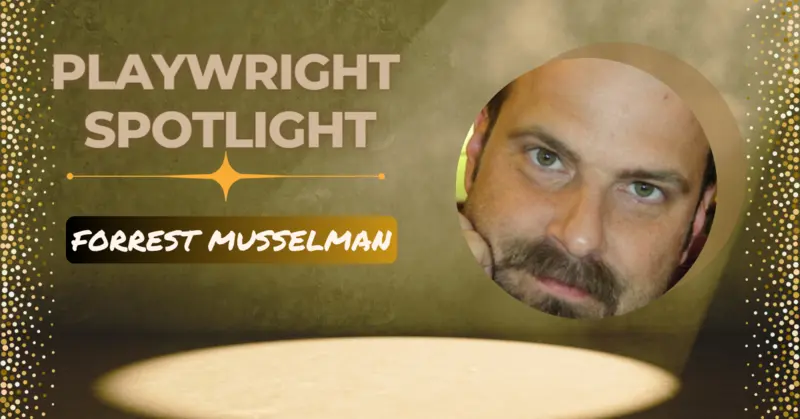
Playwright Spotlight: Get to Know Forrest Musselman
General

Playwright Spotlight: Get to Know Forrest Musselman

Welcome to "Playwright Spotlight" — your exclusive backstage pass to the creative minds crafting the incredible plays featured in our Theatrefolk catalogue. Discover the magic, quirks, and genius of the playwrights who help bring the stage to life. Let's meet one of these exceptional playwrights who offers the chance for your student performers to shine in their spotlight. What inspired you to start writing plays specifically for high school & middle school students?When I started writing nearly 30 years ago, I saw a need in the youth market for plays that were relatable to teens. I wanted to make plays that they could identify with. Can you share a bit about your creative process when developing plays that resonate with students?I am a teacher and director at a local high school, so I'm surrounded by kids all the time. When I write a new script, the students help me a lot with shaping it and making it more "teen" friendly. Are there any challenges you face when writing for student performers, and how do you overcome them?A big challenge is just keeping up on what's cool and what's not. What slang phrases are being used? What stands the test of time and what is just the flavor of the month? The students keep me in check : ) What themes or messages do you aim to convey through your plays?It's okay to be different. Technology is evil. All we need is love. How do you balance education and fun in your scripts?It can be a fine line sometimes, but I always want to have fun first. The education comes sometimes when students have to research or find meaning behind the text. Can you share a memorable experience or feedback from a student performance that left an impact on you?I've had quite a few actually. The latest one was during my performance of who are we, who we are when showing it to our student body. I swear you could have heard a pin drop in the theatre, they were so invested in watching the show. After the show, several students went to see our guidance counselor to seek help with their anxiety and depression. Any advice for teachers or directors looking to choose engaging and age-appropriate plays for their student performers?Theatrefolk is a great resource. Start there. What is your favourite play you've written so far?A Deep Poetic Journey Into Something Anything else you'd like students and/or directors to know about you as a playwright?I love to hear feedback on shows and see pictures. Don't be afraid to contact me and send pictures. I'd love to post them on my social media platforms.
Theatrefolk Featured Play – who are we, who we are by Forrest Musselman
Featured Plays

Theatrefolk Featured Play – who are we, who we are by Forrest Musselman

*Welcome to our Featured Play Spotlight. * who are we, who we are by Forrest Musselman is an excellent ensemble piece with a variety of movement and staging opportunities. who are we, who we are addresses anxiety and depression in teens. Clay is having issues because of his mother’s failing health. At the beginning of the play he finds himself inside his own brain, where he meets other teens from his school who are also suffering. Clay learns to listen and ask for help as the first step on his road to recovery. Why did we publish this play? Teen anxiety and depression are topics we should be constantly talking about. Forrest’s play brings these issues to light in an incredibly theatrical manner. The message is timely and the ending is really on point. Before publication this play was in competition at the Minnesota State High School League One-Act Play competition where it received 1st in conference, 1st in subsection, and 1st in section 1A. We’re not surprised it did so well. It’s a lovely play with an ensemble cast and so many movement and staging opportunities. Let’s hear from the author!1. Why did you write this play? Clay’s story is based off of a real student of mine that was dealing with similar issues. I wanted to tell his story and explore other aspects of anxiety and depression. 2. Describe the theme in one or two sentences. Anxiety and depression should not be suppressed or ignored. If you are having problems, take the first step and tell someone. 3. What’s the most important visual for you in this play? When I did the show, I had glowing boxes that added a very cool visual element. I realize a lot of schools wouldn’t have this option, but you can still use the ensemble to create interesting stage pictures. 4. If you could give one piece of advice for those producing the play, what would it be? Take some time to talk through all the different characters and identify with what they are dealing with. The more the actors can make these characters real, the stronger it will become. 5. Why is this play great for student performers? It’s totally relatable to the various struggles they may be going through. 6. Why is this play great for online performances? You may want to reconsider how to do the final scene between Clay and Annie since they can actually hug. Perhaps just give a line or two to Clay where he finally asks for help. Get your copy of who are we, who we are right here, right now!Interested in studying this play with your class? Don't miss our FREE classroom study guide! Not right for your group right now? Search our play catalogue to find one that your performers will love!
We accept

In addition to the above payment methods, Purchase Orders are accepted from US and Canadian Schools.

Info for your purchasing department