
Warm-ups
10 Super-Quick Warm-Up Games
Warm-ups are important to get students into the drama mindset, but sometimes you only have a few moments to spare. When time is at a premium, get your classes started in a jiffy with these 10...
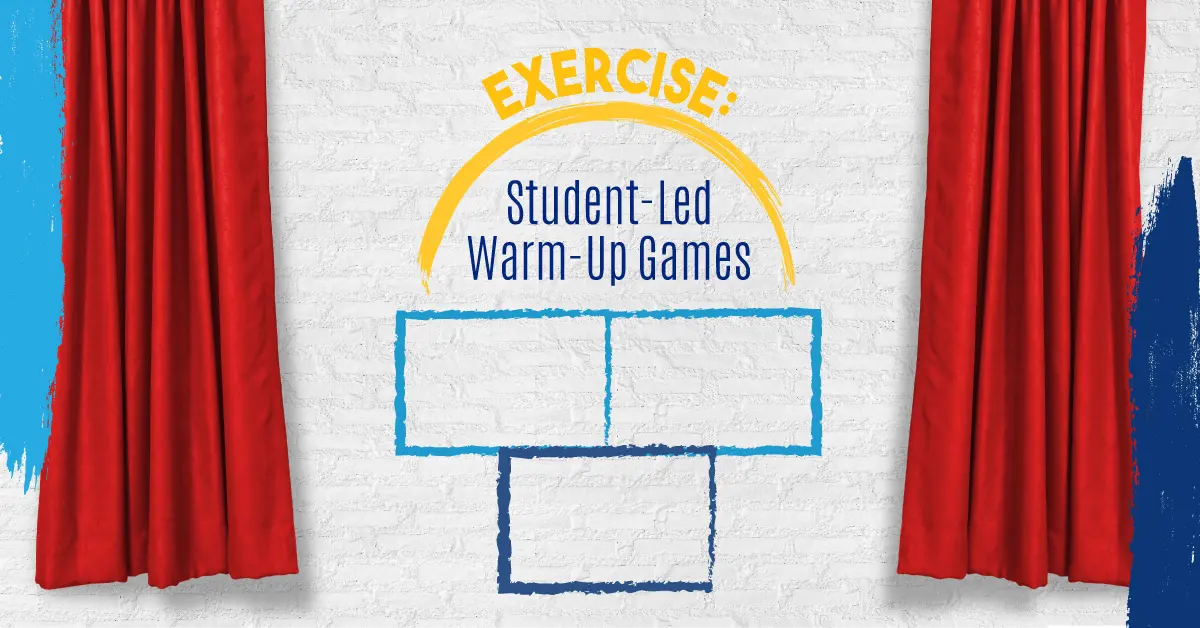
Student-led warm-up games are a great way for students to demonstrate what they’ve learned in drama class and apply it in a practical setting, as well as to develop their leadership skills. Student-led warm-up games are particularly useful for senior students, who could be assigned to lead warm-ups for grade 9 and 10 drama classes, show rehearsals, or drama club get-togethers, in addition to leading their own peers in class.
The following exercise will help teachers to organize a schedule for student-led warm-ups, as well as lead students through the process of preparing, proposing, and presenting their warm-up game.
1. At the beginning of the semester, have students pair up. Each pair will be assigned a date on which they will be responsible for leading the warm-up. If at all possible, give students a class syllabus ahead of time so they are able to tailor their warm-up to the topic being studied that day.
2. Pairs will research and/or devise a warm-up game or activity (they may use an existing warm-up game, or invent their own new game).
3. Students will submit a proposal to the teacher, answering the following questions:
4. The teacher will approve the proposals and/or ask for revisions (this also helps to ensure multiple groups are not proposing the same activity).
5. Once all the proposals have been approved, on the assigned date the pair will lead the warm-up activity. The leading pair are responsible for obtaining any materials needed ahead of time, as well as setting up the classroom as needed.
6. The leading pair must clearly explain and/or demonstrate the game/exercise, and then lead the rest of the class in participating in the game. The leading pair must be prepared to explain the purpose of the activity, as well as respond to any questions or issues that arise. Once the activity has been completed, participating students will complete the Reflection question created by the leading pair (as devised for the initial proposal).
7. The leading pair will complete a more in-depth, individual Reflection upon completion of their proposal and their presentation.
Subscribe for our exciting updates, insights, teaching resources, and new script releases. Plus, sign up now and get 4 plays and 2 lesson plans for FREE!
by Lindsay Price
A collection of games and activities that go well beyond the notion of "play."
by Jennine Profeta
Improv games including feedback suggestions and questions, game variations, teaching tips, side coaching tips, entry prompts, exit slip questions, and more!