đŁSCRIPT SALE! Treat yourself to an easier Fall. Save 30% on 5+ perusal scripts with code SPRING30 before May 3 and head into summer stress-free.
Teaching
Teaching Drama
My Best Stress Relief Advice for the Drama Classroom
The drama classroom can be a stressful place. Between an ever-changing, dynamic curriculum and the daily demands of classroom teaching, itâs easy to find yourself in a perpetual state of anxiety. While self-care and meditation are important, when it comes to eliminating the primary source of stress in the classroom, one strategy towers over the rest:
Be prepared.
Understand that when I say this I am not being smug or snarky, I am being honest. I have seen my fair share of teachers who wake up every day stressed out and miserable at the thought of driving to school, because they know that they are not prepared: not prepared for class, not prepared for rehearsal, not prepared for their responsibilities as a teacher. Being unprepared is a terrible feeling, and it can eventually lead to the end of your teaching career. Hereâs how:
Teaching is not a profession where you can make it up as you go along. You might get away with being unprepared once or twice, but you can only improvise for so long before students call your bluff. After that, cracks will appear in your daily classroom operations: Classroom management slips, students become disrespectful and disengaged, assignments are dropped, grades get fudged. Eventually, word gets out that your classroom is in disarray, and thatâs when administration gets involved. Before long, youâre placed on a required district âimprovement plan,â complete with increased administrative supervision and mandatory goals. From there you have two choices: Get your act together, or get out.
The good news is that you have the ability to prevent this stressful situation. Starting today, make being prepared a priority. Write out your lesson plans at least a day in advance. Assemble materials ahead of time and have them ready to distribute when students walk through the door. Anticipate potential difficulties or disruptions and develop strategies to keep them at a minimum. The more time and effort you put into preparation now, the smoother things will go when itâs time to execute those plans. At first, it may be taxing to prioritize preparation as part of your daily teaching responsibilities, but like any skill, the more you practice, the easier it will get.
Preparation is the foundation of stress-free teaching. Start taking steps to decrease your stress by increasing your preparation.
Teaching Drama
Stepping Out of Your Comfort Zone: 10 Tips for Drama Teachers
Great teaching isnât just about what you know, itâs about daring to try what you donât. Stepping into unfamiliar territory can be scary, and who has the time for it when youâre teaching full days and directing and doing a million other things? On the other hand, itâs important because it can spark creativity, build collaboration, and create unforgettable learning experiences. So here are our top 10 tips for taking that leap in the drama classroom.
1. Recognize your comfort zone.Artists often have areas where they feel safe: writing familiar dialogue, playing roles similar to their personality, or sticking to familiar genres. So do teachers. Do you stick to directing comedies because theyâre in your wheelhouse? These zones are cozy but limiting.
2. Take on challenges outside your usual scope.Trying something completely new, like a challenging text, writing a one-act, directing a musical, or including everyone who auditions in your production pushes creativity and growth. It may feel uncomfortable, but thatâs where breakthroughs happen.
3. Embrace collaboration.When venturing into unknown territory, involving others in the creative process leads to richer results. Collective brainstorming and experimentation often solve problems that feel impossible to conquer alone.
4. Accept fear as part of the process.Fear of the unknown is natural, but it shouldnât prevent you from trying. Jumping into new experiences builds resilience and confidence. Keep telling yourself: Failure is learning!
5. Focus on the process, not just the end product.The skills learned, the memories made, and the community built during rehearsal are often more valuable than the final performance.
6. Small details can have a big impact.When youâre stepping out of your comfort zone, donât neglect simple and small details. Not everything has to be big, bold, or extravagant. Simplicity can create atmosphere, humor, or powerful audience reactions. Sometimes the smallest touch is the most effective.
7. Learning happens in both directions.Working with students can remind you of your own growth and help you see things from different perspectives, such as understanding how younger participants process complex material.
8. Be adaptable and willing to experiment.Initial setbacks, like scenes that feel like disasters, can be resolved by trying new approaches, testing ideas, and refining as you go. Flexibility is key. Failure is a part of the process.
9. Trust the ensemble.A collaborative and responsive group can elevate a project beyond what a single director or writer could accomplish alone. True ensemble work encourages creativity and innovation.
10. Taking risks enables future opportunities.Once a new project is brought to life, it can continue to grow, develop, and reach new audiences. Risk-taking today creates potential for success tomorrow!
Teaching Drama
3 Ways to Put Teacher Burnout in Check
Teacher burnout is all too common, especially among theatre teachers. Theatre teachers have to deal with everything from apathetic students to overbearing admin, and thatâs BEFORE the production-fueled 12-hour days. Thatâs why theatre teachers have to constantly push back against the ever-looming spectre of burnout. If you feel like youâre on the edge of burning out, here are three strategies you can use to put burnout in check.
Self-CareSelf-care is at the top of the list. Theatre teachers give and give and give - everything from one-on-one feedback for classroom projects to late-night rehearsals of the impending spring musical. We love our students and we love our programs and we are far too willing to sacrifice our own personal well-being for the sake of that love. However, the MOST important thing to love is yourself! You need to rest and recuperate to have the energy to help your students and run your program. That means you need to unplug and pursue some non-theatre pastimes: Read a book, take a walk, treat yourself to your favorite cup of coffee. These pursuits do not need to be complicated or expensive to be effective self-care activities. Give yourself the chance to recharge your batteries so that you will have the energy in reserve to tackle the projects that are on your plate.
Time ManagementInsufficient time management is a leading factor in teacher burnout. Time management challenges typically fall into one of two categories - under-planning and over-commitment - and the two are often connected.
⢠Under-planning relates to not being properly prepared for class, or rehearsal, or other required school activities - things like not writing lesson plans or maintaining an updated rehearsal calendar. This makes teaching stressful, because itâs incredibly difficult to maintain focus in the classroom when youâre constantly playing catch-up or operating âon the fly.â If youâre under-prepared, take the time to prioritize your most important responsibilities, especially when it comes to things like lesson planning and rehearsals.
⢠If you feel like you never have enough time in the day, it is probably because you are over-committed. As theatre teachers, we love to say yes (and as NEW theatre teachers we sometimes feel that we HAVE to say yes): yes to forming a drama club, yes to volunteering for adhoc committees, yes to special student projects. But your daily responsibilities should be your first priority. When you feel like youâre barely keeping up with your responsibilities, burnout comes quickly.
If you find yourself in the weeds with your time management, look for projects or activities that are not part of your required work, and politely excuse yourself from those undertakings. There are only so many hours in a day, and you need to manage those hours effectively.
Remember the WhyItâs easy to have a long, happy career when everything runs smoothly. However, when teaching is no longer fun, burnout usually follows. This is especially true for theatre teachers. Somewhere between the lack of community support, the overbearing admin, and the mandatory incomprehensible âdistrict educational initiativeâ (that you somehow have to integrate into your curriculum!), many theatre teachers come to realize the love is gone. Being a full-time teacher is a lot of work, and sometimes that work is more frustrating than fun, and that is when burnout can set in.
This is when you need to remember the Why. Remember WHY you wanted to teach theatre in the first place. Most drama teachers pursue this career because of their love of theatre, their love of young people, or both! Take time to remember the joy you feel when you see a student find their passion. Remember the pride on a parentâs face when they see their child light up the stage. Remember when an administrator brags about your production to the entire school. If nothing else, keep in mind that your class is the reason one student came to school today, and that being in your production motivated another student to stay in school and graduate. That is the Why, and the Why helps keep burnout at bay.
Additional Reading:
How to Deal With Rehearsal Burnout
Dealing With Theatrical Burnout: 4 Tips for Teachers
Ten Questions Every Teacher Needs to Ask. (When did you last ask #3?)
Drama Teachers: We See You. We Hear You. We Are With You.
Round-Up: Well-Being and Self-Care for Drama Teachers
General
What I've Learned from 10 Years of Writing About Drama Education
My first blog post at Theatrefolk went live 10 years ago (check it out here). Since then, Iâve realized that the most valuable lessons arenât always about curriculum, rehearsal strategies, or theatre history. Theyâre about people â the teachers who show up every day, the students who challenge us daily but also rely on the drama classroom as their safe space, and the communities built around the work we do.
Here are some of the things Iâve learned from 10 years of listening to, writing for, and supporting drama teachers.
1. Drama teachers are some of the most creative problem-solvers on the planet.Give a drama teacher a classroom with no stage, a budget of zero, and 30+ students of wildly mixed abilities, and theyâll create magic. Iâve heard so many stories of teachers turning cafeterias, libraries, and gymnasiums into theatres, transforming the most mundane objects into sensational props and costumes, and teaching lessons with nothing more than a rolling cart and a lesson plan. Drama teachers donât wait for the âperfectâ conditions, they build something meaningful with what they have. Thatâs real artistry!
2. Students donât need to become actors to benefit from drama class.Not every student will go on to pursue theatre, but every student who takes drama class can walk away with increased confidence, resilience, collaboration skills, and communication skills. Teachers frequently share stories of shy students coming out of their shells, anxious students demonstrating bravery, and loner students finding their place. Drama teaches social-emotional learning skills, teamwork, and empathy â all things that students will use in their everyday lives.
3. Ensemble mindset is key.Having an ensemble mindset is vital for success. Iâve said it again and again: Theatre is a collaborative medium. In the drama classroom, students learn and practice how to listen, support one another, give and take space, grow and build trust, and fail (and recover) together. A strong ensemble mindset can bring the toughest group together into a team, while a poor ensemble can make even the best lesson plan fall flat.
4. Simple activities done well are more powerful than flashy activities done poorly.You donât need the most complicated activities to keep your studentsâ attention. Exercises like Tableau Scenes from a Book and Scenes from a Bag are simple, fun, and they work. They teach communication skills, active listening, and teamwork in a way that is easy for students to execute. Thereâs no sense using an elaborate activity that students donât fully understand. Same with productions â yes, itâs nice to have a fancy set, glamourous costumes, and the hottest technology, but you and your students can also make magic with just a few rehearsal cubes and your imaginations. Sometimes, simple is best.
5. Students take more risks when they feel safe.Drama requires students to show their vulnerable sides, which isnât easy, especially for beginning drama students. The drama teachers who build trust first and create safer spaces for their students tend to see those students eventually take bigger risks in the classroom. Students arenât generally afraid of performing, theyâre afraid of being judged by their peers. Creating a drama classroom that is safe and accepting makes students feel more at ease.
6. Teachers need community just as much as students do.One thing Iâve heard from drama teachers is that they often feel isolated, misunderstood, shuffled to the side, or unappreciated. Frequently, theyâre the only one in their school doing what they do. Thatâs why online communities and resources (like Theatrefolk and the Drama Teacher Academy!) matter so much. Teachers thrive when they can exchange ideas, celebrate wins, vent, ask questions, and feel seen. Theatre is collaborative â theatrical education should be too.
7. Students donât need perfection, they need presence.The most impactful drama teachers arenât the ones with flawless lesson plans and the most impressive productions. Theyâre the ones who show up fully and authentically. Students remember the teachers who believed in them, who made them feel safe, who laughed with them, and who saw them for who they really are.
8. Theatre education keeps evolving â and thatâs a good thing.There have been huge shifts in the realm of theatre education, including more emphasis on inclusion, better understanding of trauma-informed practice, the rise of intimacy direction, increased use of technology in the drama classroom and productions, and more focus on student voice and choice, as well as the temporary pivot to online learning and production during the pandemic. Drama education is not static; it changes as the world changes. And teachers keep rising to meet these changes.
9. Reflection is just as important as action.Reflection is vital for students to really absorb moments of learning. Exit slips, check-ins, and class discussions help students develop self-awareness, process emotions, track their growth, and consider what worked well and what could be improved upon. Reflection also gives teachers the chance to get to know their students better and helps them to better understand what students got out of the lessons. Reflections help everyone to pause, consider, evaluate, and then move forward.
10. Drama education is work that matters.If youâve ever doubted your impact as a drama teacher, please donât! Drama class is where students learn to collaborate, communicate, create, take risks, build confidence, and express themselves authentically. For many students, the drama classroom is the one place they feel at home. Drama teachers change lives!
A final word from Kerry:
Thank you, drama teachers, for everything you do. The long rehearsals, the lesson planning, the emergency fixes, the hours spent caring about students who really need you. It has been an honour to be part of the Theatrefolk community for the past decade, and to share in the incredible work of the Drama Teacher Academy community. I carry every lesson â and the deep respect I have for drama teachers â with me on my journey ahead. Giant thanks as well go to the incredible team at Theatrefolk: Lindsay, Craig, Christy, and the rest of the crew. I am so grateful for this opportunity to share my love of theatre education with such a dedicated and passionate group of people.
Teaching Drama
What to Do in Drama Class When Half the Students Are Absent
What do you do when you enter the drama classroom, ready to teach, and half your students arenât in class? Maybe itâs due to illness, a field trip, it being the last week before winter break, the full moon? Whatever the cause, itâs hard to proceed with your carefully planned lesson when youâre missing students. It might feel like you havenât had a fully attended class all term.
But try not to stress! Here are some adaptable and productive ways to make the most of a partially full drama class.
1. Do activities with flexible participant needs.Lots of theatre games and exercises can be done individually or in pairs, or by dividing the class into two teams (regardless of the number of team members). Try exercises like Commercials, Two Prompts, Speed Props, Row of Hats, Scenario Generator, or the old favourite Scenes from a Bag. None of these exercises have a required number of participants outside of partners or dividing the class into two teams. This also gives students the opportunity to work with peers they may not have had a chance to work with before.
Additionally, this is a great time to do playwriting exercises, watch pro shoots of plays and musicals, or have students work on research projects. These activities can all be done individually or with a partner.
2. Focus on individual practice and skill building.With fewer students, you can give each student more personal attention. You can use this time to work one-on-one with students while they practice theatrical skills, such as cold reading, taking direction in an audition, neutral position, or vocal exercises. Youâll be able to devote more time to each student and give more detailed notes and confidence boosts as needed. With a smaller group, your students will likely have the opportunity to take your notes and try again. This one-on-one time can also help you get to know your students better and explore how they like to learn and how they receive feedback.
3. Use class time as a rehearsal lab for upcoming performances.Many students will feel relieved when they can work and rehearse in a classroom with fewer people present. There are fewer distractions and it tends to be quieter. Rehearse solo and pair scenes â whatever can be done with whoever is present. If your students are working on group scenes and some of their group members are absent, try having another student step in and act as an understudy. Have the group members teach the understudy the blocking and acting approach as a way to demonstrate their understanding of the full scope of the work. If youâre feeling generous, make recordings of the rehearsals so the absent students can get caught up later.
4. Use this as a âreal worldâ lesson.Absences happen all the time in the real world. It doesnât make them any less annoying or inconvenient, but it means you can use them as a learning opportunity. Try the Casting Challenge â Not Enough Actors exercise using only the students in the room, or have students problem solve a hypothetical issue such as having an actor drop out of a production. Study small cast plays and discuss their advantages and disadvantages. Talk about double casting and how it can be advantageous when actors are absent. You can also try the exercise Last Minute Fill-In, where one group member from each group gets moved to a different group five minutes before performance time.
When half your class is absent, itâs like a real-life improv moment: reacting to whatâs happening with the people around you, pivoting, and going with the flow. You may have to let your plans go for the moment, but you keep going. These days can be challenging, but they may also turn into a meaningful, memorable experience for your students who are in class, because of all the extra attention they received.
Additional Reading:
How Do You Manage Overcommitted Students Who Miss Rehearsals?
Teaching Drama
How to Help Students Discover Their Best Learning Style in the Drama Classroom
Every student learns differently. Some do well when they can listen and take notes, some prefer visuals to make sense of information, some like to read articles and books about different topics, while others need to move and experiment. Understanding their learning style gives students more ownership of their education; it helps them recognize and employ strategies that support their success in the drama classroom, in their other classes, and beyond. Here are some ways to guide your students toward uncovering their best learning style.
1. Talk about learning styles early and often.Start the learning styles conversation early in the semester. Explain that people often learn in different ways:
⢠Visual learners â They need to see it: pictures, diagrams, blocking charts, colour-coding.
⢠Auditory learners â They need to hear it: verbal instructions, discussions, sound cues, explaining concepts back in their own words.
⢠Kinesthetic learners â They learn by doing and practicing: improvising, hands-on stagecraft, movement work.
⢠Reading/writing learners â They learn by reading instructions, checking things off written lists, responding to journal prompts.
⢠Combination learners â They learn best by combining two or more learning styles, for example, looking at a diagram while the teacher gives a verbal description, and taking notes to cement the concept in their brain.
Youâll find more information about learning styles here: Giving Instructions for Different Learning Styles.
2. Present exercises and activities in multiple styles.You can ask your students in a questionnaire what their preferred learning style is, but they may not know. Or, they might believe theyâre an auditory learner, but only because they havenât had the opportunity to learn in a different style. So try designing or adapting activities that highlight each learning style. For example, if youâre teaching stage directions:
⢠Draw a stage map on the board or tape it out on the floor (visual).
⢠Say the directions out loud (downstage left, upstage right, etc.) and have students repeat them back (auditory).
⢠Have students walk the stage directions themselves, or play a game like Trapdoor (kinesthetic).
⢠Give students a paper diagram of a blank stage and have them label the different directions by hand (reading/writing).
3. Combine styles for maximum impact.Blending and combining learning styles in one lesson can not only help students discover what their best learning style is, but also solidify the concepts in their brains. You can use all four of the learning styles in combination in different ways:
⢠As a lesson through-line: Introduce the topic visually â discuss it verbally â explore it physically â reflect on it in writing.
⢠Station rotations: Set up four stations, with each station presenting the concept in a different way (watch it, read it, act it, discuss it).
⢠Peer teaching: Have students get in groups of four; each student will present/explain the concept in different ways (sketching/illustrating/showing a video, reading about it, physically demonstrating, talking it out).
Encourage students to notice not only when they feel theyâre absorbing the material best, but also when learning is feeling a bit more challenging. For example, some students may find it challenging to listen to instructions but thrive when working from a written checklist. Or, they might have trouble physically doing the exercise, but can explain it verbally with perfect clarity. It doesnât mean they canât work in that particular learning style; their strengths might be in different areas, or they may just need more time to practice in different ways.
4. Offer choices when possible.When assigning a project, if youâre able to, build in learning style options. For example, if you are studying an introductory overview of theatre history (Greek, Roman, Medieval, Renaissance, and so on), students might choose one of the following options that best suit their learning style:
⢠Create a visual timeline poster of important times/moments in theatre history (visual).
⢠Record a podcast-style report and analysis of a period in theatre history (auditory).
⢠Perform a short scene from a particular era of theatre history (kinesthetic).
⢠Read an article about a particular era in theatre history and answer comprehension questions in writing (reading/writing).
Giving students choices empowers them to use their strengths while still meeting learning goals.
5. Encourage self-reflection.Use journal prompts or exit slips to get students thinking about their successes from the dayâs lessons and communicate them with you. If possible, allow students to respond in a method that works with their best learning style (handwritten response, typed response, recording a voice note, filming a video, etc.). See the giveaway below for some free exit slip prompts.
Note: Helping drama students discover their best learning style doesnât mean labeling them forever. Students are always growing and evolving, and they may discover that a style that worked well in the past doesnât work as well anymore, or that now they have different tools that help them even more. When students identify how they learn best, they become more confident, adaptable, and independent thinkers, and thatâs a skill that will serve them well both in the drama classroom and in life.
Teaching Drama
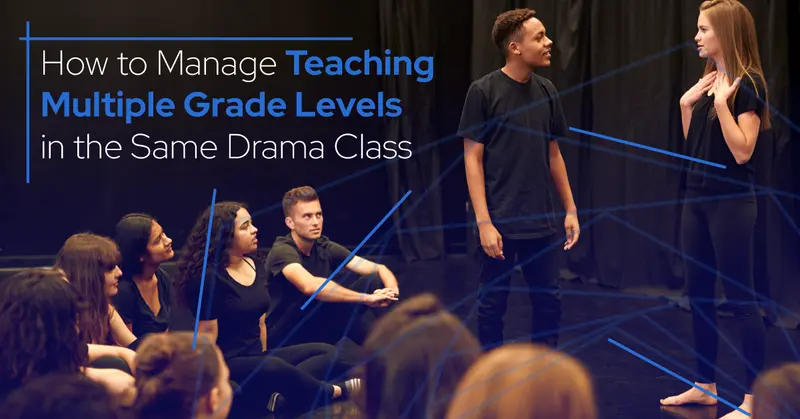
How to Manage Teaching Multiple Grade Levels in the Same Drama Class
Teaching multiple grade levels in the same class is fairly common in elementary school, but is also becoming more and more prevalent in high school. You might be growing a new theatre program at your school, dealing with declining student numbers, or trying to manage many other reasons for split classes. Grade 9 students are brand-new to the program, while your graduating seniors are likely seasoned performers, and all the students in between have various levels of experience, skills, and confidence.
The good news is: Itâs possible to plan lessons that keep everyone engaged and make your theatre classes vibrant learning experiences. Itâs not necessarily about creating completely different lesson plans for each grade; itâs about creating layers of challenge within the activities and projects and fostering an inclusive, collaborative environment. Here are some tips to help.
1. Start with ensemble-building, trust-building, and âgetting to know youâ exercises.No matter what grade or experience level your students are, all theatre classes benefit from ensemble-building, trust-building, and âget to know youâ games and exercises to help create a sense of community. When everyone feels like theyâre part of the same team, grade differences fade into the background. We have lots of options to help you; check out the following blog posts:
⢠Warm-Up Exercises for Trust Building
⢠Community-Building Warm-Ups
⢠5 Collaboration Games for the Drama Classroom
⢠3 âGet To Know Youâ Games
2. Use similar lessons with tiered levels of requirements.Rather than coming up with multiple assignments, use the same overarching assignment for all students, with increasing challenge levels for older and more experienced students. For example, you could teach a monologue unit and have the younger students start with shorter, modern pieces, while older, more experienced students can tackle monologues that are longer, more emotionally driven, or more technically complex.
For costume, props, or set design units, your senior students can be the lead designer or managing head of each department, while younger students do more of the creation and/or operations side (such as pulling or sewing costumes, painting sets, being a backstage dresser, assistant stage manager, or stagehand).
With written assignments, you could offer one choice board for all students and assign different completion requirements for different grade levels. For example, your choice board might have five different options on it. Grade 10 students must complete two of the five requirements, while Grade 11s must complete three of five and Grade 12s must complete four of five.
3. Or, have different focuses for each grade level on the same overall project.This is most common in production drama classes, where the younger students work on the production side (technicians, builders, assisting) while the senior students appear onstage. Or, the senior students direct a series of scenes featuring the younger students. Then if students continue to take drama classes in subsequent years, theyâll get the opportunity to experience all three roles over their years in drama (e.g., tech in Grade 10, performing in Grade 11, and directing in Grade 12).
4. Senior students can mentor younger students.Having multiple grades in one class gives older students a wonderful opportunity to lead and mentor younger students. Senior students can take on leadership roles such as student director, stage manager, or head technician. They can lead warm-ups, take on dance or fight captain roles, or give feedback to younger students when appropriate. You could establish a buddy system, where younger students shadow or work with more experienced students in various roles and experiences in the drama classroom. You could also assign senior students various theatre topics to research independently and teach the rest of the class (under your supervision).
5. Have time-filler activities ready, just in case.There will likely be times when some students finish early or need more challenges, particularly in split-level classes. Youâll want to have some time filler activities in your back pocket for those moments, such as journal prompts (youâll find additional journal prompts in the giveaway below) and reflections, playwriting prompts, or other low- or no-prep exercises that students can do independently or with their class buddy. This helps minimize downtime and keeps the class running smoothly.
Teaching Drama
How to Engage the Non-Theatre Student
If you have taught theatre for any length of time you have encountered a ânon-theatre student.â It could be a student looking for an easy A, someone who needed to fill an arts requirement for graduation, or simply the path of least resistance in an incomplete schedule. No matter what the circumstances may be, the question is the same: How do you get that student interested in your class? Here are three strategies to engage a non-theatre student.
1. Welcome everyone.Oftentimes a student is not engaged in drama class because they feel like an outsider. There are plenty of students in your classroom who DO want to be there, and itâs easy (and natural) to focus on those students and exclude others. Unfortunately, that approach becomes a self-fulfilling prophecy: Students are ignored, feel invisible, and are justified in feeling like outsiders.
To address this issue, work to make your classroom a supportive, welcoming space. Treat all students who come through your door equally. Conscientiously invite students who may seem hesitant or standoffish to participate, but donât force them; they will be more willing to participate as they get more comfortable in your class. More than anything, encourage all students to support each other. This will create an environment that builds ensemble and helps all students feel a sense of belonging.
2. Explain the Why.For many students, the biggest obstacle to engaging in theatre class is a lack of understanding what theyâre learning. If a student thinks that the only reason to take a theatre class is to eventually end up on Broadway, then whatâs the point? Thatâs why you need to explain the Why. What theatre REALLY teaches are real-life skills that are valuable no matter what career you pursue. Once students realize what they actually learn in theatre, they will see your class in a different light, and so will their parents.
Drill into your students that theatre teaches public speaking, leadership, creative problem solving, and dozens of other useful so-called âsoft skills.â These skills are highly prized in professional work environments, in addition to being beneficial in everyday life. Once students realize that participating in theatre is a valuable tool for improving personal and professional social skills, they are more likely to be engaged in classroom activities.
3. Change it up.All theatre teachers know: Acting is not for everyone. From simple self-consciousness to full-blown stage fright, there are students who have ZERO interest being on stage. So it makes sense that if these students believe theatre = acting, they are not going to engage. (And who can blame them?) However, the theatre curriculum covers a wide range of subjects, from carpentry to costume design, literature to playwriting. Therefore, if a student is not interested in one area of theatre, help them explore a different one!
Theatre examines the entirety of the human condition, so odds are there is SOMETHING they are interested in. Acting may not appeal to a shy student, but when the subject changes to design or tech, they may suddenly explode with interest and excitement. A change in subject may very well lead to a change of heart!
Additional Reading:
Three Ways to Engage a Large Drama Class
Using Pop Culture to Engage Drama Students
Teaching Drama
Why You Need the Drama Teacher Academy
Are you looking for top-notch curriculum materials, valuable teaching resources, professional learning, and a supportive community for your drama classroom? Whether you're a new drama teacher, new to teaching drama, or looking to freshen up your theatre classroom materials, the DTA is for you.
A Drama Teacher Academy membership helps you be the best you can be in the drama classroom.
Join the online community that provides classroom materials, educational resources, and professional development just for middle school and high school drama teachers.
What's Included?⢠Full-year curriculum plans for middle school and high school
⢠Professional Development courses just for drama teachers
⢠Sub plans and stand alone units at your fingertips
⢠Resources to support your students
⢠A community of support for you
How Much Does it Cost?⢠A monthly membership is $37/month, no minimum time commitment, stay as long or as short a period as you like, or come and go as you please.
⢠An annual membership is $444 with options for your school or district to pay. Click here to get a quote for your admin.
What If Iâm Not Sure?⢠Try out DTA risk-free! New memberships come with a 30-day money-back guarantee, no questions asked.
How Can I Get More Information?⢠Click here for the full details, including sample lessons, a sneak peek into our materials, and information to share with your administration.
Still Have Questions?⢠Contact us: help@dramateacheracademy.com or,
⢠Use the live chat feature on this page to connect with a real person who will be happy to assist you.
Teaching Drama
The Rehearsal Companion
Youâve chosen the play, paid the royalties, done the script analysis, held your auditions, and cast the show. Tomorrow is the first rehearsal. Are you ready? Really ready? The Rehearsal Companion can help!
Will you be ready if an actor drops out? Will you be ready for the mid-rehearsal blues? Will you be ready to have your tech week run as smoothly as possible? Will
you be ready with a comprehensive strike checklist? You CAN be ready for all these rehearsal situations and more.
The Rehearsal Companion is a comprehensive e-book that will be your guide through problem-solving, getting organized, choosing the best warm-up for your play, giving notes, and keeping track of production goals.
Thereâs more to think about than blocking and learning lines â be the director whoâs ready for anything!
Teaching Drama
The Audition Toolkit
Auditions require more than talent. Even the most talented students need confidence, communication, active listening, flexibility, a strong work ethic, and proper preparation. The Audition Toolkit can help!
This easy-to-use e-book contains 22 articles, exercises and audition templates to help teachers incorporate audition skill building into the program. Plus printable articles, tips, and technique sheets for students to use for their own audition preparation.
Teaching Drama
Impowerment Improv
Impowerment Improv is not your typical improv resource.
Improv Instructor Jennine Profeta will teach you how to validate improv to your administrators as you help students to take risks, embrace failure, find their courage, and become more aware. Learn how you can use improv to create self-awareness and confidence in your students.
There are specific exercises, and pointers on how to debrief with students in order to drive the points home. Improv is not frivolous or âjust games.â It is empowering. Itâs Impowerment Improv!
Learn more and order Impowerment Improv today!
NOTE: Are you a member of the Drama Teacher Academy? This resource is included as part of your membership!
Not a DTA Member? Learn more or join today!* * *
Teaching Drama
The Drama Classroom Companion: Volume 2
Loved the original Drama Classroom Companion? The Drama Classroom Companion: Volume 2 has more articles, exercises, reflections and rubrics that focus on reaching the 21st century teen using 21st century skills.
How do you approach common assumptions about drama class? How do you rehearse backwards? How do you deal with students who canât handle feedback? How do you communicate with parents? How do you encourage ensemble thinking?
This volume contains everything you need to further explore creative thinking, critical thinking, communication, and collaboration in the drama classroom.
Teaching Drama
Your High School Improv Show Playbook
Have you wondered how to take improv to the next level with your students? Your High School Improv Show Playbook is the âhow-toâ guide for you! Empower students to present their first improv show that is fun and entertaining for all.
Improvisation is a great tool for the drama classroom to help build ensemble, encourage risk-taking, support spontaneity and foster a sense of humour. But how do you take improv further? Have students do a live performance!
Your High School Improv Show Playbook is a fantastic resource to help your student performers build confidence in their creative abilities. It holds everything youâll ever need to know about putting on your first live show from the what and the why, to game lists, to warm-ups, to host tasks, to audience suggestions and more!
Teaching Drama
Active Citizenship in the Drama Classroom
Global citizenship focuses on the world as a whole and our place within it. With Active Citizenship in the Drama Classroom you can encourage students to take ownership of their voices and make positive changes for the future.
To be an active citizen requires skills that are practiced daily in the drama classroom: critical thinking, communication, collaboration, and empathy, to name a few.
This toolkit offers articles and activities that you can use with your students to encourage them to start thinking about their place in their community, their country, the world and beyond.
Teaching Drama
Developing a Drama Teacher Community
Whether youâre a new drama teacher or youâve been at it for years, please donât try to go it alone. Weâve said many times before on the Theatrefolk blog that theatre is a collaborative effort. Even in a one-person show, you need others to help. Itâs important to reach out and develop a community of people who can share resources, tips, and advice, support each other, and offer a place to vent and celebrate. Creating these connections requires a willingness to put yourself out there, but itâs so worth it. A great drama teacher community is a circle of support, and can even blossom into great friendships.
Here are some people you can potentially add to your circle of support!
1. Teachers at your school (but not just drama teachers)If your school has other drama teachers, this is the obvious place to start. These people will be your closest collaborators and youâll be sharing resources and learning spaces with them on a daily basis. Additionally, itâs good to get to know teachers in similar arts subjects, such as music, dance, visual arts, and language arts. These people can be great resources if you decide to produce a show with your students.
Of course, itâs always in your best interest to be on good terms with as many teachers as possible at your school. You never know who will have some nuggets of wisdom for you (everyone was a new teacher at some point) or who might have a surprising connection. Maybe the chemistry teacher at your school is a neighbour of the drama teacher at the elementary feeder school in your district. Which brings us to the next group of people to reach out toâŚ
*2. Other drama teachers in your city *This includes drama teachers at other high schools, elementary feeder schools, and even college or university instructors if your city has a performing arts post-secondary institution. Again, these people can potentially share lesson plans and resources such as costumes, props, and set pieces, and theyâre a great source of advice and camaraderie. As well, itâs good to be able to share performance dates and potential show titles with each other. This way you can all avoid issues like three performances of Beauty and the Beast at three different schools on the same weekend.
3. Theatre companies in your communityThis can include both professional theatre companies and community theatre and youth theatre groups. For example, London, Ontario is home to the Grand Theatre (a professional theatre). It also has a thriving community theatre scene, including companies such as the Palace Theatre Arts Commons, London Youth Theatre Education (LYTE), Musical Theatre Productions, Original Kids Theatre Company, and many others. Making connections with people who are involved in other companies can create opportunities for field trips, workshops, guest speakers, costume and prop rentals or exchanges, and maybe even discounted theatre tickets. You may be able to connect with theatre specialists such as fight choreographers or intimacy directors. Many professional theatres also offer educator clubs, talkbacks, and professional development opportunities. Joining in on these groups can help you make all sorts of connections!
4. Online communitiesOnline communities are fabulous resources, particularly if you are in a remote or rural area or there arenât many other drama teachers in your area. But even if there are lots of âreal lifeâ people in your drama teacher community, having an online circle of support is so helpful. Itâs great to hear how educators in other cities, provinces, and countries run their programs and how their drama programs are similar and different to yours. The Drama Teacher Academy is one of these great communities. Not only is it packed with lesson plans and professional development opportunities, but it has a thriving private Facebook group full of educators who are eager to chat.
5. Other performing arts communities such as choirs, dance studios, concert halls, and performance venuesLook beyond drama and consider community connections in related fields. Choirs can introduce you to potential music directors for your upcoming musical. Dance studios could lead to potential choreographers as well as costume rentals or loans for large ensembles. Concert halls and performance venues can be great resources for performance spaces (especially if your school doesnât have its own performance space) as well as connections for sound and lighting equipment sources. What other connections are out there? Think about thrift shops, tailors, musicians and bands, makeup artists, videographers, historical experts, and specialists in different areas. For example, perhaps you could reach out to the local Jewish community if you are doing a production of Fiddler on the Roof or The Diary of Anne Frank. The opportunities are truly endless, and the connections youâll create are invaluable.
Teaching Drama
What is the best thing about being a drama teacher?
Drama teachers are special people. Sharing their passion for theatre and the arts with their students is an incredible gift, and the impact of a great drama teacher extends far beyond the classroom.
So, we asked drama teachers: What is the best thing about being a drama teacher?
So. Much. Fun.I laugh every day at work. Often multiple times a day. I cherish that. (Karl M.)
People donât bat an eye when you dress weird. (Brittany M.)
Itâs fun. We get to be silly and create things together. (Brianna F.)
Being able to let loose and have fun with the kids. (Shannon J.)
Getting to play all day long. (Adrienne L.)
Allowing kids to play again. (Steven S.)
The lightbulb momentsTeaching them that playing is beneficial, learning how to embrace failure, and creating a growing mindset. (Danni R.)
Seeing students whose master status is âI canâtâ become confident and capable young adults. (Pat S.)
The lightbulb moments. (Sharon S.)
Seeing the lightbulb, enjoyment, and excitement in my students!! (Caitlin P.)
Watching people find the joy of discovering that they can do way more than they thought, especially kids! (Angela V.)
The creativity! The âAHAâ moment of how to play a scene or realizing why cheating out to the audience is to their advantage! (Chuck R.)
Watching them âget itâ and seeing their little minds explode with creativity! (Vicky B.)
Lightbulb âAHAâ moments. (Amina J.)
Watching kids discover their voice! (Christi W.)
Helping students become their best selvesWatching kids grow, soar, and maximize their creative potential. (Bernie D.)
Watching students find a part of themselves they didnât know existed and making something really positive out of it! (David B.)
Getting a bunch of students together and showing them how through teamwork they can produce a shared experience of something that they will remember for the rest of their lives. (John S.)
Witnessing students come alive through play, shifting into states of creative potential and exploration together, revealing the potential for this at any given moment. (Diana W.)
Seeing kids learn and grow through something they love! (Skee R.)
When a kid comes in nervous and says âI canât do thisâ and in the end asks when auditions are!!! (MMS)
Watching them discover their talents and ultimate potential!! (Greer M.)
Empowering students. (Kate W.)
Building relationshipsSeeing their talent grow and developing long-lasting relationships. Thereâs so much more but thatâs a start. (Kim M.)
Being the teacher a student remembers the longest after graduation. Iâve even gotten a couple of wedding invitations. (Kim R.)
All my students and developing a bond with them that they have with no other teacher. (Cha Y.)
Being the only class of the day where students can be themselves, create joy, and make meaningful connections with other humans. And this isnât me just making assumptions â itâs what my students tell me. If that doesnât fill my life with a sense of meaning and purpose, nothing will. (April M.)
Connecting! (Ray W.)
The impact and relationships made! (Paula S.)
Itâs all about the studentsSeeing kids come alive with what they love! (Jill O.)
When I make students see that they are as beautiful and valuable as I see them every day. (Jeff S.)
The students! (Katie B.)
Definitely the kids!! (PPB)
Every student and every moment. (Denise H.)
Sharing a love of theatreTeaching the future of world theatre who will become theatre educators, performers, technical designers, production staff members, arts administrators, playwrights, then if they choose, parents who will share the power of theatre with their children, family members, volunteers. (Gai J.)
Going to the theatre, cinema, or turning on a television and seeing former students doing their thing. (Heidy P.)
Building a communityWatching someone find the group in which they thrive! (Nadine J.)
The weird magical family we create together!! (Ali W.)
The love and community, creativity, and laughs. (Jen D.)
All the collaboration! (Brooke P.)
Growing togetherGrowing with them! (Jackie V.)
The discovery of self for all of us. (Lawrence W.)
Being able to see a different side of the students outside of the classroom and being able to express myself in a different way outside of the classroom. (Irene I.)
The joy of teachingThe memories. (Ale T.)
Creating something new every day! (Jim M.)
Changing lives! (Deborah F.)
Everything! (Michael S.)
Doing something new everyday! No two days are alike! (DFL)
Joy! So much joy. (Hannah L.)
The adrenaline of rehearsals. (Vanny E.)
Teaching Drama
What motivational words would you offer a struggling drama teacher?
As theatre educators, we typically do what we do because of a passion for both theatre and teaching. When our students struggle, weâre often the first ones in their corner cheering them on. But what happens when weâre the ones struggling? When the daily stresses and frustrations add up until you feel like the show canât go on?
We went straight to the source to get the inside scoop from those whoâve been there: drama teachers.
We asked: What motivational words would you offer a struggling drama teacher?
Have funLet yourself play â and let the kids play! Stop, drop, and goof around! (Julia B.)
If you can laugh and your students can laugh every lesson, then youâre doing it right!
Teach the students to look after their voices so you can look after yours! (Robert D.)
Have fun with it, show them how much you love it. The more excited you get about what you are teaching, the more excited they will get about what you are teaching. Share that love you have for it with them! (Misty R.)
Learn to laugh. Weâre all fallible and so are the kids. Learn to enjoy the process together. You are all developing artists. Learn to grow together. (David V.)
Find the magicRemember when you first had that awe-inspiring moment of, âItâs magic!â in the theater? You get to set up the structure for an unsuspecting kid to get hit with that same amazing moment. (Rachel W.)
Remember why you do thisRemember that teacher who inspired you as a kid. (Aoife H.)
Remember your WHY!!!! (Claire L.)
Donât look at the big picture. Find the little moments, a student who finally âgets itâ or a moment of connection you had with a group. Itâs the little moments that get you through, especially in a job where weâre usually the only one there. (Andi C.)
Theatre skills are life skills. Your students may never use these skills for acting but theyâll always have them for use in life. (Zack P.)
Itâs all about relationships! Work on relationships. (Andy L.)
Itâs not always easyIf everything is easy and everyone is comfortable, youâre doing it wrong. (Scott G.)
It gets better. (Joshua D.)
Itâs a temporary glitch. Trust in your skills and knowledge. Youâve got this! (Heidy P.)
Teaching is a lot like tech / âhellâ week. You remember all of the things that are going wrong, and sometimes donât have time to acknowledge all of the really awesome things happening. You feel like the whole thing is a mess. But, in the end, most people see a lovely end product and applaud all of that hard work you did. In the same vein, there are others with you in other schools (or âproductions,â with this analogy) who see what youâre doing and realize exactly how much of you went into what the public sees. You are not alone, but you ARE trained and ready for this! (Kathryn H.)
What you do mattersYou are planting seeds of growth and in time the fruits of your labor will flourish. (Andrea K.)
You will make a difference if you continue to expose them to theater. Kids have so much fun. (Nadine J.)
They may not tell you this but you may be the reason some kids attended school today. (TD)
A good teacher is one who knows they know nothing and starts from the heart. (Andrea S.)
Youâre the whole reason some of the kids in your class can express themselves at all! (Stephen C.)
The journey is every bit as important as the end product. Encourage students to stop and smell the greasepaint along the way. When you engage students in creative play, improv, rehearsal, and performance, you are giving them a gift that will last a lifetime. (Kathi T.)
You matter and your work matters, so much! (OTC)
Your work is important, vital, and necessary. (Sarah L.)
Keep some perspectiveThe show will go up. The show will come down. You will be in your yoga pants. Borrowing from someone who said it to me. (Jennifer P.)
Remind yourself that they are just high schoolers (or whatever grade level you teach). They are really good at acting like adults 75% of the time and that can make it hard to remember that they are still kids and will still do dumb things. Love them through it. Itâs worth it. (Brittany M.)
Itâs not the bells and whistles, use what you have to make it work. We donât have a theatre, but have a successful program due to imagination, practice, and fun! (Beth G.)
Make self-care a priorityItâs okay to take days off. Rest is important. (Tabitha C.)
Those relaxation/breathing exercises you do with your kids? DO THEM. Always remember the BIG PICTURE. (Andy R.)
Take five. Sometimes you learn the most by listening to them talk to each other. (Shannon R.)
It takes a villageAsk for help. Youâre not alone. Make a list and then figure out what can be taken off your plate or done by others. (Christa D.)
Pace yourself. Donât compare your program to others. Always keep the kids in mind. Make friends with the coaches, custodians, secretaries, and bookkeeper. They are amazing people who will provide you with support. Ask for what you need. Youâll never know if you donât try! Find joy in the little things. (Carolyn G.)
You donât have to do it all by yourself. Find the allies in your school. Set up a system for parent, community, and alumni volunteers. And remember that this is educational theatre and you are working with earnest amateurs. Allow yourself and others an extra measure of patience and grace. (Erin M.)
Youâve got thisLife is like a big box seat. You never miss a thing and youâre in total control. (Fiona Y.)
Youâre doing it right. Itâs a process for everyone. (Anne M.)
Just keep showing up! (Corianna L.)
The show must go on! Seriously, you will get the hang of it! (Caitlin P.)
The show is going to come together and it will be great! Enjoy the ride! (Kelly R.)
Teaching Drama
BIPOC Voices and Perspectives Monologue Resource
Diversity and representation in the drama classroom is imperative for students and teachers alike. BIPOC Voices & Perspectives: Monologue Resource is an incredible collection of original monologues written by BIPOC (Black, Indigenous, and People of Colour) students that shares their perspectives, their stories and their voices.
These monologues written for students by students each include close reading questions for analysis and discussion, as well as performance permissions. Topics range from race, identity, BLM, home, addiction, family, friendship, pride, joy, hope, and so many more.
Plus, weâve included tips on how to use this resource in your classroom, as well as how to encourage your students to share their own voice!
Enjoy the monologues in this collection. We are amazed at the quality, the variety, and the insight of these pieces. These are voices that donât often end up in monologue books. Itâs time they did.
Teaching Drama
How do you define success as a drama teacher?
There are many reasons to get into teaching theatre. Whether it comes from a love of teaching or a love of theatre, itâs important to take a deep breath and enjoy the journey. Learn from the challenges and celebrate the successes. But sometimes it can be tough to determine what success looks like.
So we went straight to the source to get the inside scoop from those whoâve been there: drama teachers.
We asked: How do you define success as a drama teacher?
Keeping in touchThe amazing successes of so many students. Even more importantly, how so many of them have stayed in contact through the years. I have loved each and every one of them and it means so much to still be in contact. I love being able to congratulate them on their many achievements. (Kim)
Former students, as long ago as 15 years, writing me letters of appreciation and realizing the good effects that drama had on them. I love it when Iâm invited to their weddings too! (Tina)
Today I went to see a play at a local theater and one of my former students was in it (I didnât realize until I saw the program). She was so excited to see me and told me I made her day, because I was her favorite teacher ever. To me, that is success. (Jennifer)
Groups of students who remain friends and creative collaborators after leaving my class and come back to visit me sharing about their latest projects. Letters written by students advocating for the preservation of the school drama program citing the impact itâs had on their lives. (Diana)
Developing life skillsAre the students learning skills and stretching whatever it is they need to stretch⌠voice, confidence, movement, intentions, teamwork, awareness, listening, posture, eye contact, diction, focus, staying in character, playing increasingly more difficult characters, more in period, etc., and are they enjoying it after a performance/success? (Deborah)
Students learning empathy for others and how to be unapologetically their most authentic selves. (Kelly)
Social awareness of something greater than oneself rooted in actions fueled with empathy. (Pam)
Being told by a parent of a dyslexic student that they never thought their child would be capable of confidence with reading, but seeing them on a stage in front of a crowd having memorized lines blew them away. (Eryn)
Confidence buildingWhen that shyest of kids opens up and owns his scene to the delight of the audience. And watching him feel that joy. (Kelly)
Seeing a shy little kiddo come to class at the beginning of the year, and leave at the end of the year being able to stand up and perform confidently in front of the class is the most rewarding for me. Building confidence and helping them believe in themselves! (Ashleigh)
Having students forcibly hug me after their performance, saying, ââYou said I could do it and you were right, you believed in me more than I did!â (Vicky)
Happy, confident kids. (Kris)
Getting a kid who previously had stage fright to act as the lead in your show. (Jeff)
Not having to be backstage ever because the students are so confident in their ability to get the job done. (Meg)
If my students leave my care having more confidence in themselves than when I got them.(RHS)
When I see my actors fully committed and fearless in their characters. (Jeannette)
The smiles on their faces when they finish performing and they thought they could never do it. (MMS)
Students finding their placeA place for kids to belong, to find their thing, just like any kid who loves basketball, music, etc. The pride they feel putting on a show, the joy they get from playing a game, losing themselves in a character⌠so many things. (Tara)
When a parent tells me, âMy kid loves this, he found his people.â (Shannon)
My favorite part of theater education is the kinship and feeling of family that comes from the shared effort of putting together a show. When I see even the quirkiest kids finding solace in the safe space that I strive to create, that to me is the biggest success I could achieve. (Leigh)
As a neurodivergent teacher, theater saved school for me. I hope to be that place for my kids. (Amanda)
Small things. That one freshman that came after school to finish painting that set piece you assigned during class who gradually gets to know the rehearsing drama kids and then when an ensemble member drops, sheâs there to step in and within a month, sheâs found her theater family and sheâll be a drama kid for life, and in those tiny, one-student-at-a-time moments, magic is made and faith is restored and I am once again in love with what I do. Small things. (Terry)
Seeing students come into their ownObserving and being part of their development as artists and human beings. That moment when you see them come into their own is so satisfying! (Amy)
Growth! My favorite thing in the world is feedback saying, âI never expected that from [troubled/shy/athletic/etc. student name]!â (Caryn)
The ownership of actors and tech on the night of the opening show! They own it. Joy! (Betsy)
Developing a love of theatreWhen people who experience their first few classes suddenly realise that drama is an essential subject and should be taught to all ages and levels. Bingo right there. (Amina)
When the final curtain falls at the end of a run and all of the students run to you and beg to do one more performance or start asking what the next show will be. (Bill)
Students who leave my class loving theatre. (Roxanne)
Just when we start rehearsals on an end-of-course showcase and one student asks, âAfter this one are we going to do another show?!â (Ranya)
When students leave the room excitedly chatting about what they just experienced in class. (Kathi)