Are you the only drama teacher trying to build a thriving theatre program on minimal resources? Theatre can happen anytime, and anywhere. You can produce powerful theatre experiences without fancy equipment, a large budget, or even a real stage. It just takes a creative, resourceful, community-minded and student-centred approach.
Here’s our top 10 thoughts on producing shows on a small budget.
1. Large-cast shows build community.
If you want to build your program, that means including more students. A large cast gives more students the chance to feel valued, included, and creatively engaged. Prioritizing participation makes your program welcoming and popular, even when the resources are limited. Large-cast shows require more coordination but the payoff is a lively, collaborative environment.
2. Creative problem-solving is your greatest asset.
The most memorable theatre solutions often come from creative thinking rather than big spending. Everyday objects like hula hoops, boxes, or recycled materials can be turned into props, costume pieces, or set elements with a little imagination. Working within constraints encourages everyone to think differently about what theatre can look like. This inventive mindset not only saves money but also empowers students to take ownership of the artistic process.
3. Student-centered theatre creates the best outcomes.
A supportive, collaborative, and playful environment helps students grow as performers and individuals. When rehearsal processes emphasize learning rather than perfection, students take more risks, build stronger relationships, and develop emotional resilience. Clear communication, trust, and teamwork become central parts of the experience. Instead of focusing solely on the final performance, the program becomes a place where students discover their voices, challenge themselves, and celebrate creativity.
4. Sets are optional—actors aren’t.
When resources are scarce, it helps to prioritize what truly drives the performance: the actors. Elaborate sets often require money, storage, and labor that a small program may not have, but strong performances cost nothing. By focusing on character work, relationship-building, and imaginative staging, you can create engaging productions without physical clutter. Students also learn to communicate story through movement, expression, and voice, strengthening their overall theatrical skills. Students learn to connect, commit, and perform authentically.
5. You don’t need a real theatre to make real theatre.
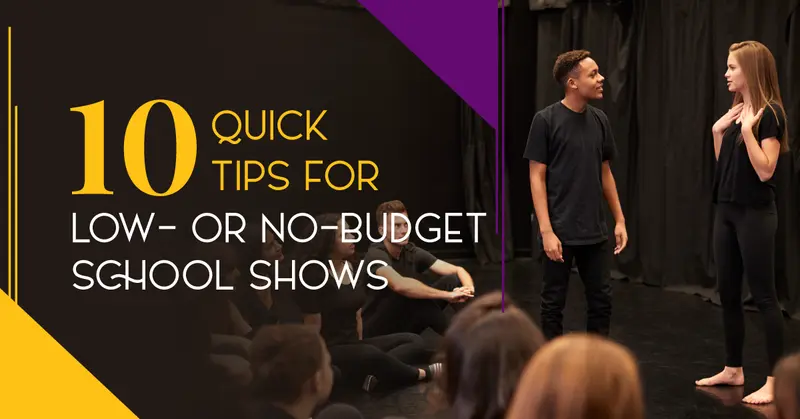
A lack of technical bells and whistles doesn’t prevent meaningful performances. Productions can thrive in gyms, cafeterias, classrooms, or makeshift stages using only curtains and basic lighting. When space is limited, students learn to focus on what truly matters: storytelling, character development, and emotional connection. This simplicity encourages everyone involved to rely on acting rather than spectacle, proving that authentic theatre can emerge from the humblest settings.
6. Fabric can transform a stage.
Fabric is one of the most versatile and affordable tools for transforming a performance space. A single roll of “prom” fabric or tulle can completely change the mood of a scene. Curtains, backdrops, color themes, and textured layers will help create visual interest without needing heavy construction. Fabric is easy to store, reuse, and adapt for new shows, making it a cost-effective solution for programs working with limited funds. With creativity, even the simplest materials can make a small stage feel magical.
7. Costuming on a budget is completely achievable.
Costumes don’t have to be expensive to be effective. Bargain fabric sales, garage sale finds, online bulk purchases, and repurposed clothing can create a unified look at minimal cost. Mix thrifted items with handmade accessories. Go with basic black and one-colour accent. By approaching costumes with flexibility and imagination, you can outfit large casts without straining the budget.
8. You don’t need a budget to create a powerful theatre experience.
A powerful theatre experience can shape a person forever. You have the resources to create that kind of experience for your students by shaping an environment and community where they feel confident, seen, like they belong, artistically alive. When this is the driving force, budgets and resources don’t matter as much.