Social Emotional Learning Collection
Courses
PD COURSE
The Adult in the Room: Understanding Your Relationship to Your Students
by Matt Webster
How do we build or rebuild relationships in the classroom? Well, first, you must understand the difference between your relationship with your students and your relationship to your students. Once you understand the difference between those two relationships, you can construct a professional working relationship in your classroom. At the end of this course, you'll have a better understanding of the different relationships between you and your students and why establishing a healthy professional relationship is best for everyone concerned.
PD COURSE
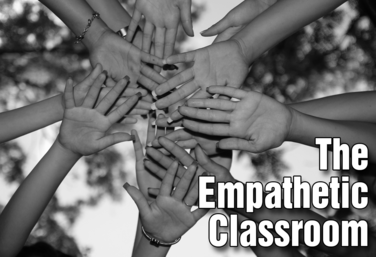
The Empathetic Classroom
by Steven Stack
Why should you take a class on empathy? And why is theatre the perfect vehicle for empathy?
Empathy, the more sought-after and inclusive cousin of sympathy, is the experiencing of someone else’s experience in the world. What it would be like if you were wearing their clothes, their life?
Teaching students to understand the clothes that they’re putting on, the characters and their lives teaches students not how to act but how to be. It allows the students to feel what someone else feels and experiences, which can and should translate to their fellow actors and peers away from the stage. It will lead to a stronger class connection, stronger performances and stronger students who will seek out understanding instead of isolation and fear.
PD COURSE
Empathy 2.0
by Steven Stack
Brought to you by instructor Steven Stack, creator of The Empathetic Classroom, this course looks at ways to move on from the worldwide pandemic, while honoring the past and learning from it. In the past year, students had many things taken from them: school, hanging out with friends, freedom, hope, and innocence.
With this course, each session will highlight one specific topic relating to moving on. There will also be activities for each session that will help your students own the past, embrace their own and others’ narratives and scars, create a stronger classroom community, find ways to be where their feet are planted, and learn to play again.

PD COURSE
Every Day You Deserve a Round of Applause: Self-Compassion and Care for You as a Theatre Educator
by Gai Jones
Gai Jones leads this course in social and emotional self-compassion and care for the theatre educator. Join her on this 5-module journey to practice self-care and self-compassion while teaching educational theatre.
PD COURSE
Mindfulness & Wellness in the Drama Classroom
by Claire Broome
In this course, instructor Claire Broome shares what mindfulness is, and why it is so important in the Drama Classroom. The course covers how mindfulness and wellness can help both students and teachers.
Claire discusses how to prepare students for this kind of learning, and provides various activities to bring into your classroom, as well as a variety of extensions for these activities that can be applied to character creation and possible projects.
PD COURSE
SEL Through the Lens of Theatre
by Christa Vogt
SEL stands for Social Emotional Learning. Theatre teachers know that Social Emotional Learning and its categories: Self-Awareness, Self-Management, Social Awareness, Relationship Skills and Responsible Decision Making, are innate in what we do.
The goal of this mini-course is to show you that you can take SEL in the way that your administration wants you to, using the language they want you to use, and apply it to lessons you already teach.
Instructor Christa Vogt will take you through the facets of SEL, and then take you step by step through an activity - to show you how you can apply SEL to each and every step.
PD COURSE
Social Emotional Learning through Game Play
by Matt Webster
The skills identified in Social Emotional Learning are the same skills theatre teachers spotlight in the warmups, games, and activities, as well as group work and theater-related assignments found in the drama curriculum every day.
This course will break down the various games and activities in the drama classroom to identify, incorporate, and intensify the Social Emotional Learning outcomes we want our students to achieve. By the end of this course, you will be able to identify the five components of Social Emotional Learning and see the places in the curriculum where they intersect with basic games and activities in the drama classroom.
PD COURSE
Soft Skills, The Tangible Value of the Drama Curriculum
by Matt Webster
This course is about the fact that so-called soft skills are sought after and highly valued in professional work environments, educational settings, and in everyday social interactions. They're valuable life skills, but we can't always identify these skills within a standard educational setting, and yet, they are incredibly useful in education and beyond. That's why it's important to be able to identify these soft skills in the classroom and in the educational process and to recognize that these soft skills are being taught every day in the drama curriculum. We need to concentrate our efforts into making sure that these skills are identified and utilized within our classrooms. They are built into every arts curriculum a school offers, especially the theater arts.