Facebook Pixel Skip to main content

National Core Arts Standards
Relate artistic ideas and works with societal, cultural, and historical context to deepen understanding - Grade HS Accomplished

6 units • 7 professional development courses aligned to
TH:Cn11.2.HSII.a - Formulate creative choices for a devised or scripted drama/theatre work based on theatre research about the selected topic.

View all Standards for National Core Arts Standards

TH:Cn11.2.HSII.a Formulate creative choices for a devised or scripted drama/theatre work based on theatre research about the selected topic.

This page lists 6 units and 7 professional development courses aligned to TH:Cn11.2.HSII.a from the National Core Arts Standards. Designed for drama teachers, these resources directly address TH:Cn11.2.HSII.a - Formulate creative choices for a devised or scripted drama/theatre work based on theatre research about the selected topic.

Puppetry

by Jenny Goodfellow

This unit on Puppetry is designed for middle school and up, to introduce students to the material and get them comfortable with performing in a safe and low exposure environment. This is a unit that builds to a culminating experience for your students. Each lesson is designed to explore techniques, provide opportunities for creative collaboration among your students, and give them opportunities to perform. Some of the lessons require materials to build or create puppets. Puppetry can be as easy as drawing a face on your finger for finger puppets, to actually purchasing your own finger puppets for students to use. While the focus of this unit is puppetry, your students will explore other skills as well. There’s the obvious ones of creative thinking, teamwork, and problem solving. They are also going to explore storytelling, performing skills, and playwriting.

Devising

by Corinna Rezzelle

While the Drama Two Curriculum has a focus on acting, it’s always important to include a unit on the technical theatre skills that are necessary to any production. Students will also be able to use what they’ve learned in this unit in their upcoming devising project. Students will begin by exploring design for the stage by experimenting with line, shape, texture, size, and color. They will expand their understanding of stage properties and scenic flats. They will then apply their knowledge of these building blocks of design to create a high-concept design for a miniature “stage.”

Our Town Unit

by Lindsay Price

This is a read, discuss, and apply literature unit. Students will study the play Our Town by Thornton Wilder. Our Town is often referred to as “nostalgic.” It’s seen as an antiquated look at a moment in time. But this play is called Our Town, not My Town. What’s happening in Grover’s Corners happened in the past, the distant past, in our present, and even in the future. The themes of the play—the ordinary versus universality, the concept of time, the cycle of life, the ignorance of humanity to the eternal—these are just as relevant in the twenty-first century as they were when the play was written. The purpose of the unit is not to have students recall knowledge about the play. Students will be able to identify, articulate, and dramatize text themes and concepts and compare/contrast these concepts to their own experiences.

Theatre Radically Reimagined: Exploring Artaud, Grotowski, and Boal

by Ruthie Tutterow

In this unit, students will learn about Antonin Artaud and how his ideas influenced avant-garde theatre in the 20th and 21st centuries. They will also learn how Jerzy Grotowski took Artaud’s theories into new directions. This is done through direct instruction. A culminating presentation will ask students to take common stories and reimagine them using some of these ideas. They will present a “pitch” of an avant-garde version of their story. In the second lesson, students learn about some of the ideas of Augusto Boal and try a session of Forum Theatre.

The Dilemma Project

by Claire Broome

The Dilemma Project is based on a situation that requires a decision: push a button and get a great reward, but there’s also a great consequence. Don’t push the button and there’s no reward. This unit will lead to a group performance including characters, costumes, set, acting theory, acting tools, and a student written script. The final script will be about ten pages in length which means roughly ten minutes of stage time.

The Crucible Unit

by Lindsay Price
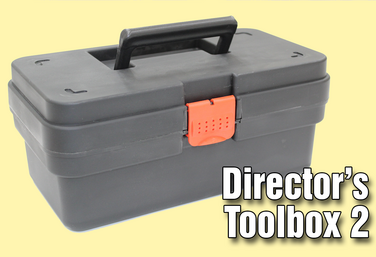
This is a research, read, discuss, and apply theatrical literature unit. Students will study the play The Crucible by Arthur Miller. The Crucible is Miller’s most produced play. There are hundreds of high school productions each year, and the play is in many high school curricula. As with every Miller work, there is much to discuss and many rich themes to explore. The unit is divided into three sections. Each section is a complete set of lessons. You can choose to do all three sections, or if you have your own way to teach the play, you can pick and choose exercises.

View all Standards for National Core Arts Standards    Standards Master List