Facebook Pixel Skip to main content

Alberta, Canada
Improvisation Drama 30

6 units • 8 professional development courses aligned to
38 - demonstrate various ways of creating and communicating mood

View all Standards for Alberta, Canada

38 demonstrate various ways of creating and communicating mood

This page lists 6 units and 8 professional development courses aligned to 38 from the Alberta, Canada. Designed for drama teachers, these resources directly address 38 - demonstrate various ways of creating and communicating mood

Commedia dell'Arte

by Todd Espeland

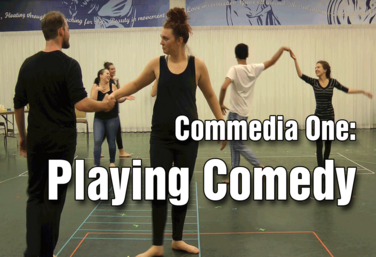
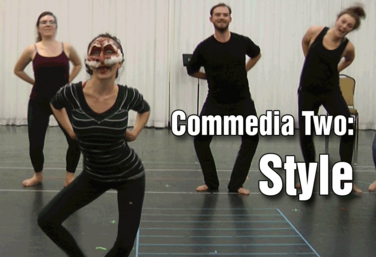
Commedia dell’arte is a 16th century masked acting form. It is the basis of all comedy, including all tv sitcoms. This form is characterized by masked types and archetypical characters and a specific way of playing comedy. To that end, this unit is divided into two parts. Part One focuses on the foundations of commedia - playing comedy. These principles will be important to learn when it comes to developing commedia characters, specifically the physicality of the characters. Part Two will cover lazzi. Note: there are links to video demos in many of the lessons of this unit.

Perspective Taking

by Lindsay Price

Perspective taking is the ability to understand a situation from another person’s perspective or point of view: What are they thinking? What are they feeling? How does their background influence their perspective? Perspective taking allows students to develop self-awareness, to recognize differences, to understand an opposing point of view, to assess nonverbal language, and more. In this unit, students will practice perspective taking as they: • Assess their own perspective. • Demonstrate understanding of the perspective of others in specific situations. • Analyze characters in a text.

Introduction to Stanislavski

by Drama Teacher Academy
This is an in-depth unit with instruction and activities about the Stanislavski acting method. It is followed by scene work in which students learn how to score a scene, do a comprehensive character analysis, and use what they have learned in rehearsals in a performance. Students will also watch their own work and evaluate their process after the performance. The purpose of this unit is to give students an introduction and understanding of Stanislavski’s method and to put it into use as they prepare scenes for performance. After seeing their work, and spending time reflecting on how they used the principles of the method, students should take away a concrete understanding of how to prepare a role for performance.

Virtual Introduction to Stanislavski

by Drama Teacher Academy
The unit has been adapted for a virtual environment. This is an in-depth unit with instruction and activities about the Stanislavski acting method. It is followed by scene work in which students learn how to score a scene, do a comprehensive character analysis, and use what they have learned in rehearsals in a performance. Students will also watch their own work and evaluate their process after the performance. The purpose of this unit is to give students an introduction and understanding of Stanislavski’s method and to put it into use as they prepare scenes for performance. After seeing their work, and spending time reflecting on how they used the principles of the method, students should take away a concrete understanding of how to prepare a role for performance.

The Autobiographical Monologue

by Gai Jones

All students have something to say and a story to tell. They can relate to their personal stories better than anyone else. All students have a lot of material which can be used as part of an original monologue. In this unit, students will write an autobiographical monologue based on their personal expertise, memories, distinct point of view, sense of truth, and life experiences. Through the process, students will be encouraged to explore past stories, objects, and images and other personal material.

Scene Staging

by Lindsay Price

The goal for this unit is to give students a process to work primarily on their own to create a staged scene with specific, dynamic blocking and three-dimensional characters. This unit would work well as a culminating project for a semester. In this unit, students will work independently to analyze, block, build character, experiment, and rehearse a scene. Their performance can count as a summative assessment for the class. Material: This unit requires that students have access to scenes from plays. Ideally, students should work in pairs and prepare duet scenes.

View all Standards for Alberta, Canada    Standards Master List