
Alberta, Canada
Theatre Studies Drama 30 (Early or Middle or Late drama)
6 units • 4 professional development courses aligned to
5 - recognize elements of tragedy and comedy
View all Standards for Alberta, Canada
5 recognize elements of tragedy and comedy
This page lists 6 units and 4 professional development courses aligned to 5 from the Alberta, Canada. Designed for drama teachers, these resources directly address 5 - recognize elements of tragedy and comedy
Unit
5
of
14
in
Drama One
Curriculum
UNIT
Ancient Greek Theatre
by Karen Loftus
4 lessons
This unit on Ancient Greek theatre focuses on the function of the chorus, the choral ode, and the details of the theatre space. It touches on plays and playwrights of the era, culminating in a final project of a modern version of Medea that includes a choral ode.
UNIT
Agatha Rex and Ancient Greek Theatre
by Angel Borths
10 lessons
Help… It’s all Greek to me! Join Angel Borths in this unit that uses a modern adaptation of the Ancient Greek play Antigone to introduce Middle School students to Ancient Greek Theatre.
Have your students read Percy Jackson and want to find out more about Ancient Greece? Then, this unit is for you. This unit is designed for middle and high school students and will take you through the basics of classical Greek theatre and pairs it with a modern adaptation of the story of Antigone called Agatha Rex by Lindsay Price. Students will learn vocabulary, design, and basic theory surrounding classical Greek theatre. Students will also enjoy the mask-building component of this unit, as they learn to disappear into the character of a mask, like the first actors did on a Greek stage thousands of years ago.
The unit culminates in a scene performance with masks.
Unit
5
of
7
in
Drama Two
Curriculum
UNIT
Performing Shakespeare
by Matt Webster
5 lessons
In this unit, students are introduced to a series of lesson plans that explore non-traditional approaches to performing the works of William Shakespeare. By the end of the unit students will be exposed to a unique set of tools they can utilize as the foundations for analyzing, staging and performing a scene from Shakespeare’s canon. Students will then rehearse and perform a two-person Shakespearean scene.
UNIT
Commedia dell'Arte
by Todd Espeland
14 lessons
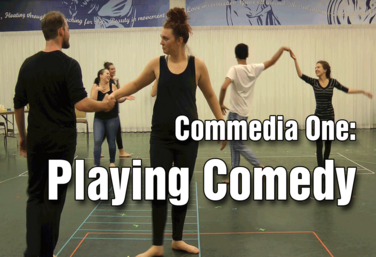
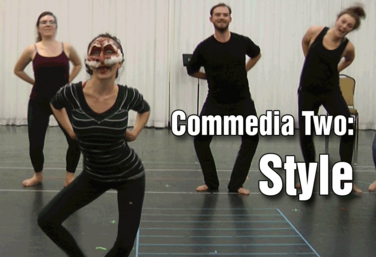
Commedia dell’arte is a 16th century masked acting form. It is the basis of all comedy, including all tv sitcoms. This form is characterized by masked types and archetypical characters and a specific way of playing comedy. To that end, this unit is divided into two parts.
Part One focuses on the foundations of commedia - playing comedy. These principles will be important to learn when it comes to developing commedia characters, specifically the physicality of the characters. Part Two will cover lazzi.
Note: there are links to video demos in many of the lessons of this unit.
UNIT
Comedy of Manners
by Lindsay Price
5 lessons
The Comedy of Manners is a style of comedy that satirizes the behaviour, actions, fashions, and “manners” of a segment of society. Because it has such specific characteristics – from plot to dialogue, to characterization, to costumes – it’s an excellent era for students to learn and apply.
In this unit students are introduced to the style, learn some background, and apply the traits of the comedy of manners. The unit culminates in the creation of a modern scene.
UNIT
Anti-Realism
by Wendy-Marie Martin
7 lessons
This unit gives students an overview of the anti-realism movement of the late 19th century and early 20th century and introduces them to some key theorists, playwrights, and theatre makers involved in this movement. Students will be introduced to the “isms” of symbolism, Dadaism, surrealism, expressionism, and absurdism along with various manifestos and theories as we track the characteristics of each “ism.”
In a culminating project, students will design an “ISMS’’ Theme Park, which they will share with the class at the end of the unit. Their project will feature each of the five “isms” in the form of rides, themed concessions areas, entertainment options, and in-park characters.

View all Standards for Alberta, Canada Standards Master List
