
Facebook Pixel Skip to main content

📣SCRIPT SALE! Treat yourself to an easier Fall. Save 30% on 5+ perusal scripts with code SPRING30 before May 3 and head into summer stress-free.

Baalzebub - One Act Version

Baalzebub - One Act Version

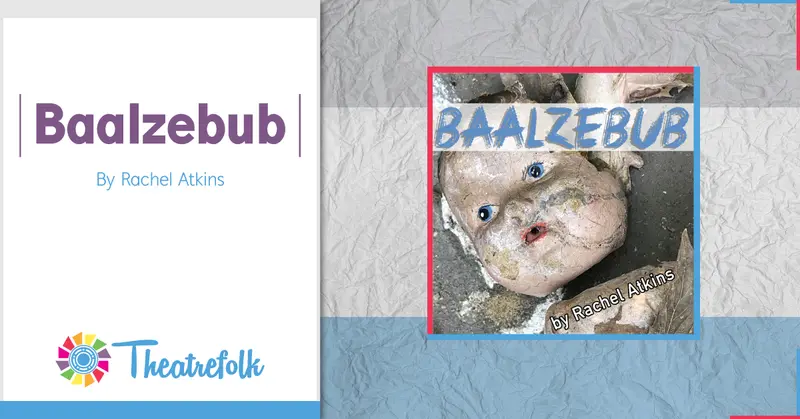
by Rachel Atkins

What would a group of girls do if they were abandoned alone, at a refugee camp, in an unnamed war zone, away from adults and civilization? As time passes without rescue, the girls face the adult challenges of creating and maintaining a working society, as they struggle to cooperate, understand their differences, define themselves, and survive. Will they establish civility or fall apart?

A response to the classic novel, Lord of the Flies. Please consider inclusive, racially conscious and gender-expansive choices in casting.

Drama Character Study Classical Adaptation Issue-Based

Also available in a full-length version here.

Recommended for High Schools

Running Time
About 35 minutes
Approximate; excludes intermissions and scene changes
Cast
11 Characters
11 F, Easily expandable
Set
Simple set
Length
34 pages
Free Excerpt

What to order?

Not sure what you need to order? Check out our pricing and ordering guide.

Performance Royalty Fees

Royalty fees apply to all performances whether or not admission is charged. Any performance in front of an audience (e.g. an invited dress rehearsal) is considered a performance for royalty purposes.

Exemption details for scenes and monologues for competition.

11 Characters
11 F, Easily expandable
Rayyan (Ray) [F] 90 lines
The leader
Princess [F] 104 lines
The brains/conscience
Blessing [F] 57 lines
The good girl
Raja [F] 56 lines
The mean girl
Juno [F] 85 lines
The leader of the boyah gang
Diamond [F] 33 lines
A boyah
Ali [F] 40 lines
A boyah
Sam [F] 27 lines
Isis’s twin, a follower
Isis [F] 39 lines
Sam’s twin, a follower
Baby [F] 38 lines
A young‘un
Sister [F] 43 lines
A young‘un

More Plays Like Baalzebub - One Act Version

Baalzebub

by Rachel Atkins

Will they establish civility or fall apart?

Just Girls Talking

by Robert Wing

A drama for six women that will have your audience talking long after they leave the theatre.

Cobweb dreams of a different life, away from Titania's train.

A girl moves too fast. A boy is still the same after a heartwrenching moment. Moving/Still looks at those who want to grow up and those who don't.

This powerful vignette play uses one set to explore the vast range of teen experiences that can unfold within the same four walls.

R is a letter stuck in a world of numbers. Potential is too scared to get out of the chair. Two one-acts about rejection, fear, and the everyday courage it takes to keep going.

From the Drama Teacher Learning Centre

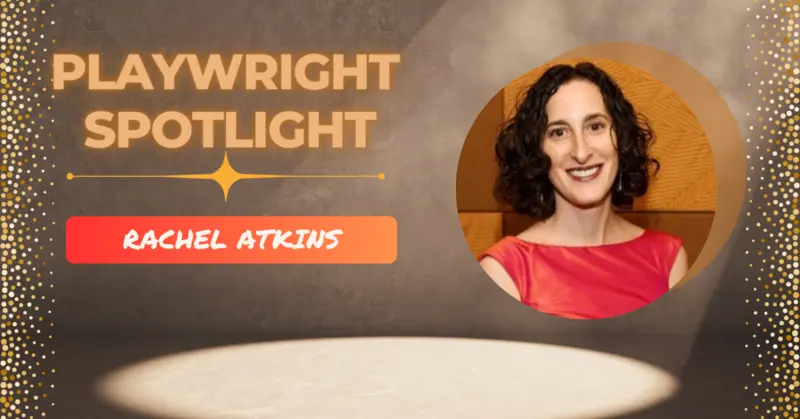
Playwright Spotlight: Rachel Atkins
General

Playwright Spotlight: Get to Know Rachel Atkins

Welcome to "Playwright Spotlight" — your exclusive backstage pass to the creative minds crafting the incredible plays featured in our Theatrefolk catalogue. Discover the magic, quirks, and genius of the playwrights who help bring the stage to life. Let's meet one of these exceptional playwrights who offers the chance for your student performers to shine in their spotlight. What inspired you to start writing plays specifically for high school & middle school students?I'm the longtime scriptwriter for Living Voices, an educational theatre company that tours all across North America with 12 different shows about history and social justice. Four million high school and middle school students have seen my work! It was a natural next step to write plays for those students to perform themselves. Can you share a bit about your creative process when developing plays that resonate with students?As much as possible, I involve young people in the creative process: through development workshops, feedback, and using youth voices. My most recent youth theatre play, The State of the Students, was created in collaboration with 143 young people who replied to a questionnaire I posted online. The play is comprised entirely of their words. What themes or messages do you aim to convey through your plays?I'm interested in themes and issues of social justice, gender, race, identity, and how young people are experiencing our world today. How do you balance education and fun in your scripts?Humor is key! Even when a play deals with serious subjects, there need to be moments of laughter. Can you share a memorable experience or feedback from a student performance that left an impact on you?"I never knew that other people thought or felt the way I did, until I read this play." Any advice for teachers or directors looking to choose engaging and age-appropriate plays for their student performers?New plays! Don't keep doing the same old chestnuts or the same five plays that every other theater department is doing. There are so many great playwrights out there writing new plays for young performers. And get your students involved in the play selection process. Anything else you'd like students and/or directors to know about you as a playwright?I love customizing a script for a specific cast or community. I'm always open to making adjustments, so feel free to ask. And I love seeing your production photos when you share them! You can see all of my other work here.
Happy International Women’s Day!
General

Happy International Women’s Day!

March 8th is International Women’s Day – and what better time to highlight some amazing women within the Theatrefolk community. Join us in celebrating these phenomenal playwrights and authors and their incredible contributions to the world of student theatre. Plus, keep reading to see our Top 10 Plays for Female Casts at the end of the post! Rachel Atkins • Baalzebub (and One Act Version)
Theatrefolk Featured Play – Baalzebub by Rachel Atkins
Featured Plays

Theatrefolk Featured Play – Baalzebub by Rachel Atkins

Welcome to our Featured Play Spotlight. A response to the classic novel, Lord of the Flies, Baalzebub by Rachel Atkins is a full-length or one-act ensemble piece that offers excellent inclusive, diverse and gender-expansive opportunities in casting. What would a group of girls do if they were abandoned alone, at a refugee camp, in an unnamed war zone, away from adults and civilization? As time passes without rescue, the girls face the adult challenges of creating and maintaining a working society, as they struggle to cooperate, understand their differences, define themselves, and survive. Will they establish civility or fall back to savagery? Why did we publish this play? Rachel writes strong female characters with great emotional impact. That alone is a great reason to publish this play. But she goes further – the play clearly suggests inclusive, racially conscious and gender-expansive choices in casting. Having plays that welcome gender flexibility is a major initiative here at Theatrefolk. Lastly, it’s an adaptation, or more specifically a response to a classic work – _Lord of the Flies. _How does this tale of civility and savagery reflect through a gender flexible lens? It was not hard at all to accept _Baalzebub _for publication. Let’s hear from the author! 1. Why did you write this play? I was commissioned by Seattle Public Theater to write a play for their youth program. The director and I brainstormed a range of ideas that could serve their company of young actors. Our conversation covered both the current refugee crisis, and William Golding’s quote about Lord of the Flies: "A group of little boys… are more like scaled-down society than a group of little girls would be” — and putting those two ideas together just made sense. I wanted to write a play that would be both empowering and community-building for an ensemble of young women. 2. Describe the theme in one or two sentences. Community vs. the individual Identity Power Order vs. chaos, peace vs. war And how all of the above relates to gender. 3. What’s the most important visual for you in this play? The song—which isn’t just a visual, so maybe this answers a different question, but their “performance” of it is important: the way the characters personalize it, the ways they use it to bring themselves together and establish their community, and how it morphs through the play as the characters and their relationships change 4. If you could give one piece of advice for those producing the play, what would it be? Be willing to think outside the box for inclusive casting. For example: the first production had 2 boys playing Sam and Isis as girls, 3 non-binary actors as Juno, Ali and Diamond, and younger (elementary and middle school age) actors playing Baby and Sister. This is an ensemble piece, which benefits from as diverse an ensemble as possible—by whatever definition diversity holds in your community. 5. Why is this play great for student performers? Opportunities to build ensemble both on and off the stage. The songs and rituals can come from your actors’ own experiences, interests, abilities and strengths. Helping your cast develop their own community will serve the community within the play. Also, particularly if you’re working with a more homogenous or privileged population, this play provides a chance to connect with the world at large. Bring in members of your local refugee support organization to talk to the cast. Coordinate a donation drive during the production. This play has served as a jumping point for young actors to also become activists.
Social Issue Plays for High Schools / Middle Schools
Teaching Drama

Social Issue Plays for High Schools / Middle Schools

Our website lists all of our plays with social issue themes but it struck me that they’re only lumped as “issue plays” without a good guide to sorting out which title addresses which issue. So I’ve categorized them for you to hopefully give you a helping hand in your quest to find the perfect script for your school. Check them out. As usual, all of the titles have extensive free sample pages for you to read. I think you’ll find the writing honest, fresh, and believable – three qualities sadly lacking from a lot of “teen-issue” plays out there in the world. Alienation / Feeling Alone in the World• Anonymous by Allison Green • The Art of Rejection: Two One Act Plays by Christian Kiley • A Box of Puppies by Billy Houck • Constantly, Incessantly, All The Time by Billy Houck • Huge Hands by Billy Houck Body Image• Body Body by Lindsay Price • The Four Hags of the Apocalypse Eat Salad at their General Meeting by Lindsay Price • The Battle of Image vs. Girl by Johanna Skoreyko • Hoodie by Lindsay Price • Breathless by Wendy-Marie Martin Censorship• Censorbleep by Lindsay Price Human Rights• Look Me in the Eye by Lindsay Price • Sweep Under Rug by Lindsay Price Racism• Flaky Lips by Lindsay Price • With Liberty and Justice For All by Jeyna Lynn Gonzales • Not Going Anywhere by Emma Fonseca Halverson • The Burgundy Letter by Kirk Shimano • Let Me In by Sholeh Wolpe *** Rumours and Lies• Have You Heard? by Krista Boehnert • The Redemption of Gertie Greene by Taryn Temple Individuality• Hoodie by Lindsay Price • Virtual Family by Christian Kiley • The Happiness Shop by Lindsay Price • A Deep, Poetic Journey Into Something by Forrest Musselman • Carrying the Calf by Shirley Barrie • Monster Problems by Lindsay Price • Stereotype High by Jeffrey Harr • Sixteen in 10 Minutes or Less by Bradley Hayward • Nice Girl by Amanda Murray Cutalo • Pressure by Lindsay Price • They Eat Sunshine, Not Zebras by Dara Murphy • The Super Non-Heroes by Taryn Temple • Smarty Pants by Bradley Hayward Identity• Box by Lindsay Price • Labeled by Lindsay Price • We Are Masks by Lindsay Price • Stressed by Alan Haehnel • Anonymous by Allison Green • Constantly, Incessantly, All The Time by Billy Houck • The Super Non-Heroes by Taryn Temple School Violence• Huge Hands by Billy Houck • Power Play by Lindsay Price • Clowns with Guns (A Vaudeville) by Christopher Evans • The Butterfly Queen by Christian Kiley • Life and Death in an Empty Hallway by Christopher Evans • Water. Gun. Argument. by Alan Haehnel Sexual Abuse• The Waking Moment by Bradley Hayward • Breathless by Wendy-Marie Martin Substance (alcohol & drug) Abuse• Bottle Baby by Lindsay Price • Floating on a Don’t Care Cloud by Lindsay Price • One Beer Too Many by Billy Houck Suicide• The Bright Blue Mailbox Suicide Note by Lindsay Price • Chicken. Road. by Lindsay Price • The Butterfly Queen by Christian Kiley Teen Pregnancy• The Pregnancy Project by Lindsay Price • Among Friends and Clutter (one scene) by Lindsay Price Illness/Health• Chemo Girl by Christian Kiley • The Other Room by Christian Kiley • Red Rover by Christian Kiley • Waiting Room by Christian Kiley • Breathless by Wendy-Marie Martin • Shreds and Patches by Robert Wing • Inanimate by Christian Kiley • Constantly, Incessantly, All The Time by Billy Houck Depression/Anxiety• darklight by Lindsay Price • Fidget by Bradley Hayward • Among Friends and Clutter (one scene) by Lindsay Price • Constantly, Incessantly, All The Time by Billy Houck • who are we, who we are by Forrest Musselman Bullying• Finishing Sentences by Scott Giessler • Funhouse by Lindsay Price • Power Play by Lindsay Price • The Redemption of Gertie Greene by Taryn Temple • Sixteen in 10 Minutes or Less by Bradley Hayward • Carrying the Calf by Shirley Barrie Divorce• Split by Bradley Hayward Gender• Life, Off Book by Scott Giessler • Anonymous by Allison Green • Baalzebub by Rachel Atkins (Baalzebub – One-Act Version here) • Completely, Absolutely Normal: Vignettes About LGBTQ+ Teens by Bradley Walton • Finding Jo March by Laramie Dean • Thought Traps by Lindsay Price Empathy• Discovering Rogue by Christian Kiley • Boat by Lindsay Price • We Are Masks by Lindsay Price • The Butterfly Queen by Christian Kiley Dependence on Technology• Virtual Family by Christian Kiley • Inanimate by Christian Kiley
We accept

In addition to the above payment methods, Purchase Orders are accepted from US and Canadian Schools.

Info for your purchasing department