Facebook Pixel Skip to main content

📣SCRIPT SALE! Treat yourself to an easier Fall. Save 30% on 5+ perusal scripts with code SPRING30 before May 3 and head into summer stress-free.

Postcards from Shakespeare

Postcards from Shakespeare

by Allison Williams

Shakespeare has writer’s block. Nothing inspires him. The best he can come up with is “Now is the winter of our irritation!”

He pleads to the one person who can help him – Queen Elizabeth the First. Queen Lizzy, who could be a writer herself if she weren’t so busy crushing the Welsh, sends Shakespeare around the world in 30 minutes. Denmark! Venice! Egypt!

Join his whirlwind tour as he desperately searches for material. Star-crossed lovers! Surprise death! Shipwrecks! Something’s rotten in the state of Denmark…

Comedy Shakespeare

Recommended for High Schools and Middle Schools

Running Time
About 35 minutes
Approximate; excludes intermissions and scene changes
Cast
15 Characters
6 M | 4 F | 5 Any Gender
Set
Simple Set
Length
37 pages
Free Excerpt

What to order?

Not sure what you need to order? Check out our pricing and ordering guide.

Performance Royalty Fees

Royalty fees apply to all performances whether or not admission is charged. Any performance in front of an audience (e.g. an invited dress rehearsal) is considered a performance for royalty purposes.

Exemption details for scenes and monologues for competition.

15 Characters
6 M, 4 F, 5 Any Gender

Characters in this play are currently identified as male or female. Directors are welcome to assign any gender (binary or non-binary) to any character and modify pronouns accordingly.

William (Shakespeare) [M] 34 lines
The Bard, himself; One monologue
(Queen) Elizabeth [F] 43 lines
Long may she reign; One monologue
Messenger [M] 6 lines
Carries messages, as messengers do.

Richard III
Richard III [M] 5 lines

Hamlet:
Hamlet [M] 16 lines
Ghost [M] 1 line
Laertes [M] 4 lines
Horatio [M] 2 lines
Gertrude [F] 5 lines
Claudius [M] 4 lines
Ophelia [F] 1 line
1st Player [M] 3 lines
Player King [M] 1 line
Polonius [M] 3 lines

Antony and Cleopatra:
Antony [M] 3 lines
Brutus [M] 1 line
Lucius [M] 1 line
Lepidus [M] 1 line
Cleopatra [F] 7 lines
Servant [M] 1 line

The Merchant of Venice:
Antonio [M] 5 lines
Shylock [M] 7 lines
Portia [F] 5 lines
Bassanio [M] 2 lines
Nerissa [F] 1 line

Measure for Measure:
Angelo [M] 7 lines
Claudio [M] 3 lines
Girlfriend of Claudio [F] 0 lines
Isabella [F] 4 lines

Romeo and Juliet:
Romeo [M] 5 lines
Juliet [F] 4 lines
Mercutio [M] 2 lines

Much Ado About Nothing:
Beatrice [F] 4 lines
Benedick [M] 5 lines

Troilus and Cressida:
Troilus [M] 2 lines
Cressida [F] 2 lines

The Taming of the Shrew:
Katherine [F] 3 lines
Petruchio [M] 3 lines

Twelfth Night:
Viola [F] 2 lines

The Tempest:
Miranda [F] 4 lines
Ariel [F] 1 line

A Winter’s Tale:
Antigonus [M] 8 lines

Pericles:
Marina [F] 1 line

Two Gentlemen of Verona:
Julia [F] 1 line
Launce [M] 5 lines
One monologue

Othello:
Othello [M] 2 lines
Desdemona [F] 1 line

Julius Caesar:
Marc Antony [M] 7 lines
One monologue
Julius Caesar [M] 1 line
Brutus [M] 1 line

Macbeth:
Macbeth [M] 0 lines
Birnam Wood (played by Soldiers) [M] 0 lines

Cymbeline:
Imogen [F] 1 line
Pisanio [M] 1 line

Henry VIII:
Henry VIII [M] 2 lines

Henry IV pts 1&2:
Lead Soldier [M] 3 lines

Richard II:
Richard II [M] 1 line

Timon of Athens:
Timon [M] 1 line

Coriolanus:
Martius [M] 1 line

Titus Andronicus:
Titus [M] 1 line

A Midsummer Night’s Dream:
Puck [M] 6 lines
Helena [F] 1 line
Demetrius [M] 1 line
Hermia [F] 1 line
Lysander [M] 1 line
Bottom [M] 0 lines
Oberon [M] 1 line
Mechanicals [A] 0 lines

More Plays Like Postcards from Shakespeare

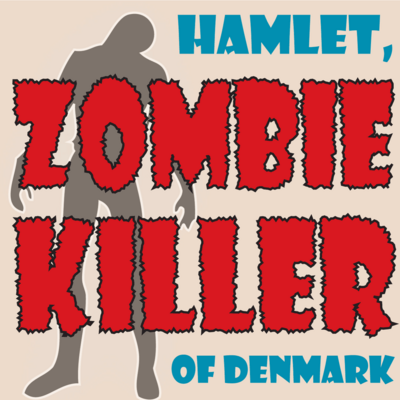
Denmark is plagued with zombies in this gruesomely comic adaptation of Shakespeare's Hamlet.

Faked Death! Mistaken Identity! Parental Marital Veto! But wait, there’s more!

This is the Shakespeare/Dating show mash-up you’ve been waiting for!

A shorter version of our hilarious gender-bending take on the Scottish play. Updated version.

Mmmbeth

by Allison Williams

An hilarious gender-bending take on the Scottish play! Updated Version.

Hamlette

by Allison Williams

Hamlet is played by a girl in this twisty-turny comedic interpretation of the classic Danish tale.

From the Drama Teacher Learning Centre

Happy International Women’s Day!
General

Happy International Women’s Day!

March 8th is International Women’s Day – and what better time to highlight some amazing women within the Theatrefolk community. Join us in celebrating these phenomenal playwrights and authors and their incredible contributions to the world of student theatre. Plus, keep reading to see our Top 10 Plays for Female Casts at the end of the post! Rachel Atkins • Baalzebub (and One Act Version)
Theatrefolk Featured Play – Postcards from Shakespeare by Allison Williams
Featured Plays

Theatrefolk Featured Play – Postcards from Shakespeare by Allison Williams

Welcome to our Featured Play Spotlight. Postcards from Shakespeare by Allison Williams is so much more than your typical Shakespeare spoof. Your budding Bards will have a lot of fun with this one-act comedy! Shakespeare has writer’s block. Nothing inspires him. The best he can come up with is “Now is the winter of our irritation!” He pleads to the one person who can help him – Queen Elizabeth the First. Queen Lizzy, who could be a writer herself if she weren’t so busy crushing the Welsh, sends Shakespeare around the world in 30 minutes. Denmark! Venice! Egypt! Join his whirlwind tour as he desperately searches for material. Star-crossed lovers! Surprise death! Shipwrecks! Something’s rotten in the state of Denmark… Why did we publish this play? Shakespeare spoofs are more than frivolous comedies. They give students a much greater understanding of the original text, for both actors and audience, once they’ve done or seen a spoof. That’s important. Postcards From Shakespeare covers so much ground. It opens a window to Shakespeare to allow students to understand the plays and have some fun with them. It gives us a peak into the genesis of the writing process. And it provides an opportunity to visit plays that schools can never do or would never visit, in a wonderful comedic fashion. There’s all that and more! Let’s hear from the author!1. Why did you write this play? Because I love the Reduced Shakespeare Company’s Compleat Works of William Shakespeare (Abridged) and I waited ten years to come up with my own spin on the idea of “all the plays in one go.” I wanted to make a version that was shorter and could have a larger cast, specifically for students. 2. Describe the theme in one or two sentences. When you’ve got an audience or a reader you really care about, writing something worthy of them is an act of love. 3. What’s the most important visual for you in this play? If the production pulls off the chaos of the last few pages, in which so many individual moments are happening within a swirl of activity, it’s a thing of beauty. 4. If you could give one piece of advice for those producing the play, what would it be? This play is CHALLENGING. There’s a million entrances and exits. Actors are playing five characters apiece if you’re doubling, or the cast has up to 80 people without doubling. Two of the greatest monologues from Shakespeare are delivered at the same time, while the stage is full of other things. There are a ton of props, and each one has to be visually clear to the audience as a joke. And there are so. many. “in-jokes” for people who love Shakespeare. That said, have fun with it—and the best way to have fun with it is to know it backwards and forwards so that the show can be executed with both great precision and passionate emotion. 5. Why is this play great for student performers? Because if you have a huge cast, everyone gets to do a joke, and if you cast it with the minimum or close to it, it’s a wonderful acting challenge for advanced students to show strong, immediate characterization.
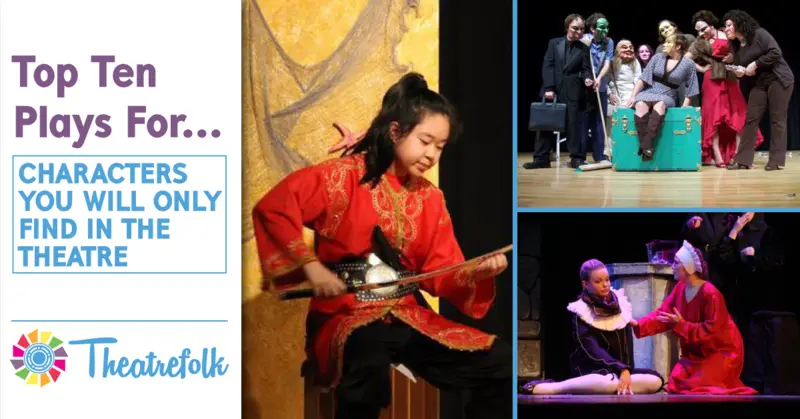
Theatrefolk’s Top 10: Characters You Will Only Find in the Theatre
Production

Theatrefolk’s Top 10: Characters You Will Only Find in the Theatre

Time for a Tfolk Top Ten Plays About…Characters you will only find in the theatre. You want unique characters for your students? We got them! Cat hair, archetypes, Shakespearean, and a severed head just to name a few. Read one, read them all! Click the link and you’ll be taken to the webpage for each play. There you’ll get the details and read sample pages. All the best with your search! Inanimate Ani talks to the inanimate objects in her life and they talk back. It all seems friendly and fun at first. So why is Ani writing hate texts to her friends? Why does she let the objects control her? What if feels she can’t leave her room anymore? Characters: The inanimate objects in Ani’s life Floating On A Don’t Care Cloud Jamie Peel is a pothead. He lives in his own world, a bubble, a cloud that calls his name and reaches out to him. His sister TJ has watched him slowly drift away and doesn’t know what to do. An emotional tightrope. Characters: Marijuana is personified by a cloud of 7 characters. To Kill a Mocking Birdie Birdie would like you to meet her parents: a goldfish and a moldy piece of bread. You may also meet What, When, Alexa (who’s hiding in the bathroom) and Birdie’s sister Scoot, who thinks she’s a glazed Virginia Ham. It’s a perfectly crazy dinner party. Consider this your invitation. Characters: Everyone is Absolutely abnormal Lose Not Thy Head Joan pleads for life, Death waits for death, a severed Head says beheading isn’t so bad, a doctor tries to convince everyone that you can’t sew a head back on a body, and then things get weird. Shakespeare, Monty Python, a little love, a little death, a lot of laughs and a talking head. Characters: Death. A freudian Doctor. A severed head. Shakespeare’s sister who’s impersonating Shakespeare. Censorbleep The Bleep Bleep Girls are the greatest group in school. They know what’s best. And when students try to stand up for themselves, or don’t do the “right” thing, they get dealt with. Characters: Teenagers are turned into garbage and disappear. Postcards From Shakespeare Shakespeare has writer’s block. He pleads to the one person who can help him – Queen Elizabeth the First who sends Shakespeare around the world in 30 minutes. Denmark! Venice! Egypt! Join his whirlwind tour as he desperately searches for material. Characters: Shakespeare. Shakespeare’s Characters. Elizabeth the first. Myth-o-logues Cassandra is here to be your Greek mythology tour guide. She’ll lead you through stories of war, relationships and the origins of good and evil. Pick and choose from this must-have collection of monologues. Characters: Greek Mythology’s greatest The Dread Playwright Sadie Sadie wishes to leave her life on the high seas to pursue her true passion: theatre. But there’s a problem. She’s not just Sadie; she’s The Dread Pirate Sadie, the most feared pirate in all the land. And there’s another problem. She’s a horrible pirate. Characters: Pirates. And Playwrights. The Absolute Insidious and Utterly Terrifying Truth About Cat Hair Cat hair is infinite. It is the secret driving force behind business and politics, and is plotting the downfall of humanity even as we speak. Unbelievable? Find out for yourself in this hilarious, insidious and utterly terrifying tale… Characters: Lint Roller, Granola Bar, Masking Tape, and of course, Cat Hair. Emotional Baggage Seven strangers meet in a train station. Instead of luggage, they all carry their “emotional baggage.” This unique play is based solely on action and has no dialogue. Characters: All the characters in this play are archetypes: Dead End Job, Living in the Past, etc.
Drama Teachers Directing A Midsummer Night’s Dream
Podcast

Drama Teachers Directing A Midsummer Night’s Dream

Episode 164: Drama Teachers Directing A Midsummer Night’s Dream Four drama teachers talk about their vision, their experience, their successes and their struggles directing A Midsummer Night’s Dream. The same play with four completely different outcomes. A great peek into how a director interprets a script and how they illuminate the Bard for their students.
What does Public Domain Mean? A Guide for Drama Teachers
Directing

What does Public Domain Mean? A Guide for Drama Teachers

I instruct a course on Copyright for the Drama Teacher Academy and I wanted to share what I’ve learned about Public Domain material – particularly how it applies to Drama Teachers. Before I get started, I want to be clear that I’m not a lawyer and so please don’t take anything here as legal advice. This is a summary of what I’ve learned in my years as a publisher. Let’s answer the question in the headline first: What does “Public Domain” mean?A work that is “in the Public Domain” is a work that is completely free for anyone to use in any way they like. It has entered the Public Domain either because the term of the copyright expired or the work was never covered by copyright in the first place. An example of this would be the works of William Shakespeare. Nobody holds a copyright on his works and so anybody can do whatever they please with them. Publish them in a book? Sure. Perform them without royalty? Absolutely. Translate the text into “modern English?” Yes. Into Italian? Si. Write a derivative work such as Postcards from Shakespeare? I hope so, otherwise our lawyers are going to be busy. Cut them down to an hour? You bet. Shakespeare works are in the domain of the public. They are there for all of us to use, share, enjoy, build upon, be inspired by, and perform. Here are some other examples of work in the Public Domain. • Greek Drama (there are Public Domain translations available on Project Gutenberg) • Grimms’ Fairy Tales (there are Public Domain translations available on Project Gutenberg) • The works of Charles Dickens (one of the reasons that there are so many versions of A Christmas Carol available) • Gilbert and Sullivan How do you know that a work is in the Public Domain?This depends on an awful lot of things. The first question is: Where you are going to be using it? It doesn’t necessarily matter where the work originated, it matters where you’re using it. Copyright law is applied in the country of use. Modern copyright law is based on the date of the author’s death. In Canada, the work is under copyright for 50 years after the author dies. In the US, it’s 70 years after the author dies. Therefore, the works of George Bernard Shaw (who died in 1950) is in the Public Domain in Canada but is still under copyright in the US. Copyright law has changed many times and it can be tricky to navigate all the ins and outs of the various changes. Sometimes it matters when a book was first printed, sometimes it matters if it had a copyright notice, sometimes it matters if the copyright was renewed. There are some wonderful flowcharts that help with this. Remember that copyright law applies in the country in which the work is being used, not in the country in which the work originated. Make sure you’re using the proper flowchart for your country: • American flowchart http://copyright.cornell.edu/resources/publicdomain.cfm • Canadian Flowchart http://kaplanmyrth.wordpress.com/2008/12/16/updates-to-the-canadian-copyri/ Thankfully, copyright is simpler today. It’s automatic. It exists the second the author writes the words. It doesn’t require registration, it doesn’t require the © mark, it doesn’t require much of anything except a creative being “fixed” in a tangible way. The big caveat!Only the original work is in the Public Domain. Any creation based upon or inspired by or translated from the original work is most likely under a form of copyright protection. Postcards from Shakespeare is a fine example of this. It’s based many of Shakespeare’s plays, all of which are in the Public Domain. But the new work is protected by copyright. Project Gutenberg is a wonderful source of Public Domain translations of classic works like Molière and The Greeks. But John Barton’s The Greeks is protected by copyright. Public Domain is NOTYou know what Public Domain is, here are some things that it is not. Works posted online. The fact that a work is posted online (even by the author herself) does not place it into the Public Domain. There are hundreds of copies of Star Wars posted on the Internet. It isn’t Public Domain. It’s just heavily pirated. Anonymous works. Just because the author has used a pseudonym or is anonymous doesn’t mean that it’s free to use. It’s still protected by copyright. The term of the copyright is different for anonymous works but it’s still protected for many years. Work for which you can’t find the author or the rightsholder. Also known as orphan works. These are still protected by copyright for the same duration as mentioned above. Work released under a Creative Commons license. Creative Commons is a fabulous evolution to the world of copyright and intellectual property. It’s a very forward-thinking and open look at copyright. For that reason, many people confuse CC-licensed work as totally free to use. But CC in and of itself isn’t a license to have free reign with the work. Each work is licensed with certain terms and restrictions. A discussion of the various CC licensing schemes is well beyond the scope of this article, but suffice to say that CC licensed work is still covered by copyright. Want more?Interested in learning more? Consider joining the Drama Teacher Academy – professional development on demand for drama teachers.
Theatrefolk Podcast: Why Shakespeare Today - Postcards From Shakespeare
Podcast

Theatrefolk Podcast: Why Shakespeare Today - Postcards From Shakespeare

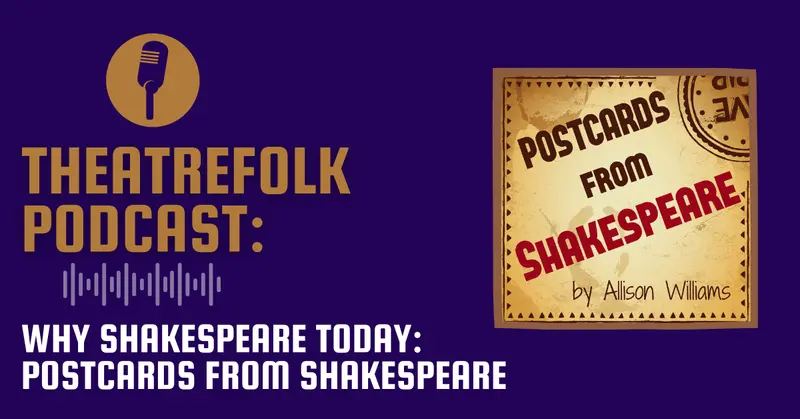
Episode 104: Why Shakespeare Today – Postcards From ShakespeareTheatrefolk Playwright Allison Williams talks about her attraction to Shakespeare adaptations, why students should study the bard today, her best tips for acting and directing Shakespeare and her newest play Postcards From Shakespeare.
Theatrefolk Podcast: Character Interpretation - The Student’s Point of View
Podcast

Theatrefolk Podcast: Character Interpretation - The Student’s Point of View

Episode 87: Character Interpretation – The Student’s Point of ViewLindsay talks with two sets of students who prepared the same characters, in the same show, but in two different productions. How did they prepare? How did seeing their character played by another actor affect their work?
We accept

In addition to the above payment methods, Purchase Orders are accepted from US and Canadian Schools.

Info for your purchasing department