
Story Structure
Brainstorming
I’m working on a new play in a different way this month. It’s going to be from the ground up with a class. When we had the first meeting a student raised their hand and asked “What’s this play...
For many student playwrights, there are two major areas of struggle: the blank page at the start of any writing project and figuring out where to begin with a second draft.
The Blank Page: If a student is insecure about their writing abilities, the blank page can be extremely intimidating. Where do you start?
The Second Draft: Many student writers feel that the first draft is the only draft they need to write. I got to the end, what else do I need to write? The second draft is where true writing begins, with revision, character building, and analysis.
Automatic Writing (also called free-writing) is an exercise that can help with both areas. It allows students to:
The goal is to help students fight past their inner critic who tells them: this isn’t perfect, that idea is no good, you’re not a good writer. When that voice kicks in, the easiest thing to do is stop writing. But if there’s an exercise that focuses on the act of writing over content, students can practice getting words on the page even if they’re not exactly what they want to write. Encourage students to get in the habit of revising their writing once it’s on the page, rather than waiting for the “perfect” idea to come.
This exercise is also a great way to help students get into a writing mindset. There are many reasons why a student might not “want” to write: they’re tired, they’re worried about something, they can’t think. Automatic writing gets the ball rolling.
Start every writing session with an automatic writing exercise. Choose a prompt and use a two-minute time limit. Remind students it's okay to go off topic. (Click below for a page of automatic writing prompts.) This gets students in the habit of getting words on the page without overthinking.
You can also incorporate automatic writing into second draft revisions. Have students write through their problems. If they don’t know what to do with a character, automatic write in their voice. If they have a story block, automatic write 10 possible solutions. Encourage students not to worry about whether they’re the right answers; just get as many answers as possible.
Subscribe for our exciting updates, insights, teaching resources, and new script releases. Plus, sign up now and get 4 plays and 2 lesson plans for FREE!
by Lindsay Price
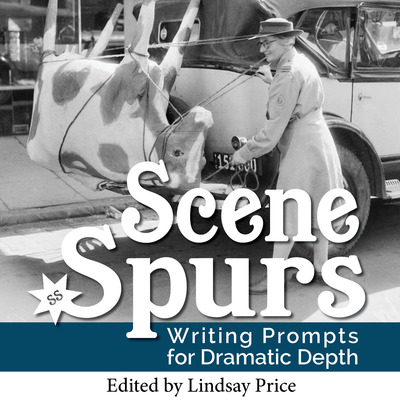
Scene Spurs is a collection of photo-based writing prompts developed by playwright Lindsay Price. The set includes 35 different Spurs along with an instruction guide to integrate them into your drama classroom.
by Lindsay Price
35 more photo-based writing prompts developed by playwright Lindsay Price. Includes an instruction guide and tips to integrate them into a distance learning curriculum.
by Lindsay Price
81 exercises that can be used to get students in the habit of writing on a regular basis.
by Lindsay Price
You’ve chosen to write a play for your students! Where do you start?
Use these 4 Playwriting drama teaching resources to make playwriting possible with your students. Great for warm-ups, prompts, writer's block and more!