📣SCRIPT SALE! Treat yourself to an easier Fall. Save 30% on 5+ perusal scripts with code SPRING30 before May 3 and head into summer stress-free.
Theatrefolk Plays
Featured Plays
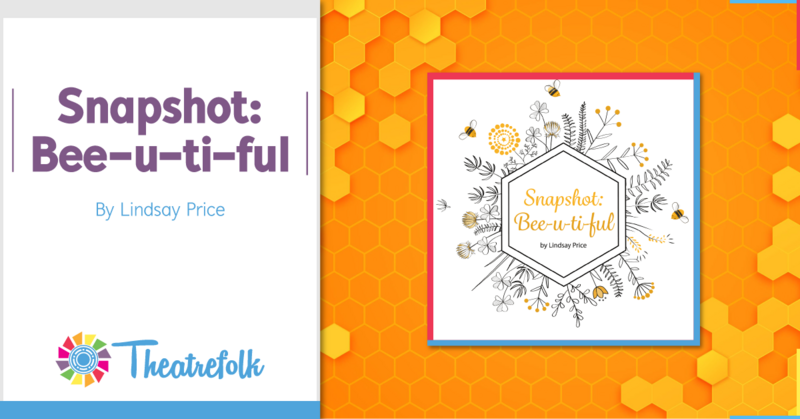
Theatrefolk Featured Play: Snapshot: Bee-u-ti-ful
Welcome to our Featured Play Spotlight. Snapshot: Bee-u-ti-ful is a competion-length version of Beauty and the Bee, and an awesome character piece for your next competition!
Do you get along with your sister… or is she the freak? And more importantly, does she think you’re the freak?
Meet Catherine: high school royalty. Cheerleader. Pageant queen. Meet Cosette: homeschooled genius. Spelling bee champ. Knows way too much about rats. When Cosette enters Catherine’s glittering, chaotic high school world, the collision is nuclear.
A sharp, weird comedy about sisters, status, and the sting of standing out — where the pressure to fit in gets so intense it conjures GIANT TALKING BEES. Yes. Literal bees. With opinions.
Witty, wild, and full of emotional honey, this play asks: what does it really mean to belong… and can one photo fix a fractured bond?
Sisters. Spelling bees. Frenemies. Freak-outs. Say cheese.
Let's hear from the author!
Why create a competition version?The original, Beauty and the Bee, is just too long for most high school competitions. I love this play and I love the characters in it. I feel like I could go into any school and meet Catherine, Cosette, and Julian in the halls. And can I mention life-sized bees one more time? I want this play to have more productions and I hope a competition length version can make that happen!
1. Why did you write this play?This play can be found in a longer length on our site as "Beauty and the Bee." The inspiration was simple. I love spelling bees and watched them for years.
I'm fascinated by spelling bee participants. How do they keep those words in their heads? Some participants are so charming. Some, so obnoxious. A unique and intriguing community! It was only a matter of time before such a character made it into one of my plays. It was a natural progression to throw an opposite character into the mix, make them sisters, and then make them have to talk to each other.
2. Describe the theme in one or two sentences?A play about family, relationships and learning how to hold on who you are.
3. What's the most important visual for you in this play?The characters talk about the photographs that have been taken of them throughout their lives and how pictures, frozen in time never really tell the truth, even if they want them to. Where does the truth lie? In the picture or just outside the frame?
4. If you could give one piece of advice for those producing the play, what would it be?This play is all about character and relationships, so do the work to make your actors bring these three dimensional characters to life. Spoiler alert - the mom is the most impactful character who never makes an appearance.
5. Why is this play great for student performers?This is a great script to show students strong character wants and what characters are willing to do to get what they want. It also theatricalizes abstract concepts: in the play the sister's heads are so full of conflict they manifest life-sized bees. And when are you ever going to have the chance to play a life-sized bee?
6. Who is your favourite character in the play?The Bees! They are the characters I would love to play. The bees represent the buzzing in your brain when you are trying to hide from something that you should really face.
7. What is your favourite line in the play?"And you are living in a dream world. A bubble. A dream world surrounded by a bubble wearing a sweater vest. There are no sweater vests in high school! It’s a vicious place where the weak get tossed onto the tundra to be devoured by wolves."
Featured Plays
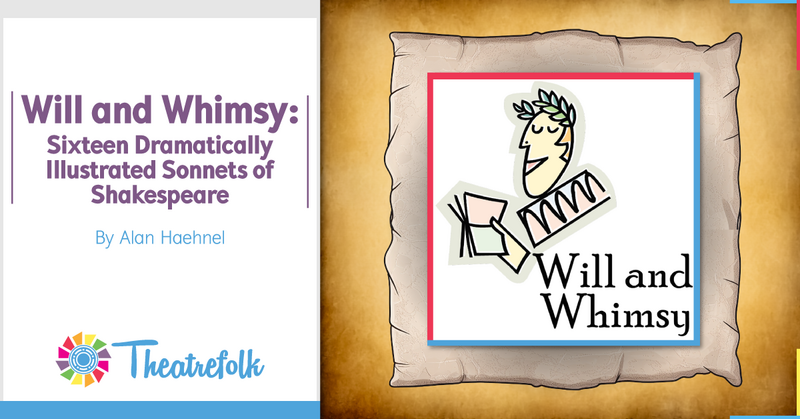
Theatrefolk Featured Play: Will and Whimsy: Sixteen Dramatically Illustrated Sonnets of Shakespeare
Welcome to our Featured Play Spotlight. Shakespeare's Sonnets come alive in Will and Whimsy: Sixteen Dramatically Illustrated Sonnets of Shakespeare by Alan Haehnel where modern scenes play hand in hand with the original text. Very flexible casting.
Shakespeare stands before you with a book of his 154 sonnets. Will you read them?
No way! Shakespeare isn’t meant to be just read. He’s meant to be performed, loved, fought for… lived.
If the language feels overwhelming, start with Will and Whimsy. Modern scenes meet the original text, and the sonnets come alive.
No bleeding required. Promise.
Why did we publish this play?Shakespeare is meant to be performed and sometimes you need a doorway to get students to engage and connect. Will and Whimsy is just that door. The play looks at sixteen sonnets both in their original form and in modern scenes that illuminate what Shakespeare is trying to say. You get moments that are poignant, heartbreaking, comedic, and everything in-between. It’s perfect for competition because of its flexible casting, flexible length (you can cut and rearrange the sonnets as you choose) and easy staging. In short, we love how this play brings Shakespeare to life and how you'll be able to do the same.
Let's hear from the author!
1. Why did you write this play/collection?I have long loved Shakespeare's sonnets, particularly for the way they use elegant language to describe timeless emotions and situations. I wanted to create a play that would help people appreciate the sonnets by pairing them with contemporary scenes.
2. Describe the theme in one or two sentences?To quote another famous text: There is nothing new under the sun. (But, I would add, there are endless ways to describe those not-new things!).
3. What's the most important visual for you in this play/collection?A juxtaposition of a classically-dressed Bard next to characters in contemporary costumes.
4. If you could give one piece of advice for those producing the play/collection - or studying it with their class - what would it be?Make certain that the person or people playing the Bard really understand every word of the sonnet they are reciting. It should be delivered with intention, with a need to communicate an important concept. And sometimes, if the sonnet calls for it, with humor!
5. Why is this play/collection great for student performers?Whenever students can have an opportunity to use poetic language as profound as Shakespeare's, it's a win. But when you can mix the poetic and classical with brief contemporary scenes featuring a lot of action and humor, then you really have a rich, multi-faceted theatrical opportunity!
6. Who is your favourite character in the play/collection?I'd love to be the Bard.
7. What is your favourite line in the play/collection?"If this be error, and upon me proved, I never writ, nor no man ever loved."
Featured Plays
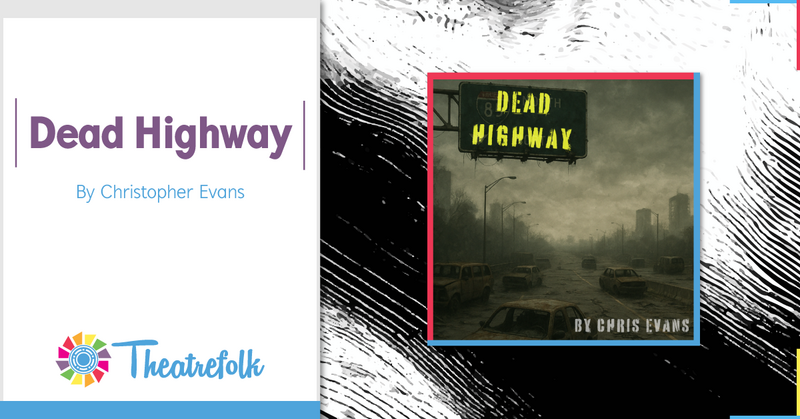
Theatrefolk Featured Play: Dead Highway
Welcome to our Featured Play Spotlight. Dead Highway by Christopher Evans is a pulse-pounding thriller set in the terrifying aftermath of a viral apocalypse. Six teenagers fight for survival against the undead, facing brutal realities and testing the limits of their bonds. Expect intense action, dark humor, and raw emotion in this gripping story of desperation and resilience.
This high-stakes play offers flexible staging and unique opportunities for your makeup and costume team. Dead Highway delivers a visceral and thought-provoking theatrical experience, perfect for captivating audiences with its chilling portrayal of survival against overwhelming odds.
Why did we publish this play?Dead Highway is both full on funny and full on horror. That horror piece was key for us. All our current horror/zombie material is more tongue-in-cheek and we didn't have anything straight up apocalyptic. Dead Highway is all that and more. Add to that, this play has a number of fantastic student tech opportunities. What do the zombies look like? How does the set crew put together the car the characters travel in? How is the apocalypse lit? We love this play and you will too!
Let's hear from the author!
1. Why did you write this play?I am a big fan of the Walking Dead and wanted to see if their realistic style would transfer to the stage.
2. Describe the theme in one or two sentences?Teenagers can be resilient in the face of unending odds.
3. What's the most important visual for you in this play?The last one. Casey in the car surrounded by the dead lit only by her cellphone.
4. If you could give one piece of advice for those producing the play, what would it be?Keep it simple and keep it ,as much as you can, gore free. Bloody is good but some administrators might have a problem with gore.
5. Why is this play great for student performers?It’s so fun to handle this play. From being a Zombie (makeup!) to working as a tight ensemble made this a real joy. The play has sporadic humor in it so it’s not entirely a slog through heavy drama.
6. Who is your favourite character in the play?Brynn - a tough character to play because she is the one character who is mentally and spiritually broken by the Apocalypse. A very traumatic event broke her. Tough role but if you nail it it’s terrifying.
7. What is your favourite line in the play?Jennifer’s line: “So, according to you, the universe is a giant alien development plan?”
Featured Plays
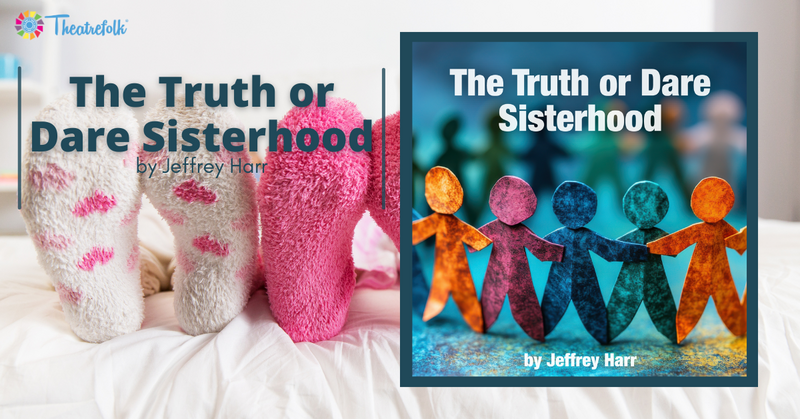
Theatrefolk Featured Play: The Truth or Dare Sisterhood
Welcome to our Featured Play Spotlight. The Truth or Dare Sisterhood by Jeffrey Harr is a sharp, funny, and unexpectedly emotional coming-of-age play that tackles identity, friendship, and the beautiful mess of growing up. Through jelly bean dares, wet willies, and late-night confessions, this band of middle schoolers learns what it really means to show up for someone–and just how powerful it is when weird kids stick together.
Welcome to the wildest slumber party since the Great Guacamole Incident. When Serena and her tight-knit crew of thirteen-year-old misfits gather for a night of junk food, spooky stories, and sisterhood rituals, everything seems hilariously on track. That is, until Monarch shows up with a stuffed clown and more baggage than a carousel at JFK. Monarch isn’t just new to the group–they’re new to being themselves, and not everyone in the Sisterhood is ready for that.
Why did we publish this play?We love this play for its combination of authenticity, humour, character depth simple staging, AND because it showcases all of these features in a middle school play. Yes, it has a smaller cast than many of the other middle school plays we offer, but we specifically chose this play to give students the opportunity to explore these bold characters: this play will give every actor in it a chance to shine. Did I mention how great the characters are? We could listen to Agatha and Raven talk all day long! A sincere, moving work with a clear message and a heartfelt voice.
Let's hear from the author!
1. Why did you write this play?I wrote this play because as a teacher, every day, I saw small groups of kids who were friends that had next to nothing in common, except that they were empathetic, caring individuals who simply accepted one another, warts and all. Honestly, it was one of the best parts of teaching--the daily affirmation that as cruel and intolerant the world can be to kids who are just trying to be themselves, there are safe spaces and support systems and FRIENDS, in every best sense of the word. These girls are quirky as all get out, but man are they good people. The kind of people I saw in my school and the kind of people I want to be around.
2. Describe the theme in one or two sentences?Kindness is never wasted.
3. What's the most important visual for you in this play?The most important visual in the play is near the end when the girls and their new friend, who's crying, are in the circle when Serena's big sister comes in, sees Monarch crying, and immediately goes to console them before getting in the circle. It doesn't matter that she's older, that it's her little sister's group, she's one of them, and her empathy compels her to be a part of the circle.
4. If you could give one piece of advice for those producing the play, what would it be?Keep it light - it's a slumber party! Lean into the quirkiness, the comedy. It will make the impact of their support of Monarch at the end so much more powerful when the tone shifts.
5. Why is this play great for student performers?This play is awesome for student performers because these characters are soooo fun to play. They're all so sweet and honest and authentically themselves that a young performer can really sink their teeth into them. And, I honestly believe that young people - especially theatre kids - get it. They are among the most empathetic, supportive people I've ever met.
6. Who is your favourite character in the play?My favorite character is Agatha. Hands down. She is the Debby Downer, Eeyore of the group, but is so funny. It would be so much fun to play the kid who just happens to know every terrifyingly dark aspect of, well, everything - and is not afraid to tell you all about it.
7. What is your favourite line in the play?My favourite line in the play is when Monarch explains their name to the group by reciting a haiku: "A caterpillar /. This deep in fall-- / Still not a butterfly"--then says, "I know I'm not a monarch, yet. But I hope to be."
Featured Plays
Theatrefolk Featured Play - Agatha Rex
Welcome to our Featured Play Spotlight. Agatha Rex by Lindsay Price is a modern high school adaptation of Antigone, transforming the Greek chorus into a dynamic ensemble opportunity. Available in a competition-length version too!
Possible expulsion, expulsion, expulsion.
Agatha is a girl who stands up for her beliefs, regardless of the consequences. As student council president at Thebes High, she vigorously defends a student who is unfairly punished. Based on her actions, she could be expelled and lose an important scholarship.
Set in a modern-day high school, the play translates the original Greek chorus into a fantastic ensemble opportunity.
Let's hear from the author!
1. Why did you write this play?I love adaptations, and Antigone is an epic play - adapting it is always a fun challenge. The original story translated seamlessly to the high school stage: Antigone defies the king to honor her brother, while Agatha defies the principal to support hers.
Both Agatha and Antigone stand up for what they believe in, no matter the consequences. In this modern version, Agatha isn’t faced with a life-or-death choice—apologize or die—but her actions will still change her life. She risks losing everything she’s worked for, all for a brother who may not even be worth the sacrifice.
1b. Why did you also write a competition length version?Agatha Rex is one of my more popular plays for production and for classroom study because of its link to Ancient Greek Theatre. I've had many teachers ask for a competition length version of this play and it's been great to be able to adapt my adaptation!
2. Describe the theme in one or two sentences?Do you stand up for your beliefs, regardless of the consequences? How do you define right vs wrong?
3. What's the most important visual for you in this play?The "Greek Chorus" of students who observe the action and comment on it.
4. If you could give one piece of advice for those producing the play, what would it be?Agatha Rex is a great example of an ensemble that has a lot to do and can't stand around being wall paper. The Greek Chorus in the original is transformed into an ensemble of high school students. Frankly, it's the toughest part in the play – they set the scene, they set up the world of the play and its characters.
The ensemble acts as foils for Agatha (both encouraging her to act and then backing away when she asks for their help) they are the atmosphere of the play. They act as the voice of the student body. And they have to do it in unison.
5. Why is this play great for student performers?This play has a lot to offer from offering a modern look into an Ancient Greek play, to the ensemble work, to the strong character development, to the discussion of the themes. How do you define right from wrong? What would you do in a similar situation? Should someone be punished less harshly because they are a good student? What are your thoughts on personal responsibility?
6. Who is your favourite character in the play? OR Which character would you be in this play?Eunice, the head hall monitor, is my favourite character! I would love to play her.
7. What is your favourite line in the play?Any time the chorus called Dr Creon "Cromagnon."

Featured Plays
Theatrefolk Featured Play - With Liberty and Justice For All
Welcome to our Featured Play Spotlight. A powerful and timely piece, With Liberty and Justice for All by Jeyna Lynn Gonzales brings student voices to the stage, capturing a moment in history while reflecting the ongoing fight for justice.
It’s June 2020. Set on a street in downtown Atlanta, With Liberty and Justice for All follows eight people as they attend a BLM protest. They come together as a community, share their voices, and share their stories. But as day turns to night, as the curfew comes and goes, it’s every person for themselves. There’s only one thing on their mind: run.
A timely and poignant play with incredibly strong performance potential from a variety of actors.
Why did we publish this play?
At Theatrefolk, it's important to us that student voices are heard in the characters that appear in our plays. We want students to be able to see themselves on stage. This is a key factor in With Liberty and Justice for All. Jeyna Lynn writes in her author's notes: "There are too many people who have never seen a character share their same name, and there are too many people who have never watched a play that represents their lives and/or history." Adding to that, it's such a well written play with a timely message.
Let's hear from the author!
1. Why did you write this play?The world has many ways of making one feel powerless, and this play is my resistance to that oppression. In the midst of the pandemic, I felt the need to speak up. Five years later, I've seen little change and cannot emphasize enough the importance of empathy, education, and accountability.
2. Describe the theme in one or two sentences?With Liberty and Justice For All is a deeply moving piece of docu-theatre that features stories inspired by advocates challenging oppression. It is both a time capsule and a mirror held up to society.
3. What's the most important visual for you in this play?The most important visual in this play is the end of Scene 13: Please Rise.
4. If you could give one piece of advice for those producing the play, what would it be?Be fearless. Speak up for both yourself and others who may not have the privilege of being listened to.
5. Why is this play great for student performers?Theatre helps students build social-emotional learning skills by practicing understanding other perspectives. This play is great for students to study and perform because it introduces them to critical thinking and discussion. It provides a safe environment for students to begin forming their own views about the world outside of their neighborhood or see their community's stories represented.
6. Who is your favourite character in the play? OR Which character would you be in this play?My favorite character in the play is Ona. I think she is courageous, inspirational, and a beacon of hope.
7. What is your favourite line in the play?My favorite line in the play is "And I took her portrait."
Featured Plays
October Reading List: Mystery Plays
Ready to add a little mystery to your drama classroom? We’ve put together a list of plays full of secrets, twists, and unexpected turns that are sure to captivate your students.
Whether they’re uncovering hidden clues or piecing together the puzzle, these scripts will have your performers and the audience hooked. Ready to crack the case? Dive into our mystery play picks!
Featured Plays
September Reading List: Plays for Competition
As you gear up for competition season, why not check out some of our top picks for standout plays? These scripts are bursting with memorable characters and fantastic stories, giving your students the perfect material to showcase their talent.
The right play can really set your students apart in the competition scene. These selections are not only engaging but also offer plenty of moments for your actors to shine. Add one of these plays to your competition lineup, and get ready to see your students make their mark!

Featured Plays
August Reading List: Theatrefolk's Longest Play Titles
As you start sourcing scripts for the school year, why not dive into some of Theatrefolk's longest and most delightfully titled plays? These epically named scripts promise not only rich characters and fantastic stories but also a whole lot of fun just pronouncing their titles!
These plays offer endless opportunities for creative exploration, and unforgettable performances. Add them to your collection and watch your students bring these wonderfully lengthy titles to life on stage or in the classroom!
Featured Plays
July Reading List: Issue-Based Plays
As you start planning for the new school year, why not explore some incredible issue-based plays? These thought-provoking scripts tackle real-world challenges and spark meaningful conversations in your classroom or on stage.
These plays are perfect for fostering meaningful discussions and bringing diverse voices to your stage or classroom. Add them to your collection and watch your students engage with drama that truly matters!
Featured Plays
June Reading List: Plays to Celebrate Gender Diversity & Inclusivity
As we start putting together this summer's reading list, how about diving into some amazing plays that celebrate gender diversity and inclusivity? There's a whole world of stories out there just waiting to be discovered, offering endless possibilities for your students to connect with powerful characters and inspiring narratives.
These plays are perfect for embracing the magic of diverse storytelling and will make a fantastic addition to your stage or classroom this summer!
.png)
Featured Plays
May Reading List: Animal-Inspired Play Titles
As we start thinking about ideas for next year's season, why not dive headfirst into the entertaining world of plays featuring animals in their titles? So many creative opportunities and endless possibilities for your student performers to bring these captivating characters to life.
These plays are designed to help you unleash the magic that celebrates the wild spirit of storytelling. Perfect options to grace your stage or classroom next year!
Featured Plays
April Reading List: All Things Shakespeare
As April takes centre stage, we're diving into the world of all things Shakespeare. With incredible plays, adaptations and playful parodies, we're here to help you bring the world of Shakespeare to life, whether it's in your classroom or on the stage.
So grab your favourite quill and parchment, and let's celebrate the Bard's birthday in style with these phenomenal plays!
Featured Plays
March Reading List: Plays With Iconic Characters
As March takes centre stage, we're stepping into a world full of iconic characters from well-known stories. Each play in this month's lineup includes beloved characters, ready to leap off the page and onto your stage or classroom.
So, grab your popcorn, settle in, and immerse yourself in our March Reading List. These plays promise to take you on unforgettable adventures alongside some of literature's most memorable characters. It's time for an adventure like no other!
Featured Plays
February Reading List: Plays with 'Emotional' Titles
As February unfolds, we're shifting our focus to a collection of plays enriched with emotion-laden titles, each one carefully crafted to deliver nothing but the best for your stage or classroom.
So, grab a comfy spot, settle in, and dive into our February reading list. Let these plays be an emotional thrill ride that deliver unforgettable experiences. Get ready to ride the emotional wave!
Featured Plays
January Reading List: Colourful Play Titles
As January unveils its wintry palette, our attention shifts to a vibrant selection of plays designed to add some theatrical warmth to your stage or classroom. From dazzling tales to vivid narratives, these scripts are a kaleidoscope of colour, ready to light up the winter scene.
So, cozy up and explore our January reading list. Let these plays paint a beautiful picture that transforms your season into an unforgettable experience. Embrace the drama, and let the colours of January come alive on your stage!❄️🎭

Featured Plays
December Reading List: Holiday/Winter Plays
As December unfolds its festive charm, our focus turns to a collection of plays crafted to bring holiday magic to your stage or classroom. From heartwarming tales to whimsical narratives, these scripts promise to capture the joy and spirit of the season.
So bundle up and check out our December reading list. Let these plays be the delightful touch that elevates the season, transforming it into a memorable experience.

Featured Plays
Theatrefolk Featured Play - Franz Kafka Cancels His Cell Phone Plan
Welcome to our Featured Play Spotlight! Prepare to embrace the slightly off-balance world of the absurd with Kirk Shimano's Franz Kafka Cancels His Cell Phone Plan. Your students will enjoy stepping into some truly unconventional characters, while revelling in something totally unique.
A modern absurdist play that takes elements from three of Franz Kafka’s works (The Castle, The Trial, and The Metamorphosis) and puts them into the context of the everyday absurdities of our 21st century lives.
Will Franz Kafka ever succeed in escaping his mobile phone contract? Will the Inspector’s mysterious charges ever be revealed? And will someone turn into a giant insect somewhere along the way?
Why did we publish this play?
We love absurd works and it's awesome to be able to introduce students to Franz Kafka in a theatrical format. We also love adaptations, and Kirk is a master at transforming and distilling a text to make it not only theatrical but completely relatable. If you're studying the Theatre of the Absurd, pick up this play to give your students something modern and unique to read as part of your unit. Or if you want something that's never been done before for your next competition, start right here!
Let’s hear from the author!1. Why did you write this play?
I read The Metamorphosis when I was in high school and it’s a story that has always stuck with me. I was compelled by Kafka’s ability to make the strangest events seem almost mundane. Writing this play was my chance to live in that world for awhile, to take some of our everyday frustrations and elevate them to somewhere fantastical and to take some of the ways our real world feels off kilter and turn them into something fun!
2. Describe the theme in one or two sentences.
This play is about how our institutions can run you in circles and leave you feeling entirely alone, when in fact you are the only one who is seeing reason.
3. What’s the most important visual for you in this play?
Early in the play, Gardena tells Kafka that she does not have a phone while scrolling through her phone. While this is a small moment, I think it encapsulates the tone of the entire play, in which we will be told one thing but clearly shown another. It cuts to the heart of the ways we are sometimes challenged to accept a situation which clearly cannot be true.
4. If you could give one piece of advice for those producing the play, what would it be?
Whenever I revisit Kafka’s writing I am always surprised by how much he undersells the absurdity. In places where we might expect the protagonist to yell with surprise, we instead get a small sigh. I think there might be a temptation to play some of the events in this play broadly to get a big audience reaction, but I would encourage anyone producing the play to always remember that for all of the characters in the play, it’s just a boring regular Monday.
5. Why is this play great for student performers?
I think that each of the characters in this play is strongly distinct from the others, and I hope that each of their lines of dialogue provides a glimpse into their psyches. I think student performers will really enjoy the puzzle of figuring out how to present each character, and then working together to tell the story with them together. I really encourage students to explore a character even if it might not be their standard “type” and give something surprising to the audience.
6. Who is your favourite character in the play?
At heart, I’m definitely a Franz Kafka, because I’m more likely to try to make amends even if the world around me is collapsing. But because I would want to use the casting as a chance to explore another side of me, I would definitely play Gardena. Her ability to see the most amazing event and respond to it with pure boredom is something that I find endlessly entertaining.
7. What is your favourite line in the play?
“What if I am the only one who feels trapped in circles within circles and others would be repulsed to join me?”

Featured Plays
November Reading List: Plays for Veterans/Remembrance Day
This month we turn our thoughts to Remembrance Day and Veterans Day. If you're looking for meaningful and impactful performances to mark this important time of remembrance, we have a curated list of plays that will help you do just that.
Our November collection features plays designed not only to pay tribute but also to start and continue important discussions with your students - whether on the stage or in the classroom.
Featured Plays
Theatrefolk Featured Play - The Plucky Pie Murder
Welcome to our Featured Play Spotlight! The Plucky Pie Murder by Dara Murphy is an incredible way to challenge perspectives and find humour in unexpected places. A black comedy extraordinaire!
The star quarterback of Riverview High School has been charged with murder most fowl! Rooster, to be precise.
Plucky the mascot has been done in and all fingers point to the football player - even his own.
A farce of a trial ensues featuring an inept judge, an unprepared defence lawyer, and an Egg-Girl.
The audience plays the jury in this hilarious black comedy. Two possible endings!
Why did we publish this play?
The Plucky Pie Murder is a black comedy extraordinaire. It's the play to choose if you're in the rare position of having a lot of guys in your drama class or club. We love how Dara writes plays. Some may call it weird, which I would consider a compliment. She's said that she likes "finding humour in unexpected places." She also likes that humour can be used "to challenge people's perspectives." It's important to us to have plays that challenge people's perspectives! Sit back and enjoy the ride with this play.
Fun fact: When we accepted The Plucky Pie Murder Dara was the youngest playwright in our catalogue. She had written the play for a high school assignment and her teacher submitted it to us.
Let’s hear from the author!1. Why did you write this play?
I wrote The Plucky Pie Murder when I was in grade 12. It was a drama class assignment that asked us to write a one-act play. I don't remember how I got the idea for the script, but at the time I enjoyed TV shows like Murder She Wrote and Matlock. My teacher liked my play, and at the end of the school year, she recommended that I submit it to Theatrefolk. I was very excited when Theatrefolk said they were interested in publishing it! My mom even flew us to California so we could watch the first performance. That experience cemented my love for writing and theatre.
2. Describe the theme in one or two sentences.
This play is a courtroom drama and a football game rolled into one. I would say the theme is the importance of getting to know a person beyond simply looking at their mascot costume, job, reputation, or appearance.
3. What’s the most important visual for you in this play?
My favorite visual is the waterboy keeping the defense team hydrated during the court proceedings.
4. If you could give one piece of advice for those producing the play, what would it be?
If you produce this play, I would recommend keeping the pace of the dialogue very snappy. This will help the jokes land, and it will keep the energy high. People could even talk over one another.
5. Why is this play great for student performers?
This play is great for student actors because it's a lot of fun. It's goofy and silly, and it would be perfect for an energetic group. The jokes come and go quickly, and there's never a dull moment.
6. Who is your favourite character in the play?
If I were in this play, I would want to be Ms. Duncan because she's a serious lawyer who gets to pepper everyone with important questions.
7. What is your favourite line in the play?
It's hard to pick my favorite line. I like the section when Mr. Teedle is questioning the forensic specialist on whether the mascot costume is a rooster or a chicken. I also like Mr. Teedle's hopeless opening statement: MR. TEEDLE: Okay, to begin I would like to say that my client is innocent. Very… innocent. So innocent, you could throw him into a lake and he would sink… Ha ha, little witch joke there. So, to close my opening statement I would like to repeat that the innocence of my client is very… ah… very big. Thank you.