đŁSCRIPT SALE! Treat yourself to an easier Fall. Save 30% on 5+ perusal scripts with code SPRING30 before May 3 and head into summer stress-free.
Choral Work
Featured Plays
Theatrefolk Featured Play - School Daze
Welcome to our Featured Play Spotlight. Middle school: a wild mix of excitement, nerves, and really big eighth graders. With a large cast and relatable characters, School Daze by Lindsay Price is an ideal choice for middle school performers navigating their first day of school.
You remember middle school. That first day can be a funhouse or a hall of horrors. Will I fit in or be left behind? Did I wear the right clothes? How will I find the right class? Why do those eighth graders look so big...
Middle school is the tricky tightrope between being a kid and being a teenager. How did you fare? Did you fall off the tightrope? Did you hold on?
See the characters in School Daze try to keep their balance on the first day of middle school.
Let's hear from the author!
1. Why did you write this play?When Iâm writing or thinking about writing, my number one method of finding play ideas is observation. Looking at whatâs happening around me, listening to conversations, and most importantly, listening to my customers and my audience. Before writing School Daze, I had only written plays for high school students and never considered middle school. After a trip to a conference in Texas, I met so many middle school drama teachers who were looking specifically for plays written for middle school performers and dealing with middle school issues. And the big thing they told me middle school students didnât want was fairy tales or similar childish stories. I took on the challenge and this play was actually the first of many middle school pieces.
2. Describe the theme in one or two sentences?Middle school is a tricky tightrope. How do you manage the first day successfully?
3. What's the most important visual for you in this play?I love the image of Sam and Pat standing with cafeteria trays trying to figure out how to navigate this new world.
4. If you could give one piece of advice for those producing the play, what would it be?Avoid blackouts. Blackouts take the audience out of the world of the play and if you have one after every scene, the play is going to feel quite choppy. Using staging and music to move from scene to scene. Keep scene changes to a minimum and focus on keeping the play moving!
5. Why is this play great for student performers?Iâm thrilled at how schools respond to this play. Some schools present it year after year to their feeder schools as an introduction to Middle School. And because itâs in the vignette format, itâs easy to rehearse with a large cast because you can have several scenes practicing at once. Perfect for Middle School classrooms.
6. Who is your favourite character in the play?I love the race scene because it takes a typical middle school event, moving from class to class, to the extreme. It also gives actors a lot to play with â thereâs the humour of the characters and the physical action of the slow motion running. Every time Iâve ever seen the play, this scene has always been a highlight.
7. What is your favourite line in the play?"Everyone at my old school hates Skinny Marie and I know, I just know, she's going to try and be my friend because we're the only ones who know each other."
Featured Plays
Theatrefolk Featured Play - neeT Teen
Welcome to our Featured Play Spotlight. neeT Teen by Lindsay Price is a fantastic play for your group. It's got a little bit everything - from the absurd, to movement, to audience participation, to song... There's even the opportunity to add your own scene to the mix!
Teen life â backwards, forwards and inside-out. From dealing with the tractor beam of insecurity and doubt, to dealing with parents who couldnât hear you if they tried. From fighting pimples to fighting the hallway. From knowing math skills arenât going to get the girl to knowing that happy teenagers exist. They may not get the laughs, or the drama, or the big monologue, but theyâre there.
Let's hear from the author!1. Why did you write this play?
I wanted to write a vignette play that went out of my comfort zone in terms of exploring form. And there is every type of form in this play from kitchen sink scenes, to absurd, to movement based moments, to choral work, to audience participation, to song, to groups adding their own scene.
2. Describe the theme in one or two sentences?
Teen life â backwards, forwards, inside out.
3. What's the most important visual for you in this play?
I love the ending where the entire cast is singing about not feeling great, not being liked and not getting worried about it. They're not going to change who they are.
4. If you could give one piece of advice for those producing the play, what would it be?
Don't get bogged down by the different forms. Focus on the individual characters in each scene and express the form through what those characters want and the obstacles in their way.
5. Why is this play great for student performers?
It looks at teen life and tackles topics that many teens go through in a unique and varied way.
6. Who is your favourite character in the play?
She's not my favourite character, but for me, it's the most vivid moment in the play. Tyne has bullied another girl to the point where she felt she had to take her own life. Tyne is trying to grapple with the vast weight of this moment and rationalizing her actions as just "a little mean." It's one of my "favourite" monologues in its rawness and how words have consequences.
7. What is your favourite line in the play?
"The world would be a better place if people werenât so easily offended by words that donât actually do anything, they just exist."
Featured Plays
Theatrefolk Featured Play â Shuddersome: Tales of Poe by Lindsay Price
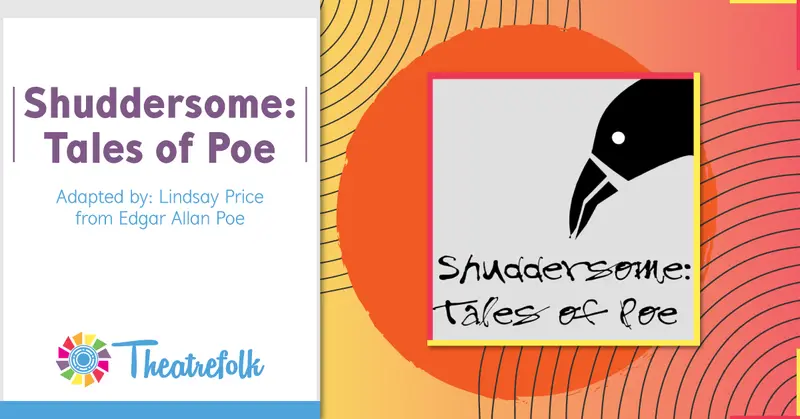
*Welcome to our Featured Play Spotlight. * Shuddersome: Tales of Poe by Lindsay Price is a creepy, cross-curricular masterpiece with tons of flexibility, theatricality and a whole lot of fun.
The thumping of a heartbeat. The creek of a door. The howl of a bitter wind. The gong of a clock tower. The clang of alarm bells. The sound of beating wings getting closer and closerâŚ
Specters, ghosts and ghouls come alive in this vivid theatrical adaptation of some of Edgar Allan Poeâs best-known works. Included are The Tell-Tale Heart, The Raven, and The Masque of the Red Death.
Poeâs words rise from the page like corpses from the grave. Be careful. Do you hear that tap, tap, tapping?
Letâs hear from the author!1. Why did you write this play?
Adaptation is my favourite form of playwrighting and I love the creepy, scary, macabre stories of Edgar Allan Poe. I thought it was a perfect marriage.
Little did I know. This play was actually a huge challenge to write. Taking a piece of literature from one medium and transforming it into another, is not easy. Poe writes in a way where itâs the single readerâs imagination that takes charge of the interaction. The story lives in the mind of the reader. In a play, we canât be inside everybodyâs head at the same time. We need action and theatricality to do the work. It took over a year to find the right balance of staying true to Poeâs intention and creating a theatrical experience, but Iâm really happy with the outcome.
2. Describe the theme in one or two sentences.
Death, Morality, Revenge, Jealousy, come to life from the page like corpses from the grave.
3. Whatâs the most important visual for you in this play?
The Shudders. They are Poeâs specters, ghosts and ghouls staring you down from every corner of the stage.
4. If you could give one piece of advice for those producing the play, what would it be?
Watch the tone. If everything is played with the same creepy feeling, then the play is going to come across as one note. Which I know is not your intention!
5. Why is this play great for student performers?
Iâm often told by teachers and students that this play is a challenge. Itâs not easy stuff. But itâs a rewarding challenge. Itâs creepy and cross-curricular which makes it great for classroom study. There is also a number of different of storytelling styles that offers student performers a wide variety of challenges. Thereâs even a humourous story! (Did you know Poe wrote comedies?)
6. Do you have any advice for people looking to perform this play online or socially distanced?
If youâre performing socially distanced, explore how the the isolation between characters impacts the creepy atmosphere of the storytelling. Light and sound will also be your best friends. The Raven would work very well with the different characters in their own areas of light. If youâre doing The Bells virtually, Iâd suggest not using unison speaking and play with how the text sounds using individual speakers. Have fun with it! Explore different options, you wonât know if something works or not until you try.
Featured Plays
Student Drama Success: The Exile and the Onion Girl
The Exile and the Onion Girl by Lindsay Price is a vividly modern adaptation of Aeschylusâ play, The Libation Bearers.
Ore has been exiled for 10 years, working as a goat herder. Onee has been banished to the kitchen â 10 years is a long time to cut onions. Their mother murdered their father and itâs time to avenge his death.
Who cares if all Onee wants is her motherâs love? Who cares if Ore canât remember what his father sounds like?
In Argos, itâs an eye for an eye, blood for blood, and watch what you say in front of the Domestics. Theyâre always watching, always listening. But blood is very complicated. And more blood doesnât necessarily solve problems.
Sarah Hankins and the incredible student drama group at Clinton High School in Clinton, MS took their production of The Exile and the Onion Girl to the Secondary School Theatre Festival at the Southeastern Theatre Conference (SETC) in Louisville, Kentucky.
Two of the students involved in their production shared their thoughts on their experiences:
âIâm really glad we chose this production because it flows so smoothly and provides an excellent platform for me to learn more about the art of performing , not to mention the fact that we have advanced from both Dramafest and MTA with it! I canât wait to perform in it again. ~ Julia M.
With Priceâs skillfully modernized version of a classic Greek Tragedy paired with the hard work of the Clinton Arrow Theatre department, The Exile and the Onion Girl has become one of the most rewarding plays I have had the pleasure of being involved in. ~ Aaron G.â
Featured Plays
An Award-Winning Journey: Through the Looking Glass
Through the Looking Glass by Lindsay Price is a fantastical physical journey for both actor and audience, and a great companion to our adaptation of Alice.
Alice is back in Wonderland and things are more confusing than ever â Flowers talk, the White Queen cries before she pricks her finger, and thereâs a life-sized chess game going on. Alice wants to play, but mostly wants to be queen. Will she make it to the eighth square?
Director Laura Michels was thrilled to sing the praises of the amazingly talented student performers at North Branch Area High School in North Branch, MN â and we can see why!
âWe placed first at subsections, sections, and are performing at the state level at the Minnesota State High School League One Act Festival.â
Featured Plays
Simple Set, Strong Theme: Hoodie
Hoodie by Lindsay Price is one of our most popular middle school plays that asks all of the tough questions that middle schoolers deal with every day.
Middle schoolers face a tornado of questions every day. What do I wear? What if I wear the wrong thing? What is she wearing? What do I look like? Stop looking at me!
Hoodie examines image and appearance in the vignette style and poses what may be the most difficult question of all â Do I stay in the clump or do I stand alone?
Dorothy Lance and the incredibly talented group of student performers at Clark Lane Middle School in Waterford, Connecticut put on an evening of entertaining theatre for cast, crew and audiences alike:
âOur show is over and was a great success. As a first act, we did Quippage, The Big Lie and Santa Runs a Sweat Shop, featuring my four graduating eighth graders. Great little plays for developing a character in a short piece.
The second act was Hoodie, and got all the attention. Parents, students and staff had nothing but great comments. I had the clump in pale gray T shirts, dark jeans and white sneakers. Characters in scenes added small accent pieces to their costumes. What I liked best was that, including all four plays, I had 21 students playing more than 50 characters-a challenge for all of us.
Thank you for your wonderful writing. Your understanding of the adolescent mind and personality provides an entertaining and insightful evening for all.â
Featured Plays
Theatrefolk Featured Play â Letters by Mrs. Evelyn Merritt
Welcome to our Featured Play Spotlight. Letters by Mrs. Evelyn Merritt is an excellent and challenging Readerâs Theatre script for high school and middle school student performers.
For many wars, letters home were the only form of communication between soldiers and their loved ones.
Letters is thought-provoking and character-driven. Itâs not hard to see Marie, Jim, Caleb, Sarah, Harriet and Robert reaching out with pen and paper.
Why did we publish this play?
Whatâs great about the script is its focus on the characters. Each character expresses specific emotions about their place in their particular war. The play also has oral elements such as overlapping speech, unison speech, and repeated patterns. The words speak for themselves. A thought-provoking piece.
Why is this play great for online platforms?
Because this play is set up as Readerâs Theatre, itâs easy to transfer to an online platform. The montage sections can be presented in a gallery setting and will take a little practice to get the timing â but they would in a traditional production too.
Letâs hear from the author!1. Why did you write this play?
I wanted a way to allow students to remember the past in a theatrical way.
2. Describe the theme in one or two sentences.
Remember the human face of war.
3. Whatâs the most important visual for you in this play?
The letters. Even though itâs readers theater, try to have the type of letter each of these characters would have as a prop.
4. If you could give one piece of advice for those producing the play, what would it be?
Readerâs Theatre doesnât mean you canât act â each character should be brought to life as much as possible, even though you have a script in your hand.
5. Why is this play great for student performers?
Itâs a chance for students to put a face to the past and also connect to history. Experiencing history is always better than just reading about it.
Featured Plays
Theatrefolk Featured Play â Tick Talk by Lindsay Price
Welcome to our Featured Play Spotlight. Tick Talk by Lindsay Price is a wonderful technical exercise for high school student performers that also serves as a fantastic starting point for discussions.
The teenagers in Tick Talk have a lot to say, but no way to say it. Most characters are limited to only ONE WORD for the whole play.
A fascinating challenge for actors: What happens when a character has just one word to express hopes, fears, and frustrations? What if they have something terribly important to say but canât? Theyâd better find a way soon: Time is running out.
Why did we publish this play?
âWhat Ifâ questions are great questions to explore in theatre â âwhat ifâ characters only had one word or phrase to share their story and their experience? That is the world of the play in _Tick Talk. _ How do we encourage students to find ways other than dialogue to create a three-dimensional characterization? Plays that challenge form, challenge students, and challenge the audience are important and thatâs why Tick Talk is in our catalogue.
Letâs hear from the author!1. Why did you write this play?
I love writing challenges. What if wrote a play where the characters have only one word or phrase to tell their story? What would that look like on the page? What would that look like in performance?
2. Describe the theme in one or two sentences.
The teenagers in this play have much to say but no way to say it.
3. Whatâs the most important visual for you in this play?
There is a character named Great Dance, who puts on the visual of being completely âhappyâ but we learn that she is also bulimic. The idea that people often hide darkness behind a positive face is something we often miss. We only focus on what we see.
4. If you could give one piece of advice for those producing the play, what would it be?
Itâs all about the subtext. Every single line a character says in the play, even though itâs the same line over and over, has a different subtext. Itâs important for students to figure out the meaning behind each line in order to help them know how to say it.
5. Why is this play great for student performers?
Itâs a great challenge for students to take characters their own age who are limited in their dialogue. How will they make a three-dimensional character out of one word?
Featured Plays
Student Director Insights & Interpretations: Pressure
Pressure by Lindsay Price is not your average âteen angstâ play. Itâs theatrical. Itâs character driven. Some of the teenagers succeed with dealing with their pressure, and some donât. Thatâs the way life works.
Four teenagers struggle with life. Alex is a refugee. Tera is faced with an unpopular decision when all she wants to be is popular. Penny is getting up at five in the morning just so she can accomplish all she has to do in a day. And Kyle canât live up to his parentsâ expectations. It is the week before the prom and for these four characters, everything is coming to a head.
This play is candid and uncompromising, with no easy answers or neat and tidy endings. The script is ideal for groups who have varying degrees of ability. There are parts for both novice and advanced actors.
David Heywood and the students from Black Hills High School in Tumwater, WA didnât feel the pressure when it came to their production of Pressure. Student director, Logan Hyer-Long shared thoughts on the groupâs interpretation of the play and the successes and challenges of bringing oneâs own ideas as a student director to a production:
âCopyrighted in 1997, Pressureâs themes still resonate with todayâs teenagers. Typically a phrase like âstill resonatesâ would be used in reference to a classical piece of literature (or something at least written more than 22 years ago), but nowadays, society is changing quickly and drastically. This play was written before social media. Snapchat, Twitter, Instagram, Facebook, and even Myspace had not been injected into teen culture at this time. The clear theme of this piece is pressures, but when I read it I knew it was missing todayâs biggest one: social media.
I was not initially drawn to this play, but when I saw the part of âThe Mobâ, I started to envision the possibilities: Incorporating phones as light sources that only revealed part of an actor; having a sound that is both random and cacophonous; people moving in patterns, with the same motions, but never crossing paths. All of these ideas reflected my opinions of social media. The Mob started to turn into a metaphor for the world that happens on our phones: incomplete, chaotic, and impersonal. While the general narrative can be seen as taking place in the pre-digital-age, our direction of âThe Mobâ is our way of incorporating the digital era.
We suggest as you watch scenes from Pressure to ask yourself, âWould this interaction happen in person today?â. Or try, âWould this monologue instead be a post to social media?â. How would this narrative be different if people had not reached out to someone else? In some instances, how would it be different if someone had? In general, how would this story be different in 2019?
Unfortunately not all of my ideas made it into the show. Some ideas made it, but did not happen how I had hoped. Others made the cut, but changed as rehearsals went on. Art is seldom complete; artists simply decide when their work is ready enough to be presented. I find it hard not to cling onto the frustrations throughout this process. This is what Alex and I have created. We created something, and that alone is something anyone should be proud of.â
Featured Plays
Theatrefolk Featured Play â Stressed by Alan Haehnel
*Welcome to our Featured Play Spotlight. * Stressed by Alan Haehnel is a symphony of sound and character that is a true theatrical experience. A challenging but incredibly fun piece, this vivid character play is an excellent competition piece.
For Alex, itâs school. For Josh, itâs his girlfriend. For Carmen, itâs dealing with her coach. And Mindyâs frustrated with her parents. Stress is driving this quartet crazy â so much so they canât stop talking about it.
Why did we publish this play?
Alan describes Stressed as a Teen Symphony. I love this description and itâs so accurate! Characters blend and crash, emotions swell like strings. Itâs a fantastic piece to teach students not only how to create a character but how to listen to each other. Add to that, the structure is monologue-based, so youâre also teaching students the craft of preparing multiple monologues. This play has gone on to great success in competitions and Iâm thrilled we were able to publish it.
Why is this play great for online platforms?
This play is written in monologue format, and each character is in their own space â so it easily transfers to an online format. There is some unison speaking and some sound exploration under text, so that will take some creative thinking and problem solving. But if thereâs anyone who can do it, itâs drama teachers and students!
Letâs hear from the author!1. Why did you write this play?
Because stress has been increasing lately for everyone, and I wanted to give students a humorous way to express their feelings about it.
2. Decribe the theme in one or two sentences.
Well, the theme is in the title. But an important sub-theme is that we are all in this stress-filled world together.
3. Whatâs the most important visual for you in this play?
This is more an exploration of rhythm and vocal variety than it is a visual play, but I think a creative director could have a lot of fun with costuming and lighting to enhance the different characters and the quick pace of the piece.
4. If you could give one piece of advice for those producing the play, what would it be?
Remember the sub-title of the play: âA Teen Symphony.â The vocal work has to be tight and musical. The voices should truly interplay like instruments in a quartet.
5. Why is this play great for student performers?
Besides relatable subject matter, this play gives four student performers a ton of juicy lines, lots of stage time, a full range of emotional states, and great chance to put together a tour de force entry for any drama contest.
Featured Plays
A Unique Audition Experience: Hoodie
Relevant themes, easy-to-connect-to characters and fun, fun, fun! Hoodie by Lindsay Price examines appearance and image in middle school, allowing students to immerse themselves in subject matters and issues that they deal with every day.
Middle schoolers face a tornado of questions every day. What do I wear? What if I wear the wrong thing? What is she wearing? What do I look like? Stop looking at me!
Hoodie examines image and appearance in the vignette style and poses what may be the most difficult question of all â Do I stay in the clump or do I stand alone?
The incredible middle school student performers at Gill St. Bernardâs School in Gladstone, New Jersey had an amazing experience with their production of Hoodie. Director Todd Ross shared how the show and performance really resonated with the entire cast â starting with a unique casting experience that really started off things on the right foot:
âSome of the interesting and unique things I did with this show was to âauditionâ by having all 18 kids pick a character out of a hat. They were all like WHAT???? Are you serious??? To tell the truth, it is amazing how certain people got characters that were exactly like them, I donât think I could have cast it better that what happened randomly.
Several kids came to me after the show and told me that at first they didnât like the play but by the end they loved it. They felt awkward at first (too close to reality) but through the process gained the confidence and comfort to be in those type of places. Wow, we (you, me, the show) did our job. The head of the middle school thinks this show should be on tour at schools all the time.â
Featured Plays
Plenty of Poe: Shuddersome: Tales of Poe
Whether youâre looking for a great production piece, a superior competition entry or simply some great material for cross-curricular classroom study, Lindsay Priceâs Shuddersome: Tales of Poe has the material you need.
The thumping of a heartbeat. The creek of a door. The howl of a bitter wind. The gong of a clock tower. The clang of alarm bells. The sound of beating wings getting closer and closerâŚ
Specters, ghosts and ghouls come alive in this vivid theatrical adaptation of some of Edgar Allen Poeâs best-known works. Included are The Tell-Tale Heart, The Raven, and The Masque of the Red Death.
Poeâs words rise from the page like corpses from the grave. Be careful. Do you hear that tap, tap, tapping?
The incredibly talented student performers at Cambridge-Isanti High School in Cambridge, MN were not only successful in their newfound appreciation of Poe, but also enjoyed award-winning performances at the Minnesota State Festival: Mississippi 8 conference starred Performance, Minnesota Sub-Section 7AA Champions, Minnesota Section 7AA Champions and Minnesota State Festival Performers. Director Kelly Fairchild-Fahrni was thrilled to share their success and these picture-perfect photos, along with some tips that helped keep their production running smoothly:
âThis has been a wonderful play to produce. It is exciting to go into rehearsal everyday to see what new level of detail we can add to the piece. I really feel the entire company has come to appreciate Poe as they hadnât before. The biggest challenge for us has been to present heavily rhymed poetry without emphasizing the rhythm.
We made all our actors into âShuddersâ wearing easy to remove headpieces when they moved into main characters. This really helped with the transitions from one scene to the next. We kept all the actors on stage for the whole show so we could move quickly between pieces as well. We also used a lot of music and sound effects to add to the overall atmosphere.â
Featured Plays
Theatrefolk Featured Play â Hoodie by Lindsay Price
*Welcome to our Featured Play Spotlight. * Hoodie by Lindsay Price is one of our most popular middle school plays that asks all of the tough questions that middle schoolers deal with every day.
Middle schoolers face a tornado of questions every day. What do I wear? What if I wear the wrong thing? What is she wearing? What do I look like? Stop looking at me!
Hoodie examines image and appearance in the vignette style and poses what may be the most difficult question of all â Do I stay in the clump or do I stand alone?
Why did we publish this play?
Hoodie was our first middle school specific play. We started solely focused on the high school market but as we went to more and more conferences, we started meeting more and more middle school teachers. And what middle schoolers didnât have a lot of was plays that had characters their age dealing with issues they were specifically going through. It was either fairy tales which are too young, or high school plays that arenât right either.
Iâm proud of Hoodie (and the other plays that weâve published that are middle school specific) and it remains one of our most popular plays to date.
Letâs hear from the author!1. Why did you write this play?
This was the first play I wrote specifically for middle school. We started going to middle school specific conferences and realized these students donât want to do fairy tales â they want characters and subjects that are relevant to their experience.
2. Describe the theme in one or two sentences.
This play examines appearance and image in middle school.
3. Whatâs the most important visual for you in this play?
The Clump. I love this group of characters and I feel for them!
4. If you could give one piece of advice for those producing the play, what would it be?
Donât give up on the Clump! This is the one group of characters that I get the most questions about. There are no shortcuts, it takes practice, practice and more practice both with movement and with dialogue. But when you get it, it will look and sound amazing.
5. Why is this play great for student performers?
The topic is relevant, the characters are easy to connect to, and itâs fun!
Featured Plays
Beyond the Battlefront: Letters
If youâre looking for an excellent and challenging Readerâs Theatre script that chronicles the correspondence between the battlefront and home, Letters by Mrs. Evelyn Merritt is one you wonât want to miss. Super simple to stage, the characters in this play are from the civil war, WWI and WWII all the way up to the Iraq War. It is a thought provoking look at what people say to each other in times of strife.
For many wars, letters home were the only form of communication between soldiers and their loved ones.
Letters is thought-provoking and character-driven. Itâs not hard to see Marie, Jim, Caleb, Sarah, Harriet and Robert reaching out with pen and paper.
Kristina Mercilliott and the talented student performers at VFW Auxiliary in Afton, New York had an emotional experience with their production that had an incredible impact on both students and their audience:
âThis was the first play I directed, I didnât know what to expect. I wanted to honor our veterans and teach the kids along the way for the understanding on why we stand for the flag, why we have Veterans Day off, why it was important to remember these men and women. This play was perfect â it was more than what I expected and it brought up questions that I had to answer. It was a very emotional play for our audience, and we are looking forward to doing this one again one day! It brought kids and our local veterans together so they could share stories.â
Featured Plays
Theatrefolk Featured Play â Drum Taps by Lindsay Price
*Welcome to our Featured Play Spotlight. * Drum Taps by Lindsay Price is a theatrical adaptation of a selection of Walt Whitmanâs civil war poems. Available in both large cast and small cast versions, student performers can bring a war-time experience to stage.
The poems in Drum Taps represent Walt Whitmanâs firsthand account of the Civil War. See the words, the emotion, the blood come to life in this theatrical adaptation. This is not your traditional readers theatre or poetry recital. This is flesh and bone words breathed to their fullest humanity. This is struggle and pain. This is confusion and contradiction. This is war.
Why did we publish this play?
Itâs one thing to read about war in a textbook. Itâs another thing to read an account by someone who was there, who can feel every word they write. And it takes on an entirely new meaning when you read a firsthand account of war through a creative genre.
Walt Whitmanâs Drum Taps poetry illuminates his experience of the Civil War â his passion for it at the beginning, his despair at Lincolnâs death, his visits to the wounded at hospitals, his change of attitude towards war as it drew on.
Poetry is hard to stage. Itâs a singular experience. I find Whitmanâs poetry extremely character-driven. Each poem tells a story. But one genre does not necessarily fit easily into another. A poem is not a play. That was my challenge with my adaptation of Drum Taps â to bring the characters to life and to make it make sense to an audience.
Our version of Drum Taps brings war to life in a unique way. Itâs a challenge, itâs cross-curricular, itâs a unique theatrical experience. All great reasons to publish a play.
Letâs hear from the author!1.Why did you write this play?
Adaptation is my favourite style of writing. I like taking something in one form and finding itâs theatricality. Iâve always been fond of Walt Whitman, and had the opportunity to study some poems in detail. And thatâs when I started seeing the possibilities. The vivid imagery of the poetry, and really, the first hand account of war really spoke to me.
2. Describe the theme in one or two sentences.
War brought to life.
3. Whatâs the most important visual for you in this play?
I think the two images that bookend the play, that also represent Whitmanâs changing view of war â the beginning of the war where there is excitement to see the young men in their clean uniforms going off to fight for right, and then the much different tone at the end, as the realities, the death, the anguish of war has been fully realized. Whereas at the beginning characters hold pieces of manuscript up high and proud, at the end (the poem is âTo a Certain Civilianâ) a character crumples pages of manuscript and throws them to the ground.
4. If you could give one piece of advice for those producing the play, what would it be?
Work with the text as is. Itâs all Whitman, there are no lines of dialogue that are my own. So donât change it, donât modernize it, figure it out. Itâs Whitman!
5. Why is this play great for student performers?
I think the source material is a vivid and vibrant first hand look at a war that doesnât have a lot of primary sources. This alone is important. And then the task to bring a theatricality to poetry is a valuable process. I loved writing it and I have loved seeing it in performance!
Featured Plays
Reaching beyond the theatre: Shuddersome: Tales of Poe
Looking for a great competition piece or cross-curricular play? Shuddersome: Tales of Poe by Lindsay Price is a vivid and theatrical adaptation of some of Poeâs best known works, complete with multi length versions to fit every performance need.
The thumping of a heartbeat. The creek of a door. The howl of a bitter wind. The gong of a clock tower. The clang of alarm bells. The sound of beating wings getting closer and closerâŚ
Specters, ghosts and ghouls come alive in this vivid theatrical adaptation of some of Edgar Allen Poeâs best-known works. Included are The Tell-Tale Heart, The Raven, and The Masque of the Red Death.
Poeâs words rise from the page like corpses from the grave. Be careful. Do you hear that tap, tap, tapping?
Under the direction of Todd Espeland , the extremely talented performers at Fort Wayne Youtheatre in Fort Wayne, Indiana were able to take the material in Shuddersome: Tales of Poe and allow it to reach not only their audience, but also their community and even themselves:
âThis show has been very well received by both our actors and audiences. Previous to doing Shuddersome our free Storybook Tours have been original scripts and fairy tale based shows. Our youth performers have responded to this script in a HUGE way. They love the challenge of it. They love the drama of it. They LOVE the creativity that is called upon by the actors to make this show work.
Our audiences have doubled this tour and I think it is a direct result of this script. They are interested in the title and subject matter and our Youth performers have been inviting more and more people outside of their immediate family to the shows.
One of our performances was for a youth mental health facility. The show was done for youth who are receiving mental health counseling. We were initially hesitant about doing this show for them due to the overall subject matter and the specific subject matter of Tell Tale Heart. The doctors insisted it was okay. We performed the show for 16 youth who volunteered to see the show (the youth in this facility sign up to see things that interest them). They responded to the show very well. After the performance their counselor said that the show and its subject matter was going to be part of their evening group session. That was awesome. Itâs awesome to know that we are reaching youth all over Fort Wayne with this subject matter.â
Featured Plays
A Theatrical Journey: Shuddersome: Tales of Poe
If youâre looking for a vivid and theatrical adaptation of some of Edgar Allen Poeâs greatest works, look no further than Shuddersome: Tales of Poeby Lindsay Price. With three play lengths available, this is a perfect vehicle for your next student production, a great competition piece or an excellent cross-curricular classroom study piece.
The thumping of a heartbeat. The creek of a door. The howl of a bitter wind. The gong of a clock tower. The clang of alarm bells. The sound of beating wings getting closer and closerâŚ
Specters, ghosts and ghouls come alive in this vivid theatrical adaptation of some of Edgar Allen Poeâs best-known works. Included are The Tell-Tale Heart, The Raven, and The Masque of the Red Death.
Poeâs words rise from the page like corpses from the grave. Be careful. Do you hear that tap, tap, tapping?
Paul Milisch from Madison East High School in Madison, WI was happy to share photos and kudos of this talented group of performers as they took audiences on their own incredible journey with this theatrical adaptation:
âWe advanced to the next round of the WI High School Theatre Festival. Here are some photos from our final dress.â
Featured Plays
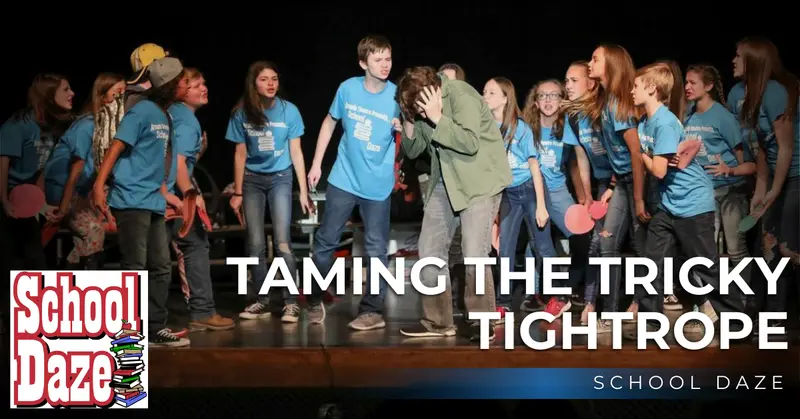
Taming the Tricky Tightrope: School Daze
Middle school can be tricky. School Daze by Lindsay Price explores the tricky tightrope between being a kid and a teenager on the first day of middle school.
You remember middle school. That first day can be a funhouse or a hall of horrors. Will I fit in or be left behind? Did I wear the right clothes? How will I find the right class? Why do those eighth graders look so bigâŚ
Middle school is the tricky tightrope between being a kid and being a teenager. How did you fare? Did you fall off the tightrope? Did you hold on?
See the characters in School Daze try to keep their balance on the first day of middle school.
Thanks so much to Robin Caporuscio and the amazing student performers at Armada Middle School in Armada, MI for sharing their photos and experience with their production of School Daze:
âThis was a cast of all 7th and 8th graders and the show was their final exam for acting class and it was presented in an evening performance for the public.â
Featured Plays
A WONDERful Journey: Through the Looking Glass
Are you looking for a fantastical physical journey for your actors and your audience? Through the Looking Glass by Lindsay Price is a movement-based classical adaptation that you wonât want to miss.
Alice is back in Wonderland and things are more confusing than ever â Flowers talk, the White Queen cries before she pricks her finger, and thereâs a life-sized chess game going on. Alice wants to play, but mostly wants to be queen. Will she make it to the eighth square?
Under the direction of Juliet Cottrell , the student performers at The Drama Workshop in Havelock North, New Zealand were able to truly come together and take their audience on a truly magical â and _ wonder _ful â journey with their production
âThe show features children from all over Hawkes Bay who come together once a week to rehearse. Creating a safe emotional environment is paramount to our work and many parents and students comment that they have found their âtribeâ in Drama.â
Featured Plays
The Purposeful Pause: betweenity
If you are looking for an excellent class project play with parts for everyone at all levels with a great technique exploration, look no further than betweenity by Lindsay Price.
Weâve all been there. The awkward pause. The silence where you just canât think of something to say. The space in-between words where nothing is said and yet so much is spoken. The state of being between.
This vignette play explores the beats, pauses, and never-ending silences in conversation. The girl who tries to tell her best friend she wants to date him. The boy who creates the wrong kind of pause. The sister who is dealing with the silent treatment. The guy who wants to confess but canât open his mouth. The daughter who doesnât want to talk because talking makes her remember.
How do you act in a pause?
Director Laura Maney and the drama students from the York County School of the Arts in Williamsburg, VA explored the sound of silence and the power of the pause with this engaging vignette play. Itâs important to learn that sometimes itâs not whatâs being said thatâs important. Itâs the space in-between.


.png)


.png)
.png)