Monologue writing is a great exercise for students. The monologue is a mini play: It has a beginning, middle, and end, as well as character, conflict, and often a listener. This makes the monologue a lovely introduction to the world of playwriting.
Having said that, writing monologues does not come naturally in the way dialogue might. Conversation is natural; it happens every day, all around us. People rarely monologue in real life. More often than not, when you ask a student to write a monologue, they will end up writing a story. Stories, storytelling, reading stories, listening to stories—all of this comes naturally to students. They’ve been exposed to stories since they were toddlers. It makes total sense that they would think monologues and stories are the same thing.
How do we get students to write monologues with character, conflict, and an emotional journey?
It’s all about communication. The purpose of theatre is to communicate. The purpose of a monologue is to communicate to someone or something. The goal is to move students away from the storytelling framework they are used to writing from, and into a theatrical experience which focuses on character and conflict.
Tip! Always have students write monologues with a listener. Don’t have their characters talk to themselves or the audience. Get students in the habit of thinking that a monologue is dialogue where only one person speaks. Next, put the listener at the centre of the conflict in the monologue. As the character establishes what they want in the monologue, make the listener the thing in the way (i.e. the conflict) of the character getting what they want. This gives students a lot of active tactics to work with as their character speaks to the listener to get what they want: convincing, defending, insisting, cajoling, flattering, exaggerating, pleading, warning, and more! This will give the monologue a defined shape, an energy, and a journey.
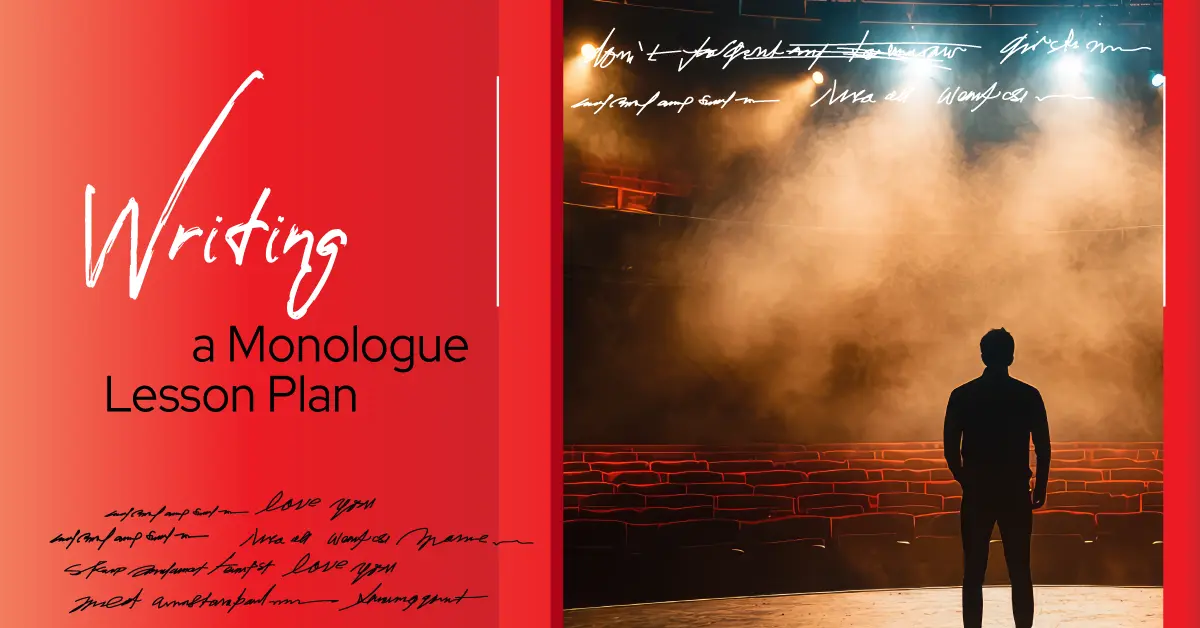
Want more? Download our Writing a Monologue Lesson Plan to take students step by step through the idea stage to practice exercises and realizing a one-to-two-minute piece. Rubric included!