
Ontario, Canada
Grade 12 - Foundations - Responsible Practices
9 units • 4 professional development courses aligned to
C.3.1 - identify and follow safe and ethical practices in all drama activities
View all Standards for Ontario, Canada
C.3.1 identify and follow safe and ethical practices in all drama activities
This page lists 9 units and 4 professional development courses aligned to C.3.1 from the Ontario, Canada. Designed for drama teachers, these resources directly address C.3.1 - identify and follow safe and ethical practices in all drama activities
Unit
1
of
4
in
Production Classroom Units
Curriculum
UNIT
Part One - Pre-Production
by Karen Loftus
5 lessons
In Part One of The Production Classroom, you’ll take your students through a series of pre-production units designed to help students gain as much comprehension as possible about putting on a successful production.
Unit
2
of
4
in
Production Classroom Units
Curriculum
UNIT
Part Two - Rehearsal and Performance
by Karen Loftus
7 lessons
Part Two offers articles on each step in the process, samples and forms, a suggested pacing, role definitions and task checklists, an outline for a typical class, as well as performance duties. This section also outlines the assessment piece for The Production Classroom – the production binder.
Unit
3
of
4
in
Production Classroom Units
Curriculum
UNIT
Part Two - Documents
by Karen Loftus
7 lessons
This section provides samples and worksheets for actor forms, costume department, general binder, lighting and sound, marketing samples, scenic and prop samples, and stage management and production manager samples and forms.
Unit
4
of
4
in
Production Classroom Units
Curriculum
UNIT
Part Three - Reflection and Assessment
by Karen Loftus
3 lessons
Part Three provides a Post-Performance Reflection. Unpack the experience with students, reflect back on what went right and what could be changed for next time. A written Reflection is included as well as a Rubric for student production binders.
UNIT
Character Creation: Superhero Series: Multi platform
by Lindsay Price and Kerry Hishon
6 lessons
This unit focuses on character creation: How do you create a character from the ground up? Use this unit as a precursor to a playwriting unit, to a devising unit, or to a class production.
Using the archetypes of the superhero, the sidekick, and the supervillain, students work on exercises to help them create unique characters through physical and vocal qualities, character profiles, and theatrical writing.
Because many of the exercises have an individual focus, this unit works in a distance learning environment or for your no-technology students.
UNIT
Foundations of Acting
by Annie Dragoo
7 lessons
Students will demonstrate an understanding of the foundations of acting. At the end of the unit, students will be able to understand the value of making rich acting choices on stage.
This unit gives students an opportunity to explore and develop acting skills on a more advanced level, regardless of experience. They will explore skills, including voice, movement, emotional recall, memory, playing objectives, and character development culminating in a final scene.
UNIT
Introduction to Stanislavski
by Drama Teacher Academy
6 lessons
This is an in-depth unit with instruction and activities about the Stanislavski acting method. It is followed by scene work in which students learn how to score a scene, do a comprehensive character analysis, and use what they have learned in rehearsals in a performance. Students will also watch their own work and evaluate their process after the performance.
The purpose of this unit is to give students an introduction and understanding of Stanislavski’s method and to put it into use as they prepare scenes for performance. After seeing their work, and spending time reflecting on how they used the principles of the method, students should take away a concrete understanding of how to prepare a role for performance.
UNIT
Virtual Introduction to Stanislavski
by Drama Teacher Academy
6 lessons
The unit has been adapted for a virtual environment.
This is an in-depth unit with instruction and activities about the Stanislavski acting method. It is followed by scene work in which students learn how to score a scene, do a comprehensive character analysis, and use what they have learned in rehearsals in a performance. Students will also watch their own work and evaluate their process after the performance.
The purpose of this unit is to give students an introduction and understanding of Stanislavski’s method and to put it into use as they prepare scenes for performance. After seeing their work, and spending time reflecting on how they used the principles of the method, students should take away a concrete understanding of how to prepare a role for performance.
UNIT
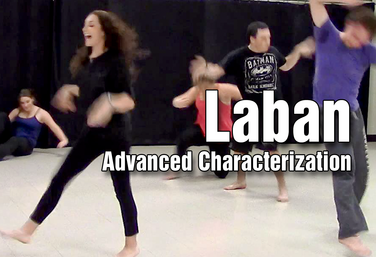
Laban: Advanced Characterization
by Drama Teacher Academy
7 lessons
This is an advanced acting unit in playing character through the Laban movement technique. Students will explore dance theorist Rudolf Laban’s eight efforts and their component parts; turn these elements into physicalizations through which one can express character; use Laban efforts and connect them to a character’s voice and body; and demonstrate knowledge through the creation of an original character.
Reminder: This is an advanced acting unit. You will need students who can do work on their own outside of class time, commit to movement and sound, and commit to making instinctual choices.

View all Standards for Ontario, Canada Standards Master List